


Best selection of Endodontic supplies in the UK


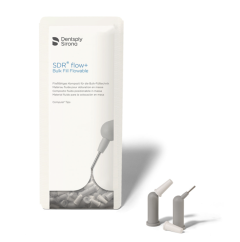
SDR® flow+ · Universal shade · 15 compules
Post-endodontic coreBase or liner, Class I and IIClass III and VPit and fissure sealing
How much of the outcome is still in your hands once the last cone is down? And why fill the access cavity with something that shrinks away from the seal you have just placed? SDR® flow+ is a low-viscosity bulk fill composite that self-levels into the chamber and around the orifices, and is designed to be cured in increments up to 4 mm. The chamber is an awkward shape to fill – undercuts, a pulpal floor you cannot see into, orifice plugs you would rather not disturb – and a self-levelling material finds that geometry without condensation.
| 4 mm BULK INCREMENT | 20 s CURE AT 4 MM | 2.6 mm AL RADIOPACITY |
This pack: 15 × 0.25 g Compula® tips, Universal shade
Made by Dentsply Sirona · mfr code 60603040
| Increment | Cured in increments up to 4 mm depth, per the Directions for Use |
| Cure | 20 s at 4 mm in the Universal shade at 550 to 1000 mW/cm2; the A shades need 40 s. Minimum output 550 mW/cm2 |
| Filler | Total filler 47.3% by volume (IFU); 70.5% by weight per Dentsply's Scientific Manual |
| Radiopacity | Approximately 2.6 mm Al – it reads on a post-operative film |
› A base, not the finished surface in a load-bearing Class I or II – the IFU caps it occlusally with a universal or posterior composite.
› Watch the eugenol. The IFU says to avoid eugenol and hydrogen peroxide – worth remembering if a ZOE sealer or an IRM-type temporary has been near the chamber.
› Not for known methacrylate hypersensitivity, and not alongside mineral-impregnated retraction cord.
The SDR technology comprises the unique combination of such a large molecular structure with a chemical moiety called a “Polymerization Modulator” chemically embedded in the center of the polymerizable resin backbone of the SDR resin monomer.
— Dentsply Sirona, SDR® flow+ Scientific Manual, 2017. The same document puts volumetric shrinkage at 3.5%, and attributes an approximately 80% reduction in polymerisation stress against conventional methacrylate resins to its own internal data.
Van Dijken and Pallesen followed 49 paired Class II restorations in 38 patients for six years, SDR under a capping composite against conventional layering, and reported an annual failure rate of 1% in both groups (Eur J Oral Sci 2017;125:303–9). El-Damanhoury and Platt recorded bottom-to-top hardness above 90% at 4 mm (Oper Dent 2014;39:374–82). The honest reading: as good as careful incremental layering, not better – and in less chair time.
Can I finish the restoration in SDR flow+ alone?
Not in a load-bearing Class I or II – the IFU has it capped by a universal or posterior composite. Conservative Class I, Class III and V restorations and core build-ups are listed as full indications.
Does my curing light have enough output?
It needs at least 550 mW/cm2, and the 20 s figure assumes 550 to 1000 mW/cm2. A radiometer check is worth thirty seconds – a tired unit is the usual reason a 4 mm increment cures short.
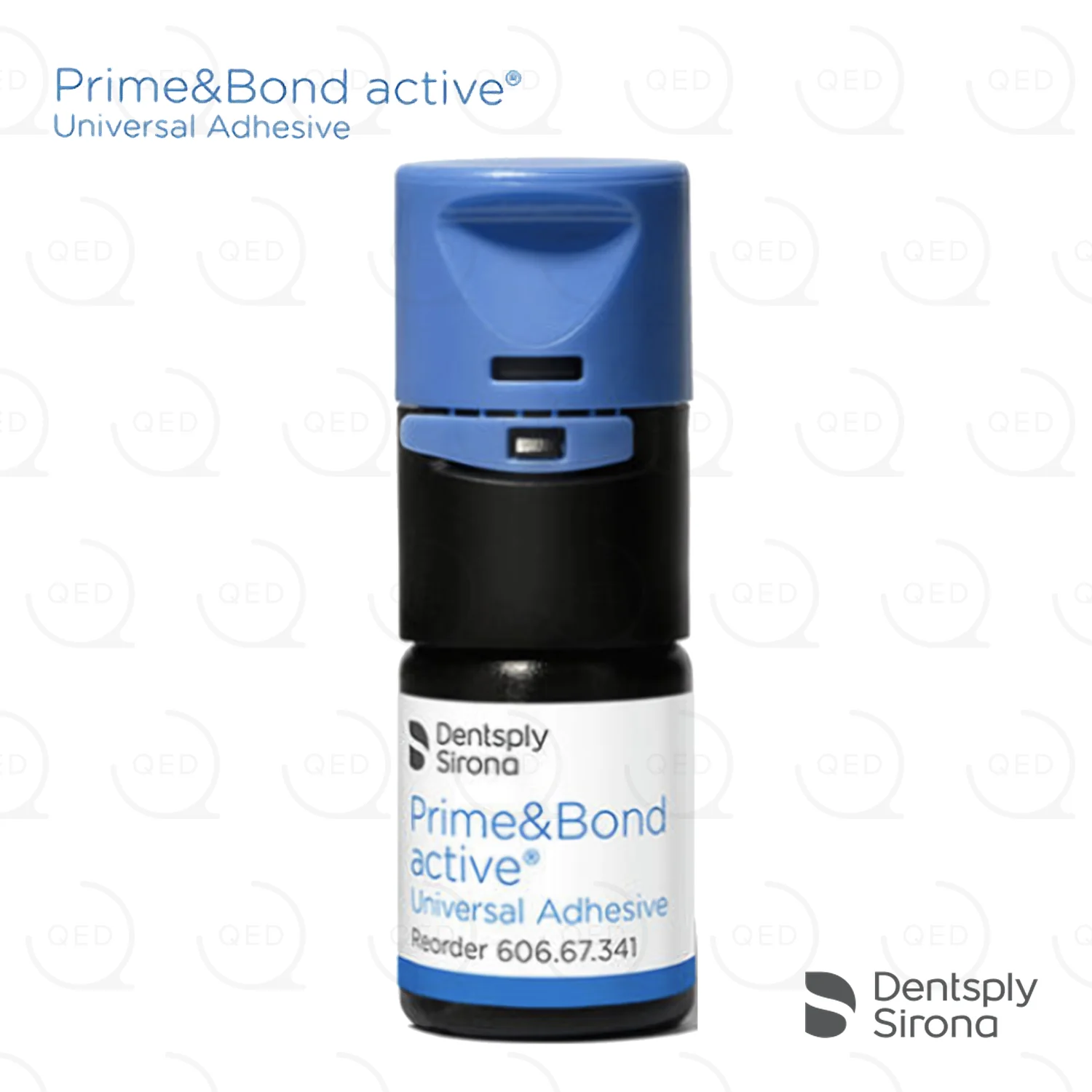
| Shape and restore | RECIPROC® blue and SDR flow+ Procedure Kit – 30 R25 files and 30 compules on one code, or the same kit with a free adhesive while that offer runs |
| Shape | WaveOne® Gold and SDR flow+ Kit – the same pairing on the reciprocating single-file sequence, or the Treatment Solution Box with its own matched cones and points |
| Dry | RECIPROC® Paper Points R25 · 144 – matched to the R25 preparation |
| Fill | RECIPROC® blue Gutta Percha R25 · 60 – the cone that matches the file that cut the canal |
| Seal the orifice | NeoPUTTY® · 0.5 g kit – a premixed bioceramic barrier under the build-up, and for a perforation or open apex |
| Between visits | J-Temp™ – when the definitive build-up waits for a second appointment |
SDR® flow+ Universal · bulk fill flowable composite · self-levelling · 4 mm increment, 20 s cure · 2.6 mm Al · 15 × 0.25 g Compula® tips · Dentsply Sirona · REF 60603040
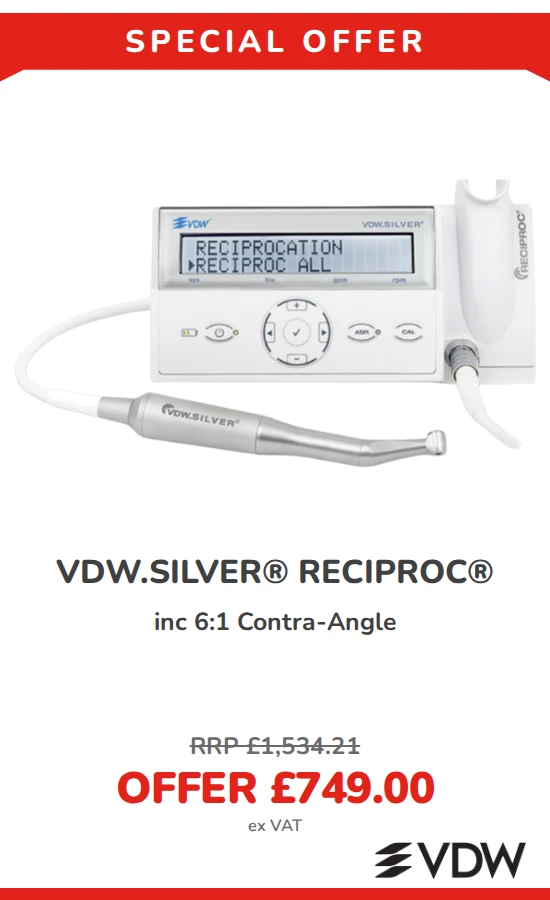
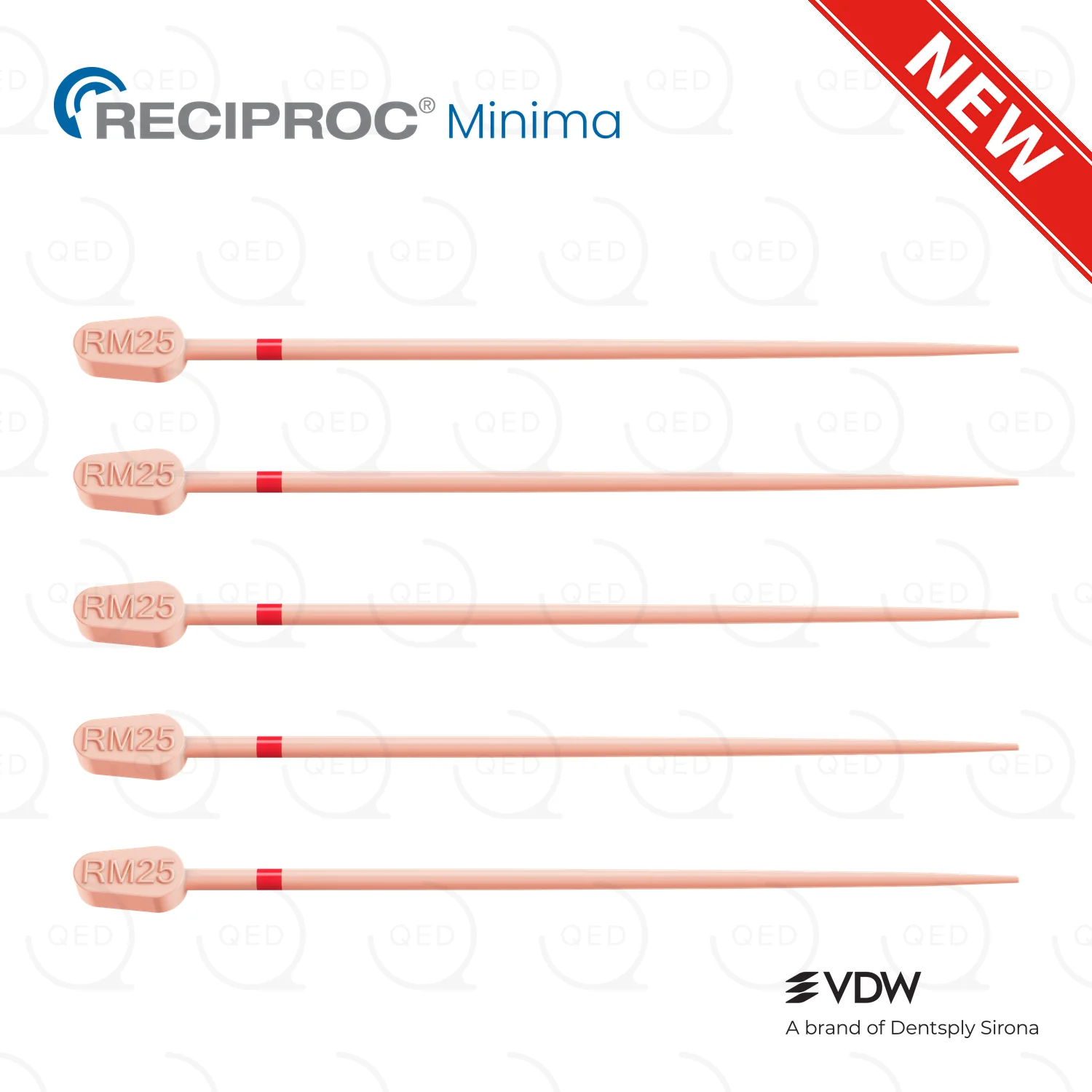
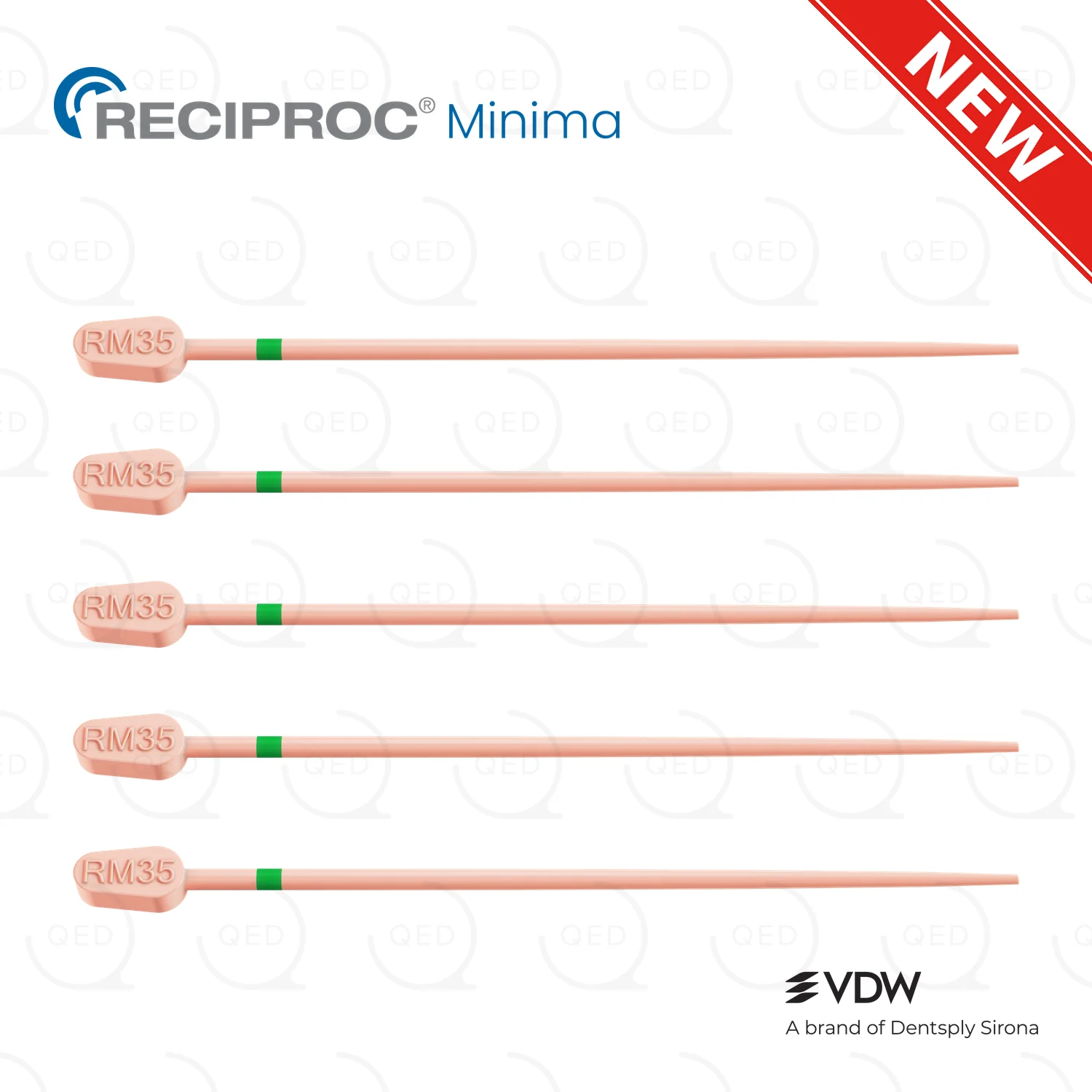
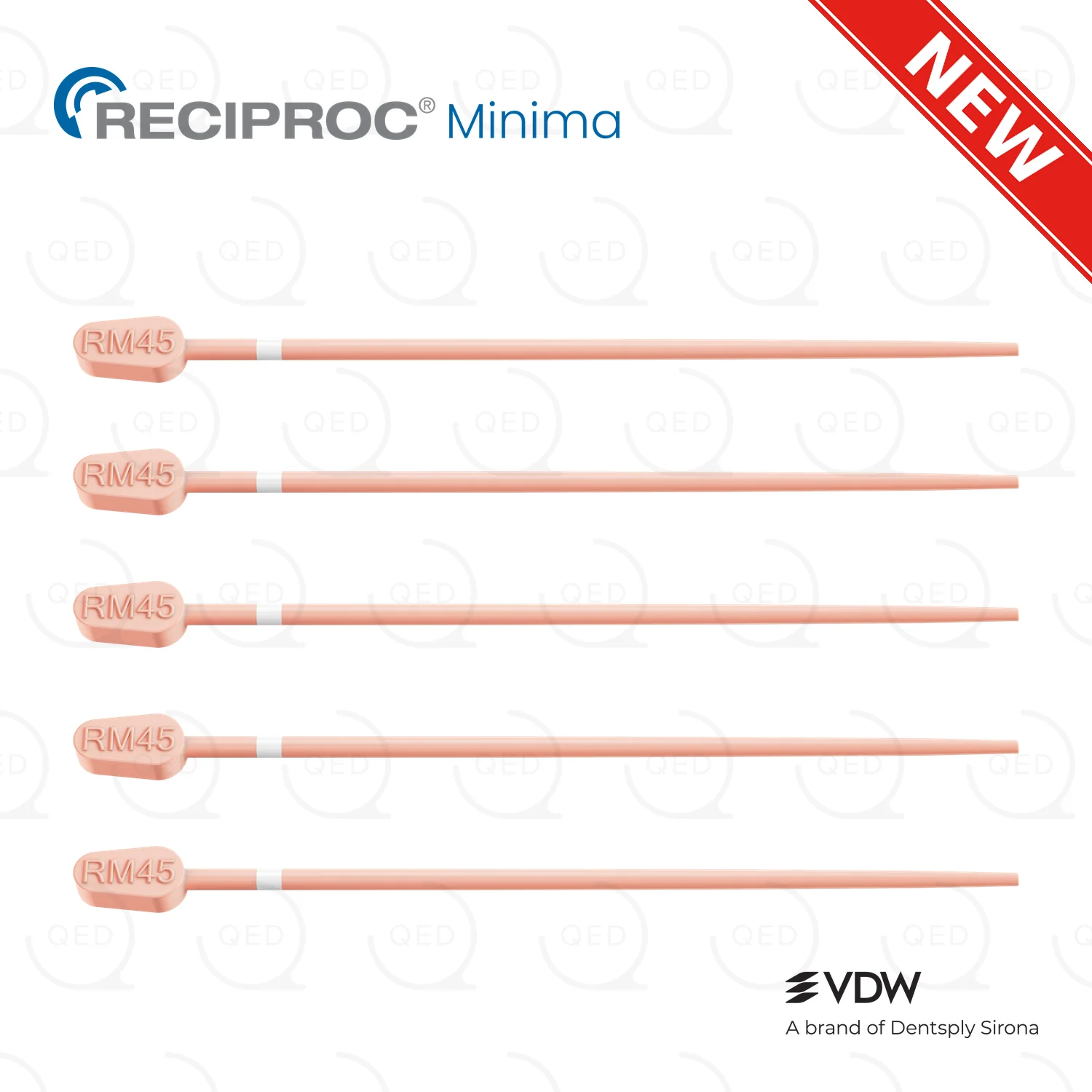
SpotlightRECIPROC® MinimaOne file · slim shaping for narrow canals
Shaping systems
Hand files & finders
Materials & more
 eMail 60603040 to a friend





















 Facebook
 Twitter
 Instagram
 Pinterest