


Best selection of Endodontic supplies in the UK


CITRIC ACID 40% · 5 x 200 G
Smear layer removalChelationPractice packDentist use only
The same 40% solution as the single bottle, five to a pack. Worth it once citric acid is the chelator your protocol uses rather than the one you are trying.
| 40% CITRIC ACID | 5 BOTTLES OF 200 G |
This pack: Citric Acid 40% (5 x 200 g bottles, approx. 187 ml each)
| Active | Citric acid, 40% solution |
| Pack | 5 x 200 g bottles, each with adapter and dispenser. Cerkamed give the density as 1.07 g/ml, so 200 g is approx. 187 ml |
| Use | Canal rinsing during endodontic treatment, to remove the smear layer |
| Single bottle | Citric Acid 40%, 200 g |
› Identical solution to the single bottle – the difference is how often you reorder.
› Cerkamed: removes the smear layer from the canal walls, exposing the dentinal tubules.
› Cerkamed are explicit: "do not leave product in the canal or the tooth cavity between visits", as it may lead to oversoftening of dentine.
› Cerkamed mark the product "TO BE USED BY DENTIST ONLY".
The European Society of Endodontology's S3-level guideline takes sodium hypochlorite followed by EDTA as its reference sequence – it is the comparator every other irrigant regimen in the review was measured against. For asymptomatic apical periodontitis in permanent teeth it states that NaOCl (1%–5.25%) followed by EDTA, then NaOCl again, may be considered (open-grade recommendation). Concentration is the clinician's choice: the guideline found insufficient evidence to prefer one over another, and we stock both ends of the range it names.
| 1 · Sodium hypochlorite | Cerkamed: removes the remains of dead pulp and cleans the canal. Chloraxid 2% · Chloraxid 5.25% |
| 2 · EDTA | Cerkamed: flushes out calcium and magnesium ions, softening the dentine surface layer so the smear layer lifts and the tubule orifices are exposed. Endo-Solution 17% EDTA |
| 3 · Sodium hypochlorite | A final flush, at the same concentration as step 1. |
Rinse with purified water between steps. Cerkamed direct that the two are not run straight into one another – "the EDTA contained in the product neutralizes the effect of NaOCl" – and that "purified water should be used to rinse root canals between the use of fluids". The same applies to citric acid, and to chlorhexidine, which forms a precipitate with either.
Because you cannot be sure what is going into the canal. A 2026 randomised trial compared a domestic bleach with a medical-grade sodium hypochlorite, both diluted to what the operators took to be 2.5%. Measured afterwards, the domestic product was 6.13% sodium hypochlorite against the medical-grade at 4.83% – and patients in the domestic group reported significantly more pain at six and twelve hours, which the authors put down to the higher chlorine content together with the surfactants household bleach carries. (Nasr & Hassan, BMC Oral Health 2026; randomised controlled trial, 60 patients, one product on each side.)
A medical device carries a stated concentration, a batch number, an expiry date and a safety data sheet, and it is manufactured for this purpose. A household bleach is formulated to clean a surface to a price; its strength is not controlled for use in a root canal, and it is not intended for one.
This covers the irrigation step only. The same guideline also addresses diagnosis, instrumentation, intracanal dressing and adjunctive disinfection. › Read the full ESE guideline – Duncan HF et al., International Endodontic Journal 2023 (open access).
Cerkamed describe it as flushing out calcium and magnesium ions, "softening the dentine surface layer to allow its easier removal and canal unblocking", which removes the smear layer left by instrumentation and exposes the tubule orifices.
Cerkamed are explicit: "do not leave product in the canal or the tooth cavity between visits", as it may lead to oversoftening of dentine.
No. Cerkamed state that the EDTA "neutralizes the effect of NaOCl", and that "purified water should be used to rinse root canals between the use of fluids".
| Sodium hypochlorite | Chloraxid 2% · Chloraxid 5.25% |
| Chelation | Endo-Solution 17% EDTA, 200 ml · 5 x 200 ml · Citric Acid 40%, 200 g · 5 x 200 g |
| Delivery | Endo-Top side-vented 30 g needles (100) · IrriFlex 30 g · NaviTip 29 ga, 25 mm |
| Evacuation | Endo Aspirator (5) · Endo Aspirator PRO |
Cerkamed · Cerkamed Citric Acid 40% 5 x 200g · REF CER-W-K1000
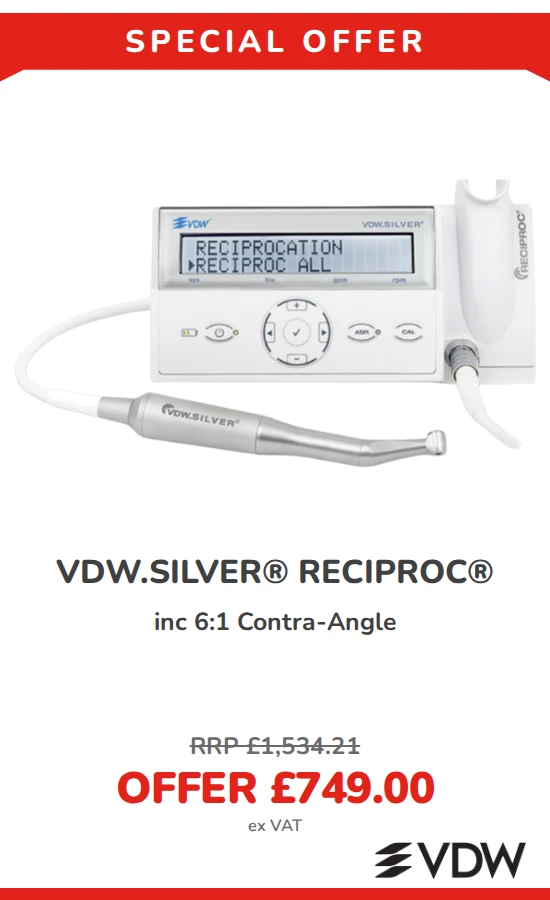
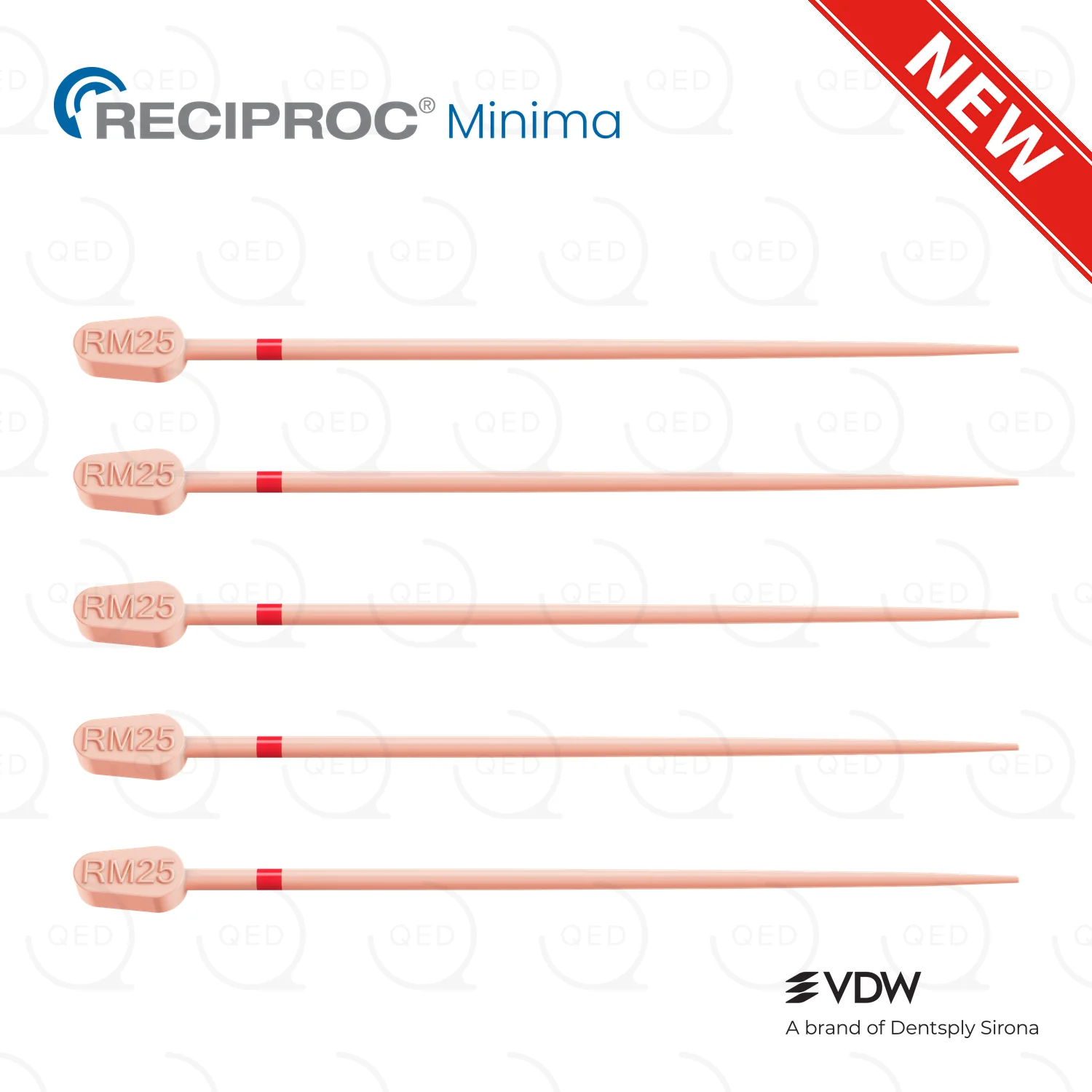
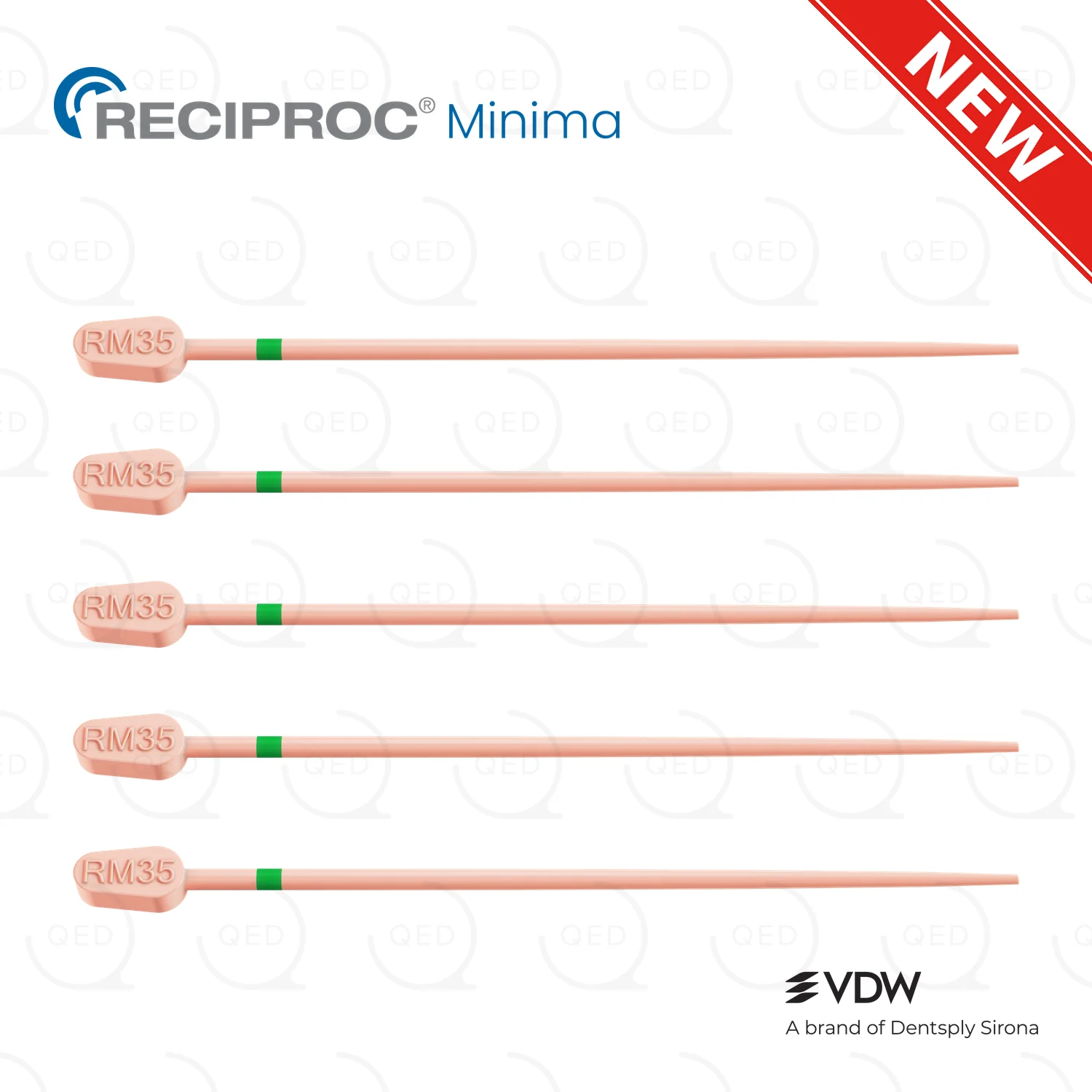
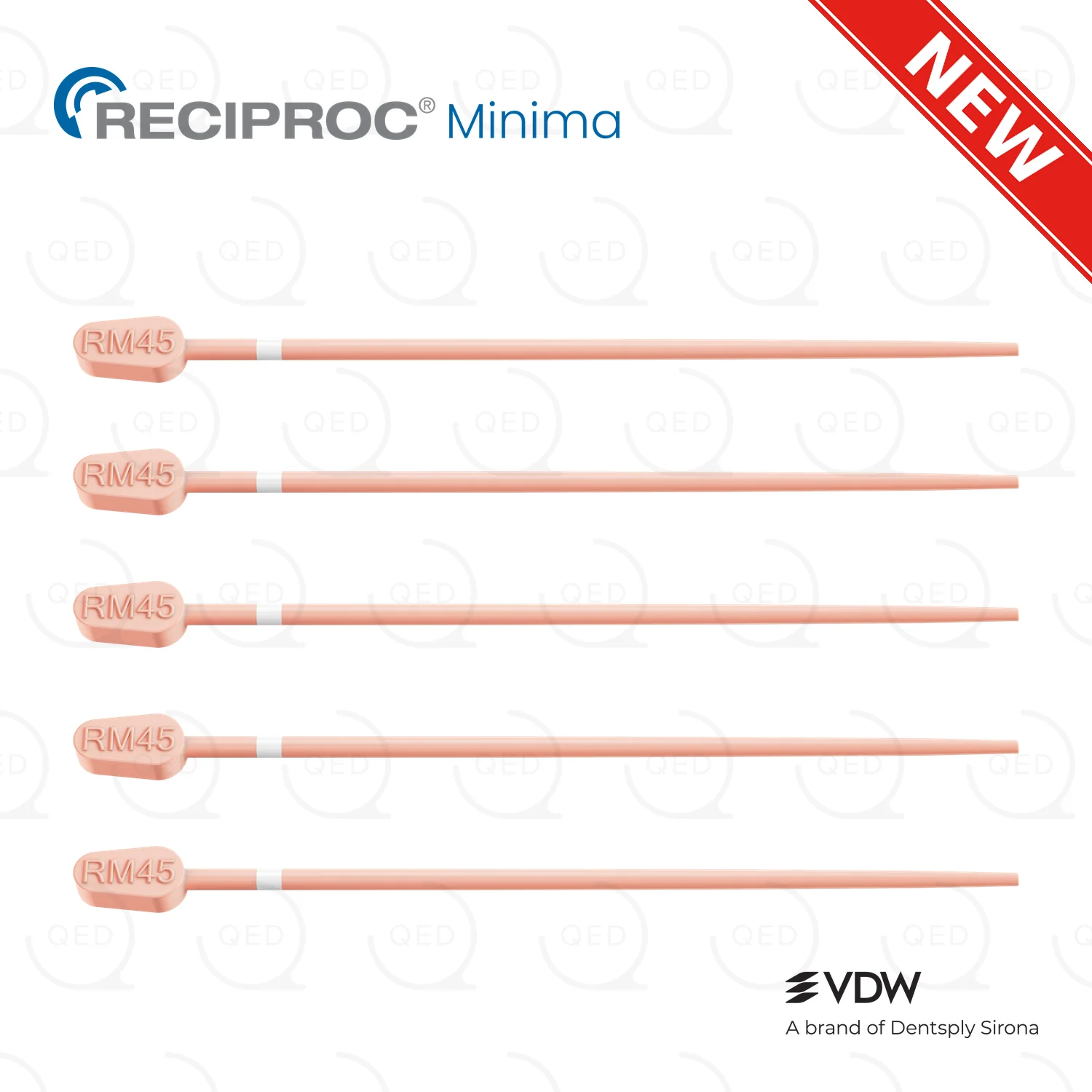
SpotlightRECIPROC® MinimaOne file · slim shaping for narrow canals
Shaping systems
Hand files & finders
Materials & more
 eMail CER-W-K1000 to a friend


















 Facebook
 Twitter
 Instagram
 Pinterest