


Best selection of Endodontic supplies in the UK


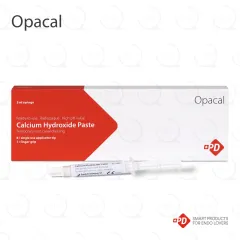
Opacal® · Calcium hydroxide dressing · 3 ml syringe
Temporary root canal dressingTwo-visit endodonticsInterappointmentReady to useNon-setting
A weeping canal, a patient who cannot come back for a fortnight, and a temporary that has to do the thinking while they are away. Opacal® is a radiopaque, creamy, ready-to-use calcium hydroxide paste for temporary root canal dressing. PD's own statement of purpose is plain: it is intended to eliminate remaining microorganisms and prevent reinfection between appointments, and its main properties come from its alkaline pH.
| >12 pH | 300% OF DENTINE | 3 ml SYRINGE |
This pack: 1 × 3 ml syringe · 10 × single-use application tips · 1 × finger grip
Made by Produits Dentaires SA, Switzerland · Class IIa medical device, supplied non-sterile
Everything a calcium hydroxide dressing does, it does by being strongly alkaline, and how fast it gets there depends on the vehicle. Opacal is an aqueous, non-setting paste at 30% calcium hydroxide – the formulation type that releases its ions quickly rather than over months. That suits a dressing you mean to remove in a fortnight, and it is why it comes out easily: nothing has set.
Opacal is an aqueous non-setting material. This characteristic induces rapid ionic release and performant action in short treatment time procedure. In addition, the paste can be easily removed.
— Produits Dentaires SA, on their own Opacal pages
1 Prepare, clean and dry the canal meticulously – the IFU's word, not ours.
2 Clip the finger grip on, uncap, fit a new tip to the Luer-lock, and test the flow onto a pad before going intraorally. Never force the plunger.
3 Fill from the apical portion outward, staying at least 2 mm shy of the apex, and adjust the volume to the anatomy rather than to habit.
4 Seal with a temporary restorative for a tight seal between visits, then confirm the fill radiographically.
5 Discard the tip, cap the syringe immediately so the paste does not dry in it, and disinfect the syringe.
6 Remove it completely next visit – an endodontic file and a few drops of saline, per the IFU.
| Composition | Calcium hydroxide 30%, barium sulphate 24%, plus an excipient PD do not disclose |
| pH | Above 12, in PD's wording. They publish no measured value |
| Radiopacity | PD state more than 300% of the radiopacity of dentine; their earlier flyer gives the figure as greater than 3 mm aluminium |
| The tip | Flexible, Luer-lock, 20 mm long and angled at 110° on PD's flyer diagram |
| Dressing period | PD give 1 to 3 weeks as usual; the IFU sets a maximum of 30 days |
| Storage | 15 to 25 °C, protected from direct light. Shelf life 3 years |
› Tips are single use, per patient. Discard after each treatment; a blocked tip is replaced rather than persuaded.
› The syringe is not. PD require it disinfected between every patient, but specify no agent or contact time – use your own validated protocol.
› Two millimetres shy of the apex, stated twice in the IFU – in the directions, and again as an extrusion precaution.
› It is a strong alkali. Calcium hydroxide is a skin irritant that can cause serious eye damage; PD ask for rubber dam, safety glasses and a waterproof bib for the patient, and gloves, mask and goggles for the operator.
› Undesirable effects: the IFU records none known or foreseen when the product is used as intended.
Worth being straight about this. The figures above – pH, radiopacity, ionic release – are Produits Dentaires' own, and PD publish no test data behind them. The one reference they cite is Fava and Saunders' classification of calcium hydroxide pastes (Int Endod J 1999), a review of the category rather than a study of this product, cited to support the general point that aqueous non-setting vehicles release their ions quickly. There is no independent published work on Opacal itself. None of which makes it a poor choice – a 30% aqueous calcium hydroxide paste does what the category has done for decades – but buy it as a well-made example of a familiar material, not as something with a trial behind it.
How is it delivered – do I need a spiral filler?
PD's method is the syringe and its own tip, and that is the only delivery route their instructions describe: fit the tip, fill from the apical portion outward, stop 2 mm short. They do not discuss any other technique.
How long can it stay in?
PD describe the usual temporisation as one to three weeks. The IFU is firmer about the outer limit: as a temporary root canal dressing, the maximum duration of treatment should be 30 days.
Will I get it all out again?
It is non-setting and water-based, and the IFU asks for complete removal at the next appointment with an endodontic file and a few drops of saline. Saline specifically – PD name no other solution here.
| Isolate | OraSeal™ Caulking – PD ask for rubber dam with this material, and a dam that weeps is not isolation |
| Irrigate | Chlorax 5.25% sodium hypochlorite · 5 × 200 ml |
| Deliver it | IrriFlex® with endostops – flexible 30G needle for the curve the dressing must reach past |
| Final rinse | Endo-Solution 17% EDTA · 200 ml |
| Dry it first | RECIPROC® Paper Points R25 · 144 – the IFU wants the canal dry first |
| Seal it in | J-Temp™ Temporary Resin – radiopaque, so the film confirms the temporary as well as the dressing |
| Longer intervals | BIO-C® TEMP · 4 × 0.5 g – a premixed bioceramic dressing, for gaps running past Opacal's 30-day maximum |
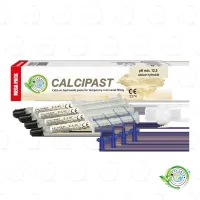
| The same material, differently | Calcipast Calcium Hydroxide · 4 × 2.1 g – the same material in a four-syringe pack, if that suits you better |
Opacal® · radiopaque calcium hydroxide dressing · calcium hydroxide 30%, barium sulphate 24% · pH above 12 · aqueous, non-setting · 3 ml syringe with 10 single-use tips and a finger grip · Class IIa · Produits Dentaires SA, Switzerland · REF 11020
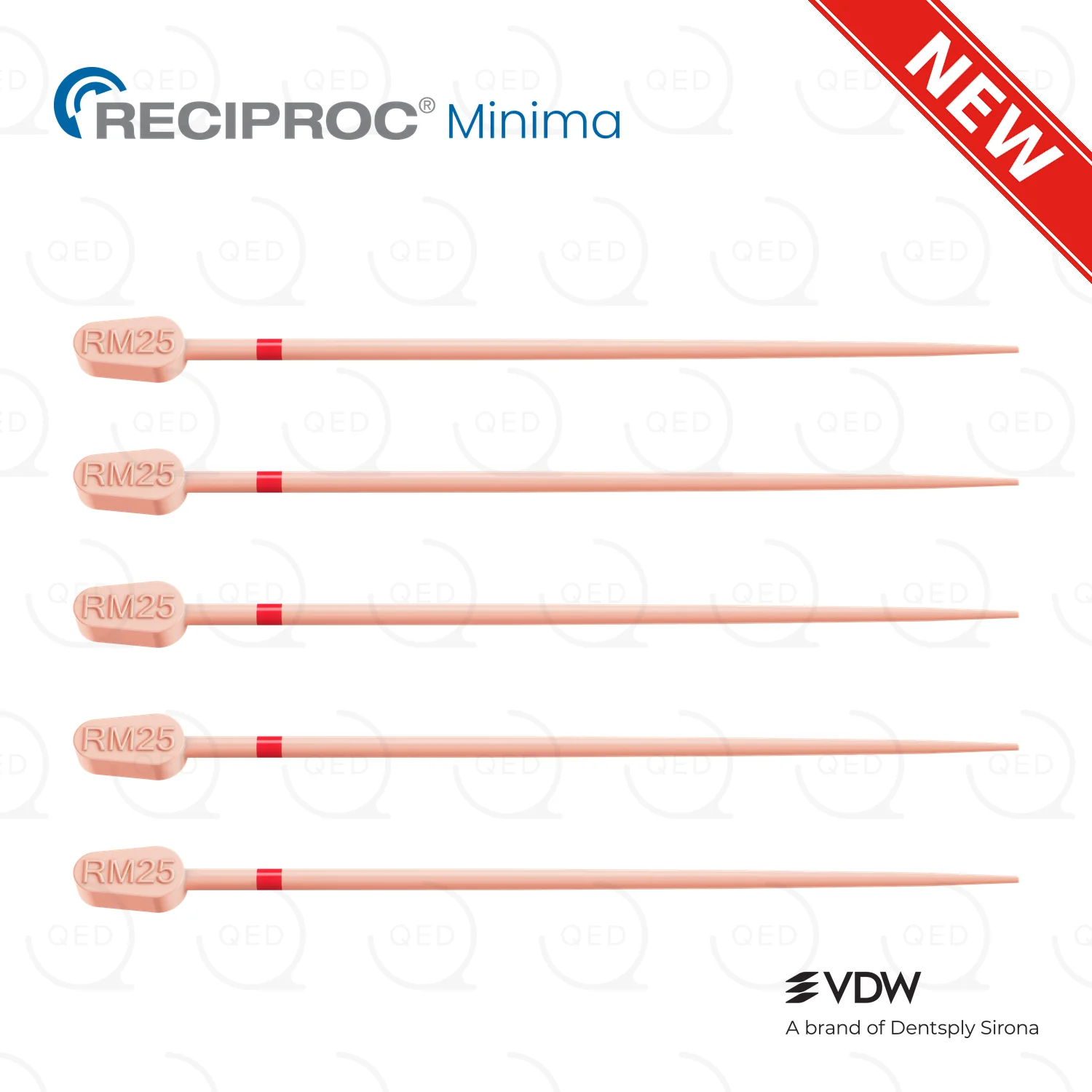
SpotlightRECIPROC® MinimaOne file · slim shaping for narrow canals
Shaping systems
Hand files & finders
Materials & more
 eMail 11020 to a friend
































 Facebook
 Twitter
 Instagram
 Pinterest