


Best selection of Endodontic supplies in the UK


| deals for this product |
|---|
| buy 10 in Acadental to get 20.00% off |
Endo 3DP™ · #19 lower left first molar · pre-accessed
Which tooth do most UK root canals actually happen in? The lower first molar – and this is the one that teaches why it is difficult. Acadental publishes working lengths of approximately 23 mm and lists the features plainly: pronounced secondary curvature, an isthmus in the apical third, and two independent canals in the distal root apically. Secondary curvature is the one trainees miss, because it does not show on the first film and it is exactly where files separate.
This item: 1 × Endo 3DP #19, lower left first molar (LL6), supplied pre-accessed
Made by Acadental, USA · mfr code 3D_AE601A_19RL
| ~23 mm lengths | Acadental publishes all working lengths at approximately 23 mm – a rare piece of hard data on a training tooth |
| Secondary curvature | Pronounced – the curve beyond the obvious one, and the reason files separate in lower molars |
| Apical isthmus | An isthmus in the apical third, visible through the tooth as irrigant does or does not reach it |
| Two distal canals | Independent apically – the distal root that looks like one canal and is not |
› The published length matters – with ~23 mm across all canals, a course can set stops before the exercise starts and compare like with like.
› See-through – the isthmus and the second distal canal are visible from outside, so a missed canal is a teaching moment rather than an argument.
› Its mirror image – #30 (LR6) is the same tooth on the right, with a simpler distal root.
Is this too hard for undergraduates?
For a first molar attempt, yes – start on #30 or the graded #14. This tooth suits DFT, DCT and postgraduate hands-on work where separation and missed anatomy are the subject.
Can I take working-length films?
Not on this one – the Endo 3DP range is radiolucent. Acadental publishes the lengths instead, and the Real-T Endo #19 is the radiopaque tooth at this position.
Will it survive a rotary file?
It is a single-hardness printed tooth intended for instrumentation, and pronounced curvature is the point – but treat a separated instrument here as the lesson it would be clinically, not a product fault.
| Mount it | ModuPRO Endo Kit – mandibular module included |
| Glide path | C-PILOT assorted 25 mm – patency past the secondary curve |
| Shape it | RECIPROC blue System Kit – 24 files for a teaching bench |
| Irrigate | NaviTip sideport 25 mm – reach for ~23 mm canals |
| Fill it | RECIPROC blue GP assorted – cones matched to those files |
| Same tooth, on film | Real-T Endo #19 – radiopaque throughout |
Endo 3DP™ #19 · lower left first molar LL6 · working lengths ~23 mm · apical isthmus · two distal canals · pre-accessed · radiolucent · Acadental · REF ACA-3DAE601A19RL

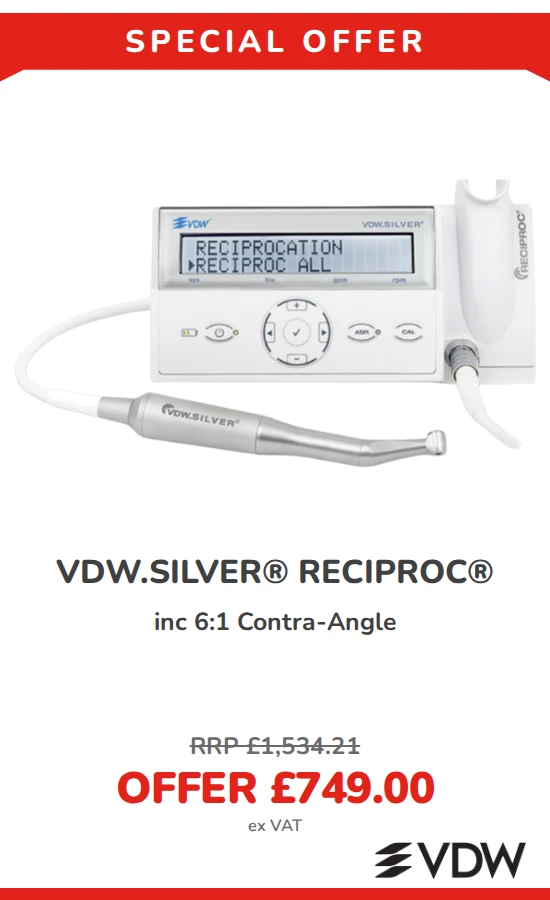
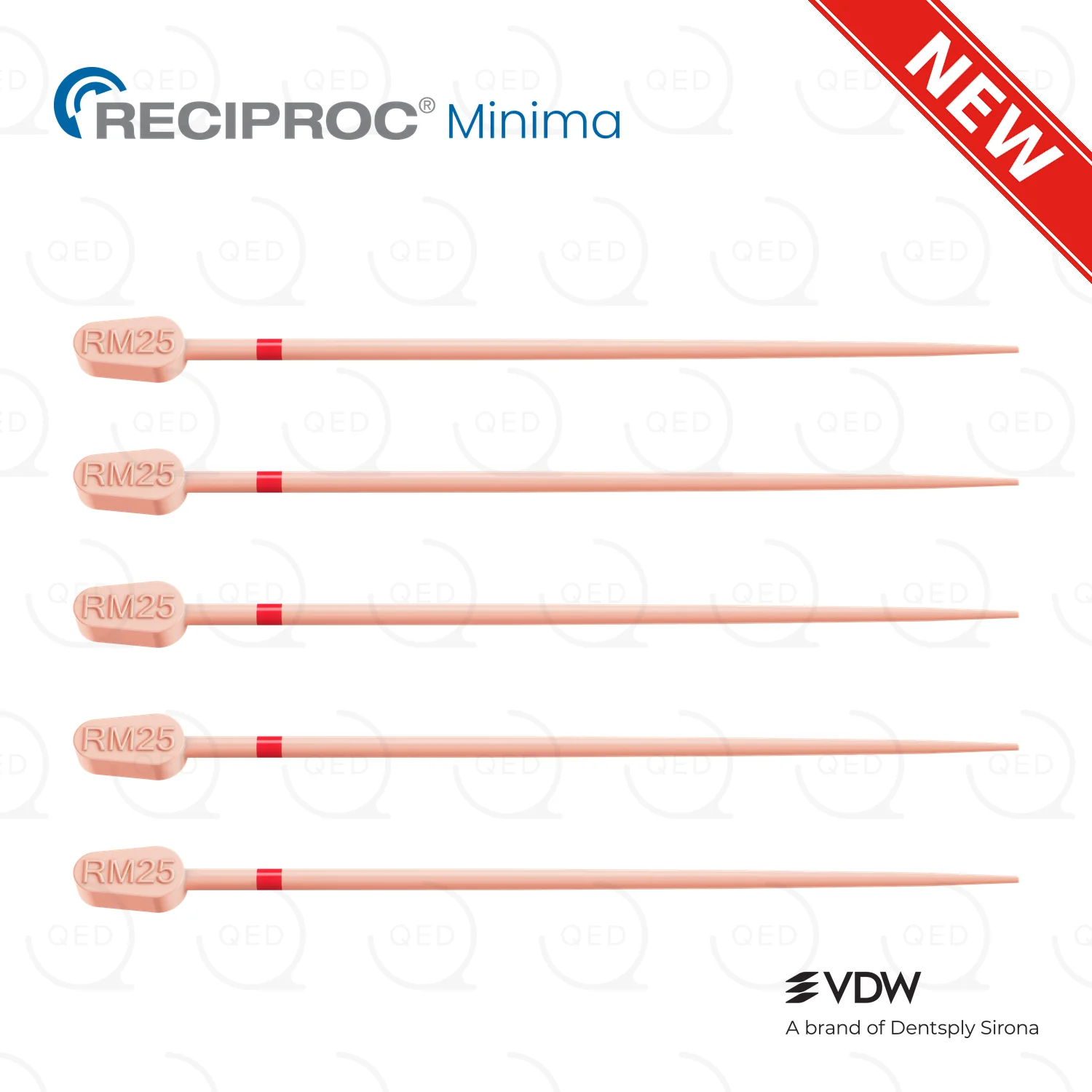
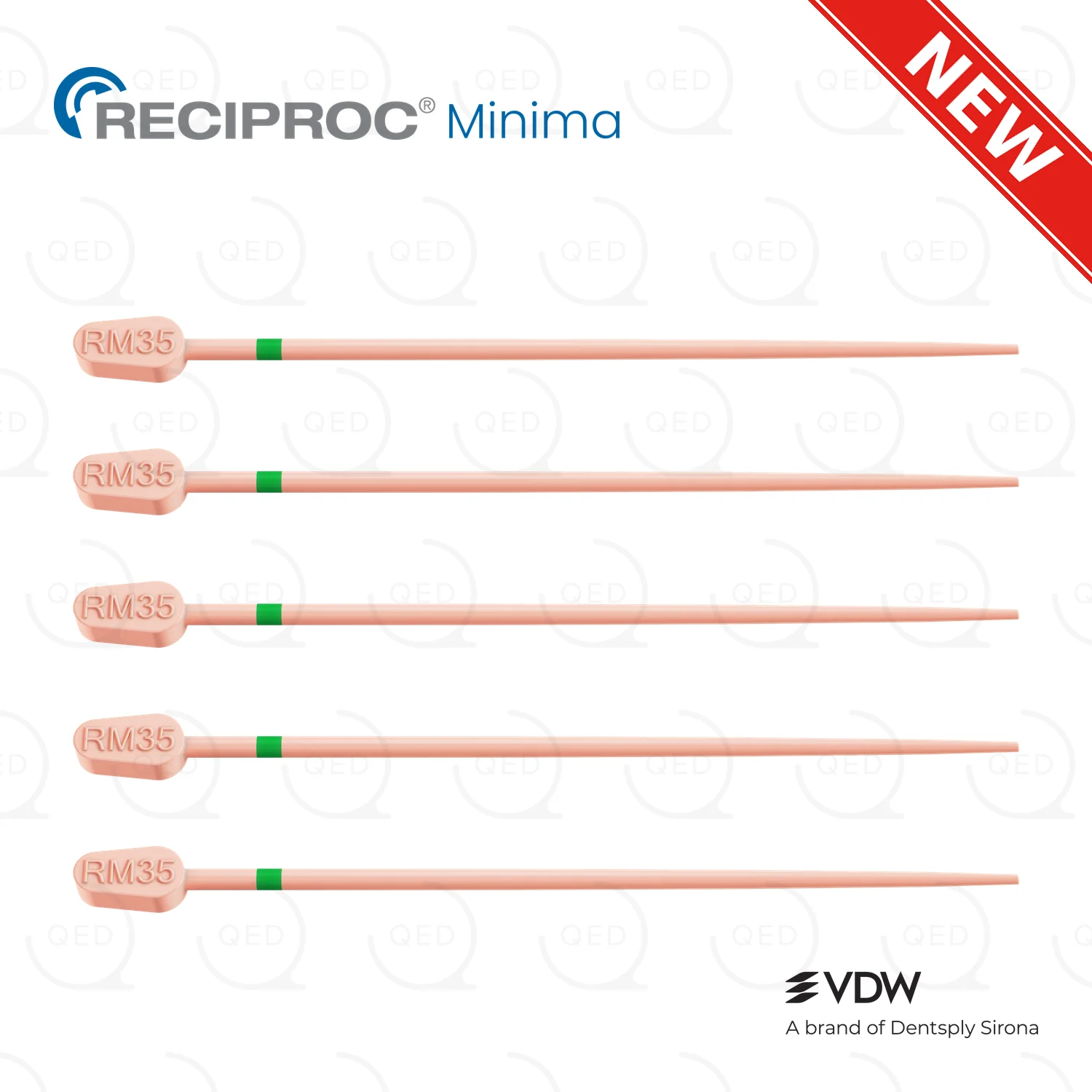
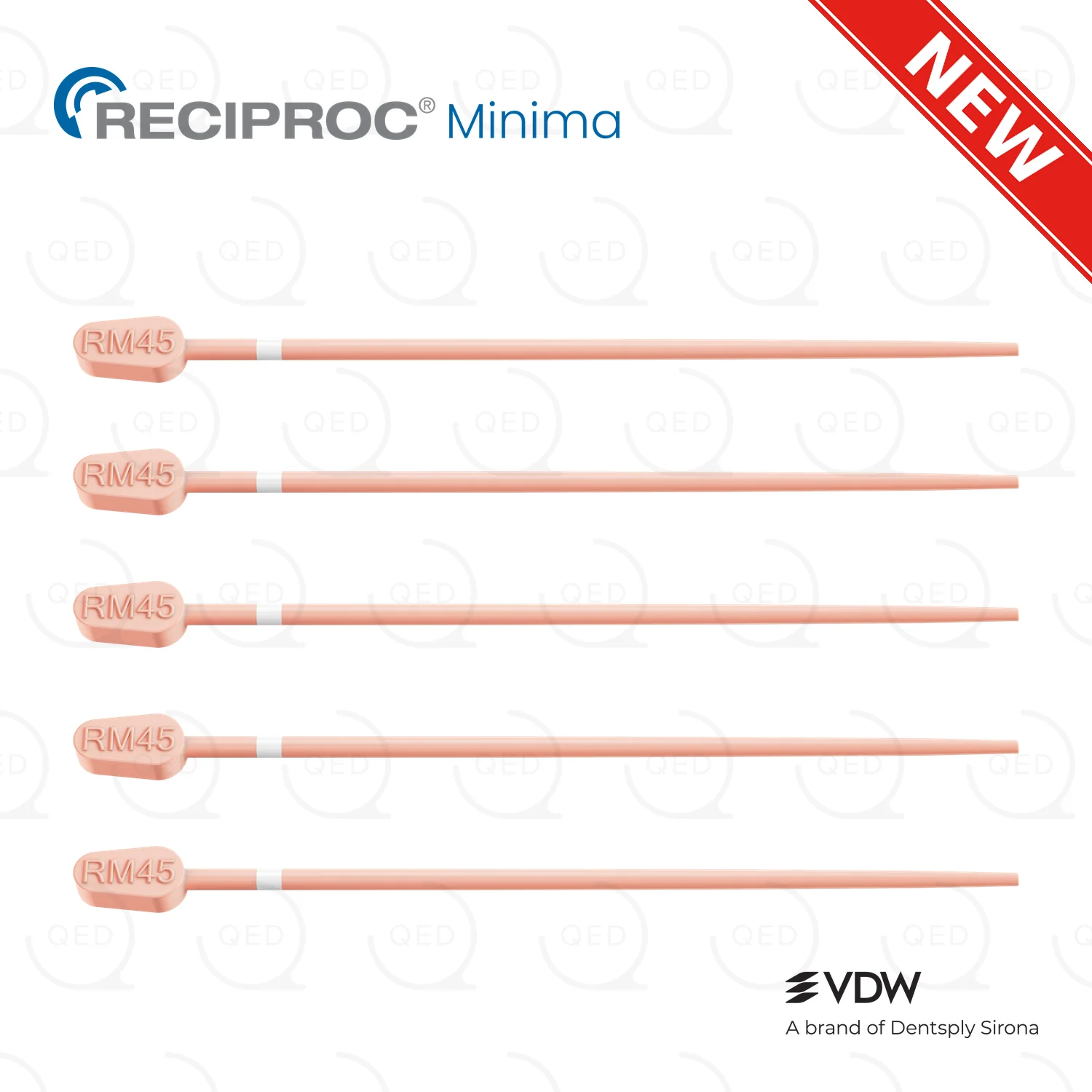
SpotlightRECIPROC® MinimaOne file · slim shaping for narrow canals
Shaping systems
Hand files & finders
Materials & more
 eMail aca-3dae601a19rl to a friend



















 Facebook
 Twitter
 Instagram
 Pinterest