


Best selection of Endodontic supplies in the UK


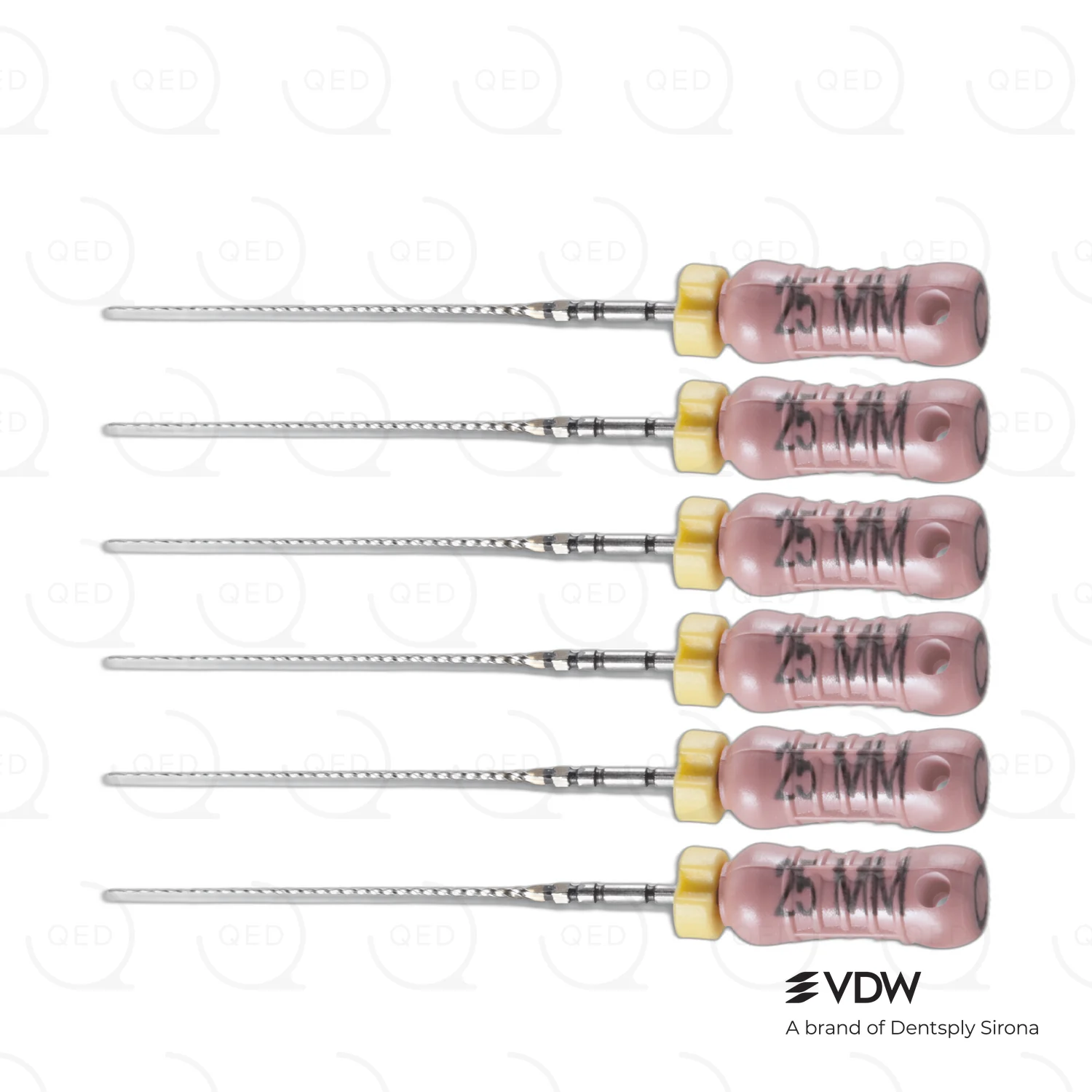
VDW® C-PILOT® ISO 006 · 25 mm · 6 sterile files
Sclerosed lower incisor, a pulp stone where the orifice should be, and the 008 has stopped dead? ISO 006 is the finest size VDW make in this range, and it exists for the cases where the alternative is cutting dentine you will never get back. At 0.06 mm the tip is a quarter thinner than an 008 – the last honest step before you reach for magnification, ultrasonics or a referral pad.
| 0.06 mm TIP DIAMETER | 25 mm WORKING LENGTH | 6 STERILE BLISTER |
This pack: 6 × VDW®STERILE C-PILOT® ISO 006, 25 mm, .02 taper · pre-mounted silicone stoppers · mfr code 368 025 006
Made by VDW GmbH, Munich, Germany
A 006 is a probe. It is there to tell you whether a path exists, and roughly where it goes, without removing the dentine that a wider instrument would take to answer the same question. Used that way it is one of the most conservative instruments in the tray. Used as a shaping file it is simply a wire under load, so the discipline matters: find the path, confirm it, and hand the canal over to the next size rather than trying to enlarge with the finest instrument you own.
The material earns its place here more than anywhere else in the range. VDW credit a special thermal hardening process with the file's high bending strength, and the inactive pilot tip is designed to be led by the canal rather than to cut a new one – the distinction between negotiating an obstruction and creating a false path. In a 2021 laboratory comparison in Endodontology, stainless steel pathfinding files including C-PILOT® resisted buckling better than carbon steel and nickel-titanium instruments (Gupta and colleagues, DOI 10.4103/endo.endo_126_20); it measures one property on a bench, but it is the property that decides whether a 006 transmits anything useful to your fingers.
| 0.06 mm tip | The finest C-PILOT® size – a quarter thinner at D0 than an 008 |
| Inactive pilot tip | VDW's description: conducts the instrument safely along the canal rather than cutting its own path |
| Thermally hardened | VDW attribute the range's high bending strength to a special thermal hardening process |
| Fine but readable | Radiopaque calibration rings and stopper, plus the length printed on the CC+ handle |
| Sterile, ready to use | Gamma sterilised to DIN EN ISO 11137, blister of six |
| Constant .02 taper | The ISO hand file geometry – the blade widens by 0.02 mm for every millimetre back from the tip, so the size you read is the size the canal gets |
Create a glide path even in canals which are difficult to penetrate.
— VDW product catalogue, C-PILOT® range. The difficult ones are the entire reason the 006 exists.
› Magnify first – a 006 is a poor substitute for seeing the orifice. Find it, then probe it.
› Probe through a reservoir – never dry. Irrigant in the chamber does the work; a viscous chelator such as File-Eze™ is a preference rather than a requirement, and comes in a the 30 ml IndiSpense™ syringe if you get through it.
› Change files, not technique – if a 006 stops advancing and starts to bend, take a fresh one rather than pushing harder on a stressed instrument.
› Single use – VDW recommend single use of these pre-sterilised instruments; the UK position since April 2007 is that endodontic reamers and files are treated as single use (CMO(2007)5).
Is a 006 not too fragile to be useful?
It is fine, and it should be treated as such. What it gives you is information at the lowest possible cost in dentine: whether there is a path, and in which direction. Once you know that, 008 and 010 do the work of making it usable.
Do I need 006 if I already stock 008?
Not for routine cases. Stock it for the calcified anterior and the second molar you would otherwise abandon – the blister that sits in the drawer for a month and then saves an appointment.
Which length?
25 mm reaches long anterior roots comfortably. For a second molar with limited opening, the 19 mm version puts the handle where you can actually control it.
| Next size up | C-PILOT 008, 25 mm · once 006 is loose |
| Glide path size | C-PILOT 010, 25 mm · the reference size |
| Whole sequence | C-PILOT assorted 25 mm · two each of 006, 008, 010 |
| Lubricant, optional | File-Eze™ kit · 19% EDTA gel, if you use one |
| Bulk gel, optional | File-Eze™ 30 ml IndiSpense™ · for high volume use |
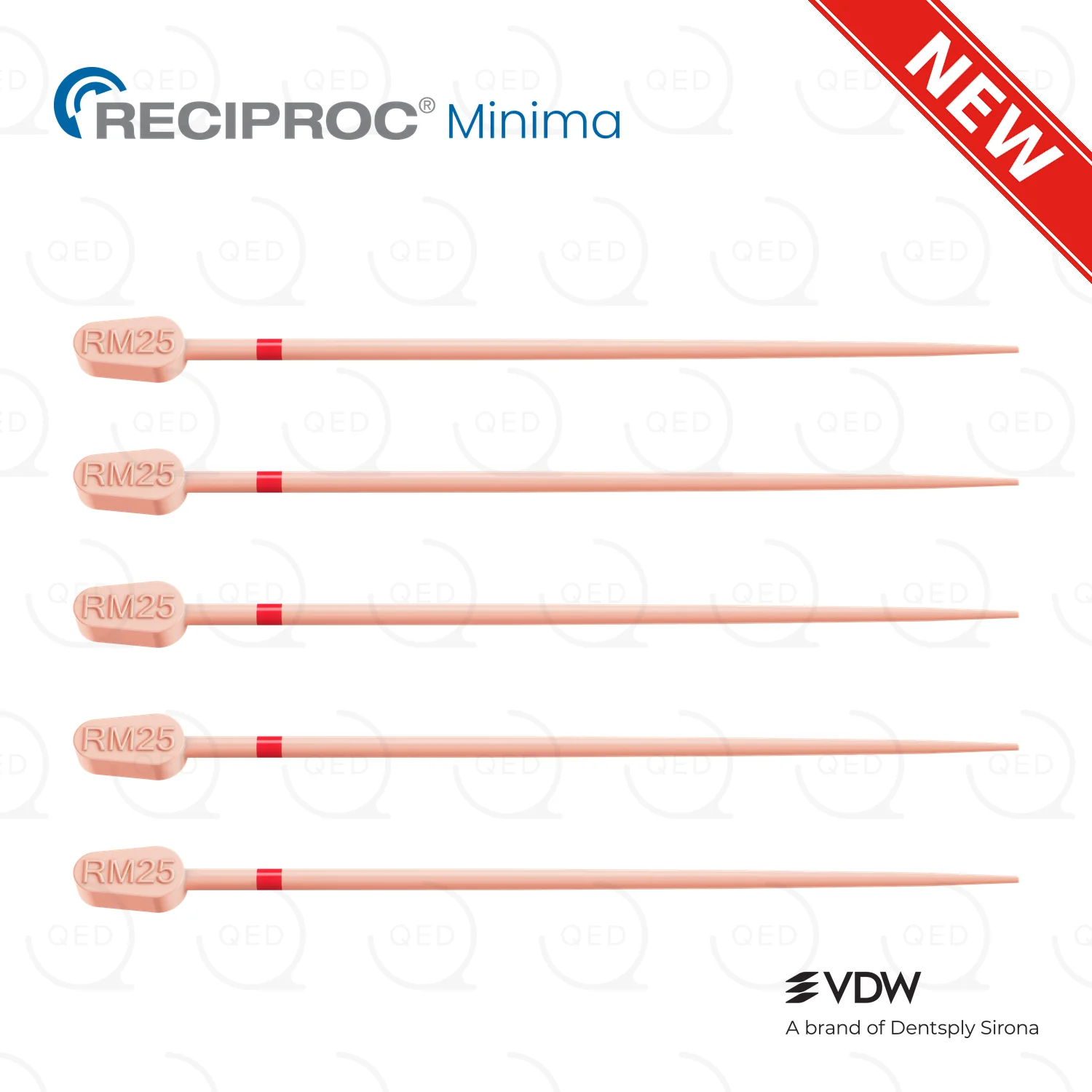
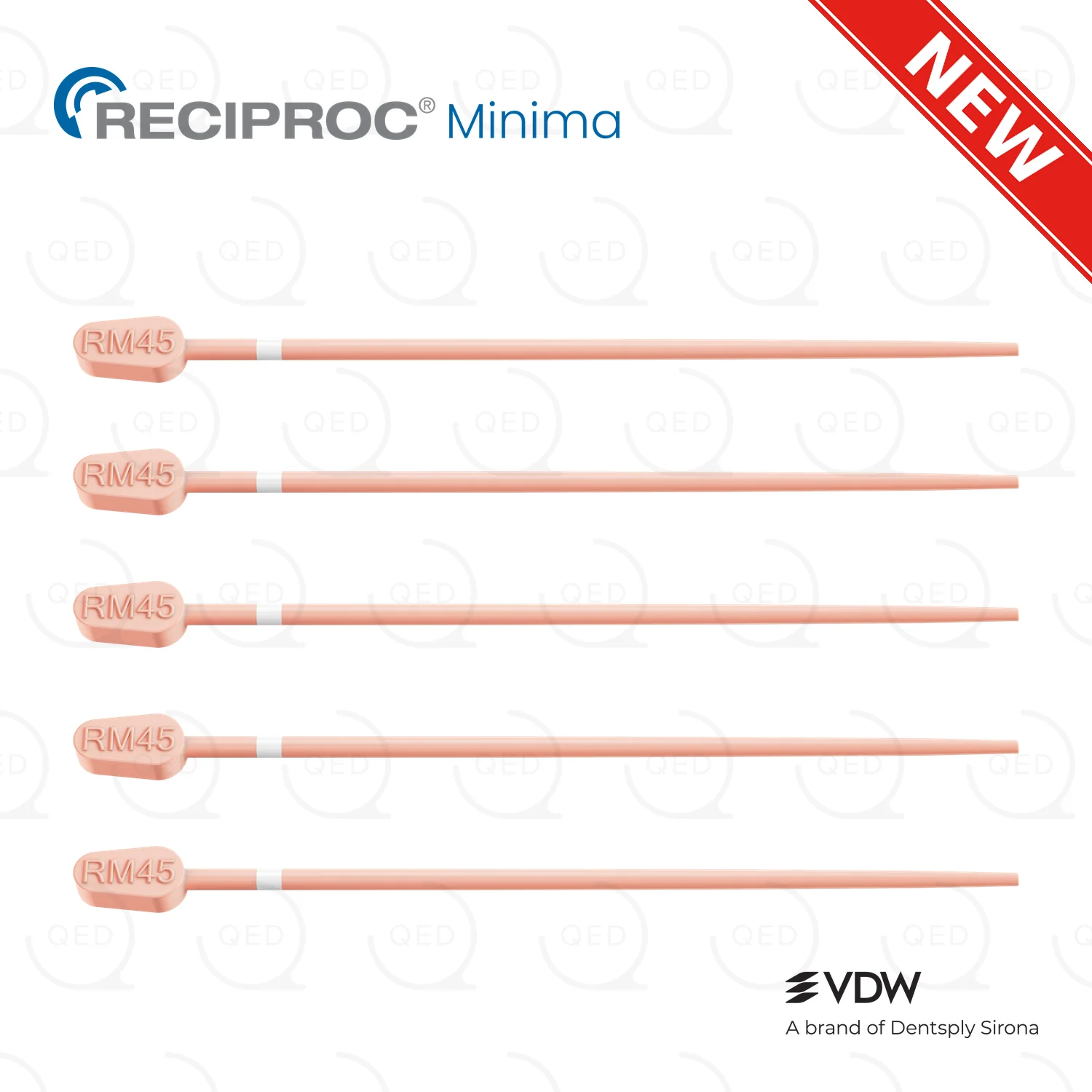
| Narrow anatomy | RECIPROC® Minima R20 25 mm · the slimmest reciprocating file we stock |
| Dress it | UltraCal™ XS · calcium hydroxide between visits |
| Limited opening | C-PILOT 006 in 19 mm · short handle reach |
VDW® C-PILOT® ISO 006 · 25 mm · .02 taper · sclerosed canals · calcified canals · canal scouting · pathfinding · stainless steel · sterile · single use · 6 files · VDW GmbH · REF V040368025006 · also in 21 mm and 19 mm
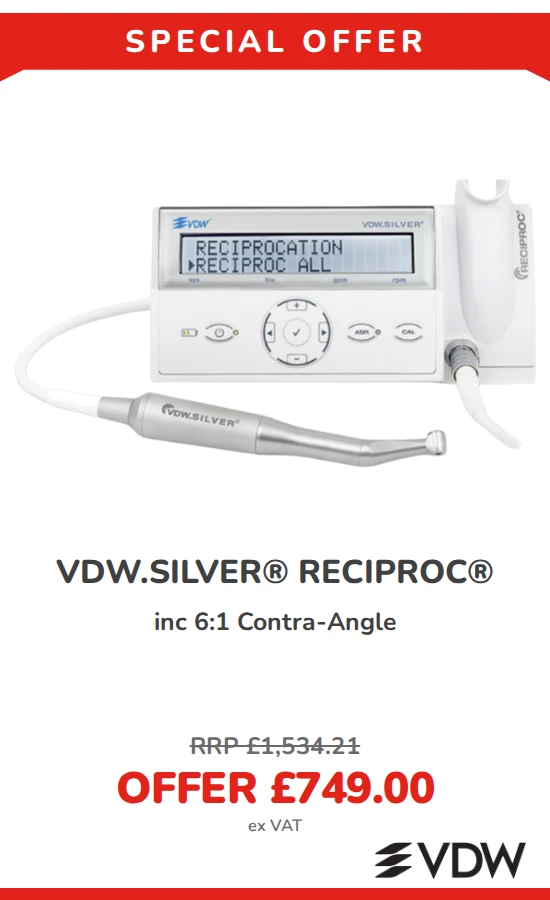
SpotlightRECIPROC® MinimaOne file · slim shaping for narrow canals
Shaping systems
Hand files & finders
Materials & more
 eMail v040368025006 to a friend



















 Facebook
 Twitter
 Instagram
 Pinterest