


Best selection of Endodontic supplies in the UK


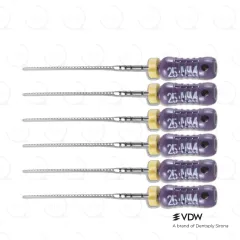
VDW® C-PILOT® ISO 010 · 25 mm · 6 sterile files
Rotary file screwing in, stalling, or refusing the curve? A glide path is not a feeling, it is a measurement. The criterion used across the literature is a size 10 hand file that moves loosely from orifice to working length – and until that is true, every rotary or reciprocating instrument you introduce is doing two jobs at once. C-PILOT® 010 is the instrument that establishes it: stainless steel, thermally hardened for bending strength, with an inactive pilot tip that follows the canal instead of cutting its own path.
| 0.10 mm TIP DIAMETER | 25 mm WORKING LENGTH | 6 STERILE BLISTER |
This pack: 6 × VDW®STERILE C-PILOT® ISO 010, 25 mm, .02 taper · pre-mounted silicone stoppers · mfr code 368 025 010
Made by VDW GmbH, Munich, Germany
Scouting is a compression problem. You are pushing a very fine wire along a path you cannot see, and the failure mode is not cutting too much – it is the instrument bending, coiling and losing the tactile signal that tells you where the canal goes. That is why the material still matters at this end of the range. In a laboratory comparison of pathfinding instruments published in Endodontology in 2021, the stainless steel files, C-PILOT® among them, resisted buckling better than the carbon steel and nickel-titanium instruments tested (Gupta, Mohite, Patil and Bansal, DOI 10.4103/endo.endo_126_20). It is a bench test of one property, not a clinical outcome – but it is the property you are relying on at ISO 010.
VDW's answer is a special thermal hardening process, which they credit with the file's high bending strength, and a tip that is deliberately inactive. The point of an inactive tip is that the instrument is guided by the anatomy rather than by you: it will follow a curve it can find, and it will stop rather than start a ledge in one it cannot. Combined with the calibration rings and the radiopaque silicone stopper, that gives you something to read on a working-length film rather than something to guess at.
| Inactive pilot tip | VDW's description: the tip conducts the instrument safely along the canal, rather than cutting a path of its own |
| Thermally hardened | VDW attribute the file's high bending strength to a special thermal hardening process – stiffness where you are pushing |
| Radiopaque marks | X-ray visible calibration rings and a radiopaque silicone stopper, so depth is readable on the film |
| CC+ handle | Grip designed for fine tactile control, with the length printed on the handle as well as colour coded |
| Sterile, ready to use | Gamma sterilised to DIN EN ISO 11137 and packed in a blister of six – no cycle needed before first use |
| Constant .02 taper | The ISO hand file geometry – the blade widens by 0.02 mm for every millimetre back from the tip, so the size you read is the size the canal gets |
Enables creation of a smooth glide path prior to every rotary preparation.
— VDW's published description of the STERILE C-PILOT® range. Note the word every: the glide path is not the exception, it is the step before the motor.
› Watch-winding, not pushing – small reciprocating quarter turns with light apical pressure let the inactive tip find the path. If it stops advancing, come back, irrigate and re-establish before trying again.
› Work through a reservoir – scout through irrigant rather than a dry canal. Whether to add a viscous chelator on top of that is a matter of preference and opinion is divided, but where one is used, File-Eze™ is 19% EDTA in a water soluble gel.
› Recapitulate – return to 010 between shaping instruments to confirm the path is still patent and has not packed with dentine mud.
› Single use – VDW recommend single use of their industrially cleaned, pre-sterilised instruments, and since April 2007 the UK position has been that endodontic reamers and files are treated as single use (CMO(2007)5, following the SEAC statement of 2006).
My system is reciprocating – do I still need this?
Yes, and the instructions say so. The RECIPROC® and RECIPROC® Minima instructions ask you to confirm patency with a small hand instrument, and to establish a glide path if the file does not advance. A blister of six 010s is the cheapest insurance in the drawer against a separated NiTi file.
Why 010 rather than 008 or 015?
010 is the reference size: the accepted description of a glide path is a size 10 that is loose to length (van der Vyver and colleagues, South African Dental Journal 2019). If 010 will not reach, drop to 008 or 006; once it is loose, move up through ISO 12.5.
Why 25 mm?
It is the length most UK practices stock first: it covers anteriors, canines and long premolar roots, and leaves room for a stopper you can still see. Where the opening is tight, the 21 mm and 19 mm versions of this same file put the handle where you can reach it.
| If 010 will not go | C-PILOT 008, 25 mm · then 006 if the canal is sclerosed |
| Next step up | C-PILOT ISO 12.5, 25 mm · a 25% step instead of 50% |
| Whole sequence | C-PILOT assorted 25 mm · two each of 006, 008, 010 |
| Lubricant, optional | File-Eze™ kit · 19% EDTA gel, 4 × 1.2 ml, if you use one |
| Mechanical glide path | WaveOne® Gold Glider 25 mm · takes over once 010 is loose |
| Then shape | RECIPROC® blue R25 25 mm or WaveOne® Gold Primary |
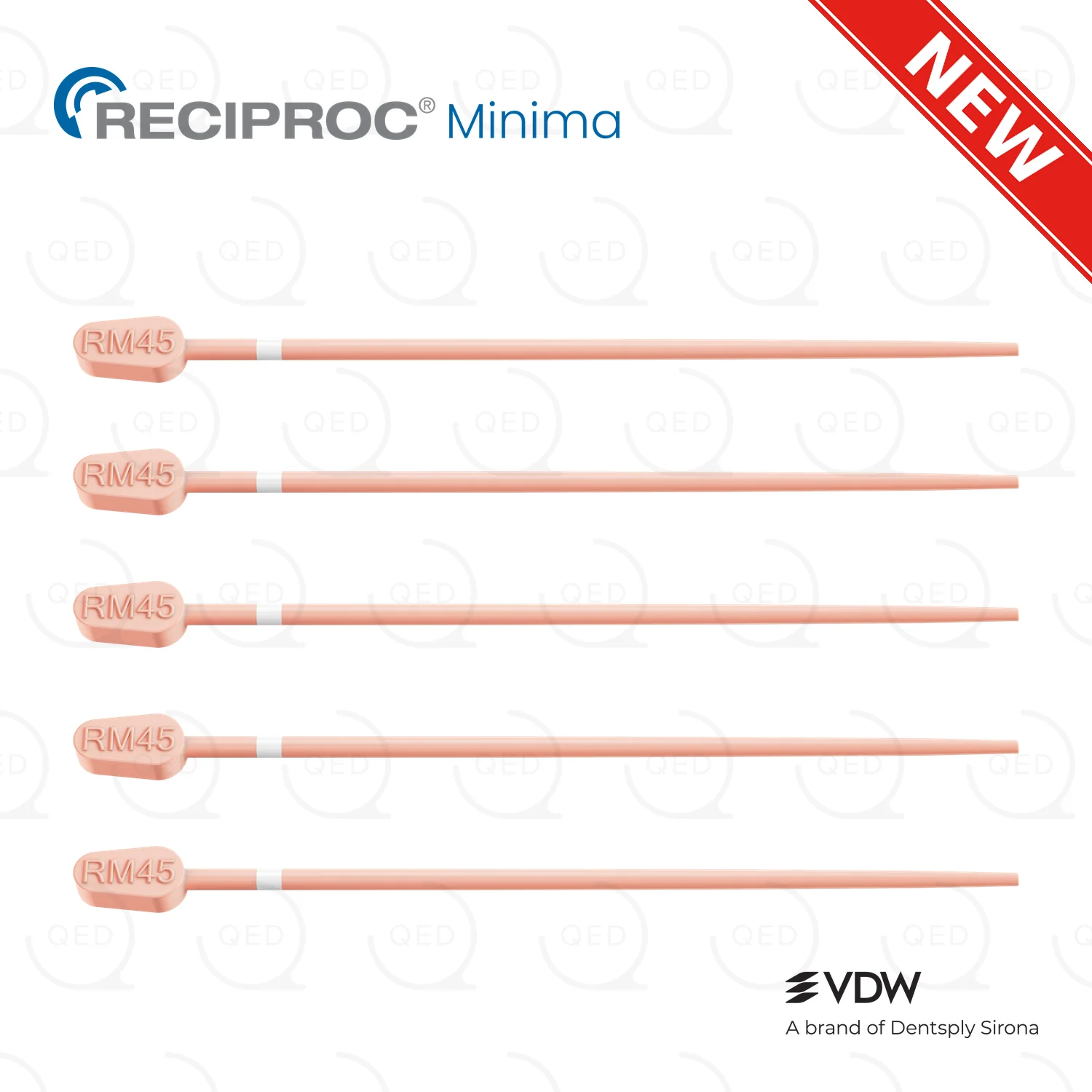
| Narrow anatomy | RECIPROC® Minima R20 25 mm · the slim reciprocating option |
| Irrigate | NaviTip™ 29 ga sideport 25 mm · delivery without extrusion |
VDW® C-PILOT® ISO 010 · 25 mm · .02 taper · calcified canals · canal scouting · glide path · patency · recapitulation · stainless steel · sterile · single use · 6 files · VDW GmbH · REF V040368025010 · also in 21 mm and 19 mm
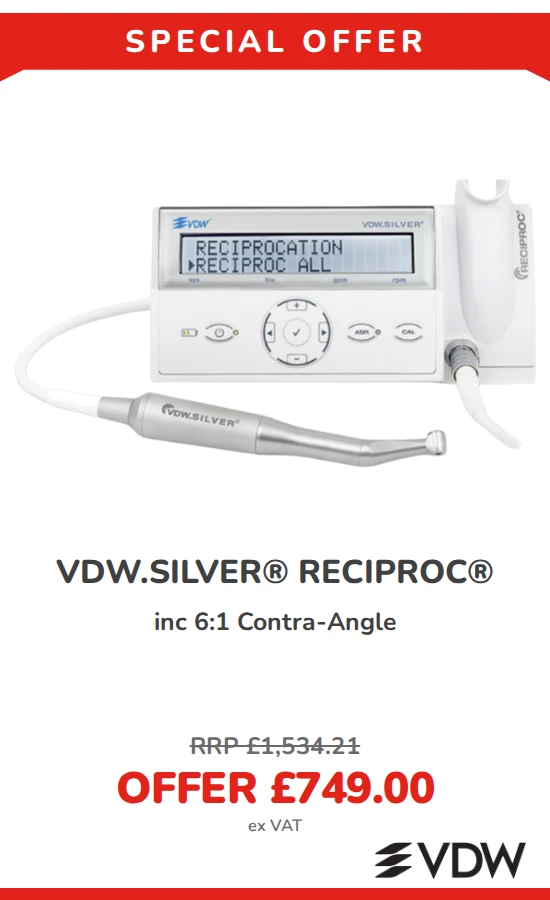
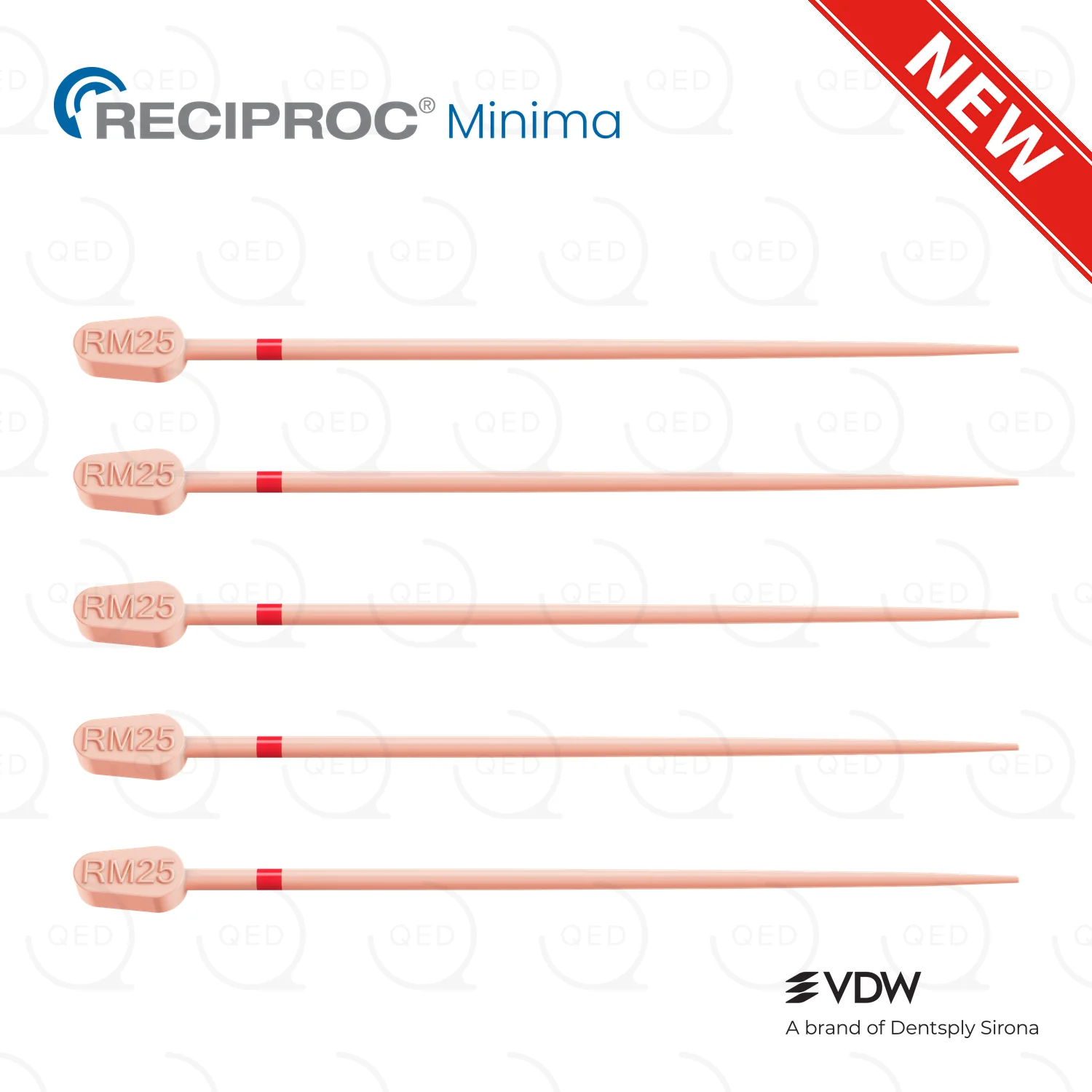
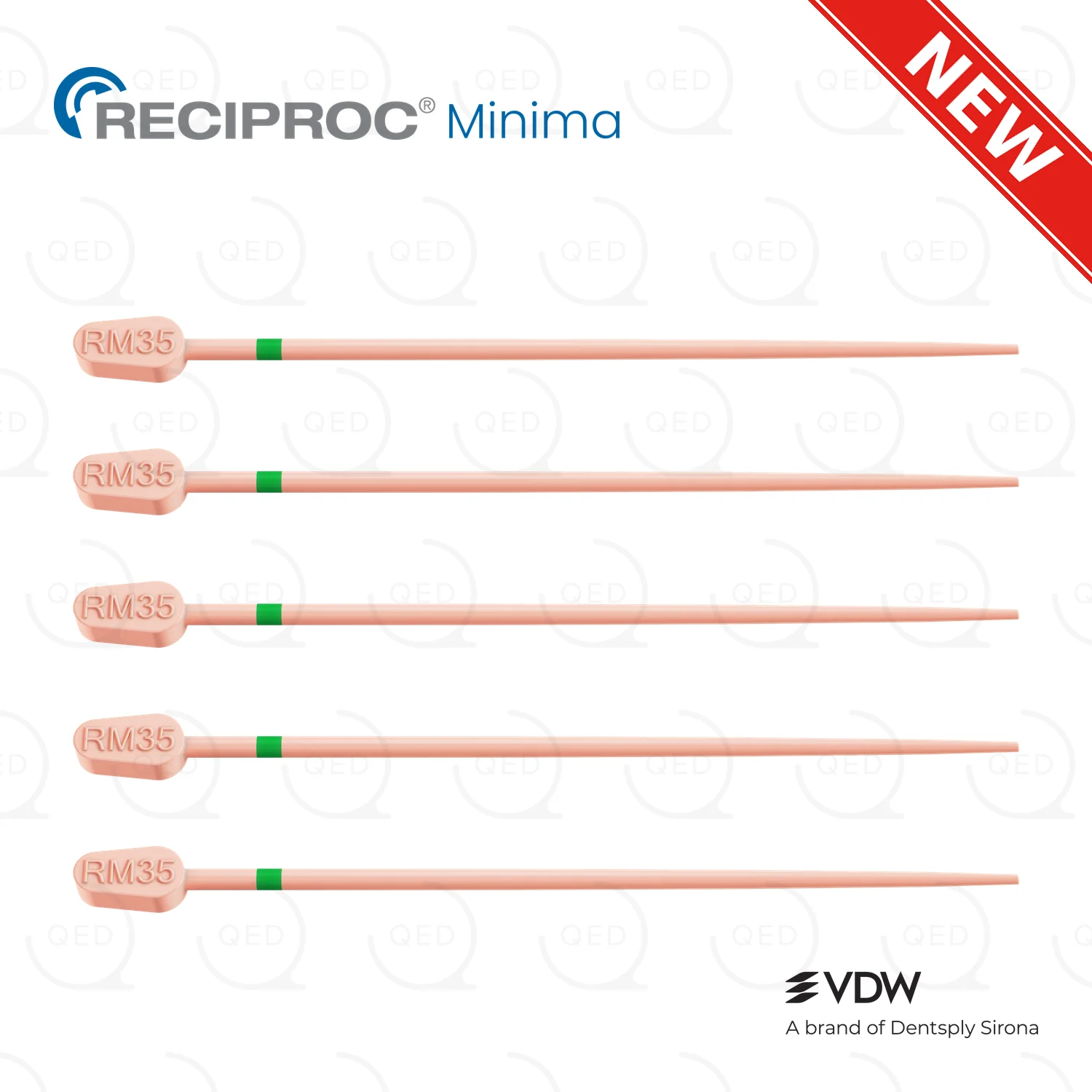
SpotlightRECIPROC® MinimaOne file · slim shaping for narrow canals
Shaping systems
Hand files & finders
Materials & more
 eMail V040368025010 to a friend






























 Facebook
 Twitter
 Instagram
 Pinterest