

Best selection of Endodontic supplies in the UK





pathfile® · 013/.02 · 21 mm · 6 files
glide pathcurved canalsbefore shapingrotary
pathfile® 013 is where the sequence starts. it follows the iso 010 hand file that established working length, and it is the file that decides whether the other two have a path to follow. a purple ring on the handle tells it apart on the tray.
| 013 iso tip size | .02 constant taper | 300 rpm motor speed |
this pack: pathfile® rotary glide path file, iso size 13, .02 taper, 21mm (pack of 6) · sterile
ref a001522101303 · made by dentsply sirona (maillefer), switzerland
| tip size | iso 013 |
| taper | constant .02 – the same figure written as a percentage is 2 per cent |
| colour ring | purple |
| length | 21 mm |
| material | nickel-titanium |
| motion | continuous rotation, 300 rpm |
| supplied | sterile, single patient use |
| pack | 6 files |
013 is barely wider than the 010 hand file ahead of it, which is the point: the step up is small enough that the file follows the canal rather than cutting a new one.
pathfile® was developed with dr berutti, dr cantatore and dr castellucci, and it is the range that established the idea of cutting the glide path with a dedicated rotary instrument rather than a sequence of hand files.
berutti and colleagues compared preflaring with hand k-files against pathfile® in one hundred s-shaped training blocks, with an endodontist and an inexperienced clinician each doing both. the pathfile groups showed significantly less modification of canal curvature and significantly fewer canal aberrations – and, notably, the inexperienced clinician using pathfile® produced more conservative shaping than the expert using manual preflaring. (berutti e et al., journal of endodontics 2009 – simulated canals in training blocks, not teeth. berutti co-developed the instrument.)
a later independent study went to extracted teeth. zheng and colleagues scanned sixty mesial canals of mandibular first molars by micro-ct and found pathfile® transported the canal significantly less than hand k-files at every level measured, and extruded less debris apically. (zheng l et al., bmc oral health 2018 – ex vivo, micro-computed tomography.)
do i need the other two sizes?
pathfile® is designed as a sequence, so in normal use yes. the other packs at this length are pathfile® 016, 21 mm · pathfile® 019, 21 mm · pathfile® assorted, 21 mm.
where does it sit against the hand file?
dentsply sirona’s sequence has you establish working length with an iso 008 or 010 hand file first, then take 013, 016 and 019 to length in turn, irrigating between each. the rotary files replace the larger hand files, not the scouting one.
what are the motor settings?
300 rpm, continuous rotation, with light apical pressure and the flutes cleaned frequently. both motors we stock will run it: x-smart® pro+ and vdw.silver® reciproc®.
can the files be reused?
no. they are supplied sterile for single patient use. three files go into one canal in sequence, so the pack of six is one glide path per two canals.
is there a one-file alternative?
two, and we stock both. proglider® cuts the glide path with a single rotary file on a variable progressive taper; r-pilot® does it in one reciprocating file on the reciproc all setting. pathfile® takes three passes and steps up in smaller increments.
| patency | c-pilot® 08, 21 mm · c-pilot® 10, 21 mm |
| lubricant | glyde™ file prep |
| irrigants | chlorax 5.25% · chlorax 2% · endo-solution 17% edta |
| delivery | navitip™ 29 ga, 25 mm · irriflex® 30g |
| activation | smartlite pro endoactivator® · vdw eddy® tips |
| shape | protaper next® x1, 21 mm · protaper gold® s1, 21 mm · waveone® gold primary, 21 mm |
| obturate | ah plus® paste · neosealer® ezflo, 21 mm tips |
| coronal seal | sdr® flow+ refill universal |
pathfile® rotary glide path file · iso 013 tip · constant .02 taper · purple ring · nickel-titanium · 21 mm · sterile, single patient use · blister of 6 · 300 rpm, continuous rotation · ref a001522101303
pathfile® · 016/.02 · 21 mm · 6 files
glide pathcurved canalsbefore shapingrotary
pathfile® 016 is the second file in the sequence, between 013 and 019. it is the one most practices run out of first, because it does most of the widening. a white ring on the handle identifies it.
| 016 iso tip size | .02 constant taper | 300 rpm motor speed |
this pack: pathfile® rotary glide path file, iso size 16, .02 taper, 21mm (pack of 6) · sterile
ref a001522101603 · made by dentsply sirona (maillefer), switzerland
| tip size | iso 016 |
| taper | constant .02 – the same figure written as a percentage is 2 per cent |
| colour ring | white |
| length | 21 mm |
| material | nickel-titanium |
| motion | continuous rotation, 300 rpm |
| supplied | sterile, single patient use |
| pack | 6 files |
by 016 the canal has already been opened by the 013, so this file is working in a path that exists. it is the step that turns a scouted canal into one a shaping file can enter.
pathfile® was developed with dr berutti, dr cantatore and dr castellucci, and it is the range that established the idea of cutting the glide path with a dedicated rotary instrument rather than a sequence of hand files.
berutti and colleagues compared preflaring with hand k-files against pathfile® in one hundred s-shaped training blocks, with an endodontist and an inexperienced clinician each doing both. the pathfile groups showed significantly less modification of canal curvature and significantly fewer canal aberrations – and, notably, the inexperienced clinician using pathfile® produced more conservative shaping than the expert using manual preflaring. (berutti e et al., journal of endodontics 2009 – simulated canals in training blocks, not teeth. berutti co-developed the instrument.)
a later independent study went to extracted teeth. zheng and colleagues scanned sixty mesial canals of mandibular first molars by micro-ct and found pathfile® transported the canal significantly less than hand k-files at every level measured, and extruded less debris apically. (zheng l et al., bmc oral health 2018 – ex vivo, micro-computed tomography.)
do i need the other two sizes?
pathfile® is designed as a sequence, so in normal use yes. the other packs at this length are pathfile® 013, 21 mm · pathfile® 019, 21 mm · pathfile® assorted, 21 mm.
where does it sit against the hand file?
dentsply sirona’s sequence has you establish working length with an iso 008 or 010 hand file first, then take 013, 016 and 019 to length in turn, irrigating between each. the rotary files replace the larger hand files, not the scouting one.
what are the motor settings?
300 rpm, continuous rotation, with light apical pressure and the flutes cleaned frequently. both motors we stock will run it: x-smart® pro+ and vdw.silver® reciproc®.
can the files be reused?
no. they are supplied sterile for single patient use. three files go into one canal in sequence, so the pack of six is one glide path per two canals.
is there a one-file alternative?
two, and we stock both. proglider® cuts the glide path with a single rotary file on a variable progressive taper; r-pilot® does it in one reciprocating file on the reciproc all setting. pathfile® takes three passes and steps up in smaller increments.
| patency | c-pilot® 08, 21 mm · c-pilot® 10, 21 mm |
| lubricant | glyde™ file prep |
| irrigants | chlorax 5.25% · chlorax 2% · endo-solution 17% edta |
| delivery | navitip™ 29 ga, 25 mm · irriflex® 30g |
| activation | smartlite pro endoactivator® · vdw eddy® tips |
| shape | protaper next® x1, 21 mm · protaper gold® s1, 21 mm · waveone® gold primary, 21 mm |
| obturate | ah plus® paste · neosealer® ezflo, 21 mm tips |
| coronal seal | sdr® flow+ refill universal |
pathfile® rotary glide path file · iso 016 tip · constant .02 taper · white ring · nickel-titanium · 21 mm · sterile, single patient use · blister of 6 · 300 rpm, continuous rotation · ref a001522101603

pathfile® · 019/.02 · 21 mm · 6 files
glide pathcurved canalsbefore shapingrotary
pathfile® 019 is the last of the three. when it reaches working length freely, the glide path is cut and the shaping file can go in. a yellow ring on the handle identifies it.
| 019 iso tip size | .02 constant taper | 300 rpm motor speed |
this pack: pathfile® rotary glide path file, iso size 19, .02 taper, 21mm (pack of 6) · sterile
ref a001522101903 · made by dentsply sirona (maillefer), switzerland
| tip size | iso 019 |
| taper | constant .02 – the same figure written as a percentage is 2 per cent |
| colour ring | yellow |
| length | 21 mm |
| material | nickel-titanium |
| motion | continuous rotation, 300 rpm |
| supplied | sterile, single patient use |
| pack | 6 files |
019 leaves a canal wide enough for a rotary or reciprocating shaping file to enter without binding at the orifice – which is the whole purpose of the exercise.
pathfile® was developed with dr berutti, dr cantatore and dr castellucci, and it is the range that established the idea of cutting the glide path with a dedicated rotary instrument rather than a sequence of hand files.
berutti and colleagues compared preflaring with hand k-files against pathfile® in one hundred s-shaped training blocks, with an endodontist and an inexperienced clinician each doing both. the pathfile groups showed significantly less modification of canal curvature and significantly fewer canal aberrations – and, notably, the inexperienced clinician using pathfile® produced more conservative shaping than the expert using manual preflaring. (berutti e et al., journal of endodontics 2009 – simulated canals in training blocks, not teeth. berutti co-developed the instrument.)
a later independent study went to extracted teeth. zheng and colleagues scanned sixty mesial canals of mandibular first molars by micro-ct and found pathfile® transported the canal significantly less than hand k-files at every level measured, and extruded less debris apically. (zheng l et al., bmc oral health 2018 – ex vivo, micro-computed tomography.)
do i need the other two sizes?
pathfile® is designed as a sequence, so in normal use yes. the other packs at this length are pathfile® 013, 21 mm · pathfile® 016, 21 mm · pathfile® assorted, 21 mm.
where does it sit against the hand file?
dentsply sirona’s sequence has you establish working length with an iso 008 or 010 hand file first, then take 013, 016 and 019 to length in turn, irrigating between each. the rotary files replace the larger hand files, not the scouting one.
what are the motor settings?
300 rpm, continuous rotation, with light apical pressure and the flutes cleaned frequently. both motors we stock will run it: x-smart® pro+ and vdw.silver® reciproc®.
can the files be reused?
no. they are supplied sterile for single patient use. three files go into one canal in sequence, so the pack of six is one glide path per two canals.
is there a one-file alternative?
two, and we stock both. proglider® cuts the glide path with a single rotary file on a variable progressive taper; r-pilot® does it in one reciprocating file on the reciproc all setting. pathfile® takes three passes and steps up in smaller increments.
| patency | c-pilot® 08, 21 mm · c-pilot® 10, 21 mm |
| lubricant | glyde™ file prep |
| irrigants | chlorax 5.25% · chlorax 2% · endo-solution 17% edta |
| delivery | navitip™ 29 ga, 25 mm · irriflex® 30g |
| activation | smartlite pro endoactivator® · vdw eddy® tips |
| shape | protaper next® x1, 21 mm · protaper gold® s1, 21 mm · waveone® gold primary, 21 mm |
| obturate | ah plus® paste · neosealer® ezflo, 21 mm tips |
| coronal seal | sdr® flow+ refill universal |
pathfile® rotary glide path file · iso 019 tip · constant .02 taper · yellow ring · nickel-titanium · 21 mm · sterile, single patient use · blister of 6 · 300 rpm, continuous rotation · ref a001522101903
pathfile® · 013-019 · 21 mm · 6 files
glide pathcurved canalsbefore shapingrotary
the assorted blister holds the whole sequence – 013, 016 and 019 – in one pack of six. dentsply sirona designed pathfile® as a three-file progression, and this is the pack that matches how it is used.
| 3 sizes in the pack | .02 taper, all three | 300 rpm motor speed |
this pack: pathfile® rotary glide path files, assorted sizes 13 / 16 / 19, .02 taper, 21mm (pack of 6) · sterile
ref a001522190003 · made by dentsply sirona (maillefer), switzerland
| tip size | iso 013, 016 and 019 |
| taper | constant .02 – the same figure written as a percentage is 2 per cent |
| colour ring | purple, white and yellow |
| length | 21 mm |
| material | nickel-titanium |
| motion | continuous rotation, 300 rpm |
| supplied | sterile, single patient use |
| pack | 6 files |
buying the three sizes as singles means three part-used blisters and a running count of which one is short. the assorted pack tracks the sequence instead.
pathfile® was developed with dr berutti, dr cantatore and dr castellucci, and it is the range that established the idea of cutting the glide path with a dedicated rotary instrument rather than a sequence of hand files.
berutti and colleagues compared preflaring with hand k-files against pathfile® in one hundred s-shaped training blocks, with an endodontist and an inexperienced clinician each doing both. the pathfile groups showed significantly less modification of canal curvature and significantly fewer canal aberrations – and, notably, the inexperienced clinician using pathfile® produced more conservative shaping than the expert using manual preflaring. (berutti e et al., journal of endodontics 2009 – simulated canals in training blocks, not teeth. berutti co-developed the instrument.)
a later independent study went to extracted teeth. zheng and colleagues scanned sixty mesial canals of mandibular first molars by micro-ct and found pathfile® transported the canal significantly less than hand k-files at every level measured, and extruded less debris apically. (zheng l et al., bmc oral health 2018 – ex vivo, micro-computed tomography.)
what is in the pack?
six files covering the three sizes – 013, 016 and 019 – all at 21 mm. to reorder one size on its own, the singles are pathfile® 013, 21 mm · pathfile® 016, 21 mm · pathfile® 019, 21 mm.
where does it sit against the hand file?
dentsply sirona’s sequence has you establish working length with an iso 008 or 010 hand file first, then take 013, 016 and 019 to length in turn, irrigating between each. the rotary files replace the larger hand files, not the scouting one.
what are the motor settings?
300 rpm, continuous rotation, with light apical pressure and the flutes cleaned frequently. both motors we stock will run it: x-smart® pro+ and vdw.silver® reciproc®.
can the files be reused?
no. they are supplied sterile for single patient use. three files go into one canal in sequence, so the pack of six is one glide path per two canals.
is there a one-file alternative?
two, and we stock both. proglider® cuts the glide path with a single rotary file on a variable progressive taper; r-pilot® does it in one reciprocating file on the reciproc all setting. pathfile® takes three passes and steps up in smaller increments.
| patency | c-pilot® 08, 21 mm · c-pilot® 10, 21 mm |
| lubricant | glyde™ file prep |
| irrigants | chlorax 5.25% · chlorax 2% · endo-solution 17% edta |
| delivery | navitip™ 29 ga, 25 mm · irriflex® 30g |
| activation | smartlite pro endoactivator® · vdw eddy® tips |
| shape | protaper next® x1, 21 mm · protaper gold® s1, 21 mm · waveone® gold primary, 21 mm |
| obturate | ah plus® paste · neosealer® ezflo, 21 mm tips |
| coronal seal | sdr® flow+ refill universal |
pathfile® rotary glide path files · iso 013, 016 and 019 · constant .02 taper · nickel-titanium · 21 mm · sterile, single patient use · blister of 6 · 300 rpm, continuous rotation · ref a001522190003

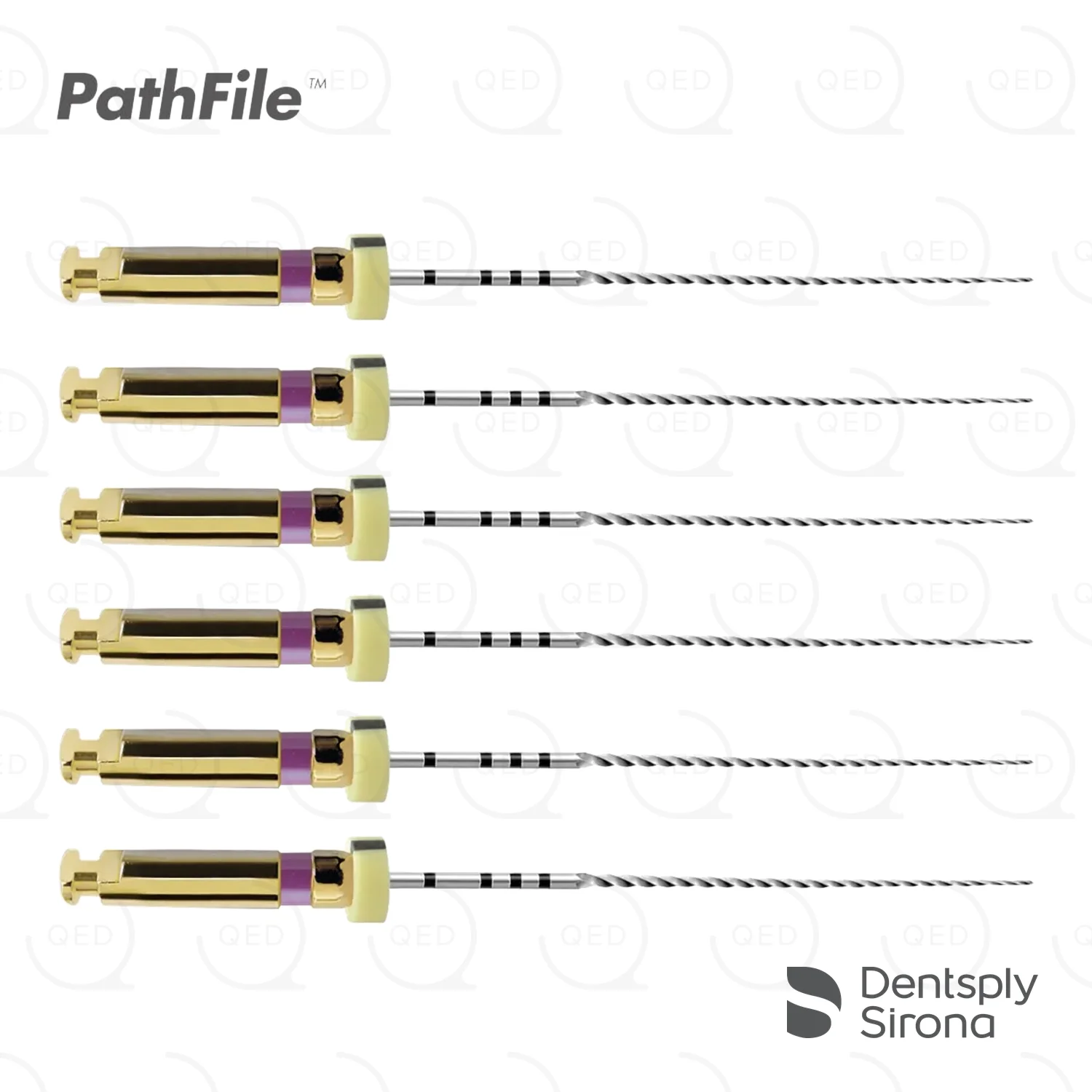
pathfile® · 013/.02 · 25 mm · 6 files
glide pathcurved canalsbefore shapingrotary
pathfile® 013 is where the sequence starts. it follows the iso 010 hand file that established working length, and it is the file that decides whether the other two have a path to follow. a purple ring on the handle tells it apart on the tray.
| 013 iso tip size | .02 constant taper | 300 rpm motor speed |
this pack: pathfile® rotary glide path file, iso size 13, .02 taper, 25mm (pack of 6) · sterile
ref a001522501303 · made by dentsply sirona (maillefer), switzerland
| tip size | iso 013 |
| taper | constant .02 – the same figure written as a percentage is 2 per cent |
| colour ring | purple |
| length | 25 mm |
| material | nickel-titanium |
| motion | continuous rotation, 300 rpm |
| supplied | sterile, single patient use |
| pack | 6 files |
013 is barely wider than the 010 hand file ahead of it, which is the point: the step up is small enough that the file follows the canal rather than cutting a new one.
pathfile® was developed with dr berutti, dr cantatore and dr castellucci, and it is the range that established the idea of cutting the glide path with a dedicated rotary instrument rather than a sequence of hand files.
berutti and colleagues compared preflaring with hand k-files against pathfile® in one hundred s-shaped training blocks, with an endodontist and an inexperienced clinician each doing both. the pathfile groups showed significantly less modification of canal curvature and significantly fewer canal aberrations – and, notably, the inexperienced clinician using pathfile® produced more conservative shaping than the expert using manual preflaring. (berutti e et al., journal of endodontics 2009 – simulated canals in training blocks, not teeth. berutti co-developed the instrument.)
a later independent study went to extracted teeth. zheng and colleagues scanned sixty mesial canals of mandibular first molars by micro-ct and found pathfile® transported the canal significantly less than hand k-files at every level measured, and extruded less debris apically. (zheng l et al., bmc oral health 2018 – ex vivo, micro-computed tomography.)
do i need the other two sizes?
pathfile® is designed as a sequence, so in normal use yes. the other packs at this length are pathfile® 016, 25 mm · pathfile® 019, 25 mm · pathfile® assorted, 25 mm.
where does it sit against the hand file?
dentsply sirona’s sequence has you establish working length with an iso 008 or 010 hand file first, then take 013, 016 and 019 to length in turn, irrigating between each. the rotary files replace the larger hand files, not the scouting one.
what are the motor settings?
300 rpm, continuous rotation, with light apical pressure and the flutes cleaned frequently. both motors we stock will run it: x-smart® pro+ and vdw.silver® reciproc®.
can the files be reused?
no. they are supplied sterile for single patient use. three files go into one canal in sequence, so the pack of six is one glide path per two canals.
is there a one-file alternative?
two, and we stock both. proglider® cuts the glide path with a single rotary file on a variable progressive taper; r-pilot® does it in one reciprocating file on the reciproc all setting. pathfile® takes three passes and steps up in smaller increments.
| patency | c-pilot® 08, 25 mm · c-pilot® 10, 25 mm |
| lubricant | glyde™ file prep |
| irrigants | chlorax 5.25% · chlorax 2% · endo-solution 17% edta |
| delivery | navitip™ 29 ga, 25 mm · irriflex® 30g |
| activation | smartlite pro endoactivator® · vdw eddy® tips |
| shape | protaper next® x1, 25 mm · protaper gold® s1, 25 mm · waveone® gold primary, 25 mm |
| obturate | ah plus® paste · neosealer® ezflo, 25 mm tips |
| coronal seal | sdr® flow+ refill universal |
pathfile® rotary glide path file · iso 013 tip · constant .02 taper · purple ring · nickel-titanium · 25 mm · sterile, single patient use · blister of 6 · 300 rpm, continuous rotation · ref a001522501303
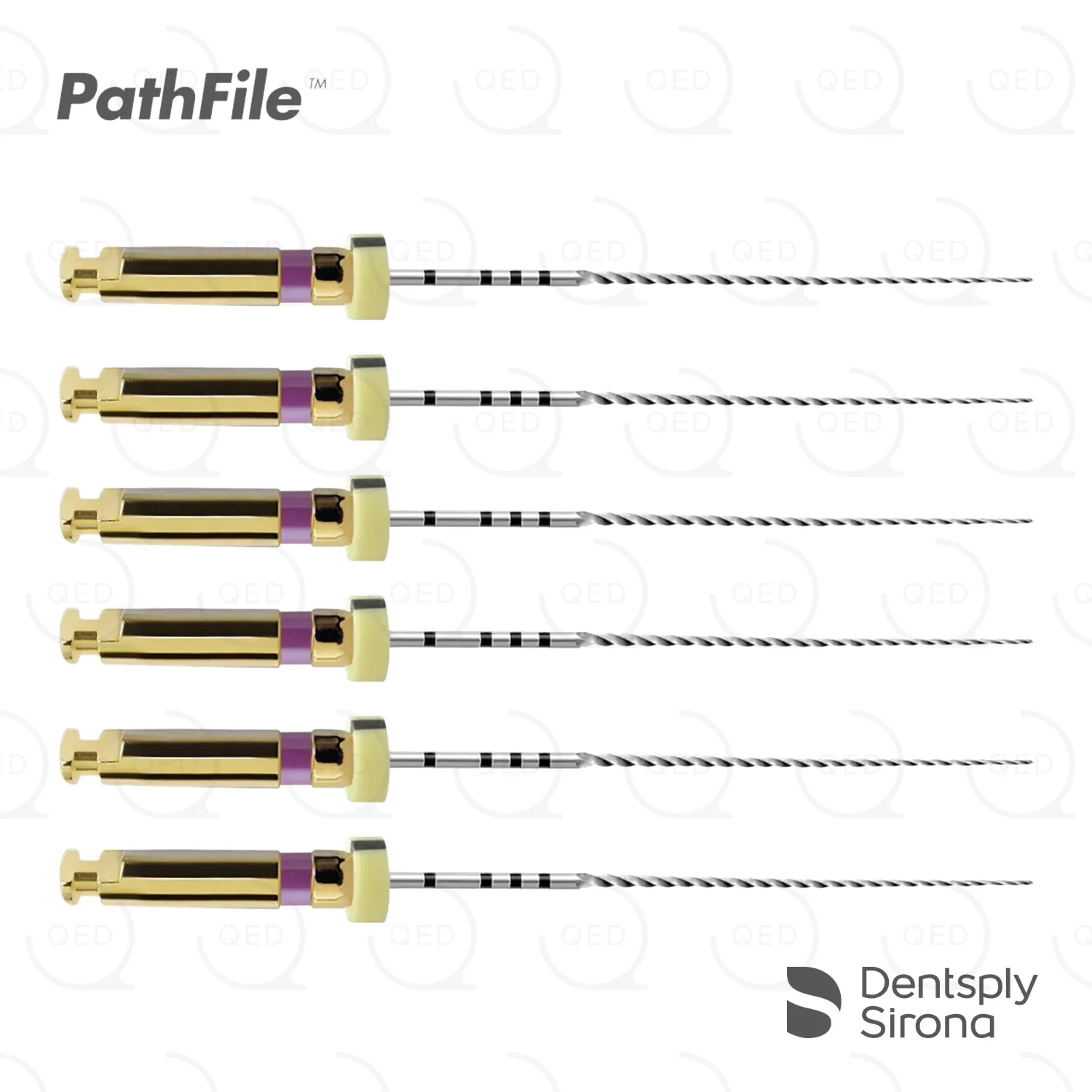
pathfile® · 016/.02 · 25 mm · 6 files
glide pathcurved canalsbefore shapingrotary
pathfile® 016 is the second file in the sequence, between 013 and 019. it is the one most practices run out of first, because it does most of the widening. a white ring on the handle identifies it.
| 016 iso tip size | .02 constant taper | 300 rpm motor speed |
this pack: pathfile® rotary glide path file, iso size 16, .02 taper, 25mm (pack of 6) · sterile
ref a001522501603 · made by dentsply sirona (maillefer), switzerland
| tip size | iso 016 |
| taper | constant .02 – the same figure written as a percentage is 2 per cent |
| colour ring | white |
| length | 25 mm |
| material | nickel-titanium |
| motion | continuous rotation, 300 rpm |
| supplied | sterile, single patient use |
| pack | 6 files |
by 016 the canal has already been opened by the 013, so this file is working in a path that exists. it is the step that turns a scouted canal into one a shaping file can enter.
pathfile® was developed with dr berutti, dr cantatore and dr castellucci, and it is the range that established the idea of cutting the glide path with a dedicated rotary instrument rather than a sequence of hand files.
berutti and colleagues compared preflaring with hand k-files against pathfile® in one hundred s-shaped training blocks, with an endodontist and an inexperienced clinician each doing both. the pathfile groups showed significantly less modification of canal curvature and significantly fewer canal aberrations – and, notably, the inexperienced clinician using pathfile® produced more conservative shaping than the expert using manual preflaring. (berutti e et al., journal of endodontics 2009 – simulated canals in training blocks, not teeth. berutti co-developed the instrument.)
a later independent study went to extracted teeth. zheng and colleagues scanned sixty mesial canals of mandibular first molars by micro-ct and found pathfile® transported the canal significantly less than hand k-files at every level measured, and extruded less debris apically. (zheng l et al., bmc oral health 2018 – ex vivo, micro-computed tomography.)
do i need the other two sizes?
pathfile® is designed as a sequence, so in normal use yes. the other packs at this length are pathfile® 013, 25 mm · pathfile® 019, 25 mm · pathfile® assorted, 25 mm.
where does it sit against the hand file?
dentsply sirona’s sequence has you establish working length with an iso 008 or 010 hand file first, then take 013, 016 and 019 to length in turn, irrigating between each. the rotary files replace the larger hand files, not the scouting one.
what are the motor settings?
300 rpm, continuous rotation, with light apical pressure and the flutes cleaned frequently. both motors we stock will run it: x-smart® pro+ and vdw.silver® reciproc®.
can the files be reused?
no. they are supplied sterile for single patient use. three files go into one canal in sequence, so the pack of six is one glide path per two canals.
is there a one-file alternative?
two, and we stock both. proglider® cuts the glide path with a single rotary file on a variable progressive taper; r-pilot® does it in one reciprocating file on the reciproc all setting. pathfile® takes three passes and steps up in smaller increments.
| patency | c-pilot® 08, 25 mm · c-pilot® 10, 25 mm |
| lubricant | glyde™ file prep |
| irrigants | chlorax 5.25% · chlorax 2% · endo-solution 17% edta |
| delivery | navitip™ 29 ga, 25 mm · irriflex® 30g |
| activation | smartlite pro endoactivator® · vdw eddy® tips |
| shape | protaper next® x1, 25 mm · protaper gold® s1, 25 mm · waveone® gold primary, 25 mm |
| obturate | ah plus® paste · neosealer® ezflo, 25 mm tips |
| coronal seal | sdr® flow+ refill universal |
pathfile® rotary glide path file · iso 016 tip · constant .02 taper · white ring · nickel-titanium · 25 mm · sterile, single patient use · blister of 6 · 300 rpm, continuous rotation · ref a001522501603

pathfile® · 019/.02 · 25 mm · 6 files
glide pathcurved canalsbefore shapingrotary
pathfile® 019 is the last of the three. when it reaches working length freely, the glide path is cut and the shaping file can go in. a yellow ring on the handle identifies it.
| 019 iso tip size | .02 constant taper | 300 rpm motor speed |
this pack: pathfile® rotary glide path file, iso size 19, .02 taper, 25mm (pack of 6) · sterile
ref a001522501903 · made by dentsply sirona (maillefer), switzerland
| tip size | iso 019 |
| taper | constant .02 – the same figure written as a percentage is 2 per cent |
| colour ring | yellow |
| length | 25 mm |
| material | nickel-titanium |
| motion | continuous rotation, 300 rpm |
| supplied | sterile, single patient use |
| pack | 6 files |
019 leaves a canal wide enough for a rotary or reciprocating shaping file to enter without binding at the orifice – which is the whole purpose of the exercise.
pathfile® was developed with dr berutti, dr cantatore and dr castellucci, and it is the range that established the idea of cutting the glide path with a dedicated rotary instrument rather than a sequence of hand files.
berutti and colleagues compared preflaring with hand k-files against pathfile® in one hundred s-shaped training blocks, with an endodontist and an inexperienced clinician each doing both. the pathfile groups showed significantly less modification of canal curvature and significantly fewer canal aberrations – and, notably, the inexperienced clinician using pathfile® produced more conservative shaping than the expert using manual preflaring. (berutti e et al., journal of endodontics 2009 – simulated canals in training blocks, not teeth. berutti co-developed the instrument.)
a later independent study went to extracted teeth. zheng and colleagues scanned sixty mesial canals of mandibular first molars by micro-ct and found pathfile® transported the canal significantly less than hand k-files at every level measured, and extruded less debris apically. (zheng l et al., bmc oral health 2018 – ex vivo, micro-computed tomography.)
do i need the other two sizes?
pathfile® is designed as a sequence, so in normal use yes. the other packs at this length are pathfile® 013, 25 mm · pathfile® 016, 25 mm · pathfile® assorted, 25 mm.
where does it sit against the hand file?
dentsply sirona’s sequence has you establish working length with an iso 008 or 010 hand file first, then take 013, 016 and 019 to length in turn, irrigating between each. the rotary files replace the larger hand files, not the scouting one.
what are the motor settings?
300 rpm, continuous rotation, with light apical pressure and the flutes cleaned frequently. both motors we stock will run it: x-smart® pro+ and vdw.silver® reciproc®.
can the files be reused?
no. they are supplied sterile for single patient use. three files go into one canal in sequence, so the pack of six is one glide path per two canals.
is there a one-file alternative?
two, and we stock both. proglider® cuts the glide path with a single rotary file on a variable progressive taper; r-pilot® does it in one reciprocating file on the reciproc all setting. pathfile® takes three passes and steps up in smaller increments.
| patency | c-pilot® 08, 25 mm · c-pilot® 10, 25 mm |
| lubricant | glyde™ file prep |
| irrigants | chlorax 5.25% · chlorax 2% · endo-solution 17% edta |
| delivery | navitip™ 29 ga, 25 mm · irriflex® 30g |
| activation | smartlite pro endoactivator® · vdw eddy® tips |
| shape | protaper next® x1, 25 mm · protaper gold® s1, 25 mm · waveone® gold primary, 25 mm |
| obturate | ah plus® paste · neosealer® ezflo, 25 mm tips |
| coronal seal | sdr® flow+ refill universal |
pathfile® rotary glide path file · iso 019 tip · constant .02 taper · yellow ring · nickel-titanium · 25 mm · sterile, single patient use · blister of 6 · 300 rpm, continuous rotation · ref a001522501903
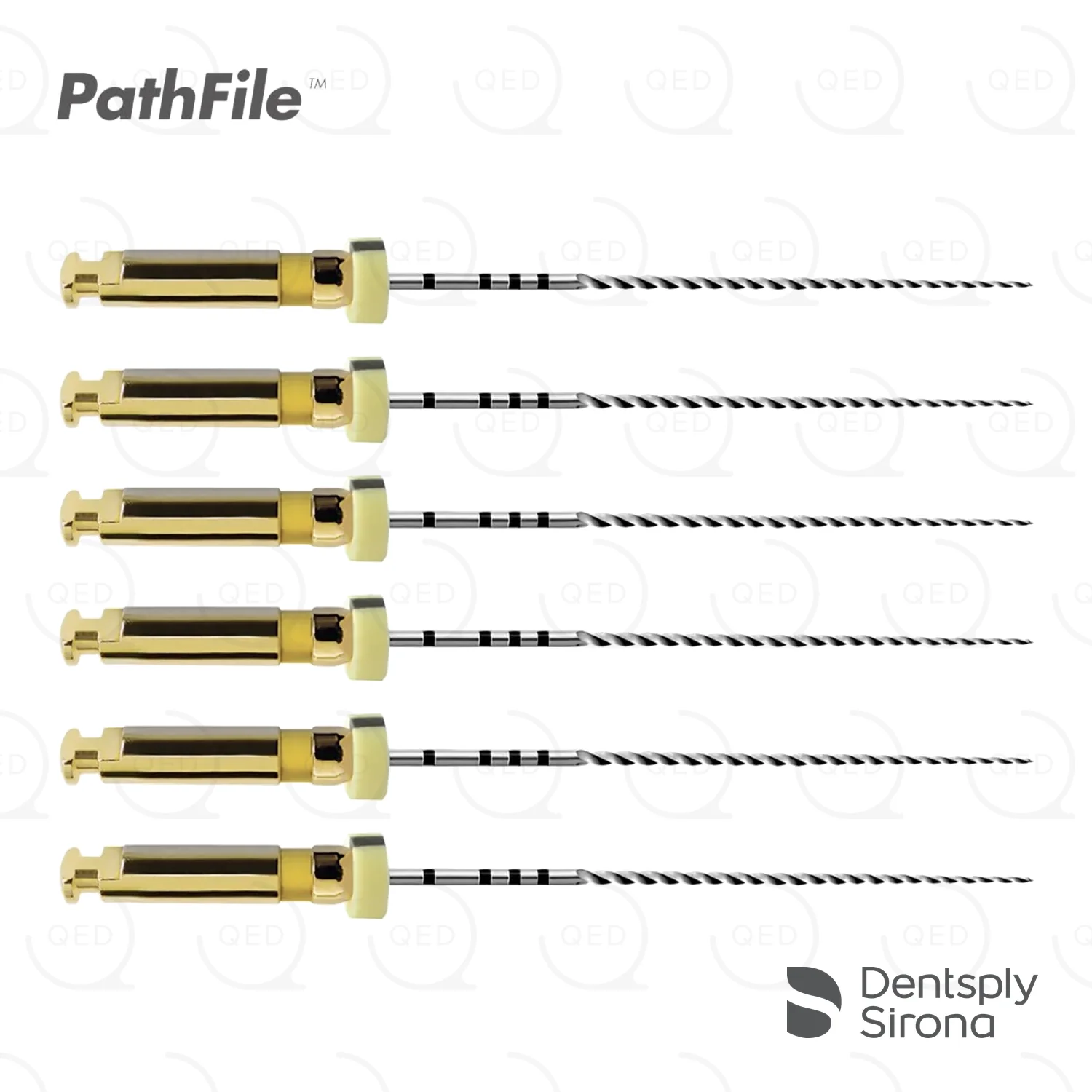
pathfile® · 013-019 · 25 mm · 6 files
glide pathcurved canalsbefore shapingrotary
the assorted blister holds the whole sequence – 013, 016 and 019 – in one pack of six. dentsply sirona designed pathfile® as a three-file progression, and this is the pack that matches how it is used.
| 3 sizes in the pack | .02 taper, all three | 300 rpm motor speed |
this pack: pathfile® rotary glide path files, assorted sizes 13 / 16 / 19, .02 taper, 25mm (pack of 6) · sterile
ref a001522590003 · made by dentsply sirona (maillefer), switzerland
| tip size | iso 013, 016 and 019 |
| taper | constant .02 – the same figure written as a percentage is 2 per cent |
| colour ring | purple, white and yellow |
| length | 25 mm |
| material | nickel-titanium |
| motion | continuous rotation, 300 rpm |
| supplied | sterile, single patient use |
| pack | 6 files |
buying the three sizes as singles means three part-used blisters and a running count of which one is short. the assorted pack tracks the sequence instead.
pathfile® was developed with dr berutti, dr cantatore and dr castellucci, and it is the range that established the idea of cutting the glide path with a dedicated rotary instrument rather than a sequence of hand files.
berutti and colleagues compared preflaring with hand k-files against pathfile® in one hundred s-shaped training blocks, with an endodontist and an inexperienced clinician each doing both. the pathfile groups showed significantly less modification of canal curvature and significantly fewer canal aberrations – and, notably, the inexperienced clinician using pathfile® produced more conservative shaping than the expert using manual preflaring. (berutti e et al., journal of endodontics 2009 – simulated canals in training blocks, not teeth. berutti co-developed the instrument.)
a later independent study went to extracted teeth. zheng and colleagues scanned sixty mesial canals of mandibular first molars by micro-ct and found pathfile® transported the canal significantly less than hand k-files at every level measured, and extruded less debris apically. (zheng l et al., bmc oral health 2018 – ex vivo, micro-computed tomography.)
what is in the pack?
six files covering the three sizes – 013, 016 and 019 – all at 25 mm. to reorder one size on its own, the singles are pathfile® 013, 25 mm · pathfile® 016, 25 mm · pathfile® 019, 25 mm.
where does it sit against the hand file?
dentsply sirona’s sequence has you establish working length with an iso 008 or 010 hand file first, then take 013, 016 and 019 to length in turn, irrigating between each. the rotary files replace the larger hand files, not the scouting one.
what are the motor settings?
300 rpm, continuous rotation, with light apical pressure and the flutes cleaned frequently. both motors we stock will run it: x-smart® pro+ and vdw.silver® reciproc®.
can the files be reused?
no. they are supplied sterile for single patient use. three files go into one canal in sequence, so the pack of six is one glide path per two canals.
is there a one-file alternative?
two, and we stock both. proglider® cuts the glide path with a single rotary file on a variable progressive taper; r-pilot® does it in one reciprocating file on the reciproc all setting. pathfile® takes three passes and steps up in smaller increments.
| patency | c-pilot® 08, 25 mm · c-pilot® 10, 25 mm |
| lubricant | glyde™ file prep |
| irrigants | chlorax 5.25% · chlorax 2% · endo-solution 17% edta |
| delivery | navitip™ 29 ga, 25 mm · irriflex® 30g |
| activation | smartlite pro endoactivator® · vdw eddy® tips |
| shape | protaper next® x1, 25 mm · protaper gold® s1, 25 mm · waveone® gold primary, 25 mm |
| obturate | ah plus® paste · neosealer® ezflo, 25 mm tips |
| coronal seal | sdr® flow+ refill universal |
pathfile® rotary glide path files · iso 013, 016 and 019 · constant .02 taper · nickel-titanium · 25 mm · sterile, single patient use · blister of 6 · 300 rpm, continuous rotation · ref a001522590003

pathfile® · 013/.02 · 31 mm · 6 files
glide pathcurved canalsbefore shapingrotary
pathfile® 013 is where the sequence starts. it follows the iso 010 hand file that established working length, and it is the file that decides whether the other two have a path to follow. a purple ring on the handle tells it apart on the tray.
| 013 iso tip size | .02 constant taper | 300 rpm motor speed |
this pack: pathfile® rotary glide path file, iso size 13, .02 taper, 31mm (pack of 6) · sterile
ref a001523101303 · made by dentsply sirona (maillefer), switzerland
| tip size | iso 013 |
| taper | constant .02 – the same figure written as a percentage is 2 per cent |
| colour ring | purple |
| length | 31 mm |
| material | nickel-titanium |
| motion | continuous rotation, 300 rpm |
| supplied | sterile, single patient use |
| pack | 6 files |
013 is barely wider than the 010 hand file ahead of it, which is the point: the step up is small enough that the file follows the canal rather than cutting a new one.
pathfile® was developed with dr berutti, dr cantatore and dr castellucci, and it is the range that established the idea of cutting the glide path with a dedicated rotary instrument rather than a sequence of hand files.
berutti and colleagues compared preflaring with hand k-files against pathfile® in one hundred s-shaped training blocks, with an endodontist and an inexperienced clinician each doing both. the pathfile groups showed significantly less modification of canal curvature and significantly fewer canal aberrations – and, notably, the inexperienced clinician using pathfile® produced more conservative shaping than the expert using manual preflaring. (berutti e et al., journal of endodontics 2009 – simulated canals in training blocks, not teeth. berutti co-developed the instrument.)
a later independent study went to extracted teeth. zheng and colleagues scanned sixty mesial canals of mandibular first molars by micro-ct and found pathfile® transported the canal significantly less than hand k-files at every level measured, and extruded less debris apically. (zheng l et al., bmc oral health 2018 – ex vivo, micro-computed tomography.)
do i need the other two sizes?
pathfile® is designed as a sequence, so in normal use yes. the other packs at this length are pathfile® 016, 31 mm · pathfile® 019, 31 mm · pathfile® assorted, 31 mm.
where does it sit against the hand file?
dentsply sirona’s sequence has you establish working length with an iso 008 or 010 hand file first, then take 013, 016 and 019 to length in turn, irrigating between each. the rotary files replace the larger hand files, not the scouting one.
what are the motor settings?
300 rpm, continuous rotation, with light apical pressure and the flutes cleaned frequently. both motors we stock will run it: x-smart® pro+ and vdw.silver® reciproc®.
can the files be reused?
no. they are supplied sterile for single patient use. three files go into one canal in sequence, so the pack of six is one glide path per two canals.
is there a one-file alternative?
two, and we stock both. proglider® cuts the glide path with a single rotary file on a variable progressive taper; r-pilot® does it in one reciprocating file on the reciproc all setting. pathfile® takes three passes and steps up in smaller increments.
| patency | an iso 008 or 010 hand file in a 31 mm length – the c-pilot® range stops at 25 mm |
| lubricant | glyde™ file prep |
| irrigants | chlorax 5.25% · chlorax 2% · endo-solution 17% edta |
| delivery | navitip™ 29 ga, 25 mm · irriflex® 30g |
| activation | smartlite pro endoactivator® · vdw eddy® tips |
| shape | protaper next® x1, 31 mm · protaper gold® s1, 31 mm · waveone® gold primary, 31 mm |
| obturate | ah plus® paste · neosealer® ezflo, 25 mm tips |
| coronal seal | sdr® flow+ refill universal |
pathfile® rotary glide path file · iso 013 tip · constant .02 taper · purple ring · nickel-titanium · 31 mm · sterile, single patient use · blister of 6 · 300 rpm, continuous rotation · ref a001523101303
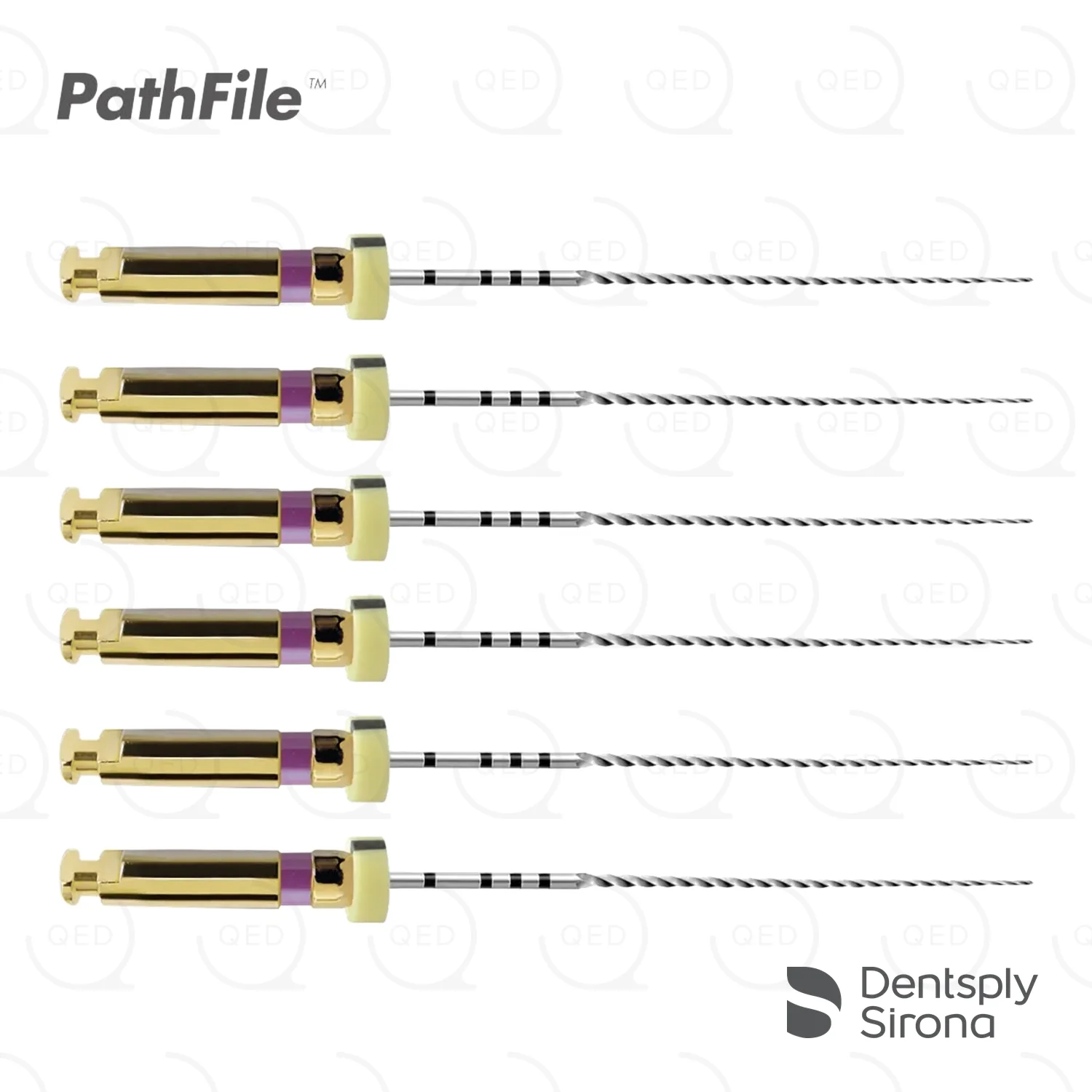
pathfile® · 016/.02 · 31 mm · 6 files
glide pathcurved canalsbefore shapingrotary
pathfile® 016 is the second file in the sequence, between 013 and 019. it is the one most practices run out of first, because it does most of the widening. a white ring on the handle identifies it.
| 016 iso tip size | .02 constant taper | 300 rpm motor speed |
this pack: pathfile® rotary glide path file, iso size 16, .02 taper, 31mm (pack of 6) · sterile
ref a001523101603 · made by dentsply sirona (maillefer), switzerland
| tip size | iso 016 |
| taper | constant .02 – the same figure written as a percentage is 2 per cent |
| colour ring | white |
| length | 31 mm |
| material | nickel-titanium |
| motion | continuous rotation, 300 rpm |
| supplied | sterile, single patient use |
| pack | 6 files |
by 016 the canal has already been opened by the 013, so this file is working in a path that exists. it is the step that turns a scouted canal into one a shaping file can enter.
pathfile® was developed with dr berutti, dr cantatore and dr castellucci, and it is the range that established the idea of cutting the glide path with a dedicated rotary instrument rather than a sequence of hand files.
berutti and colleagues compared preflaring with hand k-files against pathfile® in one hundred s-shaped training blocks, with an endodontist and an inexperienced clinician each doing both. the pathfile groups showed significantly less modification of canal curvature and significantly fewer canal aberrations – and, notably, the inexperienced clinician using pathfile® produced more conservative shaping than the expert using manual preflaring. (berutti e et al., journal of endodontics 2009 – simulated canals in training blocks, not teeth. berutti co-developed the instrument.)
a later independent study went to extracted teeth. zheng and colleagues scanned sixty mesial canals of mandibular first molars by micro-ct and found pathfile® transported the canal significantly less than hand k-files at every level measured, and extruded less debris apically. (zheng l et al., bmc oral health 2018 – ex vivo, micro-computed tomography.)
do i need the other two sizes?
pathfile® is designed as a sequence, so in normal use yes. the other packs at this length are pathfile® 013, 31 mm · pathfile® 019, 31 mm · pathfile® assorted, 31 mm.
where does it sit against the hand file?
dentsply sirona’s sequence has you establish working length with an iso 008 or 010 hand file first, then take 013, 016 and 019 to length in turn, irrigating between each. the rotary files replace the larger hand files, not the scouting one.
what are the motor settings?
300 rpm, continuous rotation, with light apical pressure and the flutes cleaned frequently. both motors we stock will run it: x-smart® pro+ and vdw.silver® reciproc®.
can the files be reused?
no. they are supplied sterile for single patient use. three files go into one canal in sequence, so the pack of six is one glide path per two canals.
is there a one-file alternative?
two, and we stock both. proglider® cuts the glide path with a single rotary file on a variable progressive taper; r-pilot® does it in one reciprocating file on the reciproc all setting. pathfile® takes three passes and steps up in smaller increments.
| patency | an iso 008 or 010 hand file in a 31 mm length – the c-pilot® range stops at 25 mm |
| lubricant | glyde™ file prep |
| irrigants | chlorax 5.25% · chlorax 2% · endo-solution 17% edta |
| delivery | navitip™ 29 ga, 25 mm · irriflex® 30g |
| activation | smartlite pro endoactivator® · vdw eddy® tips |
| shape | protaper next® x1, 31 mm · protaper gold® s1, 31 mm · waveone® gold primary, 31 mm |
| obturate | ah plus® paste · neosealer® ezflo, 25 mm tips |
| coronal seal | sdr® flow+ refill universal |
pathfile® rotary glide path file · iso 016 tip · constant .02 taper · white ring · nickel-titanium · 31 mm · sterile, single patient use · blister of 6 · 300 rpm, continuous rotation · ref a001523101603
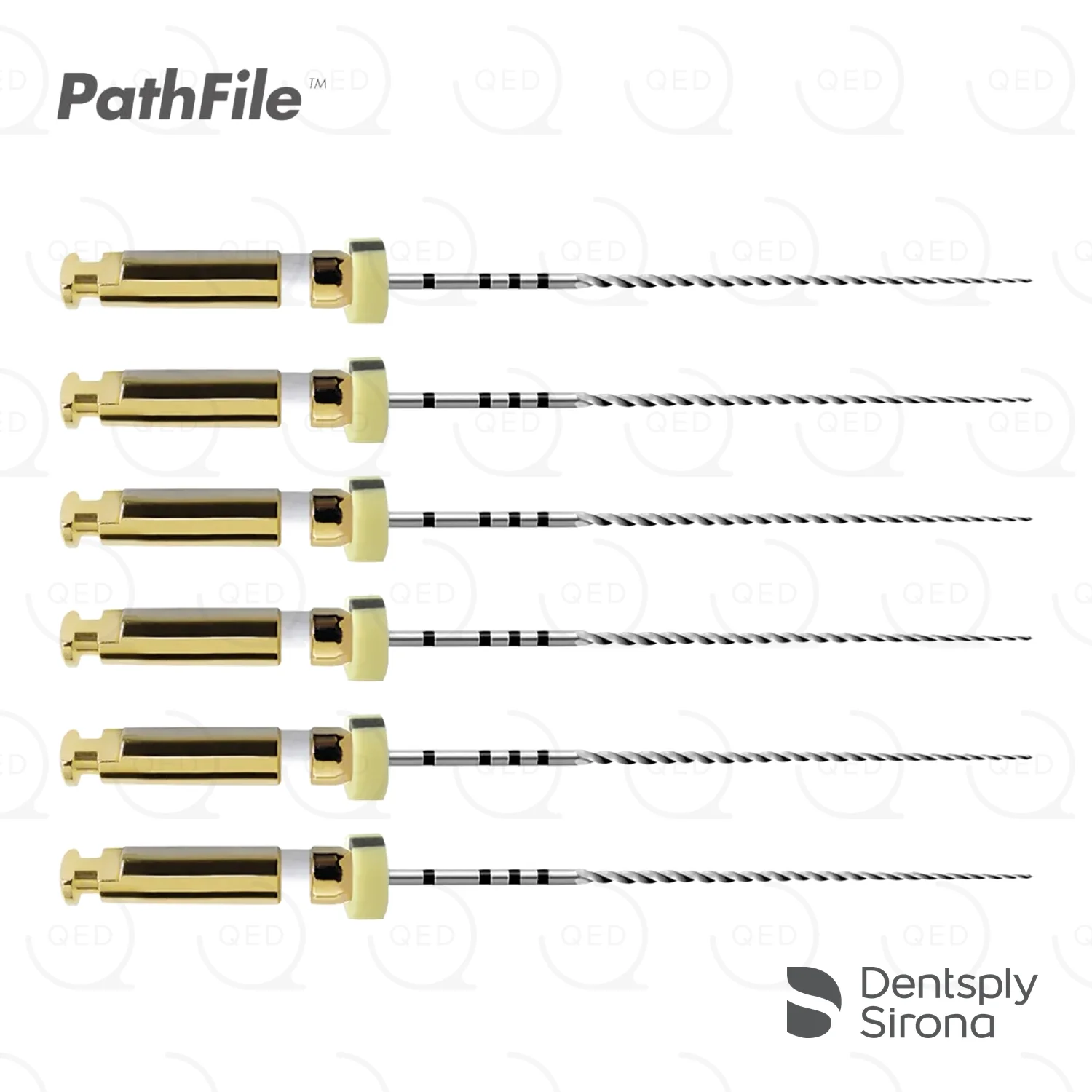
pathfile® · 019/.02 · 31 mm · 6 files
glide pathcurved canalsbefore shapingrotary
pathfile® 019 is the last of the three. when it reaches working length freely, the glide path is cut and the shaping file can go in. a yellow ring on the handle identifies it.
| 019 iso tip size | .02 constant taper | 300 rpm motor speed |
this pack: pathfile® rotary glide path file, iso size 19, .02 taper, 31mm (pack of 6) · sterile
ref a001523101903 · made by dentsply sirona (maillefer), switzerland
| tip size | iso 019 |
| taper | constant .02 – the same figure written as a percentage is 2 per cent |
| colour ring | yellow |
| length | 31 mm |
| material | nickel-titanium |
| motion | continuous rotation, 300 rpm |
| supplied | sterile, single patient use |
| pack | 6 files |
019 leaves a canal wide enough for a rotary or reciprocating shaping file to enter without binding at the orifice – which is the whole purpose of the exercise.
pathfile® was developed with dr berutti, dr cantatore and dr castellucci, and it is the range that established the idea of cutting the glide path with a dedicated rotary instrument rather than a sequence of hand files.
berutti and colleagues compared preflaring with hand k-files against pathfile® in one hundred s-shaped training blocks, with an endodontist and an inexperienced clinician each doing both. the pathfile groups showed significantly less modification of canal curvature and significantly fewer canal aberrations – and, notably, the inexperienced clinician using pathfile® produced more conservative shaping than the expert using manual preflaring. (berutti e et al., journal of endodontics 2009 – simulated canals in training blocks, not teeth. berutti co-developed the instrument.)
a later independent study went to extracted teeth. zheng and colleagues scanned sixty mesial canals of mandibular first molars by micro-ct and found pathfile® transported the canal significantly less than hand k-files at every level measured, and extruded less debris apically. (zheng l et al., bmc oral health 2018 – ex vivo, micro-computed tomography.)
do i need the other two sizes?
pathfile® is designed as a sequence, so in normal use yes. the other packs at this length are pathfile® 013, 31 mm · pathfile® 016, 31 mm · pathfile® assorted, 31 mm.
where does it sit against the hand file?
dentsply sirona’s sequence has you establish working length with an iso 008 or 010 hand file first, then take 013, 016 and 019 to length in turn, irrigating between each. the rotary files replace the larger hand files, not the scouting one.
what are the motor settings?
300 rpm, continuous rotation, with light apical pressure and the flutes cleaned frequently. both motors we stock will run it: x-smart® pro+ and vdw.silver® reciproc®.
can the files be reused?
no. they are supplied sterile for single patient use. three files go into one canal in sequence, so the pack of six is one glide path per two canals.
is there a one-file alternative?
two, and we stock both. proglider® cuts the glide path with a single rotary file on a variable progressive taper; r-pilot® does it in one reciprocating file on the reciproc all setting. pathfile® takes three passes and steps up in smaller increments.
| patency | an iso 008 or 010 hand file in a 31 mm length – the c-pilot® range stops at 25 mm |
| lubricant | glyde™ file prep |
| irrigants | chlorax 5.25% · chlorax 2% · endo-solution 17% edta |
| delivery | navitip™ 29 ga, 25 mm · irriflex® 30g |
| activation | smartlite pro endoactivator® · vdw eddy® tips |
| shape | protaper next® x1, 31 mm · protaper gold® s1, 31 mm · waveone® gold primary, 31 mm |
| obturate | ah plus® paste · neosealer® ezflo, 25 mm tips |
| coronal seal | sdr® flow+ refill universal |
pathfile® rotary glide path file · iso 019 tip · constant .02 taper · yellow ring · nickel-titanium · 31 mm · sterile, single patient use · blister of 6 · 300 rpm, continuous rotation · ref a001523101903
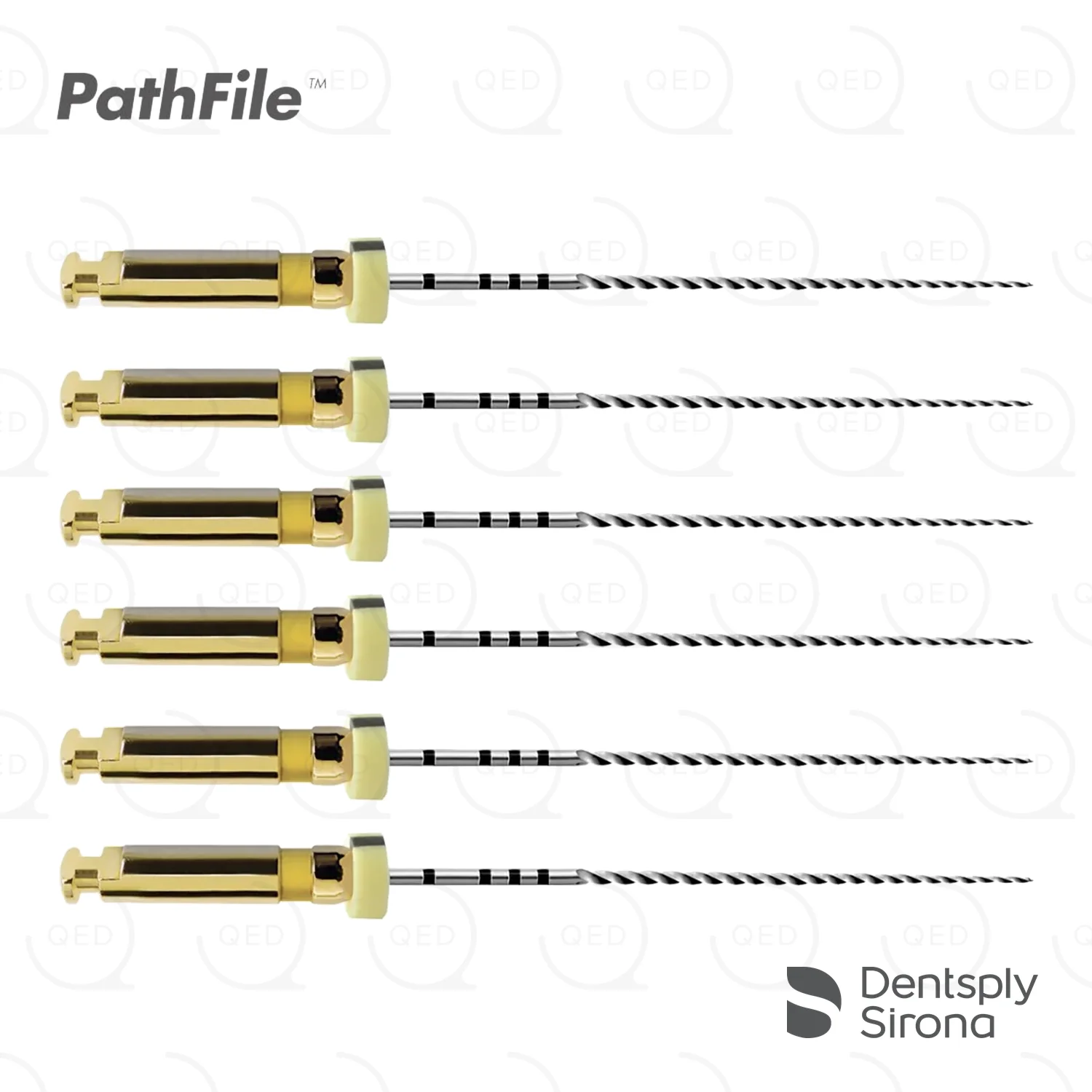
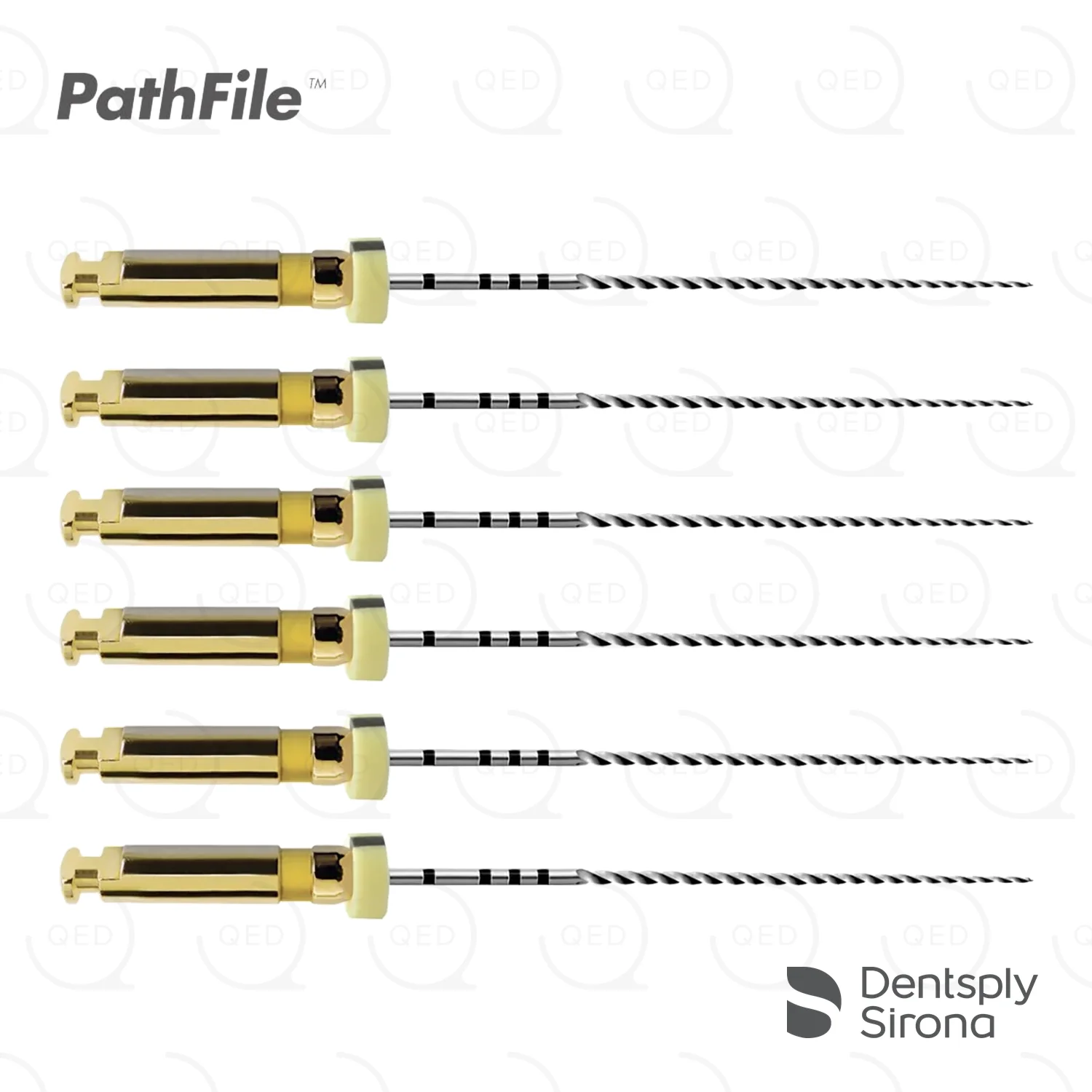
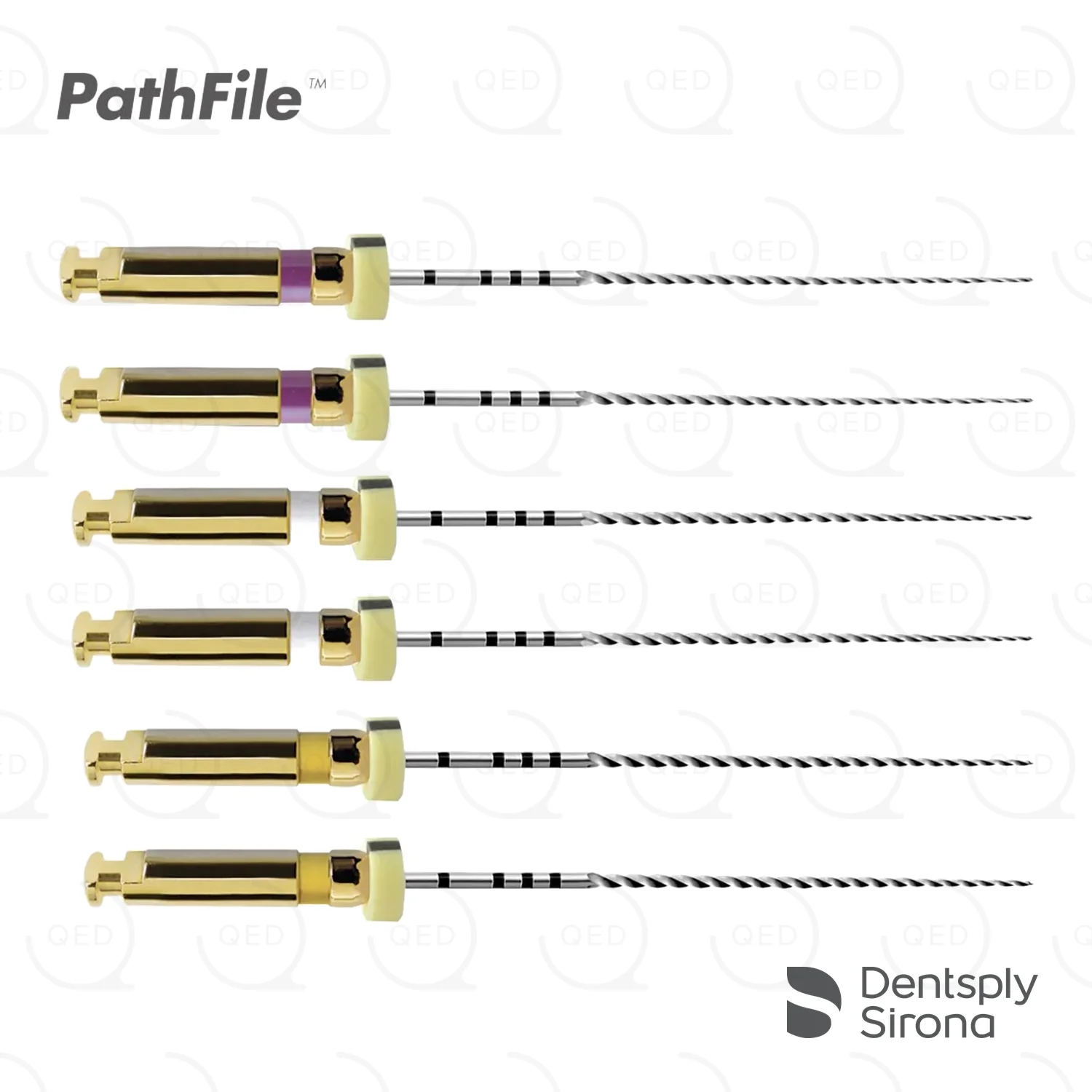
pathfile® · 013-019 · 31 mm · 6 files
glide pathcurved canalsbefore shapingrotary
the assorted blister holds the whole sequence – 013, 016 and 019 – in one pack of six. dentsply sirona designed pathfile® as a three-file progression, and this is the pack that matches how it is used.
| 3 sizes in the pack | .02 taper, all three | 300 rpm motor speed |
this pack: pathfile® rotary glide path files, assorted sizes 13 / 16 / 19, .02 taper, 31mm (pack of 6) · sterile
ref a001523190003 · made by dentsply sirona (maillefer), switzerland
| tip size | iso 013, 016 and 019 |
| taper | constant .02 – the same figure written as a percentage is 2 per cent |
| colour ring | purple, white and yellow |
| length | 31 mm |
| material | nickel-titanium |
| motion | continuous rotation, 300 rpm |
| supplied | sterile, single patient use |
| pack | 6 files |
buying the three sizes as singles means three part-used blisters and a running count of which one is short. the assorted pack tracks the sequence instead.
pathfile® was developed with dr berutti, dr cantatore and dr castellucci, and it is the range that established the idea of cutting the glide path with a dedicated rotary instrument rather than a sequence of hand files.
berutti and colleagues compared preflaring with hand k-files against pathfile® in one hundred s-shaped training blocks, with an endodontist and an inexperienced clinician each doing both. the pathfile groups showed significantly less modification of canal curvature and significantly fewer canal aberrations – and, notably, the inexperienced clinician using pathfile® produced more conservative shaping than the expert using manual preflaring. (berutti e et al., journal of endodontics 2009 – simulated canals in training blocks, not teeth. berutti co-developed the instrument.)
a later independent study went to extracted teeth. zheng and colleagues scanned sixty mesial canals of mandibular first molars by micro-ct and found pathfile® transported the canal significantly less than hand k-files at every level measured, and extruded less debris apically. (zheng l et al., bmc oral health 2018 – ex vivo, micro-computed tomography.)
what is in the pack?
six files covering the three sizes – 013, 016 and 019 – all at 31 mm. to reorder one size on its own, the singles are pathfile® 013, 31 mm · pathfile® 016, 31 mm · pathfile® 019, 31 mm.
where does it sit against the hand file?
dentsply sirona’s sequence has you establish working length with an iso 008 or 010 hand file first, then take 013, 016 and 019 to length in turn, irrigating between each. the rotary files replace the larger hand files, not the scouting one.
what are the motor settings?
300 rpm, continuous rotation, with light apical pressure and the flutes cleaned frequently. both motors we stock will run it: x-smart® pro+ and vdw.silver® reciproc®.
can the files be reused?
no. they are supplied sterile for single patient use. three files go into one canal in sequence, so the pack of six is one glide path per two canals.
is there a one-file alternative?
two, and we stock both. proglider® cuts the glide path with a single rotary file on a variable progressive taper; r-pilot® does it in one reciprocating file on the reciproc all setting. pathfile® takes three passes and steps up in smaller increments.
| patency | an iso 008 or 010 hand file in a 31 mm length – the c-pilot® range stops at 25 mm |
| lubricant | glyde™ file prep |
| irrigants | chlorax 5.25% · chlorax 2% · endo-solution 17% edta |
| delivery | navitip™ 29 ga, 25 mm · irriflex® 30g |
| activation | smartlite pro endoactivator® · vdw eddy® tips |
| shape | protaper next® x1, 31 mm · protaper gold® s1, 31 mm · waveone® gold primary, 31 mm |
| obturate | ah plus® paste · neosealer® ezflo, 25 mm tips |
| coronal seal | sdr® flow+ refill universal |
pathfile® rotary glide path files · iso 013, 016 and 019 · constant .02 taper · nickel-titanium · 31 mm · sterile, single patient use · blister of 6 · 300 rpm, continuous rotation · ref a001523190003
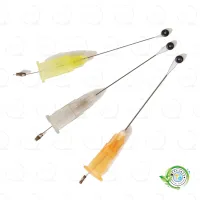
cerkamed btr tip · nitinol loop · 0.3 mm · 5
separated instrument retrievalfor btr pensingle use
replacement tips for the btr pen: a needle of 0.3 mm diameter with a nitinol loop at its end, which the pen carries to the fragment, closes around it and draws out. cerkamed's spec for the loop: a thin, highly elastic needle with a nitinol loop that returns to shape, resists stretching, and is biocompatible and corrosion-resistant. five to the pack, single use.
this pack: cerkamed btr pen tips with nitinol loop, 0.3 mm diameter, single use, non-sterile (pack of 5)
| diameter | 0.3 mm needle |
| loop | nitinol – shape memory, resistant to stretching |
| fits | btr pen |
| sterility | cerkamed: delivered non-sterile; autoclave in a standard bag before use, without the protective cap |
| single use | cerkamed: "btr tip is for single use." |
| pack | 5 |
| other sizes | 0.4 mm · 0.5 mm |
› cerkamed: "the btr tip is delivered non – sterile. before use, the tip should be sterilised" in a standard bag in the autoclave, and stored dry and clean.
› cerkamed, in capitals: "sterilise without the protective cup!"
› set the loop with the calibrator before it goes in – cerkamed note that a blunt or bent calibrator needle "negatively affects the instrument performance".
› cerkamed: "used tips disposed of responsibly or returned to the manufacturer."
the one that reaches the fragment. a 0.3 mm needle is the finest of the three, for the narrow canal and the fragment furthest down; it is the size cerkamed put in the set. keep all three; the case chooses.
no. cerkamed are unambiguous that the tip is single use, and a loop that has been tightened on steel once will not set true a second time.
| the instrument | btr pen set |
| other sizes | 0.4 mm · 0.5 mm |
| training | btr dental training gum · training teeth – easy · training teeth – hard |
| solvents | eucalyptol · orange guttane |
btr tip · 0.3 mm · nitinol loop · single use, autoclave before use · pack of 5 · made by cerkamed, stalowa wola, poland · ref cer-w-btr-0.3n
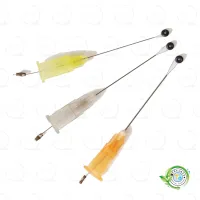
cerkamed btr tip · nitinol loop · 0.4 mm · 5
separated instrument retrievalfor btr pensingle use
replacement tips for the btr pen: a needle of 0.4 mm diameter with a nitinol loop at its end, which the pen carries to the fragment, closes around it and draws out. cerkamed's spec for the loop: a thin, highly elastic needle with a nitinol loop that returns to shape, resists stretching, and is biocompatible and corrosion-resistant. five to the pack, single use.
this pack: cerkamed btr pen tips with nitinol loop, 0.4 mm diameter, single use, non-sterile (pack of 5)
| diameter | 0.4 mm needle |
| loop | nitinol – shape memory, resistant to stretching |
| fits | btr pen |
| sterility | cerkamed: delivered non-sterile; autoclave in a standard bag before use, without the protective cap |
| single use | cerkamed: "btr tip is for single use." |
| pack | 5 |
| other sizes | 0.3 mm · 0.5 mm |
› cerkamed: "the btr tip is delivered non – sterile. before use, the tip should be sterilised" in a standard bag in the autoclave, and stored dry and clean.
› cerkamed, in capitals: "sterilise without the protective cup!"
› set the loop with the calibrator before it goes in – cerkamed note that a blunt or bent calibrator needle "negatively affects the instrument performance".
› cerkamed: "used tips disposed of responsibly or returned to the manufacturer."
the one that reaches the fragment. a 0.4 mm needle is the middle size, a little stiffer than the 0.3 for a fragment that needs more pull. keep all three; the case chooses.
no. cerkamed are unambiguous that the tip is single use, and a loop that has been tightened on steel once will not set true a second time.
| the instrument | btr pen set |
| other sizes | 0.3 mm · 0.5 mm |
| training | btr dental training gum · training teeth – easy · training teeth – hard |
| solvents | eucalyptol · orange guttane |
btr tip · 0.4 mm · nitinol loop · single use, autoclave before use · pack of 5 · made by cerkamed, stalowa wola, poland · ref cer-w-btr-0.4n
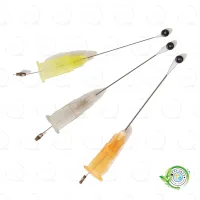
cerkamed btr tip · nitinol loop · 0.5 mm · 5
separated instrument retrievalfor btr pensingle use
replacement tips for the btr pen: a needle of 0.5 mm diameter with a nitinol loop at its end, which the pen carries to the fragment, closes around it and draws out. cerkamed's spec for the loop: a thin, highly elastic needle with a nitinol loop that returns to shape, resists stretching, and is biocompatible and corrosion-resistant. five to the pack, single use.
this pack: cerkamed btr pen tips with nitinol loop, 0.5 mm diameter, single use, non-sterile (pack of 5)
| diameter | 0.5 mm needle |
| loop | nitinol – shape memory, resistant to stretching |
| fits | btr pen |
| sterility | cerkamed: delivered non-sterile; autoclave in a standard bag before use, without the protective cap |
| single use | cerkamed: "btr tip is for single use." |
| pack | 5 |
| other sizes | 0.3 mm · 0.4 mm |
› cerkamed: "the btr tip is delivered non – sterile. before use, the tip should be sterilised" in a standard bag in the autoclave, and stored dry and clean.
› cerkamed, in capitals: "sterilise without the protective cup!"
› set the loop with the calibrator before it goes in – cerkamed note that a blunt or bent calibrator needle "negatively affects the instrument performance".
› cerkamed: "used tips disposed of responsibly or returned to the manufacturer."
the one that reaches the fragment. a 0.5 mm needle is the stoutest of the three, for a wide canal and a fragment that will take a firmer loop. keep all three; the case chooses.
no. cerkamed are unambiguous that the tip is single use, and a loop that has been tightened on steel once will not set true a second time.
| the instrument | btr pen set |
| other sizes | 0.3 mm · 0.4 mm |
| training | btr dental training gum · training teeth – easy · training teeth – hard |
| solvents | eucalyptol · orange guttane |
btr tip · 0.5 mm · nitinol loop · single use, autoclave before use · pack of 5 · made by cerkamed, stalowa wola, poland · ref cer-w-btr-0.5n
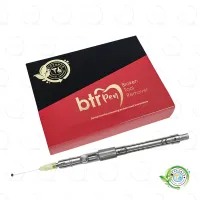
cerkamed btr pen · broken tool remover · set
separated instrument retrievalretreatmentnitinol loopautoclavable
the btr pen is cerkamed's instrument for a separated file: a stainless steel pen that carries a fine nitinol loop down the canal, lassos the fragment and tightens on it. cerkamed's intended use: "btr pen, together with a compatible nitinol loop tip, is designed to remove fragments of broken endodontic instruments from the root canal." the set is the pen, a calibrator for setting the loop, five 0.3 mm tips, spare springs and o-rings.
this pack: cerkamed btr pen set: btr pen (stainless steel), btr calibrator, 5 x btr tip 0.3 mm with nitinol loop, 2 x btr spring (soft and hard; the medium spring is fitted), 3 x silicone o-ring
| pen | stainless steel, reusable; disassemble before sterilisation |
| tips | nitinol loop on a needle, in 0.3, 0.4 and 0.5 mm; single use; supplied non-sterile, autoclave before use without the protective cap |
| calibrator | reusable; cerkamed: disinfect with isopropyl alcohol and inspect before each use – a blunt or bent calibrator needle makes the loop hard to set accurately |
| springs | soft and hard supplied; medium fitted in the pen |
| sterilisation | cerkamed: steam autoclave 134°c for 5 minutes, or 121°c for 20 minutes |
| storage | cerkamed: 5–30°c, relative humidity below 70% |
› cerkamed: "the stainless steel instrument is designed for multiple use, while the btr pen-compatible nitinol loop tip is intended for single use."
› cerkamed: "btr pen must always be disassembled before sterilisation." clean new instruments with a soft brush and an instrument cleaning solution; ultrasonic cleaning is also recommended; rinse with purified water and dry.
› on the tips, cerkamed: "the btr tip is delivered non – sterile. before use, the tip should be sterilised" – and in capitals, "sterilise without the protective cup!"
› cerkamed: "before each use, the instrument should be inspected for contamination, damage to the material structure (cracks, bends, splits, scratches – deeper scratches)."
› cerkamed publish a user manual, a work methodology and the ifu on their product page, and run btr-pen.com for the technique. this page does not describe the technique; those documents do.
› cerkamed mark the product "to be used by dentist only".
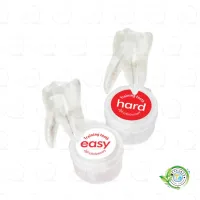
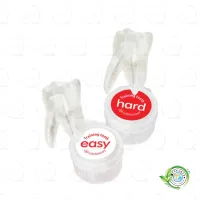
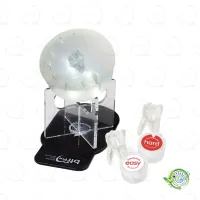
learn it on the bench first. cerkamed make a training set for exactly this: the btr dental training gum is a backlit silicone mass with eight embedded fragments and two resin teeth with fragments set easy and hard, and the training teeth – easy and training teeth – hard are the same teeth in tens. a retrieval you have done ten times on the bench is a different proposition at the chair.
cerkamed make the loop tip in three diameters – 0.3 mm, 0.4 mm and 0.5 mm. the set ships with five 0.3 mm. the canal and the fragment decide: the finer the canal, the finer the needle that will reach the fragment. keep all three in the drawer.
they are used together as often as instead of one another: ultrasonics to expose and loosen the head of the fragment, the loop to grip and withdraw it. cerkamed's work methodology covers the sequence; we make no claim for one over the other.
one tip. the pen, calibrator and springs are reusable; the loop tip is single use, five to a pack.
| loop tips | 0.3 mm · 0.4 mm · 0.5 mm |
| training | btr dental training gum · training teeth – easy · training teeth – hard |
| solvents for the filling around it | eucalyptol · orange guttane |
| re-scout afterwards | c-pilot iso 010, 25 mm |
| irrigants | chloraxid 5.25% · endo-solution 17% edta |
| repair a perforation | mta+ maxi · neomta 2 |
btr pen set · stainless steel pen, calibrator, 5 x 0.3 mm nitinol loop tips, springs, o-rings · autoclave 134°c 5 min · made by cerkamed, stalowa wola, poland · ref cer-w-btr-pen
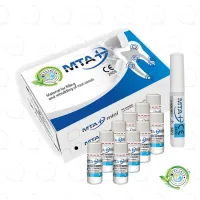
cerkamed mta+ · maxi · 10 x 0.14 g
perforation repairroot-end fillingpulp cappingpulpotomyresorptionopen apex
mta+ is cerkamed's mineral trioxide aggregate: a calcium-silicate powder in single-dose glass vials, mixed with purified water to "the consistency of wet sand". the maxi box carries ten 0.14 g vials and a 1 ml vial of liquid. cerkamed's indications, in their words: "perforations of root canal walls, intracanal resorptions, root tip backfilling, direct pulp capping, during pulp amputation surgery, treatment of teeth with incomplete root development".
this pack: cerkamed mta+ maxi: 10 glass vials of 0.14 g mta+ powder and 1 vial of 1 ml mta+ liquid
| powder | cerkamed: oxides of calcium, silicon, iron, aluminium, sodium, potassium, magnesium, calcium phosphate (approx. three quarters of the total), and bismuth and zirconium oxide |
| liquid | ph. eur. purified water |
| mix | cerkamed: the whole vial with 1–2 drops of liquid, spatulate about 30 seconds to wet sand; another drop if too thick or brittle |
| working time | cerkamed: 6 minutes from mixing |
| setting | cerkamed: approx. 180 minutes |
| standard | cerkamed: meets the requirements of en iso 6876; radiopaque |
| presentation | 10 x 0.14 g single-dose vials, 1 ml liquid |
› cerkamed on what it does: "the high content of calcium ions remineralises the tooth tissue. calcium-silicon compounds support tissue reconstruction following wall perforation and intracanal resorption."
› cerkamed: "one container of the mta+ powder contains a single dose." and "once mixed with the mta+ liquid the mixed dose must be used within 6 minutes."
› cerkamed: "exposure to moisture, including blood, will reduce the curing time."
› three contraindications from cerkamed: "do not use in inflammatory conditions." · "acidic ph values disrupt setting of mta+." · "the mta+ cannot be used as a full root canal filling, as its potential removal will be difficult."
› two cautions cerkamed carry that are worth knowing before the case: "discolouration might occur." and "complete filling of the root canal may reduce the resistance of the root to fracture."
› cerkamed: "avoid creating and inhaling dust." causes serious eye damage. cofferdam, gloves, goggles.
cerkamed carry the discolouration caution themselves. mta+ contains bismuth oxide, and cerkamed state plainly that "discolouration might occur." for an anterior tooth where that matters, our bioceramic range is formulated without bismuth – see the table below. that is a choice of material, not a ranking.
because an opened mta powder takes up moisture, and 0.14 g is what one repair or one pulp cap uses. ten vials is ten cases with nothing left drying in a tub. cerkamed also make a mini box of three.
a carrier. cerkamed make the tools for mta (mx1–mx4) – four tips, two for carrying from a dosing block and two for condensing – and the mta+ applicator 0.8 mm and mta+ applicator 1.2 mm for placing a measured plug. the vista apex mta carriers are the other carrier we stock for every mta.
cerkamed give 6 minutes from mixing to placement. have the site prepared, dry and isolated before the liquid goes on the powder.
| carriers and condensers | tools for mta (mx1–mx4) · mta+ applicator 0.8 mm · mta+ applicator 1.2 mm · vista apex mta carriers |
| practise it first | mta smart system training set – training mta, five drsk teeth with perforations and resorptions, and a backlit mass |
| bismuth-free bioceramic | neomta 2 · neoputty (avalon biomed) |
| isolation | rubber-dam liquid |
| irrigants | chloraxid 5.25% · endo-solution 17% edta |
mta+ maxi · 10 x 0.14 g powder vials, 1 ml liquid · en iso 6876 · radiopaque · 6 min working, approx. 180 min set · made by cerkamed, stalowa wola, poland · ref cer-w-mta maxi
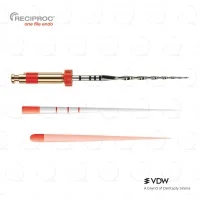
reciproc® r25 · 25 mm · 6 files
still stepping through a sequence, and reprocessing what survives it? reciproc® prepares the whole canal with one reciprocating instrument, and in the majority of canals with no initial hand filing. r25 is where vdw's own selection protocol lands most often, and 25 mm is the length most cases call for. it is also the instrument in the published papers: when a study says reciproc®, this is usually what was on the bench.
| 93%+ without a glide path | 1 file per molar | 66% fewer retreatments |
this pack: 6 × reciproc® r25, 25 mm · radiopaque depth markings at 18/19/20/22 mm · sterile blisters, single use – one molar per file, per vdw
made by vdw, munich – genuine reciproc®
a 0.25 mm tip on an 8% taper over the first 3 mm, regressing above it to d16 1.05 mm – apical shaping where the case needs it, coronal dentine left alone. the alloy is m-wire®, which vdw describe as having greater cyclic fatigue resistance and greater flexibility than traditional nickel-titanium; the core is s-shaped with a non-cutting tip, so it follows the canal rather than cutting its own path; and the shaft is 11 mm against the 13 mm or longer on many instruments, which is felt on a second molar with limited opening.
it is not a rotary file driven differently. the reciprocating angles are set below the point at which the instrument would fail, so binding cannot lock it – which is the whole basis of the glide path argument. vdw's wording, and ours: the angles "are smaller than the angle settings where the elastic limit of the instrument would be met, thus minimising the risk of instrument fractures."
settled before you start, from the radiograph and, where the canal is visible, one hand file inserted passively – here meaning it travels directly to working length with a gentle watch-winding movement, but with no filing action.
› r25 – canal partly or completely invisible on the radiograph, or visible but an iso 20 will not go passively.
› r40 – an iso 20 goes passively, an iso 30 does not.
› r50 – an iso 30 reaches working length passively.
in most cases, the r25 will be suitable in size for the root canal treatment.
— vdw, reciproc® user brochure, summarising its own instrument-selection protocol.
1 check the canal is free with an iso 10 hand instrument – the directions name vdw's own c-pilot® 010 in 25 mm. no orifice opener first; the design clears the coronal third itself.
2 irrigate, throughout. the directions have you irrigate the canal and clean the flutes between passes – a single-file system shortens the mechanical part of the case, not the chemical one. sodium hypochlorite in 5.25% or 2%, to your own protocol.
3 shape on the reciproc® setting in slow in-and-out pecks of no more than 3 mm, very light pressure, three at a time. then out, flutes cleaned in the interim stand, re-irrigate, patency confirmed, back in. a lateral brushing motion is sanctioned for irregular canals.
4 gauge the apex with a hand instrument one iso size larger than the file that reached length: light tug-back about 1 mm short and no further means the preparation is done. r25 achieves an iso 33 at 1 mm from the apex; for a larger apical preparation, r40 or r50 follow.
5 dry, then obturate. matched paper points r25, then the matched gutta-percha cone carried to length with sealer – vdw make it in the greater taper corresponding to this instrument, for single cone, lateral compaction or a master cone in warm vertical condensation. the taper you cut is the taper you fill.
6 seal it coronally. the apical seal is only half the job – sdr® flow+ places a 4 mm bulk increment straight over the orifices in a single cure.
and the glide path? no initial hand filing in the majority of canals – the manufacturer's own headline, unchanged since 2011, with a peer-reviewed figure behind it: de-deus and colleagues (international endodontic journal, 2013) took the r25 to full working length without an initial glide path in more than 93% of canals. where it does not advance, do not force it: withdraw, clean, irrigate, try again, and if it still will not go, create a glide path with c-pilot® 015 and continue. "usually unnecessary" and "never necessary" are different claims, and only the first is ours to make.
a single-file canal is only as good as what goes into it, and this is where we reach for neosealer® ezflo: premixed bioceramic, nothing to mix or time on the bench, around 35 minutes of working time, 5.5 mm al radiopacity, delivered through 29 gauge navitip™ cannulas. the gauge is the point – a bore that fine places sealer in the apical third rather than wiping it down the coronal walls, and the 25 mm tips match this file's length. prefer a wider bore? neosealer® flo is the same chemistry with flex flo tips. staying with resin? ah plus® is still the epoxy sealer every other one is measured against, and vdw's own 2seal® is the brand-matched epoxy-amine. resin or bioceramic is a choice of technique rather than a ranking – we carry both because both are right in different hands.
bürklein and colleagues (iej, 2012) found this system prepared a canal up to 60% faster than multiple-file systems – 73.1 seconds against 185.2 – while maintaining the original curvature and cleaning the apical region more thoroughly; gavini (joe, 2012) measured the r25's own cyclic fatigue resistance as significantly higher in reciprocation than in continuous rotation; and zuolo (iej, 2013) found it left the least residual gutta percha and sealer of the retreatment approaches compared, at 4.57%, because r25 retreats as well as it shapes. the newest citation is about teeth rather than benches: kiel followed 14,233 endodontically treated teeth for five to ten years (iej, june 2025) and found survival without further intervention 30–40% higher under the reciproc® protocol, non-surgical retreatment 66% lower and extractions 21% lower. it is a retrospective single-centre cohort, statistically adjusted, and the authors say only that the result "might be attributed to" the system – but it answers the question a clinician actually has.
the limit is worth knowing and it is narrow. severe curvature is what this instrument is for; abrupt apical curvature is a contraindication. if the iso 10 hand file used for working length still has to be pre-curved to reach it, after the instrument has reached two thirds of the estimated length, finish the canal with hand files. vdw have printed the sentence that puts it in proportion since 2010: this limitation also applies to continuous rotary instruments. and the files may look slightly curved in the blister – vdw note that this is not a manufacturing defect.
the fracture of the original reciproc is not an issue considering that its fracture rate is very low (0.2%).
— ghassan yared, who developed single-file reciprocation and consults to the reciproc® range. his statement in a vdw article, rather than a study result.
what motor do i need?
a drive system carrying the original vdw reciproc® settings – reciprocating motors without them can lead to misuse. we stock the vdw.silver® reciproc® with 6:1 contra-angle, the motor this system launched with, and the x-smart® pro+ with an integrated apex locator. the cordless x-smart® go carries a reciproc® programme too.
how does this compare with reciproc® blue?
same geometry, same three sizes, same movement, same motor programme – the difference is the alloy. this is the original in m-wire®, and the instrument most of the published reciproc® literature was measured on. blue is the later heat-treated version. if your practice is already standardised on this one, nothing about it has changed.
one file per case, really?
per molar, which is the unit vdw set – so a two-molar appointment is two files, and one per canal in extreme curvature. against three to six rotary instruments plus reprocessing the arithmetic still works, and the plastic band on the shaft deforms in the autoclave, so the decision is made for you.
| patency, and between passes | c-pilot® 010 and 008 in 25 mm · interim stand and foam refills for the flutes |
| drive it | a motor with original reciproc® settings: vdw.silver® · x-smart® pro+ · x-smart® go |
| other sizes and lengths | r40 and r50 in 25 mm, or the assorted blister · r25 in 21 mm or 31 mm |
| irrigate | hypochlorite 5.25% or 2% · 17% edta · 40% citric acid · 2% chx · through irriflex® 30g or navitip™ 29 ga 25 mm, activated with eddy® |
| dry and fill | paper points r25 · gutta-percha r25 · or assorted boxes covering all three sizes: points, cones |
| buying in | system kit – 12 files, assorted cones and points, and a training model |
reciproc® r25 · reciprocating single-file system · 0.25 mm tip, 8% taper over the first 3 mm, regressive, d16 1.05 mm · m-wire® niti · s-shaped cross-section, non-cutting tip, 11 mm shaft · radiopaque markings 18/19/20/22 mm · shaping, curvature, mb2 and retreatment · 6 sterile files, single use, one molar · 25 mm, also in 21 and 31 mm · vdw, munich · ref v040212025025

reciproc® assorted · 25 mm · 3 × r40, 3 × r50
this is the pack vdw build into their own system kit, and it is worth understanding why. most canals take an r25, so that is the size you buy six at a time. the other two are for the wide canals and the apical enlargements – needed regularly, but not often enough to justify a full blister of each. three r40 and three r50 in one sterile pack is the honest quantity, at the everyday 25 mm length.
| 3 + 3 r40 and r50 | 25 mm everyday length | 1 file per molar |
this pack: 3 × r40 (0.40 mm tip, 6% over the first 3 mm) and 3 × r50 (0.50 mm tip, 5%) at 25 mm · radiopaque markings at 18/19/20/22 mm · sterile blisters, single use
made by vdw, munich – genuine reciproc®
› both answers to the iso 30 test. an iso 30 hand file that reaches working length passively means r50; one that does not, where an iso 20 does, means r40. whichever way the canal answers, the file is in the pack.
› and the apical enlargement. if gauging with a hand file one size larger than the r25 takes it to full length, the apical third wants opening, and r40 or r50 is what does it.
› no r25 in this one. deliberately. it is the size you already stock by the box – six r25 at 25 mm is the companion order.
what fill do i need for both sizes?
the assorted boxes follow the same logic: gutta-percha comes 40 × r25 with ten each of r40 and r50, and paper points 96 × r25 with 24 each. one box of each covers the whole range.
or start from scratch?
the system kit is this blister plus a blister of six r25, the assorted cones and points, and a training model – the whole system in one order.
| patency, and the flutes | c-pilot® 010 and 008 in 25 mm · interim stand |
| drive it | vdw.silver® reciproc® · x-smart® pro+ · x-smart® go |
| irrigate | hypochlorite 5.25% or 2% · 17% edta · through navitip™ 25 mm |
| seal | neosealer® ezflo with 25 mm tips, or resin ah plus® · then sdr® flow+ over the orifices |
| other lengths | assorted in 21 mm or 31 mm |
reciproc® assorted, 25 mm · 3 × r40 and 3 × r50 · reciprocating single-file system · m-wire® niti, s-shaped cross-section, non-cutting tip · 11 mm shaft · markings 18/19/20/22 mm · sterile, single use, one molar per file · vdw, munich · ref v040212025233

reciproc® system kit · 12 files · 25 mm
trying single-file endodontics usually means assembling six separate orders and hoping you picked the right sizes. this is the alternative: every instrument the system uses, the matched cones and points to fill what they cut, and a training model to learn the pecking motion on before it meets a patient. it is the order to place when the answer to "should we try reciproc®?" is "probably".
this kit: 12 sterile files at 25 mm – a blister of 6 × r25 and a blister of 3 × r40 with 3 × r50 · assorted reciproc® gutta-percha · assorted reciproc® paper points · training model · user card, brochure and directions for use
made by vdw, munich – genuine reciproc®
| one file per canal | the whole preparation with a single reciprocating instrument, and no initial hand filing in the majority of cases – the manufacturer's own qualifier, unchanged since 2011 |
| weighted 6 : 3 : 3 | six r25 because most canals take one, three r40 and three r50 for the wider ones and the apical enlargements |
| matched fill included | assorted cones and points, each corresponding to its instrument, so the first case is done in system from access to obturation |
| practise first | the training model lets you feel the three-peck cycle and the light pressure before it matters |
› the size is chosen, not stepped through. from the radiograph and one passive hand file – and in most cases it is r25.
› faster, and published. bürklein and colleagues (international endodontic journal, 2012) found preparation up to 60% faster than multiple-file systems, 73.1 seconds against 185.2, while maintaining the original canal curvature.
› sterile, single use, one molar per file. nothing to reprocess, and the plastic band on the shaft deforms in the autoclave so the decision is made for you.
what else do i need?
a drive system carrying the original vdw reciproc® settings, and a hand file for patency. we stock the vdw.silver® reciproc® with 6:1 contra-angle – the motor this system launched with – and the x-smart® pro+ with an integrated apex locator. the cordless x-smart® go carries a reciproc® programme too.
is this everything for a first case?
everything reciproc® makes, yes. you will still need your own irrigants, a sealer and a coronal restorative – all linked below.
and when the kit runs out?
every component is sold separately, in the same weighting: r25 six to a blister, the assorted blister of three r40 and three r50, and the assorted cones and points.
| patency, and the flutes | c-pilot® 010 and 008 in 25 mm · interim stand for cleaning between passes |
| irrigate | hypochlorite 5.25% or 2% · 17% edta · through irriflex® 30g or navitip™ 25 mm |
| seal | bioceramic neosealer® ezflo with 29 ga 25 mm tips · resin ah plus® or vdw's 2seal® |
| coronal seal | sdr® flow+ universal · 4 mm bulk increment over the orifices in one cure |
| more practice | vdw training teeth · upper right first molar, five per pack |
reciproc® system kit · 12 sterile files at 25 mm – 6 × r25, 3 × r40, 3 × r50 · assorted gutta-percha and paper points · training model · user card, brochure and directions for use · m-wire® niti, s-shaped cross-section, non-cutting tip, 11 mm shaft · single use, one molar per file · requires a motor with original reciproc® settings · vdw, munich · ref v041211025000
reciproc® blue system kit · the complete start
thinking about switching to one-file endo? this is how you start. the system kit holds everything a reciproc® blue case needs, coordinated to the three file sizes: twenty-four sterile files weighted to a real caseload, matched gutta percha and paper points for the fill, and an endo training tooth to practise the reciprocating technique before your first patient.
this kit: 24 files, 25 mm – 12 × r25, 6 × r40, 6 × r50 (sterile blisters) · reciproc® blue gutta-percha assorted · reciproc® blue paper points assorted, sterile · endo training tooth
made by vdw, germany – genuine reciproc®
| one file. done. | complete canal preparation with a single instrument – no glide path needed in the majority of cases (vdw) |
| 24 files, 3 sizes | weighted like real dentistry: 12 × r25 for most canals, 6 × r40 for medium, 6 × r50 for wide |
| +40% flexibility | blue heat treatment vs original reciproc® – better centring, pre-bendable, higher cyclic-fatigue resistance (vdw) |
| practice first | the included endo training tooth lets you feel the reciprocating technique before it meets a patient |
› shape and fill, matched – the assorted gutta percha and paper points mirror the file geometries, so the first case is done in system from access to obturation.
› runs on reciproc all – vdw.silver®, vdw.gold®, x-smart® pro+, x-smart® go and compatible motors.
› easy to learn – vdw positions the system as easier to learn and teach than rotary sequences, with less likelihood of procedural errors.
is this the right way to try reciproc® blue?
yes – it's the purpose-built entry: every size, the matched fill, and a tooth to practise on, in one order. when you've settled in, each component is available separately: files, gutta percha and paper points.
what else do i need?
just a motor with the "reciproc all" reciprocation programme – if you run a vdw or x-smart® motor, you already have it.
do i need a glide path first?
in the majority of cases, no – that's the reciproc® concept. where a canal can't be negotiated, a conventional glide path can still be established first.
reciproc® blue system kit 24 · 12 × r25 + 6 × r40 + 6 × r50, 25 mm · assorted gp & paper points · endo training tooth · blue heat-treated niti · sterile, single-use files · vdw · all components also sold separately


 Facebook
 X
 Instagram
 Pinterest
