

Best selection of Endodontic supplies in the UK










map system® · surgery left · n°0 · ø0.90 mm
why does a retrograde needle come in a left and a right at all? because the operator does not move but the tooth does. approaching a resected root from the buccal on one side of the arch puts the tip at the mirror image of the angle it needs on the other, and a handed needle solves that without you contorting to compensate. this is the fine left-hand needle, ø0.90 mm, for small retro-preparations.
this pack: 1 × surgery needle, left, n°0 yellow, ø0.90 mm, with 16 matching plungers
made by pd dental, switzerland
| approach | retrograde, in apical surgery – pd's stated purpose for the triple-angle geometry |
| handed | left. sold singly, so you can replace one side without replacing the pair |
| bore | ø0.90 mm – the fine size. surgery needles are made in n°0 and n°1 only |
| reusable | validated by pd for 50 reprocessing cycles; the plunger inside is single-use |
› buy the pair, replace singly. a full surgical set-up wants both hands in both sizes; a damaged needle only needs its own code reordering.
› clean it inside fifteen minutes – and a surgical list is exactly the setting where that slips, because the next stage of the operation is more interesting than the needle.
› keep it out of hydrogen peroxide, and out of hypochlorite above 5% for more than five minutes.
how do i tell them apart on the tray?
by the bend, and by keeping them in the kit's aluminium case rather than loose. both are yellow, because the colour codes the bore, not the hand.
yellow or red for surgery?
yellow where the retro-preparation is small or access is tight; red where the cavity will take a fuller increment. owning both sizes in both hands is what the surgical kit is for.
| its pair | surgery needle right n°0 · ø0.90 mm |
| wider, same hand | surgery needle left n°1 · ø1.10 mm |
| its consumable | plastic plungers n°0 yellow · 16 |
| all four handed needles | map surgical kit – the complete surgical set-up |
map surgery needle left n°0 · yellow · ø0.90 mm · triple-angle, retrograde · autoclavable, 50 cycles · pd dental · ref 20226
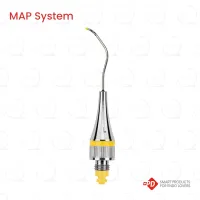
map vpt® · kit · ø2.30 mm white needle
a carious exposure on a vital pulp, a bioceramic that must sit evenly across it, and an amalgam plugger designed for neither? vital pulp therapy asks the opposite of apical work – wide, gentle coverage rather than a fine increment driven deep. map vpt is pd's answer: the same syringe you may already own, fitted with a ø2.30 mm white needle that lays material across an exposure in one delivery.
this kit: 1 × stainless steel syringe · 1 × vpt needle n°1 white, ø2.30 mm · 16 × white plungers · 1 × cleaning brush · 1 × stainless steel well
made by pd dental, switzerland
| indication | pd list it for placement of repair materials during pulp capping procedures |
| bore | ø2.30 mm – pd describe the white needle as ideal for precise coronal filling |
| materials | pd state compatibility with biomaterials used in pulp therapy, such as mta or bioceramic cements |
| reprocessing | needle, syringe, well and brush are reusable and validated for 50 cycles. plungers are single-use |
› clean with the brush, not with floss. the vpt lumen is far too wide for the threads used on the standard needles – and the fifteen-minute window applies here too.
› the syringe is shared, the consumables are not. vpt needles fit map system syringes, but the plungers and the brush are vpt-specific.
› isolation first. pulp capping outcomes turn on a dry field long before they turn on the carrier.
i already own a map syringe – do i need the kit?
not necessarily. the white needle is sold on its own with plungers and brush; the kit suits anyone starting from nothing, or wanting a second syringe kept set up for vpt.
what is the evidence?
a published case series describes clinical use across different vital pulp therapies. it is a case series, not a trial, and no comparative data exists for this or any other carrier – treat it as technique reporting, not proof.
pd publish a map vpt tutorial and a pulp capping case by dr marc kaloustian.
| its consumable | vpt plungers n°1 white · 16 |
| wider needle | vpt needle n°2 purple · ø3.40 mm – for broader pulpotomy work |
| material to place | neoputty® · 0.5 g – premixed bioceramic, ready at the chairside |
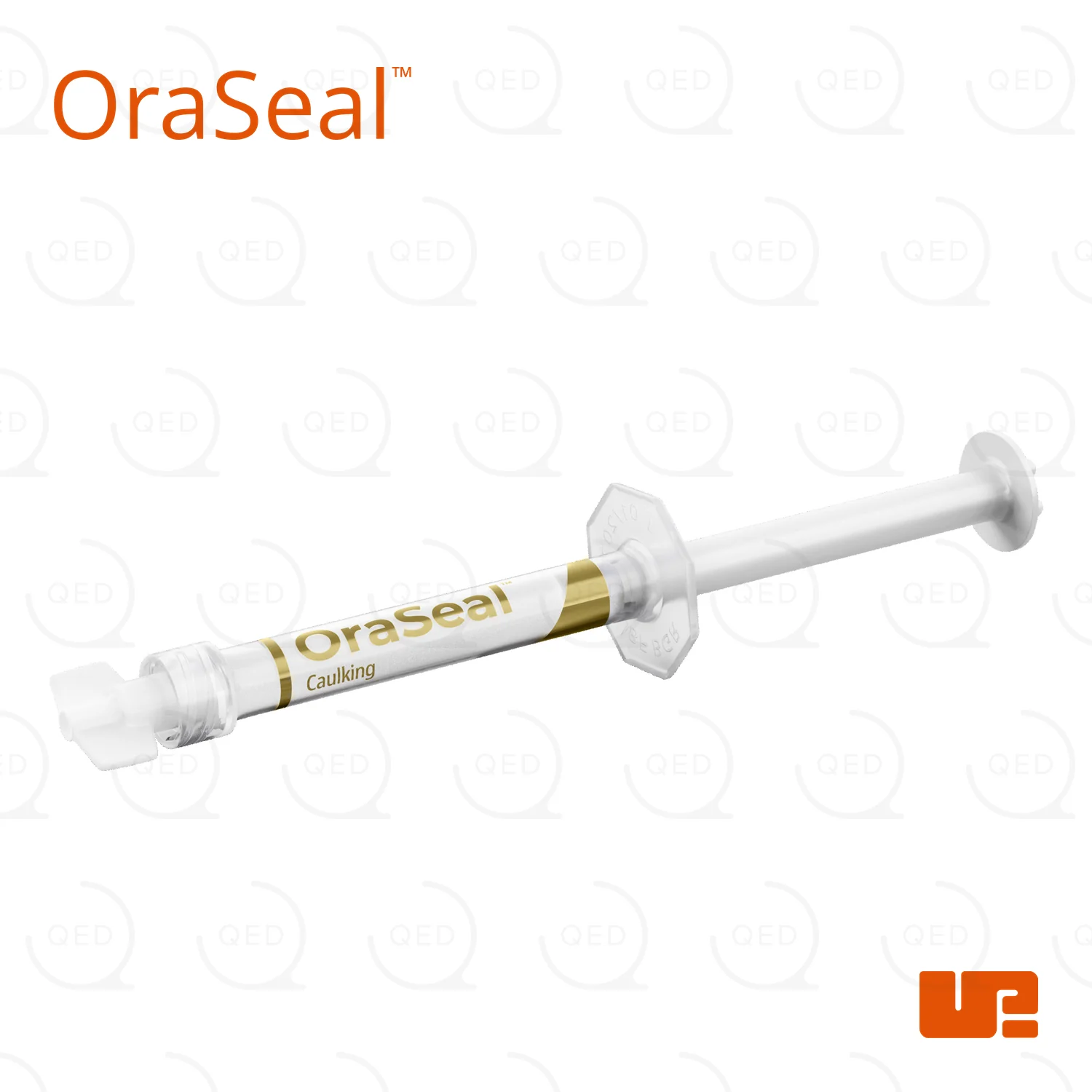
| isolate | oraseal™ caulking – seals the dam margin before the pulp is uncovered |
map vpt kit · syringe, ø2.30 mm white needle, 16 plungers, brush and well · vital pulp therapy · autoclavable, 50 cycles · pd dental · ref 20288

irriflex® · 40 needles with 50 endostops
root canal irrigationcurved canalssmear layer removalfinal rinseworking-length control
this code now ships with endostops. orders for ref 21401 are dispatched as irriflex® with endostops (ref 21401_pp) – the same 40 needles, with 50 endostops added to the box. nothing to change in your basket or reorder list.
how far down a curved molar canal does your irrigant actually reach? a rigid needle stops where the curve begins, and everything below that is served by diffusion and optimism. irriflex® is a polypropylene needle that bends with the canal – pd's own wording is that the flexibility allows the needle to access the apical region without resistance or damage to the dentinal walls. two side vents sit at the tip, back-to-back, so irrigant leaves as two jets aimed at the walls rather than one column aimed at the apex. the box now includes fifty endostops, so the depth you work to is set on the needle rather than judged through a mirror.
| 30g ø0.3 mm | 27 mm length | 4% conicity |
you receive: 40 × irriflex® needles, individually pouched · 50 × endostops · supplied as ref 21401_pp
made by pd dental, switzerland · class iia medical device
irrigation does the disinfecting; the file only makes room for it. so the question worth asking of a needle is not what it is made of but how close it gets, and what the fluid does when it arrives. a 4% taper narrows roughly as the preparation does, keeping the gap around it even – and back-to-back vents put the energy sideways into the walls rather than forwards into the periapex.
the tapered shape of the needle adapts to the shape of the canal. flow thickness of the irrigant is therefore constant as the fluid moves to the coronal area, which maximises shear forces and the elimination of debris, smear layer and biofilm.
— produits dentaires sa, on their own irriflex pages
1 fill the syringe with a compatible irrigant – stabilised sodium hypochlorite up to 6%, edta 17%, chlorhexidine digluconate 2%, citric acid up to 40%, or dual rinse hedp.
2 lock it on clockwise and expel residual air. the fitting is luer-lock; a slip-tip barrel will not hold it.
3 set the depth. the cannula is marked at 18, 19, 20 and 22 mm; a stop defines working length where it falls between marks.
4 check two equal jets before the tip goes near an orifice, so you know the pressure needed and that both vents are clear.
5 start in the chamber, pre-bend the tip for posterior access, and insert passively to 1 to 2 mm short, moving up and down by the same amount.
6 irrigate 1 to 2 ml after each instrument, check patency, re-irrigate; then finish with edta followed by hypochlorite, and discard the needle.
| the needles | made under clean-room conditions and ready to use. pd's ifu: do not sterilise before use. single use, 5-year shelf life |
| the endostops | handling of the stops is set out by pd in their own endostop notice – linked under downloads, alongside the ifu |
| free movement | pd's precaution: make sure the needle can move freely, so there is constant flowback up the canal |
| chamber floor | pd's quick guide: irrigate the pulp chamber, avoiding contact with the pulp chamber floor |
| stated risk | the ifu records no known contraindications and no known adverse reactions |
strand, lægreid and fristad compared four needle designs in 30° curved simulated canals prepared to 30/.04, and found the flexible polypropylene needle gave the lowest absorbance values, significantly better than both the flat open-ended and the double-vented metallic needles (dent j 2026;14(5):278 – no external funding, no declared conflicts). baasch and colleagues, in 3d-printed molar models, left 26.8% remaining tissue in the apical third against 53.9% and 44.9% for two closed-ended needles – though an open-ended needle did better overall at 23.7%, and better again in the middle and coronal thirds (odontology 2025;113(3):1180–8). lebbos and colleagues found the smear-layer benefit showed in a 30/.04 preparation but was less evident at 25/.06 (eur j dent 2025;19(3):678–87) – a hint that the needle suits a preparation shaped like it is.
the honest summary: this is not a needle that wins everywhere. it is a needle that holds up where a rigid one struggles – curvature, and the apical third – and the published work says so without needing help from us.
irriflex® is a new standard in root canal irrigation. the sensation of secure and smooth tip insertion, flow control and the increased visibility are the benefits i observe in my daily practice.
— dr riccardo tonini, quoted by pd dental
irriflex® has revolutionized root canal irrigation and has become a fundamental part of my protocol.
— dr uwe radmacher, quoted by pd dental
do i need the stops if the needle is marked?
not always. the marks at 18, 19, 20 and 22 mm cover a lot of cases. a stop earns its place when working length falls between them, or when access is poor enough that reading a mark is optimistic.
to which depth should i set the endostop?
pd's answer: we recommend setting the insertion depth 1 to 2 mm less than the root canal working length. their quick guide says the same, using either the markers or a stopper.
how are the endostops fitted?
pd say they can be installed on irriflex either with the use of an endobloc or by hand, and recommend the endobloc, because the ruler on most endoblocs makes the insertion depth easier to get right.
is there a risk of over-bending it?
pd's answer is no: irriflex is highly flexible and does not break when pre-bending it prior to insertion into a root canal. they add that bending it beyond 90° is neither advised nor needed.
which hypochlorite concentration is allowed?
the ifu says stabilised sodium hypochlorite up to 6%. pd's product page lists 5.25%; the ifu is the authoritative document, and pd's own quick guide says so.
| two boxes and syringes | irriflex® bundle – two of these boxes, 80 needles and 100 stops, plus 5 ml luer-lock syringes |
| hypochlorite | chlorax 5.25% · chlorax 2% – both within the ifu's limit |
| chelate | endo-solution 17% edta · 200 ml – the final-rinse step in pd's sequence |
| bulk chelate | endo-solution 17% edta · 5 × 200 ml |
| citric acid | citric acid 40% · 200 ml – at the ceiling the ifu states |
| chlorhexidine | canalpro chx 2% · 500 ml – the concentration the ifu names |
| isolate | oraseal™ caulking – hypochlorite deserves a dam that does not weep |
› irriflex® quick user guide (pdf, 0.3 mb, pd dental) – the technique on one card
› irriflex® directions for use (ifu) (pdf, 0.4 mb, pd dental, multilingual) – the authoritative document
› endostops – sterilisation of single-use products (pdf, pd dental, multilingual) – pd's notice for the stops in this box
irriflex® with endostops · flexible polypropylene irrigation needle · 30g, ø0.3 mm · 27 mm · 4% conicity · two back-to-back side vents · luer-lock · single use · 40 needles and 50 stops · pd dental · ref 21401, supplied as 21401_pp

irriflex® · 40 needles with 50 endostops
root canal irrigationcurved canalssmear layer removalfinal rinseworking-length control
how far down a curved molar canal does your irrigant actually reach? a rigid needle stops where the curve begins, and everything below that is served by diffusion and optimism. irriflex® is a polypropylene needle that bends with the canal – pd's own wording is that the flexibility allows the needle to access the apical region without resistance or damage to the dentinal walls. two side vents sit at the tip, back-to-back, so irrigant leaves as two jets aimed at the walls rather than one column aimed at the apex. this box adds fifty endostops, so the depth you work to is set on the needle rather than judged through a mirror.
| 30g ø0.3 mm | 27 mm length | 4% conicity |
this pack: 40 × irriflex® needles, individually pouched · 50 × endostops
ordering ref 21401? that code now ships as this box.
made by pd dental, switzerland · class iia medical device
irrigation does the disinfecting; the file only makes room for it. so the question worth asking of a needle is not what it is made of but how close it gets, and what the fluid does when it arrives. a 4% taper narrows roughly as the preparation does, keeping the gap around it even – and back-to-back vents put the energy sideways into the walls rather than forwards into the periapex.
the tapered shape of the needle adapts to the shape of the canal. flow thickness of the irrigant is therefore constant as the fluid moves to the coronal area, which maximises shear forces and the elimination of debris, smear layer and biofilm.
— produits dentaires sa, on their own irriflex pages
1 fill the syringe with a compatible irrigant – stabilised sodium hypochlorite up to 6%, edta 17%, chlorhexidine digluconate 2%, citric acid up to 40%, or dual rinse hedp.
2 lock it on clockwise and expel residual air. the fitting is luer-lock; a slip-tip barrel will not hold it.
3 set the depth. the cannula is marked at 18, 19, 20 and 22 mm; a stop defines working length where it falls between marks.
4 check two equal jets before the tip goes near an orifice, so you know the pressure needed and that both vents are clear.
5 start in the chamber, pre-bend the tip for posterior access, and insert passively to 1 to 2 mm short, moving up and down by the same amount.
6 irrigate 1 to 2 ml after each instrument, check patency, re-irrigate; then finish with edta followed by hypochlorite, and discard the needle.
| the needles | made under clean-room conditions and ready to use. pd's ifu: do not sterilise before use. single use, 5-year shelf life |
| the endostops | handling of the stops is set out by pd in their own endostop notice – linked under downloads, alongside the ifu |
| free movement | pd's precaution: make sure the needle can move freely, so there is constant flowback up the canal |
| chamber floor | pd's quick guide: irrigate the pulp chamber, avoiding contact with the pulp chamber floor |
| stated risk | the ifu records no known contraindications and no known adverse reactions |
strand, lægreid and fristad compared four needle designs in 30° curved simulated canals prepared to 30/.04, and found the flexible polypropylene needle gave the lowest absorbance values, significantly better than both the flat open-ended and the double-vented metallic needles (dent j 2026;14(5):278 – no external funding, no declared conflicts). baasch and colleagues, in 3d-printed molar models, left 26.8% remaining tissue in the apical third against 53.9% and 44.9% for two closed-ended needles – though an open-ended needle did better overall at 23.7%, and better again in the middle and coronal thirds (odontology 2025;113(3):1180–8). lebbos and colleagues found the smear-layer benefit showed in a 30/.04 preparation but was less evident at 25/.06 (eur j dent 2025;19(3):678–87) – a hint that the needle suits a preparation shaped like it is.
the honest summary: this is not a needle that wins everywhere. it is a needle that holds up where a rigid one struggles – curvature, and the apical third – and the published work says so without needing help from us.
irriflex® is a new standard in root canal irrigation. the sensation of secure and smooth tip insertion, flow control and the increased visibility are the benefits i observe in my daily practice.
— dr riccardo tonini, quoted by pd dental
irriflex® has revolutionized root canal irrigation and has become a fundamental part of my protocol.
— dr uwe radmacher, quoted by pd dental
do i need the stops if the needle is marked?
not always. the marks at 18, 19, 20 and 22 mm cover a lot of cases. a stop earns its place when working length falls between them, or when access is poor enough that reading a mark is optimistic.
to which depth should i set the endostop?
pd's answer: we recommend setting the insertion depth 1 to 2 mm less than the root canal working length. their quick guide says the same, using either the markers or a stopper.
how are the endostops fitted?
pd say they can be installed on irriflex either with the use of an endobloc or by hand, and recommend the endobloc, because the ruler on most endoblocs makes the insertion depth easier to get right.
is there a risk of over-bending it?
pd's answer is no: irriflex is highly flexible and does not break when pre-bending it prior to insertion into a root canal. they add that bending it beyond 90° is neither advised nor needed.
which hypochlorite concentration is allowed?
the ifu says stabilised sodium hypochlorite up to 6%. pd's product page lists 5.25%; the ifu is the authoritative document, and pd's own quick guide says so.
| two boxes and syringes | irriflex® bundle – two of these boxes, 80 needles and 100 stops, plus 5 ml luer-lock syringes |
| hypochlorite | chlorax 5.25% · chlorax 2% – both within the ifu's limit |
| chelate | endo-solution 17% edta · 200 ml – the final-rinse step in pd's sequence |
| bulk chelate | endo-solution 17% edta · 5 × 200 ml |
| citric acid | citric acid 40% · 200 ml – at the ceiling the ifu states |
| chlorhexidine | canalpro chx 2% · 500 ml – the concentration the ifu names |
| isolate | oraseal™ caulking – hypochlorite deserves a dam that does not weep |
› irriflex® quick user guide (pdf, 0.3 mb, pd dental) – the technique on one card
› irriflex® directions for use (ifu) (pdf, 0.4 mb, pd dental, multilingual) – the authoritative document
› endostops – sterilisation of single-use products (pdf, pd dental, multilingual) – pd's notice for the stops in this box
irriflex® with endostops · flexible polypropylene irrigation needle · 30g, ø0.3 mm · 27 mm · 4% conicity · two back-to-back side vents · luer-lock · single use · 40 needles and 50 stops · pd dental · ref 21401_pp
swissmat™ · molar band · 6.4 mm · 100
most class ii composites are molars, and most of them want the same band. at 6.4 mm high in 0.04 mm stainless steel, this is the swissmat™ workhorse – tall enough to carry a molar marginal ridge, thin enough that the contact it forms is a contact rather than a gap the thickness of the foil.
this pack: 100 × molar bands, 6.4 mm height, 0.04 mm thick
assembled in switzerland by produits dentaires
| height | 6.4 mm – the standard molar height in the swissmat range |
| thickness | 0.04 mm stainless steel, the same foil as every band in the system |
| placement | concave edge toward the occlusal margin, then burnish before restoring |
| single use | cannot be sterilised, not to be reused – which is why a hundred is a sensible pack |
› when the margin runs deep, the band with the gingival extension is the one to pick up instead – same height, more coverage below.
› wedge before the ring. pd's order is band, wedge, then ring seated over the wedge as far gingivally as possible.
› rubber dam is mandatory with this system, and pd ask you to secure the ring with dental floss as well.
why does 0.04 mm matter?
because the band's thickness sits between the two teeth while you build the wall. thinner foil means less to compensate for once it comes out, which is why the separation ring is doing the other half of the job.
is it pre-shaped?
pd publish three anatomical heights and a concave edge to orient toward the occlusal. they do not describe the bands as pre-contoured, so neither do we – burnishing is in their sequence for a reason.
| deep margins | band molar with extension · 6.4 mm · 50 |
| shorter band | band premolar · 5 mm · 100 |
| wedge it | v-wedges assorted · 100 |
| whole system | swissmat™ starter kit |
swissmat™ band molar · 6.4 mm height · 0.04 mm stainless steel · single use · 100 per pack · assembled in switzerland by produits dentaires · ref 41906
swissmat™ · v-wedges · assorted · 100
how much of the bleeding at the end of a class ii came from the caries, and how much from the wedge? a solid wedge has one shape and the interdental space has to accept it. the swissmat™ v-wedge is hollow: pd's own description is that the v-shape allows them to compress and adapt to the interproximal anatomy of the teeth, preventing damage to the papilla. this pack is a hundred, in assorted sizes.
this pack: 100 × v-wedges, assorted sizes · thermoplastic
assembled in switzerland by produits dentaires
| shape | hollow v, so it compresses and adapts to the interproximal anatomy rather than displacing it |
| sizes | pd make xs, s, m and l. this is the assorted pack; the size split within it is not published – ask us and we will confirm before you order |
| material | thermoplastic – not wood, so it does not swell with moisture |
| single use | wedges cannot be sterilised and are not to be reused |
› insert firmly at the gingival margin, which is pd's instruction, and place it before the ring rather than after.
› the ring seats over the wedge, as far gingivally as it will go – the two are doing one job between them.
› rubber dam is mandatory with this system. a wedge is small, and pd's warning about ingestion and aspiration covers it.
why assorted rather than one size?
because embrasures are not one size. four sizes exist precisely so that the wedge can be chosen after you have seen the space, rather than the space having to accept the wedge you had.
do they seal the cervical margin?
pd do not claim that, and nor do we. what they describe is compression, adaptation and protection of the papilla – the seal is the band's job, helped by burnishing.
| band it first | band molar · band premolar |
| ring over the wedge | rings refill set – 2 rings and 4 pairs of tines |
| deep margins | band molar with extension · 50 |
| whole system | swissmat™ starter kit |
swissmat™ v-wedges assorted · hollow v-shape, thermoplastic · compresses and adapts to the interproximal anatomy · single use · 100 per pack · produits dentaires · ref 41912
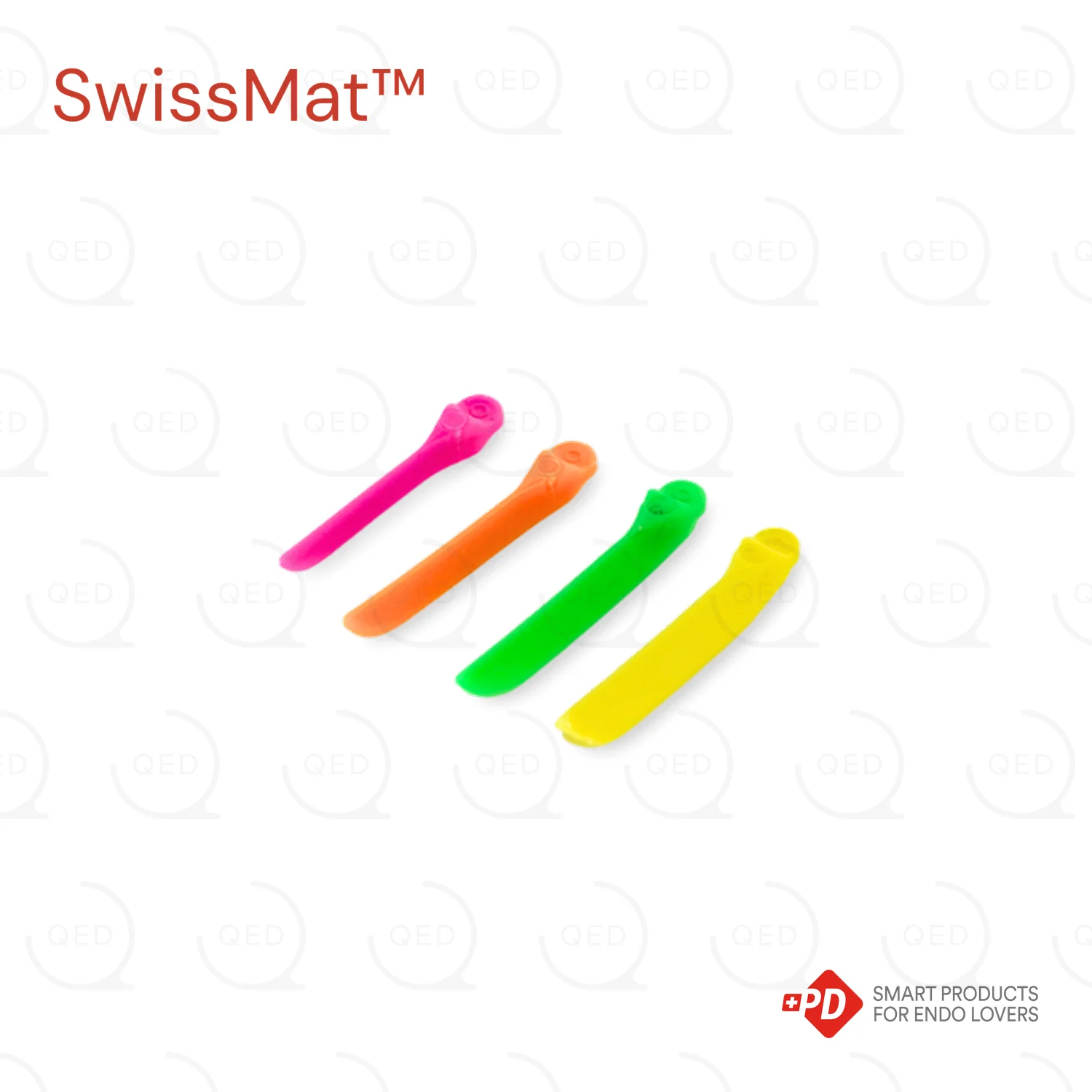
swissmat™ · 2 rings · 4 pairs of tines
two class ii cavities side by side, and one separation ring on the tray. the starter kit ships with a single ring, which is fine until the day it is not. this refill set adds two more, plus four pairs of tines across all three sizes – including the large pair the starter kit does not include.
this set: 2 × rings · 1 pair of tines s · 2 pairs of tines m · 1 pair of tines l
assembled in switzerland by produits dentaires
| the ring | stainless steel, for what pd describe as strong tooth separation to create the contact point |
| the tines | thermoplastic, interchangeable and autoclavable, in s, m and l to suit different tooth anatomies |
| two m pairs | the medium tines are the ones that get used, which is why the set carries twice as many |
| reusable | rings and tines are supplied non-sterile and must be sterilised before first use |
› a ring that spreads can be reset. the swissmat forceps carry notches for exactly that, so a tired ring is a fixable problem rather than a replacement.
› secure it with floss. pd's warning says to ensure the ring with dental floss, alongside the mandatory rubber dam.
› seat it over the wedge, as far gingivally as it will go, once the band and wedge are already in place.
how much separation force does the ring apply?
pd publish no figure, so we will not quote one – and we would be sceptical of anyone who did without a method to go with it. what they do state is the intent: strong tooth separation to create the contact point.
which tine size do i use?
the one that matches the tooth. they are interchangeable and autoclavable, so changing them mid-list is a few seconds rather than a second ring.
| the full system | swissmat™ starter kit – includes the forceps that reset the ring |
| band refills | molar · premolar · molar with extension |
| wedge refills | v-wedges assorted · 100 |
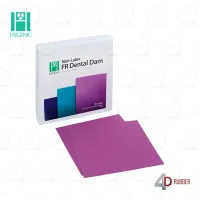
| the mandatory dam | hygenic fr dam, non-latex · 30 sheets |
swissmat™ rings refill set · 2 stainless steel rings · 4 pairs of interchangeable thermoplastic tines, s, m and l · autoclavable · produits dentaires · ref 41914

proroot® mta · white · 4 × 0.5 g
root-end fillingperforation repairapexificationpulp cappingpulpotomy, primary teeth
proroot® mta is dentsply sirona’s mineral trioxide aggregate – a fine, hydrophilic powder that sets in the presence of moisture into what their directions call “a strong impermeable barrier”. four 0.5 g pouches, each with its own water ampoule, so every case is mixed fresh and nothing is left open on the shelf.
| 4 mm al min. radiopacity, ifu | ~3 min working time, ifu | > 24 mpa compressive, ifu |
this pack: proroot® mta root canal repair material, white – 4 pouches of 0.5 g powder and 5 ampoules of 0.18 g water · dentsply sirona ref a040500000300
single use · non-sterile, do not sterilise · shelf life 3 years
› six indications in one material. dentsply sirona’s directions list root-end filling, the apical plug in apexification, perforation repair during root canal therapy, repair after internal resorption, pulp capping and pulpotomy of primary teeth.
› sets in a wet field. the powder hydrates to a colloidal gel that, in the directions’ words, “solidifies to form a strong impermeable barrier”. moisture is part of the chemistry, not an enemy of it.
› unit dose. each 0.5 g pouch is matched to a 0.18 g micro-dose water ampoule, so the powder-to-liquid ratio is set by the pack, not the clock. the four-pouch box carries one spare ampoule.
› radiopaque. at least 4 mm of aluminium equivalent (ifu), so placement can be confirmed on the radiograph the directions ask for.
› a permanent part of the filling. in perforation repair and apexification the directions leave the set mta in place and obturate the remaining canal on top of it.
dentsply sirona call it “the first name in root repair”, and on a bench of newer bioceramics it is still the material the others describe themselves against. what you are buying is a known quantity: a composition published in the directions, six indications set out step by step, and a pack that controls the one variable mta punishes – the water.
the four-pouch box suits a practice that places mta occasionally – a perforation here, a pulp cap there – because each pouch stays sealed until the case needs it. the directions insist on that: kept in its sealed packaging and stored dry, because moisture is what sets it. for regular use, the 10 × 0.5 g box is the lower cost per pouch.
proroot® mta root repair material is a powder consisting of fine, hydrophilic particles that set in the presence of moisture. hydration of the powder creates a colloidal gel that solidifies to form a strong impermeable barrier that fully cures over a four-week period.
dentsply sirona, proroot® mta instructions for use (europe, 2025-08)
| material | mineral trioxide aggregate – a fine, hydrophilic powder that sets in the presence of moisture |
| composition | tri- and dicalcium silicates 69–74%, bismuth oxide 17–22%, minor components 2–7% (calcium aluminate, aluminoferrite and sulphate, and others) |
| shade | white (tooth-coloured) |
| mixing | one 0.5 g pouch with one 0.18 g water ampoule, about a minute on the pad |
| cure | checked for hardness after four hours; fully cures over four weeks |
| shelf life | 3 years; store dry, below 30 °c, away from sunlight |
| contraindications | none known |
mixing (all indications). dispense a pouch onto the pad, pull the end off an ampoule and squeeze it out alongside, bring the liquid in gradually and mix for about a minute. it does not set as quickly as other cements – careful mixing is what makes it easy to handle.
1perforation repair, and repair after internal resorption. under dam: debride and irrigate with hypochlorite (for resorption, a week of calcium hydroxide first), dry, and obturate the canal apical to the defect. carry the mta into the defect, compact it with a small plugger, cotton pellet or paper point, and confirm on a radiograph.
2apexification. after a week of calcium hydroxide, carry and compact a three to five millimetre apical barrier, confirm it radiographically, and leave a moist pellet under a temporary.
3after either: at four hours or the next visit, check the mta is hard (if not, rinse and repeat), then obturate the rest of the canal. the mta stays as a permanent part of the filling.
4root-end filling. resect, prepare a class i root-end cavity three to five millimetres deep with an ultrasonic tip, achieve haemostasis, dry, then place and compact the mta, clean the root surface and confirm on a radiograph.
5pulp capping. rinse the exposure with hypochlorite, place a small amount of mta over it, blot the excess moisture, cover it with a light-cured liner, then etch, bond and restore. review sensibility every six months.
6pulpotomy of primary teeth. remove the coronal pulp, achieve haemostasis with pressure, place mta over the pulp stumps and chamber floor to an even three to four millimetres, fill the chamber and restore – the directions finish with a stainless-steel crown.
these are summaries. the directions carry every step, and the materials they name at each stage, in full – see downloads.
how much water, and what if it is too wet or too dry?
use the ampoule supplied with each pouch and mix for about a minute so every particle is hydrated. the directions allow a little extra water – the spare ampoule, or usp purified water – to reach the consistency you want, and they warn that too much or too little liquid reduces the final strength. if the mix starts to dry on the pad, cover it with moist gauze rather than adding more water.
will it discolour the tooth?
the directions are candid about it: a slight discolouration may appear in the months after treatment, and in an aesthetic zone they ask the clinician to weigh the procedure, the surface area exposed and the other restorative materials used.
how long before i can restore over it?
for perforation repair and apexification the directions place a moist pellet and a temporary for at least four hours, then check the mta is hard – at that visit or a later one – before obturating the rest of the canal. for pulp capping they cover it straight away with a light-cured liner, then bond and restore in the same visit.
can i use a pouch across two patients?
no. proroot mta is single use and single patient, and the directions say to place it immediately after mixing; once set it cannot be used again. that is what the 0.5 g unit dose is for.
4 × 0.5 g or 10 × 0.5 g?
same material, same pouch, same ampoule. the four-pack carries one spare ampoule for adjusting a mix; the ten-pack is the lower cost per pouch for practices placing mta every week.
| isolation | qed non-latex dam – the directions use dental dam at every stage. |
| irrigants | chlorax 5.25%, chlorax 2% and endo-solution 17% edta. |
| interim dressing | ultracal xs, calcipast and opacal – calcium hydroxide, which the resorption and apexification protocols place for a week. |
| drying | mmpp paper points 15–40 – or the matched points for your file system. |
| delivery | vista mta carriers 0.80 mm, 0.99 mm and 1.60 mm · cerkamed mta applicator 0.80 mm and 1.20 mm. |
| compaction | penn micro-plugger 060, 100 · root-end: endoblack retroplugger 050, 075. |
| obturation | proroot bio sealer – dentsply sirona’s bioceramic sealer on the same calcium silicate chemistry · ah plus – the epoxy alternative. |
| bonding | prime&bond active – dentsply sirona’s universal adhesive. |
| coronal seal | sdr flow+ refill universal – 4 mm bulk increment, one cure. |
| also in stock | neomta 2 and neoputty – avalon biomed’s bioceramic repair materials, a different formulation and handling. |
› proroot® mta instructions for use (pdf, 1.1 mb, multilingual, dentsply sirona) – the current european edition (2025-08), on dentsply sirona’s site. english is the first section.
indications, composition, physical properties, precautions, adverse reactions, storage and every step above are from dentsply sirona’s proroot® mta instructions for use (end-ifu-proroot-mta-tds-v05, europe, 2025-08; english section, spelling anglicised). “the first name in root repair” is dentsply sirona’s own line. technique is theirs; the clinical decision is yours – we make no claim of our own about seal, healing or outcome. proroot, ah plus, sdr and prime&bond are dentsply sirona trademarks; neomta and neoputty are avalon biomed trademarks.
proroot® mta · root canal repair material, white · 4 × 0.5 g pouches + 5 × 0.18 g water ampoules · dentsply sirona · ref a040500000300
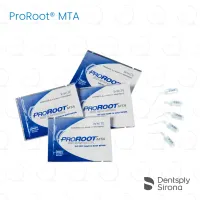
proroot® mta · white · 10 × 0.5 g
root-end fillingperforation repairapexificationpulp cappingpulpotomy, primary teeth
ten single-patient pouches of dentsply sirona’s mineral trioxide aggregate, each with its own 0.18 g water ampoule. the lower cost per pouch, for practices that place mta every week – perforations, apical plugs, root-end fillings and pulp caps.
| 4 mm al min. radiopacity, ifu | ~3 min working time, ifu | > 24 mpa compressive, ifu |
this pack: proroot® mta root canal repair material, white – 10 pouches of 0.5 g powder and 10 ampoules of 0.18 g water · dentsply sirona ref a040500000400
single use · non-sterile, do not sterilise · shelf life 3 years
› six indications in one material. dentsply sirona’s directions list root-end filling, the apical plug in apexification, perforation repair during root canal therapy, repair after internal resorption, pulp capping and pulpotomy of primary teeth.
› sets in a wet field. the powder hydrates to a colloidal gel that, in the directions’ words, “solidifies to form a strong impermeable barrier”. moisture is part of the chemistry, not an enemy of it.
› unit dose. each 0.5 g pouch is matched to a 0.18 g micro-dose water ampoule, so the powder-to-liquid ratio is set by the pack, not the clock. the four-pouch box carries one spare ampoule.
› radiopaque. at least 4 mm of aluminium equivalent (ifu), so placement can be confirmed on the radiograph the directions ask for.
› a permanent part of the filling. in perforation repair and apexification the directions leave the set mta in place and obturate the remaining canal on top of it.
it is the same material, the same 0.5 g pouch and the same unit-dose ampoule as the 4 × 0.5 g box – the difference is volume. each pouch stays sealed until the case needs it, which is what the directions ask for: kept in its sealed packaging and stored dry, because moisture is what sets it. with a three-year shelf life, a ten-pack is a sensible stock item for any practice doing its own perforation repairs and pulp caps.
dentsply sirona call it “the first name in root repair”. the case for it is a known quantity: a composition published in the directions, six indications set out step by step, and a pack that controls the water.
| material | mineral trioxide aggregate – a fine, hydrophilic powder that sets in the presence of moisture |
| composition | tri- and dicalcium silicates 69–74%, bismuth oxide 17–22%, minor components 2–7% (calcium aluminate, aluminoferrite and sulphate, and others) |
| shade | white (tooth-coloured) |
| mixing | one 0.5 g pouch with one 0.18 g water ampoule, about a minute on the pad |
| cure | checked for hardness after four hours; fully cures over four weeks |
| shelf life | 3 years; store dry, below 30 °c, away from sunlight |
| contraindications | none known |
dispense a pouch onto the pad, pull the end off an ampoule and squeeze it out alongside, bring the liquid in gradually and mix for about a minute. carry it into place, compact it, and confirm on a radiograph. in perforation repair and apexification (a three to five millimetre apical barrier), leave a moist pellet under a temporary and check the mta is hard at four hours or the next visit before obturating the rest of the canal. in pulp capping, cover it with a light-cured liner and restore in the same visit.
each indication is set out step by step on the 4 × 0.5 g page and in full in the directions – see downloads.
how much water, and what if it is too wet or too dry?
use the ampoule supplied with each pouch and mix for about a minute so every particle is hydrated. the directions allow a little extra water – the spare ampoule, or usp purified water – to reach the consistency you want, and they warn that too much or too little liquid reduces the final strength. if the mix starts to dry on the pad, cover it with moist gauze rather than adding more water.
will it discolour the tooth?
the directions are candid about it: a slight discolouration may appear in the months after treatment, and in an aesthetic zone they ask the clinician to weigh the procedure, the surface area exposed and the other restorative materials used.
how long before i can restore over it?
for perforation repair and apexification the directions place a moist pellet and a temporary for at least four hours, then check the mta is hard – at that visit or a later one – before obturating the rest of the canal. for pulp capping they cover it straight away with a light-cured liner, then bond and restore in the same visit.
can i use a pouch across two patients?
no. proroot mta is single use and single patient, and the directions say to place it immediately after mixing; once set it cannot be used again. that is what the 0.5 g unit dose is for.
| isolation | qed non-latex dam – the directions use dental dam at every stage. |
| irrigants | chlorax 5.25%, chlorax 2% and endo-solution 17% edta. |
| interim dressing | ultracal xs, calcipast and opacal – calcium hydroxide, which the resorption and apexification protocols place for a week. |
| drying | mmpp paper points 15–40 – or the matched points for your file system. |
| delivery | vista mta carriers 0.80 mm, 0.99 mm and 1.60 mm · cerkamed mta applicator 0.80 mm and 1.20 mm. |
| compaction | penn micro-plugger 060, 100 · root-end: endoblack retroplugger 050, 075. |
| obturation | proroot bio sealer – dentsply sirona’s bioceramic sealer on the same calcium silicate chemistry · ah plus – the epoxy alternative. |
| bonding | prime&bond active – dentsply sirona’s universal adhesive. |
| coronal seal | sdr flow+ refill universal – 4 mm bulk increment, one cure. |
| also in stock | neomta 2 and neoputty – avalon biomed’s bioceramic repair materials, a different formulation and handling. |
› proroot® mta instructions for use (pdf, 1.1 mb, multilingual, dentsply sirona) – the current european edition (2025-08), on dentsply sirona’s site. english is the first section.
indications, composition, physical properties, precautions, adverse reactions, storage and every step above are from dentsply sirona’s proroot® mta instructions for use (end-ifu-proroot-mta-tds-v05, europe, 2025-08; english section, spelling anglicised). “the first name in root repair” is dentsply sirona’s own line. technique is theirs; the clinical decision is yours – we make no claim of our own about seal, healing or outcome. proroot, ah plus, sdr and prime&bond are dentsply sirona trademarks; neomta and neoputty are avalon biomed trademarks.
proroot® mta · root canal repair material, white · 10 × 0.5 g pouches + 10 × 0.18 g water ampoules · dentsply sirona · ref a040500000400
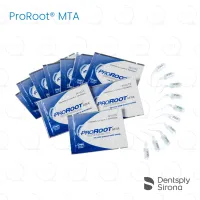
start-x® no. 1 · satelec thread
access wallsaccess cavitypiezo ultrasonicsatelec thread
walls that overhang the canal entrances cost you a straight line into the canal. no. 1 is the start-x tip for finishing them: the sides do the cutting, and the tip itself is deliberately non-active so it will not mark the pulp chamber floor while you work.
this pack: dentsply sirona start-x® ultrasonic tip no. 1, access wall refinement · satelec thread (m3 x 0.6 mm) · 1 tip
| indication | finishing of the walls of the access cavity (dentsply sirona directions) |
| thread | satelec type, m3 x 0.6 mm |
| for | satelec-type (acteon) piezo ultrasonic units, piezo generators only |
| power | 16–18 on a satelec p5 / newtron (dentsply sirona brochure) |
| reprocessing | steam sterilisation, 134°c for 18 min |
| dentsply ref | a066000000100 |
› non-active tip – dentsply sirona: avoids accidentally damaging the pulp chamber floor.
› active lateral part – creates a straight access to the canal.
› dentsply sirona's launch material also gives it the removal of restorations, filling materials, caries and dentine interferences from the access cavity.
dentsply sirona developed the five start-x tips with professor berutti, professor cantatore and dr castellucci on a simple principle: one tip, one clinical indication, to facilitate and optimise the preparation of the access cavity.
in dentsply sirona's words: “higher control and precision with ultrasonic inserts specifically designed for access cavity refinement and canal orifice location.”
› micro-milled active part – in dentsply sirona's words, minimising the risk of diamond grit loss in the patient's mouth.
› resistance to fracture – dentsply sirona describe it as excellent.
› satelec thread – m3 x 0.6 mm. need the other fitting? this tip is also made with an ems thread.
| no. 1 | this page. access wall refinement |
| no. 2 | start-x® no. 2 – mb2 canal locator |
| no. 3 | start-x® no. 3 – canal entrance tip |
| no. 4 | start-x® no. 4 – metal post removal |
| no. 5 | start-x® no. 5 – pulp floor anatomy |
› secure the tip to the handpiece with the key before use.
› start at a lower power setting and only increase it if necessary to safely accomplish the task. dentsply sirona give no. 1 a range of 16–18 on a satelec p5 / newtron, adjusted to the clinical application; check your unit's own instructions too.
› irrigation is recommended for procedures that need high power, to avoid overheating.
› a visual aid is recommended, for comfort and safety. never run the generator with a damaged tip.
› contraindications: none known when used as recommended, but dentsply sirona recommend not using the tips in patients with a pacemaker.
why is the end of the tip smooth?
so the walls can be taken back right down to the floor without the tip cutting into it. dentsply sirona designed the non-active end for exactly that: to avoid accidentally damaging the pulp chamber floor.
will it fit my ultrasonic unit?
this is the satelec-thread version (m3 x 0.6 mm). dentsply sirona give its power settings for satelec p5 / newtron units. if your unit takes ems-thread tips, choose the ems version.
not sure? call 01733 404999 or email sales@qedendo.com with the make and model and we will check it for you.
| ultrasonic unit | newtron® p5 xs · newtron® booster |
| negotiation | c-pilot® 08, 21 mm · c-pilot® 10, 21 mm · micro-opener 10/.04 |
| irrigants | chlorax 5.25% · endo-solution 17% edta |
| delivery | navitip™ 29 ga, 25 mm |
| coronal seal | sdr® flow+ universal – 4 mm bulk increment |
› start-x® ultrasonic tips brochure (pdf, 0.5 mb, dentsply sirona) – all five tips and their indications, the power range for each on satelec p5 / newtron and ems minipiezon units, and the order codes by thread.
dentsply sirona · start-x® ultrasonic tip no. 1 · satelec thread m3 x 0.6 mm · dentsply ref a066000000100 · ref a066000000100
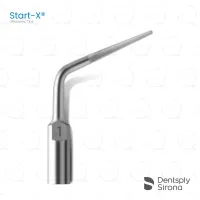
start-x® no. 1 · ems thread
access wallsaccess cavitypiezo ultrasonicems thread
walls that overhang the canal entrances cost you a straight line into the canal. no. 1 is the start-x tip for finishing them: the sides do the cutting, and the tip itself is deliberately non-active so it will not mark the pulp chamber floor while you work.
this pack: dentsply sirona start-x® ultrasonic tip no. 1, access wall refinement · ems thread (m3 x 0.5 mm) · 1 tip
| indication | finishing of the walls of the access cavity (dentsply sirona directions) |
| thread | ems type, m3 x 0.5 mm |
| for | ems-type piezo ultrasonic units, piezo generators only |
| power | 8–9 on a ems minipiezon (dentsply sirona brochure) |
| reprocessing | steam sterilisation, 134°c for 18 min |
| dentsply ref | a06610000100 |
› non-active tip – dentsply sirona: avoids accidentally damaging the pulp chamber floor.
› active lateral part – creates a straight access to the canal.
› dentsply sirona's launch material also gives it the removal of restorations, filling materials, caries and dentine interferences from the access cavity.
dentsply sirona developed the five start-x tips with professor berutti, professor cantatore and dr castellucci on a simple principle: one tip, one clinical indication, to facilitate and optimise the preparation of the access cavity.
in dentsply sirona's words: “higher control and precision with ultrasonic inserts specifically designed for access cavity refinement and canal orifice location.”
› micro-milled active part – in dentsply sirona's words, minimising the risk of diamond grit loss in the patient's mouth.
› resistance to fracture – dentsply sirona describe it as excellent.
› ems thread – m3 x 0.5 mm. need the other fitting? this tip is also made with an satelec thread.
| no. 1 | this page. access wall refinement |
| no. 2 | start-x® no. 2 – mb2 canal locator |
| no. 3 | start-x® no. 3 – canal entrance tip |
| no. 4 | start-x® no. 4 – metal post removal |
| no. 5 | start-x® no. 5 – pulp floor anatomy |
› secure the tip to the handpiece with the key before use.
› start at a lower power setting and only increase it if necessary to safely accomplish the task. dentsply sirona give no. 1 a range of 8–9 on a ems minipiezon, adjusted to the clinical application; check your unit's own instructions too.
› irrigation is recommended for procedures that need high power, to avoid overheating.
› a visual aid is recommended, for comfort and safety. never run the generator with a damaged tip.
› contraindications: none known when used as recommended, but dentsply sirona recommend not using the tips in patients with a pacemaker.
why is the end of the tip smooth?
so the walls can be taken back right down to the floor without the tip cutting into it. dentsply sirona designed the non-active end for exactly that: to avoid accidentally damaging the pulp chamber floor.
will it fit my ultrasonic unit?
this is the ems-thread version (m3 x 0.5 mm), with dentsply sirona power settings for the ems minipiezon. if your unit takes satelec-thread tips, choose the satelec version.
not sure? call 01733 404999 or email sales@qedendo.com with the make and model and we will check it for you.
| negotiation | c-pilot® 08, 21 mm · c-pilot® 10, 21 mm · micro-opener 10/.04 |
| irrigants | chlorax 5.25% · endo-solution 17% edta |
| delivery | navitip™ 29 ga, 25 mm |
| coronal seal | sdr® flow+ universal – 4 mm bulk increment |
› start-x® ultrasonic tips brochure (pdf, 0.5 mb, dentsply sirona) – all five tips and their indications, the power range for each on satelec p5 / newtron and ems minipiezon units, and the order codes by thread.
dentsply sirona · start-x® ultrasonic tip no. 1 · ems thread m3 x 0.5 mm · dentsply ref a06610000100 · ref a0661-1
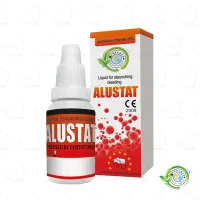
cerkamed alustat · liquid · 10 ml
gingival bleedingswollen gingivabefore impressionsdentist use only
alustat is cerkamed's 25% aluminium chloride liquid for the slight gingival bleeding that gets in the way of an impression, a matrix or a bond. cerkamed's description: aluminium chloride "has the vasoconstrictive effect on tiny blood vessels, as a result of which the gingival swelling and slight bleedings decrease". a dropper bottle, so it goes onto a cotton pellet rather than out of a syringe.
this pack: cerkamed alustat haemostatic liquid, 10 ml bottle with dropper · 25% aluminium chloride
| active | aluminium chloride 25%, water ph. eur., excipients |
| use | to staunch slight gingival bleeding and reduce gingival swelling during dental treatment |
| how it is applied | cerkamed: rub the swollen or injured gingiva with a cotton wool tampon soaked in alustat, rinse with clean water; contact time up to 5 minutes |
| presentation | 10 ml bottle with dropper |
| also in the range | alustat gel (syringe, 25%) · alustat foam (syringe, 20%) |
› cerkamed: "rub gently the swollen or injured gingiva with a cotton wool tampon soaked in alustat and rinse with clean water. repeat if necessary."
› cerkamed caution that it must be removed before an impression is taken, "to avoid inhibiting the polymerisation of the impression material", and that aluminium chloride "can adversely affect the bonding strength of dentin to tooth restoration materials" – rinse well before you bond.
› practical shelf life: stored below 25°c and resealed after each use, cerkamed state the expiry date does not change once opened.
› cerkamed mark the product "to be used by dentist only".
same chemistry, three ways of getting it to the tissue. the liquid goes on a pellet and suits a broad area of weeping gingiva. alustat gel comes in a syringe with fine applicators for a sulcus or a single papilla. alustat foam is 20% aluminium chloride in a foam that cerkamed also direct for tissue retraction, on its own or over a retraction cord. cerkamed give all three the same contact time of up to 5 minutes for the liquid and gel and 2 minutes for the foam.
cerkamed list one: "do not use for patients who are hypersensitive to the product components." they also note the product "has cytotoxic potential" and that aluminium chloride products "may cause local and temporary tissue damage" – keep it to the bleeding site and rinse.
| haemostasis, in a syringe | alustat gel · alustat foam |
| chemical cautery | tcadent – 35% trichloroacetic acid for a granulating lesion, not a bleed |
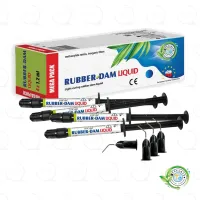
| gingival protection | rubber-dam liquid – light-cured barrier before etching or whitening |
| applicators | elastic applicator tips (20) · black applicator tips (10) |
alustat · 25% aluminium chloride · 10 ml dropper bottle · made by cerkamed, stalowa wola, poland · ref cer-w-al
*Short Shelf Life*
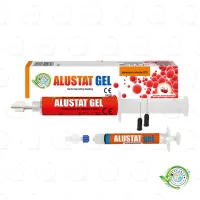
cerkamed alustat gel · 25% · 10 ml syringe
gingival bleedingsulcus haemostasisbefore impressionsdentist use only
alustat gel is the syringe version of cerkamed's 25% aluminium chloride haemostatic: a 10 ml reservoir syringe, a dispenser and a connector to decant from one to the other, and disposable applicator tips to put the gel exactly where the sulcus is bleeding. cerkamed's wording is the same as for the liquid – aluminium chloride "has the vasoconstrictive effect on tiny blood vessels".
this pack: cerkamed alustat gel, 10 ml syringe with dispenser, connector and disposable applicator tips · 25% aluminium chloride
| active | aluminium chloride 25%, water ph. eur., excipients |
| use | to staunch slight gingival bleeding during dental treatment; cerkamed: keep on the bleeding site for up to 5 minutes |
| how it is applied | cerkamed: immerse the applicator in ethyl alcohol, let it dry, fit it to the syringe, apply directly on the bleeding spot, then rinse with clean water. repeat if necessary. |
| presentation | 10 ml syringe, dispenser, connector, disposable applicators. the 10 ml is a bulk syringe – you fill the small dispenser from it |
| also in the range | alustat liquid (dropper bottle) · alustat foam (foam, 20%) |
› cerkamed: "product intended for multiple use except the applicator which is for single use only. multiple use of the applicator may cause the risk of reinfection."
› before an impression, cerkamed direct that the preparation is removed "to avoid inhibiting the polymerisation of the impression material"; before bonding, note their caution that aluminium chloride "can adversely affect the bonding strength of dentin to tooth restoration materials".
› practical shelf life: stored below 25°c and resealed after each use, cerkamed state the expiry date does not change once opened.
› cerkamed mark the product "to be used by dentist only".
because 10 ml is a practice reservoir, not a chairside syringe. cerkamed's system is to screw the connector onto the big syringe, draw a small amount into the dispenser, and fit an applicator tip to that. the reservoir stays capped and clean; only the dispenser and the single-use tip go near the patient.
the pack comes with disposable applicators. replacements are the cerkamed elastic applicator tips (20), and the black applicator tips (10) that cerkamed supply for their syringe materials.
| other formats | alustat liquid · alustat foam |
| chemical cautery | tcadent – for a granulating lesion rather than a bleed |
| gingival protection | rubber-dam liquid |
| replacement tips | elastic applicator tips (20) · black applicator tips (10) |
alustat gel · 25% aluminium chloride · 10 ml syringe, dispenser, connector, applicators · made by cerkamed, stalowa wola, poland · ref cer-w-alg10
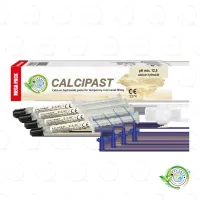
calcipast mega pack · calcium hydroxide in volume
every multi-visit case needs it – so why buy it a gram at a time? calcipast is cerkamed's non-setting calcium hydroxide paste for temporary root canal filling and pulp capping, with hydroxyapatite in the formulation to support remineralisation and healing of periapical tissues. the mega pack puts 8.4 g of it on your shelf.
mega pack: 4 × 2.1 g syringes · 4 disposable applicators · grip plate
made by cerkamed, poland
| ph 12.5–13 | strongly alkaline – an unfavourable environment for the microorganisms left between visits |
| + hydroxyapatite | formulated with hydroxyapatite to support remineralisation and restoration of damaged periapical tissues |
| endostop control | set the applicator 2–3 mm short of working length for depth-controlled placement – verify radiographically |
| 8.4 g total | four full 2.1 g syringes – the economical way to keep a multi-surgery practice dressed |
› indicated for temporary root canal filling during endodontic treatment and temporary deep-cavity filling in direct and indirect pulp capping.
› non-setting and radiopaque – easy to see on the radiograph, easy to remove at the next visit.
› practical shelf life – stored below 25°c and resealed between uses, the expiry date remains valid after opening.
how do i control placement depth?
measure the canal, set the endostop on the applicator 2–3 mm shorter, and fill while withdrawing – then confirm on the radiograph that material stays short of the apex.
what does the hydroxyapatite add?
alongside the antibacterial alkalinity of calcium hydroxide, it gives the paste a remineralising effect on dental tissues and supports periapical healing.
does an opened syringe keep?
yes – kept below 25°c in its original packaging and properly sealed between uses, the expiry date remains valid after opening.
calcipast mega pack · calcium hydroxide + hydroxyapatite + barium sulphate · ph 12.5–13 · non-setting · radiopaque · 4 × 2.1 g syringes · cerkamed
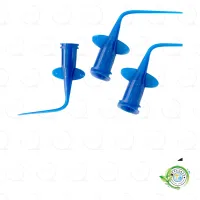
cerkamed capillary tips · blue · 0.25 mm · 20
pastes and gelsendodontic materialsluer locksingle use, non-sterile
cerkamed's blue capillary tip: 0.25 mm bore, bendable, luer-lock, for placing pastes, creams and gels from a syringe. cerkamed's wording: "elastic applicators for application of dental materials." twenty to the pack, single use, non-sterile.
this pack: cerkamed elastic applicator tips (capillary tip, plastic), blue, 0.25 mm, luer lock, single use, non-sterile (pack of 20)
| bore | 0.25 mm |
| fitting | luer-lock syringes |
| material | plastic, blue, bendable |
| sterility | cerkamed: medical device for single use only, non-sterile |
| pack | 20 |
› cerkamed's spec, in full: blue, capillary tip, bendable, diameter 0.25 mm, suitable for luer-lock syringes, medical device for single use only, non-sterile.
› fits the cerkamed syringe materials – alustat gel, endo-prep cream 10 ml, canal detector, rubber-dam liquid and blue etch flow among them – and any other luer-lock syringe on the tray.
› bend it to the angle the tooth needs before it goes on; cerkamed call it elastic for that reason.
bore. these are the 0.25 mm capillary tips for thin materials. the black applicator tips (10) are the wider bent tips cerkamed supply with alustat foam and the thicker syringe materials.
no – cerkamed supply them non-sterile, single use. cerkamed's directions for their syringe materials have the tip dipped in ethyl alcohol before it is fitted.
| wider tips | black applicator tips (10) |
| materials they fit | alustat gel · endo-prep cream 10 ml · canal detector · rubber-dam liquid · blue etch flow |
| aspirators | endo-aspirator pro · endo-aspirator (5) |
capillary tip · blue · 0.25 mm · luer lock · single use, non-sterile · pack of 20 · made by cerkamed, stalowa wola, poland · ref cer-w-ea20n
cerkamed tools for mta · mx1–mx4 · stainless steel
mta carryingmta condensingperforation repairretrograde fillingautoclavable
a set of double-ended stainless steel instruments for mta: two ends that carry a measured dose from the dosing block to the site, two that condense and smooth it once it is there, split by anterior and posterior reach. cerkamed's description: "reusable dental tools for handling and application of prepared measure of mta material." non-sterile in the box; autoclave before first use and every use after.
this pack: cerkamed tools for mta, stainless steel instrument set, mx1–mx4, non-sterile, reusable
| mx1 | carrying tip – mta from the dosing block into the prepared canal, perforation or retrograde cavity, posterior teeth |
| mx2 | carrying tip – the same, anterior teeth |
| mx3 | application tip – placing, condensing and smoothing the cement, anterior teeth |
| mx4 | application tip – the same, posterior teeth |
| material | cerkamed: corrosion-resistant stainless steel |
| sterilisation | cerkamed: steam autoclave 134°c for 5 minutes; disinfect, wash, rinse and dry first. ultrasonic cleaning recommended |
| storage | cerkamed: 5–30°c, relative humidity below 70% |
› cerkamed: "the packaged instruments are non – sterile. before sterilisation, these new instruments should be washed thoroughly with warm water and using detergent. before each use these dental instruments must be sterilised."
› cerkamed: "before use protect the instrument against contamination or damage of the material structure (cracks, bends, fractures, peeling, etc.)."
› the mx1–mx4 functions above are from the qed listing, which follows cerkamed's instrument leaflet; their web page describes the set only in general terms.
› cerkamed mark the product "to be used by dentist only".
three different jobs. the tools set carries a formed dose and condenses it. the mta+ applicator 0.8 mm and mta+ applicator 1.2 mm are single-ended placers that pick up a plug of a set diameter. the vista apex mta carriers are spring-loaded carriers for a longer reach. most operators own a carrier and this set.
cerkamed's matrix mta dosing block has grooves from 0.7 to 1.0 mm for forming a dose to size, and mx1/mx2 are described as carrying from it. it is not one we stock at present; a glass slab and a measured pick-up works with the same tips.
| the material | mta+ maxi |
| placers | mta+ applicator 0.8 mm · mta+ applicator 1.2 mm · vista apex mta carriers |
| practise it | mta smart system training set |
| bioceramic alternatives | neomta 2 · neoputty |
tools for mta · mx1–mx4 · stainless steel · non-sterile, autoclave 134°c 5 min · made by cerkamed, stalowa wola, poland · ref cer-w-narz
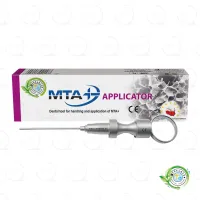
cerkamed mta+ applicator · 0.8 mm · stainless steel
mta placementperforation repairroot-end fillingautoclavablereusable
the mta+ applicator is cerkamed's single-ended placer for mixed mta: a stainless steel handle with a ring for the finger, a fine plunger, and a 0.8 mm tip that picks up a measured dose and pushes it out where the repair is. cerkamed's description: "reusable dental tools for handling and application of prepared measure of mta+ material." two diameters; this is the 0.8 mm.
this pack: cerkamed mta+ applicator, 0.8 mm diameter, stainless steel, reusable, non-sterile
| tip diameter | 0.8 mm |
| material | cerkamed: corrosion-resistant stainless steel |
| sterilisation | cerkamed: steam autoclave 134°c for 5 minutes, after disinfecting, washing, rinsing and drying; ultrasonic cleaning recommended |
| storage | cerkamed: 5–30°c, relative humidity below 70% |
| other size | mta+ applicator 1.2 mm |
› cerkamed: "the packaged instruments are non–sterile. before sterilisation, these new instruments should be washed thoroughly with warm water and using detergent. before each use these dental instruments must be sterilised."
› cerkamed: "before use protect the instrument against contamination or damage of the material structure (cracks, bends, fractures, peeling, etc.)."
› clear the barrel before the mta sets in it – cerkamed give 6 minutes from mixing on the mta+ page, and the plunger is the only way through a set plug.
› cerkamed mark the product "to be used by dentist only".
the canal or the cavity decides. 0.8 mm goes down a shaped canal for an apical plug or a lateral perforation; 1.2 mm carries more for a furcation floor, a pulpotomy or a retrograde cavity. many operators keep both. this page is the 0.8 mm; the other is here.
this is a placer: it picks up a plug of one diameter and delivers it. the vista apex mta carriers are spring-loaded carriers with a longer reach, and the tools for mta (mx1–mx4) carry and condense from a dosing block. they are companions rather than substitutes.
| the material | mta+ maxi |
| other instruments | tools for mta (mx1–mx4) · vista apex mta carriers |
| practise it | mta smart system training set |
| bioceramic alternatives | neomta 2 · neoputty |
mta+ applicator · 0.8 mm · stainless steel · reusable, non-sterile, autoclave 134°c 5 min · made by cerkamed, stalowa wola, poland · ref cer-w-narz0.8
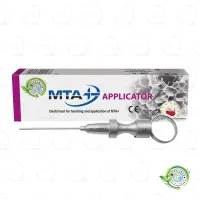
cerkamed mta+ applicator · 1.2 mm · stainless steel
mta placementperforation repairroot-end fillingautoclavablereusable
the mta+ applicator is cerkamed's single-ended placer for mixed mta: a stainless steel handle with a ring for the finger, a fine plunger, and a 1.2 mm tip that picks up a measured dose and pushes it out where the repair is. cerkamed's description: "reusable dental tools for handling and application of prepared measure of mta+ material." two diameters; this is the 1.2 mm.
this pack: cerkamed mta+ applicator, 1.2 mm diameter, stainless steel, reusable, non-sterile
| tip diameter | 1.2 mm |
| material | cerkamed: corrosion-resistant stainless steel |
| sterilisation | cerkamed: steam autoclave 134°c for 5 minutes, after disinfecting, washing, rinsing and drying; ultrasonic cleaning recommended |
| storage | cerkamed: 5–30°c, relative humidity below 70% |
| other size | mta+ applicator 0.8 mm |
› cerkamed: "the packaged instruments are non–sterile. before sterilisation, these new instruments should be washed thoroughly with warm water and using detergent. before each use these dental instruments must be sterilised."
› cerkamed: "before use protect the instrument against contamination or damage of the material structure (cracks, bends, fractures, peeling, etc.)."
› clear the barrel before the mta sets in it – cerkamed give 6 minutes from mixing on the mta+ page, and the plunger is the only way through a set plug.
› cerkamed mark the product "to be used by dentist only".
the canal or the cavity decides. 0.8 mm goes down a shaped canal for an apical plug or a lateral perforation; 1.2 mm carries more for a furcation floor, a pulpotomy or a retrograde cavity. many operators keep both. this page is the 1.2 mm; the other is here.
this is a placer: it picks up a plug of one diameter and delivers it. the vista apex mta carriers are spring-loaded carriers with a longer reach, and the tools for mta (mx1–mx4) carry and condense from a dosing block. they are companions rather than substitutes.
| the material | mta+ maxi |
| other instruments | tools for mta (mx1–mx4) · vista apex mta carriers |
| practise it | mta smart system training set |
| bioceramic alternatives | neomta 2 · neoputty |
mta+ applicator · 1.2 mm · stainless steel · reusable, non-sterile, autoclave 134°c 5 min · made by cerkamed, stalowa wola, poland · ref cer-w-narz1.2
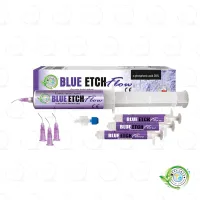
cerkamed blue etch flow · 36% phosphoric acid · 10 ml
enamel and dentine etchingfissure sealingfibre post cementationdentist use only
blue etch flow is cerkamed's 36% orthophosphoric acid in a semi-solid, thixotropic gel: it flows into a fissure under the applicator and stops flowing when the applicator stops. cerkamed's intended use: "etching dentine and enamel fissures prior to composites and cavity seals", and "also recommended for use before cementing glass fibre crown and root inlays". the 10 ml is a reservoir syringe with a dispenser to fill from it.
this pack: cerkamed blue etch flow, 10 ml syringe with connector, delivery syringe (dispenser) and 2 delivery tips · 36% o-phosphoric acid
| active | o-phosphoric acid 36%, gel base, dye |
| use | etching dentine and enamel before composite, fissure sealant, and fibre post or inlay cementation |
| etch time | cerkamed: no longer than 60 seconds; then irrigate with a strong air and water stream for about 15–20 seconds; do not over-dry |
| preparing the 10 ml | cerkamed: swap the white cap for the connector, screw on the dispenser, pump no more than 2 ml into it, fit the metal applicator; leave the connector on the reservoir under its blue cap |
| presentation | 10 ml syringe, connector, dispenser, disposable applicators |
› cerkamed: "apply a thin layer of the etchant onto the dried surface. etch no longer than 60 seconds. irrigate with a strong air stream and water (about 15-20 seconds). do not over-dry." and if the enamel is not clean, repeat.
› on the consistency, cerkamed: "with its carefully formulated semi-solid consistence, blue etch flow reaches inaccessible dental grooves and fissures."
› if the gel is slow to pump into the dispenser, cerkamed: "move the plunger of the syringe with the product several times. the preparation will dilute due to its thixotropic properties."
› cerkamed: "causes severe skin burns and eye damage." cofferdam, gloves, goggles; and their note that etchants "may involve with post-operative hypersensitivity, resulting in temporary pain".
› cerkamed mark the product "to be used by dentist only".
at the end of the case. the coronal seal goes on etched enamel, and a fibre post goes into an etched canal – cerkamed name "glass fibre crown and root inlays" as an indication. it also earns its place next to rubber-dam liquid, since a gingival barrier goes on before the etch does.
cerkamed make 2 ml single syringes, a monster pack of ten 2 ml, and 10 ml and 50 ml reservoirs. the 10 ml with its dispenser is the practice size we stock; ask us about the 2 ml.
| gingival protection first | rubber-dam liquid |
| isolation | irriflex |
| replacement tips | elastic applicator tips (20) |
| haemostasis | alustat gel |
blue etch flow · o-phosphoric acid 36% · 10 ml with connector, dispenser and tips · etch up to 60 s · made by cerkamed, stalowa wola, poland · ref cer-w-wfd
diagnosis · jordco e-dx® · cold and fracture testing
a cotton pledget in ordinary tweezers gives up its coolant almost as fast as you can get it to the tooth – and gives up entirely somewhere around the second molar. jordco built the e-dx® around an open-cell foam tip that holds dental coolant longer, on a detachable contra-angled plier that reaches the back of the mouth and still lets you see what you are doing. their summary is the plain one: the instrument can easily cold and fracture test teeth. the fractester™ for the second of those is built in.
this kit: 3 × handles with the built-in fractester™, 36 × single-use contra-angled pliers, 36 × single-use open-cell foam tips
made by jordco, inc.
| open-cell foam tip | jordco’s stated reason for it: the foam retains dental coolants during testing, rather than shedding them on the way to the tooth |
| contra-angled, detachable | cut to reach posterior teeth and to keep the view clear. the pliers come off the handle and are single use |
| fractester™ built in | at the end of the handle. jordco have the patient bite carefully down on it, to locate fractures or assess for apical periodontitis |
| handles reusable, tips are not | foam tips and pliers are single use only. the handle is reprocessed in a hospital-grade disinfectant with a tuberculocidal claim, and jordco say it withstands limited steam autoclaving |
› the coolant cerkamed pulp spray, mint – what the foam tip is made to hold.
› also from jordco endoring® ii with reduced-glare ruler – the hand-worn organiser.
› file storage endoring® filecaddy® – autoclave the organiser loaded.
› measuring jordco e-ruler®, reduced glare.
what is in the kit?
three handles, 36 pliers and 36 foam tips – so roughly 36 tests, with the handles carrying on.
does it come with coolant?
no, the refrigerant is bought separately – cerkamed pulp spray is the one in our range. it is an ice spray; the open-cell foam is built to hold one longer than a cotton pledget would.
anything to watch in use?
two things straight from jordco’s instructions: always apply a rubber dam before use, and apply the chilled foam to tooth structure only – they warn that contact with soft tissue can cause damage. spray the coolant onto the foam at a safe distance from the patient.
› jordco e-dx® product sheet (pdf, 0.7 mb, jordco) – kit contents, the fractester™ handle and the coolants jordco name.
› jordco e-dx® instructions for use (pdf, 0.6 mb, jordco) – assembling handle and tip, and reprocessing the handle.
jordco e-dx® endodontic diagnostic instrument kit · cold and fracture testing · built-in fractester™ · 3 handles, 36 pliers, 36 foam tips · jordco, inc. · ref edx-s

acteon endo success™ apical surgery kit · 5 tips
ultrasonic endodonticskitnewtron®
controlled retro-preparation. acteon describe the apical surgery kit as offering, “with its unique 3-6-9mm concept”, a controlled retrograde endodontic treatment with greater preservation of bone and dental tissue. the asld and asrd tips add posterior access.
this pack: 5 acteon endo success™ tips (as3d, as6d, as9d, asld, asrd) · a metal holder and an autoclavable universal wrench · ref f00069
made by satelec, a company of the acteon group, mérignac, france
| as3d | the first 3 mm of a retro-preparation in anterior teeth · 3 mm, 9% taper, diamond-coated 30 µm · power 7 |
| as6d | the second tip in the 3-6-9 sequence · 6 mm, 9% taper, diamond-coated 30 µm · power 7 |
| as9d | the third tip, for complex cases · 9 mm, diamond-coated 30 µm at the extremity · power 6 |
| asld | the left-angled apical surgery tip for premolars and molars · 3 mm, diamond-coated 30 µm, left-angled · power 7 |
| asrd | the right-angled apical surgery tip for premolars and molars · 3 mm, diamond-coated 30 µm, right-angled · power 7 |
| also in the kit | a metal holder and an autoclavable universal wrench |
› clean, disinfect and sterilise before each use, following acteon’s cleaning, disinfection and sterilisation instructions for tips (j02001).
› replace at least once a year. acteon: because a maximum number of uses cannot be set, tips in routine use should be “replaced at least once a year”, and sooner if the tip no longer vibrates as expected or treatment slows.
› genuine tips on acteon handpieces. acteon warn that tips from other sources can put patients at risk and damage the equipment.
can i buy the tips singly?
yes – each is stocked on its own: as3d · as6d · as9d · asld · asrd.
which generator do i need?
a newtron® generator such as the p5 xs b.led or booster. power settings for each tip are on acteon’s tip sheets.
| generators | newtron® p5 xs b.led · newtron® booster |
| handpieces | newtron® slim b.led · newtron® handpiece |
| tools | acteon universal wrench · autoclavable tip stand |
acteon endo success™ apical surgery kit · as3d, as6d, as9d, asld, asrd · holder and wrench · satelec / acteon · ref f00069

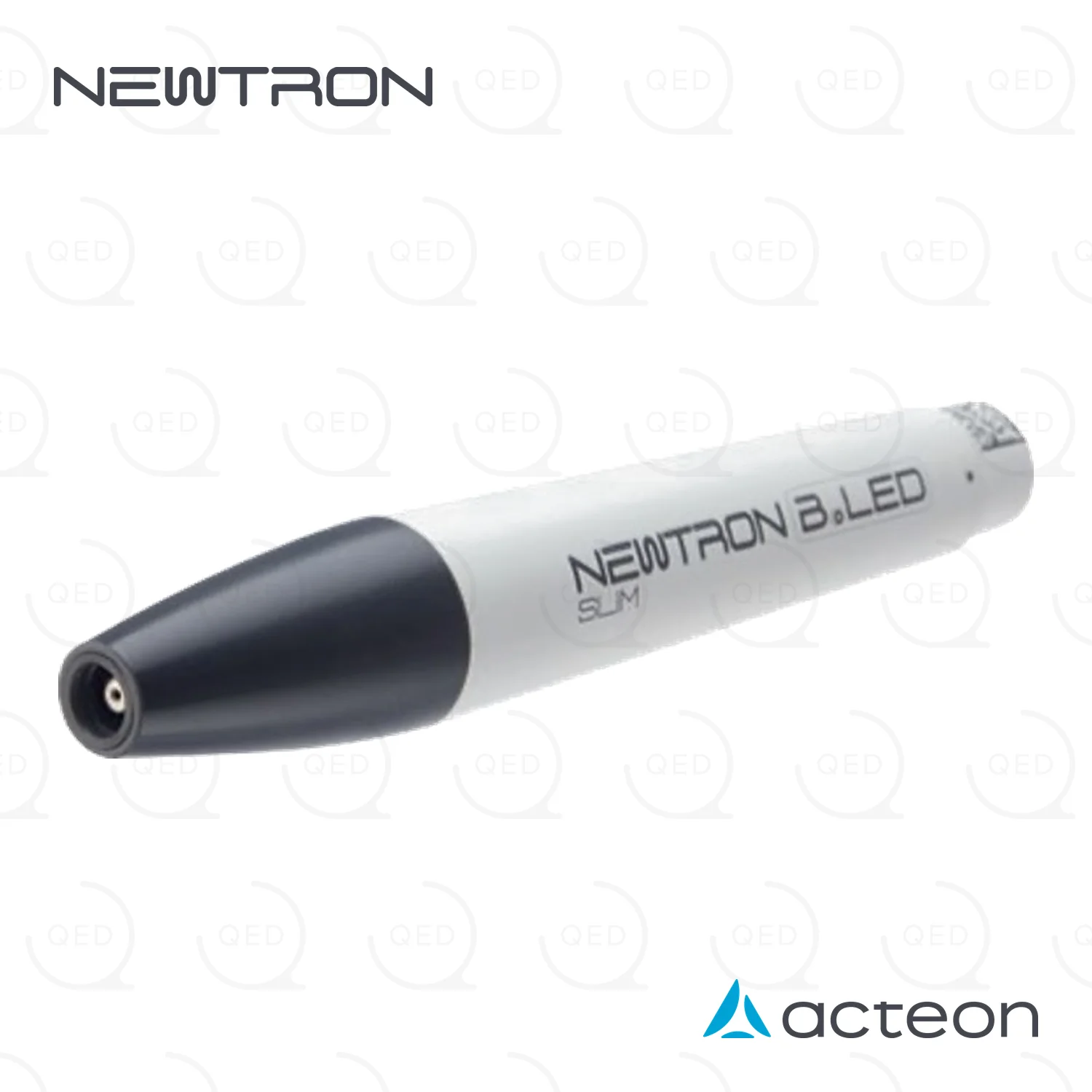
acteon newtron® slim b.led handpiece · white ring
handpieceb.lednewtron®
the led handpiece for the p5 xs b.led. acteon list the newtron® slim b.led handpiece, with a blue ring or a white ring, for the newtron p5 xs b.led. this is the white-ring version. used with acteon’s f.l.a.g.™ for b.led, the light highlights dental plaque.
this pack: 1 × acteon newtron® slim b.led handpiece, white ring · ref f12905
made by satelec, a company of the acteon group, mérignac, france
| weight | 48 g (acteon brochure, 2021) |
| light | b.led, white ring |
| for | newtron® p5 xs b.led |
| balance | acteon: thin handpiece that does not heat up |
› reprocess as acteon instruct. follow acteon’s cleaning, disinfection and sterilisation protocols for handpieces (j12911).
› genuine tips on acteon handpieces. acteon warn that tips from other sources can put patients at risk and damage the equipment.
| generator | newtron® p5 xs b.led |
| standard handpiece | newtron® handpiece |
| tools | acteon universal wrench · autoclavable tip stand |
acteon newtron® slim b.led handpiece, white · 48 g · led · for newtron® p5 xs b.led · satelec / acteon · ref f12905
acteon newtron® booster · with newtron® handpiece
ultrasonic generatorplumbed-inendodonticsperiodontics
water from the unit, not a tank. acteon’s newtron booster connects to the dental unit’s water supply rather than an external tank. acteon describe “an automatic and continuous frequency adjustment” for maximum efficiency regardless of the load applied, with real-time power compensation.
this pack: 1 × acteon newtron® booster generator with newtron® handpiece · ref f60204
made by satelec, a company of the acteon group, mérignac, france
| newtron® technology | acteon: controlled linear vibrations, with automatic and continuous frequency adjustment |
| colour coding system™ | each tip’s colour ring is associated with one of four power ranges |
| tip range | acteon describe “the widest range of inserts (80)” |
| irrigation | acteon: irrigation reaches the end of the tip; quick water disconnect |
| water supply | connected, 1–5 bar (acteon brochure, 2021) |
| weight and size | 1,650 g; 155 × 185 × 100 mm |
| cleaning | acteon: flat glass surface and detachable dial for quick, safe cleaning; autoclavable handpiece holders |
| classification | class iia medical device |
› balanced handpiece. acteon: the thin handpiece does not heat up, for the practitioner’s comfort.
› genuine tips on acteon handpieces. acteon warn that tips from other sources can put patients at risk and damage the equipment.
booster or p5 xs?
the booster is plumbed into the unit’s water; the p5 xs b.led has its own tank, so an irrigant can be used from it.
| endodontic kits | retreatment kit · cap kit · apical surgery kit |
| scaling tips | 1s · no.1 · no.2 |
| handpieces | newtron® handpiece · slim b.led |
| tools | acteon universal wrench · autoclavable tip stand |
acteon newtron® booster + newtron handpiece · piezoelectric ultrasonic generator · plumbed-in · colour coding system™ · satelec / acteon · ref f60204

acteon newtron® p5 xs b.led · with slim b.led handpiece
ultrasonic generatorendodonticsperiodonticsprophylaxis
an external tank and an led handpiece. the p5 xs b.led is acteon’s piezoelectric ultrasonic generator with its own graduated irrigation tank, so an irrigant can be used and topped up during the procedure, and the slim b.led handpiece. acteon describe perfectly controlled vibrations and irrigation that reaches the end of the tip.
this pack: 1 × acteon newtron® p5 xs b.led generator with newtron® slim b.led handpiece · ref f62103
made by satelec, a company of the acteon group, mérignac, france
| newtron® technology | acteon: controlled linear vibrations, with automatic and continuous frequency adjustment |
| colour coding system™ | each tip’s colour ring is associated with one of four power ranges |
| tip range | acteon describe “the widest range of inserts (80)” |
| irrigation | acteon: irrigation reaches the end of the tip; quick water disconnect |
| tank | 300 ml as standard; a 500 ml tank is available |
| irrigation flow | 5–40 ml/min (acteon brochure, 2021) |
| weight and size | device 2,100 g, 260 × 185 × 140 mm; handpiece 48 g |
| classification | class iia medical device |
much more than a scaler, the newtron® p5xs b.led will give you access to the largest range of specialized tips in the world!
acteon, newtron® p5 xs b.led product page
› b.led. acteon: applied on teeth, their f.l.a.g.™ for b.led highlights dental plaque when used under the slim b.led handpiece.
› balanced handpiece. acteon: the thin handpiece does not heat up, for the practitioner’s comfort.
› genuine tips on acteon handpieces. acteon warn that tips from other sources can put patients at risk and damage the equipment.
with or without led?
this package has the slim b.led handpiece. we also stock the p5 xs with the standard newtron handpiece and the plumbed-in newtron® booster.
| endodontic kits | retreatment kit · cap kit · apical surgery kit |
| irrigation files | irrisafe® 25, 21 mm |
| scaling tips | 1s · no.1 · 10z |
| tanks and spares | 300 ml tank · 500 ml tank · irrigation wheel |
| tools | acteon universal wrench · autoclavable tip stand |
acteon newtron® p5 xs b.led + slim b.led handpiece · piezoelectric ultrasonic generator · external graduated tank · colour coding system™ · satelec / acteon · ref f62103

simit protrain · endodontic simulator · for extracted teeth
real dentine, held still. protrain locks an extracted tooth in position with a ring nut, so it can be taken through a complete treatment: working length with the apex locator, shaping, irrigation, radiographs and obturation. simit dental describe it as letting “the operator perform endodontic therapy on extracted teeth as if they were still alive”. it was invented by dr riccardo tonini, a specialist in endodontics, and is made in italy by simit dental.
this pack: 1 × protrain simulator · 6 grips in 3 diameters · gel for 10–12 exercises · 1 metal bar · 1 ring nut to lock the tooth · instructions for use · extracted teeth not included
made by simit dental srl, italy
 | measure root canal length “by inserting the k-file connected to the apex locator” |
 | shape and fill with the tooth held in the same position throughout |
 | take radiographs a space for the vertical positioning of intraoral radiographic film |
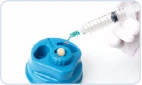 | irrigate root canal washes with saline solution |
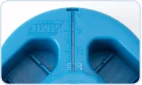 | measure the file a millimetre scale on the simulator |
› courses and workshops – simit made protrain “to allow and facilitate the simulation of the dentist’s endodontic therapy during workshops and training courses”.
› dental schools – prof. giuseppe cantatore, quoted by simit, adopted it for teaching conservative dentistry and endodontics at the university of verona and vita-salute san raffaele in milan, calling it “easy and intuitive to use”.
› research – prof. luigi cianconi and colleagues, also quoted by simit, used it to standardise procedures from working length to obturation and retreatment, and to standardise radiograph film position.
does it come with teeth?
no. protrain holds extracted teeth you supply. the kit is the simulator, grips, gel, metal bar and ring nut. if you have no extracted teeth, see the printed training teeth in the table below.
which apex locator does it work with?
simit describe measuring with a k-file connected to the apex locator and do not name a model. we list the locators we stock below.
how far does the gel go?
the pack in the kit is for 10 to 12 exercises, per simit.
| apex locator | root zx3 · x-smart® go with apex locator |
| measuring file | vdw c-pilot® 10, 21 mm · vdw k-files 15, 21 mm |
| isolation | qed rubber dam, medium (36) |
| irrigation delivery | navitip™ 29 ga, 25 mm |
| no extracted teeth? | vdw training tooth ur6 (5) · x2 endo™ #30 molar |
simit protrain · endodontic training simulator · extracted teeth · apex locator · radiographs · irrigation · courses · dental schools · research · simit dental srl, italy · ref protr


 Facebook
 X
 Instagram
 Pinterest
