

Best selection of Endodontic supplies in the UK



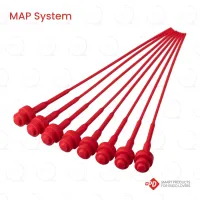
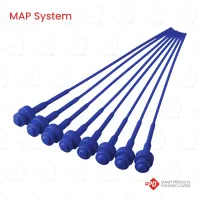











*Last Chance to Buy*

*Last Chance to Buy*

*Last Chance to Buy*


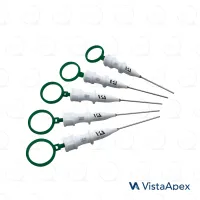
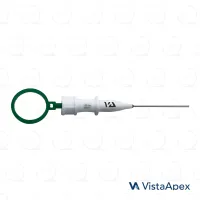
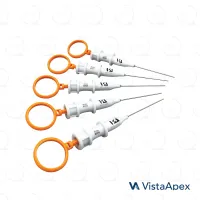
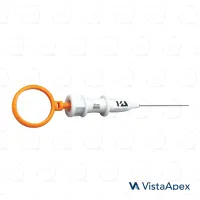
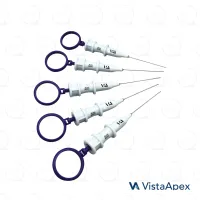

proroot® bio sealer · 2.2 g kit · 20 tips
coming soonpre-orderroot canal sealingpremixed bioceramiccold and warm techniquesresin-free
proroot bio sealer is dentsply sirona’s premixed, injectable, resin-free bioceramic root canal sealer – tricalcium and dicalcium silicate in an organic medium, set by the moisture already in the canal, with non-staining tantalite for radiopacity. one 2.2 g syringe, twenty proroot flex tips, and nothing to mix.
| 6 mm al radiopacity, ifu | ~30 min working time, ifu | 46.6% bioactive cement, ds |
this pack: proroot® bio sealer kit – 1 × 2.2 g syringe and 20 proroot® flex tips · dentsply sirona ref 60620140
made by nusmile ltd, houston, for dentsply sirona · store at room temperature, never refrigerated
coming soon – on pre-order: order it now and it ships as soon as uk stock arrives.
› premixed and resin-free. the directions describe “an extremely fine, inorganic powder of tricalcium/dicalcium silicate in an organic medium”, packaged ready to use. no powder and liquid, no base and catalyst.
› set by the canal, not the clock. designed “to set in vivo in the presence of moisture provided by the surrounding tissues” – the directions say moisture is required, so you dry with paper points and stop there.
› more of the cement that does the work. dentsply sirona’s x-ray diffraction puts the bioactive cement fraction at 46.6% – higher, they say, than the other bioceramic sealers they tested (internal data on file). calcium aluminates sit alongside the silicates; dentsply sirona credit them with faster, more reliable setting and better acid resistance.
› non-staining. tantalite as the radiopacifier and no bismuth oxide – “does not discolor teeth” is a listed material characteristic. radiopacity 6 mm al, twice the iso 6876 minimum.
› cold, warm or carrier-based. dentsply sirona designed it for all three, single cone included.
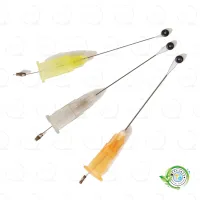
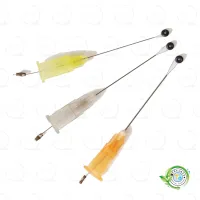
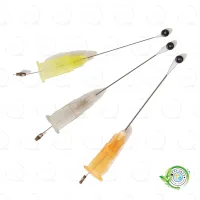
› less left in the tip. the proroot flex tip is a bendable 25 gauge cannula; dentsply sirona measured 0.087 g stranded per tip, which they put at up to 49% less waste than the competitor tips they tested (internal data on file).
› retreatable. the directions: remove set sealer with conventional instrumentation – hand and rotary files and ultrasonic tips – “as with any other sealer”.
because it is the bioceramic that comes with dentsply sirona’s own name on it, and their own clinical programme behind it. for a practice already running protaper, waveone gold or trunatomy with conform fit cones, it closes the case without leaving the range: the same company’s file, cone, activator and now sealer, and their proroot mta chemistry at the root of it.
dentsply sirona also make plain what is inside. their fact file states that proroot bio sealer “is an equivalent sealer to neosealer® flo (nusmile, ltd, usa)”, and the instructions name nusmile as the manufacturer. we stock neosealer flo too, under the avalon biomed name – so the choice between the two is brand, tip and pack, not material.
“proroot® bio sealer has excellent viscosity allowing me to control placement. it flows into microanatomy and canal irregularities when present. the obturation pops off the screen, giving the post-operative image a dense look with no voids.”
david j. landwehr dds, ms, capital endodontics, madison wi – quoted in dentsply sirona’s proroot bio sealer brochure
dentsply sirona cite two published studies for proroot bio sealer, both carried out on the equivalent neosealer flo. retreatment: carrillo ca et al., journal of endodontics 2022;48(6):781–786 (ex vivo, 130 extracted teeth, straight canals, single-cone fills retreated with rotary niti and no solvent) regained apical patency in 100% of the canals sealed with it, in a mean of 169 seconds. outcome: lepure c et al., clinical oral investigations 2024;28(11):598 – a retrospective analysis of 687 teeth at a minimum of one year – put healed-or-healing at 96.5%.
dentsply sirona also report interim results from an on-going randomised trial (gustavo de-deus, rio de janeiro; unpublished, data on file): very high healing rates at 6 and 12 months, stable radiographic visibility over time, and post-operative sensitivity in line with the resin and bioceramic comparators. we pass that on as their statement, not as a published finding.
| proroot bio sealer | ah plus | |
| chemistry | bioceramic – calcium silicate and aluminate cement, resin-free | epoxy-amine resin |
| mixing | none – premixed syringe | two pastes, 1:1 on the pad (or automixed in the jet) |
| working time | about 30 minutes at room temperature (ifu) | about 4 hours at 23 °c |
| how it sets | on canal moisture; meets iso 6876 | chemical cure, within 24 hours |
| radiopacity | 6 mm al | calcium tungstate and zirconium oxide fillers |
| techniques | cold, warm, carrier-based | cold, warm, carrier-based |
| staining | listed as non-staining | – |
resin or bioceramic is a real choice of technique rather than a ranking – we carry both because both are right in different hands, and dentsply sirona now sell both under their own name.
1finish the irrigation with distilled water, then dry with paper points. moisture is required for setting, so the canal is dried, not desiccated.
2check the flow by extruding a little onto a pad before it goes anywhere near the tooth.
3place with the tip – no deeper than the middle third, never forced until it seals against the walls (that is how sealer ends up past the apex), and with gentle, steady pressure while the tip moves outward. the tip is recommended but optional: without it, coat the walls lightly and coat the dried cone before insertion.
4insert the cone or cones slowly, sear and remove the excess gutta-percha at the orifice per the cone manufacturer, lift excess sealer with a moist cotton pellet, and confirm the fill and any overextension on a radiograph.
worth knowing before you open it. the directions list two contraindications – hypersensitivity to caustic, high-ph solutions, and primary-tooth pulpectomy unless the successor is absent – and warn that the material is caustic, as all tricalcium silicates are: keep unset paste off skin and mucosa, and do not overfill. syringe and tips are supplied clean but not sterile and cannot be sterilised, so it is a new tip every time and a sleeve over the syringe intraorally. and one line that explains the occasional puzzling case: setting is inhibited in acidic environments such as infected sites.
when can i have it?
it is coming soon: you can order it now, and it ships the moment uk stock arrives.
so do i still dry the canal?
yes – final rinse with distilled water, then paper points. what you do not chase is bone-dry, because the moisture in the tubules is what sets the material.
how long does it take to set?
the directions say it meets iso 6876, and dentsply sirona cite a published laboratory figure of about 2 hours 41 minutes (pradelli et al., braz oral res 2025). laboratory setting times for this chemistry vary a great deal with the test method, so treat any single number as a property of the test rather than a promise about the tooth.
is it the same as neosealer flo?
dentsply sirona say so: “an equivalent sealer to neosealer flo”, made for them by nusmile. what differs is the tip supplied, the branding and dentsply sirona’s own clinical programme. for very narrow preparations the same family’s neosealer ezflo places through a 29 gauge navitip instead.
can i use it with guttacore or a warm technique?
dentsply sirona designed it for cold, warm and carrier-based obturation, and their fact file reports its properties stay stable under warm vertical compaction. follow the obturator’s own directions for the carrier itself.
what if i run out of tips?
the 20 tips are sized to the syringe and it is one tip per application. dentsply sirona say other dispensing tips can be used, with the note that finer gauges are harder to push through; avalon’s 25 gauge basic flex tips are the ones supplied with the equivalent neosealer flo syringe.
| irrigants | chlorax 5.25%, chlorax 2% and endo-solution 17% edta. |
| activation | smartlite pro endoactivator – dentsply sirona’s own. |
| points | conform fit, matched to the file: waveone gold, protaper ultimate, protaper gold, trunatomy. |
| carrier-based | guttacore – crosslinked gutta-percha core obturators. |
| extra tips | avalon basic flex tips (40) – 25 gauge, luer-lock. |
| same family | neosealer flo – the equivalent sealer under the avalon biomed name · neosealer ezflo – 29 gauge navitip delivery for narrow canals. |
| resin | ah plus 8 ml paste · ah plus jet starter kit – dentsply sirona’s epoxy sealer. |
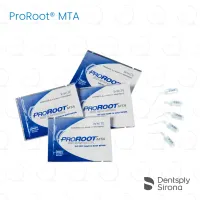
| repair material | proroot mta – the chemistry this sealer is built on. |
| coronal seal | sdr flow+ refill universal – 4 mm bulk increment, one cure. |
› proroot® bio sealer fact file (pdf, 0.9 mb, dentsply sirona) – composition, iso 6876 figures, the studies and their references.
› proroot® bio sealer brochure (pdf, 0.7 mb, dentsply sirona) – the two-page sell sheet.
composition, characteristics, contraindications, technique and the iso 6876 figures are from dentsply sirona’s instructions for use (k79200344-00, 2026). bioactive cement content, ph, tip waste, the neosealer flo equivalence and the study summaries are from their proroot® bio sealer fact file (08/2025) and brochure; figures marked internal data on file are theirs and unpublished. we make no claim of our own about seal, healing or outcome. proroot, ah plus, conform fit, guttacore, smartlite, sdr, waveone, protaper and trunatomy are dentsply sirona trademarks; neosealer is a trademark of avalon biomed / nusmile.
proroot® bio sealer kit · premixed bioceramic root canal sealer · 1 × 2.2 g syringe · 20 proroot® flex tips, 25 gauge · dentsply sirona · ref 60620140
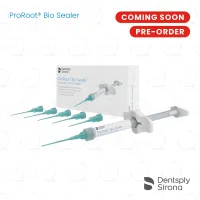
neosealer® flo · avalon biomed · 2.2 g kit, 20 tips
root canal obturationpremixedmoisture-setretreatablecone buttering
every clinician has stood there with a fourth paper point wondering how dry is dry enough. with a bioceramic that question changes shape. the instructions are explicit: dry the canal with paper points to remove pooled irrigants or body fluids – and then stop, because moisture from the dentinal tubules and apical tissues is what starts neosealer® flo setting. the residual moisture in the canal wall is not your enemy; it is part of the chemistry.
| 9.5 hrs setting time | 6 mm al radiopacity | 81% less tip waste |
this pack: 2.2 g neosealer® flo premixed bioceramic sealer · 20 × flex flo tips™
made by avalon biomed · 2-year shelf life, store at room temperature
“moisture is required for setting of the sealer, supplied by the dentinal tubules and apical tissues.”
avalon biomed, neosealer® flo frequently asked questions.
the instructions for use give about thirty minutes of working time at room temperature – long enough that a difficult four-canal molar is not a race, and long enough to stop and re-take a radiograph without the syringe going off on the bracket table. avalon put setting at around 9.5 hours in vivo, in the presence of canal moisture – a laboratory iso protocol will give you a longer figure, because it is not measuring the same thing. nothing is mixed, so nothing is mixed wrongly: the powder-to-liquid ratio that decides a conventional sealer's flow and film thickness was set at the factory.
| chemistry | premixed bioactive bioceramic – tricalcium and dicalcium silicate in an organic liquid |
| radiopacifier | tantalum oxide (tantalite), giving about 6 mm al equivalent. avalon state it does not cause staining |
| setting | begins in the presence of moisture from the surrounding tissues – no complete drying required |
| retreatment | conventional instrumentation – hand and rotary files and ultrasonic tips – per avalon's own guidance |
the kit ships with 20 flex flo tips™ at 25.5 gauge, the smallest diameter avalon recommend for this sealer. any 25.5 gauge or larger luer-lock tip fits, so you are not locked to one consumable – but the instructions warn that flo becomes difficult to dispense through finer tips.
two points of technique from the instructions, both easy to get wrong. do not insert the tip past the middle third of the canal, and do not force it until it seals against the canal walls – a wedged tip is how sealer gets expressed beyond the apex. apply gentle, steady pressure with a constant outward movement as the material goes in.
you can also skip the tip entirely: avalon confirm the sealer may be dispensed straight from the syringe for the traditional cone-buttering technique – coat the canal walls lightly first, then coat the dried gutta-percha points before insertion.
working in deliberately narrow preparations? a 25.5 gauge floor is the wrong tool for a canal shaped by a reduced-taper file. reach for neosealer® ezflo instead – same family, designed around a 29 gauge navitip™.
every bioceramic sealer leaves material stranded in the dispensing tip. you pay for it, you never place it, and it goes in the bin with the tip. avalon publish 81% less waste than conventional tips for the flex flo tip™ used with neosealer® flo – a minimal-waste barrel design rather than anything to do with the sealer chemistry.
| flex flo tip™ | 0.027 g left in the tip |
| basic flex tip™ | 0.087 g left in the tip |
those are avalon's own two tips, so you can do the arithmetic yourself and it is the honest version of the claim. across the twenty tips in this kit, the difference between them is about 1.2 g of sealer – more than half a second syringe. on a 2.2 g syringe, the tip you choose changes how many cases you get out of it more than anything else does.
one further line worth knowing, because it explains the occasional puzzling case: setting of tricalcium silicates is inhibited in acidic environments such as infected sites. the chemistry that makes a bioceramic work is the same chemistry that an active infection can slow down.
the 2.2 g kit is where almost everyone starts, and 20 tips is a sensible match to the sealer in the syringe. if bioceramic obturation is already routine, the 4.4 g kit with 40 tips and the 6.6 g kit with 60 tips bring the cost per gram down. if you already have tips in the drawer, the 2.2 g refill and the three-syringe pack leave the tips out – just remember to keep flex flo tips on the shelf, because a refill with nothing to dispense it through is an expensive paperweight.
| larger kits | 4.4 g with 40 tips · 6.6 g with 60 tips |
| refills | 2.2 g, no tips · three-syringe pack |
| tips | flex flo tip™ (40) · 25.5 ga, the one avalon recommend |
| wider bore | basic flex tip™ (40) · 25 ga, for generous preparations |
| narrow canals | neosealer® ezflo · 29 ga navitip™ delivery |
| repair material | neoputty® · neomta® 2 · same bioceramic family |
| sealer and putty | neosealer® flo & neoputty® kit · both in one box |
so do i still dry the canal?
yes – you remove the free irrigant and pooled fluid, because you are placing sealer, not swimming it. what you do not have to chase is bone-dry desiccation. avalon are explicit that complete drying is not needed and that moisture is what sets the material.
can i retreat a case sealed with this?
avalon say yes, using conventional instrumentation including hand and rotary files and ultrasonic tips. that is their published position; plan any retreatment on the case in front of you rather than on a general rule.
flo or ezflo?
bore size, mostly. flo's finest recommended tip is 25.5 ga; ezflo is built around a 29 ga navitip™. if you shape conservatively – reduced-taper single-file systems especially – ezflo reaches where flo's tip will not.
will it stain?
the instructions list “does not discolor teeth” among the material characteristics – tantalite rather than bismuth oxide as the radiopacifier. bismuth is the mechanism behind classic mta discolouration (marciano, duarte and camilleri, clin oral investig 2015).
before first clinical use: neosealer® flo is alkaline, as every tricalcium silicate material is. it is not for use where there is hypersensitivity to caustic solutions, or in a primary tooth that has a permanent successor. full warnings, precautions and handling guidance are in the instructions for use – ask us if you would like a copy before ordering.
neosealer® flo 2.2 gm kit · premixed bioceramic root canal sealer · tantalite radiopacifier · ~6 mm al · ~30 min working time · ~9.5 hr set · ~0.3% shrinkage · 20 flex flo tips™ 25.5 ga · 2-year shelf life · avalon biomed · ref ansfk

bio-c® temp · bioceramic intracanal dressing
necrotic pulpretreatmentperforationsresorptiontraumaopen apex
necrotic case? retreatment? a review you can't book for a month? bio-c® temp is a ready-to-use bioceramic paste for intracanal dressing. its calcium silicates hydrate to produce calcium hydroxide gradually, releasing calcium and hydroxyl ions over time rather than all at once – and angelus states the paste can stay in the canal for up to 30 days without replacement.
| 30 days angelus maximum | 9+ ph at day 28 | 4 syringes |
this pack: 4 × 0.5 g syringes · 20 intracanal tips
made by angelus, brazil – the bioceramics specialists
a conventional calcium hydroxide paste reaches a high ph quickly and is typically refreshed between visits. bio-c® temp works differently: the calcium silicates generate calcium hydroxide as they hydrate, so the alkalinity arrives gradually and persists. independent work bears this out honestly – lopes and colleagues (european endodontic journal, 2024) recorded ph above 9 from day three through day 28, below a calcium hydroxide control that held around 11.3 to 11.5. the case for this material is that it stays working for weeks, not that it is more alkaline.
| up to 30 days | angelus states the dressing can remain in the canal for up to 30 days without replacement |
| sustained ph | gradual release of calcium and hydroxyl ions holds an alkaline environment, unfavourable to bacterial growth |
| ready to use | no mixing, no spatulation, no waiting – the syringe and tip go straight into the canal |
| radiopaque | clear radiographic check that the canal is filled to length before the patient leaves |
“bio-c® temp can remain in the canal until 30 days” without requiring replacement, unlike calcium hydroxide which needs frequent changes.
— angelus, bio-c temp product information
› necrotic pulp and retreatment – where the canal needs disinfecting between visits and the next appointment is not next week.
› perforations and resorption, internal or external – angelus indicates it ahead of definitive repair with mta angelus.
› incomplete rhizogenesis and trauma – the cases where healing sets the timetable, not the diary.
› long recall intervals – referral practices, patients travelling, anyone you cannot see again in a fortnight.
1 place direct. fit an intracanal tip, insert to about 3 mm short of working length, and fill on withdrawal.
2 remove with hypochlorite. sodium hypochlorite with a k-file in brushing movements, or ultrasonic inserts.
3 then edta. 17% edta activated ultrasonically in three ten-second cycles – angelus's published protocol.
how is it different from a calcium hydroxide paste?
duration rather than peak ph. pastes such as opacal, calcipast and ultracal™ xs reach a higher ph quickly and are typically refreshed between visits. bio-c® temp generates its calcium hydroxide gradually as it hydrates.
will i get all of it out again?
be realistic – no technique fully removes any intracanal dressing. in the lopes study neither manual irrigation nor passive ultrasonic cleared the canal completely, though ultrasonic activation performed significantly better in the apical third. follow the protocol above and expect some residue.
does it cause postoperative pain if it extrudes?
angelus reports no painful symptomatology even where the paste extrudes through the apical foramen. that is the manufacturer's clinical experience rather than a controlled trial, so treat it as reassurance rather than evidence, and place to length as you would with any dressing.
when would i reach for it over a conventional paste?
when the interval is long or healing needs time – trauma follow-ups, resorption management, apexification-type cases. for a routine two-week dressing where you will re-enter anyway, a calcium hydroxide paste does the job and comes ready to use: opacal in a single 3 ml syringe, calcipast with hydroxyapatite, or ultracal™ xs at ph 12.5 through a sideport tip. different tools, not better or worse ones.
how many cases does the pack cover?
four 0.5 g syringes and 20 intracanal tips. each syringe carries several canals' worth, so the tip count is usually the practical limit rather than the paste.
| routine dressing | opacal – 3 ml syringe |
| four-syringe pack | calcipast – with hydroxyapatite, 4 × 2.1 g |
| precision delivery | ultracal™ xs refill |
| repair, white | mta angelus white 1 g |
| repair, grey | mta angelus grey 1 g |
| non-staining repair | neomta® 2 – tantalite, no bismuth oxide |
| no mixing | neoputty® – premixed bioceramic putty, 8.1 mm al |
| placing mta | mta carrier 0.99 mm |
| then obturate | mta fillapex® sealer |
bio-c® temp · calcium silicate bioceramic paste · ready to use · radiopaque · 4 × 0.5 g syringes + 20 tips · angelus, brazil · ref mta-2833 · mfr code 2833


 Facebook
 X
 Instagram
 Pinterest
