

Best selection of Endodontic supplies in the UK











































Special Offer

Special Offer






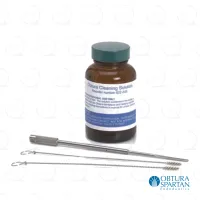
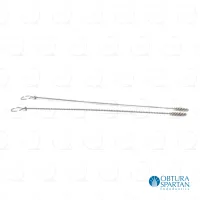
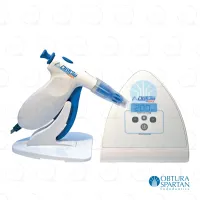
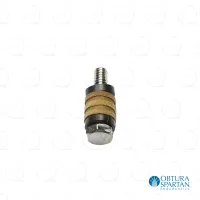
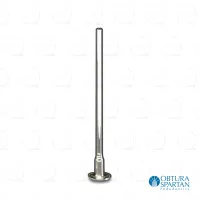
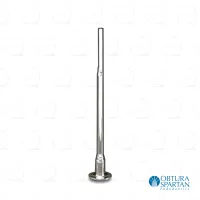
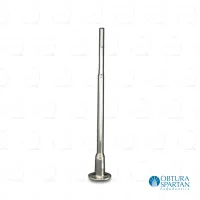
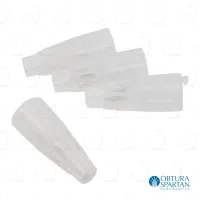




















file-eze™ · 19% edta file lubricant
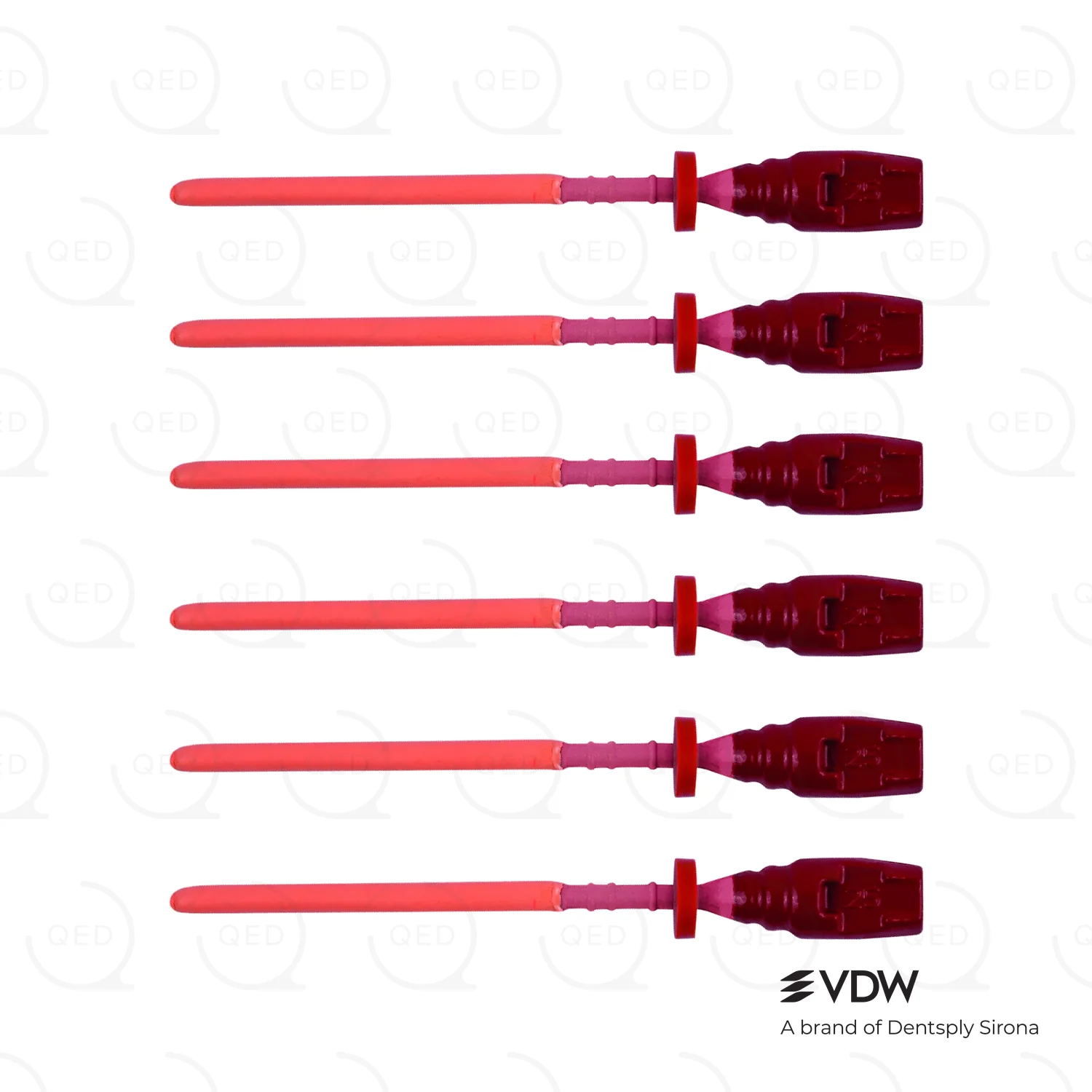
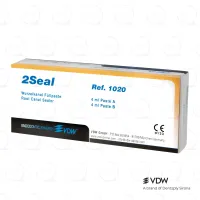
sclerosed canal? fine file binding at the coronal third? file-eze™ is a 19% edta chelating agent in a water-soluble, viscous, lubricating base – ultradent's own description – used with the first two or three instruments to chelate, lubricate and aid debridement while the canal is still tight. it is peroxide-free, so it will not affect the set of resin sealers.
this pack: 4 × 1.2 ml unit-dose syringes
made by ultradent, usa
| 19% edta | chelates dentine while you shape, in an aqueous, water-soluble base that rinses away rather than lingering |
| viscous | gel body stays where it is placed at the orifice instead of running out of the access cavity |
| peroxide-free | ultradent states it will not affect the set of resin sealers – worth knowing if you obturate with a resin system |
| preloaded | four 1.2 ml syringes ready to use from the box – nothing to fill before the list, and a small barrel that sits on the tray |
› technique (ultradent's ifu) – deliver to the canal orifice and express to no more than half the working length; never express material with pressure up the canal past the apical foramen.
› alternate with sodium hypochlorite and a liquid edta through the shaping sequence, then rinse the gel away before obturating.
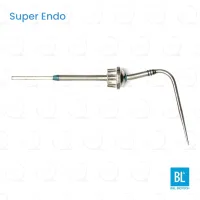
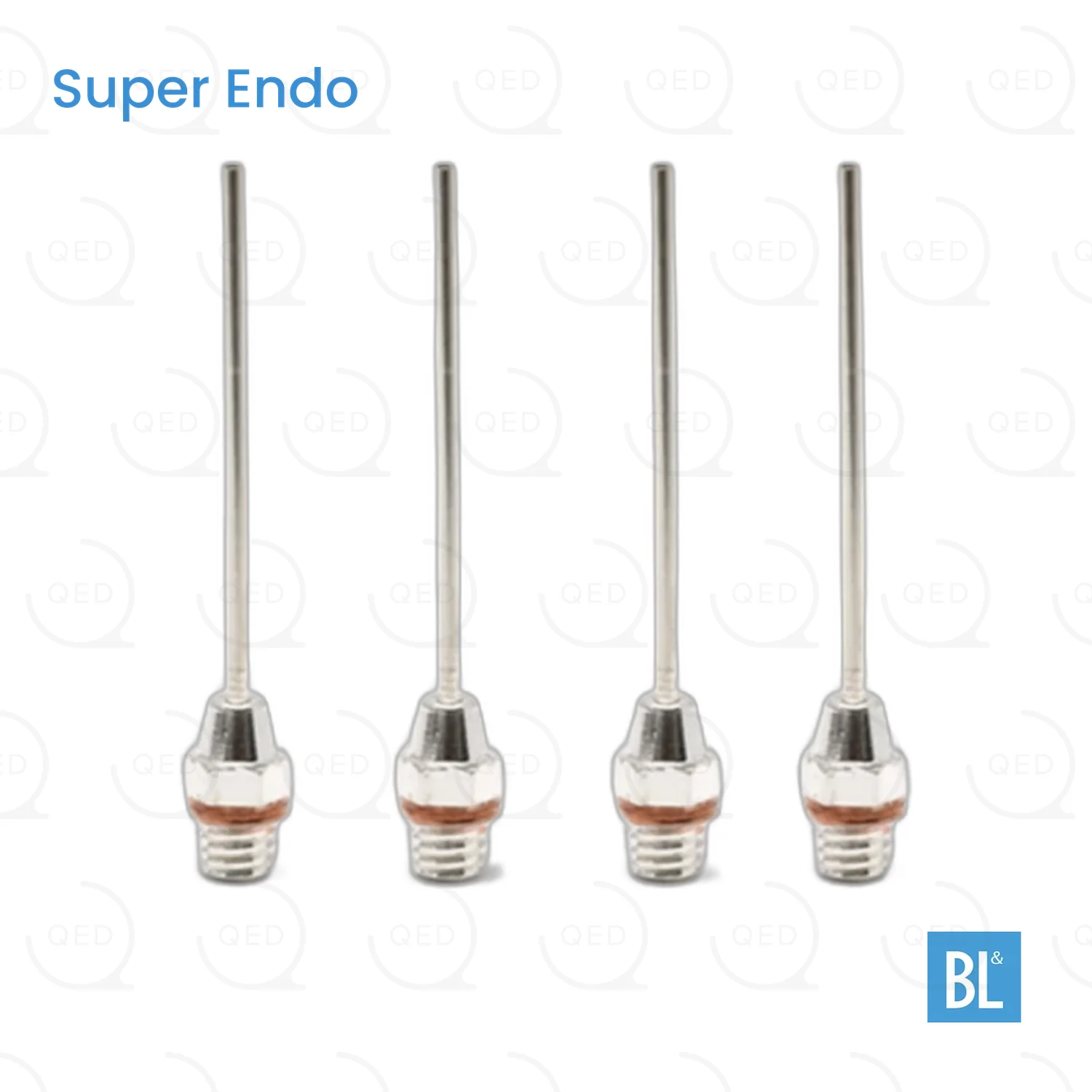
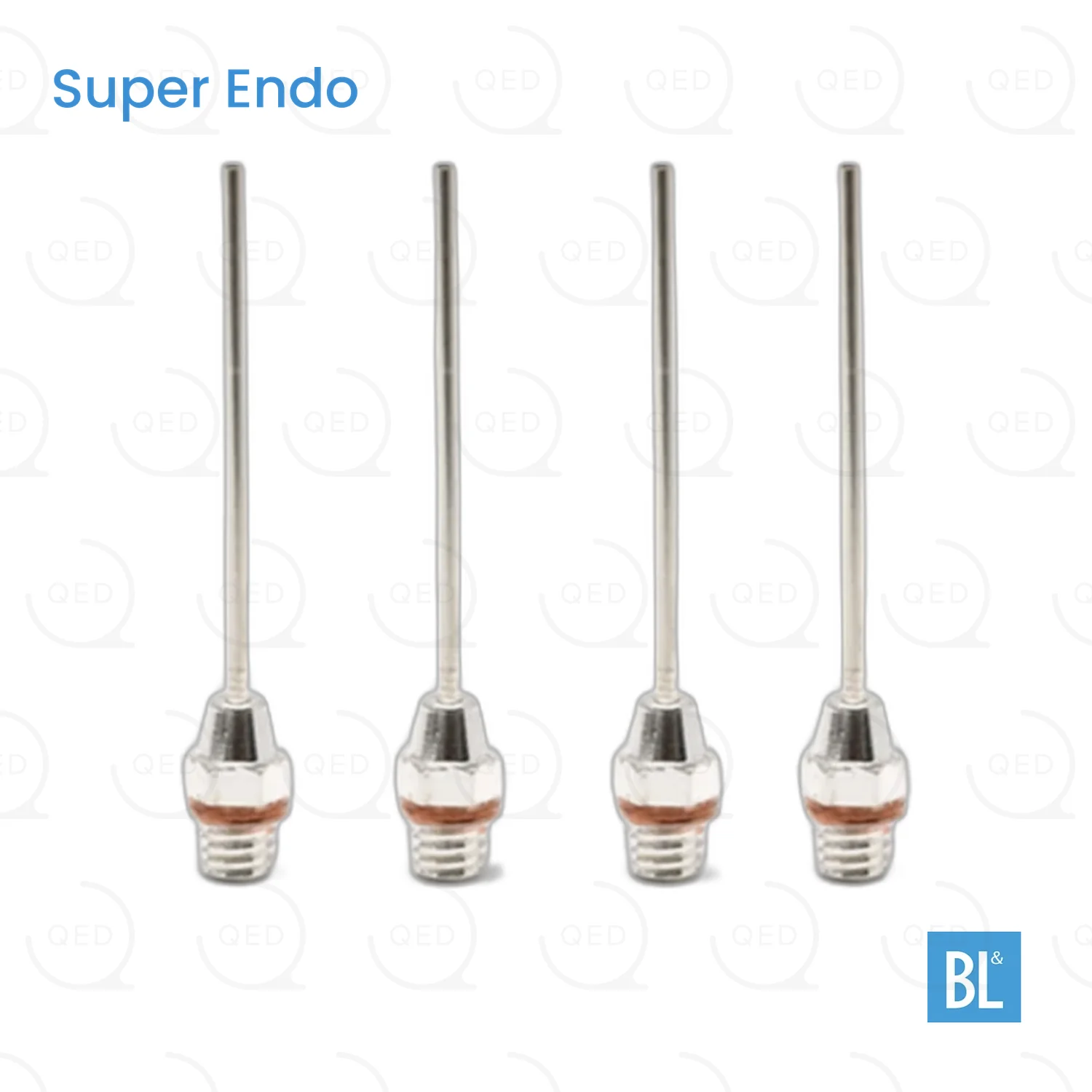
› delivery – ultradent recommends a 25 mm navitip™; qed stocks the 29 ga open-end in 21 mm. test flow before going intraoral and never force a plunger.
gel or liquid edta – do i need both?
they do different jobs. the gel lubricates and chelates at the file, early in shaping; liquid edta is the final rinse that lifts the smear layer. ultradent's own protocol alternates the two.
will it interfere with my sealer?
file-eze is peroxide-free and ultradent states it will not affect the set of resin sealers. rinse thoroughly before obturation regardless.
is there a bigger pack?
yes – the 30 ml indispense™ syringe dispenses into 1.2 ml empty syringes and works out cheaper per case for a busy endodontic list.
file-eze™ · 19% edta file lubricant · water-soluble · viscous · peroxide-free · 4 × 1.2 ml syringes · ultradent · ref 1075-ce · also as a 30 ml indispense syringe

map system® · niti · n°1 red · ø1.10 mm
perforation repair on monday, an open apex on wednesday, a retrograde fill on friday – and one needle to cover all three? the niti n°1 at ø1.10 mm is the size pd build map one around, and it earns that place. it carries a useful increment without demanding wide access, and because it is memory-shape nitinol you bend it to each case and the autoclave returns it straight for the next.
this pack: 1 × niti memory shape needle n°1 red, ø1.10 mm, with 16 matching plungers
made by pd dental, switzerland
| bore | ø1.10 mm – the general-purpose size, and the needle supplied in map one |
| shapeable | bend it to the case; sterilisation returns it to straight. never straighten it with a flame |
| reusable | validated by pd for 50 reprocessing cycles, with a single-use plunger inside |
| not with biodentine | the ifu excludes biodentine from the red and yellow needles – it clogs the lumen |
› indications pd list for the system: pulp capping, iatrogenic and pathological perforation, root resorption, apexification and apexogenesis by the orthograde route, and retro-obturation.
› clean it inside fifteen minutes with stiffened floss, having first discarded the plunger. this is the whole difference between fifty cycles and one.
› keep it away from hydrogen peroxide, hypochlorite above 5% for more than five minutes, and any solution below ph 6 or above ph 8.
needle on its own, or the kit?
if you have no syringe yet, map one is the sensible start – it is this needle plus the syringe. if you already own a syringe, the needle alone is the cheaper route to a second size.
memory shape or fixed curve?
niti if the approach changes case to case. the classic curved needle holds one geometry, which some clinicians prefer precisely because it is predictable.
| its consumable | plastic plungers n°1 red · 16 |
| with a syringe | map one – this needle, the syringe and its plungers |
| all three sizes | map intro kit – n°0, n°1 and n°2 with syringe and well |
| material to place | neoputty® · 0.5 g – premixed, so nothing sets while you are mixing |
map niti memory shape needle n°1 · red · ø1.10 mm · bendable, self-straightening in the autoclave · 50 reprocessing cycles · pd dental · ref 20211
map system® · map one · the way in
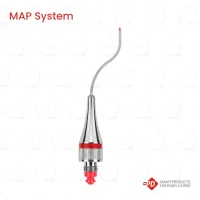
placing mta with an amalgam carrier and a plugger, and wondering whether a dedicated carrier is worth it? map one is the smallest way to find out. pd call it the simplified kit for clinicians who want to acquire an efficient tool, and it is built around the size that suits most cases – the niti memory shape n°1 at ø1.10 mm, which you bend to the canal and the autoclave straightens again.
this kit: 1 × stainless steel syringe · 1 × niti memory shape needle n°1 · 16 × plastic plungers n°1
made by pd dental, switzerland
| the needle | niti memory shape n°1, ø1.10 mm – bendable, and straightened again by sterilisation |
| grows with you | the syringe takes every geometry in the range, so a second need costs a needle rather than a kit |
| reprocessing | syringe and needle are validated by pd for 50 cycles. the plungers are single-use |
| not included | the material, and a cleaning thread – both bought separately and both needed on day one |
› order floss with it. the fifteen-minute cleaning rule applies from the first case, and cleanyfloss is what pd name for it.
› what pd list the system for: pulp capping, perforation, root resorption, apexification and apexogenesis, and retro-obturation.
› not for biodentine in this needle – the ifu excludes it from the red and yellow bores.
will one size cover my cases?
n°1 covers a great deal of orthograde repair work. if you also do apical surgery, the handed surgery needles are a different geometry rather than a different size, and are bought separately.
map one or the intro kit?
map one if you want the instrument in your hand and will add sizes as cases demand. the intro kit if you already know you want all three bores, since it also brings a mixing well and a pack of floss.
| order with it | cleanyfloss · 30 threads – needed from the first case |
| its consumable | plastic plungers n°1 red · 16 |
| all three bores | map intro kit – n°0, n°1 and n°2 with a well |
| material to place | neoputty® · 0.5 g – premixed bioceramic |
map one · stainless steel syringe, niti memory shape n°1 needle and 16 plungers · autoclavable, 50 cycles · pd dental · ref 20296

capillary tips · 0.36 mm · 20 tips
six points in and the canal is still damp? capillary tips attach to the ultradent™ luer vacuum adapter and evacuate the canal directly – ultradent states they substantially minimise the use of paper points. the narrow, flexible taper follows curvature instead of stopping at the first bend.
this pack: 20 × capillary tips, 0.36 mm with a 0.014" opening
made by ultradent, usa
| 0.014" opening | a 0.36 mm tip – fine enough to sit in the canal rather than hover over the access cavity |
| flexible taper | narrow and flexible, so it accesses curved canals rather than binding at the coronal third |
| fewer paper points | suction removes the bulk of the liquid; points finish the job instead of doing all of it |
| not for chemistry | ultradent is explicit: never use these to deliver irrigating materials or endodontic chemistries |
› attaches to the ultradent™ luer vacuum adapter for moisture removal from canals.
› where it fits the sequence – after final irrigation, before obturation; a couple of seconds per canal is enough to clear standing liquid.
› beyond the canal – ultradent also lists irrigation of peri-implant pockets with chlorhexidine gel delivered through a capillary tip. that is a periodontal application; the warning above still governs endodontic chemistries.
› for delivering endodontic chemistry – use a navitip™ 29 ga instead.
can i irrigate through them?
not with endodontic chemistry – ultradent warns against using capillary tips to deliver irrigants or endodontic chemistries, so deliver those through a navitip. they do list one delivery use of their own: chlorhexidine gel into peri-implant pockets, which is periodontal rather than endodontic.
twenty or fifty?
twenty for occasional endodontics. if you are drying multiple canals on most lists, the 50-tip pack is the better cost per tip.
single use?
yes – ultradent specifies single-use only and publishes no reprocessing protocol.
capillary tips · canal evacuation and drying · 0.36 mm with 0.014" opening · flexible taper · single use · 20 tips · ultradent · ref 341 · also in 50

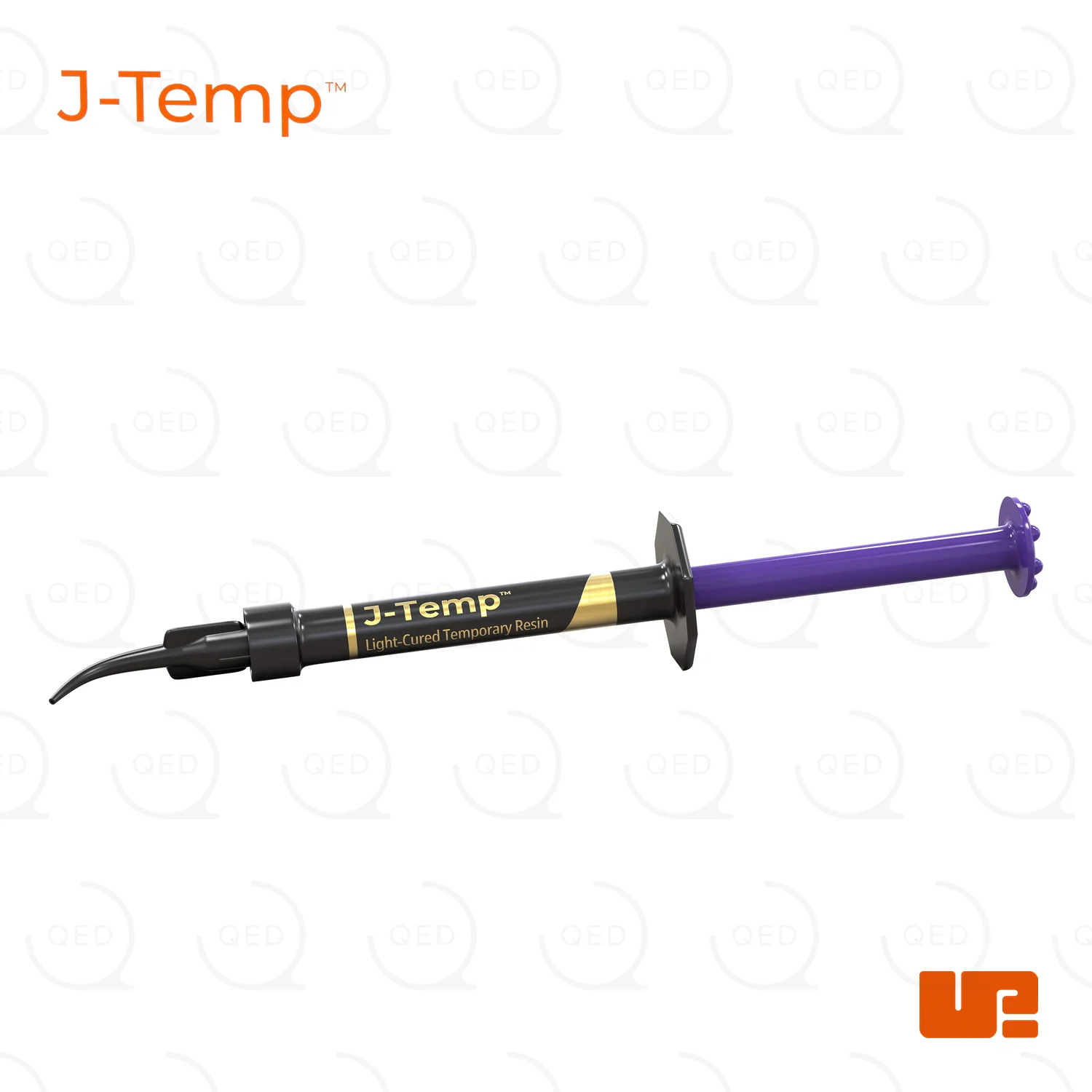
j-temp™ · radiopaque temporary resin
endo accesswalking bleachinlay and onlayimplant splintingbite ramps
multi-visit endodontics, and a temporary that has to survive four weeks and then come out cleanly? j-temp™ is a radiopaque, light-cured, flowable methacrylate resin. it is self-levelling, distinctly purple so it is never mistaken for tooth, and because it is radiopaque you can confirm on a film that every last piece has come out before you obturate.
| 10 s cure per layer | 4 indications | 4 × 1.2 ml syringes |
this pack: 4 × 1.2 ml j-temp™ syringes (4.8 ml) · 20 × black mini™ tips
made by ultradent, usa
a temporary that cannot be seen is a temporary you have to take on trust. fragments left in a chamber floor or a canal orifice compromise the seal you are about to place, and you will not spot them on a dry field alone. because j-temp™ is radiopaque, the same film that confirms your working length also confirms the chamber is clean – which is the difference between believing the access is clear and knowing it.
| radiopaque | visible under x-ray, so complete removal is verified rather than assumed |
| purple | ultradent's distinctive shade – easily differentiated from enamel and dentine, and a visible reminder to the patient that this is temporary |
| under 5% | the shrinkage rate ultradent publishes for the material |
| self-levelling | flowable body adapts to the preparation, then holds its place once cured |
› temporary restorations – endodontic access, the walking bleach technique, inlay and onlay temporaries, cusp build-ups.
› splinting between multiple implant copings when taking an impression.
› isolation structure – building a surface to clamp against, and a barrier against endodontic irrigants, alongside oraseal™ caulking.
› bite ramps and temporary occlusal build-ups during orthodontic treatment.
1 do not etch, do not bond. ultradent is explicit: no acid etch and no bonding agent before placing j-temp over the preparation.
2 build in 2–3 mm layers, curing each for 10 seconds with a light of at least 800 mw/cm2 in the 385–515 nm range.
3 finish with a 20-second cure. then check the occlusion as you would with any temporary.
the shade is light purple because we want just a subtle reminder to the patients that this is still just a temporary restoration.
— ultradent, on why j-temp is the colour it is
how does it come out?
with a bur or a hand instrument where it meets sound tooth structure. take a film if you want certainty that nothing is left in the chamber – that is what the radiopacity buys you.
do i really not etch first?
correct. ultradent's instructions say not to acid etch and not to place a bonding agent, and their own guidance is that no adhesive is required. treat it as a mechanically retained temporary, not a bonded restoration.
which tip do i dispense through?
a black mini™ tip – the opaque plastic is what stops a light-cured material setting in the nozzle between increments. twenty come in the pack; that tub of 100 is the refill.
will it survive four weeks between visits?
it is designed to be durable enough to stay in place, which is why it appears in ultradent's own endodontic access indication. if the interval is long, pair it with a dressing that lasts too – bio-c® temp is indicated for up to 30 days.
any contraindications?
yes – not for patients with a known sensitivity to acrylates or other resins. as with any resin, avoid skin contact with uncured material.
| its own tip | black mini™ tips · tub of 100 |
| dam sealing | oraseal™ caulking · 4 × 1.2 ml |
| both viscosities | oraseal™ kit |
| thick material tip | white mac™ tips · tub of 20 |
| long dressing | bio-c® temp – up to 30 days |
| routine dressing | opacal · 3 ml syringe |
› j-temp™ step-by-step guide (pdf, 0.8 mb, ultradent) – photographed sequences for all five uses, including the walking bleach and implant splinting techniques.
j-temp™ · radiopaque light-cured flowable temporary resin · methacrylate-based · purple · self-levelling · 4 × 1.2 ml syringes (4.8 ml) · 20 black mini™ tips · ultradent, usa · ref 4897
hyflex edm · finishing file 30/.04 · 25 mm
enlargement to lengthogsf step 4matched 30/.04 points
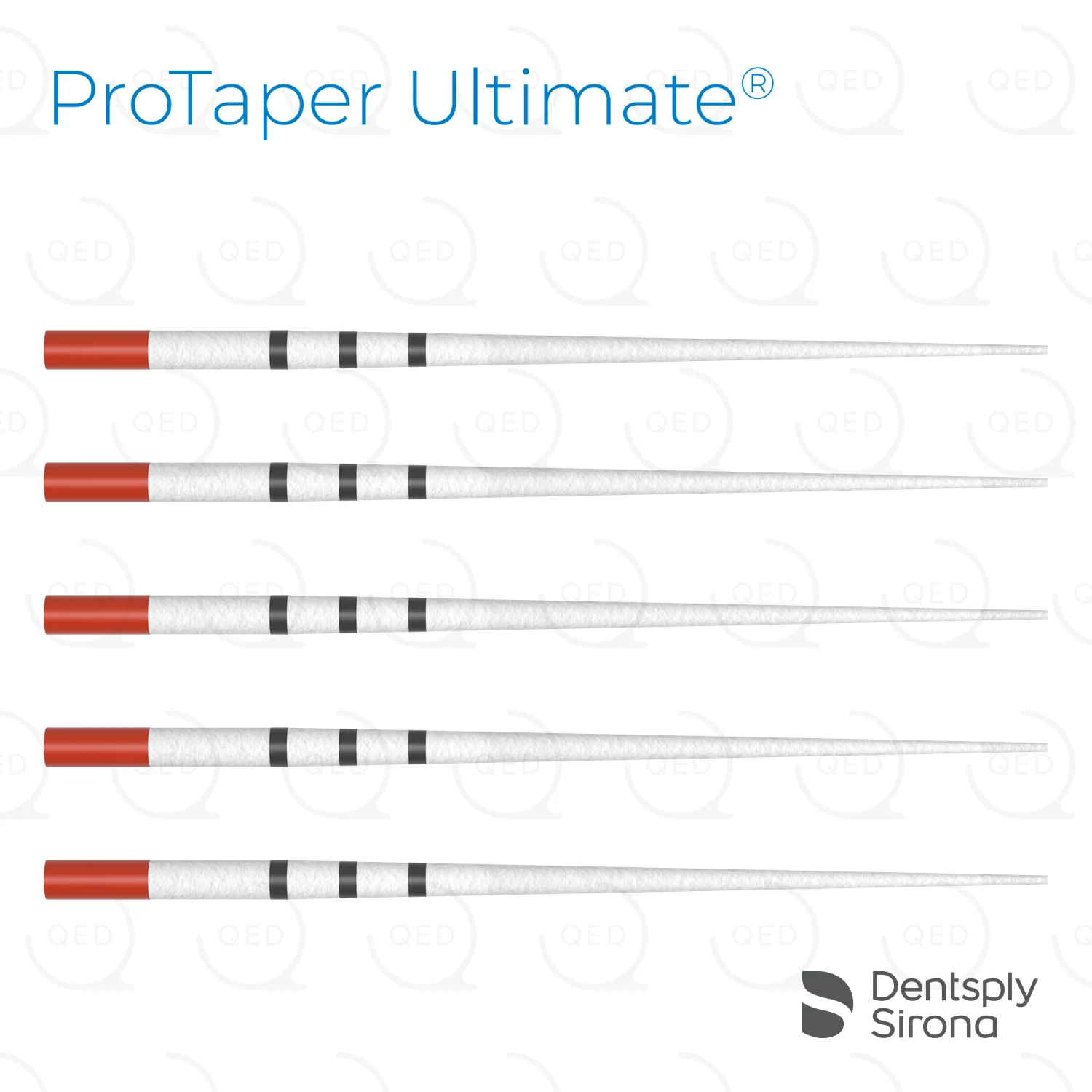
step 4 of coltene’s ogsf sequence: opener, glider, shaper, and this, the finisher. the 30/.04 finishing file enlarges the canal up to working length after the 18/.045 shaping file – and it is the one hyflex edm size we carry matched paper points and gutta percha for, so the fill follows the file.
| 30/.04 tip / taper | 400 rpm up to 2.5 ncm | step 4 of 4, ogsf |
sizes as coltene print them: tip diameter / taper. motor settings from coltene’s hyflex edm ogsf instructions for use (rev-03-2023).
this pack: coltene hyflex edm ogsf finishing file, iso size 30, .04 taper, 25 mm (pack of 3) · presterilised
coltene · coltène/whaledent gmbh + co. kg, langenau, germany
› to working length. step 4: “use the finishing file 30/.04 for enlargement of the root canal up to the working length.”
› step back at resistance. “return to the previous step as soon as resistance is felt.” patency with a hand file, canal irrigated and lubricated.
› matched obturation. coltene list 30/.04 paper points (100) and gutta percha points (60) alongside the ogsf files; we stock both.
1 coronal access. straight-line access, then a hand file (coltene say up to 20/.02) or a rotary glide path file, with irrigant such as naocl in the canal. orifice opener 18/.11 creates space coronally.
2 glide path. glidepath file 15/.03 to working length, at 300 rpm.
3 shape. shaping file 18/.045 to working length.
4 finish. finishing file 30/.04 to working length; larger finishers if needed.
summarised from coltene’s hyflex edm ogsf instructions for use (rev-03-2023). your clinical judgement governs the case; the instructions for use govern the file.
coltene give one handling rule for every file in the range: “place the file in the canal without running engine. when the file cannot proceed any further move it back 1mm until it is free of the walls. then start the engine and proceed forward slowly using tapping movements and without applying pressure.” irrigate the canal frequently, keep it lubricated, and clean the spirals every time the file comes out.
| printed size | 30/.04 – iso 30 tip, .04 taper |
| role | step 4 of the ogsf sequence – enlargement to working length |
| motor | 400 rpm · up to 2.5 ncm, continuous rotation |
| length | 25 mm · the length we stock |
| pack | 3 files, presterilised |
what if the apex needs more than 30?
coltene list three larger hyflex edm finishing files: 40/.04, 50/.03 and 60/.02.
which motor settings?
coltene set 400 rpm and up to 2.5 ncm for the hyflex edm files (the 2025 instructions allow 400–500 rpm on the classic files), and 300 rpm and up to 1.8 ncm for the glide path files, in continuous rotation on a low-speed contra-angle. set it in a custom programme on any of the three endo motors we stock: x-smart® go · x-smart® pro+ · vdw.silver® reciproc®.
can i pre-bend them?
coltene say so: “like stainless steel files, the hyflex edm files can be pre-bent.” they put it down to the controlled memory heat treatment of the nickel-titanium.
anything to check before use?
coltene’s instructions carry one patient caution: hyflex edm files “contain nickel and titanium and should not be used on patient with known allergic sensitivity to these metals.” and before each use, a manual check that the file is correctly fixed in the contra-angle.
| the sequence | hyflex edm ogsf sequence set, 25 mm (4) |
| larger apex | 40/.04 · 50/.03 · 60/.02 |
| isolation | hysolate dental dam, coltene |
| hand file | c-pilot® 010, 25 mm · 015 · coltene have you check patency with a hand file throughout |
| irrigants | chlorax 5.25% · endo-solution 17% edta · canalpro™ chx 2%, coltene |
| delivery | irriflex® 30g needles (40) |
| dry | hyflex edm paper points 30/.04 |
| fill and seal | hyflex edm gutta percha 30/.04 · neosealer® ezflo, 25 mm tips or ah plus® |
| coronal seal | sdr® flow+ refill, universal |
| motor | x-smart® go · x-smart® pro+ · vdw.silver® reciproc® |
hyflex edm finishing file 30/.04, 25 mm (3) · heat-treated niti, electric discharge machined · 400 rpm · up to 2.5 ncm · presterilised · coltene · ref 60036139
stropko™ irrigator · 2 inch · vista apex
microscope endodonticstroughinginstrument retrievalroot-end preparationdrying before obturation
you are at 16× magnification, troughing for a second mesiobuccal, and the field fills with dentinal dust. the standard three-in-one tip is not built for that moment: it throws a wide, hard stream that clears the debris and your view along with it. the stropko™ irrigator replaces that tip with a fine luer-lock hub, so the same syringe delivers a directed thread of air or water exactly where you are looking – at a pressure you have deliberately turned down.
| 4-7 psi, regulated | 1-3 psi, in canals | 80 autoclave cycles |
this pack: 1 × stropko™ irrigator, 2" · 1 × blue-flo™ tip · 1 × appli-vac™ bendable 20 ga · 1 × 22 ga · 1 × 25 ga
made by inter-med, inc. (vista apex), usa · vista ref 315260-2
› troughing for hidden canals. clearing dust from the pulpal floor a thread at a time, so the map you are following stays visible while you work.
› retrieving a separated instrument. the same controlled clearing, in the one procedure where losing sight of the fragment costs you the tooth.
› root-end preparation in surgery. cleaning and drying a retro-cavity under magnification, where a wide stream would flood the crypt.
› drying before obturation – what the technique card calls a "kiss of air" through the canal system before the cones go down.
› and outside endodontics: vista list restorative, periodontal, implant, surgical and orthodontic uses – air-thinning a deep resin is the one most people find next.
1 turn the pressure down first. a dental syringe normally runs at 30 to 50 psi. vista's ifu says regulate it to between 4 and 7 psi before the instrument goes anywhere near a patient.
2 remove the standard three-way tip and seat the stropko™ snugly in its place. on a press-ring handpiece, check it has locked.
3 screw the tip fully home into the luer-lock hub, so it cannot dislodge in use. tips must not extend back into the instrument past the hub.
4 for air-drying a canal, drop to 1 to 3 psi and use only notched or side-vented needles. this is vista's own instruction, stated without qualification, and it is the one to build into the setup rather than remember at the chairside.
when using for air-drying endodontic canals, reduce the air pressure to 1-3 psi and use only notched or side-vent needles.
— stropko™ irrigator instructions for use, vista apex
| length | 2 inches. the xl is 3.5 inches and is otherwise the same instrument |
| fits | most air/water syringes using a standard 3-way tip, including quick-connect types |
| takes | any luer-lock tip of 27 ga or larger. never a sharp injection needle, and never a tip finer than 27 ga |
| reprocessing | moist heat to iso 17665-1 at 132 or 134 °c for at least 3 minutes, 20 minutes drying. rated for 80 cycles |
| cleaning | neutral-ph detergents only, no abrasives, and do not disassemble it |
› the gauge limit rules out most endodontic irrigation needles. vista's ifu excludes anything finer than 27 ga, which means 29 ga and 30 ga irrigation tips are not for this instrument, however well they work on a syringe. check the gauge before you fit it.
› blunt tips only. no sharp, pointed, injection-type needles – the ones supplied are dead-soft and blunt-ended for a reason.
› one oddity worth knowing: the ifu says not to sterilise it in commercial wraps or pouches carrying sterilisation indicators, which does not sit comfortably with normal uk pouched practice. worth a word with your decontamination lead before it joins the tray.
straight answer: no published study of this instrument exists. dr john stropko is a real and well-cited endodontic clinician – his 1999 paper on maxillary molar canal morphology in the journal of endodontics is still quoted for its mb2 findings – but that is a study of anatomy, not of the device that carries his name, and it would be dishonest to present it as evidence. what the stropko™ has instead is twenty-odd years of use by clinicians working under magnification, and a design that does one obvious thing: it makes the stream small and the pressure low enough to be useful in a place you are looking at very closely.
will it fit my surgery's syringes?
vista say most air/water syringes that use a standard 3-way tip, quick-connect included. if yours is an older three-way, check the air and water buttons are secured – vista note that some older syringes need a retaining pin fitted so the buttons cannot pop out under a regulated supply.
can i use my usual 30 ga irrigation needles in it?
no. the ifu excludes tips finer than 27 ga. use 27 ga or larger, blunt-ended, and for drying a canal specifically, notched or side-vented.
standard or xl?
the only published difference is length – 2" against 3.5". vista do not say why you would pick one over the other, so the honest answer is reach and how you like to hold it, not performance.
| the tip in the box | blue-flo™ 23 ga soft plastic · 100 – or 20 |
| at the gauge limit | appli-vac™ irrigation needles 27 ga · 100 – the finest tip the ifu allows |
| bendable | mst visco-tip™ 25 ga bendable · 50 – shaped to the access you have |
| longer reach | stropko™ irrigator xl · 3.5" – the same instrument, longer |
| irrigate | chlorax 5.25% sodium hypochlorite · 5 × 200 ml |
| final rinse | endo-solution 17% edta · 200 ml |
| dry the canal | reciproc® paper points r25 · 144 – air is the last step, not the only one |
| isolate | oraseal™ caulking – a controlled field is the point of the whole exercise |
stropko™ irrigator · 2" · precise control of air and water · fits most 3-way syringes · luer-lock, 27 ga or larger · autoclavable, 80 cycles · supplied with 4 tips · vista apex · ref 911-030
pathfile® · 013/.02 · 21 mm · 6 files
glide pathcurved canalsbefore shapingrotary
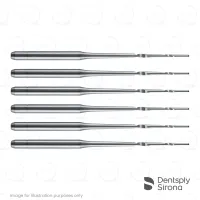
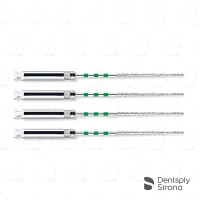
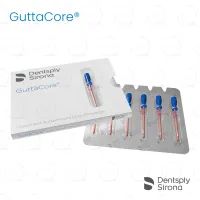
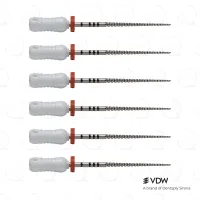
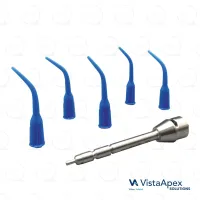
pathfile® 013 is where the sequence starts. it follows the iso 010 hand file that established working length, and it is the file that decides whether the other two have a path to follow. a purple ring on the handle tells it apart on the tray.
| 013 iso tip size | .02 constant taper | 300 rpm motor speed |
this pack: pathfile® rotary glide path file, iso size 13, .02 taper, 21mm (pack of 6) · sterile
ref a001522101303 · made by dentsply sirona (maillefer), switzerland
| tip size | iso 013 |
| taper | constant .02 – the same figure written as a percentage is 2 per cent |
| colour ring | purple |
| length | 21 mm |
| material | nickel-titanium |
| motion | continuous rotation, 300 rpm |
| supplied | sterile, single patient use |
| pack | 6 files |
013 is barely wider than the 010 hand file ahead of it, which is the point: the step up is small enough that the file follows the canal rather than cutting a new one.
pathfile® was developed with dr berutti, dr cantatore and dr castellucci, and it is the range that established the idea of cutting the glide path with a dedicated rotary instrument rather than a sequence of hand files.
berutti and colleagues compared preflaring with hand k-files against pathfile® in one hundred s-shaped training blocks, with an endodontist and an inexperienced clinician each doing both. the pathfile groups showed significantly less modification of canal curvature and significantly fewer canal aberrations – and, notably, the inexperienced clinician using pathfile® produced more conservative shaping than the expert using manual preflaring. (berutti e et al., journal of endodontics 2009 – simulated canals in training blocks, not teeth. berutti co-developed the instrument.)
a later independent study went to extracted teeth. zheng and colleagues scanned sixty mesial canals of mandibular first molars by micro-ct and found pathfile® transported the canal significantly less than hand k-files at every level measured, and extruded less debris apically. (zheng l et al., bmc oral health 2018 – ex vivo, micro-computed tomography.)
do i need the other two sizes?
pathfile® is designed as a sequence, so in normal use yes. the other packs at this length are pathfile® 016, 21 mm · pathfile® 019, 21 mm · pathfile® assorted, 21 mm.
where does it sit against the hand file?
dentsply sirona’s sequence has you establish working length with an iso 008 or 010 hand file first, then take 013, 016 and 019 to length in turn, irrigating between each. the rotary files replace the larger hand files, not the scouting one.
what are the motor settings?
300 rpm, continuous rotation, with light apical pressure and the flutes cleaned frequently. both motors we stock will run it: x-smart® pro+ and vdw.silver® reciproc®.
can the files be reused?
no. they are supplied sterile for single patient use. three files go into one canal in sequence, so the pack of six is one glide path per two canals.
is there a one-file alternative?
two, and we stock both. proglider® cuts the glide path with a single rotary file on a variable progressive taper; r-pilot® does it in one reciprocating file on the reciproc all setting. pathfile® takes three passes and steps up in smaller increments.
| patency | c-pilot® 08, 21 mm · c-pilot® 10, 21 mm |
| lubricant | glyde™ file prep |
| irrigants | chlorax 5.25% · chlorax 2% · endo-solution 17% edta |
| delivery | navitip™ 29 ga, 25 mm · irriflex® 30g |
| activation | smartlite pro endoactivator® · vdw eddy® tips |
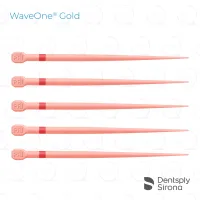
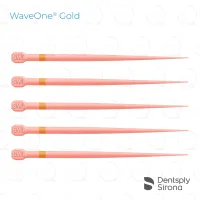
| shape | protaper next® x1, 21 mm · protaper gold® s1, 21 mm · waveone® gold primary, 21 mm |
| obturate | ah plus® paste · neosealer® ezflo, 21 mm tips |
| coronal seal | sdr® flow+ refill universal |
pathfile® rotary glide path file · iso 013 tip · constant .02 taper · purple ring · nickel-titanium · 21 mm · sterile, single patient use · blister of 6 · 300 rpm, continuous rotation · ref a001522101303
pathfile® · 016/.02 · 21 mm · 6 files
glide pathcurved canalsbefore shapingrotary
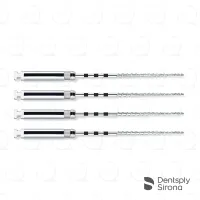
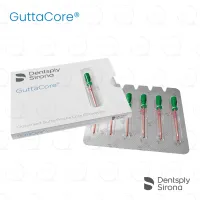
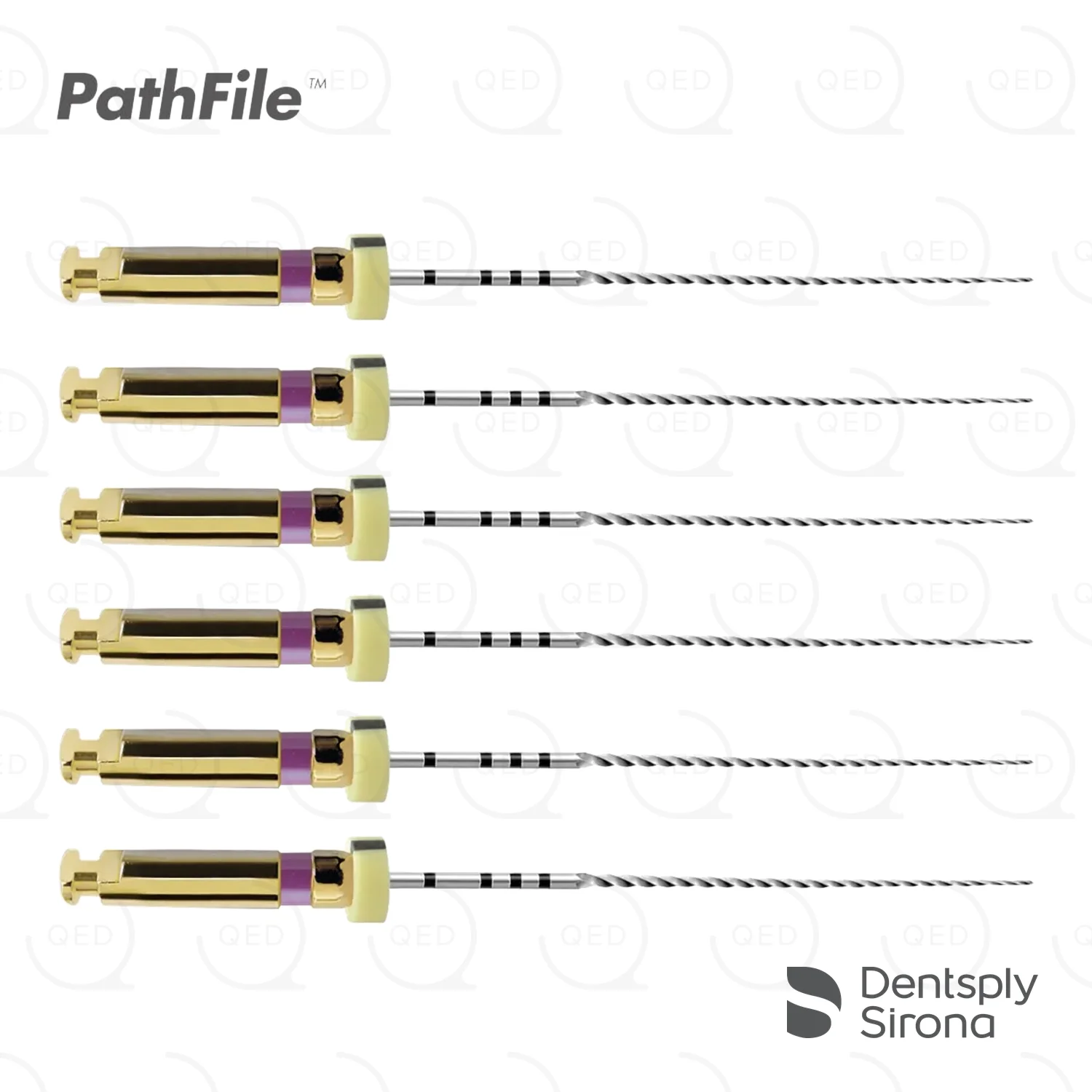
pathfile® 016 is the second file in the sequence, between 013 and 019. it is the one most practices run out of first, because it does most of the widening. a white ring on the handle identifies it.
| 016 iso tip size | .02 constant taper | 300 rpm motor speed |
this pack: pathfile® rotary glide path file, iso size 16, .02 taper, 21mm (pack of 6) · sterile
ref a001522101603 · made by dentsply sirona (maillefer), switzerland
| tip size | iso 016 |
| taper | constant .02 – the same figure written as a percentage is 2 per cent |
| colour ring | white |
| length | 21 mm |
| material | nickel-titanium |
| motion | continuous rotation, 300 rpm |
| supplied | sterile, single patient use |
| pack | 6 files |
by 016 the canal has already been opened by the 013, so this file is working in a path that exists. it is the step that turns a scouted canal into one a shaping file can enter.
pathfile® was developed with dr berutti, dr cantatore and dr castellucci, and it is the range that established the idea of cutting the glide path with a dedicated rotary instrument rather than a sequence of hand files.
berutti and colleagues compared preflaring with hand k-files against pathfile® in one hundred s-shaped training blocks, with an endodontist and an inexperienced clinician each doing both. the pathfile groups showed significantly less modification of canal curvature and significantly fewer canal aberrations – and, notably, the inexperienced clinician using pathfile® produced more conservative shaping than the expert using manual preflaring. (berutti e et al., journal of endodontics 2009 – simulated canals in training blocks, not teeth. berutti co-developed the instrument.)
a later independent study went to extracted teeth. zheng and colleagues scanned sixty mesial canals of mandibular first molars by micro-ct and found pathfile® transported the canal significantly less than hand k-files at every level measured, and extruded less debris apically. (zheng l et al., bmc oral health 2018 – ex vivo, micro-computed tomography.)
do i need the other two sizes?
pathfile® is designed as a sequence, so in normal use yes. the other packs at this length are pathfile® 013, 21 mm · pathfile® 019, 21 mm · pathfile® assorted, 21 mm.
where does it sit against the hand file?
dentsply sirona’s sequence has you establish working length with an iso 008 or 010 hand file first, then take 013, 016 and 019 to length in turn, irrigating between each. the rotary files replace the larger hand files, not the scouting one.
what are the motor settings?
300 rpm, continuous rotation, with light apical pressure and the flutes cleaned frequently. both motors we stock will run it: x-smart® pro+ and vdw.silver® reciproc®.
can the files be reused?
no. they are supplied sterile for single patient use. three files go into one canal in sequence, so the pack of six is one glide path per two canals.
is there a one-file alternative?
two, and we stock both. proglider® cuts the glide path with a single rotary file on a variable progressive taper; r-pilot® does it in one reciprocating file on the reciproc all setting. pathfile® takes three passes and steps up in smaller increments.
| patency | c-pilot® 08, 21 mm · c-pilot® 10, 21 mm |
| lubricant | glyde™ file prep |
| irrigants | chlorax 5.25% · chlorax 2% · endo-solution 17% edta |
| delivery | navitip™ 29 ga, 25 mm · irriflex® 30g |
| activation | smartlite pro endoactivator® · vdw eddy® tips |
| shape | protaper next® x1, 21 mm · protaper gold® s1, 21 mm · waveone® gold primary, 21 mm |
| obturate | ah plus® paste · neosealer® ezflo, 21 mm tips |
| coronal seal | sdr® flow+ refill universal |
pathfile® rotary glide path file · iso 016 tip · constant .02 taper · white ring · nickel-titanium · 21 mm · sterile, single patient use · blister of 6 · 300 rpm, continuous rotation · ref a001522101603

pathfile® · 019/.02 · 21 mm · 6 files
glide pathcurved canalsbefore shapingrotary
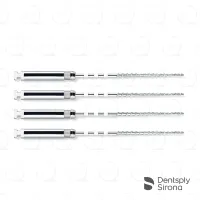
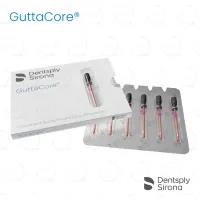
pathfile® 019 is the last of the three. when it reaches working length freely, the glide path is cut and the shaping file can go in. a yellow ring on the handle identifies it.
| 019 iso tip size | .02 constant taper | 300 rpm motor speed |
this pack: pathfile® rotary glide path file, iso size 19, .02 taper, 21mm (pack of 6) · sterile
ref a001522101903 · made by dentsply sirona (maillefer), switzerland
| tip size | iso 019 |
| taper | constant .02 – the same figure written as a percentage is 2 per cent |
| colour ring | yellow |
| length | 21 mm |
| material | nickel-titanium |
| motion | continuous rotation, 300 rpm |
| supplied | sterile, single patient use |
| pack | 6 files |
019 leaves a canal wide enough for a rotary or reciprocating shaping file to enter without binding at the orifice – which is the whole purpose of the exercise.
pathfile® was developed with dr berutti, dr cantatore and dr castellucci, and it is the range that established the idea of cutting the glide path with a dedicated rotary instrument rather than a sequence of hand files.
berutti and colleagues compared preflaring with hand k-files against pathfile® in one hundred s-shaped training blocks, with an endodontist and an inexperienced clinician each doing both. the pathfile groups showed significantly less modification of canal curvature and significantly fewer canal aberrations – and, notably, the inexperienced clinician using pathfile® produced more conservative shaping than the expert using manual preflaring. (berutti e et al., journal of endodontics 2009 – simulated canals in training blocks, not teeth. berutti co-developed the instrument.)
a later independent study went to extracted teeth. zheng and colleagues scanned sixty mesial canals of mandibular first molars by micro-ct and found pathfile® transported the canal significantly less than hand k-files at every level measured, and extruded less debris apically. (zheng l et al., bmc oral health 2018 – ex vivo, micro-computed tomography.)
do i need the other two sizes?
pathfile® is designed as a sequence, so in normal use yes. the other packs at this length are pathfile® 013, 21 mm · pathfile® 016, 21 mm · pathfile® assorted, 21 mm.
where does it sit against the hand file?
dentsply sirona’s sequence has you establish working length with an iso 008 or 010 hand file first, then take 013, 016 and 019 to length in turn, irrigating between each. the rotary files replace the larger hand files, not the scouting one.
what are the motor settings?
300 rpm, continuous rotation, with light apical pressure and the flutes cleaned frequently. both motors we stock will run it: x-smart® pro+ and vdw.silver® reciproc®.
can the files be reused?
no. they are supplied sterile for single patient use. three files go into one canal in sequence, so the pack of six is one glide path per two canals.
is there a one-file alternative?
two, and we stock both. proglider® cuts the glide path with a single rotary file on a variable progressive taper; r-pilot® does it in one reciprocating file on the reciproc all setting. pathfile® takes three passes and steps up in smaller increments.
| patency | c-pilot® 08, 21 mm · c-pilot® 10, 21 mm |
| lubricant | glyde™ file prep |
| irrigants | chlorax 5.25% · chlorax 2% · endo-solution 17% edta |
| delivery | navitip™ 29 ga, 25 mm · irriflex® 30g |
| activation | smartlite pro endoactivator® · vdw eddy® tips |
| shape | protaper next® x1, 21 mm · protaper gold® s1, 21 mm · waveone® gold primary, 21 mm |
| obturate | ah plus® paste · neosealer® ezflo, 21 mm tips |
| coronal seal | sdr® flow+ refill universal |
pathfile® rotary glide path file · iso 019 tip · constant .02 taper · yellow ring · nickel-titanium · 21 mm · sterile, single patient use · blister of 6 · 300 rpm, continuous rotation · ref a001522101903
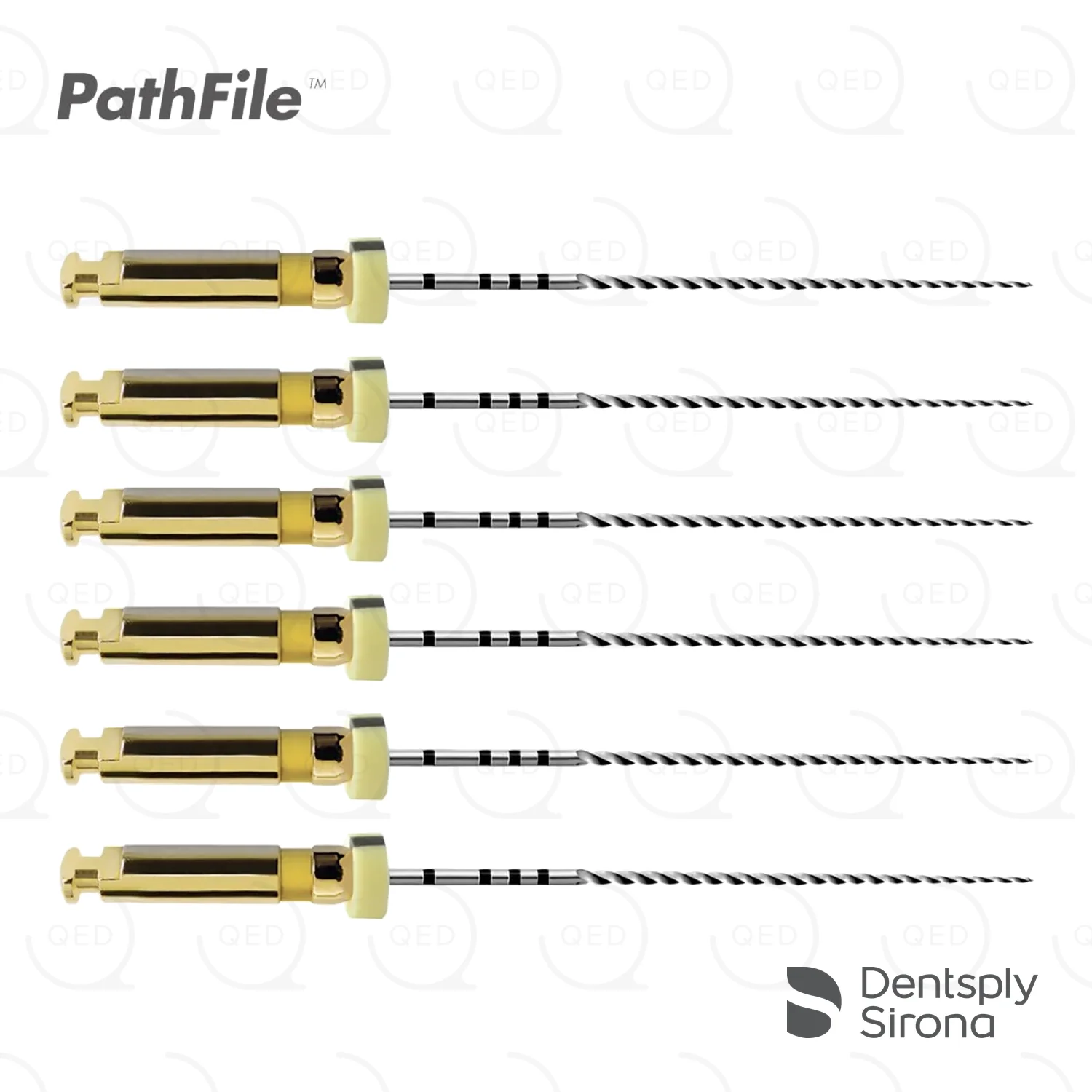
pathfile® · 013-019 · 21 mm · 6 files
glide pathcurved canalsbefore shapingrotary
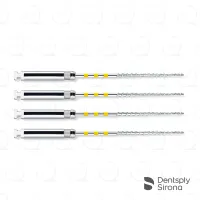
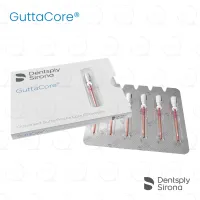
the assorted blister holds the whole sequence – 013, 016 and 019 – in one pack of six. dentsply sirona designed pathfile® as a three-file progression, and this is the pack that matches how it is used.
| 3 sizes in the pack | .02 taper, all three | 300 rpm motor speed |
this pack: pathfile® rotary glide path files, assorted sizes 13 / 16 / 19, .02 taper, 21mm (pack of 6) · sterile
ref a001522190003 · made by dentsply sirona (maillefer), switzerland
| tip size | iso 013, 016 and 019 |
| taper | constant .02 – the same figure written as a percentage is 2 per cent |
| colour ring | purple, white and yellow |
| length | 21 mm |
| material | nickel-titanium |
| motion | continuous rotation, 300 rpm |
| supplied | sterile, single patient use |
| pack | 6 files |
buying the three sizes as singles means three part-used blisters and a running count of which one is short. the assorted pack tracks the sequence instead.
pathfile® was developed with dr berutti, dr cantatore and dr castellucci, and it is the range that established the idea of cutting the glide path with a dedicated rotary instrument rather than a sequence of hand files.
berutti and colleagues compared preflaring with hand k-files against pathfile® in one hundred s-shaped training blocks, with an endodontist and an inexperienced clinician each doing both. the pathfile groups showed significantly less modification of canal curvature and significantly fewer canal aberrations – and, notably, the inexperienced clinician using pathfile® produced more conservative shaping than the expert using manual preflaring. (berutti e et al., journal of endodontics 2009 – simulated canals in training blocks, not teeth. berutti co-developed the instrument.)
a later independent study went to extracted teeth. zheng and colleagues scanned sixty mesial canals of mandibular first molars by micro-ct and found pathfile® transported the canal significantly less than hand k-files at every level measured, and extruded less debris apically. (zheng l et al., bmc oral health 2018 – ex vivo, micro-computed tomography.)
what is in the pack?
six files covering the three sizes – 013, 016 and 019 – all at 21 mm. to reorder one size on its own, the singles are pathfile® 013, 21 mm · pathfile® 016, 21 mm · pathfile® 019, 21 mm.
where does it sit against the hand file?
dentsply sirona’s sequence has you establish working length with an iso 008 or 010 hand file first, then take 013, 016 and 019 to length in turn, irrigating between each. the rotary files replace the larger hand files, not the scouting one.
what are the motor settings?
300 rpm, continuous rotation, with light apical pressure and the flutes cleaned frequently. both motors we stock will run it: x-smart® pro+ and vdw.silver® reciproc®.
can the files be reused?
no. they are supplied sterile for single patient use. three files go into one canal in sequence, so the pack of six is one glide path per two canals.
is there a one-file alternative?
two, and we stock both. proglider® cuts the glide path with a single rotary file on a variable progressive taper; r-pilot® does it in one reciprocating file on the reciproc all setting. pathfile® takes three passes and steps up in smaller increments.
| patency | c-pilot® 08, 21 mm · c-pilot® 10, 21 mm |
| lubricant | glyde™ file prep |
| irrigants | chlorax 5.25% · chlorax 2% · endo-solution 17% edta |
| delivery | navitip™ 29 ga, 25 mm · irriflex® 30g |
| activation | smartlite pro endoactivator® · vdw eddy® tips |
| shape | protaper next® x1, 21 mm · protaper gold® s1, 21 mm · waveone® gold primary, 21 mm |
| obturate | ah plus® paste · neosealer® ezflo, 21 mm tips |
| coronal seal | sdr® flow+ refill universal |
pathfile® rotary glide path files · iso 013, 016 and 019 · constant .02 taper · nickel-titanium · 21 mm · sterile, single patient use · blister of 6 · 300 rpm, continuous rotation · ref a001522190003

pathfile® · 013/.02 · 25 mm · 6 files
glide pathcurved canalsbefore shapingrotary
pathfile® 013 is where the sequence starts. it follows the iso 010 hand file that established working length, and it is the file that decides whether the other two have a path to follow. a purple ring on the handle tells it apart on the tray.
| 013 iso tip size | .02 constant taper | 300 rpm motor speed |
this pack: pathfile® rotary glide path file, iso size 13, .02 taper, 25mm (pack of 6) · sterile
ref a001522501303 · made by dentsply sirona (maillefer), switzerland
| tip size | iso 013 |
| taper | constant .02 – the same figure written as a percentage is 2 per cent |
| colour ring | purple |
| length | 25 mm |
| material | nickel-titanium |
| motion | continuous rotation, 300 rpm |
| supplied | sterile, single patient use |
| pack | 6 files |
013 is barely wider than the 010 hand file ahead of it, which is the point: the step up is small enough that the file follows the canal rather than cutting a new one.
pathfile® was developed with dr berutti, dr cantatore and dr castellucci, and it is the range that established the idea of cutting the glide path with a dedicated rotary instrument rather than a sequence of hand files.
berutti and colleagues compared preflaring with hand k-files against pathfile® in one hundred s-shaped training blocks, with an endodontist and an inexperienced clinician each doing both. the pathfile groups showed significantly less modification of canal curvature and significantly fewer canal aberrations – and, notably, the inexperienced clinician using pathfile® produced more conservative shaping than the expert using manual preflaring. (berutti e et al., journal of endodontics 2009 – simulated canals in training blocks, not teeth. berutti co-developed the instrument.)
a later independent study went to extracted teeth. zheng and colleagues scanned sixty mesial canals of mandibular first molars by micro-ct and found pathfile® transported the canal significantly less than hand k-files at every level measured, and extruded less debris apically. (zheng l et al., bmc oral health 2018 – ex vivo, micro-computed tomography.)
do i need the other two sizes?
pathfile® is designed as a sequence, so in normal use yes. the other packs at this length are pathfile® 016, 25 mm · pathfile® 019, 25 mm · pathfile® assorted, 25 mm.
where does it sit against the hand file?
dentsply sirona’s sequence has you establish working length with an iso 008 or 010 hand file first, then take 013, 016 and 019 to length in turn, irrigating between each. the rotary files replace the larger hand files, not the scouting one.
what are the motor settings?
300 rpm, continuous rotation, with light apical pressure and the flutes cleaned frequently. both motors we stock will run it: x-smart® pro+ and vdw.silver® reciproc®.
can the files be reused?
no. they are supplied sterile for single patient use. three files go into one canal in sequence, so the pack of six is one glide path per two canals.
is there a one-file alternative?
two, and we stock both. proglider® cuts the glide path with a single rotary file on a variable progressive taper; r-pilot® does it in one reciprocating file on the reciproc all setting. pathfile® takes three passes and steps up in smaller increments.
| patency | c-pilot® 08, 25 mm · c-pilot® 10, 25 mm |
| lubricant | glyde™ file prep |
| irrigants | chlorax 5.25% · chlorax 2% · endo-solution 17% edta |
| delivery | navitip™ 29 ga, 25 mm · irriflex® 30g |
| activation | smartlite pro endoactivator® · vdw eddy® tips |
| shape | protaper next® x1, 25 mm · protaper gold® s1, 25 mm · waveone® gold primary, 25 mm |
| obturate | ah plus® paste · neosealer® ezflo, 25 mm tips |
| coronal seal | sdr® flow+ refill universal |
pathfile® rotary glide path file · iso 013 tip · constant .02 taper · purple ring · nickel-titanium · 25 mm · sterile, single patient use · blister of 6 · 300 rpm, continuous rotation · ref a001522501303
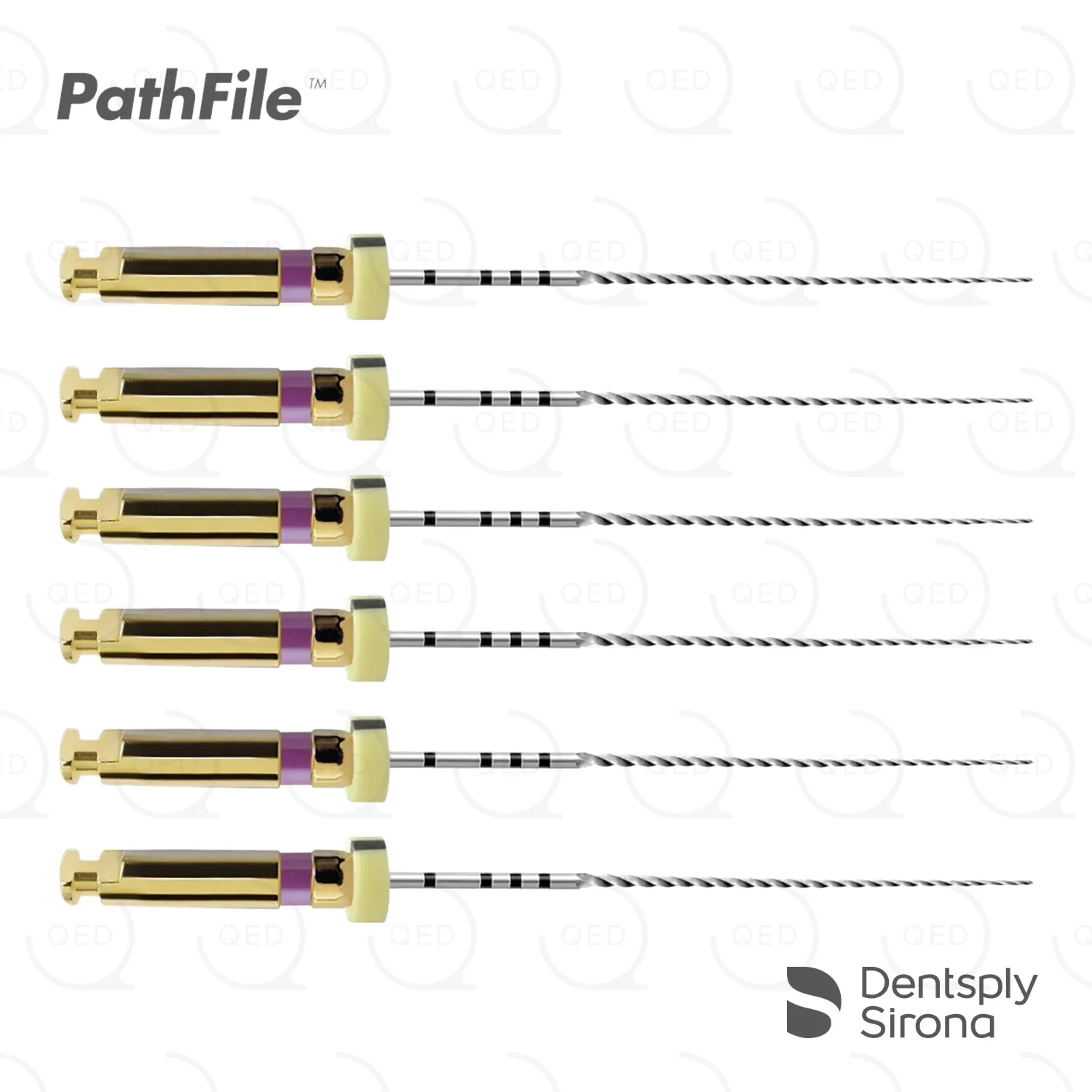
pathfile® · 016/.02 · 25 mm · 6 files
glide pathcurved canalsbefore shapingrotary
pathfile® 016 is the second file in the sequence, between 013 and 019. it is the one most practices run out of first, because it does most of the widening. a white ring on the handle identifies it.
| 016 iso tip size | .02 constant taper | 300 rpm motor speed |
this pack: pathfile® rotary glide path file, iso size 16, .02 taper, 25mm (pack of 6) · sterile
ref a001522501603 · made by dentsply sirona (maillefer), switzerland
| tip size | iso 016 |
| taper | constant .02 – the same figure written as a percentage is 2 per cent |
| colour ring | white |
| length | 25 mm |
| material | nickel-titanium |
| motion | continuous rotation, 300 rpm |
| supplied | sterile, single patient use |
| pack | 6 files |
by 016 the canal has already been opened by the 013, so this file is working in a path that exists. it is the step that turns a scouted canal into one a shaping file can enter.
pathfile® was developed with dr berutti, dr cantatore and dr castellucci, and it is the range that established the idea of cutting the glide path with a dedicated rotary instrument rather than a sequence of hand files.
berutti and colleagues compared preflaring with hand k-files against pathfile® in one hundred s-shaped training blocks, with an endodontist and an inexperienced clinician each doing both. the pathfile groups showed significantly less modification of canal curvature and significantly fewer canal aberrations – and, notably, the inexperienced clinician using pathfile® produced more conservative shaping than the expert using manual preflaring. (berutti e et al., journal of endodontics 2009 – simulated canals in training blocks, not teeth. berutti co-developed the instrument.)
a later independent study went to extracted teeth. zheng and colleagues scanned sixty mesial canals of mandibular first molars by micro-ct and found pathfile® transported the canal significantly less than hand k-files at every level measured, and extruded less debris apically. (zheng l et al., bmc oral health 2018 – ex vivo, micro-computed tomography.)
do i need the other two sizes?
pathfile® is designed as a sequence, so in normal use yes. the other packs at this length are pathfile® 013, 25 mm · pathfile® 019, 25 mm · pathfile® assorted, 25 mm.
where does it sit against the hand file?
dentsply sirona’s sequence has you establish working length with an iso 008 or 010 hand file first, then take 013, 016 and 019 to length in turn, irrigating between each. the rotary files replace the larger hand files, not the scouting one.
what are the motor settings?
300 rpm, continuous rotation, with light apical pressure and the flutes cleaned frequently. both motors we stock will run it: x-smart® pro+ and vdw.silver® reciproc®.
can the files be reused?
no. they are supplied sterile for single patient use. three files go into one canal in sequence, so the pack of six is one glide path per two canals.
is there a one-file alternative?
two, and we stock both. proglider® cuts the glide path with a single rotary file on a variable progressive taper; r-pilot® does it in one reciprocating file on the reciproc all setting. pathfile® takes three passes and steps up in smaller increments.
| patency | c-pilot® 08, 25 mm · c-pilot® 10, 25 mm |
| lubricant | glyde™ file prep |
| irrigants | chlorax 5.25% · chlorax 2% · endo-solution 17% edta |
| delivery | navitip™ 29 ga, 25 mm · irriflex® 30g |
| activation | smartlite pro endoactivator® · vdw eddy® tips |
| shape | protaper next® x1, 25 mm · protaper gold® s1, 25 mm · waveone® gold primary, 25 mm |
| obturate | ah plus® paste · neosealer® ezflo, 25 mm tips |
| coronal seal | sdr® flow+ refill universal |
pathfile® rotary glide path file · iso 016 tip · constant .02 taper · white ring · nickel-titanium · 25 mm · sterile, single patient use · blister of 6 · 300 rpm, continuous rotation · ref a001522501603

pathfile® · 019/.02 · 25 mm · 6 files
glide pathcurved canalsbefore shapingrotary
pathfile® 019 is the last of the three. when it reaches working length freely, the glide path is cut and the shaping file can go in. a yellow ring on the handle identifies it.
| 019 iso tip size | .02 constant taper | 300 rpm motor speed |
this pack: pathfile® rotary glide path file, iso size 19, .02 taper, 25mm (pack of 6) · sterile
ref a001522501903 · made by dentsply sirona (maillefer), switzerland
| tip size | iso 019 |
| taper | constant .02 – the same figure written as a percentage is 2 per cent |
| colour ring | yellow |
| length | 25 mm |
| material | nickel-titanium |
| motion | continuous rotation, 300 rpm |
| supplied | sterile, single patient use |
| pack | 6 files |
019 leaves a canal wide enough for a rotary or reciprocating shaping file to enter without binding at the orifice – which is the whole purpose of the exercise.
pathfile® was developed with dr berutti, dr cantatore and dr castellucci, and it is the range that established the idea of cutting the glide path with a dedicated rotary instrument rather than a sequence of hand files.
berutti and colleagues compared preflaring with hand k-files against pathfile® in one hundred s-shaped training blocks, with an endodontist and an inexperienced clinician each doing both. the pathfile groups showed significantly less modification of canal curvature and significantly fewer canal aberrations – and, notably, the inexperienced clinician using pathfile® produced more conservative shaping than the expert using manual preflaring. (berutti e et al., journal of endodontics 2009 – simulated canals in training blocks, not teeth. berutti co-developed the instrument.)
a later independent study went to extracted teeth. zheng and colleagues scanned sixty mesial canals of mandibular first molars by micro-ct and found pathfile® transported the canal significantly less than hand k-files at every level measured, and extruded less debris apically. (zheng l et al., bmc oral health 2018 – ex vivo, micro-computed tomography.)
do i need the other two sizes?
pathfile® is designed as a sequence, so in normal use yes. the other packs at this length are pathfile® 013, 25 mm · pathfile® 016, 25 mm · pathfile® assorted, 25 mm.
where does it sit against the hand file?
dentsply sirona’s sequence has you establish working length with an iso 008 or 010 hand file first, then take 013, 016 and 019 to length in turn, irrigating between each. the rotary files replace the larger hand files, not the scouting one.
what are the motor settings?
300 rpm, continuous rotation, with light apical pressure and the flutes cleaned frequently. both motors we stock will run it: x-smart® pro+ and vdw.silver® reciproc®.
can the files be reused?
no. they are supplied sterile for single patient use. three files go into one canal in sequence, so the pack of six is one glide path per two canals.
is there a one-file alternative?
two, and we stock both. proglider® cuts the glide path with a single rotary file on a variable progressive taper; r-pilot® does it in one reciprocating file on the reciproc all setting. pathfile® takes three passes and steps up in smaller increments.
| patency | c-pilot® 08, 25 mm · c-pilot® 10, 25 mm |
| lubricant | glyde™ file prep |
| irrigants | chlorax 5.25% · chlorax 2% · endo-solution 17% edta |
| delivery | navitip™ 29 ga, 25 mm · irriflex® 30g |
| activation | smartlite pro endoactivator® · vdw eddy® tips |
| shape | protaper next® x1, 25 mm · protaper gold® s1, 25 mm · waveone® gold primary, 25 mm |
| obturate | ah plus® paste · neosealer® ezflo, 25 mm tips |
| coronal seal | sdr® flow+ refill universal |
pathfile® rotary glide path file · iso 019 tip · constant .02 taper · yellow ring · nickel-titanium · 25 mm · sterile, single patient use · blister of 6 · 300 rpm, continuous rotation · ref a001522501903
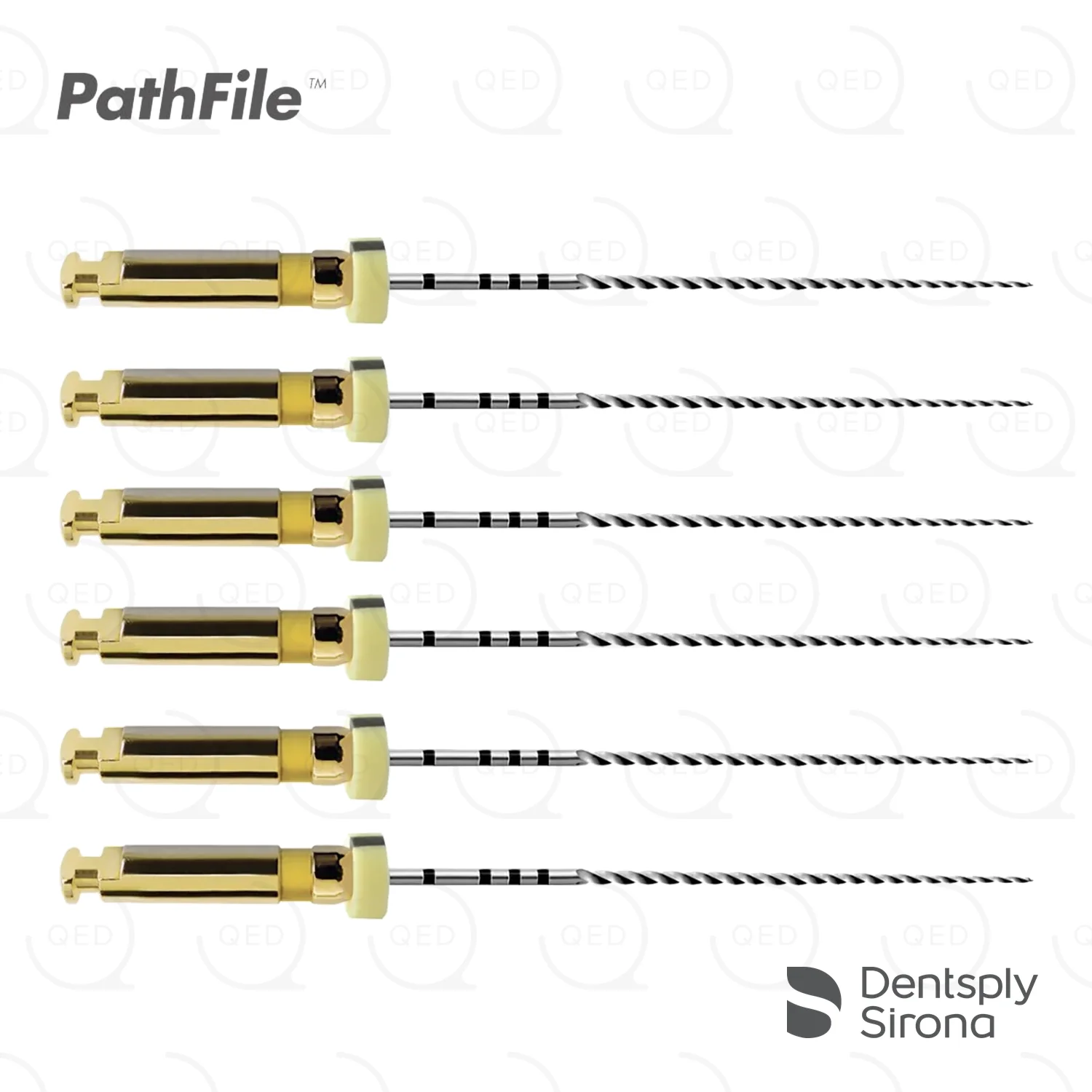
pathfile® · 013-019 · 25 mm · 6 files
glide pathcurved canalsbefore shapingrotary
the assorted blister holds the whole sequence – 013, 016 and 019 – in one pack of six. dentsply sirona designed pathfile® as a three-file progression, and this is the pack that matches how it is used.
| 3 sizes in the pack | .02 taper, all three | 300 rpm motor speed |
this pack: pathfile® rotary glide path files, assorted sizes 13 / 16 / 19, .02 taper, 25mm (pack of 6) · sterile
ref a001522590003 · made by dentsply sirona (maillefer), switzerland
| tip size | iso 013, 016 and 019 |
| taper | constant .02 – the same figure written as a percentage is 2 per cent |
| colour ring | purple, white and yellow |
| length | 25 mm |
| material | nickel-titanium |
| motion | continuous rotation, 300 rpm |
| supplied | sterile, single patient use |
| pack | 6 files |
buying the three sizes as singles means three part-used blisters and a running count of which one is short. the assorted pack tracks the sequence instead.
pathfile® was developed with dr berutti, dr cantatore and dr castellucci, and it is the range that established the idea of cutting the glide path with a dedicated rotary instrument rather than a sequence of hand files.
berutti and colleagues compared preflaring with hand k-files against pathfile® in one hundred s-shaped training blocks, with an endodontist and an inexperienced clinician each doing both. the pathfile groups showed significantly less modification of canal curvature and significantly fewer canal aberrations – and, notably, the inexperienced clinician using pathfile® produced more conservative shaping than the expert using manual preflaring. (berutti e et al., journal of endodontics 2009 – simulated canals in training blocks, not teeth. berutti co-developed the instrument.)
a later independent study went to extracted teeth. zheng and colleagues scanned sixty mesial canals of mandibular first molars by micro-ct and found pathfile® transported the canal significantly less than hand k-files at every level measured, and extruded less debris apically. (zheng l et al., bmc oral health 2018 – ex vivo, micro-computed tomography.)
what is in the pack?
six files covering the three sizes – 013, 016 and 019 – all at 25 mm. to reorder one size on its own, the singles are pathfile® 013, 25 mm · pathfile® 016, 25 mm · pathfile® 019, 25 mm.
where does it sit against the hand file?
dentsply sirona’s sequence has you establish working length with an iso 008 or 010 hand file first, then take 013, 016 and 019 to length in turn, irrigating between each. the rotary files replace the larger hand files, not the scouting one.
what are the motor settings?
300 rpm, continuous rotation, with light apical pressure and the flutes cleaned frequently. both motors we stock will run it: x-smart® pro+ and vdw.silver® reciproc®.
can the files be reused?
no. they are supplied sterile for single patient use. three files go into one canal in sequence, so the pack of six is one glide path per two canals.
is there a one-file alternative?
two, and we stock both. proglider® cuts the glide path with a single rotary file on a variable progressive taper; r-pilot® does it in one reciprocating file on the reciproc all setting. pathfile® takes three passes and steps up in smaller increments.
| patency | c-pilot® 08, 25 mm · c-pilot® 10, 25 mm |
| lubricant | glyde™ file prep |
| irrigants | chlorax 5.25% · chlorax 2% · endo-solution 17% edta |
| delivery | navitip™ 29 ga, 25 mm · irriflex® 30g |
| activation | smartlite pro endoactivator® · vdw eddy® tips |
| shape | protaper next® x1, 25 mm · protaper gold® s1, 25 mm · waveone® gold primary, 25 mm |
| obturate | ah plus® paste · neosealer® ezflo, 25 mm tips |
| coronal seal | sdr® flow+ refill universal |
pathfile® rotary glide path files · iso 013, 016 and 019 · constant .02 taper · nickel-titanium · 25 mm · sterile, single patient use · blister of 6 · 300 rpm, continuous rotation · ref a001522590003

pathfile® · 013/.02 · 31 mm · 6 files
glide pathcurved canalsbefore shapingrotary
pathfile® 013 is where the sequence starts. it follows the iso 010 hand file that established working length, and it is the file that decides whether the other two have a path to follow. a purple ring on the handle tells it apart on the tray.
| 013 iso tip size | .02 constant taper | 300 rpm motor speed |
this pack: pathfile® rotary glide path file, iso size 13, .02 taper, 31mm (pack of 6) · sterile
ref a001523101303 · made by dentsply sirona (maillefer), switzerland
| tip size | iso 013 |
| taper | constant .02 – the same figure written as a percentage is 2 per cent |
| colour ring | purple |
| length | 31 mm |
| material | nickel-titanium |
| motion | continuous rotation, 300 rpm |
| supplied | sterile, single patient use |
| pack | 6 files |
013 is barely wider than the 010 hand file ahead of it, which is the point: the step up is small enough that the file follows the canal rather than cutting a new one.
pathfile® was developed with dr berutti, dr cantatore and dr castellucci, and it is the range that established the idea of cutting the glide path with a dedicated rotary instrument rather than a sequence of hand files.
berutti and colleagues compared preflaring with hand k-files against pathfile® in one hundred s-shaped training blocks, with an endodontist and an inexperienced clinician each doing both. the pathfile groups showed significantly less modification of canal curvature and significantly fewer canal aberrations – and, notably, the inexperienced clinician using pathfile® produced more conservative shaping than the expert using manual preflaring. (berutti e et al., journal of endodontics 2009 – simulated canals in training blocks, not teeth. berutti co-developed the instrument.)
a later independent study went to extracted teeth. zheng and colleagues scanned sixty mesial canals of mandibular first molars by micro-ct and found pathfile® transported the canal significantly less than hand k-files at every level measured, and extruded less debris apically. (zheng l et al., bmc oral health 2018 – ex vivo, micro-computed tomography.)
do i need the other two sizes?
pathfile® is designed as a sequence, so in normal use yes. the other packs at this length are pathfile® 016, 31 mm · pathfile® 019, 31 mm · pathfile® assorted, 31 mm.
where does it sit against the hand file?
dentsply sirona’s sequence has you establish working length with an iso 008 or 010 hand file first, then take 013, 016 and 019 to length in turn, irrigating between each. the rotary files replace the larger hand files, not the scouting one.
what are the motor settings?
300 rpm, continuous rotation, with light apical pressure and the flutes cleaned frequently. both motors we stock will run it: x-smart® pro+ and vdw.silver® reciproc®.
can the files be reused?
no. they are supplied sterile for single patient use. three files go into one canal in sequence, so the pack of six is one glide path per two canals.
is there a one-file alternative?
two, and we stock both. proglider® cuts the glide path with a single rotary file on a variable progressive taper; r-pilot® does it in one reciprocating file on the reciproc all setting. pathfile® takes three passes and steps up in smaller increments.
| patency | an iso 008 or 010 hand file in a 31 mm length – the c-pilot® range stops at 25 mm |
| lubricant | glyde™ file prep |
| irrigants | chlorax 5.25% · chlorax 2% · endo-solution 17% edta |
| delivery | navitip™ 29 ga, 25 mm · irriflex® 30g |
| activation | smartlite pro endoactivator® · vdw eddy® tips |
| shape | protaper next® x1, 31 mm · protaper gold® s1, 31 mm · waveone® gold primary, 31 mm |
| obturate | ah plus® paste · neosealer® ezflo, 25 mm tips |
| coronal seal | sdr® flow+ refill universal |
pathfile® rotary glide path file · iso 013 tip · constant .02 taper · purple ring · nickel-titanium · 31 mm · sterile, single patient use · blister of 6 · 300 rpm, continuous rotation · ref a001523101303
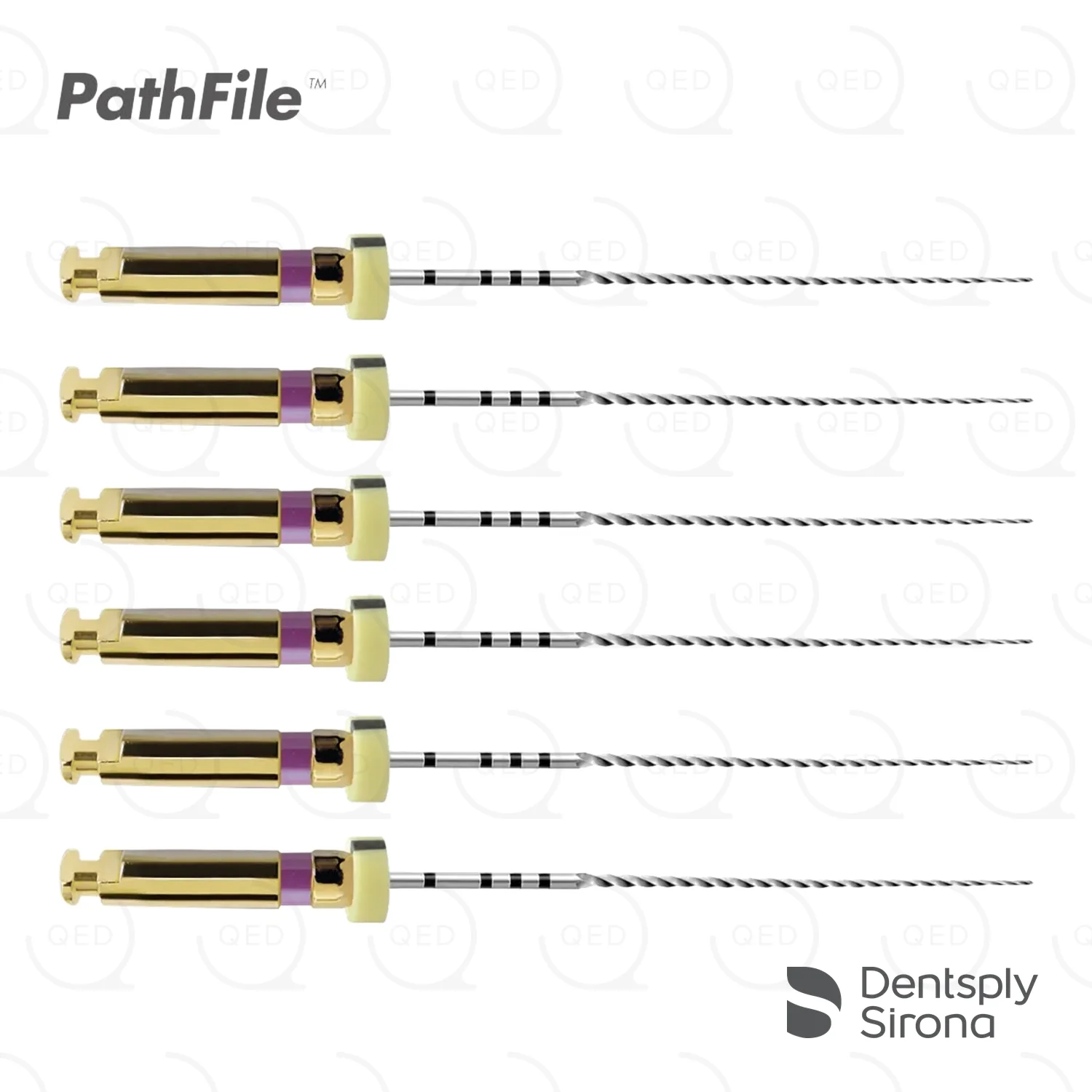
pathfile® · 016/.02 · 31 mm · 6 files
glide pathcurved canalsbefore shapingrotary
pathfile® 016 is the second file in the sequence, between 013 and 019. it is the one most practices run out of first, because it does most of the widening. a white ring on the handle identifies it.
| 016 iso tip size | .02 constant taper | 300 rpm motor speed |
this pack: pathfile® rotary glide path file, iso size 16, .02 taper, 31mm (pack of 6) · sterile
ref a001523101603 · made by dentsply sirona (maillefer), switzerland
| tip size | iso 016 |
| taper | constant .02 – the same figure written as a percentage is 2 per cent |
| colour ring | white |
| length | 31 mm |
| material | nickel-titanium |
| motion | continuous rotation, 300 rpm |
| supplied | sterile, single patient use |
| pack | 6 files |
by 016 the canal has already been opened by the 013, so this file is working in a path that exists. it is the step that turns a scouted canal into one a shaping file can enter.
pathfile® was developed with dr berutti, dr cantatore and dr castellucci, and it is the range that established the idea of cutting the glide path with a dedicated rotary instrument rather than a sequence of hand files.
berutti and colleagues compared preflaring with hand k-files against pathfile® in one hundred s-shaped training blocks, with an endodontist and an inexperienced clinician each doing both. the pathfile groups showed significantly less modification of canal curvature and significantly fewer canal aberrations – and, notably, the inexperienced clinician using pathfile® produced more conservative shaping than the expert using manual preflaring. (berutti e et al., journal of endodontics 2009 – simulated canals in training blocks, not teeth. berutti co-developed the instrument.)
a later independent study went to extracted teeth. zheng and colleagues scanned sixty mesial canals of mandibular first molars by micro-ct and found pathfile® transported the canal significantly less than hand k-files at every level measured, and extruded less debris apically. (zheng l et al., bmc oral health 2018 – ex vivo, micro-computed tomography.)
do i need the other two sizes?
pathfile® is designed as a sequence, so in normal use yes. the other packs at this length are pathfile® 013, 31 mm · pathfile® 019, 31 mm · pathfile® assorted, 31 mm.
where does it sit against the hand file?
dentsply sirona’s sequence has you establish working length with an iso 008 or 010 hand file first, then take 013, 016 and 019 to length in turn, irrigating between each. the rotary files replace the larger hand files, not the scouting one.
what are the motor settings?
300 rpm, continuous rotation, with light apical pressure and the flutes cleaned frequently. both motors we stock will run it: x-smart® pro+ and vdw.silver® reciproc®.
can the files be reused?
no. they are supplied sterile for single patient use. three files go into one canal in sequence, so the pack of six is one glide path per two canals.
is there a one-file alternative?
two, and we stock both. proglider® cuts the glide path with a single rotary file on a variable progressive taper; r-pilot® does it in one reciprocating file on the reciproc all setting. pathfile® takes three passes and steps up in smaller increments.
| patency | an iso 008 or 010 hand file in a 31 mm length – the c-pilot® range stops at 25 mm |
| lubricant | glyde™ file prep |
| irrigants | chlorax 5.25% · chlorax 2% · endo-solution 17% edta |
| delivery | navitip™ 29 ga, 25 mm · irriflex® 30g |
| activation | smartlite pro endoactivator® · vdw eddy® tips |
| shape | protaper next® x1, 31 mm · protaper gold® s1, 31 mm · waveone® gold primary, 31 mm |
| obturate | ah plus® paste · neosealer® ezflo, 25 mm tips |
| coronal seal | sdr® flow+ refill universal |
pathfile® rotary glide path file · iso 016 tip · constant .02 taper · white ring · nickel-titanium · 31 mm · sterile, single patient use · blister of 6 · 300 rpm, continuous rotation · ref a001523101603
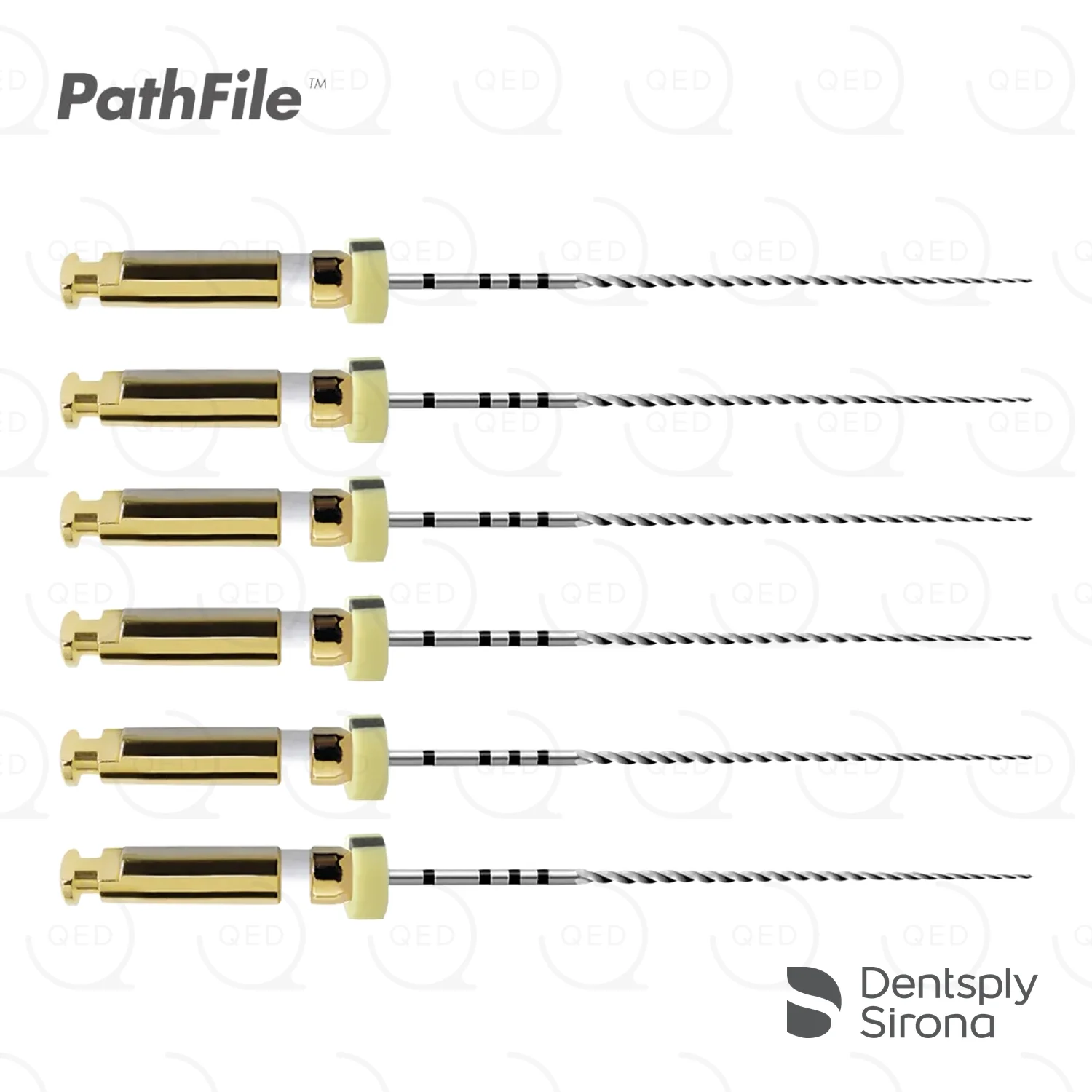
pathfile® · 019/.02 · 31 mm · 6 files
glide pathcurved canalsbefore shapingrotary
pathfile® 019 is the last of the three. when it reaches working length freely, the glide path is cut and the shaping file can go in. a yellow ring on the handle identifies it.
| 019 iso tip size | .02 constant taper | 300 rpm motor speed |
this pack: pathfile® rotary glide path file, iso size 19, .02 taper, 31mm (pack of 6) · sterile
ref a001523101903 · made by dentsply sirona (maillefer), switzerland
| tip size | iso 019 |
| taper | constant .02 – the same figure written as a percentage is 2 per cent |
| colour ring | yellow |
| length | 31 mm |
| material | nickel-titanium |
| motion | continuous rotation, 300 rpm |
| supplied | sterile, single patient use |
| pack | 6 files |
019 leaves a canal wide enough for a rotary or reciprocating shaping file to enter without binding at the orifice – which is the whole purpose of the exercise.
pathfile® was developed with dr berutti, dr cantatore and dr castellucci, and it is the range that established the idea of cutting the glide path with a dedicated rotary instrument rather than a sequence of hand files.
berutti and colleagues compared preflaring with hand k-files against pathfile® in one hundred s-shaped training blocks, with an endodontist and an inexperienced clinician each doing both. the pathfile groups showed significantly less modification of canal curvature and significantly fewer canal aberrations – and, notably, the inexperienced clinician using pathfile® produced more conservative shaping than the expert using manual preflaring. (berutti e et al., journal of endodontics 2009 – simulated canals in training blocks, not teeth. berutti co-developed the instrument.)
a later independent study went to extracted teeth. zheng and colleagues scanned sixty mesial canals of mandibular first molars by micro-ct and found pathfile® transported the canal significantly less than hand k-files at every level measured, and extruded less debris apically. (zheng l et al., bmc oral health 2018 – ex vivo, micro-computed tomography.)
do i need the other two sizes?
pathfile® is designed as a sequence, so in normal use yes. the other packs at this length are pathfile® 013, 31 mm · pathfile® 016, 31 mm · pathfile® assorted, 31 mm.
where does it sit against the hand file?
dentsply sirona’s sequence has you establish working length with an iso 008 or 010 hand file first, then take 013, 016 and 019 to length in turn, irrigating between each. the rotary files replace the larger hand files, not the scouting one.
what are the motor settings?
300 rpm, continuous rotation, with light apical pressure and the flutes cleaned frequently. both motors we stock will run it: x-smart® pro+ and vdw.silver® reciproc®.
can the files be reused?
no. they are supplied sterile for single patient use. three files go into one canal in sequence, so the pack of six is one glide path per two canals.
is there a one-file alternative?
two, and we stock both. proglider® cuts the glide path with a single rotary file on a variable progressive taper; r-pilot® does it in one reciprocating file on the reciproc all setting. pathfile® takes three passes and steps up in smaller increments.
| patency | an iso 008 or 010 hand file in a 31 mm length – the c-pilot® range stops at 25 mm |
| lubricant | glyde™ file prep |
| irrigants | chlorax 5.25% · chlorax 2% · endo-solution 17% edta |
| delivery | navitip™ 29 ga, 25 mm · irriflex® 30g |
| activation | smartlite pro endoactivator® · vdw eddy® tips |
| shape | protaper next® x1, 31 mm · protaper gold® s1, 31 mm · waveone® gold primary, 31 mm |
| obturate | ah plus® paste · neosealer® ezflo, 25 mm tips |
| coronal seal | sdr® flow+ refill universal |
pathfile® rotary glide path file · iso 019 tip · constant .02 taper · yellow ring · nickel-titanium · 31 mm · sterile, single patient use · blister of 6 · 300 rpm, continuous rotation · ref a001523101903
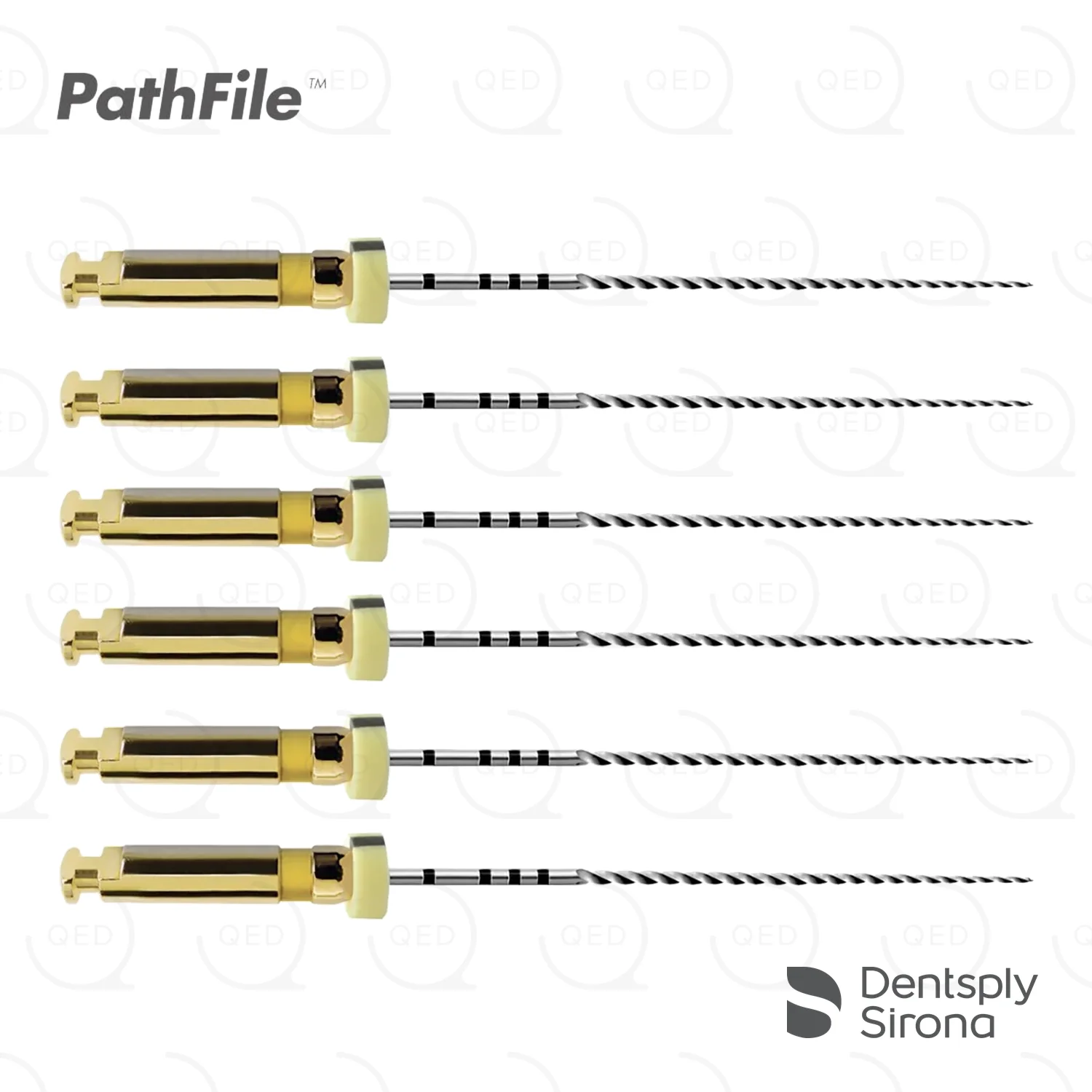
pathfile® · 013-019 · 31 mm · 6 files
glide pathcurved canalsbefore shapingrotary
the assorted blister holds the whole sequence – 013, 016 and 019 – in one pack of six. dentsply sirona designed pathfile® as a three-file progression, and this is the pack that matches how it is used.
| 3 sizes in the pack | .02 taper, all three | 300 rpm motor speed |
this pack: pathfile® rotary glide path files, assorted sizes 13 / 16 / 19, .02 taper, 31mm (pack of 6) · sterile
ref a001523190003 · made by dentsply sirona (maillefer), switzerland
| tip size | iso 013, 016 and 019 |
| taper | constant .02 – the same figure written as a percentage is 2 per cent |
| colour ring | purple, white and yellow |
| length | 31 mm |
| material | nickel-titanium |
| motion | continuous rotation, 300 rpm |
| supplied | sterile, single patient use |
| pack | 6 files |
buying the three sizes as singles means three part-used blisters and a running count of which one is short. the assorted pack tracks the sequence instead.
pathfile® was developed with dr berutti, dr cantatore and dr castellucci, and it is the range that established the idea of cutting the glide path with a dedicated rotary instrument rather than a sequence of hand files.
berutti and colleagues compared preflaring with hand k-files against pathfile® in one hundred s-shaped training blocks, with an endodontist and an inexperienced clinician each doing both. the pathfile groups showed significantly less modification of canal curvature and significantly fewer canal aberrations – and, notably, the inexperienced clinician using pathfile® produced more conservative shaping than the expert using manual preflaring. (berutti e et al., journal of endodontics 2009 – simulated canals in training blocks, not teeth. berutti co-developed the instrument.)
a later independent study went to extracted teeth. zheng and colleagues scanned sixty mesial canals of mandibular first molars by micro-ct and found pathfile® transported the canal significantly less than hand k-files at every level measured, and extruded less debris apically. (zheng l et al., bmc oral health 2018 – ex vivo, micro-computed tomography.)
what is in the pack?
six files covering the three sizes – 013, 016 and 019 – all at 31 mm. to reorder one size on its own, the singles are pathfile® 013, 31 mm · pathfile® 016, 31 mm · pathfile® 019, 31 mm.
where does it sit against the hand file?
dentsply sirona’s sequence has you establish working length with an iso 008 or 010 hand file first, then take 013, 016 and 019 to length in turn, irrigating between each. the rotary files replace the larger hand files, not the scouting one.
what are the motor settings?
300 rpm, continuous rotation, with light apical pressure and the flutes cleaned frequently. both motors we stock will run it: x-smart® pro+ and vdw.silver® reciproc®.
can the files be reused?
no. they are supplied sterile for single patient use. three files go into one canal in sequence, so the pack of six is one glide path per two canals.
is there a one-file alternative?
two, and we stock both. proglider® cuts the glide path with a single rotary file on a variable progressive taper; r-pilot® does it in one reciprocating file on the reciproc all setting. pathfile® takes three passes and steps up in smaller increments.
| patency | an iso 008 or 010 hand file in a 31 mm length – the c-pilot® range stops at 25 mm |
| lubricant | glyde™ file prep |
| irrigants | chlorax 5.25% · chlorax 2% · endo-solution 17% edta |
| delivery | navitip™ 29 ga, 25 mm · irriflex® 30g |
| activation | smartlite pro endoactivator® · vdw eddy® tips |
| shape | protaper next® x1, 31 mm · protaper gold® s1, 31 mm · waveone® gold primary, 31 mm |
| obturate | ah plus® paste · neosealer® ezflo, 25 mm tips |
| coronal seal | sdr® flow+ refill universal |
pathfile® rotary glide path files · iso 013, 016 and 019 · constant .02 taper · nickel-titanium · 31 mm · sterile, single patient use · blister of 6 · 300 rpm, continuous rotation · ref a001523190003
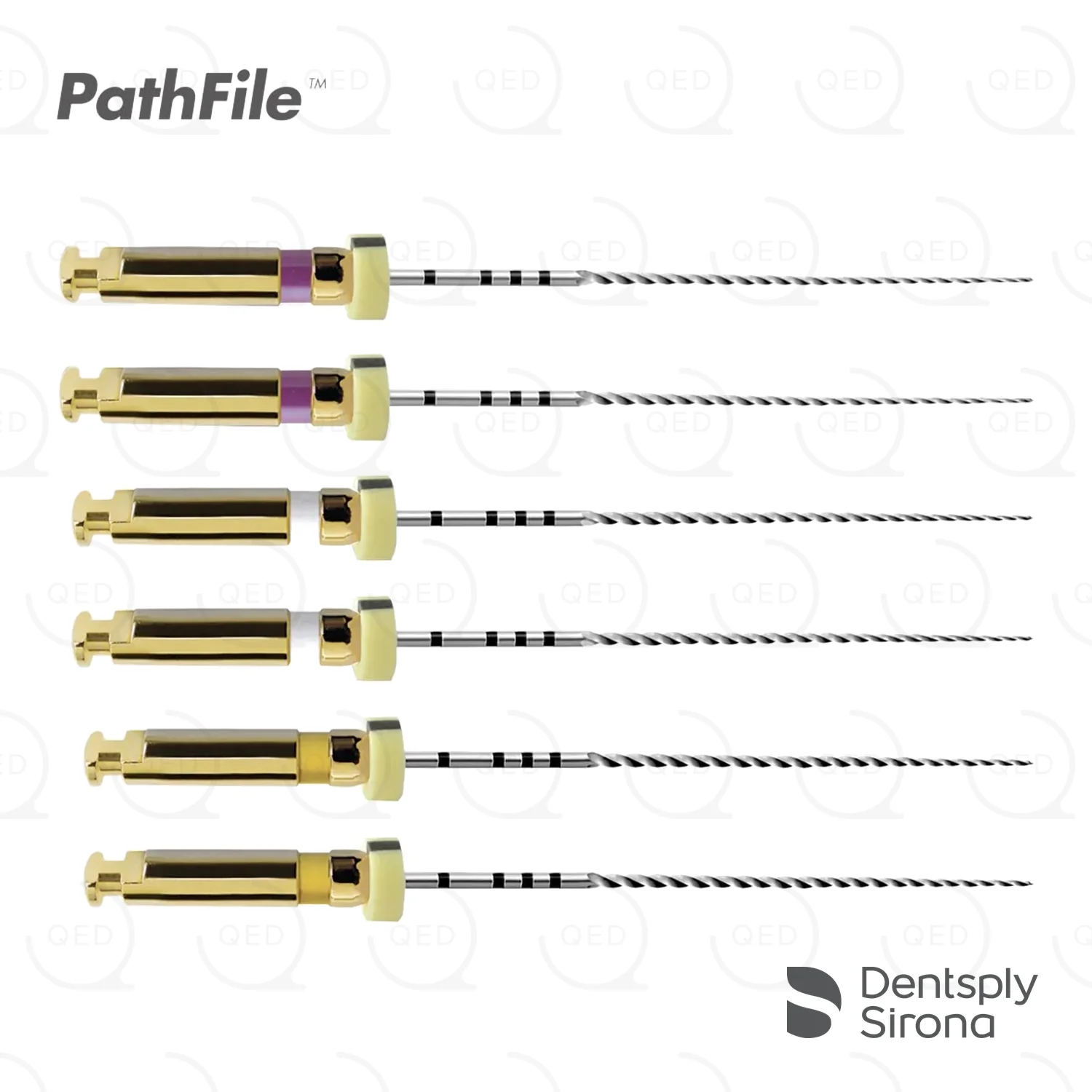
proroot® mta · white · 4 × 0.5 g
root-end fillingperforation repairapexificationpulp cappingpulpotomy, primary teeth
proroot® mta is dentsply sirona’s mineral trioxide aggregate – a fine, hydrophilic powder that sets in the presence of moisture into what their directions call “a strong impermeable barrier”. four 0.5 g pouches, each with its own water ampoule, so every case is mixed fresh and nothing is left open on the shelf.
| 4 mm al min. radiopacity, ifu | ~3 min working time, ifu | > 24 mpa compressive, ifu |
this pack: proroot® mta root canal repair material, white – 4 pouches of 0.5 g powder and 5 ampoules of 0.18 g water · dentsply sirona ref a040500000300
single use · non-sterile, do not sterilise · shelf life 3 years
› six indications in one material. dentsply sirona’s directions list root-end filling, the apical plug in apexification, perforation repair during root canal therapy, repair after internal resorption, pulp capping and pulpotomy of primary teeth.
› sets in a wet field. the powder hydrates to a colloidal gel that, in the directions’ words, “solidifies to form a strong impermeable barrier”. moisture is part of the chemistry, not an enemy of it.
› unit dose. each 0.5 g pouch is matched to a 0.18 g micro-dose water ampoule, so the powder-to-liquid ratio is set by the pack, not the clock. the four-pouch box carries one spare ampoule.
› radiopaque. at least 4 mm of aluminium equivalent (ifu), so placement can be confirmed on the radiograph the directions ask for.
› a permanent part of the filling. in perforation repair and apexification the directions leave the set mta in place and obturate the remaining canal on top of it.
dentsply sirona call it “the first name in root repair”, and on a bench of newer bioceramics it is still the material the others describe themselves against. what you are buying is a known quantity: a composition published in the directions, six indications set out step by step, and a pack that controls the one variable mta punishes – the water.
the four-pouch box suits a practice that places mta occasionally – a perforation here, a pulp cap there – because each pouch stays sealed until the case needs it. the directions insist on that: kept in its sealed packaging and stored dry, because moisture is what sets it. for regular use, the 10 × 0.5 g box is the lower cost per pouch.
proroot® mta root repair material is a powder consisting of fine, hydrophilic particles that set in the presence of moisture. hydration of the powder creates a colloidal gel that solidifies to form a strong impermeable barrier that fully cures over a four-week period.
dentsply sirona, proroot® mta instructions for use (europe, 2025-08)
| material | mineral trioxide aggregate – a fine, hydrophilic powder that sets in the presence of moisture |
| composition | tri- and dicalcium silicates 69–74%, bismuth oxide 17–22%, minor components 2–7% (calcium aluminate, aluminoferrite and sulphate, and others) |
| shade | white (tooth-coloured) |
| mixing | one 0.5 g pouch with one 0.18 g water ampoule, about a minute on the pad |
| cure | checked for hardness after four hours; fully cures over four weeks |
| shelf life | 3 years; store dry, below 30 °c, away from sunlight |
| contraindications | none known |
mixing (all indications). dispense a pouch onto the pad, pull the end off an ampoule and squeeze it out alongside, bring the liquid in gradually and mix for about a minute. it does not set as quickly as other cements – careful mixing is what makes it easy to handle.
1perforation repair, and repair after internal resorption. under dam: debride and irrigate with hypochlorite (for resorption, a week of calcium hydroxide first), dry, and obturate the canal apical to the defect. carry the mta into the defect, compact it with a small plugger, cotton pellet or paper point, and confirm on a radiograph.
2apexification. after a week of calcium hydroxide, carry and compact a three to five millimetre apical barrier, confirm it radiographically, and leave a moist pellet under a temporary.
3after either: at four hours or the next visit, check the mta is hard (if not, rinse and repeat), then obturate the rest of the canal. the mta stays as a permanent part of the filling.
4root-end filling. resect, prepare a class i root-end cavity three to five millimetres deep with an ultrasonic tip, achieve haemostasis, dry, then place and compact the mta, clean the root surface and confirm on a radiograph.
5pulp capping. rinse the exposure with hypochlorite, place a small amount of mta over it, blot the excess moisture, cover it with a light-cured liner, then etch, bond and restore. review sensibility every six months.
6pulpotomy of primary teeth. remove the coronal pulp, achieve haemostasis with pressure, place mta over the pulp stumps and chamber floor to an even three to four millimetres, fill the chamber and restore – the directions finish with a stainless-steel crown.
these are summaries. the directions carry every step, and the materials they name at each stage, in full – see downloads.
how much water, and what if it is too wet or too dry?
use the ampoule supplied with each pouch and mix for about a minute so every particle is hydrated. the directions allow a little extra water – the spare ampoule, or usp purified water – to reach the consistency you want, and they warn that too much or too little liquid reduces the final strength. if the mix starts to dry on the pad, cover it with moist gauze rather than adding more water.
will it discolour the tooth?
the directions are candid about it: a slight discolouration may appear in the months after treatment, and in an aesthetic zone they ask the clinician to weigh the procedure, the surface area exposed and the other restorative materials used.
how long before i can restore over it?
for perforation repair and apexification the directions place a moist pellet and a temporary for at least four hours, then check the mta is hard – at that visit or a later one – before obturating the rest of the canal. for pulp capping they cover it straight away with a light-cured liner, then bond and restore in the same visit.
can i use a pouch across two patients?
no. proroot mta is single use and single patient, and the directions say to place it immediately after mixing; once set it cannot be used again. that is what the 0.5 g unit dose is for.
4 × 0.5 g or 10 × 0.5 g?
same material, same pouch, same ampoule. the four-pack carries one spare ampoule for adjusting a mix; the ten-pack is the lower cost per pouch for practices placing mta every week.
| isolation | qed non-latex dam – the directions use dental dam at every stage. |
| irrigants | chlorax 5.25%, chlorax 2% and endo-solution 17% edta. |
| interim dressing | ultracal xs, calcipast and opacal – calcium hydroxide, which the resorption and apexification protocols place for a week. |
| drying | mmpp paper points 15–40 – or the matched points for your file system. |
| delivery | vista mta carriers 0.80 mm, 0.99 mm and 1.60 mm · cerkamed mta applicator 0.80 mm and 1.20 mm. |
| compaction | penn micro-plugger 060, 100 · root-end: endoblack retroplugger 050, 075. |
| obturation | proroot bio sealer – dentsply sirona’s bioceramic sealer on the same calcium silicate chemistry · ah plus – the epoxy alternative. |
| bonding | prime&bond active – dentsply sirona’s universal adhesive. |
| coronal seal | sdr flow+ refill universal – 4 mm bulk increment, one cure. |
| also in stock | neomta 2 and neoputty – avalon biomed’s bioceramic repair materials, a different formulation and handling. |
› proroot® mta instructions for use (pdf, 1.1 mb, multilingual, dentsply sirona) – the current european edition (2025-08), on dentsply sirona’s site. english is the first section.
indications, composition, physical properties, precautions, adverse reactions, storage and every step above are from dentsply sirona’s proroot® mta instructions for use (end-ifu-proroot-mta-tds-v05, europe, 2025-08; english section, spelling anglicised). “the first name in root repair” is dentsply sirona’s own line. technique is theirs; the clinical decision is yours – we make no claim of our own about seal, healing or outcome. proroot, ah plus, sdr and prime&bond are dentsply sirona trademarks; neomta and neoputty are avalon biomed trademarks.
proroot® mta · root canal repair material, white · 4 × 0.5 g pouches + 5 × 0.18 g water ampoules · dentsply sirona · ref a040500000300
proroot® mta · white · 10 × 0.5 g
root-end fillingperforation repairapexificationpulp cappingpulpotomy, primary teeth
ten single-patient pouches of dentsply sirona’s mineral trioxide aggregate, each with its own 0.18 g water ampoule. the lower cost per pouch, for practices that place mta every week – perforations, apical plugs, root-end fillings and pulp caps.
| 4 mm al min. radiopacity, ifu | ~3 min working time, ifu | > 24 mpa compressive, ifu |
this pack: proroot® mta root canal repair material, white – 10 pouches of 0.5 g powder and 10 ampoules of 0.18 g water · dentsply sirona ref a040500000400
single use · non-sterile, do not sterilise · shelf life 3 years
› six indications in one material. dentsply sirona’s directions list root-end filling, the apical plug in apexification, perforation repair during root canal therapy, repair after internal resorption, pulp capping and pulpotomy of primary teeth.
› sets in a wet field. the powder hydrates to a colloidal gel that, in the directions’ words, “solidifies to form a strong impermeable barrier”. moisture is part of the chemistry, not an enemy of it.
› unit dose. each 0.5 g pouch is matched to a 0.18 g micro-dose water ampoule, so the powder-to-liquid ratio is set by the pack, not the clock. the four-pouch box carries one spare ampoule.
› radiopaque. at least 4 mm of aluminium equivalent (ifu), so placement can be confirmed on the radiograph the directions ask for.
› a permanent part of the filling. in perforation repair and apexification the directions leave the set mta in place and obturate the remaining canal on top of it.
it is the same material, the same 0.5 g pouch and the same unit-dose ampoule as the 4 × 0.5 g box – the difference is volume. each pouch stays sealed until the case needs it, which is what the directions ask for: kept in its sealed packaging and stored dry, because moisture is what sets it. with a three-year shelf life, a ten-pack is a sensible stock item for any practice doing its own perforation repairs and pulp caps.
dentsply sirona call it “the first name in root repair”. the case for it is a known quantity: a composition published in the directions, six indications set out step by step, and a pack that controls the water.
| material | mineral trioxide aggregate – a fine, hydrophilic powder that sets in the presence of moisture |
| composition | tri- and dicalcium silicates 69–74%, bismuth oxide 17–22%, minor components 2–7% (calcium aluminate, aluminoferrite and sulphate, and others) |
| shade | white (tooth-coloured) |
| mixing | one 0.5 g pouch with one 0.18 g water ampoule, about a minute on the pad |
| cure | checked for hardness after four hours; fully cures over four weeks |
| shelf life | 3 years; store dry, below 30 °c, away from sunlight |
| contraindications | none known |
dispense a pouch onto the pad, pull the end off an ampoule and squeeze it out alongside, bring the liquid in gradually and mix for about a minute. carry it into place, compact it, and confirm on a radiograph. in perforation repair and apexification (a three to five millimetre apical barrier), leave a moist pellet under a temporary and check the mta is hard at four hours or the next visit before obturating the rest of the canal. in pulp capping, cover it with a light-cured liner and restore in the same visit.
each indication is set out step by step on the 4 × 0.5 g page and in full in the directions – see downloads.
how much water, and what if it is too wet or too dry?
use the ampoule supplied with each pouch and mix for about a minute so every particle is hydrated. the directions allow a little extra water – the spare ampoule, or usp purified water – to reach the consistency you want, and they warn that too much or too little liquid reduces the final strength. if the mix starts to dry on the pad, cover it with moist gauze rather than adding more water.
will it discolour the tooth?
the directions are candid about it: a slight discolouration may appear in the months after treatment, and in an aesthetic zone they ask the clinician to weigh the procedure, the surface area exposed and the other restorative materials used.
how long before i can restore over it?
for perforation repair and apexification the directions place a moist pellet and a temporary for at least four hours, then check the mta is hard – at that visit or a later one – before obturating the rest of the canal. for pulp capping they cover it straight away with a light-cured liner, then bond and restore in the same visit.
can i use a pouch across two patients?
no. proroot mta is single use and single patient, and the directions say to place it immediately after mixing; once set it cannot be used again. that is what the 0.5 g unit dose is for.
| isolation | qed non-latex dam – the directions use dental dam at every stage. |
| irrigants | chlorax 5.25%, chlorax 2% and endo-solution 17% edta. |
| interim dressing | ultracal xs, calcipast and opacal – calcium hydroxide, which the resorption and apexification protocols place for a week. |
| drying | mmpp paper points 15–40 – or the matched points for your file system. |
| delivery | vista mta carriers 0.80 mm, 0.99 mm and 1.60 mm · cerkamed mta applicator 0.80 mm and 1.20 mm. |
| compaction | penn micro-plugger 060, 100 · root-end: endoblack retroplugger 050, 075. |
| obturation | proroot bio sealer – dentsply sirona’s bioceramic sealer on the same calcium silicate chemistry · ah plus – the epoxy alternative. |
| bonding | prime&bond active – dentsply sirona’s universal adhesive. |
| coronal seal | sdr flow+ refill universal – 4 mm bulk increment, one cure. |
| also in stock | neomta 2 and neoputty – avalon biomed’s bioceramic repair materials, a different formulation and handling. |
› proroot® mta instructions for use (pdf, 1.1 mb, multilingual, dentsply sirona) – the current european edition (2025-08), on dentsply sirona’s site. english is the first section.
indications, composition, physical properties, precautions, adverse reactions, storage and every step above are from dentsply sirona’s proroot® mta instructions for use (end-ifu-proroot-mta-tds-v05, europe, 2025-08; english section, spelling anglicised). “the first name in root repair” is dentsply sirona’s own line. technique is theirs; the clinical decision is yours – we make no claim of our own about seal, healing or outcome. proroot, ah plus, sdr and prime&bond are dentsply sirona trademarks; neomta and neoputty are avalon biomed trademarks.
proroot® mta · root canal repair material, white · 10 × 0.5 g pouches + 10 × 0.18 g water ampoules · dentsply sirona · ref a040500000400
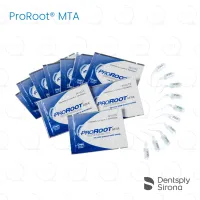
protaper gold® · sx–f3 assorted · 21 mm · pack of 6
curved canalsfull sequencesterilesingle use21 mm
six instruments – sx, s1, s2, f1, f2 and f3 – which is the protaper gold sequence as far as most canals ever need it. the straightforward way to run the system without committing to six separate lines, and the sensible way to try it.
| +24% flexibility vs ptu | x 2.4 fatigue, system | 300 rpm speed, per the ifu |
dentsply sirona’s own figures against protaper® universal, internal testing, data on file. x 2.6 is the f3 file; x 2.4 the system.
this pack: protaper gold® rotary files, sx-f3 assorted, 21 mm (pack of 6)
made by dentsply sirona · legal manufacturer maillefer instruments holding sàrl, ballaigues · uk representative dentsply ih ltd, stonehouse
› sx 019/.04v – the accessory shaper, 19 mm, for relocating the coronal aspect of the canal.
› s1 018/.02v and s2 020/.04v – the two shaping files, used with a brushing action on the outstroke.
› f1 020/.07v, f2 025/.08v and f3 030/.09v – the three finishers, used without brushing, to length.
six instruments, one blister, sterile. the three finishers cover the sizes the great majority of canals gauge to; f4 and f5 are sold separately for the ones that do not.
| contents | sx 019/.04v · s1 018/.02v · s2 020/.04v · f1 020/.07v · f2 025/.08v · f3 030/.09v |
| length | 21 mm, sx 19 mm |
| motor | 300 rpm · torque 5–6 ncm sx and s1, 1.5–2 ncm s2 and f1, 3–4 ncm f2 and f3 |
| pack | blister of 6, sterile |
the sequence is the same regardless of the length, diameter or curvature of the canal – that is dentsply sirona’s own wording. sx through f3 is the sequence as the instructions set it out, steps 8 to 18. shaping files brush on the outstroke; finishing files do not brush at all. irrigate abundantly and frequently after each instrument.
from the protaper gold instructions for use, february 2026 – their sequence, not ours.
300 rpm in continuous rotation for every file in the blister. torque is set per file: 5–6 ncm for sx and s1, 1.5–2 ncm for s2 and f1, and 3–4 ncm for f2 and f3. the shapers take the most torque and s2 and f1 the least, which is the opposite of what most people set.
dentsply sirona say this file, like every engine-driven root canal instrument, should not be used in a canal with an abrupt apical curvature, and that pre-curved hand files should be used in the apical region instead. contraindications: none known.
in the uk, endodontic reamers and files are treated as single use – the chief dental officer’s instruction of 19 april 2007, not a qed policy. so a blister of six is six canals, not six cases.
will it fit my motor?
it needs continuous rotation at 300 rpm, and 5–6 ncm for the shapers. x-smart pro+ and x-smart go both reach it. on a vdw.silver reciproc the rotary torque ceiling depends on the firmware – ask us.
is it sterile?
yes – supplied sterile in a blister of six, sterilised by radiation. in the uk the file is then single use.
| patency & glide path | vdw c-pilot 10 and c-pilot 08 in 21 mm – the iso 010 the instructions scout and recapitulate with, in the length this file works to. |
| mechanised glide path | proglider 21 mm or pathfile assorted 21 mm – the two the instructions name, after an iso 010 hand file. |
| chelator | glyde file prep – the viscous chelator named in the protaper gold instructions themselves. |
| irrigants | chlorax 5.25%, chlorax 2% and endo-solution 17% edta. |
| delivery | irriflex 30g or navitip 29 ga, 25 mm. |
| activation | smartlite pro endoactivator – dentsply sirona’s own. |
| motor | continuous rotation at 300 rpm, and the shapers ask for 5–6 ncm, so the motor has to reach that at low speed. x-smart pro+ and x-smart go both do – the x-smart go gives its full 6 ncm anywhere from 50 to 400 rpm. vdw.silver reciproc will drive the file; its rotary torque ceiling depends on the firmware, so ask us and we will check yours. |
| dry and obturate | protaper gold paper points and conform fit gutta percha in the finishing size the canal gauges to, carried to length with sealer. |
| coronal seal | sdr flow+ refill universal – 4 mm bulk increment, one cure. the apical seal is only half the job. |
› protaper gold® brochure (pdf, 1.5 mb, dentsply sirona) – the geometry table, the full product reference list and the published claims.
geometry, sizes, tapers, torque, speed and the sequence are from the protaper gold instructions for use, end-ifu-protaper-gold-reusable-sterile-v03, february 2026 (their document, on their site), and the protaper gold brochure, row en, 11/2017. the flexibility and cyclic-fatigue figures are dentsply sirona’s internal testing, data on file; the independent studies cited are laboratory and ex vivo work and are labelled as such. dentsply sirona, protaper, protaper gold, conform fit, thermafil, glyde, proglider, pathfile, x-smart and sdr are their trademarks.
protaper gold® sx–f3 assorted · six instruments · 21 mm · blister of 6 · sterile · single use in the uk · 300 rpm · ref a0409221g0103

protaper gold® · sx–f3 assorted · 25 mm · pack of 6
curved canalsfull sequencesterilesingle use25 mm
six instruments – sx, s1, s2, f1, f2 and f3 – which is the protaper gold sequence as far as most canals ever need it. the straightforward way to run the system without committing to six separate lines, and the sensible way to try it.
| +24% flexibility vs ptu | x 2.4 fatigue, system | 300 rpm speed, per the ifu |
dentsply sirona’s own figures against protaper® universal, internal testing, data on file. x 2.6 is the f3 file; x 2.4 the system.
this pack: protaper gold® rotary files, sx-f3 assorted, 25 mm (pack of 6)
made by dentsply sirona · legal manufacturer maillefer instruments holding sàrl, ballaigues · uk representative dentsply ih ltd, stonehouse
› sx 019/.04v – the accessory shaper, 19 mm, for relocating the coronal aspect of the canal.
› s1 018/.02v and s2 020/.04v – the two shaping files, used with a brushing action on the outstroke.
› f1 020/.07v, f2 025/.08v and f3 030/.09v – the three finishers, used without brushing, to length.
six instruments, one blister, sterile. the three finishers cover the sizes the great majority of canals gauge to; f4 and f5 are sold separately for the ones that do not.
| contents | sx 019/.04v · s1 018/.02v · s2 020/.04v · f1 020/.07v · f2 025/.08v · f3 030/.09v |
| length | 25 mm, sx 19 mm |
| motor | 300 rpm · torque 5–6 ncm sx and s1, 1.5–2 ncm s2 and f1, 3–4 ncm f2 and f3 |
| pack | blister of 6, sterile |
the sequence is the same regardless of the length, diameter or curvature of the canal – that is dentsply sirona’s own wording. sx through f3 is the sequence as the instructions set it out, steps 8 to 18. shaping files brush on the outstroke; finishing files do not brush at all. irrigate abundantly and frequently after each instrument.
from the protaper gold instructions for use, february 2026 – their sequence, not ours.
300 rpm in continuous rotation for every file in the blister. torque is set per file: 5–6 ncm for sx and s1, 1.5–2 ncm for s2 and f1, and 3–4 ncm for f2 and f3. the shapers take the most torque and s2 and f1 the least, which is the opposite of what most people set.
dentsply sirona say this file, like every engine-driven root canal instrument, should not be used in a canal with an abrupt apical curvature, and that pre-curved hand files should be used in the apical region instead. contraindications: none known.
in the uk, endodontic reamers and files are treated as single use – the chief dental officer’s instruction of 19 april 2007, not a qed policy. so a blister of six is six canals, not six cases.
will it fit my motor?
it needs continuous rotation at 300 rpm, and 5–6 ncm for the shapers. x-smart pro+ and x-smart go both reach it. on a vdw.silver reciproc the rotary torque ceiling depends on the firmware – ask us.
is it sterile?
yes – supplied sterile in a blister of six, sterilised by radiation. in the uk the file is then single use.
| patency & glide path | vdw c-pilot 10 and c-pilot 08 in 25 mm – the iso 010 the instructions scout and recapitulate with, in the length this file works to. |
| mechanised glide path | proglider 25 mm or pathfile assorted 25 mm – the two the instructions name, after an iso 010 hand file. |
| chelator | glyde file prep – the viscous chelator named in the protaper gold instructions themselves. |
| irrigants | chlorax 5.25%, chlorax 2% and endo-solution 17% edta. |
| delivery | irriflex 30g or navitip 29 ga, 25 mm. |
| activation | smartlite pro endoactivator – dentsply sirona’s own. |
| motor | continuous rotation at 300 rpm, and the shapers ask for 5–6 ncm, so the motor has to reach that at low speed. x-smart pro+ and x-smart go both do – the x-smart go gives its full 6 ncm anywhere from 50 to 400 rpm. vdw.silver reciproc will drive the file; its rotary torque ceiling depends on the firmware, so ask us and we will check yours. |
| dry and obturate | protaper gold paper points and conform fit gutta percha in the finishing size the canal gauges to, carried to length with sealer. |
| coronal seal | sdr flow+ refill universal – 4 mm bulk increment, one cure. the apical seal is only half the job. |
› protaper gold® brochure (pdf, 1.5 mb, dentsply sirona) – the geometry table, the full product reference list and the published claims.
geometry, sizes, tapers, torque, speed and the sequence are from the protaper gold instructions for use, end-ifu-protaper-gold-reusable-sterile-v03, february 2026 (their document, on their site), and the protaper gold brochure, row en, 11/2017. the flexibility and cyclic-fatigue figures are dentsply sirona’s internal testing, data on file; the independent studies cited are laboratory and ex vivo work and are labelled as such. dentsply sirona, protaper, protaper gold, conform fit, thermafil, glyde, proglider, pathfile, x-smart and sdr are their trademarks.
protaper gold® sx–f3 assorted · six instruments · 25 mm · blister of 6 · sterile · single use in the uk · 300 rpm · ref a0409225g0103
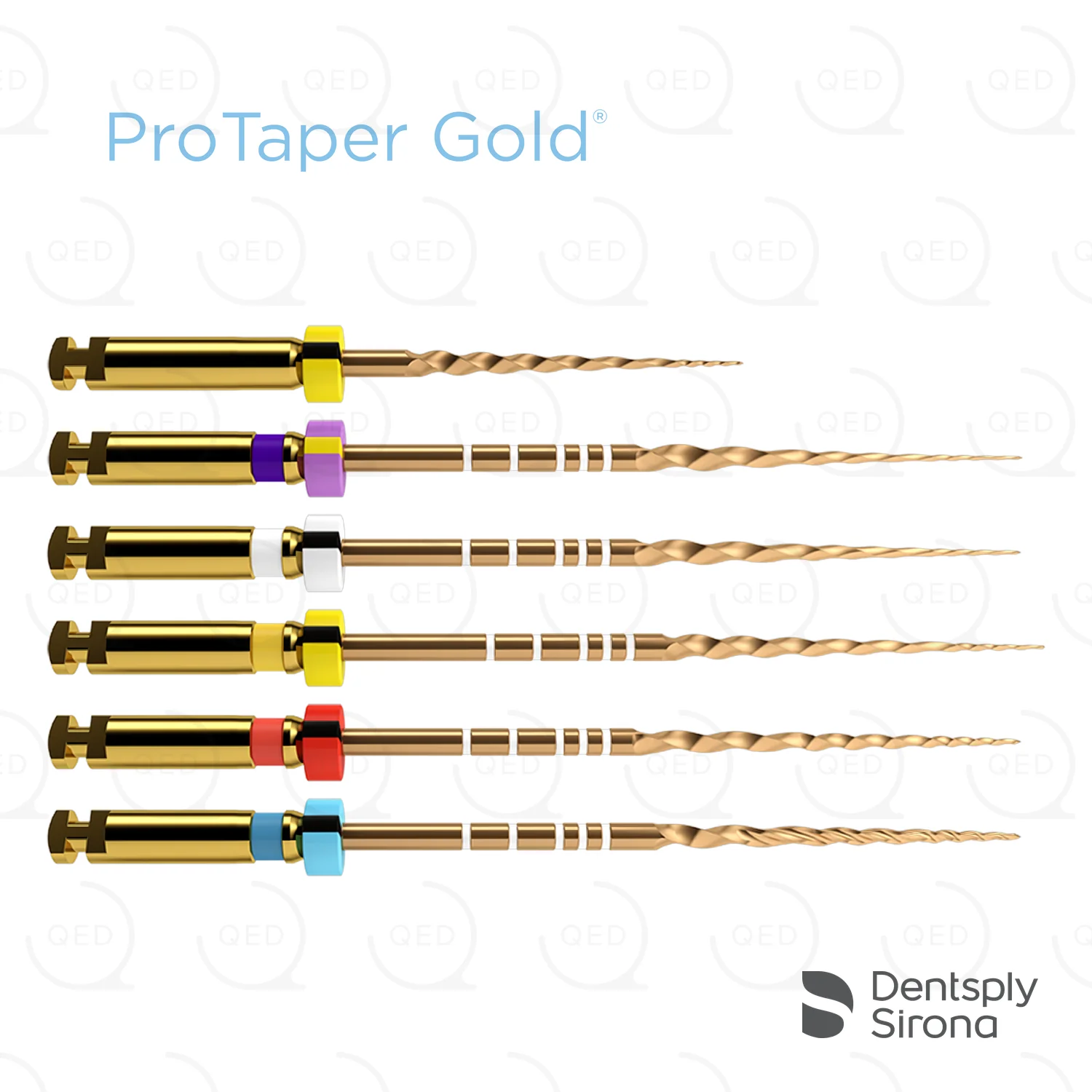
protaper gold® · sx–f3 assorted · 31 mm · pack of 6
curved canalsfull sequencesterilesingle use31 mm
six instruments – sx, s1, s2, f1, f2 and f3 – which is the protaper gold sequence as far as most canals ever need it. the straightforward way to run the system without committing to six separate lines, and the sensible way to try it.
| +24% flexibility vs ptu | x 2.4 fatigue, system | 300 rpm speed, per the ifu |
dentsply sirona’s own figures against protaper® universal, internal testing, data on file. x 2.6 is the f3 file; x 2.4 the system.
this pack: protaper gold® rotary files, sx-f3 assorted, 31 mm (pack of 6)
made by dentsply sirona · legal manufacturer maillefer instruments holding sàrl, ballaigues · uk representative dentsply ih ltd, stonehouse
› sx 019/.04v – the accessory shaper, 19 mm, for relocating the coronal aspect of the canal.
› s1 018/.02v and s2 020/.04v – the two shaping files, used with a brushing action on the outstroke.
› f1 020/.07v, f2 025/.08v and f3 030/.09v – the three finishers, used without brushing, to length.
six instruments, one blister, sterile. the three finishers cover the sizes the great majority of canals gauge to; f4 and f5 are sold separately for the ones that do not.
| contents | sx 019/.04v · s1 018/.02v · s2 020/.04v · f1 020/.07v · f2 025/.08v · f3 030/.09v |
| length | 31 mm, sx 19 mm |
| motor | 300 rpm · torque 5–6 ncm sx and s1, 1.5–2 ncm s2 and f1, 3–4 ncm f2 and f3 |
| pack | blister of 6, sterile |
the sequence is the same regardless of the length, diameter or curvature of the canal – that is dentsply sirona’s own wording. sx through f3 is the sequence as the instructions set it out, steps 8 to 18. shaping files brush on the outstroke; finishing files do not brush at all. irrigate abundantly and frequently after each instrument.
from the protaper gold instructions for use, february 2026 – their sequence, not ours.
300 rpm in continuous rotation for every file in the blister. torque is set per file: 5–6 ncm for sx and s1, 1.5–2 ncm for s2 and f1, and 3–4 ncm for f2 and f3. the shapers take the most torque and s2 and f1 the least, which is the opposite of what most people set.
dentsply sirona say this file, like every engine-driven root canal instrument, should not be used in a canal with an abrupt apical curvature, and that pre-curved hand files should be used in the apical region instead. contraindications: none known.
in the uk, endodontic reamers and files are treated as single use – the chief dental officer’s instruction of 19 april 2007, not a qed policy. so a blister of six is six canals, not six cases.
will it fit my motor?
it needs continuous rotation at 300 rpm, and 5–6 ncm for the shapers. x-smart pro+ and x-smart go both reach it. on a vdw.silver reciproc the rotary torque ceiling depends on the firmware – ask us.
is it sterile?
yes – supplied sterile in a blister of six, sterilised by radiation. in the uk the file is then single use.
| patency & glide path | the directions call for iso 010 and iso 015 hand files. we have no 31 mm c-pilot, and a 25 mm hand file cannot reach the length a 31 mm file is cutting to, so ask us and we will match a 31 mm hand file to the case. |
| mechanised glide path | proglider 31 mm or pathfile assorted 31 mm – the two the instructions name, after an iso 010 hand file. |
| chelator | glyde file prep – the viscous chelator named in the protaper gold instructions themselves. |
| irrigants | chlorax 5.25%, chlorax 2% and endo-solution 17% edta. |
| delivery | irriflex 30g or navitip 29 ga, 25 mm. |
| activation | smartlite pro endoactivator – dentsply sirona’s own. |
| motor | continuous rotation at 300 rpm, and the shapers ask for 5–6 ncm, so the motor has to reach that at low speed. x-smart pro+ and x-smart go both do – the x-smart go gives its full 6 ncm anywhere from 50 to 400 rpm. vdw.silver reciproc will drive the file; its rotary torque ceiling depends on the firmware, so ask us and we will check yours. |
| dry and obturate | protaper gold paper points and conform fit gutta percha in the finishing size the canal gauges to, carried to length with sealer. |
| coronal seal | sdr flow+ refill universal – 4 mm bulk increment, one cure. the apical seal is only half the job. |
› protaper gold® brochure (pdf, 1.5 mb, dentsply sirona) – the geometry table, the full product reference list and the published claims.
geometry, sizes, tapers, torque, speed and the sequence are from the protaper gold instructions for use, end-ifu-protaper-gold-reusable-sterile-v03, february 2026 (their document, on their site), and the protaper gold brochure, row en, 11/2017. the flexibility and cyclic-fatigue figures are dentsply sirona’s internal testing, data on file; the independent studies cited are laboratory and ex vivo work and are labelled as such. dentsply sirona, protaper, protaper gold, conform fit, thermafil, glyde, proglider, pathfile, x-smart and sdr are their trademarks.
protaper gold® sx–f3 assorted · six instruments · 31 mm · blister of 6 · sterile · single use in the uk · 300 rpm · ref a0409231g0103

protaper gold® · sx 019/.04v · 19 mm · pack of 6
curved canalscoronal shapingsterilesingle use19 mm
sx is the accessory shaper, and it is the only protaper gold file made in one length. its job comes at the end of the sequence, not the start: brushing the coronal aspect of the canal away from the furcation, taking out triangles of dentine, and shaping short roots the standard sequence overprepares.
| +24% flexibility vs ptu | x 2.4 fatigue, system | 300 rpm speed, per the ifu |
dentsply sirona’s own figures against protaper® universal, internal testing, data on file. x 2.6 is the f3 file; x 2.4 the system.
this pack: protaper gold® sx rotary file, 19 mm (pack of 6)
made by dentsply sirona · legal manufacturer maillefer instruments holding sàrl, ballaigues · uk representative dentsply ih ltd, stonehouse
› same geometry as protaper universal. dentsply sirona are explicit that the shapes did not change – the files “feature the same exact geometries as protaper® universal, but offer an increase in flexibility”. if you know the sequence, you already know this file.
› heat-treated nickel titanium. the instructions describe it as nickel titanium alloy “followed by a heat treatment”. that is the whole difference, and it is what the gold colour is telling you.
› 11 mm handle. two millimetres shorter than protaper universal’s, which is two millimetres of access you get back on a second molar.
| tip size | iso 019 |
| taper | .04 variable |
| length | 19 mm |
| motor | 300 rpm · torque 5 – 6 ncm |
| pack | blister of 6, sterile |
the sequence is the same regardless of the length, diameter or curvature of the canal – that is dentsply sirona’s own wording. sx comes in at step 18, after the finishers, and only if the coronal shape needs it. shaping files brush on the outstroke; finishing files do not brush at all. irrigate abundantly and frequently after each instrument.
from the protaper gold instructions for use, february 2026 – their sequence, not ours.
300 rpm in continuous rotation, torque 5 – 6 ncm. those figures are from the february 2026 instructions for use and are not in the 2017 brochure, which gives no torque at all. note the shape of the table: the shaping files take the most torque and s2 and f1 the least.
dentsply sirona say this file, like every engine-driven root canal instrument, should not be used in a canal with an abrupt apical curvature, and that pre-curved hand files should be used in the apical region instead. contraindications: none known.
in the uk, endodontic reamers and files are treated as single use – the chief dental officer’s instruction of 19 april 2007, not a qed policy. so a blister of six is six canals, not six cases.
will it fit my motor?
it needs continuous rotation at 300 rpm, and 5–6 ncm for the shapers. x-smart pro+ and x-smart go both reach it. on a vdw.silver reciproc the rotary torque ceiling depends on the firmware – ask us.
is it sterile?
yes – supplied sterile in a blister of six, sterilised by radiation. in the uk the file is then single use.
| patency & glide path | vdw c-pilot 10 and c-pilot 08 in 19 mm – the iso 010 the instructions scout and recapitulate with, in the length this file works to. |
| mechanised glide path | proglider 19 mm or pathfile assorted 19 mm – the two the instructions name, after an iso 010 hand file. |
| chelator | glyde file prep – the viscous chelator named in the protaper gold instructions themselves. |
| irrigants | chlorax 5.25%, chlorax 2% and endo-solution 17% edta. |
| delivery | irriflex 30g or navitip 29 ga, 25 mm. |
| activation | smartlite pro endoactivator – dentsply sirona’s own. |
| motor | continuous rotation at 300 rpm, and the shapers ask for 5–6 ncm, so the motor has to reach that at low speed. x-smart pro+ and x-smart go both do – the x-smart go gives its full 6 ncm anywhere from 50 to 400 rpm. vdw.silver reciproc will drive the file; its rotary torque ceiling depends on the firmware, so ask us and we will check yours. |
| dry and obturate | protaper gold paper points and conform fit gutta percha in the finishing size the canal gauges to, carried to length with sealer. |
| coronal seal | sdr flow+ refill universal – 4 mm bulk increment, one cure. the apical seal is only half the job. |
› protaper gold® brochure (pdf, 1.5 mb, dentsply sirona) – the geometry table, the full product reference list and the published claims.
geometry, sizes, tapers, torque, speed and the sequence are from the protaper gold instructions for use, end-ifu-protaper-gold-reusable-sterile-v03, february 2026 (their document, on their site), and the protaper gold brochure, row en, 11/2017. the flexibility and cyclic-fatigue figures are dentsply sirona’s internal testing, data on file; the independent studies cited are laboratory and ex vivo work and are labelled as such. dentsply sirona, protaper, protaper gold, conform fit, thermafil, glyde, proglider, pathfile, x-smart and sdr are their trademarks.
protaper gold® sx · 019/.04v · 19 mm · blister of 6 · sterile · single use in the uk · 300 rpm · ref a0410219g0103
protaper gold® · s1 018/.02v · 21 mm · pack of 6
curved canalscoronal shapingsterilesingle use21 mm
s1 is where the engine takes over from the hand file. it follows the glide path with a deliberate brushing action on the outstroke, cutting dentine laterally to improve straight-line access rather than driving apically.
| +24% flexibility vs ptu | x 2.4 fatigue, system | 300 rpm speed, per the ifu |
dentsply sirona’s own figures against protaper® universal, internal testing, data on file. x 2.6 is the f3 file; x 2.4 the system.
this pack: protaper gold® s1 rotary file, 21 mm (pack of 6)
made by dentsply sirona · legal manufacturer maillefer instruments holding sàrl, ballaigues · uk representative dentsply ih ltd, stonehouse
› same geometry as protaper universal. dentsply sirona are explicit that the shapes did not change – the files “feature the same exact geometries as protaper® universal, but offer an increase in flexibility”. if you know the sequence, you already know this file.
› heat-treated nickel titanium. the instructions describe it as nickel titanium alloy “followed by a heat treatment”. that is the whole difference, and it is what the gold colour is telling you.
› 11 mm handle. two millimetres shorter than protaper universal’s, which is two millimetres of access you get back on a second molar.
| tip size | iso 018 |
| taper | .02 variable |
| length | 21 mm |
| motor | 300 rpm · torque 5 – 6 ncm |
| pack | blister of 6, sterile |
the sequence is the same regardless of the length, diameter or curvature of the canal – that is dentsply sirona’s own wording. s1 is steps 8 to 10, then again at step 14 to working length. shaping files brush on the outstroke; finishing files do not brush at all. irrigate abundantly and frequently after each instrument.
from the protaper gold instructions for use, february 2026 – their sequence, not ours.
300 rpm in continuous rotation, torque 5 – 6 ncm. those figures are from the february 2026 instructions for use and are not in the 2017 brochure, which gives no torque at all. note the shape of the table: the shaping files take the most torque and s2 and f1 the least.
dentsply sirona say this file, like every engine-driven root canal instrument, should not be used in a canal with an abrupt apical curvature, and that pre-curved hand files should be used in the apical region instead. contraindications: none known.
in the uk, endodontic reamers and files are treated as single use – the chief dental officer’s instruction of 19 april 2007, not a qed policy. so a blister of six is six canals, not six cases.
will it fit my motor?
it needs continuous rotation at 300 rpm, and 5–6 ncm for the shapers. x-smart pro+ and x-smart go both reach it. on a vdw.silver reciproc the rotary torque ceiling depends on the firmware – ask us.
is it sterile?
yes – supplied sterile in a blister of six, sterilised by radiation. in the uk the file is then single use.
| patency & glide path | vdw c-pilot 10 and c-pilot 08 in 21 mm – the iso 010 the instructions scout and recapitulate with, in the length this file works to. |
| mechanised glide path | proglider 21 mm or pathfile assorted 21 mm – the two the instructions name, after an iso 010 hand file. |
| chelator | glyde file prep – the viscous chelator named in the protaper gold instructions themselves. |
| irrigants | chlorax 5.25%, chlorax 2% and endo-solution 17% edta. |
| delivery | irriflex 30g or navitip 29 ga, 25 mm. |
| activation | smartlite pro endoactivator – dentsply sirona’s own. |
| motor | continuous rotation at 300 rpm, and the shapers ask for 5–6 ncm, so the motor has to reach that at low speed. x-smart pro+ and x-smart go both do – the x-smart go gives its full 6 ncm anywhere from 50 to 400 rpm. vdw.silver reciproc will drive the file; its rotary torque ceiling depends on the firmware, so ask us and we will check yours. |
| dry and obturate | protaper gold paper points and conform fit gutta percha in the finishing size the canal gauges to, carried to length with sealer. |
| coronal seal | sdr flow+ refill universal – 4 mm bulk increment, one cure. the apical seal is only half the job. |
› protaper gold® brochure (pdf, 1.5 mb, dentsply sirona) – the geometry table, the full product reference list and the published claims.
geometry, sizes, tapers, torque, speed and the sequence are from the protaper gold instructions for use, end-ifu-protaper-gold-reusable-sterile-v03, february 2026 (their document, on their site), and the protaper gold brochure, row en, 11/2017. the flexibility and cyclic-fatigue figures are dentsply sirona’s internal testing, data on file; the independent studies cited are laboratory and ex vivo work and are labelled as such. dentsply sirona, protaper, protaper gold, conform fit, thermafil, glyde, proglider, pathfile, x-smart and sdr are their trademarks.
protaper gold® s1 · 018/.02v · 21 mm · blister of 6 · sterile · single use in the uk · 300 rpm · ref a0410221g0103
protaper gold® · s2 020/.04v · 21 mm · pack of 6
curved canalscoronal shapingsterilesingle use21 mm
s2 repeats exactly what s1 did, to the same depth, and leaves the coronal two thirds shaped and the apical third untouched. the iso 020 tip and .04 taper make it the widest cut before the finishing files begin.
| +24% flexibility vs ptu | x 2.4 fatigue, system | 300 rpm speed, per the ifu |
dentsply sirona’s own figures against protaper® universal, internal testing, data on file. x 2.6 is the f3 file; x 2.4 the system.
this pack: protaper gold® s2 rotary file, 21 mm (pack of 6)
made by dentsply sirona · legal manufacturer maillefer instruments holding sàrl, ballaigues · uk representative dentsply ih ltd, stonehouse
› same geometry as protaper universal. dentsply sirona are explicit that the shapes did not change – the files “feature the same exact geometries as protaper® universal, but offer an increase in flexibility”. if you know the sequence, you already know this file.
› heat-treated nickel titanium. the instructions describe it as nickel titanium alloy “followed by a heat treatment”. that is the whole difference, and it is what the gold colour is telling you.
› 11 mm handle. two millimetres shorter than protaper universal’s, which is two millimetres of access you get back on a second molar.
| tip size | iso 020 |
| taper | .04 variable |
| length | 21 mm |
| motor | 300 rpm · torque 1.5 – 2 ncm |
| pack | blister of 6, sterile |
the sequence is the same regardless of the length, diameter or curvature of the canal – that is dentsply sirona’s own wording. s2 is step 11, to the depth s1 reached, then step 14 to working length. shaping files brush on the outstroke; finishing files do not brush at all. irrigate abundantly and frequently after each instrument.
from the protaper gold instructions for use, february 2026 – their sequence, not ours.
300 rpm in continuous rotation, torque 1.5 – 2 ncm. those figures are from the february 2026 instructions for use and are not in the 2017 brochure, which gives no torque at all. note the shape of the table: the shaping files take the most torque and s2 and f1 the least.
dentsply sirona say this file, like every engine-driven root canal instrument, should not be used in a canal with an abrupt apical curvature, and that pre-curved hand files should be used in the apical region instead. contraindications: none known.
in the uk, endodontic reamers and files are treated as single use – the chief dental officer’s instruction of 19 april 2007, not a qed policy. so a blister of six is six canals, not six cases.
will it fit my motor?
it needs continuous rotation at 300 rpm, and 5–6 ncm for the shapers. x-smart pro+ and x-smart go both reach it. on a vdw.silver reciproc the rotary torque ceiling depends on the firmware – ask us.
is it sterile?
yes – supplied sterile in a blister of six, sterilised by radiation. in the uk the file is then single use.
| patency & glide path | vdw c-pilot 10 and c-pilot 08 in 21 mm – the iso 010 the instructions scout and recapitulate with, in the length this file works to. |
| mechanised glide path | proglider 21 mm or pathfile assorted 21 mm – the two the instructions name, after an iso 010 hand file. |
| chelator | glyde file prep – the viscous chelator named in the protaper gold instructions themselves. |
| irrigants | chlorax 5.25%, chlorax 2% and endo-solution 17% edta. |
| delivery | irriflex 30g or navitip 29 ga, 25 mm. |
| activation | smartlite pro endoactivator – dentsply sirona’s own. |
| motor | continuous rotation at 300 rpm, and the shapers ask for 5–6 ncm, so the motor has to reach that at low speed. x-smart pro+ and x-smart go both do – the x-smart go gives its full 6 ncm anywhere from 50 to 400 rpm. vdw.silver reciproc will drive the file; its rotary torque ceiling depends on the firmware, so ask us and we will check yours. |
| dry and obturate | protaper gold paper points and conform fit gutta percha in the finishing size the canal gauges to, carried to length with sealer. |
| coronal seal | sdr flow+ refill universal – 4 mm bulk increment, one cure. the apical seal is only half the job. |
› protaper gold® brochure (pdf, 1.5 mb, dentsply sirona) – the geometry table, the full product reference list and the published claims.
geometry, sizes, tapers, torque, speed and the sequence are from the protaper gold instructions for use, end-ifu-protaper-gold-reusable-sterile-v03, february 2026 (their document, on their site), and the protaper gold brochure, row en, 11/2017. the flexibility and cyclic-fatigue figures are dentsply sirona’s internal testing, data on file; the independent studies cited are laboratory and ex vivo work and are labelled as such. dentsply sirona, protaper, protaper gold, conform fit, thermafil, glyde, proglider, pathfile, x-smart and sdr are their trademarks.
protaper gold® s2 · 020/.04v · 21 mm · blister of 6 · sterile · single use in the uk · 300 rpm · ref a0410221g0203
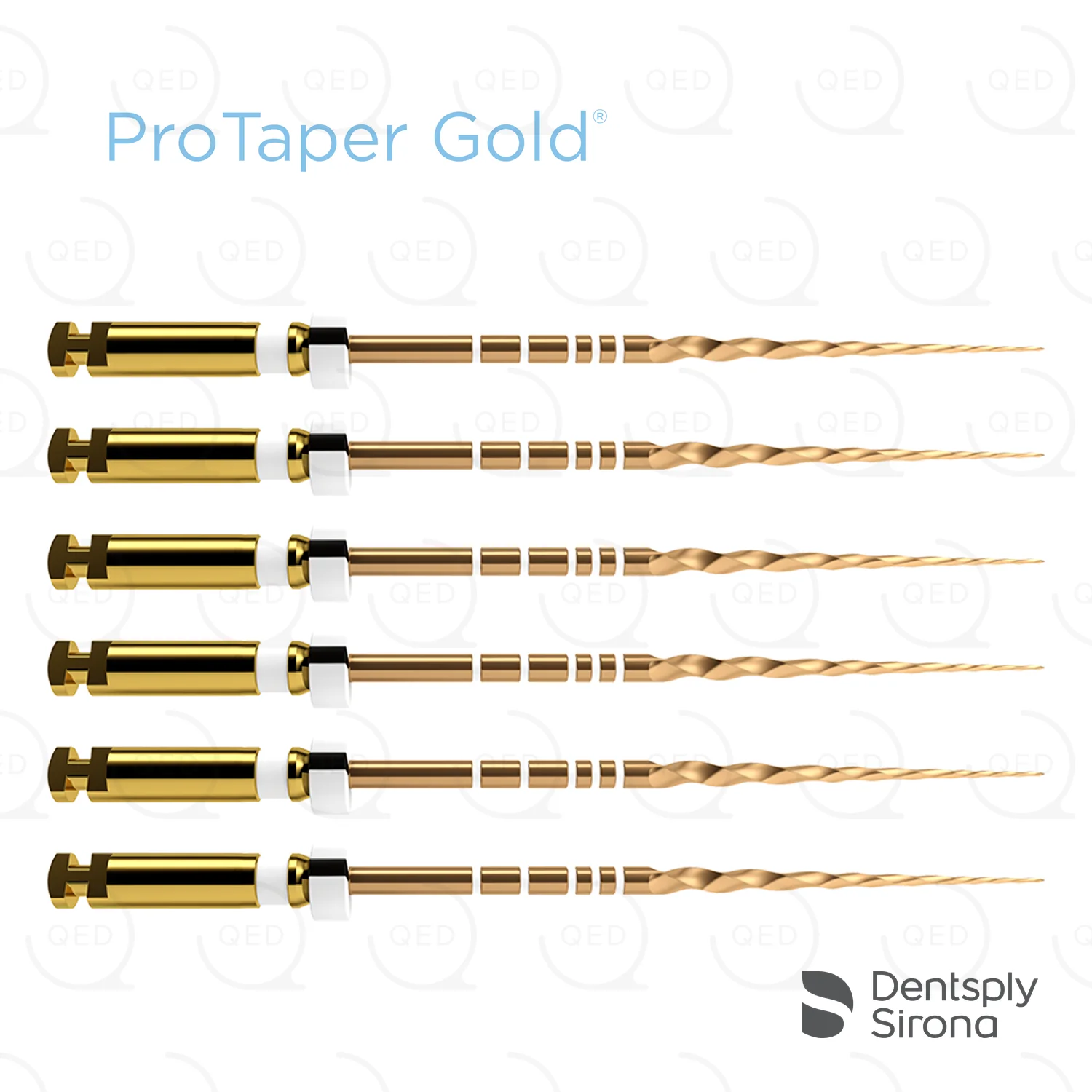
protaper gold® · s1 018/.02v · 25 mm · pack of 6
curved canalscoronal shapingsterilesingle use25 mm
s1 is where the engine takes over from the hand file. it follows the glide path with a deliberate brushing action on the outstroke, cutting dentine laterally to improve straight-line access rather than driving apically.
| +24% flexibility vs ptu | x 2.4 fatigue, system | 300 rpm speed, per the ifu |
dentsply sirona’s own figures against protaper® universal, internal testing, data on file. x 2.6 is the f3 file; x 2.4 the system.
this pack: protaper gold® s1 rotary file, 25 mm (pack of 6)
made by dentsply sirona · legal manufacturer maillefer instruments holding sàrl, ballaigues · uk representative dentsply ih ltd, stonehouse
› same geometry as protaper universal. dentsply sirona are explicit that the shapes did not change – the files “feature the same exact geometries as protaper® universal, but offer an increase in flexibility”. if you know the sequence, you already know this file.
› heat-treated nickel titanium. the instructions describe it as nickel titanium alloy “followed by a heat treatment”. that is the whole difference, and it is what the gold colour is telling you.
› 11 mm handle. two millimetres shorter than protaper universal’s, which is two millimetres of access you get back on a second molar.
| tip size | iso 018 |
| taper | .02 variable |
| length | 25 mm |
| motor | 300 rpm · torque 5 – 6 ncm |
| pack | blister of 6, sterile |
the sequence is the same regardless of the length, diameter or curvature of the canal – that is dentsply sirona’s own wording. s1 is steps 8 to 10, then again at step 14 to working length. shaping files brush on the outstroke; finishing files do not brush at all. irrigate abundantly and frequently after each instrument.
from the protaper gold instructions for use, february 2026 – their sequence, not ours.
300 rpm in continuous rotation, torque 5 – 6 ncm. those figures are from the february 2026 instructions for use and are not in the 2017 brochure, which gives no torque at all. note the shape of the table: the shaping files take the most torque and s2 and f1 the least.
dentsply sirona say this file, like every engine-driven root canal instrument, should not be used in a canal with an abrupt apical curvature, and that pre-curved hand files should be used in the apical region instead. contraindications: none known.
in the uk, endodontic reamers and files are treated as single use – the chief dental officer’s instruction of 19 april 2007, not a qed policy. so a blister of six is six canals, not six cases.
will it fit my motor?
it needs continuous rotation at 300 rpm, and 5–6 ncm for the shapers. x-smart pro+ and x-smart go both reach it. on a vdw.silver reciproc the rotary torque ceiling depends on the firmware – ask us.
is it sterile?
yes – supplied sterile in a blister of six, sterilised by radiation. in the uk the file is then single use.
| patency & glide path | vdw c-pilot 10 and c-pilot 08 in 25 mm – the iso 010 the instructions scout and recapitulate with, in the length this file works to. |
| mechanised glide path | proglider 25 mm or pathfile assorted 25 mm – the two the instructions name, after an iso 010 hand file. |
| chelator | glyde file prep – the viscous chelator named in the protaper gold instructions themselves. |
| irrigants | chlorax 5.25%, chlorax 2% and endo-solution 17% edta. |
| delivery | irriflex 30g or navitip 29 ga, 25 mm. |
| activation | smartlite pro endoactivator – dentsply sirona’s own. |
| motor | continuous rotation at 300 rpm, and the shapers ask for 5–6 ncm, so the motor has to reach that at low speed. x-smart pro+ and x-smart go both do – the x-smart go gives its full 6 ncm anywhere from 50 to 400 rpm. vdw.silver reciproc will drive the file; its rotary torque ceiling depends on the firmware, so ask us and we will check yours. |
| dry and obturate | protaper gold paper points and conform fit gutta percha in the finishing size the canal gauges to, carried to length with sealer. |
| coronal seal | sdr flow+ refill universal – 4 mm bulk increment, one cure. the apical seal is only half the job. |
› protaper gold® brochure (pdf, 1.5 mb, dentsply sirona) – the geometry table, the full product reference list and the published claims.
geometry, sizes, tapers, torque, speed and the sequence are from the protaper gold instructions for use, end-ifu-protaper-gold-reusable-sterile-v03, february 2026 (their document, on their site), and the protaper gold brochure, row en, 11/2017. the flexibility and cyclic-fatigue figures are dentsply sirona’s internal testing, data on file; the independent studies cited are laboratory and ex vivo work and are labelled as such. dentsply sirona, protaper, protaper gold, conform fit, thermafil, glyde, proglider, pathfile, x-smart and sdr are their trademarks.
protaper gold® s1 · 018/.02v · 25 mm · blister of 6 · sterile · single use in the uk · 300 rpm · ref a0410225g0103
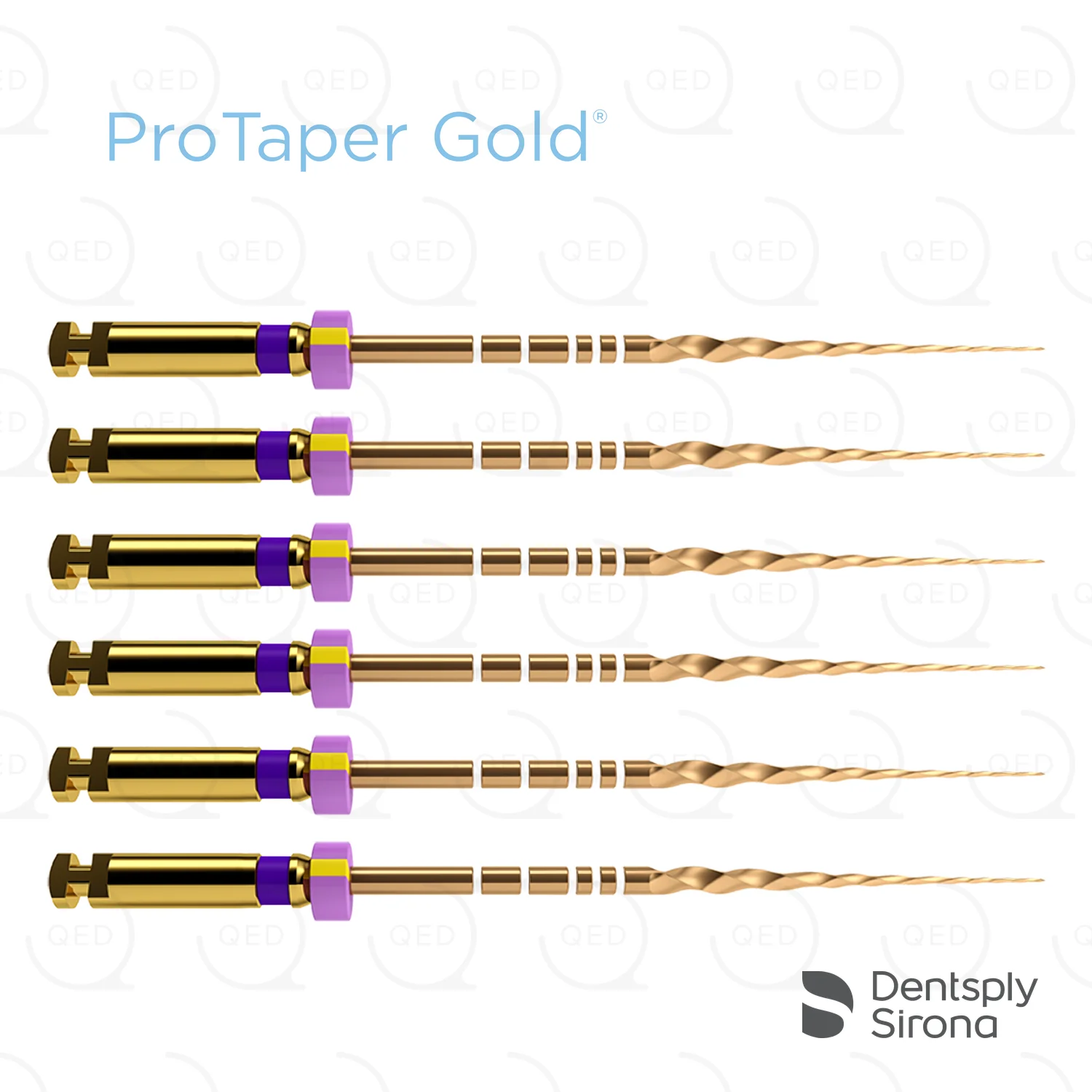
protaper gold® · s2 020/.04v · 25 mm · pack of 6
curved canalscoronal shapingsterilesingle use25 mm
s2 repeats exactly what s1 did, to the same depth, and leaves the coronal two thirds shaped and the apical third untouched. the iso 020 tip and .04 taper make it the widest cut before the finishing files begin.
| +24% flexibility vs ptu | x 2.4 fatigue, system | 300 rpm speed, per the ifu |
dentsply sirona’s own figures against protaper® universal, internal testing, data on file. x 2.6 is the f3 file; x 2.4 the system.
this pack: protaper gold® s2 rotary file, 25 mm (pack of 6)
made by dentsply sirona · legal manufacturer maillefer instruments holding sàrl, ballaigues · uk representative dentsply ih ltd, stonehouse
› same geometry as protaper universal. dentsply sirona are explicit that the shapes did not change – the files “feature the same exact geometries as protaper® universal, but offer an increase in flexibility”. if you know the sequence, you already know this file.
› heat-treated nickel titanium. the instructions describe it as nickel titanium alloy “followed by a heat treatment”. that is the whole difference, and it is what the gold colour is telling you.
› 11 mm handle. two millimetres shorter than protaper universal’s, which is two millimetres of access you get back on a second molar.
| tip size | iso 020 |
| taper | .04 variable |
| length | 25 mm |
| motor | 300 rpm · torque 1.5 – 2 ncm |
| pack | blister of 6, sterile |
the sequence is the same regardless of the length, diameter or curvature of the canal – that is dentsply sirona’s own wording. s2 is step 11, to the depth s1 reached, then step 14 to working length. shaping files brush on the outstroke; finishing files do not brush at all. irrigate abundantly and frequently after each instrument.
from the protaper gold instructions for use, february 2026 – their sequence, not ours.
300 rpm in continuous rotation, torque 1.5 – 2 ncm. those figures are from the february 2026 instructions for use and are not in the 2017 brochure, which gives no torque at all. note the shape of the table: the shaping files take the most torque and s2 and f1 the least.
dentsply sirona say this file, like every engine-driven root canal instrument, should not be used in a canal with an abrupt apical curvature, and that pre-curved hand files should be used in the apical region instead. contraindications: none known.
in the uk, endodontic reamers and files are treated as single use – the chief dental officer’s instruction of 19 april 2007, not a qed policy. so a blister of six is six canals, not six cases.
will it fit my motor?
it needs continuous rotation at 300 rpm, and 5–6 ncm for the shapers. x-smart pro+ and x-smart go both reach it. on a vdw.silver reciproc the rotary torque ceiling depends on the firmware – ask us.
is it sterile?
yes – supplied sterile in a blister of six, sterilised by radiation. in the uk the file is then single use.
| patency & glide path | vdw c-pilot 10 and c-pilot 08 in 25 mm – the iso 010 the instructions scout and recapitulate with, in the length this file works to. |
| mechanised glide path | proglider 25 mm or pathfile assorted 25 mm – the two the instructions name, after an iso 010 hand file. |
| chelator | glyde file prep – the viscous chelator named in the protaper gold instructions themselves. |
| irrigants | chlorax 5.25%, chlorax 2% and endo-solution 17% edta. |
| delivery | irriflex 30g or navitip 29 ga, 25 mm. |
| activation | smartlite pro endoactivator – dentsply sirona’s own. |
| motor | continuous rotation at 300 rpm, and the shapers ask for 5–6 ncm, so the motor has to reach that at low speed. x-smart pro+ and x-smart go both do – the x-smart go gives its full 6 ncm anywhere from 50 to 400 rpm. vdw.silver reciproc will drive the file; its rotary torque ceiling depends on the firmware, so ask us and we will check yours. |
| dry and obturate | protaper gold paper points and conform fit gutta percha in the finishing size the canal gauges to, carried to length with sealer. |
| coronal seal | sdr flow+ refill universal – 4 mm bulk increment, one cure. the apical seal is only half the job. |
› protaper gold® brochure (pdf, 1.5 mb, dentsply sirona) – the geometry table, the full product reference list and the published claims.
geometry, sizes, tapers, torque, speed and the sequence are from the protaper gold instructions for use, end-ifu-protaper-gold-reusable-sterile-v03, february 2026 (their document, on their site), and the protaper gold brochure, row en, 11/2017. the flexibility and cyclic-fatigue figures are dentsply sirona’s internal testing, data on file; the independent studies cited are laboratory and ex vivo work and are labelled as such. dentsply sirona, protaper, protaper gold, conform fit, thermafil, glyde, proglider, pathfile, x-smart and sdr are their trademarks.
protaper gold® s2 · 020/.04v · 25 mm · blister of 6 · sterile · single use in the uk · 300 rpm · ref a0410225g0203
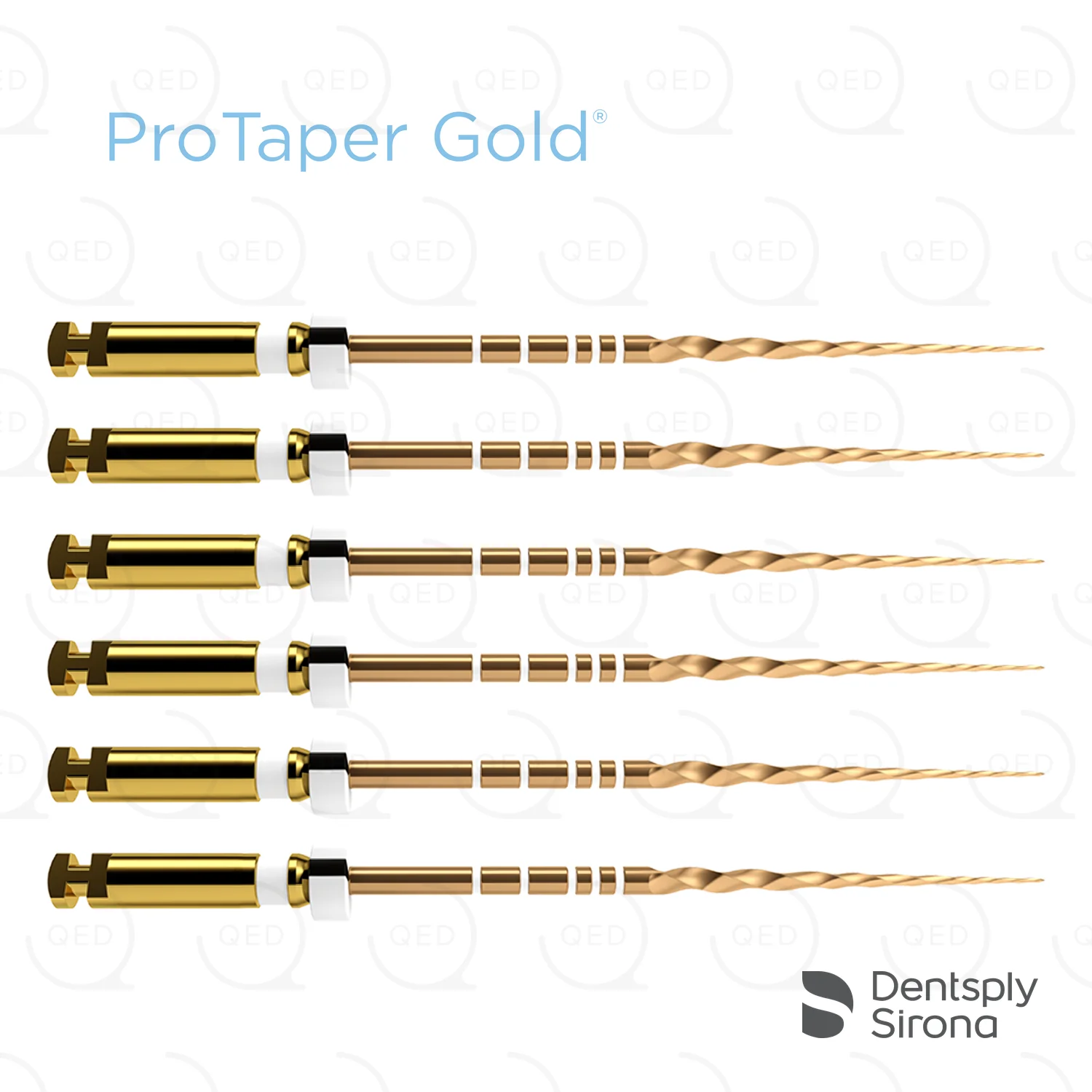
protaper gold® · s1 018/.02v · 31 mm · pack of 6
curved canalscoronal shapingsterilesingle use31 mm
s1 is where the engine takes over from the hand file. it follows the glide path with a deliberate brushing action on the outstroke, cutting dentine laterally to improve straight-line access rather than driving apically.
| +24% flexibility vs ptu | x 2.4 fatigue, system | 300 rpm speed, per the ifu |
dentsply sirona’s own figures against protaper® universal, internal testing, data on file. x 2.6 is the f3 file; x 2.4 the system.
this pack: protaper gold® s1 rotary file, 31 mm (pack of 6)
made by dentsply sirona · legal manufacturer maillefer instruments holding sàrl, ballaigues · uk representative dentsply ih ltd, stonehouse
› same geometry as protaper universal. dentsply sirona are explicit that the shapes did not change – the files “feature the same exact geometries as protaper® universal, but offer an increase in flexibility”. if you know the sequence, you already know this file.
› heat-treated nickel titanium. the instructions describe it as nickel titanium alloy “followed by a heat treatment”. that is the whole difference, and it is what the gold colour is telling you.
› 11 mm handle. two millimetres shorter than protaper universal’s, which is two millimetres of access you get back on a second molar.
| tip size | iso 018 |
| taper | .02 variable |
| length | 31 mm |
| motor | 300 rpm · torque 5 – 6 ncm |
| pack | blister of 6, sterile |
the sequence is the same regardless of the length, diameter or curvature of the canal – that is dentsply sirona’s own wording. s1 is steps 8 to 10, then again at step 14 to working length. shaping files brush on the outstroke; finishing files do not brush at all. irrigate abundantly and frequently after each instrument.
from the protaper gold instructions for use, february 2026 – their sequence, not ours.
300 rpm in continuous rotation, torque 5 – 6 ncm. those figures are from the february 2026 instructions for use and are not in the 2017 brochure, which gives no torque at all. note the shape of the table: the shaping files take the most torque and s2 and f1 the least.
dentsply sirona say this file, like every engine-driven root canal instrument, should not be used in a canal with an abrupt apical curvature, and that pre-curved hand files should be used in the apical region instead. contraindications: none known.
in the uk, endodontic reamers and files are treated as single use – the chief dental officer’s instruction of 19 april 2007, not a qed policy. so a blister of six is six canals, not six cases.
will it fit my motor?
it needs continuous rotation at 300 rpm, and 5–6 ncm for the shapers. x-smart pro+ and x-smart go both reach it. on a vdw.silver reciproc the rotary torque ceiling depends on the firmware – ask us.
is it sterile?
yes – supplied sterile in a blister of six, sterilised by radiation. in the uk the file is then single use.
| patency & glide path | the directions call for iso 010 and iso 015 hand files. we have no 31 mm c-pilot, and a 25 mm hand file cannot reach the length a 31 mm file is cutting to, so ask us and we will match a 31 mm hand file to the case. |
| mechanised glide path | proglider 31 mm or pathfile assorted 31 mm – the two the instructions name, after an iso 010 hand file. |
| chelator | glyde file prep – the viscous chelator named in the protaper gold instructions themselves. |
| irrigants | chlorax 5.25%, chlorax 2% and endo-solution 17% edta. |
| delivery | irriflex 30g or navitip 29 ga, 25 mm. |
| activation | smartlite pro endoactivator – dentsply sirona’s own. |
| motor | continuous rotation at 300 rpm, and the shapers ask for 5–6 ncm, so the motor has to reach that at low speed. x-smart pro+ and x-smart go both do – the x-smart go gives its full 6 ncm anywhere from 50 to 400 rpm. vdw.silver reciproc will drive the file; its rotary torque ceiling depends on the firmware, so ask us and we will check yours. |
| dry and obturate | protaper gold paper points and conform fit gutta percha in the finishing size the canal gauges to, carried to length with sealer. |
| coronal seal | sdr flow+ refill universal – 4 mm bulk increment, one cure. the apical seal is only half the job. |
› protaper gold® brochure (pdf, 1.5 mb, dentsply sirona) – the geometry table, the full product reference list and the published claims.
geometry, sizes, tapers, torque, speed and the sequence are from the protaper gold instructions for use, end-ifu-protaper-gold-reusable-sterile-v03, february 2026 (their document, on their site), and the protaper gold brochure, row en, 11/2017. the flexibility and cyclic-fatigue figures are dentsply sirona’s internal testing, data on file; the independent studies cited are laboratory and ex vivo work and are labelled as such. dentsply sirona, protaper, protaper gold, conform fit, thermafil, glyde, proglider, pathfile, x-smart and sdr are their trademarks.
protaper gold® s1 · 018/.02v · 31 mm · blister of 6 · sterile · single use in the uk · 300 rpm · ref a0410231g0103

protaper gold® · s2 020/.04v · 31 mm · pack of 6
curved canalscoronal shapingsterilesingle use31 mm
s2 repeats exactly what s1 did, to the same depth, and leaves the coronal two thirds shaped and the apical third untouched. the iso 020 tip and .04 taper make it the widest cut before the finishing files begin.
| +24% flexibility vs ptu | x 2.4 fatigue, system | 300 rpm speed, per the ifu |
dentsply sirona’s own figures against protaper® universal, internal testing, data on file. x 2.6 is the f3 file; x 2.4 the system.
this pack: protaper gold® s2 rotary file, 31 mm (pack of 6)
made by dentsply sirona · legal manufacturer maillefer instruments holding sàrl, ballaigues · uk representative dentsply ih ltd, stonehouse
› same geometry as protaper universal. dentsply sirona are explicit that the shapes did not change – the files “feature the same exact geometries as protaper® universal, but offer an increase in flexibility”. if you know the sequence, you already know this file.
› heat-treated nickel titanium. the instructions describe it as nickel titanium alloy “followed by a heat treatment”. that is the whole difference, and it is what the gold colour is telling you.
› 11 mm handle. two millimetres shorter than protaper universal’s, which is two millimetres of access you get back on a second molar.
| tip size | iso 020 |
| taper | .04 variable |
| length | 31 mm |
| motor | 300 rpm · torque 1.5 – 2 ncm |
| pack | blister of 6, sterile |
the sequence is the same regardless of the length, diameter or curvature of the canal – that is dentsply sirona’s own wording. s2 is step 11, to the depth s1 reached, then step 14 to working length. shaping files brush on the outstroke; finishing files do not brush at all. irrigate abundantly and frequently after each instrument.
from the protaper gold instructions for use, february 2026 – their sequence, not ours.
300 rpm in continuous rotation, torque 1.5 – 2 ncm. those figures are from the february 2026 instructions for use and are not in the 2017 brochure, which gives no torque at all. note the shape of the table: the shaping files take the most torque and s2 and f1 the least.
dentsply sirona say this file, like every engine-driven root canal instrument, should not be used in a canal with an abrupt apical curvature, and that pre-curved hand files should be used in the apical region instead. contraindications: none known.
in the uk, endodontic reamers and files are treated as single use – the chief dental officer’s instruction of 19 april 2007, not a qed policy. so a blister of six is six canals, not six cases.
will it fit my motor?
it needs continuous rotation at 300 rpm, and 5–6 ncm for the shapers. x-smart pro+ and x-smart go both reach it. on a vdw.silver reciproc the rotary torque ceiling depends on the firmware – ask us.
is it sterile?
yes – supplied sterile in a blister of six, sterilised by radiation. in the uk the file is then single use.
| patency & glide path | the directions call for iso 010 and iso 015 hand files. we have no 31 mm c-pilot, and a 25 mm hand file cannot reach the length a 31 mm file is cutting to, so ask us and we will match a 31 mm hand file to the case. |
| mechanised glide path | proglider 31 mm or pathfile assorted 31 mm – the two the instructions name, after an iso 010 hand file. |
| chelator | glyde file prep – the viscous chelator named in the protaper gold instructions themselves. |
| irrigants | chlorax 5.25%, chlorax 2% and endo-solution 17% edta. |
| delivery | irriflex 30g or navitip 29 ga, 25 mm. |
| activation | smartlite pro endoactivator – dentsply sirona’s own. |
| motor | continuous rotation at 300 rpm, and the shapers ask for 5–6 ncm, so the motor has to reach that at low speed. x-smart pro+ and x-smart go both do – the x-smart go gives its full 6 ncm anywhere from 50 to 400 rpm. vdw.silver reciproc will drive the file; its rotary torque ceiling depends on the firmware, so ask us and we will check yours. |
| dry and obturate | protaper gold paper points and conform fit gutta percha in the finishing size the canal gauges to, carried to length with sealer. |
| coronal seal | sdr flow+ refill universal – 4 mm bulk increment, one cure. the apical seal is only half the job. |
› protaper gold® brochure (pdf, 1.5 mb, dentsply sirona) – the geometry table, the full product reference list and the published claims.
geometry, sizes, tapers, torque, speed and the sequence are from the protaper gold instructions for use, end-ifu-protaper-gold-reusable-sterile-v03, february 2026 (their document, on their site), and the protaper gold brochure, row en, 11/2017. the flexibility and cyclic-fatigue figures are dentsply sirona’s internal testing, data on file; the independent studies cited are laboratory and ex vivo work and are labelled as such. dentsply sirona, protaper, protaper gold, conform fit, thermafil, glyde, proglider, pathfile, x-smart and sdr are their trademarks.
protaper gold® s2 · 020/.04v · 31 mm · blister of 6 · sterile · single use in the uk · 300 rpm · ref a0410231g0203
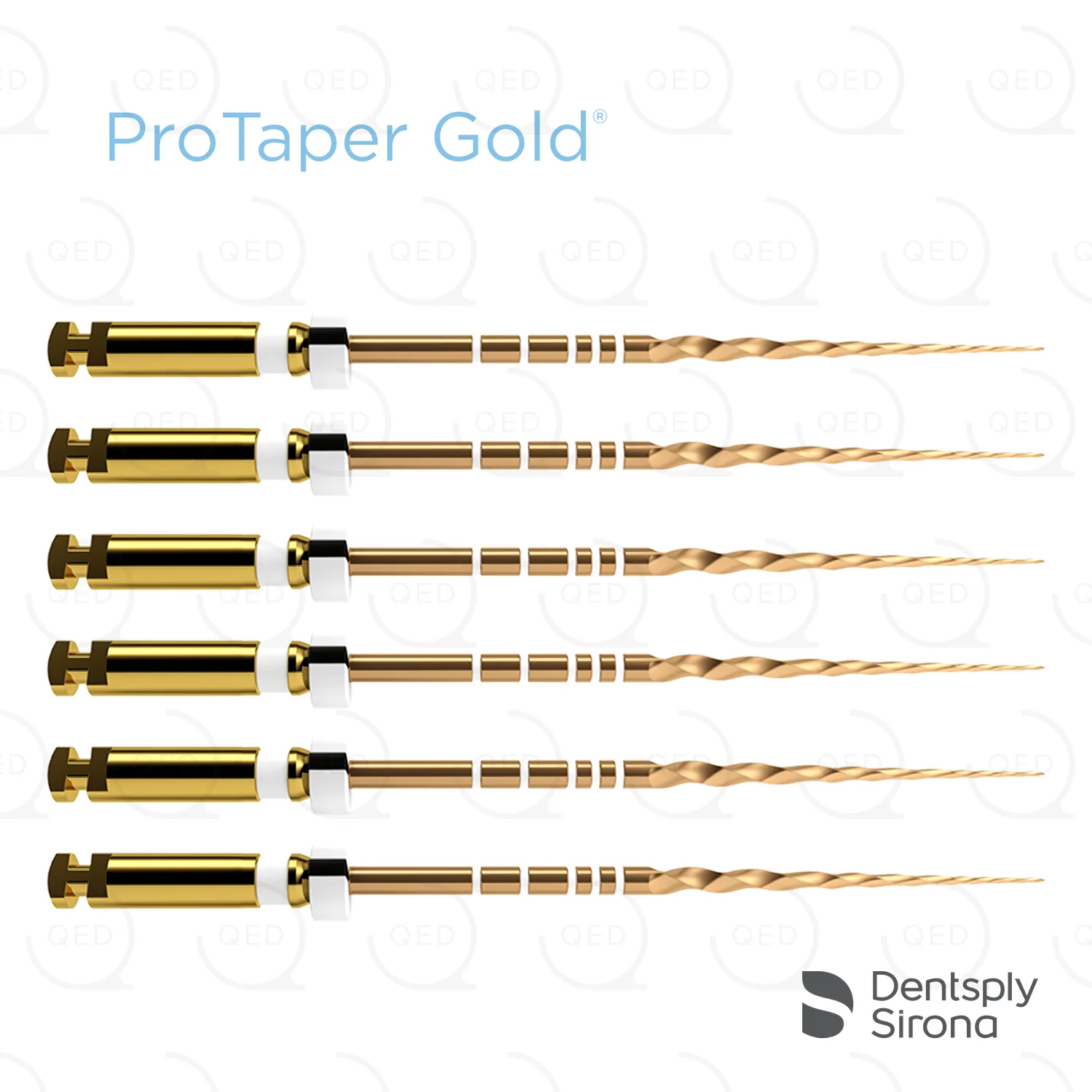
protaper gold® · f1 020/.07v · 21 mm · pack of 6
curved canalsapical finishingsterilesingle use21 mm
f1 is where the brushing stops. it goes to working length in a non-brushing action, and then an iso 020 hand file settles the case: snug at length and the preparation is done, loose and you carry on to f2.
| +24% flexibility vs ptu | x 2.4 fatigue, system | 300 rpm speed, per the ifu |
dentsply sirona’s own figures against protaper® universal, internal testing, data on file. x 2.6 is the f3 file; x 2.4 the system.
this pack: protaper gold® f1 rotary file, 21 mm (pack of 6)
made by dentsply sirona · legal manufacturer maillefer instruments holding sàrl, ballaigues · uk representative dentsply ih ltd, stonehouse
› same geometry as protaper universal. dentsply sirona are explicit that the shapes did not change – the files “feature the same exact geometries as protaper® universal, but offer an increase in flexibility”. if you know the sequence, you already know this file.
› heat-treated nickel titanium. the instructions describe it as nickel titanium alloy “followed by a heat treatment”. that is the whole difference, and it is what the gold colour is telling you.
› 11 mm handle. two millimetres shorter than protaper universal’s, which is two millimetres of access you get back on a second molar.
› gauge with iso 020. the instructions have you check the foramen with a hand file of the same size after this one. snug at length and you are finished.
| tip size | iso 020 |
| taper | .07 variable |
| length | 21 mm |
| motor | 300 rpm · torque 1.5 – 2 ncm |
| pack | blister of 6, sterile |
the sequence is the same regardless of the length, diameter or curvature of the canal – that is dentsply sirona’s own wording. f1 is step 16, and the gauging check at step 17 decides whether you stop there. shaping files brush on the outstroke; finishing files do not brush at all. irrigate abundantly and frequently after each instrument.
from the protaper gold instructions for use, february 2026 – their sequence, not ours.
300 rpm in continuous rotation, torque 1.5 – 2 ncm. those figures are from the february 2026 instructions for use and are not in the 2017 brochure, which gives no torque at all. note the shape of the table: the shaping files take the most torque and s2 and f1 the least.
dentsply sirona say this file, like every engine-driven root canal instrument, should not be used in a canal with an abrupt apical curvature, and that pre-curved hand files should be used in the apical region instead. contraindications: none known.
in the uk, endodontic reamers and files are treated as single use – the chief dental officer’s instruction of 19 april 2007, not a qed policy. so a blister of six is six canals, not six cases.
will it fit my motor?
it needs continuous rotation at 300 rpm, and 5–6 ncm for the shapers. x-smart pro+ and x-smart go both reach it. on a vdw.silver reciproc the rotary torque ceiling depends on the firmware – ask us.
which cone matches it?
protaper gold conform fit gutta percha f1, with the matched paper points. the preparation is variable taper, so a constant-taper cone is the wrong cone.
is it sterile?
yes – supplied sterile in a blister of six, sterilised by radiation. in the uk the file is then single use.
| patency & glide path | vdw c-pilot 10 and c-pilot 08 in 21 mm – the iso 010 the instructions scout and recapitulate with, in the length this file works to. |
| mechanised glide path | proglider 21 mm or pathfile assorted 21 mm – the two the instructions name, after an iso 010 hand file. |
| chelator | glyde file prep – the viscous chelator named in the protaper gold instructions themselves. |
| irrigants | chlorax 5.25%, chlorax 2% and endo-solution 17% edta. |
| delivery | irriflex 30g or navitip 29 ga, 25 mm. |
| activation | smartlite pro endoactivator – dentsply sirona’s own. |
| motor | continuous rotation at 300 rpm, and the shapers ask for 5–6 ncm, so the motor has to reach that at low speed. x-smart pro+ and x-smart go both do – the x-smart go gives its full 6 ncm anywhere from 50 to 400 rpm. vdw.silver reciproc will drive the file; its rotary torque ceiling depends on the firmware, so ask us and we will check yours. |
| dry | protaper gold paper points f1 – matched to the shape this file cuts. |
| obturate | protaper gold conform fit gutta percha f1 carried to length with sealer – ah plus, ah plus jet, neosealer ezflo or proroot bio sealer. |
| carrier alternative | thermafil for protaper gold f1. |
| coronal seal | sdr flow+ refill universal – 4 mm bulk increment, one cure. the apical seal is only half the job. |
› protaper gold® brochure (pdf, 1.5 mb, dentsply sirona) – the geometry table, the full product reference list and the published claims.
geometry, sizes, tapers, torque, speed and the sequence are from the protaper gold instructions for use, end-ifu-protaper-gold-reusable-sterile-v03, february 2026 (their document, on their site), and the protaper gold brochure, row en, 11/2017. the flexibility and cyclic-fatigue figures are dentsply sirona’s internal testing, data on file; the independent studies cited are laboratory and ex vivo work and are labelled as such. dentsply sirona, protaper, protaper gold, conform fit, thermafil, glyde, proglider, pathfile, x-smart and sdr are their trademarks.
protaper gold® f1 · 020/.07v · 21 mm · blister of 6 · sterile · single use in the uk · 300 rpm · ref a0411221g0103

protaper gold® · f2 025/.08v · 21 mm · pack of 6
curved canalsapical finishingsterilesingle use21 mm
f2 takes an iso 020 preparation to an iso 025 tip on a .08 variable taper. for a great many canals it is where the sequence stops, which is why it is the size most practices reorder first.
| +24% flexibility vs ptu | x 2.4 fatigue, system | 300 rpm speed, per the ifu |
dentsply sirona’s own figures against protaper® universal, internal testing, data on file. x 2.6 is the f3 file; x 2.4 the system.
this pack: protaper gold® f2 rotary file, 21 mm (pack of 6)
made by dentsply sirona · legal manufacturer maillefer instruments holding sàrl, ballaigues · uk representative dentsply ih ltd, stonehouse
› same geometry as protaper universal. dentsply sirona are explicit that the shapes did not change – the files “feature the same exact geometries as protaper® universal, but offer an increase in flexibility”. if you know the sequence, you already know this file.
› heat-treated nickel titanium. the instructions describe it as nickel titanium alloy “followed by a heat treatment”. that is the whole difference, and it is what the gold colour is telling you.
› 11 mm handle. two millimetres shorter than protaper universal’s, which is two millimetres of access you get back on a second molar.
› gauge with iso 025. the instructions have you check the foramen with a hand file of the same size after this one. snug at length and you are finished.
| tip size | iso 025 |
| taper | .08 variable |
| length | 21 mm |
| motor | 300 rpm · torque 3 – 4 ncm |
| pack | blister of 6, sterile |
the sequence is the same regardless of the length, diameter or curvature of the canal – that is dentsply sirona’s own wording. f2 is the first escalation at step 17, when an iso 020 hand file is loose at length. shaping files brush on the outstroke; finishing files do not brush at all. irrigate abundantly and frequently after each instrument.
from the protaper gold instructions for use, february 2026 – their sequence, not ours.
300 rpm in continuous rotation, torque 3 – 4 ncm. those figures are from the february 2026 instructions for use and are not in the 2017 brochure, which gives no torque at all. note the shape of the table: the shaping files take the most torque and s2 and f1 the least.
dentsply sirona say this file, like every engine-driven root canal instrument, should not be used in a canal with an abrupt apical curvature, and that pre-curved hand files should be used in the apical region instead. contraindications: none known.
in the uk, endodontic reamers and files are treated as single use – the chief dental officer’s instruction of 19 april 2007, not a qed policy. so a blister of six is six canals, not six cases.
will it fit my motor?
it needs continuous rotation at 300 rpm, and 5–6 ncm for the shapers. x-smart pro+ and x-smart go both reach it. on a vdw.silver reciproc the rotary torque ceiling depends on the firmware – ask us.
which cone matches it?
protaper gold conform fit gutta percha f2, with the matched paper points. the preparation is variable taper, so a constant-taper cone is the wrong cone.
is it sterile?
yes – supplied sterile in a blister of six, sterilised by radiation. in the uk the file is then single use.
| patency & glide path | vdw c-pilot 10 and c-pilot 08 in 21 mm – the iso 010 the instructions scout and recapitulate with, in the length this file works to. |
| mechanised glide path | proglider 21 mm or pathfile assorted 21 mm – the two the instructions name, after an iso 010 hand file. |
| chelator | glyde file prep – the viscous chelator named in the protaper gold instructions themselves. |
| irrigants | chlorax 5.25%, chlorax 2% and endo-solution 17% edta. |
| delivery | irriflex 30g or navitip 29 ga, 25 mm. |
| activation | smartlite pro endoactivator – dentsply sirona’s own. |
| motor | continuous rotation at 300 rpm, and the shapers ask for 5–6 ncm, so the motor has to reach that at low speed. x-smart pro+ and x-smart go both do – the x-smart go gives its full 6 ncm anywhere from 50 to 400 rpm. vdw.silver reciproc will drive the file; its rotary torque ceiling depends on the firmware, so ask us and we will check yours. |
| dry | protaper gold paper points f2 – matched to the shape this file cuts. |
| obturate | protaper gold conform fit gutta percha f2 carried to length with sealer – ah plus, ah plus jet, neosealer ezflo or proroot bio sealer. |
| carrier alternative | thermafil for protaper gold f2. |
| coronal seal | sdr flow+ refill universal – 4 mm bulk increment, one cure. the apical seal is only half the job. |
› protaper gold® brochure (pdf, 1.5 mb, dentsply sirona) – the geometry table, the full product reference list and the published claims.
geometry, sizes, tapers, torque, speed and the sequence are from the protaper gold instructions for use, end-ifu-protaper-gold-reusable-sterile-v03, february 2026 (their document, on their site), and the protaper gold brochure, row en, 11/2017. the flexibility and cyclic-fatigue figures are dentsply sirona’s internal testing, data on file; the independent studies cited are laboratory and ex vivo work and are labelled as such. dentsply sirona, protaper, protaper gold, conform fit, thermafil, glyde, proglider, pathfile, x-smart and sdr are their trademarks.
protaper gold® f2 · 025/.08v · 21 mm · blister of 6 · sterile · single use in the uk · 300 rpm · ref a0411221g0203
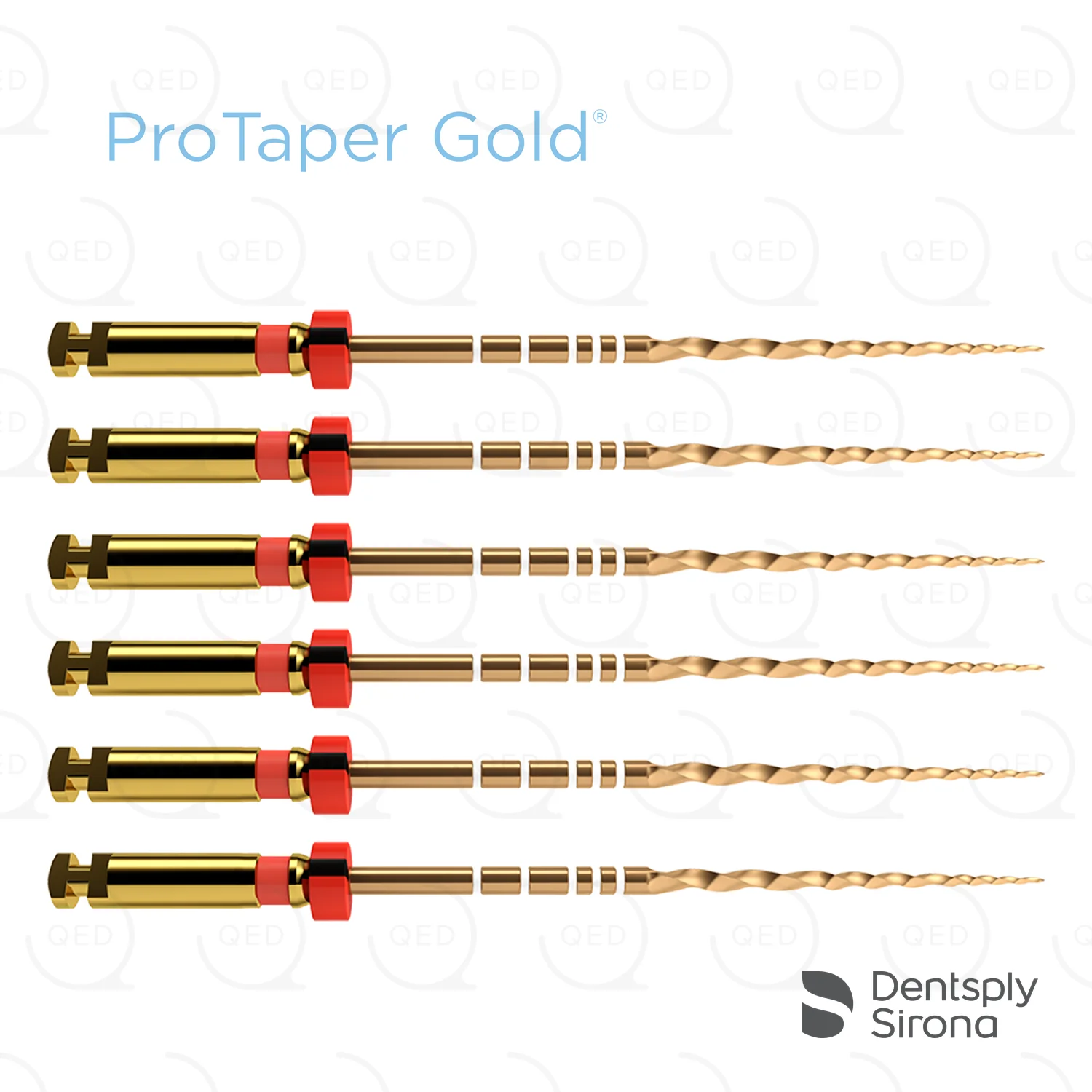
protaper gold® · f3 030/.09v · 21 mm · pack of 6
curved canalsapical finishingsterilesingle use21 mm
f3 carries a .09 apical taper – the widest in the protaper gold sequence. it is also the file dentsply sirona tested for the headline cyclic-fatigue figure, so the number on this page is f3’s own rather than a range average.
| +24% flexibility vs ptu | x 2.6 fatigue, f3 file | 300 rpm speed, per the ifu |
dentsply sirona’s own figures against protaper® universal, internal testing, data on file. x 2.6 is the f3 file; x 2.4 the system.
this pack: protaper gold® f3 rotary file, 21 mm (pack of 6)
made by dentsply sirona · legal manufacturer maillefer instruments holding sàrl, ballaigues · uk representative dentsply ih ltd, stonehouse
› same geometry as protaper universal. dentsply sirona are explicit that the shapes did not change – the files “feature the same exact geometries as protaper® universal, but offer an increase in flexibility”. if you know the sequence, you already know this file.
› heat-treated nickel titanium. the instructions describe it as nickel titanium alloy “followed by a heat treatment”. that is the whole difference, and it is what the gold colour is telling you.
› 11 mm handle. two millimetres shorter than protaper universal’s, which is two millimetres of access you get back on a second molar.
› gauge with iso 030. the instructions have you check the foramen with a hand file of the same size after this one. snug at length and you are finished.
| tip size | iso 030 |
| taper | .09 variable |
| length | 21 mm |
| motor | 300 rpm · torque 3 – 4 ncm |
| pack | blister of 6, sterile |
the sequence is the same regardless of the length, diameter or curvature of the canal – that is dentsply sirona’s own wording. f3 follows f2 at step 17, when an iso 025 hand file is still loose at length. shaping files brush on the outstroke; finishing files do not brush at all. irrigate abundantly and frequently after each instrument.
from the protaper gold instructions for use, february 2026 – their sequence, not ours.
300 rpm in continuous rotation, torque 3 – 4 ncm. those figures are from the february 2026 instructions for use and are not in the 2017 brochure, which gives no torque at all. note the shape of the table: the shaping files take the most torque and s2 and f1 the least.
dentsply sirona say this file, like every engine-driven root canal instrument, should not be used in a canal with an abrupt apical curvature, and that pre-curved hand files should be used in the apical region instead. contraindications: none known.
in the uk, endodontic reamers and files are treated as single use – the chief dental officer’s instruction of 19 april 2007, not a qed policy. so a blister of six is six canals, not six cases.
will it fit my motor?
it needs continuous rotation at 300 rpm, and 5–6 ncm for the shapers. x-smart pro+ and x-smart go both reach it. on a vdw.silver reciproc the rotary torque ceiling depends on the firmware – ask us.
which cone matches it?
protaper gold conform fit gutta percha f3, with the matched paper points. the preparation is variable taper, so a constant-taper cone is the wrong cone.
is it sterile?
yes – supplied sterile in a blister of six, sterilised by radiation. in the uk the file is then single use.
| patency & glide path | vdw c-pilot 10 and c-pilot 08 in 21 mm – the iso 010 the instructions scout and recapitulate with, in the length this file works to. |
| mechanised glide path | proglider 21 mm or pathfile assorted 21 mm – the two the instructions name, after an iso 010 hand file. |
| chelator | glyde file prep – the viscous chelator named in the protaper gold instructions themselves. |
| irrigants | chlorax 5.25%, chlorax 2% and endo-solution 17% edta. |
| delivery | irriflex 30g or navitip 29 ga, 25 mm. |
| activation | smartlite pro endoactivator – dentsply sirona’s own. |
| motor | continuous rotation at 300 rpm, and the shapers ask for 5–6 ncm, so the motor has to reach that at low speed. x-smart pro+ and x-smart go both do – the x-smart go gives its full 6 ncm anywhere from 50 to 400 rpm. vdw.silver reciproc will drive the file; its rotary torque ceiling depends on the firmware, so ask us and we will check yours. |
| dry | protaper gold paper points f3 – matched to the shape this file cuts. |
| obturate | protaper gold conform fit gutta percha f3 carried to length with sealer – ah plus, ah plus jet, neosealer ezflo or proroot bio sealer. |
| carrier alternative | thermafil for protaper gold f3. |
| coronal seal | sdr flow+ refill universal – 4 mm bulk increment, one cure. the apical seal is only half the job. |
› protaper gold® brochure (pdf, 1.5 mb, dentsply sirona) – the geometry table, the full product reference list and the published claims.
geometry, sizes, tapers, torque, speed and the sequence are from the protaper gold instructions for use, end-ifu-protaper-gold-reusable-sterile-v03, february 2026 (their document, on their site), and the protaper gold brochure, row en, 11/2017. the flexibility and cyclic-fatigue figures are dentsply sirona’s internal testing, data on file; the independent studies cited are laboratory and ex vivo work and are labelled as such. dentsply sirona, protaper, protaper gold, conform fit, thermafil, glyde, proglider, pathfile, x-smart and sdr are their trademarks.
protaper gold® f3 · 030/.09v · 21 mm · blister of 6 · sterile · single use in the uk · 300 rpm · ref a0411221g0303
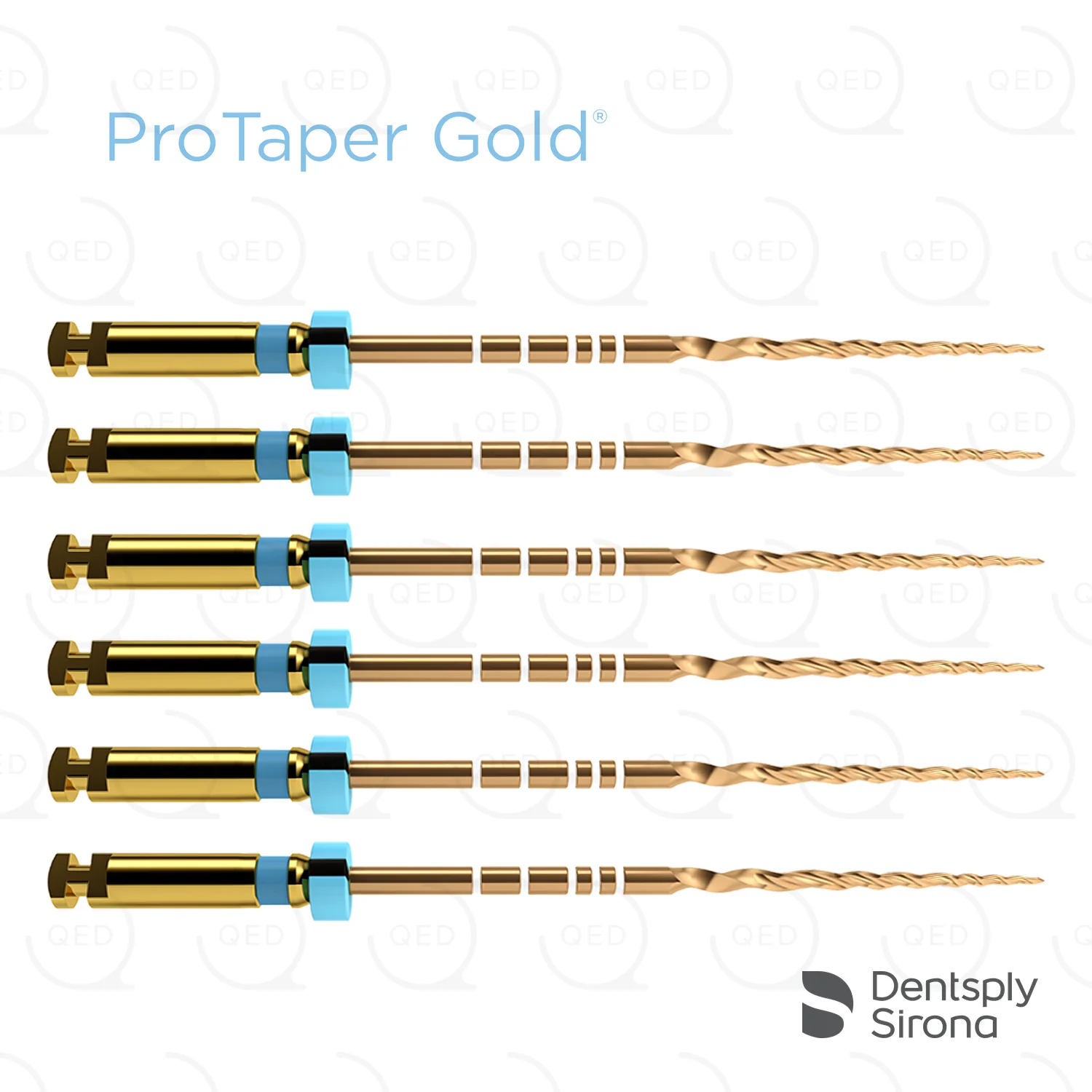
protaper gold® · f4 040/.06v · 21 mm · pack of 6
curved canalsapical finishingsterilesingle use21 mm
f4 is the first file in the sequence where the apical taper comes down as the tip goes up: an iso 040 tip on a .06 taper. larger apical diameter, less coronal cutting.
| +24% flexibility vs ptu | x 2.4 fatigue, system | 300 rpm speed, per the ifu |
dentsply sirona’s own figures against protaper® universal, internal testing, data on file. x 2.6 is the f3 file; x 2.4 the system.
this pack: protaper gold® f4 rotary file, 21 mm (pack of 6)
made by dentsply sirona · legal manufacturer maillefer instruments holding sàrl, ballaigues · uk representative dentsply ih ltd, stonehouse
› same geometry as protaper universal. dentsply sirona are explicit that the shapes did not change – the files “feature the same exact geometries as protaper® universal, but offer an increase in flexibility”. if you know the sequence, you already know this file.
› heat-treated nickel titanium. the instructions describe it as nickel titanium alloy “followed by a heat treatment”. that is the whole difference, and it is what the gold colour is telling you.
› 11 mm handle. two millimetres shorter than protaper universal’s, which is two millimetres of access you get back on a second molar.
› gauge with iso 040. the instructions have you check the foramen with a hand file of the same size after this one. snug at length and you are finished.
| tip size | iso 040 |
| taper | .06 variable |
| length | 21 mm |
| motor | 300 rpm · torque 3 – 4 ncm |
| pack | blister of 6, sterile |
the sequence is the same regardless of the length, diameter or curvature of the canal – that is dentsply sirona’s own wording. f4 follows f3 at step 17, when an iso 030 hand file is still loose at length. shaping files brush on the outstroke; finishing files do not brush at all. irrigate abundantly and frequently after each instrument.
from the protaper gold instructions for use, february 2026 – their sequence, not ours.
300 rpm in continuous rotation, torque 3 – 4 ncm. those figures are from the february 2026 instructions for use and are not in the 2017 brochure, which gives no torque at all. note the shape of the table: the shaping files take the most torque and s2 and f1 the least.
dentsply sirona say this file, like every engine-driven root canal instrument, should not be used in a canal with an abrupt apical curvature, and that pre-curved hand files should be used in the apical region instead. contraindications: none known.
in the uk, endodontic reamers and files are treated as single use – the chief dental officer’s instruction of 19 april 2007, not a qed policy. so a blister of six is six canals, not six cases.
will it fit my motor?
it needs continuous rotation at 300 rpm, and 5–6 ncm for the shapers. x-smart pro+ and x-smart go both reach it. on a vdw.silver reciproc the rotary torque ceiling depends on the firmware – ask us.
which cone matches it?
protaper gold conform fit gutta percha f4, with the matched paper points. the preparation is variable taper, so a constant-taper cone is the wrong cone.
is it sterile?
yes – supplied sterile in a blister of six, sterilised by radiation. in the uk the file is then single use.
| patency & glide path | vdw c-pilot 10 and c-pilot 08 in 21 mm – the iso 010 the instructions scout and recapitulate with, in the length this file works to. |
| mechanised glide path | proglider 21 mm or pathfile assorted 21 mm – the two the instructions name, after an iso 010 hand file. |
| chelator | glyde file prep – the viscous chelator named in the protaper gold instructions themselves. |
| irrigants | chlorax 5.25%, chlorax 2% and endo-solution 17% edta. |
| delivery | irriflex 30g or navitip 29 ga, 25 mm. |
| activation | smartlite pro endoactivator – dentsply sirona’s own. |
| motor | continuous rotation at 300 rpm, and the shapers ask for 5–6 ncm, so the motor has to reach that at low speed. x-smart pro+ and x-smart go both do – the x-smart go gives its full 6 ncm anywhere from 50 to 400 rpm. vdw.silver reciproc will drive the file; its rotary torque ceiling depends on the firmware, so ask us and we will check yours. |
| dry | protaper gold paper points f4 – matched to the shape this file cuts. |
| obturate | protaper gold conform fit gutta percha f4 carried to length with sealer – ah plus, ah plus jet, neosealer ezflo or proroot bio sealer. |
| carrier alternative | thermafil for protaper gold f4. |
| coronal seal | sdr flow+ refill universal – 4 mm bulk increment, one cure. the apical seal is only half the job. |
› protaper gold® brochure (pdf, 1.5 mb, dentsply sirona) – the geometry table, the full product reference list and the published claims.
geometry, sizes, tapers, torque, speed and the sequence are from the protaper gold instructions for use, end-ifu-protaper-gold-reusable-sterile-v03, february 2026 (their document, on their site), and the protaper gold brochure, row en, 11/2017. the flexibility and cyclic-fatigue figures are dentsply sirona’s internal testing, data on file; the independent studies cited are laboratory and ex vivo work and are labelled as such. dentsply sirona, protaper, protaper gold, conform fit, thermafil, glyde, proglider, pathfile, x-smart and sdr are their trademarks.
protaper gold® f4 · 040/.06v · 21 mm · blister of 6 · sterile · single use in the uk · 300 rpm · ref a0411221g0403
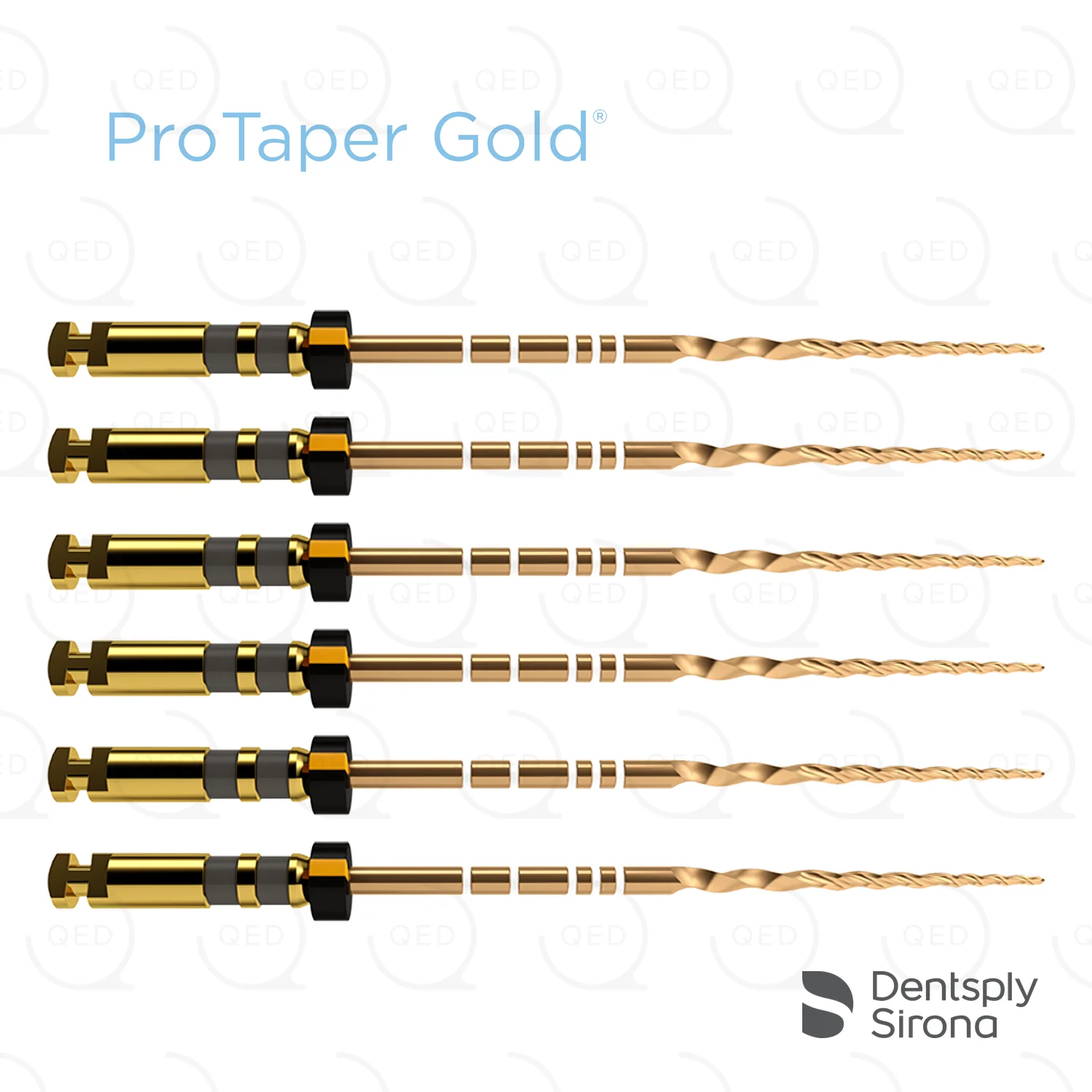
protaper gold® · f5 050/.05v · 21 mm · pack of 6
curved canalsapical finishingsterilesingle use21 mm
f5 finishes at an iso 050 tip on a .05 taper. it is the end of the sequence and the file for a canal that gauges loose at iso 040 – not a routine step, which is the honest thing to say about it.
| +24% flexibility vs ptu | x 2.4 fatigue, system | 300 rpm speed, per the ifu |
dentsply sirona’s own figures against protaper® universal, internal testing, data on file. x 2.6 is the f3 file; x 2.4 the system.
this pack: protaper gold® f5 rotary file, 21 mm (pack of 6)
made by dentsply sirona · legal manufacturer maillefer instruments holding sàrl, ballaigues · uk representative dentsply ih ltd, stonehouse
› same geometry as protaper universal. dentsply sirona are explicit that the shapes did not change – the files “feature the same exact geometries as protaper® universal, but offer an increase in flexibility”. if you know the sequence, you already know this file.
› heat-treated nickel titanium. the instructions describe it as nickel titanium alloy “followed by a heat treatment”. that is the whole difference, and it is what the gold colour is telling you.
› 11 mm handle. two millimetres shorter than protaper universal’s, which is two millimetres of access you get back on a second molar.
› gauge with iso 050. the instructions have you check the foramen with a hand file of the same size after this one. snug at length and you are finished.
| tip size | iso 050 |
| taper | .05 variable |
| length | 21 mm |
| motor | 300 rpm · torque 3 – 4 ncm |
| pack | blister of 6, sterile |
the sequence is the same regardless of the length, diameter or curvature of the canal – that is dentsply sirona’s own wording. f5 is the last file at step 17, when an iso 040 hand file is still loose at length. shaping files brush on the outstroke; finishing files do not brush at all. irrigate abundantly and frequently after each instrument.
from the protaper gold instructions for use, february 2026 – their sequence, not ours.
300 rpm in continuous rotation, torque 3 – 4 ncm. those figures are from the february 2026 instructions for use and are not in the 2017 brochure, which gives no torque at all. note the shape of the table: the shaping files take the most torque and s2 and f1 the least.
dentsply sirona say this file, like every engine-driven root canal instrument, should not be used in a canal with an abrupt apical curvature, and that pre-curved hand files should be used in the apical region instead. contraindications: none known.
in the uk, endodontic reamers and files are treated as single use – the chief dental officer’s instruction of 19 april 2007, not a qed policy. so a blister of six is six canals, not six cases.
will it fit my motor?
it needs continuous rotation at 300 rpm, and 5–6 ncm for the shapers. x-smart pro+ and x-smart go both reach it. on a vdw.silver reciproc the rotary torque ceiling depends on the firmware – ask us.
which cone matches it?
protaper gold conform fit gutta percha f5, with the matched paper points. the preparation is variable taper, so a constant-taper cone is the wrong cone.
is it sterile?
yes – supplied sterile in a blister of six, sterilised by radiation. in the uk the file is then single use.
| patency & glide path | vdw c-pilot 10 and c-pilot 08 in 21 mm – the iso 010 the instructions scout and recapitulate with, in the length this file works to. |
| mechanised glide path | proglider 21 mm or pathfile assorted 21 mm – the two the instructions name, after an iso 010 hand file. |
| chelator | glyde file prep – the viscous chelator named in the protaper gold instructions themselves. |
| irrigants | chlorax 5.25%, chlorax 2% and endo-solution 17% edta. |
| delivery | irriflex 30g or navitip 29 ga, 25 mm. |
| activation | smartlite pro endoactivator – dentsply sirona’s own. |
| motor | continuous rotation at 300 rpm, and the shapers ask for 5–6 ncm, so the motor has to reach that at low speed. x-smart pro+ and x-smart go both do – the x-smart go gives its full 6 ncm anywhere from 50 to 400 rpm. vdw.silver reciproc will drive the file; its rotary torque ceiling depends on the firmware, so ask us and we will check yours. |
| dry | protaper gold paper points f5 – matched to the shape this file cuts. |
| obturate | protaper gold conform fit gutta percha f5 carried to length with sealer – ah plus, ah plus jet, neosealer ezflo or proroot bio sealer. |
| carrier alternative | thermafil for protaper gold f5. |
| coronal seal | sdr flow+ refill universal – 4 mm bulk increment, one cure. the apical seal is only half the job. |
› protaper gold® brochure (pdf, 1.5 mb, dentsply sirona) – the geometry table, the full product reference list and the published claims.
geometry, sizes, tapers, torque, speed and the sequence are from the protaper gold instructions for use, end-ifu-protaper-gold-reusable-sterile-v03, february 2026 (their document, on their site), and the protaper gold brochure, row en, 11/2017. the flexibility and cyclic-fatigue figures are dentsply sirona’s internal testing, data on file; the independent studies cited are laboratory and ex vivo work and are labelled as such. dentsply sirona, protaper, protaper gold, conform fit, thermafil, glyde, proglider, pathfile, x-smart and sdr are their trademarks.
protaper gold® f5 · 050/.05v · 21 mm · blister of 6 · sterile · single use in the uk · 300 rpm · ref a0411221g0503

protaper gold® · f1 020/.07v · 25 mm · pack of 6
curved canalsapical finishingsterilesingle use25 mm
f1 is where the brushing stops. it goes to working length in a non-brushing action, and then an iso 020 hand file settles the case: snug at length and the preparation is done, loose and you carry on to f2.
| +24% flexibility vs ptu | x 2.4 fatigue, system | 300 rpm speed, per the ifu |
dentsply sirona’s own figures against protaper® universal, internal testing, data on file. x 2.6 is the f3 file; x 2.4 the system.
this pack: protaper gold® f1 rotary file, 25 mm (pack of 6)
made by dentsply sirona · legal manufacturer maillefer instruments holding sàrl, ballaigues · uk representative dentsply ih ltd, stonehouse
› same geometry as protaper universal. dentsply sirona are explicit that the shapes did not change – the files “feature the same exact geometries as protaper® universal, but offer an increase in flexibility”. if you know the sequence, you already know this file.
› heat-treated nickel titanium. the instructions describe it as nickel titanium alloy “followed by a heat treatment”. that is the whole difference, and it is what the gold colour is telling you.
› 11 mm handle. two millimetres shorter than protaper universal’s, which is two millimetres of access you get back on a second molar.
› gauge with iso 020. the instructions have you check the foramen with a hand file of the same size after this one. snug at length and you are finished.
| tip size | iso 020 |
| taper | .07 variable |
| length | 25 mm |
| motor | 300 rpm · torque 1.5 – 2 ncm |
| pack | blister of 6, sterile |
the sequence is the same regardless of the length, diameter or curvature of the canal – that is dentsply sirona’s own wording. f1 is step 16, and the gauging check at step 17 decides whether you stop there. shaping files brush on the outstroke; finishing files do not brush at all. irrigate abundantly and frequently after each instrument.
from the protaper gold instructions for use, february 2026 – their sequence, not ours.
300 rpm in continuous rotation, torque 1.5 – 2 ncm. those figures are from the february 2026 instructions for use and are not in the 2017 brochure, which gives no torque at all. note the shape of the table: the shaping files take the most torque and s2 and f1 the least.
dentsply sirona say this file, like every engine-driven root canal instrument, should not be used in a canal with an abrupt apical curvature, and that pre-curved hand files should be used in the apical region instead. contraindications: none known.
in the uk, endodontic reamers and files are treated as single use – the chief dental officer’s instruction of 19 april 2007, not a qed policy. so a blister of six is six canals, not six cases.
will it fit my motor?
it needs continuous rotation at 300 rpm, and 5–6 ncm for the shapers. x-smart pro+ and x-smart go both reach it. on a vdw.silver reciproc the rotary torque ceiling depends on the firmware – ask us.
which cone matches it?
protaper gold conform fit gutta percha f1, with the matched paper points. the preparation is variable taper, so a constant-taper cone is the wrong cone.
is it sterile?
yes – supplied sterile in a blister of six, sterilised by radiation. in the uk the file is then single use.
| patency & glide path | vdw c-pilot 10 and c-pilot 08 in 25 mm – the iso 010 the instructions scout and recapitulate with, in the length this file works to. |
| mechanised glide path | proglider 25 mm or pathfile assorted 25 mm – the two the instructions name, after an iso 010 hand file. |
| chelator | glyde file prep – the viscous chelator named in the protaper gold instructions themselves. |
| irrigants | chlorax 5.25%, chlorax 2% and endo-solution 17% edta. |
| delivery | irriflex 30g or navitip 29 ga, 25 mm. |
| activation | smartlite pro endoactivator – dentsply sirona’s own. |
| motor | continuous rotation at 300 rpm, and the shapers ask for 5–6 ncm, so the motor has to reach that at low speed. x-smart pro+ and x-smart go both do – the x-smart go gives its full 6 ncm anywhere from 50 to 400 rpm. vdw.silver reciproc will drive the file; its rotary torque ceiling depends on the firmware, so ask us and we will check yours. |
| dry | protaper gold paper points f1 – matched to the shape this file cuts. |
| obturate | protaper gold conform fit gutta percha f1 carried to length with sealer – ah plus, ah plus jet, neosealer ezflo or proroot bio sealer. |
| carrier alternative | thermafil for protaper gold f1. |
| coronal seal | sdr flow+ refill universal – 4 mm bulk increment, one cure. the apical seal is only half the job. |
› protaper gold® brochure (pdf, 1.5 mb, dentsply sirona) – the geometry table, the full product reference list and the published claims.
geometry, sizes, tapers, torque, speed and the sequence are from the protaper gold instructions for use, end-ifu-protaper-gold-reusable-sterile-v03, february 2026 (their document, on their site), and the protaper gold brochure, row en, 11/2017. the flexibility and cyclic-fatigue figures are dentsply sirona’s internal testing, data on file; the independent studies cited are laboratory and ex vivo work and are labelled as such. dentsply sirona, protaper, protaper gold, conform fit, thermafil, glyde, proglider, pathfile, x-smart and sdr are their trademarks.
protaper gold® f1 · 020/.07v · 25 mm · blister of 6 · sterile · single use in the uk · 300 rpm · ref a0411225g0103
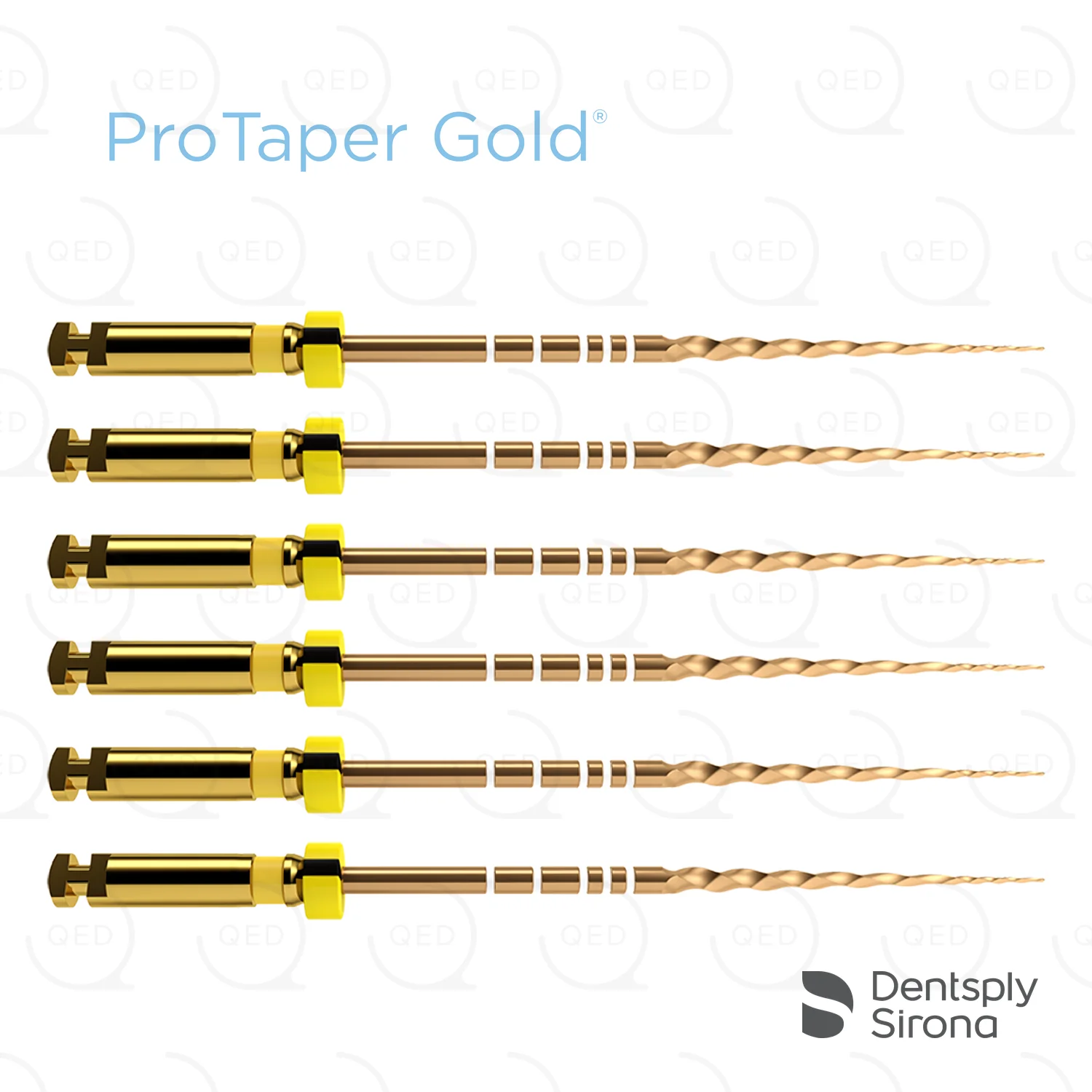
protaper gold® · f2 025/.08v · 25 mm · pack of 6
curved canalsapical finishingsterilesingle use25 mm
f2 takes an iso 020 preparation to an iso 025 tip on a .08 variable taper. for a great many canals it is where the sequence stops, which is why it is the size most practices reorder first.
| +24% flexibility vs ptu | x 2.4 fatigue, system | 300 rpm speed, per the ifu |
dentsply sirona’s own figures against protaper® universal, internal testing, data on file. x 2.6 is the f3 file; x 2.4 the system.
this pack: protaper gold® f2 rotary file, 25 mm (pack of 6)
made by dentsply sirona · legal manufacturer maillefer instruments holding sàrl, ballaigues · uk representative dentsply ih ltd, stonehouse
› same geometry as protaper universal. dentsply sirona are explicit about it, and the pull-quote below is their wording. if you know the protaper sequence, you already know this file.
› heat-treated nickel titanium. the instructions describe it as nickel titanium alloy “followed by a heat treatment”. that is the whole difference, and it is what the gold colour is telling you.
› non-cutting tip. a small flat area on the tip helps it find its way through soft tissue and debris while following the part of the canal you have already secured.
› convex triangular cross-section. with the progressive taper, it cuts while keeping the blade off the dentine between flutes – less rotational friction.
› 11 mm handle. two millimetres shorter than protaper universal’s, which is two millimetres of access you get back on a second molar.
› gauge with iso 025. the instructions have you check the foramen with a hand file of the same size after this one. snug at length and you are finished.
| tip size | iso 025 |
| taper | .08 variable |
| length | 25 mm |
| motor | 300 rpm · torque 3 – 4 ncm |
| pack | blister of 6, sterile |
1 scout and confirm a glide path. passively scout the coronal two thirds with iso 010 and iso 015 hand files in a viscous chelator, and work them until a smooth, reproducible glide path is confirmed. mechanised glide path files may be used after an iso 010 hand file.
2 shape with s1, then s2. in the presence of sodium hypochlorite, brush and follow along the glide path, cutting dentine laterally on the outstroke – always brushing away from the furcation – to the depth the iso 015 hand file reached.
3 scout the apical third, then take s1 and s2 to length. establish working length, confirm patency, verify the glide path apically, then brush s1 and s2 to working length.
4 finish with f1, without brushing. each insertion deeper than the last, until working length is reached. do not leave the file at working length for longer than one second.
5 gauge the foramen with an iso 020 hand file. snug at length and the preparation is finished. loose at length and you continue with f2, and if necessary f3, f4 and f5, gauging after each one with a hand file of the same size.
6 dry and obturate. dedicated paper points to dry, and dedicated gutta percha points with sealer to obturate. then seal the access coronally.
abridged from the nineteen numbered steps in the protaper gold instructions for use, february 2026. irrigate abundantly and frequently after each instrument, as those instructions require throughout. we are a distributor, not a clinical authority: this is dentsply sirona’s sequence, not ours.
300 rpm in continuous rotation, torque 3 – 4 ncm. those figures are from the february 2026 instructions for use and are not in the 2017 brochure, which gives no torque at all. note the shape of the table: the shaping files take the most torque and s2 and f1 the least.
x-smart pro+ and x-smart go both reach 6 ncm at 300 rpm – the x-smart go holds its full 6 ncm anywhere from 50 to 400 rpm, on its own instructions for use. neither carries a built-in protaper gold programme, so these settings go into a user memory.
dentsply sirona’s own figures are internal data, and we label them as such above. they are worth more than that, because two peer-reviewed papers found the same thing.
hieawy and colleagues put protaper gold and protaper universal through rotational bending and iso 3630-1 flexibility testing and concluded that “ptg files were significantly more flexible and resistant to fatigue than ptu files”. they traced it to the metal: the austenite finish temperature of protaper gold measured 50.1 °c against 21.2 °c for universal. hieawy et al., journal of endodontics, 2015 – a laboratory study.
gagliardi and colleagues scanned twenty-four mandibular molars before and after preparation and found protaper gold transported the canal less than protaper universal (0.11 mm against 0.14 mm) and removed less dentine (22.7% against 29.9%). gagliardi et al., journal of endodontics, 2015 – ex vivo, mesial canals, prepared to f2. it does not speak for f3, f4 or f5.
“protaper gold® rotary files feature the same exact geometries as protaper® universal, but offer an increase in flexibility. this is especially important in the finishing files, when navigating challenging curves in the apical region.”
dentsply sirona, protaper gold brochure, row en, 11/2017
dentsply sirona’s instructions carry one limitation worth reading before you buy, and the opening clause does the work: “similar to all machine-driven root canal instruments, protaper gold instruments should not be used in a root canal with an abrupt apical curvature due to heightened risk of separation. in this case, pre-curved hand files should be used in the apical region.” it is a limit on every engine-driven file, not a knock on this one, and the remedy is a hand file you already stock.
contraindications: none known. and one piece of reassurance worth printing, because it generates returns otherwise – the instructions say the files “may appear slightly curved. this is not a manufacturing defect”. it comes from the heat treatment. you can straighten one with your fingers, and you do not need to.
in the uk, endodontic reamers and files are treated as single use. that instruction came from barry cockcroft, chief dental officer for england, on 19 april 2007, and the chief medical officer and chief dental officer of scotland issued the same line the same day. it is a uk requirement rather than anything particular to this file or to us. worth doing the arithmetic on the right unit: a blister of six is six canals, not six cases.
dentsply sirona’s eu instructions describe protaper gold as a reusable sterile instrument with a reprocessing procedure. the uk position above is a requirement of practice here, not a statement about the device, and the two are not in conflict. for extremely curved canals the manufacturer goes further than the uk rule and advises one file per canal.
is protaper gold the same shape as protaper universal?
yes – dentsply sirona say so explicitly. same geometries, same sequence, same motor action. the alloy is heat treated and the handle is 11 mm instead of 13 mm.
do i need a glide path?
yes. the instructions have you scout the coronal two thirds with iso 010 and iso 015 hand files and confirm a smooth, reproducible glide path before s1 goes in. proglider or pathfile may be used after an iso 010 hand file. this is not a system that claims to go without one.
which gutta percha fits it?
protaper gold conform fit gutta percha f2 is the matched cone, and protaper gold paper points f2 the matched point. a variable-taper preparation filled with a constant-taper cone is the wrong cone.
can i use it in a sharply curved canal?
read the limitation above first. in an abrupt apical curvature the manufacturer says to use pre-curved hand files in the apical region instead – and that applies to every engine-driven file, not just this one.
| patency & glide path | vdw c-pilot 10 and c-pilot 08 in 25 mm – the iso 010 the instructions scout and recapitulate with, in the length this file works to. |
| mechanised glide path | proglider 25 mm or pathfile assorted 25 mm – the two the instructions name, after an iso 010 hand file. |
| chelator | glyde file prep – the viscous chelator named in the protaper gold instructions themselves. |
| irrigants | chlorax 5.25%, chlorax 2% and endo-solution 17% edta. |
| delivery | irriflex 30g or navitip 29 ga, 25 mm. |
| activation | smartlite pro endoactivator – dentsply sirona’s own. |
| motor | continuous rotation at 300 rpm, and the shapers ask for 5–6 ncm, so the motor has to reach that at low speed. x-smart pro+ and x-smart go both do – the x-smart go gives its full 6 ncm anywhere from 50 to 400 rpm. vdw.silver reciproc will drive the file; its rotary torque ceiling depends on the firmware, so ask us and we will check yours. |
| dry | protaper gold paper points f2 – matched to the shape this file cuts. |
| obturate | protaper gold conform fit gutta percha f2 carried to length with sealer – ah plus, ah plus jet, neosealer ezflo or proroot bio sealer. |
| carrier alternative | thermafil for protaper gold f2. |
| coronal seal | sdr flow+ refill universal – 4 mm bulk increment, one cure. the apical seal is only half the job. |
› protaper gold® brochure (pdf, 1.5 mb, dentsply sirona) – the geometry table, the full product reference list and the published claims.
geometry, sizes, tapers, torque, speed and the sequence are from the protaper gold instructions for use, end-ifu-protaper-gold-reusable-sterile-v03, february 2026 (their document, on their site), and the protaper gold brochure, row en, 11/2017. the flexibility and cyclic-fatigue figures are dentsply sirona’s internal testing, data on file; the independent studies cited are laboratory and ex vivo work and are labelled as such. dentsply sirona, protaper, protaper gold, conform fit, thermafil, glyde, proglider, pathfile, x-smart and sdr are their trademarks.
protaper gold® f2 · 025/.08v · 25 mm · blister of 6 · sterile · single use in the uk · 300 rpm · ref a0411225g0203

protaper gold® · f3 030/.09v · 25 mm · pack of 6
curved canalsapical finishingsterilesingle use25 mm
f3 carries a .09 apical taper – the widest in the protaper gold sequence. it is also the file dentsply sirona tested for the headline cyclic-fatigue figure, so the number on this page is f3’s own rather than a range average.
| +24% flexibility vs ptu | x 2.6 fatigue, f3 file | 300 rpm speed, per the ifu |
dentsply sirona’s own figures against protaper® universal, internal testing, data on file. x 2.6 is the f3 file; x 2.4 the system.
this pack: protaper gold® f3 rotary file, 25 mm (pack of 6)
made by dentsply sirona · legal manufacturer maillefer instruments holding sàrl, ballaigues · uk representative dentsply ih ltd, stonehouse
› same geometry as protaper universal. dentsply sirona are explicit that the shapes did not change – the files “feature the same exact geometries as protaper® universal, but offer an increase in flexibility”. if you know the sequence, you already know this file.
› heat-treated nickel titanium. the instructions describe it as nickel titanium alloy “followed by a heat treatment”. that is the whole difference, and it is what the gold colour is telling you.
› 11 mm handle. two millimetres shorter than protaper universal’s, which is two millimetres of access you get back on a second molar.
› gauge with iso 030. the instructions have you check the foramen with a hand file of the same size after this one. snug at length and you are finished.
| tip size | iso 030 |
| taper | .09 variable |
| length | 25 mm |
| motor | 300 rpm · torque 3 – 4 ncm |
| pack | blister of 6, sterile |
the sequence is the same regardless of the length, diameter or curvature of the canal – that is dentsply sirona’s own wording. f3 follows f2 at step 17, when an iso 025 hand file is still loose at length. shaping files brush on the outstroke; finishing files do not brush at all. irrigate abundantly and frequently after each instrument.
from the protaper gold instructions for use, february 2026 – their sequence, not ours.
300 rpm in continuous rotation, torque 3 – 4 ncm. those figures are from the february 2026 instructions for use and are not in the 2017 brochure, which gives no torque at all. note the shape of the table: the shaping files take the most torque and s2 and f1 the least.
dentsply sirona say this file, like every engine-driven root canal instrument, should not be used in a canal with an abrupt apical curvature, and that pre-curved hand files should be used in the apical region instead. contraindications: none known.
in the uk, endodontic reamers and files are treated as single use – the chief dental officer’s instruction of 19 april 2007, not a qed policy. so a blister of six is six canals, not six cases.
will it fit my motor?
it needs continuous rotation at 300 rpm, and 5–6 ncm for the shapers. x-smart pro+ and x-smart go both reach it. on a vdw.silver reciproc the rotary torque ceiling depends on the firmware – ask us.
which cone matches it?
protaper gold conform fit gutta percha f3, with the matched paper points. the preparation is variable taper, so a constant-taper cone is the wrong cone.
is it sterile?
yes – supplied sterile in a blister of six, sterilised by radiation. in the uk the file is then single use.
| patency & glide path | vdw c-pilot 10 and c-pilot 08 in 25 mm – the iso 010 the instructions scout and recapitulate with, in the length this file works to. |
| mechanised glide path | proglider 25 mm or pathfile assorted 25 mm – the two the instructions name, after an iso 010 hand file. |
| chelator | glyde file prep – the viscous chelator named in the protaper gold instructions themselves. |
| irrigants | chlorax 5.25%, chlorax 2% and endo-solution 17% edta. |
| delivery | irriflex 30g or navitip 29 ga, 25 mm. |
| activation | smartlite pro endoactivator – dentsply sirona’s own. |
| motor | continuous rotation at 300 rpm, and the shapers ask for 5–6 ncm, so the motor has to reach that at low speed. x-smart pro+ and x-smart go both do – the x-smart go gives its full 6 ncm anywhere from 50 to 400 rpm. vdw.silver reciproc will drive the file; its rotary torque ceiling depends on the firmware, so ask us and we will check yours. |
| dry | protaper gold paper points f3 – matched to the shape this file cuts. |
| obturate | protaper gold conform fit gutta percha f3 carried to length with sealer – ah plus, ah plus jet, neosealer ezflo or proroot bio sealer. |
| carrier alternative | thermafil for protaper gold f3. |
| coronal seal | sdr flow+ refill universal – 4 mm bulk increment, one cure. the apical seal is only half the job. |
› protaper gold® brochure (pdf, 1.5 mb, dentsply sirona) – the geometry table, the full product reference list and the published claims.
geometry, sizes, tapers, torque, speed and the sequence are from the protaper gold instructions for use, end-ifu-protaper-gold-reusable-sterile-v03, february 2026 (their document, on their site), and the protaper gold brochure, row en, 11/2017. the flexibility and cyclic-fatigue figures are dentsply sirona’s internal testing, data on file; the independent studies cited are laboratory and ex vivo work and are labelled as such. dentsply sirona, protaper, protaper gold, conform fit, thermafil, glyde, proglider, pathfile, x-smart and sdr are their trademarks.
protaper gold® f3 · 030/.09v · 25 mm · blister of 6 · sterile · single use in the uk · 300 rpm · ref a0411225g0303
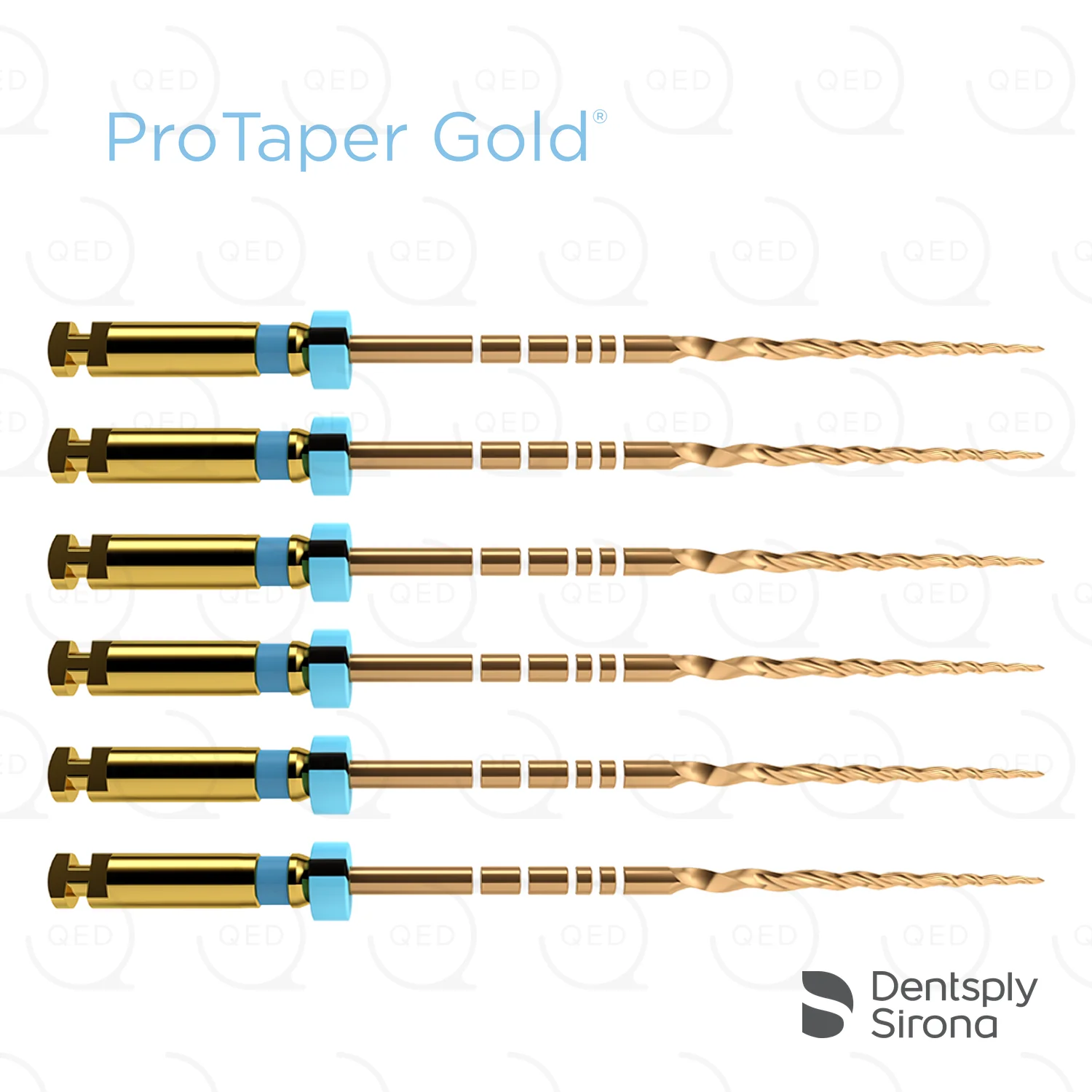
protaper gold® · f4 040/.06v · 25 mm · pack of 6
curved canalsapical finishingsterilesingle use25 mm
f4 is the first file in the sequence where the apical taper comes down as the tip goes up: an iso 040 tip on a .06 taper. larger apical diameter, less coronal cutting.
| +24% flexibility vs ptu | x 2.4 fatigue, system | 300 rpm speed, per the ifu |
dentsply sirona’s own figures against protaper® universal, internal testing, data on file. x 2.6 is the f3 file; x 2.4 the system.
this pack: protaper gold® f4 rotary file, 25 mm (pack of 6)
made by dentsply sirona · legal manufacturer maillefer instruments holding sàrl, ballaigues · uk representative dentsply ih ltd, stonehouse
› same geometry as protaper universal. dentsply sirona are explicit that the shapes did not change – the files “feature the same exact geometries as protaper® universal, but offer an increase in flexibility”. if you know the sequence, you already know this file.
› heat-treated nickel titanium. the instructions describe it as nickel titanium alloy “followed by a heat treatment”. that is the whole difference, and it is what the gold colour is telling you.
› 11 mm handle. two millimetres shorter than protaper universal’s, which is two millimetres of access you get back on a second molar.
› gauge with iso 040. the instructions have you check the foramen with a hand file of the same size after this one. snug at length and you are finished.
| tip size | iso 040 |
| taper | .06 variable |
| length | 25 mm |
| motor | 300 rpm · torque 3 – 4 ncm |
| pack | blister of 6, sterile |
the sequence is the same regardless of the length, diameter or curvature of the canal – that is dentsply sirona’s own wording. f4 follows f3 at step 17, when an iso 030 hand file is still loose at length. shaping files brush on the outstroke; finishing files do not brush at all. irrigate abundantly and frequently after each instrument.
from the protaper gold instructions for use, february 2026 – their sequence, not ours.
300 rpm in continuous rotation, torque 3 – 4 ncm. those figures are from the february 2026 instructions for use and are not in the 2017 brochure, which gives no torque at all. note the shape of the table: the shaping files take the most torque and s2 and f1 the least.
dentsply sirona say this file, like every engine-driven root canal instrument, should not be used in a canal with an abrupt apical curvature, and that pre-curved hand files should be used in the apical region instead. contraindications: none known.
in the uk, endodontic reamers and files are treated as single use – the chief dental officer’s instruction of 19 april 2007, not a qed policy. so a blister of six is six canals, not six cases.
will it fit my motor?
it needs continuous rotation at 300 rpm, and 5–6 ncm for the shapers. x-smart pro+ and x-smart go both reach it. on a vdw.silver reciproc the rotary torque ceiling depends on the firmware – ask us.
which cone matches it?
protaper gold conform fit gutta percha f4, with the matched paper points. the preparation is variable taper, so a constant-taper cone is the wrong cone.
is it sterile?
yes – supplied sterile in a blister of six, sterilised by radiation. in the uk the file is then single use.
| patency & glide path | vdw c-pilot 10 and c-pilot 08 in 25 mm – the iso 010 the instructions scout and recapitulate with, in the length this file works to. |
| mechanised glide path | proglider 25 mm or pathfile assorted 25 mm – the two the instructions name, after an iso 010 hand file. |
| chelator | glyde file prep – the viscous chelator named in the protaper gold instructions themselves. |
| irrigants | chlorax 5.25%, chlorax 2% and endo-solution 17% edta. |
| delivery | irriflex 30g or navitip 29 ga, 25 mm. |
| activation | smartlite pro endoactivator – dentsply sirona’s own. |
| motor | continuous rotation at 300 rpm, and the shapers ask for 5–6 ncm, so the motor has to reach that at low speed. x-smart pro+ and x-smart go both do – the x-smart go gives its full 6 ncm anywhere from 50 to 400 rpm. vdw.silver reciproc will drive the file; its rotary torque ceiling depends on the firmware, so ask us and we will check yours. |
| dry | protaper gold paper points f4 – matched to the shape this file cuts. |
| obturate | protaper gold conform fit gutta percha f4 carried to length with sealer – ah plus, ah plus jet, neosealer ezflo or proroot bio sealer. |
| carrier alternative | thermafil for protaper gold f4. |
| coronal seal | sdr flow+ refill universal – 4 mm bulk increment, one cure. the apical seal is only half the job. |
› protaper gold® brochure (pdf, 1.5 mb, dentsply sirona) – the geometry table, the full product reference list and the published claims.
geometry, sizes, tapers, torque, speed and the sequence are from the protaper gold instructions for use, end-ifu-protaper-gold-reusable-sterile-v03, february 2026 (their document, on their site), and the protaper gold brochure, row en, 11/2017. the flexibility and cyclic-fatigue figures are dentsply sirona’s internal testing, data on file; the independent studies cited are laboratory and ex vivo work and are labelled as such. dentsply sirona, protaper, protaper gold, conform fit, thermafil, glyde, proglider, pathfile, x-smart and sdr are their trademarks.
protaper gold® f4 · 040/.06v · 25 mm · blister of 6 · sterile · single use in the uk · 300 rpm · ref a0411225g0403
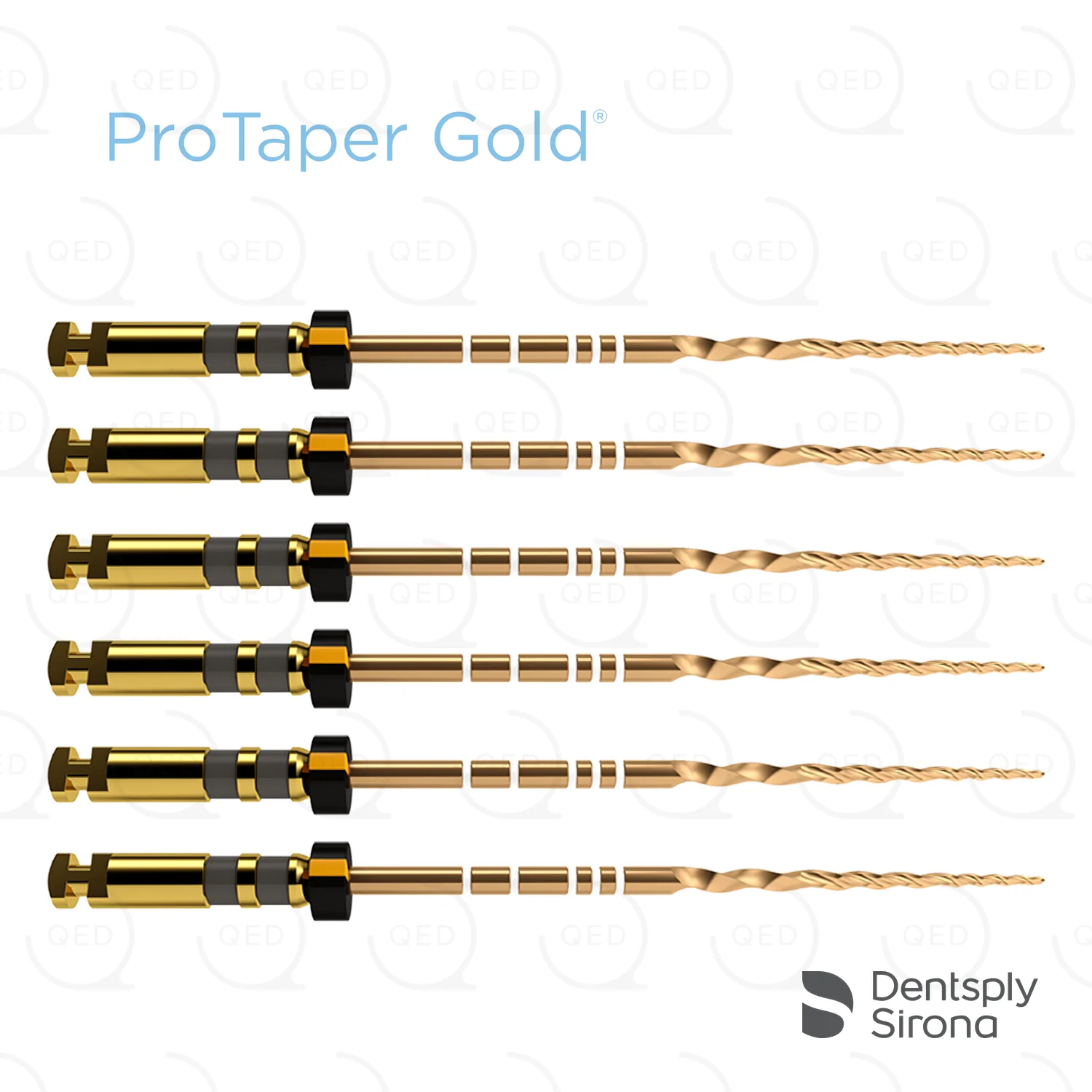
protaper gold® · f5 050/.05v · 25 mm · pack of 6
curved canalsapical finishingsterilesingle use25 mm
f5 finishes at an iso 050 tip on a .05 taper. it is the end of the sequence and the file for a canal that gauges loose at iso 040 – not a routine step, which is the honest thing to say about it.
| +24% flexibility vs ptu | x 2.4 fatigue, system | 300 rpm speed, per the ifu |
dentsply sirona’s own figures against protaper® universal, internal testing, data on file. x 2.6 is the f3 file; x 2.4 the system.
this pack: protaper gold® f5 rotary file, 25 mm (pack of 6)
made by dentsply sirona · legal manufacturer maillefer instruments holding sàrl, ballaigues · uk representative dentsply ih ltd, stonehouse
› same geometry as protaper universal. dentsply sirona are explicit that the shapes did not change – the files “feature the same exact geometries as protaper® universal, but offer an increase in flexibility”. if you know the sequence, you already know this file.
› heat-treated nickel titanium. the instructions describe it as nickel titanium alloy “followed by a heat treatment”. that is the whole difference, and it is what the gold colour is telling you.
› 11 mm handle. two millimetres shorter than protaper universal’s, which is two millimetres of access you get back on a second molar.
› gauge with iso 050. the instructions have you check the foramen with a hand file of the same size after this one. snug at length and you are finished.
| tip size | iso 050 |
| taper | .05 variable |
| length | 25 mm |
| motor | 300 rpm · torque 3 – 4 ncm |
| pack | blister of 6, sterile |
the sequence is the same regardless of the length, diameter or curvature of the canal – that is dentsply sirona’s own wording. f5 is the last file at step 17, when an iso 040 hand file is still loose at length. shaping files brush on the outstroke; finishing files do not brush at all. irrigate abundantly and frequently after each instrument.
from the protaper gold instructions for use, february 2026 – their sequence, not ours.
300 rpm in continuous rotation, torque 3 – 4 ncm. those figures are from the february 2026 instructions for use and are not in the 2017 brochure, which gives no torque at all. note the shape of the table: the shaping files take the most torque and s2 and f1 the least.
dentsply sirona say this file, like every engine-driven root canal instrument, should not be used in a canal with an abrupt apical curvature, and that pre-curved hand files should be used in the apical region instead. contraindications: none known.
in the uk, endodontic reamers and files are treated as single use – the chief dental officer’s instruction of 19 april 2007, not a qed policy. so a blister of six is six canals, not six cases.
will it fit my motor?
it needs continuous rotation at 300 rpm, and 5–6 ncm for the shapers. x-smart pro+ and x-smart go both reach it. on a vdw.silver reciproc the rotary torque ceiling depends on the firmware – ask us.
which cone matches it?
protaper gold conform fit gutta percha f5, with the matched paper points. the preparation is variable taper, so a constant-taper cone is the wrong cone.
is it sterile?
yes – supplied sterile in a blister of six, sterilised by radiation. in the uk the file is then single use.
| patency & glide path | vdw c-pilot 10 and c-pilot 08 in 25 mm – the iso 010 the instructions scout and recapitulate with, in the length this file works to. |
| mechanised glide path | proglider 25 mm or pathfile assorted 25 mm – the two the instructions name, after an iso 010 hand file. |
| chelator | glyde file prep – the viscous chelator named in the protaper gold instructions themselves. |
| irrigants | chlorax 5.25%, chlorax 2% and endo-solution 17% edta. |
| delivery | irriflex 30g or navitip 29 ga, 25 mm. |
| activation | smartlite pro endoactivator – dentsply sirona’s own. |
| motor | continuous rotation at 300 rpm, and the shapers ask for 5–6 ncm, so the motor has to reach that at low speed. x-smart pro+ and x-smart go both do – the x-smart go gives its full 6 ncm anywhere from 50 to 400 rpm. vdw.silver reciproc will drive the file; its rotary torque ceiling depends on the firmware, so ask us and we will check yours. |
| dry | protaper gold paper points f5 – matched to the shape this file cuts. |
| obturate | protaper gold conform fit gutta percha f5 carried to length with sealer – ah plus, ah plus jet, neosealer ezflo or proroot bio sealer. |
| carrier alternative | thermafil for protaper gold f5. |
| coronal seal | sdr flow+ refill universal – 4 mm bulk increment, one cure. the apical seal is only half the job. |
› protaper gold® brochure (pdf, 1.5 mb, dentsply sirona) – the geometry table, the full product reference list and the published claims.
geometry, sizes, tapers, torque, speed and the sequence are from the protaper gold instructions for use, end-ifu-protaper-gold-reusable-sterile-v03, february 2026 (their document, on their site), and the protaper gold brochure, row en, 11/2017. the flexibility and cyclic-fatigue figures are dentsply sirona’s internal testing, data on file; the independent studies cited are laboratory and ex vivo work and are labelled as such. dentsply sirona, protaper, protaper gold, conform fit, thermafil, glyde, proglider, pathfile, x-smart and sdr are their trademarks.
protaper gold® f5 · 050/.05v · 25 mm · blister of 6 · sterile · single use in the uk · 300 rpm · ref a0411225g0503

protaper gold® · f1 020/.07v · 31 mm · pack of 6
curved canalsapical finishingsterilesingle use31 mm
f1 is where the brushing stops. it goes to working length in a non-brushing action, and then an iso 020 hand file settles the case: snug at length and the preparation is done, loose and you carry on to f2.
| +24% flexibility vs ptu | x 2.4 fatigue, system | 300 rpm speed, per the ifu |
dentsply sirona’s own figures against protaper® universal, internal testing, data on file. x 2.6 is the f3 file; x 2.4 the system.
this pack: protaper gold® f1 rotary file, 31 mm (pack of 6)
made by dentsply sirona · legal manufacturer maillefer instruments holding sàrl, ballaigues · uk representative dentsply ih ltd, stonehouse
› same geometry as protaper universal. dentsply sirona are explicit that the shapes did not change – the files “feature the same exact geometries as protaper® universal, but offer an increase in flexibility”. if you know the sequence, you already know this file.
› heat-treated nickel titanium. the instructions describe it as nickel titanium alloy “followed by a heat treatment”. that is the whole difference, and it is what the gold colour is telling you.
› 11 mm handle. two millimetres shorter than protaper universal’s, which is two millimetres of access you get back on a second molar.
› gauge with iso 020. the instructions have you check the foramen with a hand file of the same size after this one. snug at length and you are finished.
| tip size | iso 020 |
| taper | .07 variable |
| length | 31 mm |
| motor | 300 rpm · torque 1.5 – 2 ncm |
| pack | blister of 6, sterile |
the sequence is the same regardless of the length, diameter or curvature of the canal – that is dentsply sirona’s own wording. f1 is step 16, and the gauging check at step 17 decides whether you stop there. shaping files brush on the outstroke; finishing files do not brush at all. irrigate abundantly and frequently after each instrument.
from the protaper gold instructions for use, february 2026 – their sequence, not ours.
300 rpm in continuous rotation, torque 1.5 – 2 ncm. those figures are from the february 2026 instructions for use and are not in the 2017 brochure, which gives no torque at all. note the shape of the table: the shaping files take the most torque and s2 and f1 the least.
dentsply sirona say this file, like every engine-driven root canal instrument, should not be used in a canal with an abrupt apical curvature, and that pre-curved hand files should be used in the apical region instead. contraindications: none known.
in the uk, endodontic reamers and files are treated as single use – the chief dental officer’s instruction of 19 april 2007, not a qed policy. so a blister of six is six canals, not six cases.
will it fit my motor?
it needs continuous rotation at 300 rpm, and 5–6 ncm for the shapers. x-smart pro+ and x-smart go both reach it. on a vdw.silver reciproc the rotary torque ceiling depends on the firmware – ask us.
which cone matches it?
protaper gold conform fit gutta percha f1, with the matched paper points. the preparation is variable taper, so a constant-taper cone is the wrong cone.
is it sterile?
yes – supplied sterile in a blister of six, sterilised by radiation. in the uk the file is then single use.
| patency & glide path | the directions call for iso 010 and iso 015 hand files. we have no 31 mm c-pilot, and a 25 mm hand file cannot reach the length a 31 mm file is cutting to, so ask us and we will match a 31 mm hand file to the case. |
| mechanised glide path | proglider 31 mm or pathfile assorted 31 mm – the two the instructions name, after an iso 010 hand file. |
| chelator | glyde file prep – the viscous chelator named in the protaper gold instructions themselves. |
| irrigants | chlorax 5.25%, chlorax 2% and endo-solution 17% edta. |
| delivery | irriflex 30g or navitip 29 ga, 25 mm. |
| activation | smartlite pro endoactivator – dentsply sirona’s own. |
| motor | continuous rotation at 300 rpm, and the shapers ask for 5–6 ncm, so the motor has to reach that at low speed. x-smart pro+ and x-smart go both do – the x-smart go gives its full 6 ncm anywhere from 50 to 400 rpm. vdw.silver reciproc will drive the file; its rotary torque ceiling depends on the firmware, so ask us and we will check yours. |
| dry | protaper gold paper points f1 – matched to the shape this file cuts. |
| obturate | protaper gold conform fit gutta percha f1 carried to length with sealer – ah plus, ah plus jet, neosealer ezflo or proroot bio sealer. |
| carrier alternative | thermafil for protaper gold f1. |
| coronal seal | sdr flow+ refill universal – 4 mm bulk increment, one cure. the apical seal is only half the job. |
› protaper gold® brochure (pdf, 1.5 mb, dentsply sirona) – the geometry table, the full product reference list and the published claims.
geometry, sizes, tapers, torque, speed and the sequence are from the protaper gold instructions for use, end-ifu-protaper-gold-reusable-sterile-v03, february 2026 (their document, on their site), and the protaper gold brochure, row en, 11/2017. the flexibility and cyclic-fatigue figures are dentsply sirona’s internal testing, data on file; the independent studies cited are laboratory and ex vivo work and are labelled as such. dentsply sirona, protaper, protaper gold, conform fit, thermafil, glyde, proglider, pathfile, x-smart and sdr are their trademarks.
protaper gold® f1 · 020/.07v · 31 mm · blister of 6 · sterile · single use in the uk · 300 rpm · ref a0411231g0103
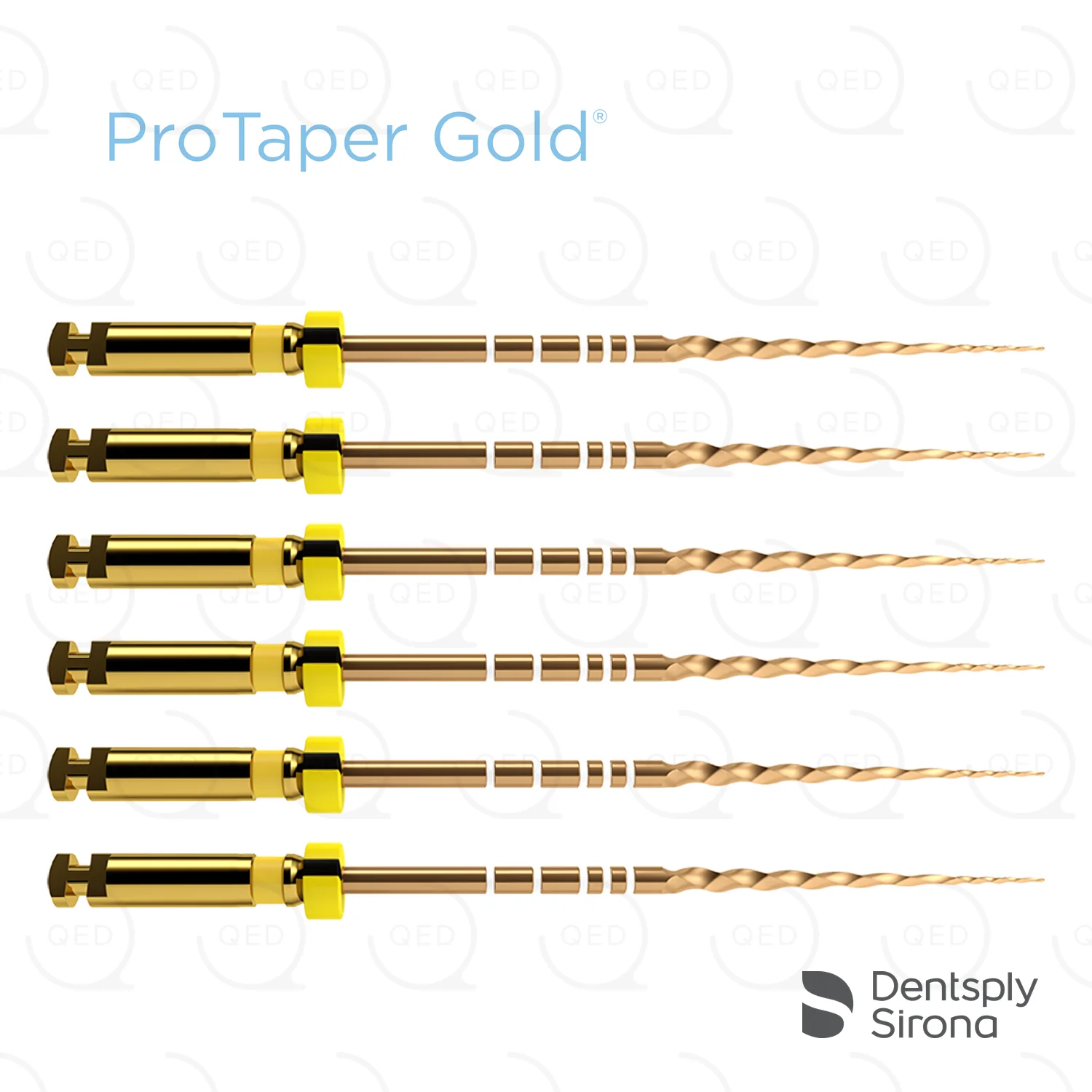
protaper gold® · f2 025/.08v · 31 mm · pack of 6
curved canalsapical finishingsterilesingle use31 mm
f2 takes an iso 020 preparation to an iso 025 tip on a .08 variable taper. for a great many canals it is where the sequence stops, which is why it is the size most practices reorder first.
| +24% flexibility vs ptu | x 2.4 fatigue, system | 300 rpm speed, per the ifu |
dentsply sirona’s own figures against protaper® universal, internal testing, data on file. x 2.6 is the f3 file; x 2.4 the system.
this pack: protaper gold® f2 rotary file, 31 mm (pack of 6)
made by dentsply sirona · legal manufacturer maillefer instruments holding sàrl, ballaigues · uk representative dentsply ih ltd, stonehouse
› same geometry as protaper universal. dentsply sirona are explicit that the shapes did not change – the files “feature the same exact geometries as protaper® universal, but offer an increase in flexibility”. if you know the sequence, you already know this file.
› heat-treated nickel titanium. the instructions describe it as nickel titanium alloy “followed by a heat treatment”. that is the whole difference, and it is what the gold colour is telling you.
› 11 mm handle. two millimetres shorter than protaper universal’s, which is two millimetres of access you get back on a second molar.
› gauge with iso 025. the instructions have you check the foramen with a hand file of the same size after this one. snug at length and you are finished.
| tip size | iso 025 |
| taper | .08 variable |
| length | 31 mm |
| motor | 300 rpm · torque 3 – 4 ncm |
| pack | blister of 6, sterile |
the sequence is the same regardless of the length, diameter or curvature of the canal – that is dentsply sirona’s own wording. f2 is the first escalation at step 17, when an iso 020 hand file is loose at length. shaping files brush on the outstroke; finishing files do not brush at all. irrigate abundantly and frequently after each instrument.
from the protaper gold instructions for use, february 2026 – their sequence, not ours.
300 rpm in continuous rotation, torque 3 – 4 ncm. those figures are from the february 2026 instructions for use and are not in the 2017 brochure, which gives no torque at all. note the shape of the table: the shaping files take the most torque and s2 and f1 the least.
dentsply sirona say this file, like every engine-driven root canal instrument, should not be used in a canal with an abrupt apical curvature, and that pre-curved hand files should be used in the apical region instead. contraindications: none known.
in the uk, endodontic reamers and files are treated as single use – the chief dental officer’s instruction of 19 april 2007, not a qed policy. so a blister of six is six canals, not six cases.
will it fit my motor?
it needs continuous rotation at 300 rpm, and 5–6 ncm for the shapers. x-smart pro+ and x-smart go both reach it. on a vdw.silver reciproc the rotary torque ceiling depends on the firmware – ask us.
which cone matches it?
protaper gold conform fit gutta percha f2, with the matched paper points. the preparation is variable taper, so a constant-taper cone is the wrong cone.
is it sterile?
yes – supplied sterile in a blister of six, sterilised by radiation. in the uk the file is then single use.
| patency & glide path | the directions call for iso 010 and iso 015 hand files. we have no 31 mm c-pilot, and a 25 mm hand file cannot reach the length a 31 mm file is cutting to, so ask us and we will match a 31 mm hand file to the case. |
| mechanised glide path | proglider 31 mm or pathfile assorted 31 mm – the two the instructions name, after an iso 010 hand file. |
| chelator | glyde file prep – the viscous chelator named in the protaper gold instructions themselves. |
| irrigants | chlorax 5.25%, chlorax 2% and endo-solution 17% edta. |
| delivery | irriflex 30g or navitip 29 ga, 25 mm. |
| activation | smartlite pro endoactivator – dentsply sirona’s own. |
| motor | continuous rotation at 300 rpm, and the shapers ask for 5–6 ncm, so the motor has to reach that at low speed. x-smart pro+ and x-smart go both do – the x-smart go gives its full 6 ncm anywhere from 50 to 400 rpm. vdw.silver reciproc will drive the file; its rotary torque ceiling depends on the firmware, so ask us and we will check yours. |
| dry | protaper gold paper points f2 – matched to the shape this file cuts. |
| obturate | protaper gold conform fit gutta percha f2 carried to length with sealer – ah plus, ah plus jet, neosealer ezflo or proroot bio sealer. |
| carrier alternative | thermafil for protaper gold f2. |
| coronal seal | sdr flow+ refill universal – 4 mm bulk increment, one cure. the apical seal is only half the job. |
› protaper gold® brochure (pdf, 1.5 mb, dentsply sirona) – the geometry table, the full product reference list and the published claims.
geometry, sizes, tapers, torque, speed and the sequence are from the protaper gold instructions for use, end-ifu-protaper-gold-reusable-sterile-v03, february 2026 (their document, on their site), and the protaper gold brochure, row en, 11/2017. the flexibility and cyclic-fatigue figures are dentsply sirona’s internal testing, data on file; the independent studies cited are laboratory and ex vivo work and are labelled as such. dentsply sirona, protaper, protaper gold, conform fit, thermafil, glyde, proglider, pathfile, x-smart and sdr are their trademarks.
protaper gold® f2 · 025/.08v · 31 mm · blister of 6 · sterile · single use in the uk · 300 rpm · ref a0411231g0203

protaper gold® · f3 030/.09v · 31 mm · pack of 6
curved canalsapical finishingsterilesingle use31 mm
f3 carries a .09 apical taper – the widest in the protaper gold sequence. it is also the file dentsply sirona tested for the headline cyclic-fatigue figure, so the number on this page is f3’s own rather than a range average.
| +24% flexibility vs ptu | x 2.6 fatigue, f3 file | 300 rpm speed, per the ifu |
dentsply sirona’s own figures against protaper® universal, internal testing, data on file. x 2.6 is the f3 file; x 2.4 the system.
this pack: protaper gold® f3 rotary file, 31 mm (pack of 6)
made by dentsply sirona · legal manufacturer maillefer instruments holding sàrl, ballaigues · uk representative dentsply ih ltd, stonehouse
› same geometry as protaper universal. dentsply sirona are explicit that the shapes did not change – the files “feature the same exact geometries as protaper® universal, but offer an increase in flexibility”. if you know the sequence, you already know this file.
› heat-treated nickel titanium. the instructions describe it as nickel titanium alloy “followed by a heat treatment”. that is the whole difference, and it is what the gold colour is telling you.
› 11 mm handle. two millimetres shorter than protaper universal’s, which is two millimetres of access you get back on a second molar.
› gauge with iso 030. the instructions have you check the foramen with a hand file of the same size after this one. snug at length and you are finished.
| tip size | iso 030 |
| taper | .09 variable |
| length | 31 mm |
| motor | 300 rpm · torque 3 – 4 ncm |
| pack | blister of 6, sterile |
the sequence is the same regardless of the length, diameter or curvature of the canal – that is dentsply sirona’s own wording. f3 follows f2 at step 17, when an iso 025 hand file is still loose at length. shaping files brush on the outstroke; finishing files do not brush at all. irrigate abundantly and frequently after each instrument.
from the protaper gold instructions for use, february 2026 – their sequence, not ours.
300 rpm in continuous rotation, torque 3 – 4 ncm. those figures are from the february 2026 instructions for use and are not in the 2017 brochure, which gives no torque at all. note the shape of the table: the shaping files take the most torque and s2 and f1 the least.
dentsply sirona say this file, like every engine-driven root canal instrument, should not be used in a canal with an abrupt apical curvature, and that pre-curved hand files should be used in the apical region instead. contraindications: none known.
in the uk, endodontic reamers and files are treated as single use – the chief dental officer’s instruction of 19 april 2007, not a qed policy. so a blister of six is six canals, not six cases.
will it fit my motor?
it needs continuous rotation at 300 rpm, and 5–6 ncm for the shapers. x-smart pro+ and x-smart go both reach it. on a vdw.silver reciproc the rotary torque ceiling depends on the firmware – ask us.
which cone matches it?
protaper gold conform fit gutta percha f3, with the matched paper points. the preparation is variable taper, so a constant-taper cone is the wrong cone.
is it sterile?
yes – supplied sterile in a blister of six, sterilised by radiation. in the uk the file is then single use.
| patency & glide path | the directions call for iso 010 and iso 015 hand files. we have no 31 mm c-pilot, and a 25 mm hand file cannot reach the length a 31 mm file is cutting to, so ask us and we will match a 31 mm hand file to the case. |
| mechanised glide path | proglider 31 mm or pathfile assorted 31 mm – the two the instructions name, after an iso 010 hand file. |
| chelator | glyde file prep – the viscous chelator named in the protaper gold instructions themselves. |
| irrigants | chlorax 5.25%, chlorax 2% and endo-solution 17% edta. |
| delivery | irriflex 30g or navitip 29 ga, 25 mm. |
| activation | smartlite pro endoactivator – dentsply sirona’s own. |
| motor | continuous rotation at 300 rpm, and the shapers ask for 5–6 ncm, so the motor has to reach that at low speed. x-smart pro+ and x-smart go both do – the x-smart go gives its full 6 ncm anywhere from 50 to 400 rpm. vdw.silver reciproc will drive the file; its rotary torque ceiling depends on the firmware, so ask us and we will check yours. |
| dry | protaper gold paper points f3 – matched to the shape this file cuts. |
| obturate | protaper gold conform fit gutta percha f3 carried to length with sealer – ah plus, ah plus jet, neosealer ezflo or proroot bio sealer. |
| carrier alternative | thermafil for protaper gold f3. |
| coronal seal | sdr flow+ refill universal – 4 mm bulk increment, one cure. the apical seal is only half the job. |
› protaper gold® brochure (pdf, 1.5 mb, dentsply sirona) – the geometry table, the full product reference list and the published claims.
geometry, sizes, tapers, torque, speed and the sequence are from the protaper gold instructions for use, end-ifu-protaper-gold-reusable-sterile-v03, february 2026 (their document, on their site), and the protaper gold brochure, row en, 11/2017. the flexibility and cyclic-fatigue figures are dentsply sirona’s internal testing, data on file; the independent studies cited are laboratory and ex vivo work and are labelled as such. dentsply sirona, protaper, protaper gold, conform fit, thermafil, glyde, proglider, pathfile, x-smart and sdr are their trademarks.
protaper gold® f3 · 030/.09v · 31 mm · blister of 6 · sterile · single use in the uk · 300 rpm · ref a0411231g0303

protaper gold® · f4 040/.06v · 31 mm · pack of 6
curved canalsapical finishingsterilesingle use31 mm
f4 is the first file in the sequence where the apical taper comes down as the tip goes up: an iso 040 tip on a .06 taper. larger apical diameter, less coronal cutting.
| +24% flexibility vs ptu | x 2.4 fatigue, system | 300 rpm speed, per the ifu |
dentsply sirona’s own figures against protaper® universal, internal testing, data on file. x 2.6 is the f3 file; x 2.4 the system.
this pack: protaper gold® f4 rotary file, 31 mm (pack of 6)
made by dentsply sirona · legal manufacturer maillefer instruments holding sàrl, ballaigues · uk representative dentsply ih ltd, stonehouse
› same geometry as protaper universal. dentsply sirona are explicit that the shapes did not change – the files “feature the same exact geometries as protaper® universal, but offer an increase in flexibility”. if you know the sequence, you already know this file.
› heat-treated nickel titanium. the instructions describe it as nickel titanium alloy “followed by a heat treatment”. that is the whole difference, and it is what the gold colour is telling you.
› 11 mm handle. two millimetres shorter than protaper universal’s, which is two millimetres of access you get back on a second molar.
› gauge with iso 040. the instructions have you check the foramen with a hand file of the same size after this one. snug at length and you are finished.
| tip size | iso 040 |
| taper | .06 variable |
| length | 31 mm |
| motor | 300 rpm · torque 3 – 4 ncm |
| pack | blister of 6, sterile |
the sequence is the same regardless of the length, diameter or curvature of the canal – that is dentsply sirona’s own wording. f4 follows f3 at step 17, when an iso 030 hand file is still loose at length. shaping files brush on the outstroke; finishing files do not brush at all. irrigate abundantly and frequently after each instrument.
from the protaper gold instructions for use, february 2026 – their sequence, not ours.
300 rpm in continuous rotation, torque 3 – 4 ncm. those figures are from the february 2026 instructions for use and are not in the 2017 brochure, which gives no torque at all. note the shape of the table: the shaping files take the most torque and s2 and f1 the least.
dentsply sirona say this file, like every engine-driven root canal instrument, should not be used in a canal with an abrupt apical curvature, and that pre-curved hand files should be used in the apical region instead. contraindications: none known.
in the uk, endodontic reamers and files are treated as single use – the chief dental officer’s instruction of 19 april 2007, not a qed policy. so a blister of six is six canals, not six cases.
will it fit my motor?
it needs continuous rotation at 300 rpm, and 5–6 ncm for the shapers. x-smart pro+ and x-smart go both reach it. on a vdw.silver reciproc the rotary torque ceiling depends on the firmware – ask us.
which cone matches it?
protaper gold conform fit gutta percha f4, with the matched paper points. the preparation is variable taper, so a constant-taper cone is the wrong cone.
is it sterile?
yes – supplied sterile in a blister of six, sterilised by radiation. in the uk the file is then single use.
| patency & glide path | the directions call for iso 010 and iso 015 hand files. we have no 31 mm c-pilot, and a 25 mm hand file cannot reach the length a 31 mm file is cutting to, so ask us and we will match a 31 mm hand file to the case. |
| mechanised glide path | proglider 31 mm or pathfile assorted 31 mm – the two the instructions name, after an iso 010 hand file. |
| chelator | glyde file prep – the viscous chelator named in the protaper gold instructions themselves. |
| irrigants | chlorax 5.25%, chlorax 2% and endo-solution 17% edta. |
| delivery | irriflex 30g or navitip 29 ga, 25 mm. |
| activation | smartlite pro endoactivator – dentsply sirona’s own. |
| motor | continuous rotation at 300 rpm, and the shapers ask for 5–6 ncm, so the motor has to reach that at low speed. x-smart pro+ and x-smart go both do – the x-smart go gives its full 6 ncm anywhere from 50 to 400 rpm. vdw.silver reciproc will drive the file; its rotary torque ceiling depends on the firmware, so ask us and we will check yours. |
| dry | protaper gold paper points f4 – matched to the shape this file cuts. |
| obturate | protaper gold conform fit gutta percha f4 carried to length with sealer – ah plus, ah plus jet, neosealer ezflo or proroot bio sealer. |
| carrier alternative | thermafil for protaper gold f4. |
| coronal seal | sdr flow+ refill universal – 4 mm bulk increment, one cure. the apical seal is only half the job. |
› protaper gold® brochure (pdf, 1.5 mb, dentsply sirona) – the geometry table, the full product reference list and the published claims.
geometry, sizes, tapers, torque, speed and the sequence are from the protaper gold instructions for use, end-ifu-protaper-gold-reusable-sterile-v03, february 2026 (their document, on their site), and the protaper gold brochure, row en, 11/2017. the flexibility and cyclic-fatigue figures are dentsply sirona’s internal testing, data on file; the independent studies cited are laboratory and ex vivo work and are labelled as such. dentsply sirona, protaper, protaper gold, conform fit, thermafil, glyde, proglider, pathfile, x-smart and sdr are their trademarks.
protaper gold® f4 · 040/.06v · 31 mm · blister of 6 · sterile · single use in the uk · 300 rpm · ref a0411231g0403

protaper gold® · f5 050/.05v · 31 mm · pack of 6
curved canalsapical finishingsterilesingle use31 mm
f5 finishes at an iso 050 tip on a .05 taper. it is the end of the sequence and the file for a canal that gauges loose at iso 040 – not a routine step, which is the honest thing to say about it.
| +24% flexibility vs ptu | x 2.4 fatigue, system | 300 rpm speed, per the ifu |
dentsply sirona’s own figures against protaper® universal, internal testing, data on file. x 2.6 is the f3 file; x 2.4 the system.
this pack: protaper gold® f5 rotary file, 31 mm (pack of 6)
made by dentsply sirona · legal manufacturer maillefer instruments holding sàrl, ballaigues · uk representative dentsply ih ltd, stonehouse
› same geometry as protaper universal. dentsply sirona are explicit that the shapes did not change – the files “feature the same exact geometries as protaper® universal, but offer an increase in flexibility”. if you know the sequence, you already know this file.
› heat-treated nickel titanium. the instructions describe it as nickel titanium alloy “followed by a heat treatment”. that is the whole difference, and it is what the gold colour is telling you.
› 11 mm handle. two millimetres shorter than protaper universal’s, which is two millimetres of access you get back on a second molar.
› gauge with iso 050. the instructions have you check the foramen with a hand file of the same size after this one. snug at length and you are finished.
| tip size | iso 050 |
| taper | .05 variable |
| length | 31 mm |
| motor | 300 rpm · torque 3 – 4 ncm |
| pack | blister of 6, sterile |
the sequence is the same regardless of the length, diameter or curvature of the canal – that is dentsply sirona’s own wording. f5 is the last file at step 17, when an iso 040 hand file is still loose at length. shaping files brush on the outstroke; finishing files do not brush at all. irrigate abundantly and frequently after each instrument.
from the protaper gold instructions for use, february 2026 – their sequence, not ours.
300 rpm in continuous rotation, torque 3 – 4 ncm. those figures are from the february 2026 instructions for use and are not in the 2017 brochure, which gives no torque at all. note the shape of the table: the shaping files take the most torque and s2 and f1 the least.
dentsply sirona say this file, like every engine-driven root canal instrument, should not be used in a canal with an abrupt apical curvature, and that pre-curved hand files should be used in the apical region instead. contraindications: none known.
in the uk, endodontic reamers and files are treated as single use – the chief dental officer’s instruction of 19 april 2007, not a qed policy. so a blister of six is six canals, not six cases.
will it fit my motor?
it needs continuous rotation at 300 rpm, and 5–6 ncm for the shapers. x-smart pro+ and x-smart go both reach it. on a vdw.silver reciproc the rotary torque ceiling depends on the firmware – ask us.
which cone matches it?
protaper gold conform fit gutta percha f5, with the matched paper points. the preparation is variable taper, so a constant-taper cone is the wrong cone.
is it sterile?
yes – supplied sterile in a blister of six, sterilised by radiation. in the uk the file is then single use.
| patency & glide path | the directions call for iso 010 and iso 015 hand files. we have no 31 mm c-pilot, and a 25 mm hand file cannot reach the length a 31 mm file is cutting to, so ask us and we will match a 31 mm hand file to the case. |
| mechanised glide path | proglider 31 mm or pathfile assorted 31 mm – the two the instructions name, after an iso 010 hand file. |
| chelator | glyde file prep – the viscous chelator named in the protaper gold instructions themselves. |
| irrigants | chlorax 5.25%, chlorax 2% and endo-solution 17% edta. |
| delivery | irriflex 30g or navitip 29 ga, 25 mm. |
| activation | smartlite pro endoactivator – dentsply sirona’s own. |
| motor | continuous rotation at 300 rpm, and the shapers ask for 5–6 ncm, so the motor has to reach that at low speed. x-smart pro+ and x-smart go both do – the x-smart go gives its full 6 ncm anywhere from 50 to 400 rpm. vdw.silver reciproc will drive the file; its rotary torque ceiling depends on the firmware, so ask us and we will check yours. |
| dry | protaper gold paper points f5 – matched to the shape this file cuts. |
| obturate | protaper gold conform fit gutta percha f5 carried to length with sealer – ah plus, ah plus jet, neosealer ezflo or proroot bio sealer. |
| carrier alternative | thermafil for protaper gold f5. |
| coronal seal | sdr flow+ refill universal – 4 mm bulk increment, one cure. the apical seal is only half the job. |
› protaper gold® brochure (pdf, 1.5 mb, dentsply sirona) – the geometry table, the full product reference list and the published claims.
geometry, sizes, tapers, torque, speed and the sequence are from the protaper gold instructions for use, end-ifu-protaper-gold-reusable-sterile-v03, february 2026 (their document, on their site), and the protaper gold brochure, row en, 11/2017. the flexibility and cyclic-fatigue figures are dentsply sirona’s internal testing, data on file; the independent studies cited are laboratory and ex vivo work and are labelled as such. dentsply sirona, protaper, protaper gold, conform fit, thermafil, glyde, proglider, pathfile, x-smart and sdr are their trademarks.
protaper gold® f5 · 050/.05v · 31 mm · blister of 6 · sterile · single use in the uk · 300 rpm · ref a0411231g0503
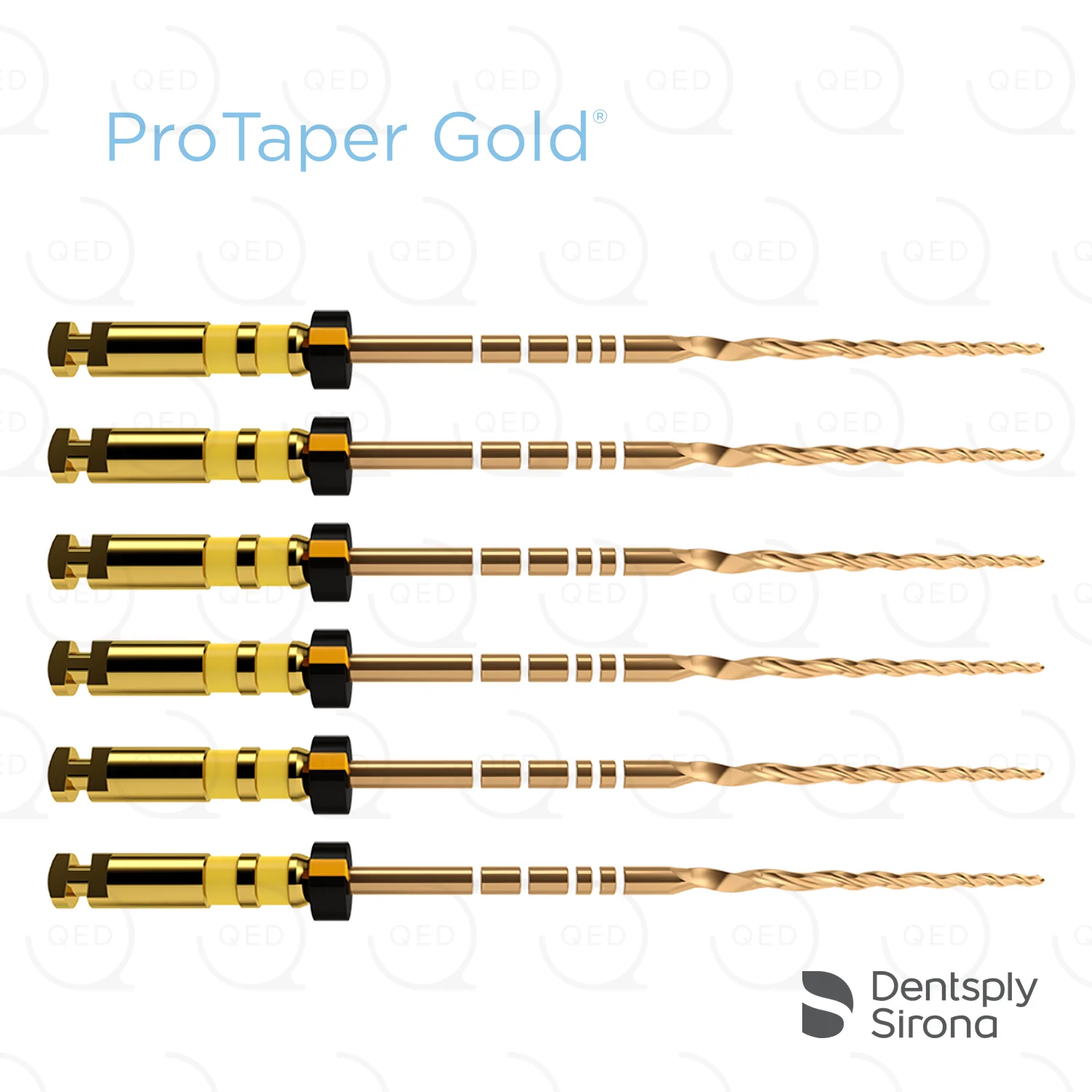
waveone® gold primary · 21 mm · pack of 3
limited openingmost canalsmolarscurved canals
short roots, limited opening? twenty-one millimetres suits a second molar, a patient who cannot open far, or a root that does not need the reach – and it buys handpiece clearance where a 25 mm file fights the opposing arch. this is the primary – most canals – in that length.
this pack: 3 × waveone® gold primary (025/.07v), 21 mm · pre-sterilised blister, single-patient use
made by dentsply sirona – maillefer, switzerland
the primary is the default, and the reason the system is sold as one-file endodontics: on dentsply sirona's data, 80% of cases are completed with a single shaping file. start here, and only move if the canal tells you to.
a 0.25 mm tip on a .07 variable taper is the geometry that suits the largest share of canals – enough apical shape to irrigate and obturate properly, without the coronal dentine a fixed-taper instrument of the same tip size would take.
a rotating file threads itself into the canal; when it binds, torsional stress has nowhere to go. waveone® gold moves in unequal back-and-forth angles instead, cutting on one stroke and releasing on the next, and the parallelogram cross-section further reduces screwing-in.
the gold is a post-machining heat treatment that leaves the niti with enhanced flexibility and fatigue resistance. dentsply cite clinical data of zero fractures across 1,104 instruments in 2,691 root canals.
on the taper figure: .07 is the nominal designation at the tip. the taper eases coronally rather than holding .07 up the shaft, and dentsply publish no average-taper figure for waveone® gold, so none is quoted here.
| tip and taper | iso 025, .07 variable taper |
| length | 21 mm · 11 mm handle |
| colour code | red |
| supply | 3 per blister, pre-sterilised · a0753221g0p03 |
› the starting file. dentsply's recommended entry point for the sequence.
› 80% of cases, one file. on the manufacturer's own figures.
› pre-bendable. gold-treated niti can be curved by hand to bypass a ledge.
| other sizes | small · medium · large |
| other lengths | primary 25 mm · primary 31 mm |
| glide path | gold glider 21 mm · same motion, same setting |
| dry the canal | paper points primary (180) |
| matched fill | conform fit® gp primary (60) |
| warm technique | thermafil® primary (6) |
› do i still need a glide path? yes. secure the canal to length with a #10 hand file and confirm patency, then the gold glider creates the glide path in the same reciprocating motion. the instructions for use require a secured, patent canal first.
› which size do i choose? start with the primary. it will not progress? small. loose at length? medium, then large.
› what motor do i need? any motor carrying the waveone setting – x-smart® pro+, x-smart® go, vdw.silver® and vdw.gold® reciproc®.
waveone® gold primary · 025 · .07 variable taper · 21 mm · gold heat-treated niti · pre-sterilised, single use · dentsply sirona · mfr code a0753221g0p03

waveone® gold primary · 31 mm · pack of 3
long canalsmost canalsmolarscurved canals
long roots? thirty-one millimetres is the length for a long canine, a tall premolar or any root where a 25 mm file leaves the rubber stop short of the reference cusp. this is the primary – most canals – in that length.
this pack: 3 × waveone® gold primary (025/.07v), 31 mm · pre-sterilised blister, single-patient use
made by dentsply sirona – maillefer, switzerland
the primary is the default, and the reason the system is sold as one-file endodontics: on dentsply sirona's data, 80% of cases are completed with a single shaping file. start here, and only move if the canal tells you to.
a 0.25 mm tip on a .07 variable taper is the geometry that suits the largest share of canals – enough apical shape to irrigate and obturate properly, without the coronal dentine a fixed-taper instrument of the same tip size would take.
a rotating file threads itself into the canal; when it binds, torsional stress has nowhere to go. waveone® gold moves in unequal back-and-forth angles instead, cutting on one stroke and releasing on the next, and the parallelogram cross-section further reduces screwing-in.
the gold is a post-machining heat treatment that leaves the niti with enhanced flexibility and fatigue resistance. dentsply cite clinical data of zero fractures across 1,104 instruments in 2,691 root canals.
on the taper figure: .07 is the nominal designation at the tip. the taper eases coronally rather than holding .07 up the shaft, and dentsply publish no average-taper figure for waveone® gold, so none is quoted here.
| tip and taper | iso 025, .07 variable taper |
| length | 31 mm · 11 mm handle |
| colour code | red |
| supply | 3 per blister, pre-sterilised · a0753231g0p03 |
› the starting file. dentsply's recommended entry point for the sequence.
› 80% of cases, one file. on the manufacturer's own figures.
› pre-bendable. gold-treated niti can be curved by hand to bypass a ledge.
| other sizes | small · medium · large |
| other lengths | primary 21 mm · primary 25 mm |
| glide path | gold glider 31 mm · same motion, same setting |
| dry the canal | paper points primary (180) |
| matched fill | conform fit® gp primary (60) |
| warm technique | thermafil® primary (6) |
› do i still need a glide path? yes. secure the canal to length with a #10 hand file and confirm patency, then the gold glider creates the glide path in the same reciprocating motion. the instructions for use require a secured, patent canal first.
› which size do i choose? start with the primary. it will not progress? small. loose at length? medium, then large.
› what motor do i need? any motor carrying the waveone setting – x-smart® pro+, x-smart® go, vdw.silver® and vdw.gold® reciproc®.
waveone® gold primary · 025 · .07 variable taper · 31 mm · gold heat-treated niti · pre-sterilised, single use · dentsply sirona · mfr code a0753231g0p03

proglider® · 16/.02 · 21 mm · 3 files
glide pathcurved canalsone file to lengthbefore shaping
a 21 mm canal is rarely a simple one. it is usually a molar, often at the back, and often behind a patient who cannot open far. proglider® cuts the whole glide path with a single rotary file, which is several fewer instrument changes in the part of the mouth where instrument changes are hardest.
| 1 file to length | 16/.02 tip, apical taper | m-wire niti alloy |
this pack: proglider® rotary glide path file, iso size 16, .02 variable taper, 21mm (pack of 3) · sterile
ref a092322100103 · made by dentsply sirona (maillefer), switzerland
› one instrument for the whole glide path. dentsply sirona: "proglider’s unique shape simplifies glide path creation, accomplishing the work of multiple files in one."
› an iso 16 tip on a variable progressive taper – .02 at the tip, widening steadily along the blade. dentsply contrast that with constant .02 glide path files: the variable design "facilitates an expanded coronal preflaring for shaping files to follow." one size only, and it carries a white ring, so there is nothing to select on the tray.
› cut from m-wire® niti, which dentsply sirona describe as "proven to provide flexibility & high resistance against cyclic fatigue."
› supplied sterile in a blister of three, single patient use.
› runs on any endodontic motor at 300 rpm, continuous rotation, torque set between 2 and 5.2 ncm.
› three lengths on the same geometry – proglider® 25 mm and proglider® 31 mm sit beside this one.
zheng and colleagues compared glide paths cut with hand k-files, with pathfile® and with proglider in sixty mesial canals of extracted mandibular first molars, scanning each canal three times by micro-ct. both engine-driven files transported the canal significantly less than the k-files at every level measured, and both extruded less debris apically. proglider had the shortest working time of the three; the k-files had the longest. (zheng l et al., bmc oral health 2018 – ex vivo, micro-computed tomography, nanjing medical university, no competing interests declared.)
a separate randomised clinical trial in 240 patients, treated by four specialists, measured postoperative pain after the glide path was cut three different ways. patients in the proglider group and the r-pilot® group reported significantly less pain than those whose glide path was cut with stainless steel k-files, and there was no significant difference between the two engine-driven files. (keskin c et al., international endodontic journal 2019 – randomised clinical trial.)
dentsply sirona separately publish a 40% reduction in glide path time against multiple hand files. that one is their own measurement – the brochure footnotes it "internal testing. data on file" – not a published result.
| proglider® | stainless steel k-files | |
| instruments to length | one | a sequence, typically three |
| canal transportation | significantly less at all levels | reference group |
| apically extruded debris | less | reference group |
| working time | shortest of the three tested | longest of the three |
| postoperative pain | significantly less | reference group |
the first four rows are zheng, and describe extracted teeth. the last is keskin, and is the one measured in patients.
these are the manufacturer’s own directions, in their order. they are not a qed protocol.
1 straightline access. prepare straightline access to the canal orifice.
2 scout. explore the canal with a .010 hand file – c-pilot® 10, 21 mm is the house choice.
3 working length. establish it with an apex locator and/or a radiograph, and confirm patency and a smooth glide path.
4 irrigate. the directions say to irrigate the root canal "copiously and frequently during the procedure".
5 proglider to length. one or more passes, to full working length.
6 irrigate again. flush the expanded glide path.
7 reconfirm. check working length once more before the mechanised niti shaping files go in.
300 rpm, continuous rotation, torque 2–5.2 ncm, with light apical pressure. those are dentsply sirona’s figures. both motors we stock will run it: x-smart® pro+ with apex locator and vdw.silver® reciproc®.
does proglider replace the hand file entirely?
no, and the directions do not claim it does. step 2 still has you scout the canal with a .010 hand file and establish working length before proglider goes in. what it replaces is the sequence of progressively larger hand files that used to follow.
what does "variable progressive taper" actually mean?
the blade widens more towards the handle than a constant .02 file does. as a ratio, .02 means 0.02 mm of diameter gained per millimetre of length – the same figure written as a percentage is 2 per cent. cliff ruddle, who is closely associated with dentsply sirona and developed protaper, gives the progression as 2% to 8% and the diameter at d16 as 0.82 mm. dentsply publish the tip figure only.
can i use it before a reciprocating file as well as a rotary one?
dentsply sirona name both. their brochure says it "enhances the simplicity of the waveone solution" and, separately, that it is "an excellent choice when combined with protaper next". both are in the table below.
can the files be reused?
no – sterile, single patient use. dentsply’s own reasoning is practical: one file is doing the work of several, so it is asked to do more within a case.
how does it compare with r-pilot?
they answer the same question in different motions. proglider rotates continuously at 300 rpm; r-pilot® reciprocates and runs on the reciproc all setting, so a practice already on a reciprocating motor changes nothing to use it. the clinical trial above found no significant difference between them in postoperative pain.
| patency | c-pilot® 08, 21 mm · c-pilot® 10, 21 mm |
| lubricant | glyde™ file prep |
| irrigants | chlorax 5.25% · chlorax 2% · endo-solution 17% edta |
| delivery | navitip™ 29 ga, 25 mm · irriflex® 30g |
| activation | smartlite pro endoactivator® · vdw eddy® tips |
| shape | protaper next® x1, 21 mm · protaper gold® s1, 21 mm · waveone® gold primary, 21 mm |
| obturate | ah plus® paste · ah plus jet® · neosealer® ezflo, 21 mm tips |
| coronal seal | sdr® flow+ refill universal – 4 mm bulk increment, one cure |
on the sealer, resin or bioceramic is a real choice of technique rather than a ranking – we carry both because both are right in different hands. ah plus® is dentsply sirona’s own and the epoxy sealer every other one is measured against; neosealer® ezflo is premixed, and its 29 gauge cannulas place sealer in the apical third rather than wiping it down the coronal walls.
| pathfile® assorted, 21 mm | rotary, three files in sequence – 013, 016 and 019, all at a constant .02 taper. |
| r-pilot®, 21 mm | reciprocating, one file, iso 12.5 at a constant 4% taper, on the reciproc all setting. |
| waveone® gold glider, 21 mm | reciprocating, one file, matched to the waveone® gold sequence. |
› proglider® brochure (pdf, 1.0 mb, dentsply sirona) – the geometry, the motor settings and the product range.
the current instructions for use are held by dentsply sirona and are available on request.
proglider® rotary glide path file · iso 16 tip, white · .02 apical taper, variable and progressive along the blade · m-wire® niti · 21 mm · sterile, single patient use · blister of 3 · 300 rpm, 2–5.2 ncm, continuous rotation · ref a092322100103
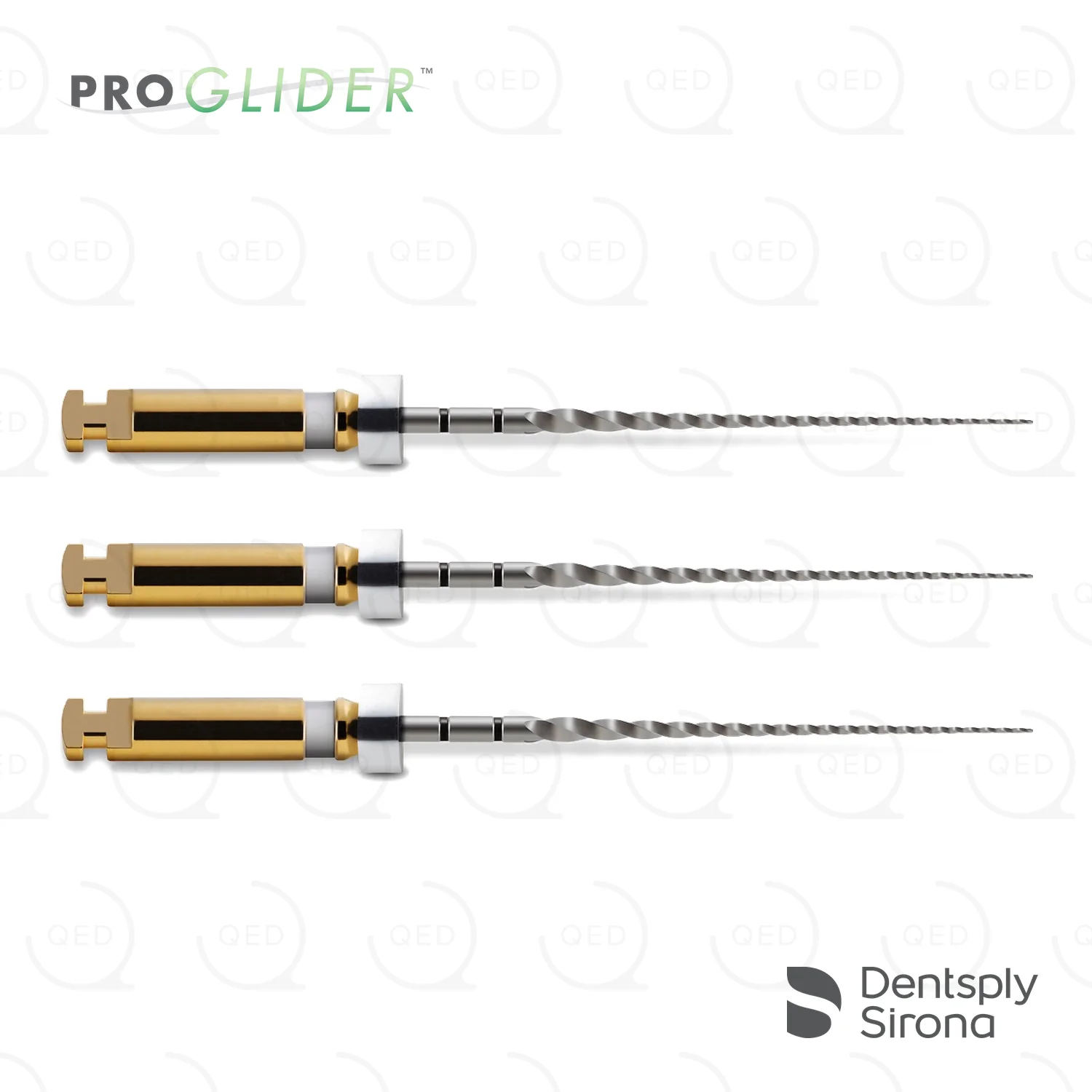
proglider® · 16/.02 · 25 mm · 3 files
glide pathcurved canalsone file to lengthbefore shaping
dentsply sirona designed proglider® to do in one rotary file what a sequence of hand files used to do before shaping. an independent micro-ct study put that to the test and found it transported the canal significantly less than stainless steel k-files, while taking the least time of the three methods compared.
| 1 file to length | 16/.02 tip, apical taper | m-wire niti alloy |
this pack: proglider® rotary glide path file, iso size 16, .02 variable taper, 25mm (pack of 3) · sterile
ref a092322500103 · made by dentsply sirona (maillefer), switzerland
› one instrument for the whole glide path. dentsply sirona: "proglider’s unique shape simplifies glide path creation, accomplishing the work of multiple files in one."
› an iso 16 tip on a variable progressive taper – .02 at the tip, widening steadily along the blade. dentsply contrast that with constant .02 glide path files: the variable design "facilitates an expanded coronal preflaring for shaping files to follow." one size only, and it carries a white ring, so there is nothing to select on the tray.
› cut from m-wire® niti, which dentsply sirona describe as "proven to provide flexibility & high resistance against cyclic fatigue."
› supplied sterile in a blister of three, single patient use.
› runs on any endodontic motor at 300 rpm, continuous rotation, torque set between 2 and 5.2 ncm.
› three lengths on the same geometry – proglider® 21 mm and proglider® 31 mm sit beside this one.
zheng and colleagues compared glide paths cut with hand k-files, with pathfile® and with proglider in sixty mesial canals of extracted mandibular first molars, scanning each canal three times by micro-ct. both engine-driven files transported the canal significantly less than the k-files at every level measured, and both extruded less debris apically. proglider had the shortest working time of the three; the k-files had the longest. (zheng l et al., bmc oral health 2018 – ex vivo, micro-computed tomography, nanjing medical university, no competing interests declared.)
a separate randomised clinical trial in 240 patients, treated by four specialists, measured postoperative pain after the glide path was cut three different ways. patients in the proglider group and the r-pilot® group reported significantly less pain than those whose glide path was cut with stainless steel k-files, and there was no significant difference between the two engine-driven files. (keskin c et al., international endodontic journal 2019 – randomised clinical trial.)
dentsply sirona separately publish a 40% reduction in glide path time against multiple hand files. that one is their own measurement – the brochure footnotes it "internal testing. data on file" – not a published result.
| proglider® | stainless steel k-files | |
| instruments to length | one | a sequence, typically three |
| canal transportation | significantly less at all levels | reference group |
| apically extruded debris | less | reference group |
| working time | shortest of the three tested | longest of the three |
| postoperative pain | significantly less | reference group |
the first four rows are zheng, and describe extracted teeth. the last is keskin, and is the one measured in patients.
these are the manufacturer’s own directions, in their order. they are not a qed protocol.
1 straightline access. prepare straightline access to the canal orifice.
2 scout. explore the canal with a .010 hand file – c-pilot® 10, 25 mm is the house choice.
3 working length. establish it with an apex locator and/or a radiograph, and confirm patency and a smooth glide path.
4 irrigate. the directions say to irrigate the root canal "copiously and frequently during the procedure".
5 proglider to length. one or more passes, to full working length.
6 irrigate again. flush the expanded glide path.
7 reconfirm. check working length once more before the mechanised niti shaping files go in.
300 rpm, continuous rotation, torque 2–5.2 ncm, with light apical pressure. those are dentsply sirona’s figures. both motors we stock will run it: x-smart® pro+ with apex locator and vdw.silver® reciproc®.
does proglider replace the hand file entirely?
no, and the directions do not claim it does. step 2 still has you scout the canal with a .010 hand file and establish working length before proglider goes in. what it replaces is the sequence of progressively larger hand files that used to follow.
what does "variable progressive taper" actually mean?
the blade widens more towards the handle than a constant .02 file does. as a ratio, .02 means 0.02 mm of diameter gained per millimetre of length – the same figure written as a percentage is 2 per cent. cliff ruddle, who is closely associated with dentsply sirona and developed protaper, gives the progression as 2% to 8% and the diameter at d16 as 0.82 mm. dentsply publish the tip figure only.
can i use it before a reciprocating file as well as a rotary one?
dentsply sirona name both. their brochure says it "enhances the simplicity of the waveone solution" and, separately, that it is "an excellent choice when combined with protaper next". both are in the table below.
can the files be reused?
no – sterile, single patient use. dentsply’s own reasoning is practical: one file is doing the work of several, so it is asked to do more within a case.
how does it compare with r-pilot?
they answer the same question in different motions. proglider rotates continuously at 300 rpm; r-pilot® reciprocates and runs on the reciproc all setting, so a practice already on a reciprocating motor changes nothing to use it. the clinical trial above found no significant difference between them in postoperative pain.
| patency | c-pilot® 08, 25 mm · c-pilot® 10, 25 mm |
| lubricant | glyde™ file prep |
| irrigants | chlorax 5.25% · chlorax 2% · endo-solution 17% edta |
| delivery | navitip™ 29 ga, 25 mm · irriflex® 30g |
| activation | smartlite pro endoactivator® · vdw eddy® tips |
| shape | protaper next® x1, 25 mm · protaper gold® s1, 25 mm · waveone® gold primary, 25 mm |
| obturate | ah plus® paste · ah plus jet® · neosealer® ezflo, 25 mm tips |
| coronal seal | sdr® flow+ refill universal – 4 mm bulk increment, one cure |
on the sealer, resin or bioceramic is a real choice of technique rather than a ranking – we carry both because both are right in different hands. ah plus® is dentsply sirona’s own and the epoxy sealer every other one is measured against; neosealer® ezflo is premixed, and its 29 gauge cannulas place sealer in the apical third rather than wiping it down the coronal walls.
| pathfile® assorted, 25 mm | rotary, three files in sequence – 013, 016 and 019, all at a constant .02 taper. |
| r-pilot®, 25 mm | reciprocating, one file, iso 12.5 at a constant 4% taper, on the reciproc all setting. |
| waveone® gold glider, 25 mm | reciprocating, one file, matched to the waveone® gold sequence. |
› proglider® brochure (pdf, 1.0 mb, dentsply sirona) – the geometry, the motor settings and the product range.
the current instructions for use are held by dentsply sirona and are available on request.
proglider® rotary glide path file · iso 16 tip, white · .02 apical taper, variable and progressive along the blade · m-wire® niti · 25 mm · sterile, single patient use · blister of 3 · 300 rpm, 2–5.2 ncm, continuous rotation · ref a092322500103

proglider® · 16/.02 · 31 mm · 3 files
glide pathcurved canalsone file to lengthbefore shaping
long canals are where a glide path earns its keep, and also where the scouting step gets awkward, because the hand file has to reach the same length the rotary file will. proglider® in 31 mm handles the second half of that job with one instrument. the first half needs a hand file long enough to match, and there is a note below on why that matters more here than on the shorter lengths.
| 1 file to length | 16/.02 tip, apical taper | m-wire niti alloy |
this pack: proglider® rotary glide path file, iso size 16, .02 variable taper, 31mm (pack of 3) · sterile
ref a092323100103 · made by dentsply sirona (maillefer), switzerland
› one instrument for the whole glide path. dentsply sirona: "proglider’s unique shape simplifies glide path creation, accomplishing the work of multiple files in one."
› an iso 16 tip on a variable progressive taper – .02 at the tip, widening steadily along the blade. dentsply contrast that with constant .02 glide path files: the variable design "facilitates an expanded coronal preflaring for shaping files to follow." one size only, and it carries a white ring, so there is nothing to select on the tray.
› cut from m-wire® niti, which dentsply sirona describe as "proven to provide flexibility & high resistance against cyclic fatigue."
› supplied sterile in a blister of three, single patient use.
› runs on any endodontic motor at 300 rpm, continuous rotation, torque set between 2 and 5.2 ncm.
› three lengths on the same geometry – proglider® 21 mm and proglider® 25 mm sit beside this one.
zheng and colleagues compared glide paths cut with hand k-files, with pathfile® and with proglider in sixty mesial canals of extracted mandibular first molars, scanning each canal three times by micro-ct. both engine-driven files transported the canal significantly less than the k-files at every level measured, and both extruded less debris apically. proglider had the shortest working time of the three; the k-files had the longest. (zheng l et al., bmc oral health 2018 – ex vivo, micro-computed tomography, nanjing medical university, no competing interests declared.)
a separate randomised clinical trial in 240 patients, treated by four specialists, measured postoperative pain after the glide path was cut three different ways. patients in the proglider group and the r-pilot® group reported significantly less pain than those whose glide path was cut with stainless steel k-files, and there was no significant difference between the two engine-driven files. (keskin c et al., international endodontic journal 2019 – randomised clinical trial.)
dentsply sirona separately publish a 40% reduction in glide path time against multiple hand files. that one is their own measurement – the brochure footnotes it "internal testing. data on file" – not a published result.
| proglider® | stainless steel k-files | |
| instruments to length | one | a sequence, typically three |
| canal transportation | significantly less at all levels | reference group |
| apically extruded debris | less | reference group |
| working time | shortest of the three tested | longest of the three |
| postoperative pain | significantly less | reference group |
the first four rows are zheng, and describe extracted teeth. the last is keskin, and is the one measured in patients.
these are the manufacturer’s own directions, in their order. they are not a qed protocol.
1 straightline access. prepare straightline access to the canal orifice.
2 scout. explore the canal with a .010 hand file – an iso 010 hand file long enough to reach working length in a 31 mm canal is the house choice.
3 working length. establish it with an apex locator and/or a radiograph, and confirm patency and a smooth glide path.
4 irrigate. the directions say to irrigate the root canal "copiously and frequently during the procedure".
5 proglider to length. one or more passes, to full working length.
6 irrigate again. flush the expanded glide path.
7 reconfirm. check working length once more before the mechanised niti shaping files go in.
a note specific to 31 mm. step 2 needs a hand file that reaches working length, and the c-pilot® range stops at 25 mm. on this length, take the requirement from the directions – an iso 010 – and use a 31 mm hand file. a 25 mm file would be shorter than the canal, so we have not linked one here.
300 rpm, continuous rotation, torque 2–5.2 ncm, with light apical pressure. those are dentsply sirona’s figures. both motors we stock will run it: x-smart® pro+ with apex locator and vdw.silver® reciproc®.
does proglider replace the hand file entirely?
no, and the directions do not claim it does. step 2 still has you scout the canal with a .010 hand file and establish working length before proglider goes in. what it replaces is the sequence of progressively larger hand files that used to follow.
what does "variable progressive taper" actually mean?
the blade widens more towards the handle than a constant .02 file does. as a ratio, .02 means 0.02 mm of diameter gained per millimetre of length – the same figure written as a percentage is 2 per cent. cliff ruddle, who is closely associated with dentsply sirona and developed protaper, gives the progression as 2% to 8% and the diameter at d16 as 0.82 mm. dentsply publish the tip figure only.
can i use it before a reciprocating file as well as a rotary one?
dentsply sirona name both. their brochure says it "enhances the simplicity of the waveone solution" and, separately, that it is "an excellent choice when combined with protaper next". both are in the table below.
can the files be reused?
no – sterile, single patient use. dentsply’s own reasoning is practical: one file is doing the work of several, so it is asked to do more within a case.
how does it compare with r-pilot?
they answer the same question in different motions. proglider rotates continuously at 300 rpm; r-pilot® reciprocates and runs on the reciproc all setting, so a practice already on a reciprocating motor changes nothing to use it. the clinical trial above found no significant difference between them in postoperative pain.
| patency | an iso 008 or 010 hand file in a 31 mm length – the c-pilot® range stops at 25 mm |
| lubricant | glyde™ file prep |
| irrigants | chlorax 5.25% · chlorax 2% · endo-solution 17% edta |
| delivery | navitip™ 29 ga, 25 mm · irriflex® 30g |
| activation | smartlite pro endoactivator® · vdw eddy® tips |
| shape | protaper next® x1, 31 mm · protaper gold® s1, 31 mm · waveone® gold primary, 31 mm |
| obturate | ah plus® paste · ah plus jet® · neosealer® ezflo, 25 mm tips |
| coronal seal | sdr® flow+ refill universal – 4 mm bulk increment, one cure |
on the sealer, resin or bioceramic is a real choice of technique rather than a ranking – we carry both because both are right in different hands. ah plus® is dentsply sirona’s own and the epoxy sealer every other one is measured against; neosealer® ezflo is premixed, and its 29 gauge cannulas place sealer in the apical third rather than wiping it down the coronal walls.
| pathfile® assorted, 31 mm | rotary, three files in sequence – 013, 016 and 019, all at a constant .02 taper. |
| r-pilot®, 31 mm | reciprocating, one file, iso 12.5 at a constant 4% taper, on the reciproc all setting. |
| waveone® gold glider, 31 mm | reciprocating, one file, matched to the waveone® gold sequence. |
› proglider® brochure (pdf, 1.0 mb, dentsply sirona) – the geometry, the motor settings and the product range.
the current instructions for use are held by dentsply sirona and are available on request.
proglider® rotary glide path file · iso 16 tip, white · .02 apical taper, variable and progressive along the blade · m-wire® niti · 31 mm · sterile, single patient use · blister of 3 · 300 rpm, 2–5.2 ncm, continuous rotation · ref a092323100103


clean stand · instrument stand · dentsply sirona
the small instruments are the ones that go missing on a tray. clean stand holds root canal preparation and obturation instruments upright in a sponge, where they are easy to see, identify and pick up during treatment. an internal receptacle takes disinfectant solution, and an outer cylinder covers the sponge.
this pack: 1 × clean stand with 1 sponge · replacement sponges: clean stand sponges (25) · mfr code a268p00000000
made by dentsply sirona
| purpose | dentsply sirona: “to display root-canal preparation instruments or root-canal obturation instruments in order to ease their prehension” |
| in view | easy visualisation and identification of instruments during the procedure |
| internal receptacle | designed for disinfectant solution |
| two cylinders | a conical upper section on the internal cylinder, and an external cylinder that covers the sponge |
| sponges | clean stand sponges (25) |
how do i clean it between patients?
follow dentsply sirona’s instructions for use, which cover reprocessing. we do not reproduce them here.
| replacement sponges | clean stand sponges (25) |
| silicone stops | silicone stops dispenser · dentsply sirona |
| hand files | vdw c-pilot® assorted, 25 mm · the house hand file |
| file lubricant | glyde™ file prep · dentsply sirona |
clean stand · endodontic instrument stand · sponge holder · receptacle for disinfectant solution · dentsply sirona · ref a268p

endo 3dp™ · #03 upper right first molar · pre-accessed
how do you teach mb2 when nobody can see what the file is doing? every extracted molar is a lottery, and the one tooth in the box with a teachable mb2 gets used once. the endo 3dp #03 is printed from scan data, so the same anatomy arrives every time – a three-rooted maxillary first molar with four canals, two of them in the mesiobuccal root. because the body is see-through, the isthmus, the lateral canal and the fin are visible from outside the tooth while the instrument is still in the canal.
this item: 1 × endo 3dp #03, upper right first molar (ur6), supplied pre-accessed
made by acadental, usa · mfr code 3d_ae601a_03rl
| four canals | three roots, four canals, two of them in the mesiobuccal root – the anatomy the mb2 lesson needs |
| isthmus and fin | acadental notes experience will be gained navigating an isthmus, a lateral canal and a fin |
| pre-accessed | the access cavity is already cut, so a session goes straight to cleaning and shaping |
| see-through | built so the whole canal system and pulp chamber stay visible while you work |
› printed from scan data – acadental's point is that only a select few natural teeth are teachable, and the same is true of printed ones; these are the ones they chose to standardise.
› radiolucent – this tooth is built to be looked at, not radiographed. if the exercise needs films, use the radiopaque x2 endo #03 instead.
› the mirror-image molar – #14 (ul6) covers the other side of the arch, with a different mix of easy and difficult roots.
can i take a radiograph of it?
no. the endo 3dp range is radiolucent, which is the trade-off for being see-through. for working-length films and post-obturation checks, the real-t endo #03 and x2 endo #03 are radiopaque throughout.
why is it already accessed?
so the tooth teaches one thing well. cleaning and shaping starts immediately, and the demonstrator's access is the same in every seat in the room. if cutting the access is the lesson, that is an x2 endo exercise.
does it mount in a typodont?
yes – the modupro endo kit takes replica or natural teeth in maxillary and mandibular modules. acadental changed the module generation in 2026 and the latest modules do not fit prior versions, so check which you have before ordering.
| mount it | modupro endo kit – modular typodont, magnetic modules |
| glide path | c-pilot assorted 25 mm – 006 to 015 for scouting mb2 |
| shape it | reciproc blue system kit – the 24-file teaching kit |
| irrigate | skini syringe with navitip sideport |
| fill it | reciproc blue gp assorted – cones matched to the files above |
| seal it | neosealer flo – bioceramic sealer, 20 flex flo tips |
endo 3dp™ #03 · upper right first molar ur6 · three roots, four canals · pre-accessed · radiolucent · single hardness · acadental · ref aca-3dae601a03

endo 3dp™ · #09 upper left central · pre-accessed
where does a trainee learn that the apex is rarely a single hole? not on a straight plastic canal. the endo 3dp #09 is a maxillary central incisor with multiple terminuses in the apical third and a lateral canal in the mid-root section – the anatomy that explains, in one tooth, why irrigation matters as much as instrumentation. the see-through body means the lateral canal either takes up sealer in front of the class, or it does not.
this item: 1 × endo 3dp #09, upper left central incisor (ul1), supplied pre-accessed
made by acadental, usa · mfr code 3d_ae601a_09rl
| multiple terminuses | the canal branches in the apical third rather than ending at one foramen |
| mid-root lateral | a lateral canal in the mid-root section – visible proof of what a sealer does or does not reach |
| single canal body | straightforward to instrument, so the lesson stays on irrigation and obturation |
| see-through | built so the whole canal system stays visible while you work |
› an obturation tooth – a single, accessible canal with complex apical exit is about as clear a demonstration of hydraulics as a bench exercise gets.
› pre-accessed – the cavity is cut, so the session starts at cleaning and shaping.
› the lower equivalent – if you want a small, awkward incisor canal instead, the x2 endo #25 lower central is the radiopaque option.
will the lateral canal actually fill?
that is the exercise, and it is why the tooth is see-through – you can compare a warm vertical technique against single cone and let the tooth settle the argument.
can i radiograph it?
no – the endo 3dp range is radiolucent. for films, use the radiopaque real-t endo #08 or x2 endo #09.
is one tooth enough for a course?
most course leaders pair an incisor with a molar – #19 or #30 – so delegates meet an easy case and a hard one in the same session.
| mount it | modupro endo kit – maxillary and mandibular modules |
| glide path | c-pilot assorted 21 mm – the shorter set for anteriors |
| shape it | reciproc minima assorted – single-file reciprocation |
| dry it | minima paper points – the points matched to those files |
| fill it | minima conform fit® gp – the matching cones |
| seal it | neosealer flo – bioceramic sealer with flex flo tips |
endo 3dp™ #09 · upper left central incisor ul1 · multiple apical terminuses · mid-root lateral canal · pre-accessed · radiolucent · acadental · ref aca-3dae601a09rl

endo 3dp™ · #11 upper left canine · pre-accessed
is a wide canal the easy case, or the one that catches people out? both, which is why the maxillary canine earns its place on a course bench. the endo 3dp #11 is a single-rooted upper left canine with a type i configuration and, in acadental's words, an extensive and challenging large canal space for intricate cleaning and obturation techniques. wide means the walls are hard to touch with a file, and a single cone rattles. everything a trainee needs to learn about hydraulics and vertical condensation happens here, in full view.
this item: 1 × endo 3dp #11, upper left canine (ul3), supplied pre-accessed
made by acadental, usa · mfr code 3d_ae601a_11rl
| type i canal | one canal, one foramen – a clean single-canal case with no branching to complicate the lesson |
| large canal space | acadental's own description: extensive and challenging, for intricate cleaning and obturation technique |
| longest root | the canine is the longest tooth in the arch – useful for length control and rubber-stop discipline |
| see-through | built so the whole canal and pulp chamber stay visible while you work |
› the condensation tooth – a wide canal is where warm vertical technique earns its keep, and where an unmatched single cone is exposed.
› pre-accessed – straight to cleaning and shaping, with the same starting cavity on every bench.
› for radiographs – the radiopaque x2 endo #11 is the same tooth position with films available.
is this an easy tooth or a hard one?
easy to find, hard to fill well. it is a good second exercise: the access and negotiation are undemanding, so attention goes to touching the walls and to a dense obturation.
our item name says incisor – is this a canine?
it is the canine. universal tooth #11 is the maxillary left canine, ul3 in palmer notation, and that is the tooth acadental supplies under this code.
what pairs with it on a course?
an anterior and a molar. #09 adds a lateral canal and multiple terminuses; #31 adds severe curvature and calcification.
| mount it | modupro endo kit – magnetic modules, replica or natural teeth |
| glide path | c-pilot assorted 25 mm – the length a canine needs |
| shape it | reciproc blue r25 25 mm – single-file reciprocation |
| dry it | reciproc blue paper points – matched to those files |
| fill it | reciproc blue gp assorted – the matching cones |
| condense it | penn endo plugger set – for the wide canal exercise |
endo 3dp™ #11 · upper left canine ul3 · single root, type i canal · large canal space · pre-accessed · radiolucent · acadental · ref aca-3dae601a11rl

acadental modupro® endo · modular endodontic typodont
undergraduate teachingdft and dct traininghands-on coursesaccess preparationworking lengthapex locator practiceradiographyobturation technique
how do you standardise an endodontic course when every extracted tooth is different? you stop relying on extracted teeth. the modupro endo is acadental's modular endodontic typodont: maxillary and mandibular modules that take replica or natural teeth, attach magnetically to a carrier tray, and come out again when the exercise is finished. everyone in the room works on identical anatomy, films are comparable across a cohort, and the bench resets between sessions in minutes rather than an afternoon.
| 2 arches | magnetic module mount | os3 compatible |
this kit: modupro endo modular typodont, for use with replica or natural teeth
made by acadental, usa
“modular typodont with maxillary and mandibular modules for use with replica or natural teeth. modules attach magnetically to the carrier tray and are compatible with the modupro os3 system. improved radiographic clarity and wider sockets for maxillary first molars enhance access and realism.”
acadental, modupro endo product specification, item mp_et120
| modular | maxillary and mandibular modules that lift on and off the carrier tray, so a bench resets between exercises |
| magnetic mount | modules attach magnetically – no screws, no clamping, and the same seating position every time |
| replica or natural | takes acadental replica teeth or extracted natural teeth, so a department can use both |
| clearer radiographs | acadental cite improved radiographic clarity over the previous generation |
| wider molar sockets | wider sockets for maxillary first molars – better access and, acadental say, more realism |
| os3 compatible | works with the modupro os3 system, so a department already on os3 is not starting again |
1 seat the modules. maxillary and mandibular modules drop onto the magnetic carrier tray in a fixed position, so every bench in the room presents the same arch.
2 set the tooth. acadental supply fixing gel for stabilising a replica or natural tooth in its socket. teeth already carried in a breakaway insert, such as the real-t endo #14 with insert, snap in without it.
3 set up the apex locator. acadental supply conductive apex putty and apex locator bars for use with an electronic apex locator – the conductive path that lets a bench model give a reading at all.
4 work and radiograph. access, length, shaping and obturation on radiopaque teeth such as real-t endo or x2 endo, then compare films across the cohort.
› check your generation before ordering. acadental state plainly that the latest generation modules are not compatible with prior versions. if your department bought modupro endo before 2026, tell us what you have and we will confirm what fits.
› teeth are bought separately. the kit is published as being for use with replica or natural teeth, not as supplying them – which is the point, because it lets one typodont serve an undergraduate cohort and a postgraduate course.
› electronic length and film, side by side. the apex locator bars exist so a student can take a reading and a radiograph of the same canal and be asked why they disagree.
does it come with teeth?
no. acadental publish the modupro endo as a typodont for use with replica or natural teeth. choose the teeth to match the exercise: endo 3dp for see-through shaping practice, real-t endo for radiographable undergraduate work, x2 endo where access and film realism matter.
will my existing modules fit?
only if they are the same generation. acadental changed the modules in 2026 and the new ones do not fit prior versions. ask us before ordering rather than after.
can we use extracted teeth in it?
yes – the sockets and fixing gel are published for replica or natural teeth, which is useful for a department that has a consented extracted-tooth bank as well as a teaching budget.
what gets used up?
the mounting materials, and eventually the modules themselves once sockets have been loaded and unloaded through enough courses. the modupro endo refill kit replaces both as a set.
is it worth it for a small practice?
if one or two people are learning, loose teeth in the hand are cheaper. the typodont earns its place when the exercise is access angle, radiography, or teaching several people the same case at once.
| replacements | modupro endo refill kit – modules and mounting materials |
| see-through teeth | endo 3dp #19 – pre-accessed, ~23 mm working lengths |
| undergraduate teeth | real-t endo #08 – radiopaque, fits the 07-12 module |
| access training | x2 endo #30 – dual hardness, enamel-like crown |
| mounted tooth | real-t endo #14 with insert – snaps straight into the module |
| apex locator | x-smart pro+ with integrated apex locator – motor and locator |
| shape it | reciproc blue system kit – 24 files for a teaching bench |
| irrigate | skini syringe with navitip sideport |
modupro® endo kit · modular endodontic typodont · maxillary and mandibular modules · magnetic carrier tray · replica or natural teeth · modupro os3 compatible · teeth not included · acadental · ref aca-mp_e120mqrpc

real-t-endo™ · #19 lower left first molar · radiopaque
if you could only buy one training molar, which should it be? the lower first molar, and acadental say so plainly: outstanding for practising complete root canal treatment, as this tooth is one of the most frequent in need of endodontic care. the real-t endo #19 has two roots, with two canals in the mesial root and one in the distal – the layout that turns up again and again in a uk practice. it radiographs completely, so a full case can be taught end to end: length, cone fit, final film.
this item: 1 × real-t endo #19, lower left first molar (ll6), radiopaque
made by acadental, usa · mfr code rt_ae401_19
| two mesial canals | mesiobuccal and mesiolingual in one root – the skill that separates two-canal from three-canal work |
| one distal canal | a findable distal canal, so the exercise is about doing three canals properly |
| the commonest case | acadental's own reasoning for the tooth – it is the one most frequently in need of endodontic care |
| radiographs fully | acadental: the entire tooth can be radiographed |
› a complete case in one tooth – access, three canals, working-length film, obturation and a final radiograph, all on a tooth students will meet in their first year of practice.
› the harder version – endo 3dp #19 adds pronounced secondary curvature, an apical isthmus and a second distal canal – but it is see-through, not radiographable.
› the upper counterpart – pair it with #03 so a cohort meets an mb2 as well.
do the two mesial canals join?
acadental publishes two canals in the mesial root and one in the distal, and does not describe a merge. if a specified apical configuration matters for your teaching, the x2 endo #30 lower first molar is documented in more detail.
how many per student?
one per attempt. there is no published reprocessing protocol, and a filled canal cannot be re-taught.
can we take working-length films in the typodont?
yes – that is what the modupro endo module is built for, and acadental supplies conductive apex putty and locator bars so the electronic reading can be compared with the film.
| mount it | modupro endo kit – mandibular module and mounting materials |
| find the length | x-smart pro+ with apex locator – compare locator against film |
| glide path | c-pilot assorted 21 mm – patency before rotation |
| shape it | reciproc blue system kit – 24 files for a teaching bench |
| dry and fill | reciproc blue paper points and matching gp |
| seal it | neosealer flo – radiopaque bioceramic sealer |
real-t-endo™ #19 · lower left first molar ll6 · two mesial canals, one distal · radiopaque throughout · from ct data · acadental · ref aca-rt_ae401_19

real-t-endo™ · #29 lower right second premolar · radiopaque
where do you learn continuous wave without wasting a molar? on a single canal with an honest taper and a real apical constriction. acadental describe the real-t endo #29 as constricted in the apical area with an ideally tapered canal, making it a great tooth for vertical condensation or continuous wave technique. one canal, one length, and a full radiograph at the end that shows whether the down-pack reached the apical third and whether the backfill has voids.
this item: 1 × real-t endo #29, lower right second premolar (lr5), radiopaque
made by acadental, usa · mfr code rt_ae401_29
| apical constriction | a defined stop for the down-pack, which is what makes a heat technique teachable |
| ideal taper | acadental's wording – a continuously tapering canal that a plugger can be seated in |
| single canal | one canal to fill, so the assessment is about obturation quality and nothing else |
| radiographs fully | acadental: the entire tooth can be radiographed – voids and short fills show up |
› the obturation tooth – the range's designated tooth for vertical condensation and continuous wave, rather than a molar borrowed for the job.
› pluggers matter here – a heat carrier that binds 5 mm from length is the whole technique, and this canal is built to accept one.
› compare techniques – run single cone against warm vertical on two of these and radiograph both. the films settle it.
can i use a carrier-based system instead?
yes – a tapered single canal is also a fair test of carrier obturation, and the radiograph will show the same voids and extrusions it would clinically.
why a premolar rather than an incisor?
because the canal is narrower and the constriction tighter, so heat and pressure behave more like a real case. #08 is the easier single canal if you want a gentler start.
which sealer for a teaching bench?
something radiopaque and forgiving. neosealer flo shows clearly on the film and behaves consistently across a room of students.
| mount it | modupro endo kit – modular typodont, magnetic modules |
| shape it | reciproc blue r25 25 mm – one file to a matched shape |
| dry it | reciproc blue paper points – matched to those files |
| fill it | reciproc blue gp assorted – the matching cones |
| down-pack | penn endo plugger set – for warm vertical practice |
| backfill | obtura iii max kit – needles and gutta percha included |
real-t-endo™ #29 · lower right second premolar lr5 · apical constriction, ideal taper · for vertical condensation and continuous wave · radiopaque · acadental · ref aca-rt_ae401_29

x2 endo™ · #11 upper left canine · dual hardness
where does a single cone stop being good enough? in a canine. acadental describe the x2 endo #11 – the maxillary cuspid – as having an extensive and challenging large space for intricate cleaning and obturation techniques. a wide canal is easy to negotiate and hard to touch: files skate down the middle, and a cone that fits the apex rattles everywhere above it. because the tooth radiographs like an extracted one, the resulting voids are visible on the film rather than taken on trust.
this item: 1 × x2 endo #11, upper left canine (ul3), radiopaque
made by acadental, usa · mfr code 3d_ae601x2_11
| large canal space | acadental's own description: extensive and challenging, for intricate cleaning and obturation |
| longest tooth | the canine is the longest in the arch – length control and stop discipline are part of the exercise |
| voids show | radiopaque throughout, so an incomplete fill is visible on the post-operative film |
| dual hardness | distinct enamel and dentin layers – acadental recommend a diamond bur for access |
› the condensation tooth – a wide canal is where warm vertical technique earns its place, and where single cone is exposed.
› our item name says incisor – it is the canine. universal tooth #11 is the maxillary left canine, ul3 in palmer notation, and acadental call it the maxillar cuspid.
› the see-through version – endo 3dp #11 shows the same large canal from outside, pre-accessed, but does not radiograph.
is a wide canal an easy case?
easy to reach length, hard to clean and hard to fill. it is the ideal second or third exercise: negotiation is not the obstacle, so attention goes to wall contact, irrigation and a dense fill.
single cone or warm vertical?
run both, on two teeth, and radiograph them side by side. that comparison is the reason to buy a canine rather than another molar.
which sealer suits a wide canal?
one that flows and shows. neosealer flo is radiopaque and consistent across a teaching bench.
| mount it | modupro endo kit – magnetic modules, both arches |
| glide path | c-pilot assorted 25 mm – the length a canine needs |
| shape it | reciproc blue r25 25 mm – single-file reciprocation |
| dry and fill | reciproc blue paper points and matching gp |
| down-pack | penn endo plugger set – for the wide-canal exercise |
| backfill | obtura iii max kit – needles and gutta percha included |
x2 endo™ #11 · upper left canine ul3 · large, challenging canal space · dual hardness · radiopaque · acadental · ref aca3d_ae601x2_11

neoputty® · avalon biomed · 0.5 g syringe
nobody's clinical result was ever improved by the mixing. powder, gel, glass slab, consistency judged by eye, working time already ticking – every step is a chance for the material to leave the pad different from the way it left the jar. neoputty® arrives ready. you dispense what the cavity needs, place it, and the variable you were managing at the bench is simply not there.
| 97.1% clinical, 12 mo | 92.8% radiographic | 1 hr+ working time |
this pack: 0.5 g neoputty® premixed bioceramic putty, syringe delivery · about six doses at the 0.075 g avalon quote for an anterior pulpotomy
made by avalon biomed · 3-year shelf life, and it does not dry out between uses
most of what gets claimed for bioceramics comes from cell culture and extracted teeth. neoputty® has something almost nothing else in this category has: a randomised controlled trial in patients. pediatric dentistry, 2023 – 70 primary molars in 42 children, twelve months, against neomta® 2, assessed by two independent evaluators.
| clinical success | 97.1% (34 of 35) for neoputty®, against 100% (34 of 34) for neomta® 2 |
| radiographic | 92.8% (32 of 35) for neoputty®, against 94.1% (32 of 34) for neomta® 2 |
| authors' finding | neoputty® showed comparable success to mineral trioxide aggregate over twelve months |
“neoputty® showed a comparable success to mineral trioxide aggregate in primary molar pulpotomies over 12 months.”
alqahtani as, alsuhaibani nn, sulimany am, bawazir oa. pediatric dentistry 2023;45(3):240–244.
that is a primary molar result at twelve months, and it does not claim superiority over mta. what it establishes is the question that actually matters about a premixed material: the convenience costs you nothing measurable.
the grey shadow older mtas leave in an anterior tooth comes from bismuth oxide, the traditional radiopacifier. avalon use tantalum oxide (tantalite) instead and market neoputty® as never discolouring. we would rather give you the measured figures – there are now two independent ones.
independent spectrophotometry on 96 extracted anterior teeth, followed to twelve months, put neoputty in saline at a colour change of delta e 2.26 – alongside biodentine™ at 2.18, and far below proroot® mta contaminated with blood at 7.42. small, and measured rather than asserted – which is more than the category usually offers. the same study makes a point no radiopacifier can fix: blood contamination worsened colour stability in every material tested. achieve haemostasis first, whatever you are placing.
özüdogru s, düzyol e, türkoglu kayaci s, aly ahmed hm, arslan h. journal of clinical pediatric dentistry 2026;50(1):236–244.
a second group looked at what your irrigants do to it. testing biodentine™ and neoputty against edta, chlorhexidine, hedp and sodium hypochlorite, they found biodentine™ discoloured more against every solution except distilled water, and concluded neoputty “could be an appropriate material in aesthetic areas”. the takeaway is about protocol: chlorhexidine and sodium hypochlorite discoloured both materials most.
usta sn, keskin c. restorative dentistry & endodontics 2024;49:e25.
| chemistry | hydraulic calcium silicate – tricalcium and dicalcium silicate, the same family as mta, supplied premixed as a putty |
| radiopacifier | tantalum oxide (tantalite), not bismuth oxide – which is what removes the classic bismuth discolouration mechanism |
| delivery | syringe. dispense what the cavity takes and recap – no slab, no spatula, no discarded excess from a batch mixed too large |
| sets in ~5 hours | in vivo, in the presence of moisture – but it is immediately washout resistant, so it stays where you put it while you finish the procedure |
| 8.1 mm al | radiopacity avalon describe as the highest in the premixed bioceramic putty class – comfortably above the iso 6876 minimum of 3 mm |
| cytocompatibility | comparable to neomta® plus and mta angelus® on human dental pulp cells (lozano-guillén et al, clin oral investig 2022) |
because it is water-free until it meets the tooth, neoputty® gives over an hour of working time and sets in about five hours in vivo. it will not go off on the pad while you deal with something else – and it needs contact with moisture, from apical tissue, tubules or pulp, to set at all.
the kits contain no applicator tip, which surprises people. express what you need onto a pad and carry it with what you already use – avalon suggest a plastics instrument, a hollenbach, an amalgam carrier or an mta carrier. for apexification, a reversed paper point guides the putty to the apex.
on thickness, avalon are specific: at least 1.5 mm for a pulpotomy, liner, base or pulp cap, and a 3–5 mm apical barrier for apexification.
avalon list twelve indications. the ones that bring people to the material are pulpotomy – what the randomised trial tested – direct and indirect pulp capping, cavity liner and base, apexogenesis and apexification, perforation repair, resorption, root-end filling and obturation. read the instructions for use before each new application.
this is the 0.5 g syringe – the only size avalon supply, and the sensible way in. if it becomes routine, we sell it in twos and threes at a lower cost per gram – sealed spares, not a bigger syringe, which is the better arrangement when shelf life runs from opening.
one honest reason to choose the powder-and-gel neomta® 2 instead: you can mix it thin, from putty to a sealer-like consistency, which a premixed putty cannot do. neoputty® answers with radiopacity – 8.1 mm al against 6.5, about 25% higher on avalon's own comparison.
| multipacks | two syringes (1.0 g) and three (1.5 g) · better value per gram |
| mixable sibling | neomta® 2 1.0 g kit · putty or sealer consistency from one powder |
| try both | neosealer® flo & neoputty® kit · sealer and putty in one box |
| carrying it | vista mta carrier · for root-end and perforation work |
| obturating | neosealer® flo · the matching bioceramic sealer |
| between visits | bio-c® temp · ready-to-use intracanal dressing |
| isolation | oraseal® caulking · a dry field before any calcium silicate |
is a premixed putty really as good as mixing it myself?
on the one indication tested in a randomised trial, yes – 97.1% against 100% clinical success at twelve months, one tooth in thirty-five. what you lose is the ability to vary the consistency; what you gain is that every increment is identical, and over an hour to place it.
how many doses will 0.5 g give me?
about six, on avalon's figure of 0.075 g for a typical anterior pulpotomy. scale it to your own work – a 3–5 mm apical barrier for apexification is a much larger increment than a pulp cap.
can i use it in a primary tooth with a permanent successor?
check the instructions for use for the indication in front of you. avalon's bioceramic sealers are specifically contraindicated there; do not assume the putty's indications match the sealer's.
five hours to set – can i restore before then?
yes, and avalon say so directly: you can complete the restoration or cement a crown immediately after placing it. setting and washout resistance are different things – neoputty® is immediately washout resistant and, per avalon, dimensionally stable with zero shrinkage, so it stays put while the set completes.
neoputty® 0.5 gm kit · premixed bioceramic putty · tricalcium and dicalcium silicate · tantalite radiopacifier · 8.1 mm al · over 1 hr working time · sets ~5 hrs · 12 indications · avalon biomed · ref anpik

neoputty® · avalon biomed · 1.5 g
three sealed 0.5 g syringes, at the lowest cost per gram in the range. not one large syringe – three, which is the point. a multi-surgery practice can put one in each room; a single-surgery practice opens one and leaves two sealed. either way you are not discovering the syringe is empty halfway through a friday afternoon.
this pack: 3 × 0.5 g neoputty® syringes · 1.5 g total · about 20 doses at the 0.075 g avalon quote for an anterior pulpotomy
made by avalon biomed
| three syringes | the lowest cost per gram in the range, and each one sealed until you open it |
| same material | identical premixed bioceramic putty in identical 0.5 g syringes – only the count differs |
| 3-year shelf life | and it does not dry out between uses – so an opened syringe keeps working rather than becoming a race |
› the full story – the 0.5 g page carries the clinical trial data and the indication list.
› smaller – two syringes, 1.0 g, if three is more than a year's use.
› obturating too? neosealer® flo is the matching premixed bioceramic sealer.
is the biggest pack always the best buy?
only if you will use it inside the three-year shelf life. tell us roughly how many bioceramic repairs you do in a year and we will point you at the right one – though with three sealed syringes the risk is lower than it would be with one large one.
can i split it across surgeries?
yes – that is exactly what three separate syringes are for. one per room, each opened when that room needs it, rather than one syringe walking between surgeries.
neoputty® 1.5 gm kit · premixed bioceramic putty · 3 × 0.5 g syringes · tantalite radiopacifier · 8.1 mm al · 3-year shelf life · avalon biomed · ref anpik_3

neosealer® flo & neoputty® · combination kit
two different jobs, one chemistry – and two full kits, not a sampler. a premixed bioceramic sealer for filling the canal, and a premixed bioceramic putty for repairing what the canal opens onto: perforations, pulp caps, root ends. this is the standard neosealer® flo kit and the standard neoputty® kit boxed together, so neither is a cut-down trial size and neither runs out first. bought that way they cost less than buying the two separately.
this pack: two complete kits – the neosealer® flo kit (2.2 g · 20 flex flo tips™) and the neoputty® kit (0.5 g syringe)
made by avalon biomed
| sealer | neosealer® flo – premixed, about 30 minutes working time, sets on canal moisture |
| repair putty | neoputty® – premixed, comparable to mta in a randomised pulpotomy trial |
| two full kits | both complete retail boxes, not trial sizes – and less than buying them separately |
› read up on the sealer – the neosealer® flo page.
› read up on the putty – the neoputty® page carries the clinical trial data.
› narrow canals – if you shape conservatively, neosealer® ezflo and 29 ga delivery may suit you better than flo.
is this a starter kit?
it is the usual way in, but do not read "starter" as "sample". both boxes are the full retail kits – the same 2.2 g sealer and 0.5 g putty you would buy on their own.
can i get the same saving on larger sizes?
ask us. the bundle pairs the two entry kits; if you want the 4.4 g sealer with two putty syringes we will price it for you.
neosealer® flo & neoputty® kit · two complete kits · 2.2 g sealer with 20 flex flo tips™ · 0.5 g repair putty · avalon biomed · ref anspk

gutta-smart™ · electric heat plugger · large
warm vertical obturationdown packsearing off cones
heat pluggers wear out, and dentsply sirona say so. they write that all electric heat pluggers “will gradually lose their heating efficiency over time”, and that a deformed or oxidised one should be replaced. this is the large – 60/.06, blue – for the pack handpiece.
this pack: gutta-smart™ ehp tip, large · 60/.06 · one plugger
dentsply sirona · made in the usa for maillefer instruments holding sàrl, ballaigues, switzerland
| size | large 60/.06 · blue (dentsply sirona) |
| fits | gutta-smart™ pack handpiece · seats in any of four orientations |
| temperature | set on the base station, 100–400°c |
| reprocessing | pre-clean, then steam sterilise at 132°c before and after every treatment |
› never fire it in air. dentsply sirona: heating a plugger without contact with gutta-percha can damage it – the most common way to shorten its life.
› four seconds, no more. the directions limit a heated plugger to 4 seconds in the canal, to prevent thermal injury.
› let it cool before swapping. turn off, wait, then pull it straight out of the handpiece.
› dispose of in a sharps bin. as the directions ask, when it is retired.
which size do i need?
the kit ships with all three. dentsply sirona publish the sizes, not a canal-by-canal selection rule, so choose as you would any heat plugger. other sizes: small 40/.025 · medium 50/.05.
is it covered by the handpiece warranty?
no. dentsply sirona treat the pluggers as consumables, outside the 24-month handpiece warranty.
| handpiece and kit | gutta-smart™ warm vertical kit |
| backfill | cartridges 20g · 23g · 25g |
| master cones | conform fit® for waveone® gold · trunatomy® · protaper gold® · protaper next® · protaper ultimate® |
| sealer | ah plus® · neosealer® ezflo · proroot® bio sealer |
gutta-smart™ electric heat plugger, large · 60/.06 · blue · pack handpiece, 100–400°c · steam sterilisable 132°c · dentsply sirona · ref b00gsiq100lrg
gutta-smart™ · electric heat plugger · medium
warm vertical obturationdown packsearing off cones
heat pluggers wear out, and dentsply sirona say so. they write that all electric heat pluggers “will gradually lose their heating efficiency over time”, and that a deformed or oxidised one should be replaced. this is the medium – 50/.05, yellow – for the pack handpiece.
this pack: gutta-smart™ ehp tip, medium · 50/.05 · one plugger
dentsply sirona · made in the usa for maillefer instruments holding sàrl, ballaigues, switzerland
| size | medium 50/.05 · yellow (dentsply sirona) |
| fits | gutta-smart™ pack handpiece · seats in any of four orientations |
| temperature | set on the base station, 100–400°c |
| reprocessing | pre-clean, then steam sterilise at 132°c before and after every treatment |
› never fire it in air. dentsply sirona: heating a plugger without contact with gutta-percha can damage it – the most common way to shorten its life.
› four seconds, no more. the directions limit a heated plugger to 4 seconds in the canal, to prevent thermal injury.
› let it cool before swapping. turn off, wait, then pull it straight out of the handpiece.
› dispose of in a sharps bin. as the directions ask, when it is retired.
which size do i need?
the kit ships with all three. dentsply sirona publish the sizes, not a canal-by-canal selection rule, so choose as you would any heat plugger. other sizes: small 40/.025 · large 60/.06.
is it covered by the handpiece warranty?
no. dentsply sirona treat the pluggers as consumables, outside the 24-month handpiece warranty.
| handpiece and kit | gutta-smart™ warm vertical kit |
| backfill | cartridges 20g · 23g · 25g |
| master cones | conform fit® for waveone® gold · trunatomy® · protaper gold® · protaper next® · protaper ultimate® |
| sealer | ah plus® · neosealer® ezflo · proroot® bio sealer |
gutta-smart™ electric heat plugger, medium · 50/.05 · yellow · pack handpiece, 100–400°c · steam sterilisable 132°c · dentsply sirona · ref b00gsiq100med
gutta-smart™ · electric heat plugger · small
warm vertical obturationdown packsearing off cones
heat pluggers wear out, and dentsply sirona say so. they write that all electric heat pluggers “will gradually lose their heating efficiency over time”, and that a deformed or oxidised one should be replaced. this is the small – 40/.025, black – for the pack handpiece.
this pack: gutta-smart™ ehp tip, small · 40/.025 · one plugger
dentsply sirona · made in the usa for maillefer instruments holding sàrl, ballaigues, switzerland
| size | small 40/.025 · black (dentsply sirona) |
| fits | gutta-smart™ pack handpiece · seats in any of four orientations |
| temperature | set on the base station, 100–400°c |
| reprocessing | pre-clean, then steam sterilise at 132°c before and after every treatment |
› never fire it in air. dentsply sirona: heating a plugger without contact with gutta-percha can damage it – the most common way to shorten its life.
› four seconds, no more. the directions limit a heated plugger to 4 seconds in the canal, to prevent thermal injury.
› let it cool before swapping. turn off, wait, then pull it straight out of the handpiece.
› dispose of in a sharps bin. as the directions ask, when it is retired.
which size do i need?
the kit ships with all three. dentsply sirona publish the sizes, not a canal-by-canal selection rule, so choose as you would any heat plugger. other sizes: medium 50/.05 · large 60/.06.
is it covered by the handpiece warranty?
no. dentsply sirona treat the pluggers as consumables, outside the 24-month handpiece warranty.
| handpiece and kit | gutta-smart™ warm vertical kit |
| backfill | cartridges 20g · 23g · 25g |
| master cones | conform fit® for waveone® gold · trunatomy® · protaper gold® · protaper next® · protaper ultimate® |
| sealer | ah plus® · neosealer® ezflo · proroot® bio sealer |
gutta-smart™ electric heat plugger, small · 40/.025 · black · pack handpiece, 100–400°c · steam sterilisable 132°c · dentsply sirona · ref b00gsiq100sml

protaper ultimate® · treatment solution box
starting on protaper ultimatestandard sequencematched obturation
moving to protaper ultimate® means new files, and new matched points and cones to go with them. the treatment solution box puts the lot on one order: four 25 mm sequence packs, single packs of the early files, both obturation assortments and irrigation needles.
this pack: protaper ultimate® treatment solution box
dentsply sirona
| sequence packs | 4 × protaper ultimate® sequence, 25 mm (5) |
| single files | 1 × each: sx · slider 25 mm · shaper 25 mm · f1 25 mm · f2 25 mm (packs of 6) |
| obturation | 1 × conform fit® gp, f1–f3 assortment (60) · 1 × paper points, f1–f3 assortment (180) |
| irrigation | 2 × dentsply sirona side-vent polymer irrigation needles (5) |
contents as currently listed for this product. please check the box on arrival.
› built around the standard sequence. slider, shaper, f1, f2, f3 – dentsply sirona’s “1 slider-shaper-finishers sequence to cover a full range of anatomical situations”.
› spare singles on top. full packs of six of the slider, shaper, f1 and f2, plus an sx orifice opener.
› not in the box. f3 singles, fx and fxl, sealer and a coronal seal – linked below.
which motor does it need?
400 rpm and 4–5.2 ncm for every file in the range. dentsply sirona list a protaper ultimate® library among the x-smart® go’s presets; on the x-smart® pro+ it is set as a custom sequence, and on the vdw.silver® in a dr’s choice slot (vdw manual: up to 4.1 ncm).
is there a step-by-step?
yes – see downloads.
› protaper ultimate® step-by-step guide (pdf, 0.4 mb, dentsply sirona, 2021) – both sequences and the 20-step procedure. printed at launch: the smartlite pro endoactivator® it lists as coming soon is now in stock, and the sealer it names is no longer available.
| more finishers | f3 25 mm · fx 25 mm · fxl 25 mm |
| patency | c-pilot® 010, 25 mm · a small stainless hand file, as the sequence asks for when the slider will not reach |
| irrigants | chlorax 5.25% · endo-solution 17% edta |
| activation | smartlite pro endoactivator® |
| sealer | ah plus® · neosealer® ezflo, 25 mm tips · proroot® bio sealer |
| coronal seal | sdr® flow+ refill, universal |
| motor | x-smart® go · x-smart® pro+ · vdw.silver® reciproc® |
protaper ultimate® treatment solution box · 4 sequence packs 25 mm · sx, slider, shaper, f1, f2 singles · gp and paper point assortments · irrigation needles · dentsply sirona · ref b00ptults0kit
procedure kit · shape and rebuild
how many instruments and how many layers does a straightforward molar really need? a reciproc® blue r25 shapes most canals as a single reciprocating file, and sdr® flow+ rebuilds the access cavity in increments of up to 4 mm. this kit buys the two together: 30 files and 30 compules on one code, at the 25 mm length most molars need.
this kit: 5 × reciproc® blue r25 25 mm (30 files) · 2 × sdr® flow+ refill universal (30 compules)
made by vdw and dentsply sirona
| r25 at 25 mm | the single-file size that covers the majority of canals, in the length most molar work needs |
| glide path still applies | the reciproc ifu requires patency with a small hand instrument, and a glide path if the file stalls |
| 4 mm increments | sdr flow+ self-levels into the chamber and cures 20 s at 4 mm, capped by a universal composite |
| restorative, not obturation | sdr flow+ is a base and core build-up material – cones, points and sealer are separate |
› matched consumables matter. an r25 preparation wants r25 points and r25 cones – both linked below, and neither is in the box.
› you will still need an adhesive between the dentine and the build-up, and a curing light giving at least 550 mw/cm2 for the 4 mm figure to hold.
why r25 and not an assortment?
because the kit is built around the single-file case. where the anatomy needs a larger apical size, r40 blisters are bought separately rather than sitting unused in a bundle.
can i get the adhesive with it?
yes – while the offer runs, the reciproc blue, sdr flow+ and prime&bond kit is the same contents with a 4 ml bottle added free of charge.
| bond | prime&bond active® · 4 ml – the adhesive the kit does not include |
| dry | reciproc® paper points r25 · 144 – matched to the preparation these files cut |
| fill | reciproc® blue gutta percha r25 · 60 – the matching cone |
reciproc® blue and sdr® flow+ procedure kit · 30 r25 25 mm reciprocating files · 30 sdr flow+ universal compules · single-file shaping and 4 mm bulk fill build-up · vdw and dentsply sirona · ref b00rsdrr2ckit

trunatomy® · treatment solution box
starting on trunatomyfiles, points and conesone order
moving to trunatomy® means new files and, because the shapes are slim, new matched points and cones as well. the treatment solution box puts them on one order: sequence packs, single packs of every file from orifice modifier to medium, both obturation assortments and irrigation needles, all at 25 mm.
this pack: trunatomy® treatment solution box
dentsply sirona
| sequence packs | 4 × trunatomy® sequence, 3 files, 25 mm |
| orifice modifier | 2 × packs of 3, 16 mm |
| glide path and shaping | 2 × packs of 3 each, 25 mm: glider · small · prime · medium |
| obturation | 1 × conform fit® gutta-percha, assorted (60) · 1 × paper points, assorted (180) |
| irrigation | 2 × trunatomy® irrigation needle packs (5) – supplied in the box; for refills we stock dentsply sirona irrigation needles, 30g (40) |
contents of the uk box as supplied by qed.
› built around prime. dentsply sirona’s procedure always begins shaping with prime, with small and medium when the canal asks for them – the box carries all three.
› one setting for the lot. 500 rpm and 1.5 ncm for every file, and one motion: peck, never brush.
› not in the box. the large 46.02v, other lengths, sealer and a coronal seal – linked below.
which motor settings?
dentsply sirona give one setting for every trunatomy® file: 500 rpm and 1.5 ncm. set it on any of the three endo motors we stock – x-smart® go · x-smart® pro+ · vdw.silver® reciproc®.
is there a step-by-step?
dentsply sirona’s solution guide sets out a 16-step procedure. it is summarised on our trunatomy® prime 25 mm page; ask us for the card.
| larger canals | large 46.02v, 25 mm |
| scouting and patency | c-pilot® 010, 25 mm · for the iso 010 k-file scouting and patency steps |
| lubricant | glyde™ file prep |
| irrigants | chlorax 5.25% · endo-solution 17% edta |
| delivery | dentsply sirona irrigation needles, 30g (40) |
| activation | smartlite pro endoactivator® |
| sealer | ah plus® · neosealer® ezflo, 25 mm tips · proroot® bio sealer |
| coronal seal | sdr® flow+ refill, universal |
| motor | x-smart® go · x-smart® pro+ · vdw.silver® reciproc® |
› trunatomy® brochure (pdf, 0.7 mb, dentsply sirona, 06/2025) – the four shaping sizes, the product references and the published claims.
› trunatomy® solution guide (pdf, 0.1 mb, dentsply sirona, 06/2025) – the step-by-step technique at 500 rpm / 1.5 ncm, from access cavity to obturation.
› trunatomy® scientific manual (pdf, 0.7 mb, dentsply sirona, 12/2022) – the laboratory and clinical research behind the system.
› clinical case – dr jonathan cowie, bath (pdf, 0.2 mb, dentsply sirona) – long roots and a calcified system, reviewed at 14 months.
› trunatomy® clinical case collection (dentsply sirona uk website) – more cases, and the full case booklet to download.
trunatomy® treatment solution box · sequence packs · orifice modifier, glider, small, prime, medium · gp and paper point assortments · irrigation needles · 25 mm · dentsply sirona · ref b00tnmyts0kit

waveone® gold · treatment solution box · complete workflow
adopting the systemrestockingall four sizesmatched fill25 mm
the awkward part of changing system is never the technique. it is the shopping list: gliders in the right length, all four file sizes because the canal decides which one you need, cones that match the shapes those files cut, points that match the cones, and something to irrigate through. miss one line and the first case stalls. the treatment solution box is that list, assembled at the factory.
this kit: 4 × waveone® gold sequence blister · 2 × glider 25 mm (3) · 2 × small 25 mm (3) · 2 × primary 25 mm (3) · 2 × medium 25 mm (3) · 2 × large 25 mm (3) · 1 × conform fit® gp assorted (60) · 1 × paper points primary (180) · 2 × side-vent polymer irrigation needles (5)
made by dentsply sirona
| 6 gliders | 60 matched cones | 180 paper points |
six gliders, because every case begins with a glide path secured by hand and then expanded mechanically – dentsply's directions for use are explicit about that order, and no reciprocating system removes the step.
all four shaping sizes, in multiple packs. the primary shapes most canals; the small is there for the canal that will not let it pass, the medium and large for the apex that gauges wider. stocking only the primary is how a single-file system quietly becomes a three-appointment one.
sixty assorted conform fit® cones and 180 primary paper points, because the fill should belong to the shape that was cut. then ten side-vent irrigation needles, so the case is not held up by the one item nobody remembers to order.
every instrument in the box is 25 mm – the length most cases call for. the 21 and 31 mm singles are there for the short root and the long canine when they turn up.
kit contents per qed’s listing; lengths as supplied by dentsply sirona.
| glide path | 6 × waveone® gold glider, 015/.02v, 25 mm – reciprocating, same motor setting as the files |
| shaping | small 020, primary 025, medium 035 and large 045, all 25 mm, in multiple packs |
| alloy | gold heat-treated nickel-titanium throughout, pre-bendable (waveone® gold scientific manual) |
| obturation | 60 assorted conform fit® cones, made to the shapes these files prepare (dentsply sirona) |
| drying | 180 primary paper points, corresponding with the primary file |
| irrigation | 10 side-vent polymer needles |
| 1 | scout by hand. to at least an iso 010, confirm patency, verify a smooth reproducible path to a loose 010. hand files are not in the box – you will have them. |
| 2 | glide. the glider expands that secured path on the waveone setting. |
| 3 | shape. primary first. drop to small if it will not passively progress; step to medium or large if it reaches length loosely. |
| 4 | irrigate and dry. side-vent needles are in the box; the primary paper points confirm the canal is dry before anything is sealed. |
| 5 | fill. seat the assorted conform fit® cone that matches your finishing file, with your own sealer. |
› what is not in the box? a motor, hand files, irrigant and sealer. everything waveone® gold specific is here; the rest is what your surgery already runs on.
› do i need a particular motor? any reciprocating motor carrying the waveone setting – x-smart® pro+, x-smart® go, vdw.silver®reciproc® and vdw.gold®. one setting covers glider and files alike.
› is this only for practices new to the system? no – it is also the tidiest way to restock the whole range at once instead of chasing eight order lines.
› what do i reorder first? whatever your caseload actually spends – usually primary files and gliders, then points and cones.
| a motor | x-smart® pro+ with apex locator · vdw.silver®reciproc® · x-smart® go |
| file refills | primary · small · medium · large, all 25 mm |
| glider refills | 25 mm · 21 mm · 31 mm |
| other lengths | primary 21 mm · primary 31 mm |
| cone refills | conform fit® assorted (60) · primary (60) |
| point refills | paper points primary (180) |
| warm route | thermafil® for waveone® gold primary (6) |
| by the case | waveone® gold + sdr® flow+ kit · fifteen sterile procedure blisters |
waveone® gold treatment solution box · 6 gliders · shaping files in all four sizes · 60 conform fit® cones · 180 paper points · 10 side-vent needles · 4 sequence blisters · all instruments 25 mm · dentsply sirona · mfr code b00w1g0ts0kit
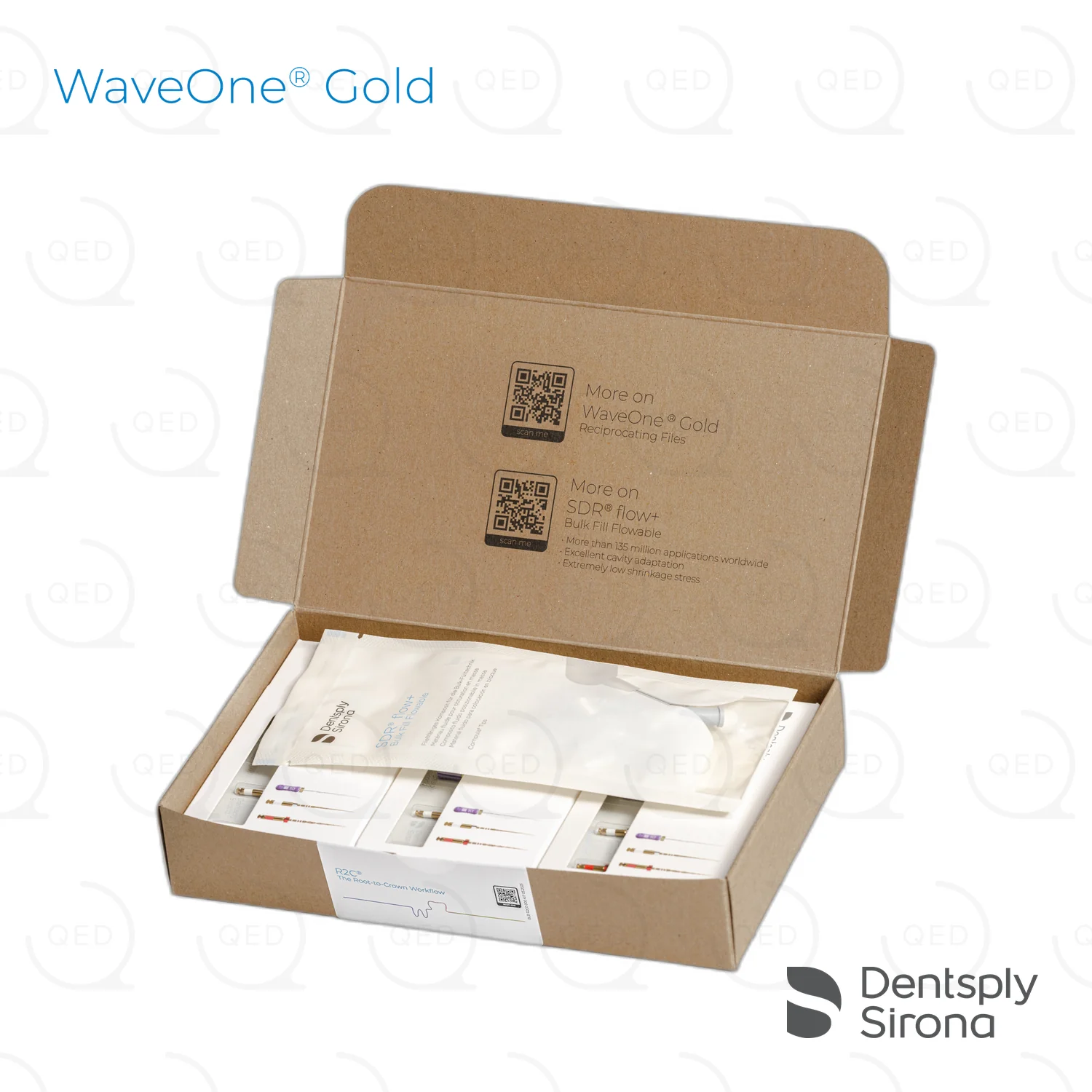
waveone® gold + sdr® flow+ · 15 procedure blisters
per-case costingscout, glide, shapepost-endodontic build-up
how much of your endodontic stock control is really cost control? counting part-used file packs across patients tells you very little. each blister here is one patient's instrument set – a #10 k-flexofile to scout, a gold glider to expand the glide path, a primary to shape – so the per-case figure is the invoice divided by fifteen. alongside them, sdr® flow+ for the restoration that finishes each case.
this kit: 15 × sterile procedure blisters – each holding 1 × #10 k-flexofile, 1 × waveone® gold glider and 1 × waveone® gold primary · 1 × sdr® flow+ refill universal, 15 × 0.25 g compula® tips
made by dentsply sirona
| 15 cases boxed | 15 compules | 4 mm bulk increment |
scout, glide, shape. dentsply's directions for use put a hand-file glide path first – to at least an iso 010, patency confirmed – which is why a k-flexofile is sealed in with the two reciprocating instruments rather than left to the drawer. nothing in the blister is optional.
one set per patient also settles a quieter question: every case starts factory-sterile, on instruments that have cut nothing else.
the root filling is not the end of the case; the coronal seal is. sdr® flow+ is a bulk-fill flowable base and core build-up material – not an obturation material – placed in increments up to 4 mm, self-levelling to the cavity floor. in a load-bearing cavity it is capped with your usual universal composite, per the dentsply sirona instructions for use. fifteen blisters, fifteen compules – one per case, so the box runs out evenly.
| per blister | #10 k-flexofile · waveone® gold glider · waveone® gold primary – sterile, single patient |
| alloy | glider and primary both gold heat-treated nickel-titanium, pre-bendable (waveone® gold scientific manual) |
| motion | reciprocating – one waveone setting for both instruments |
| restorative | 15 × sdr® flow+ universal compula® tips – base and core build-up, increments to 4 mm, capped in load-bearing cavities |
› not a complete case – sealer, cones, points and irrigant are separate. this kit covers shaping and the build-up.
› matched fill still applies – a primary preparation wants a primary cone and primary points.
› why bundle files with a restorative? because they are used in the same appointment. a shaped canal under a temporary dressing is not a finished case, and sdr® flow+ is indicated for the build-up that follows.
› what if the primary is the wrong size? then you have gauged properly, which is the point. drop to small or step up from shelf stock – the blister covers the standard case, not every case.
| other sizes | small · medium · large, all 25 mm |
| dry and fill | paper points primary (180) · conform fit® gp primary (60) |
| restorative refill | sdr® flow+ refill universal · 15 compula® tips |
| whole system | treatment solution box · every size, plus the matched fill |
| a motor | x-smart® pro+ with apex locator · vdw.silver®reciproc® · x-smart® go |
waveone® gold + sdr® flow+ kit · 15 sterile procedure blisters · #10 k-flexofile, gold glider and gold primary in each · 15 × sdr® flow+ universal compula® tips · reciprocating, one motor setting · dentsply sirona · mfr code b00wsdrr2ckit

gutta-smart™ · gutta-percha cartridges · 20 gauge · 10
warm vertical obturationbackfillsingle patient use
one cartridge, one patient, one heat cycle. each cartridge is a sealed dose of dentsply sirona’s low-temperature conform fit® gutta-percha for the flow handpiece – and the directions are unusually firm that it is “for single patient use only” and “cannot be reheated or reused.”
this pack: gutta-smart™ gutta percha cartridges, 20g · 10 cartridges per pack (dentsply sirona)
dentsply sirona · made in the usa for maillefer instruments holding sàrl, ballaigues, switzerland
| gauge | 20 gauge cannula · silver cannula, aluminium capsule |
| fits | gutta-smart™ flow handpiece · through the flow heater |
| flow settings | 130–160°c · flow rate 20–100% |
| storage | room temperature; do not use after the expiry date |
› never reheat. dentsply sirona warn that reheating or reusing a cartridge can rupture it, which will permanently damage the handpiece – and count it as misuse that voids the warranty.
› wipe, do not sterilise. wipe the cannula with isopropyl alcohol and let it dry before use. never immerse or autoclave a cartridge.
› bend with the tool only. the cannula bending tool, to within 5 mm of working length. fingers or repeated bending can rupture the cartridge or damage the handpiece.
› let the heater cool. never remove a hot cartridge; dispose of spent ones in a sharps bin.
in both conform fit® master cones and gutta-smart™ cartridges, the gutta-percha formula flows at a lower temperature, requiring less heat from the handpieces.
dentsply sirona, gutta-smart™ brochure
which gauge?
dentsply sirona list 20, 23 and 25 gauge without a selection rule, and ship 20 and 23 in the kit. other gauges: 23 gauge · 25 gauge.
which master cones go with it?
conform fit®, matched to the file you shaped with – the same gutta-percha, in dentsply sirona’s words, for radiographic consistency. we stock them for waveone® gold · trunatomy® · protaper gold® · protaper next® · protaper ultimate®.
| handpiece and kit | gutta-smart™ warm vertical kit |
| down pack | pluggers: small · medium · large |
| sealer | ah plus® · neosealer® ezflo · proroot® bio sealer |
| coronal seal | sdr® flow+ refill, universal |
gutta-smart™ gutta-percha cartridges, 20 gauge (10) · conform fit® low-temperature gutta-percha · single patient use, do not reheat · flow handpiece 130–160°c · dentsply sirona · ref bnsgsiqa0020g
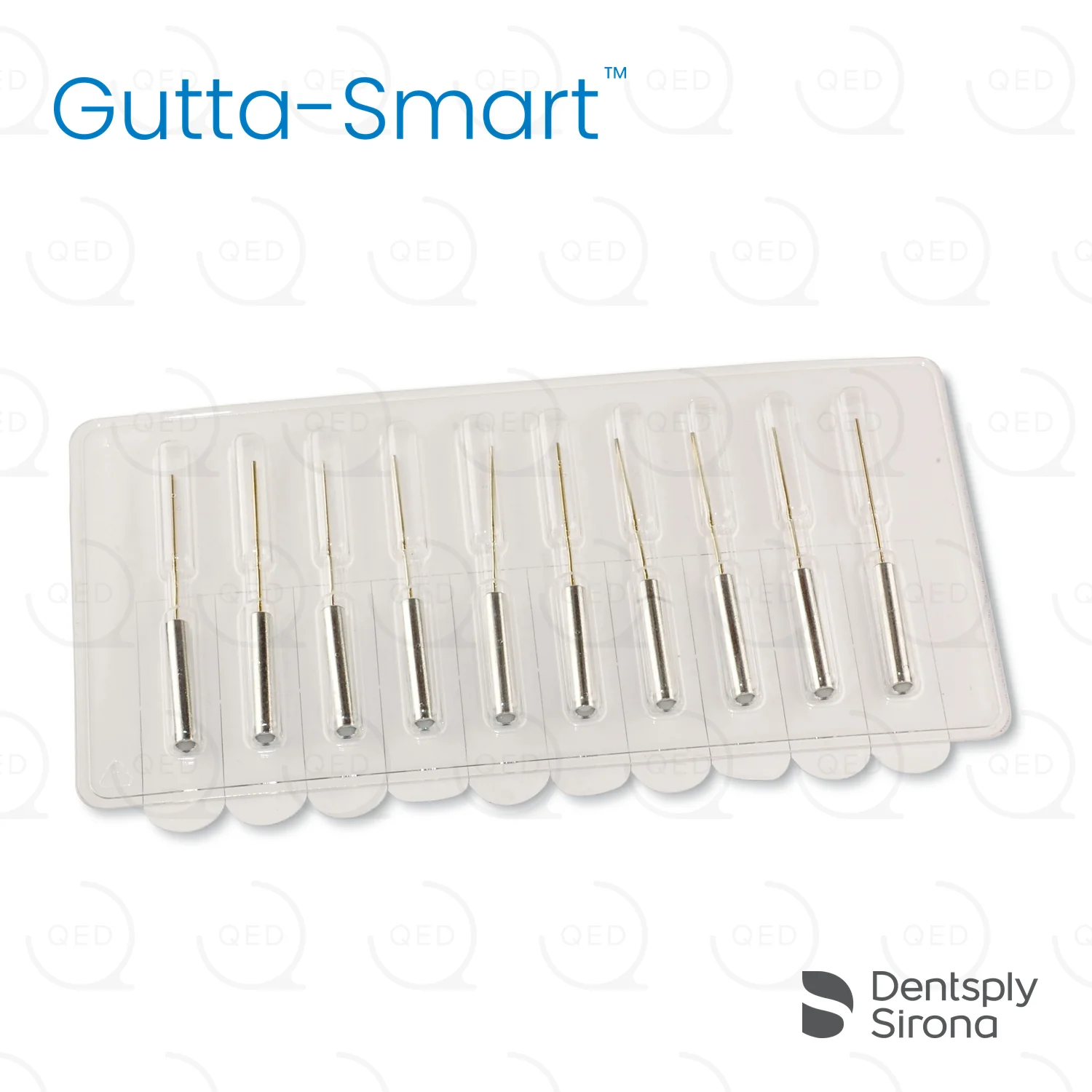
gutta-smart™ · gutta-percha cartridges · 23 gauge · 10
warm vertical obturationbackfillsingle patient use
one cartridge, one patient, one heat cycle. each cartridge is a sealed dose of dentsply sirona’s low-temperature conform fit® gutta-percha for the flow handpiece – and the directions are unusually firm that it is “for single patient use only” and “cannot be reheated or reused.”
this pack: gutta-smart™ gutta percha cartridges, 23g · 10 cartridges per pack (dentsply sirona)
dentsply sirona · made in the usa for maillefer instruments holding sàrl, ballaigues, switzerland
| gauge | 23 gauge cannula · silver cannula, aluminium capsule |
| fits | gutta-smart™ flow handpiece · through the flow heater |
| flow settings | 130–160°c · flow rate 20–100% |
| storage | room temperature; do not use after the expiry date |
› never reheat. dentsply sirona warn that reheating or reusing a cartridge can rupture it, which will permanently damage the handpiece – and count it as misuse that voids the warranty.
› wipe, do not sterilise. wipe the cannula with isopropyl alcohol and let it dry before use. never immerse or autoclave a cartridge.
› bend with the tool only. the cannula bending tool, to within 5 mm of working length. fingers or repeated bending can rupture the cartridge or damage the handpiece.
› let the heater cool. never remove a hot cartridge; dispose of spent ones in a sharps bin.
in both conform fit® master cones and gutta-smart™ cartridges, the gutta-percha formula flows at a lower temperature, requiring less heat from the handpieces.
dentsply sirona, gutta-smart™ brochure
which gauge?
dentsply sirona list 20, 23 and 25 gauge without a selection rule, and ship 20 and 23 in the kit. other gauges: 20 gauge · 25 gauge.
which master cones go with it?
conform fit®, matched to the file you shaped with – the same gutta-percha, in dentsply sirona’s words, for radiographic consistency. we stock them for waveone® gold · trunatomy® · protaper gold® · protaper next® · protaper ultimate®.
| handpiece and kit | gutta-smart™ warm vertical kit |
| down pack | pluggers: small · medium · large |
| sealer | ah plus® · neosealer® ezflo · proroot® bio sealer |
| coronal seal | sdr® flow+ refill, universal |
gutta-smart™ gutta-percha cartridges, 23 gauge (10) · conform fit® low-temperature gutta-percha · single patient use, do not reheat · flow handpiece 130–160°c · dentsply sirona · ref bnsgsiqa0023g

gutta-smart™ · gutta-percha cartridges · 25 gauge · 10
warm vertical obturationbackfillsingle patient use
one cartridge, one patient, one heat cycle. each cartridge is a sealed dose of dentsply sirona’s low-temperature conform fit® gutta-percha for the flow handpiece – and the directions are unusually firm that it is “for single patient use only” and “cannot be reheated or reused.”
this pack: gutta-smart™ gutta percha cartridges, 25g · 10 cartridges per pack (dentsply sirona)
dentsply sirona · made in the usa for maillefer instruments holding sàrl, ballaigues, switzerland
| gauge | 25 gauge cannula · silver cannula, aluminium capsule |
| fits | gutta-smart™ flow handpiece · through the flow heater |
| flow settings | 130–160°c · flow rate 20–100% |
| storage | room temperature; do not use after the expiry date |
› never reheat. dentsply sirona warn that reheating or reusing a cartridge can rupture it, which will permanently damage the handpiece – and count it as misuse that voids the warranty.
› wipe, do not sterilise. wipe the cannula with isopropyl alcohol and let it dry before use. never immerse or autoclave a cartridge.
› bend with the tool only. the cannula bending tool, to within 5 mm of working length. fingers or repeated bending can rupture the cartridge or damage the handpiece.
› let the heater cool. never remove a hot cartridge; dispose of spent ones in a sharps bin.
in both conform fit® master cones and gutta-smart™ cartridges, the gutta-percha formula flows at a lower temperature, requiring less heat from the handpieces.
dentsply sirona, gutta-smart™ brochure
which gauge?
dentsply sirona list 20, 23 and 25 gauge without a selection rule, and ship 20 and 23 in the kit. other gauges: 20 gauge · 23 gauge.
which master cones go with it?
conform fit®, matched to the file you shaped with – the same gutta-percha, in dentsply sirona’s words, for radiographic consistency. we stock them for waveone® gold · trunatomy® · protaper gold® · protaper next® · protaper ultimate®.
| handpiece and kit | gutta-smart™ warm vertical kit |
| down pack | pluggers: small · medium · large |
| sealer | ah plus® · neosealer® ezflo · proroot® bio sealer |
| coronal seal | sdr® flow+ refill, universal |
gutta-smart™ gutta-percha cartridges, 25 gauge (10) · conform fit® low-temperature gutta-percha · single patient use, do not reheat · flow handpiece 130–160°c · dentsply sirona · ref bnsgsiqa0025g
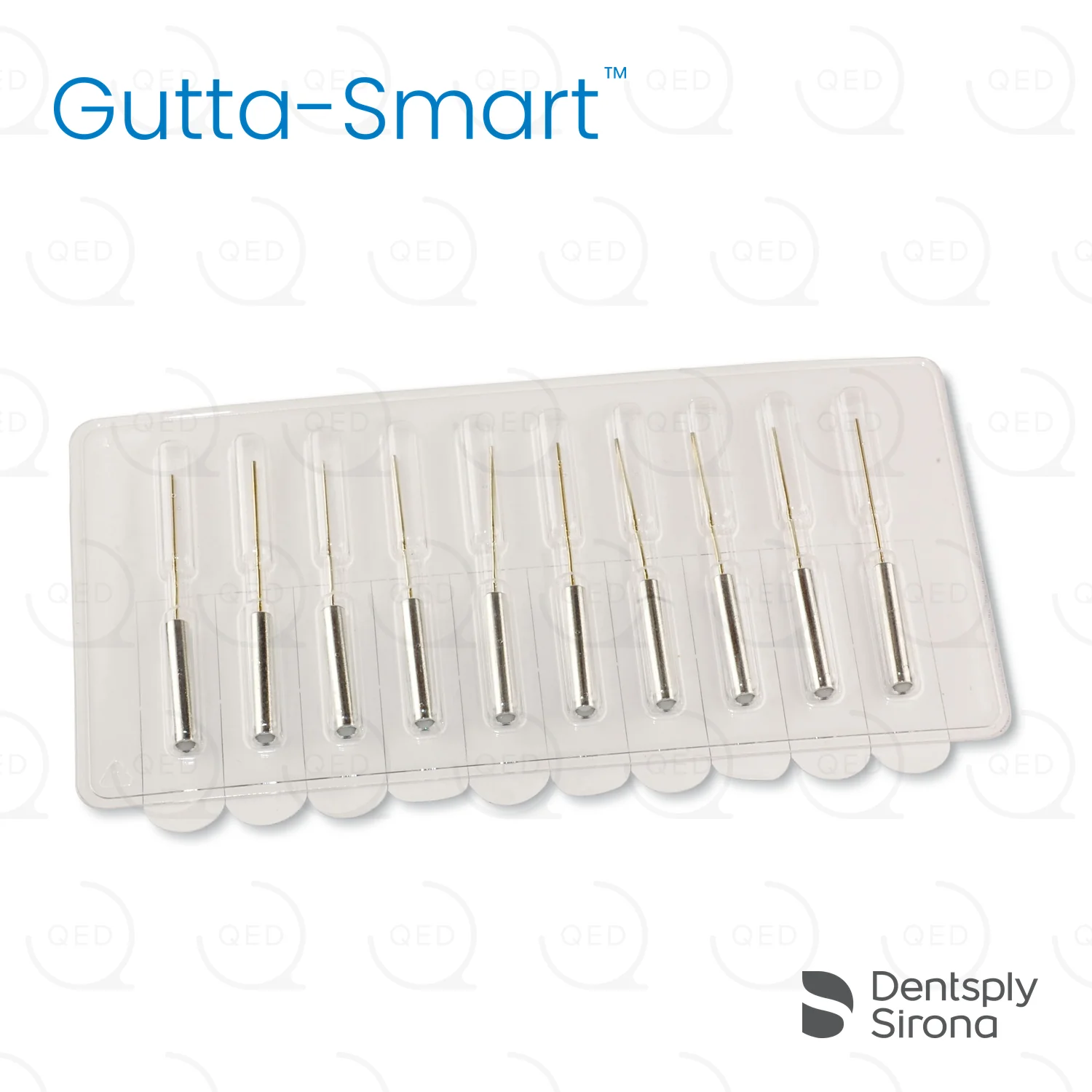
protaper ultimate® hand · sx · 19 mm
restricted accessrelocating the orificehand use
the protaper ultimate® sx, without the motor. dentsply sirona make every file in the range in a hand version, and their fact file is plain about what changes: “a dedicated hand-use version is available for all protaper ultimate® files with the same technical features as the rotary ones.” sx comes in one length, 19 mm.
this pack: protaper ultimate® sx hand file, 19 mm (pack of 6)
dentsply sirona · made by maillefer instruments holding sàrl, ballaigues, switzerland
| printed size | 020.003v – iso 20 tip, .03 variable taper |
| heat treatment | not stated by dentsply sirona for sx |
| role | restrictive space, pre-enlarging the body of the canal, or relocating its coronal aspect away from an external root concavity – the three situations dentsply sirona give for the sx. |
| rotary version | protaper ultimate® sx, 19 mm |
| other lengths | 19 mm only |
› same file, same place in the sequence. slider, shaper, then f1 to f3 as the canal gauges; fx and fxl for larger, straighter canals.
› matched obturation still applies. dentsply sirona match paper points and cones to the colour and size of the last file used – by hand or by motor.
› discard on deformation. their procedure: inspect the flutes on removal, and discard any file showing unwinding, straightening or stretching.
how do i use the hand version?
follow the instructions for use supplied with the hand files. the dentsply sirona literature we hold sets out the motor-driven technique, so we will not describe a manual one in its place – ask us if you would like the ifu chased.
can i mix hand and rotary in one case?
dentsply sirona’s larger-canal sequence names fx and fxl as either mechanically driven or manual, and their fact file gives the hand files the same technical features. beyond that, follow the ifu.
| motor-driven | protaper ultimate® sx, 19 mm |
| full hand set | protaper ultimate® hand sequence, 25 mm (5) · slider, shaper, f1, f2, f3 |
| patency | c-pilot® 010, 19 mm · a small stainless hand file, as the sequence asks for when the slider will not reach |
| dry | paper points, f1–f3 assortment |
| fill and seal | conform fit® gp, f1–f3 assortment · ah plus®, neosealer® ezflo, 21 mm tips or proroot® bio sealer |
protaper ultimate® hand sx, 19 mm (6) · 020.003v · niti hand file · dentsply sirona · ref bstpulh6190sx

protaper ultimate® hand · f1 · 21 mm
apical shapingdeep shapehand use
the protaper ultimate® f1, without the motor. dentsply sirona make every file in the range in a hand version, and their fact file is plain about what changes: “a dedicated hand-use version is available for all protaper ultimate® files with the same technical features as the rotary ones.” this is the 21 mm version – the same file on the shortest shaft, for short teeth or where opening is limited.
this pack: protaper ultimate® f1 hand file, 21 mm (pack of 6)
dentsply sirona · made by maillefer instruments holding sàrl, ballaigues, switzerland
| printed size | 020.007v – iso 20 tip, .07 variable taper, 7% apical |
| heat treatment | gold |
| role | the first finisher, and the one that decides whether the case goes up a size: loaded apical flutes at length mean finished; loose and clean means f2. |
| rotary version | protaper ultimate® f1, 21 mm |
| other lengths | 25 mm · 31 mm |
› same file, same place in the sequence. slider, shaper, then f1 to f3 as the canal gauges; fx and fxl for larger, straighter canals.
› matched obturation still applies. dentsply sirona match paper points and cones to the colour and size of the last file used – by hand or by motor.
› discard on deformation. their procedure: inspect the flutes on removal, and discard any file showing unwinding, straightening or stretching.
how do i use the hand version?
follow the instructions for use supplied with the hand files. the dentsply sirona literature we hold sets out the motor-driven technique, so we will not describe a manual one in its place – ask us if you would like the ifu chased.
can i mix hand and rotary in one case?
dentsply sirona’s larger-canal sequence names fx and fxl as either mechanically driven or manual, and their fact file gives the hand files the same technical features. beyond that, follow the ifu.
| motor-driven | protaper ultimate® f1, 21 mm |
| full hand set | protaper ultimate® hand sequence, 21 mm (5) · slider, shaper, f1, f2, f3 |
| patency | c-pilot® 010, 21 mm · a small stainless hand file, as the sequence asks for when the slider will not reach |
| dry | paper points, f1 |
| fill and seal | conform fit® gp, f1 · ah plus®, neosealer® ezflo, 21 mm tips or proroot® bio sealer |
protaper ultimate® hand f1, 21 mm (6) · 020.007v · gold heat treatment · niti hand file · dentsply sirona · ref bstpulh6210f1
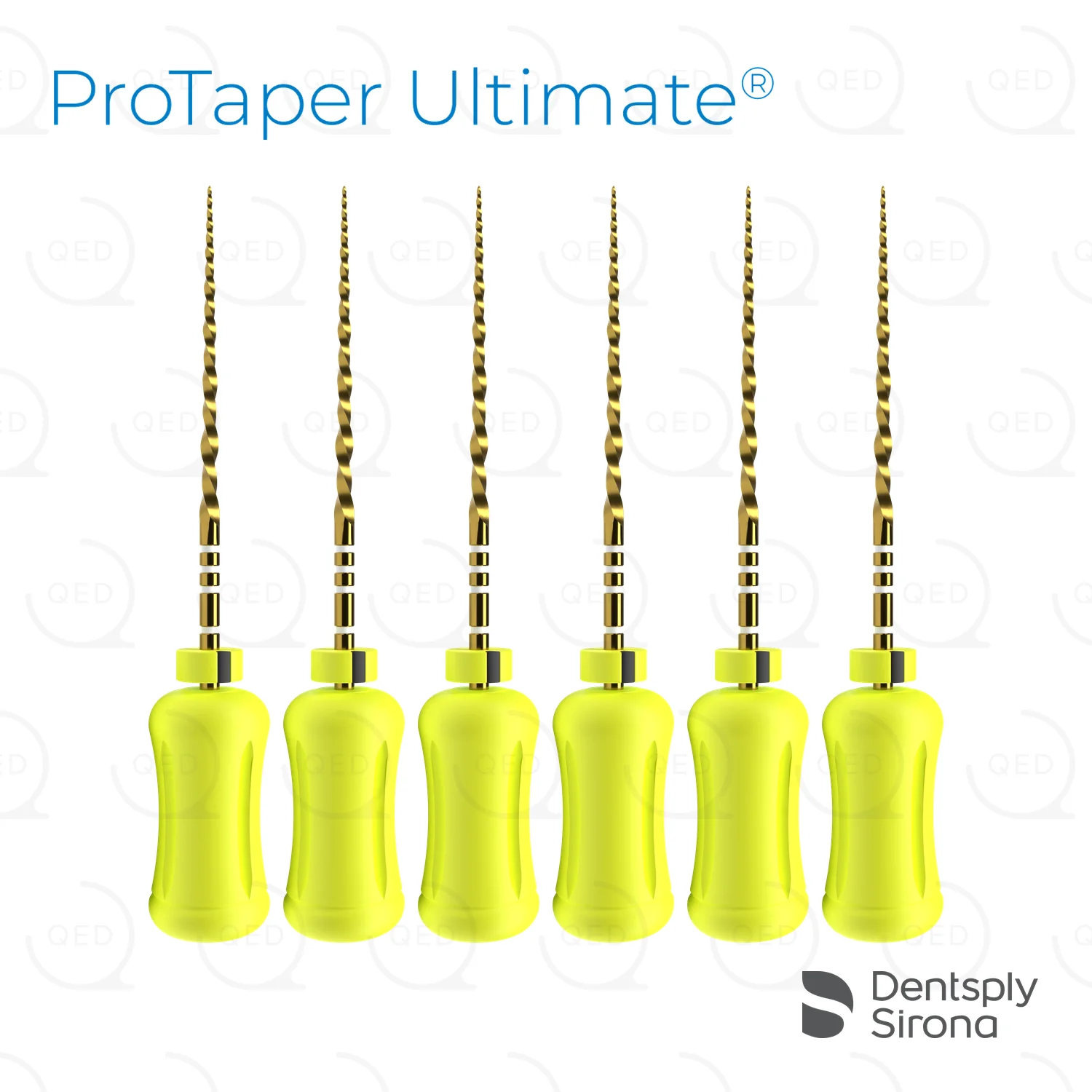
protaper ultimate® hand · f2 · 21 mm
apical shapingdeep shapehand use
the protaper ultimate® f2, without the motor. dentsply sirona make every file in the range in a hand version, and their fact file is plain about what changes: “a dedicated hand-use version is available for all protaper ultimate® files with the same technical features as the rotary ones.” this is the 21 mm version – the same file on the shortest shaft, for short teeth or where opening is limited.
this pack: protaper ultimate® f2 hand file, 21 mm (pack of 6)
dentsply sirona · made by maillefer instruments holding sàrl, ballaigues, switzerland
| printed size | 025.008v – iso 25 tip, .08 variable taper, 8% apical |
| heat treatment | gold |
| role | the second finisher, 8% apical taper, picked up when f1 is loose at length and its flutes come out clean. |
| rotary version | protaper ultimate® f2, 21 mm |
| other lengths | 25 mm · 31 mm |
› same file, same place in the sequence. slider, shaper, then f1 to f3 as the canal gauges; fx and fxl for larger, straighter canals.
› matched obturation still applies. dentsply sirona match paper points and cones to the colour and size of the last file used – by hand or by motor.
› discard on deformation. their procedure: inspect the flutes on removal, and discard any file showing unwinding, straightening or stretching.
how do i use the hand version?
follow the instructions for use supplied with the hand files. the dentsply sirona literature we hold sets out the motor-driven technique, so we will not describe a manual one in its place – ask us if you would like the ifu chased.
can i mix hand and rotary in one case?
dentsply sirona’s larger-canal sequence names fx and fxl as either mechanically driven or manual, and their fact file gives the hand files the same technical features. beyond that, follow the ifu.
| motor-driven | protaper ultimate® f2, 21 mm |
| full hand set | protaper ultimate® hand sequence, 21 mm (5) · slider, shaper, f1, f2, f3 |
| patency | c-pilot® 010, 21 mm · a small stainless hand file, as the sequence asks for when the slider will not reach |
| dry | paper points, f2 |
| fill and seal | conform fit® gp, f2 · ah plus®, neosealer® ezflo, 21 mm tips or proroot® bio sealer |
protaper ultimate® hand f2, 21 mm (6) · 025.008v · gold heat treatment · niti hand file · dentsply sirona · ref bstpulh6210f2
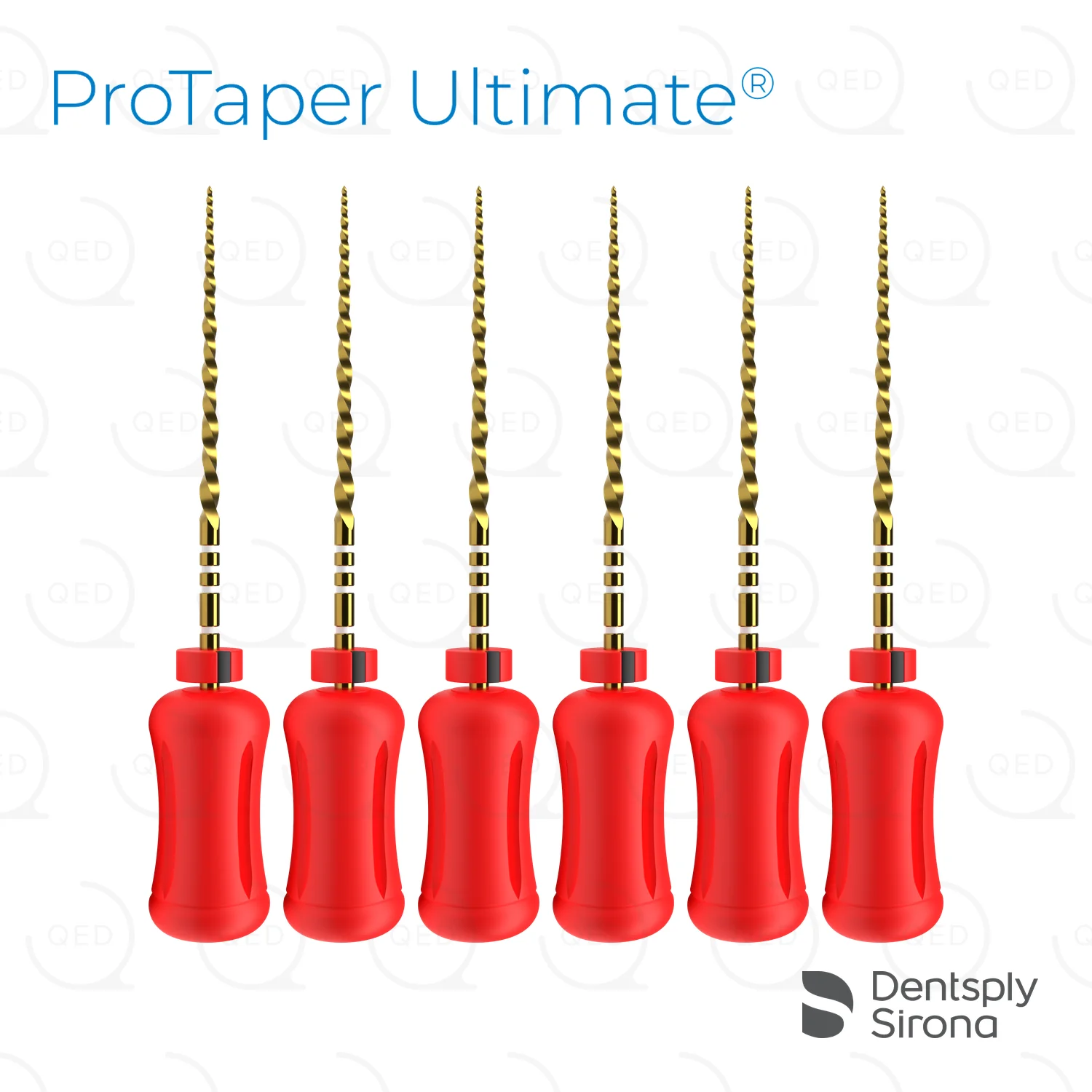
protaper ultimate® hand · f3 · 21 mm
apical shapingwider canalshand use
the protaper ultimate® f3, without the motor. dentsply sirona make every file in the range in a hand version, and their fact file is plain about what changes: “a dedicated hand-use version is available for all protaper ultimate® files with the same technical features as the rotary ones.” this is the 21 mm version – the same file on the shortest shaft, for short teeth or where opening is limited.
this pack: protaper ultimate® f3 hand file, 21 mm (pack of 6)
dentsply sirona · made by maillefer instruments holding sàrl, ballaigues, switzerland
| printed size | 030.009v – iso 30 tip, .09 variable taper, 9% apical |
| heat treatment | gold |
| role | the third finisher, 9% apical taper, picked up when f2 is loose at length and its flutes come out clean. |
| rotary version | protaper ultimate® f3, 21 mm |
| other lengths | 25 mm · 31 mm |
› same file, same place in the sequence. slider, shaper, then f1 to f3 as the canal gauges; fx and fxl for larger, straighter canals.
› matched obturation still applies. dentsply sirona match paper points and cones to the colour and size of the last file used – by hand or by motor.
› discard on deformation. their procedure: inspect the flutes on removal, and discard any file showing unwinding, straightening or stretching.
how do i use the hand version?
follow the instructions for use supplied with the hand files. the dentsply sirona literature we hold sets out the motor-driven technique, so we will not describe a manual one in its place – ask us if you would like the ifu chased.
can i mix hand and rotary in one case?
dentsply sirona’s larger-canal sequence names fx and fxl as either mechanically driven or manual, and their fact file gives the hand files the same technical features. beyond that, follow the ifu.
| motor-driven | protaper ultimate® f3, 21 mm |
| full hand set | protaper ultimate® hand sequence, 21 mm (5) · slider, shaper, f1, f2, f3 |
| patency | c-pilot® 010, 21 mm · a small stainless hand file, as the sequence asks for when the slider will not reach |
| dry | paper points, f3 |
| fill and seal | conform fit® gp, f3 · ah plus®, neosealer® ezflo, 21 mm tips or proroot® bio sealer |
protaper ultimate® hand f3, 21 mm (6) · 030.009v · gold heat treatment · niti hand file · dentsply sirona · ref bstpulh6210f3
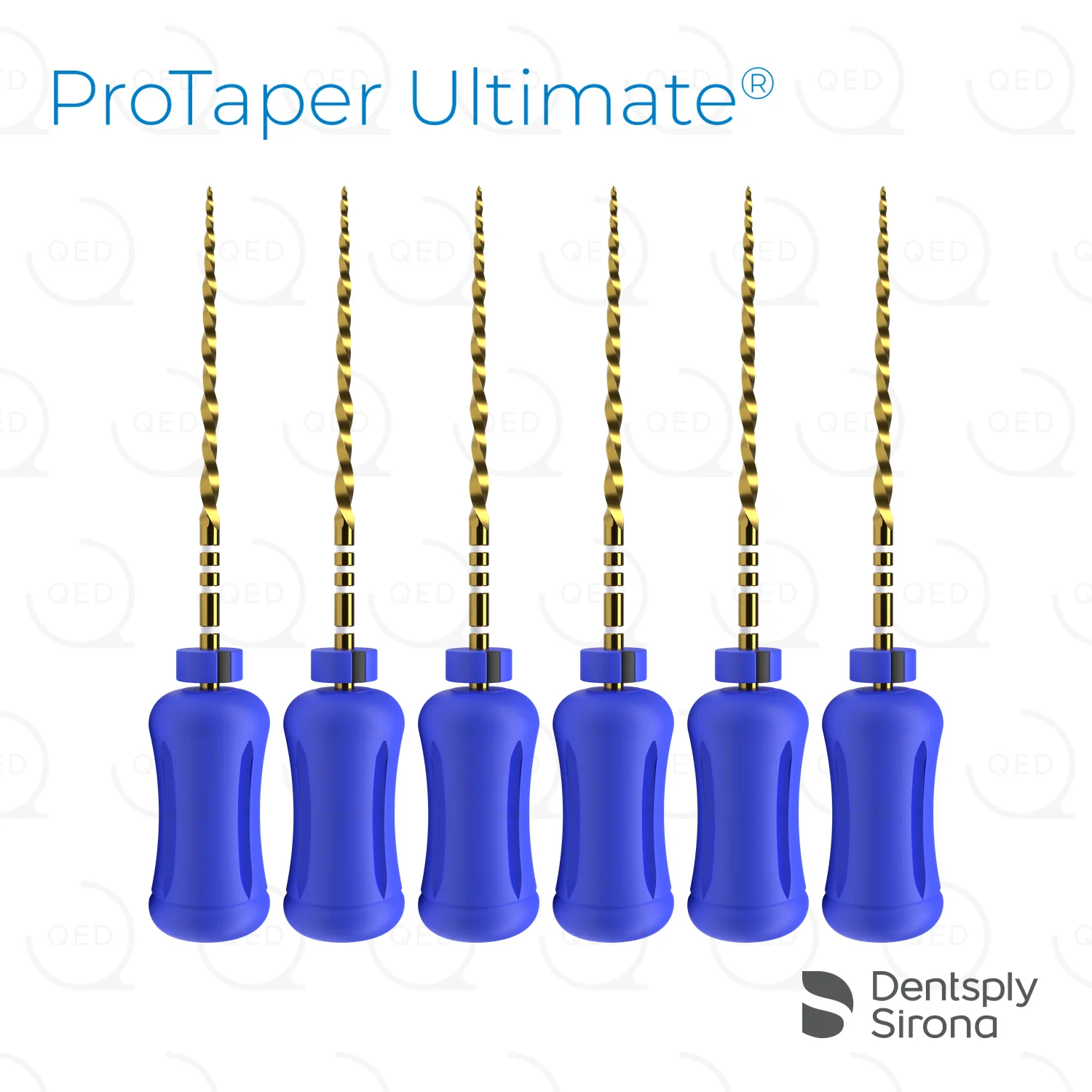
protaper ultimate® hand · fx · 21 mm
larger canalsstraighter canalshand use
the protaper ultimate® fx, without the motor. dentsply sirona make every file in the range in a hand version, and their fact file is plain about what changes: “a dedicated hand-use version is available for all protaper ultimate® files with the same technical features as the rotary ones.” this is the 21 mm version – the same file on the shortest shaft, for short teeth or where opening is limited.
this pack: protaper ultimate® fx hand file, 21 mm (pack of 6)
dentsply sirona · made by maillefer instruments holding sàrl, ballaigues, switzerland
| printed size | 035.012v – iso 35 tip, .12 variable taper |
| heat treatment | blue |
| role | dentsply sirona’s larger-canal sequence asks for “either a mechanically driven or manual auxiliary file, finisher fx”, in larger and straighter canals only. |
| rotary version | protaper ultimate® fx, 21 mm |
| other lengths | 25 mm · 31 mm |
› same file, same place in the sequence. slider, shaper, then f1 to f3 as the canal gauges; fx and fxl for larger, straighter canals.
› matched obturation still applies. dentsply sirona match paper points and cones to the colour and size of the last file used – by hand or by motor.
› discard on deformation. their procedure: inspect the flutes on removal, and discard any file showing unwinding, straightening or stretching.
how do i use the hand version?
follow the instructions for use supplied with the hand files. the dentsply sirona literature we hold sets out the motor-driven technique, so we will not describe a manual one in its place – ask us if you would like the ifu chased.
can i mix hand and rotary in one case?
dentsply sirona’s larger-canal sequence names fx and fxl as either mechanically driven or manual, and their fact file gives the hand files the same technical features. beyond that, follow the ifu.
| motor-driven | protaper ultimate® fx, 21 mm |
| full hand set | protaper ultimate® hand sequence, 21 mm (5) · slider, shaper, f1, f2, f3 |
| patency | c-pilot® 010, 21 mm · a small stainless hand file, as the sequence asks for when the slider will not reach |
| dry | paper points, fx |
| fill and seal | conform fit® gp, fx · ah plus®, neosealer® ezflo, 21 mm tips or proroot® bio sealer |
protaper ultimate® hand fx, 21 mm (6) · 035.012v · blue heat treatment · niti hand file · dentsply sirona · ref bstpulh6210fx
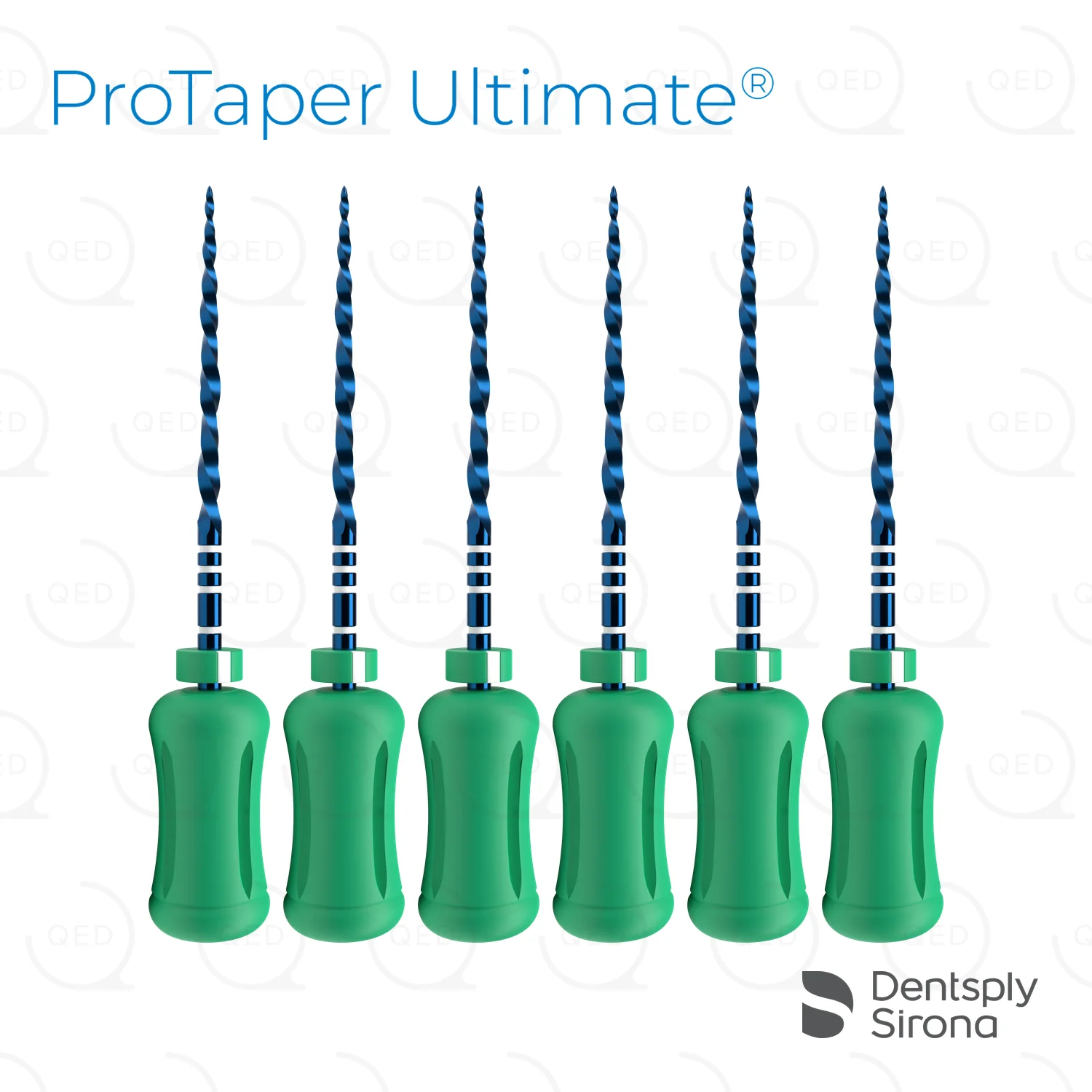
protaper ultimate® hand · shaper · 21 mm
coronal shapingcurved canalshand use
the protaper ultimate® shaper, without the motor. dentsply sirona make every file in the range in a hand version, and their fact file is plain about what changes: “a dedicated hand-use version is available for all protaper ultimate® files with the same technical features as the rotary ones.” this is the 21 mm version – the same file on the shortest shaft, for short teeth or where opening is limited.
this pack: protaper ultimate® shaper hand file, 21 mm (pack of 6)
dentsply sirona · made by maillefer instruments holding sàrl, ballaigues, switzerland
| printed size | 020.004v – iso 20 tip, .04 variable taper |
| heat treatment | gold |
| role | dentsply sirona describe the shaper’s job as cutting and hauling debris in the coronal two-thirds, giving the finishers easy and safe access to the apical third. |
| rotary version | protaper ultimate® shaper, 21 mm |
| other lengths | 25 mm · 31 mm |
› same file, same place in the sequence. slider, shaper, then f1 to f3 as the canal gauges; fx and fxl for larger, straighter canals.
› matched obturation still applies. dentsply sirona match paper points and cones to the colour and size of the last file used – by hand or by motor.
› discard on deformation. their procedure: inspect the flutes on removal, and discard any file showing unwinding, straightening or stretching.
how do i use the hand version?
follow the instructions for use supplied with the hand files. the dentsply sirona literature we hold sets out the motor-driven technique, so we will not describe a manual one in its place – ask us if you would like the ifu chased.
can i mix hand and rotary in one case?
dentsply sirona’s larger-canal sequence names fx and fxl as either mechanically driven or manual, and their fact file gives the hand files the same technical features. beyond that, follow the ifu.
| motor-driven | protaper ultimate® shaper, 21 mm |
| full hand set | protaper ultimate® hand sequence, 21 mm (5) · slider, shaper, f1, f2, f3 |
| patency | c-pilot® 010, 21 mm · a small stainless hand file, as the sequence asks for when the slider will not reach |
| dry | paper points, f1–f3 assortment |
| fill and seal | conform fit® gp, f1–f3 assortment · ah plus®, neosealer® ezflo, 21 mm tips or proroot® bio sealer |
protaper ultimate® hand shaper, 21 mm (6) · 020.004v · gold heat treatment · niti hand file · dentsply sirona · ref bstpulh6210sh

protaper ultimate® hand · slider · 21 mm
glide pathsecuring the canal pathhand use
the protaper ultimate® slider, without the motor. dentsply sirona make every file in the range in a hand version, and their fact file is plain about what changes: “a dedicated hand-use version is available for all protaper ultimate® files with the same technical features as the rotary ones.” this is the 21 mm version – the same file on the shortest shaft, for short teeth or where opening is limited.
this pack: protaper ultimate® slider hand file, 21 mm (pack of 6)
dentsply sirona · made by maillefer instruments holding sàrl, ballaigues, switzerland
| printed size | 016.002v – iso 16 tip, .02 variable taper |
| heat treatment | m-wire® |
| role | the slider secures the canal path to the terminus. dentsply sirona treat it during wire production for a certain rigidity, to remove restrictive dentine and calcifications without the systematic need of a k-file. |
| rotary version | protaper ultimate® slider, 21 mm |
| other lengths | 25 mm · 31 mm |
› same file, same place in the sequence. slider, shaper, then f1 to f3 as the canal gauges; fx and fxl for larger, straighter canals.
› matched obturation still applies. dentsply sirona match paper points and cones to the colour and size of the last file used – by hand or by motor.
› discard on deformation. their procedure: inspect the flutes on removal, and discard any file showing unwinding, straightening or stretching.
how do i use the hand version?
follow the instructions for use supplied with the hand files. the dentsply sirona literature we hold sets out the motor-driven technique, so we will not describe a manual one in its place – ask us if you would like the ifu chased.
can i mix hand and rotary in one case?
dentsply sirona’s larger-canal sequence names fx and fxl as either mechanically driven or manual, and their fact file gives the hand files the same technical features. beyond that, follow the ifu.
| motor-driven | protaper ultimate® slider, 21 mm |
| full hand set | protaper ultimate® hand sequence, 21 mm (5) · slider, shaper, f1, f2, f3 |
| patency | c-pilot® 010, 21 mm · a small stainless hand file, as the sequence asks for when the slider will not reach |
| dry | paper points, f1–f3 assortment |
| fill and seal | conform fit® gp, f1–f3 assortment · ah plus®, neosealer® ezflo, 21 mm tips or proroot® bio sealer |
protaper ultimate® hand slider, 21 mm (6) · 016.002v · m-wire® heat treatment · niti hand file · dentsply sirona · ref bstpulh6210sl
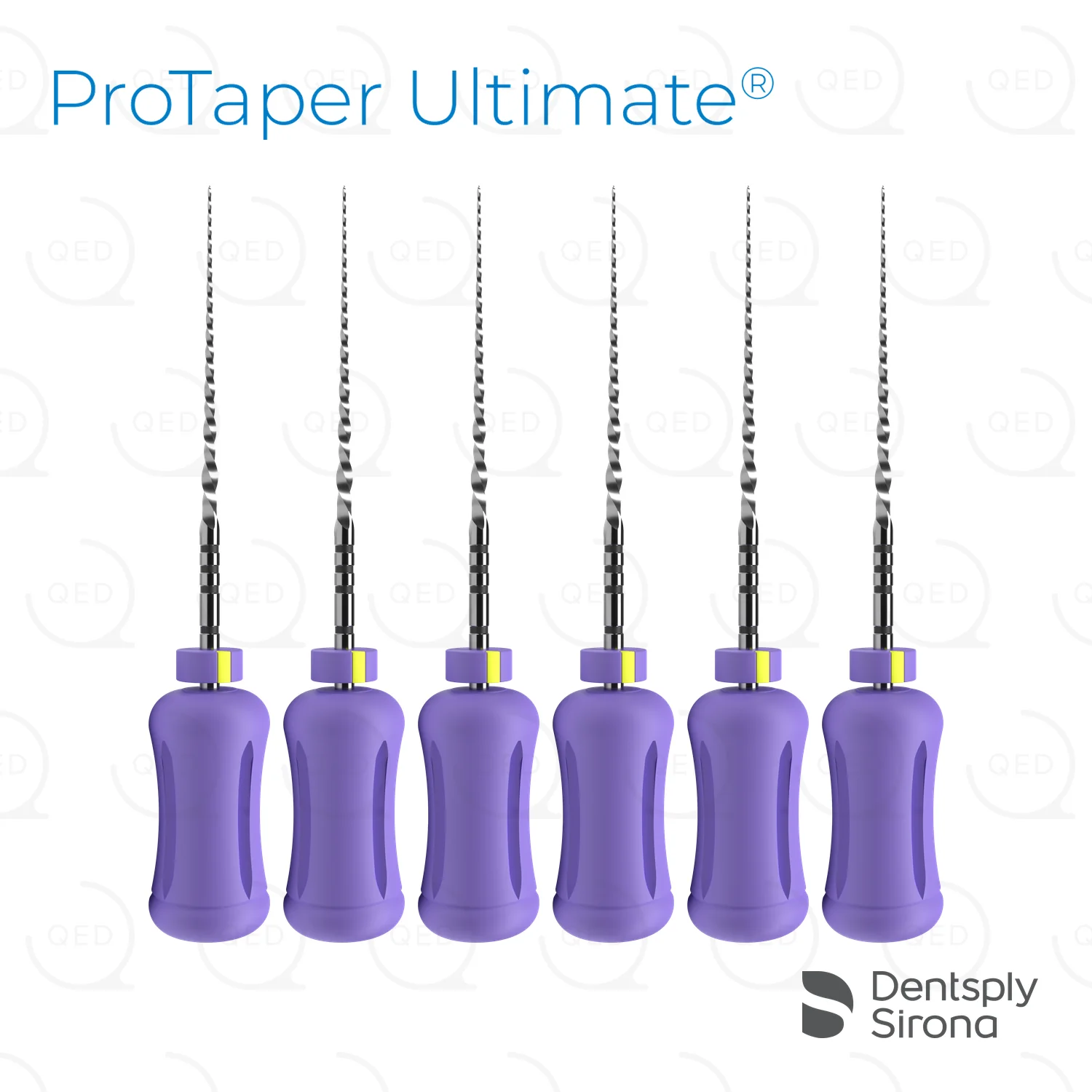
protaper ultimate® hand · fxl · 21 mm
large canalsstraighter canalshand use
the protaper ultimate® fxl, without the motor. dentsply sirona make every file in the range in a hand version, and their fact file is plain about what changes: “a dedicated hand-use version is available for all protaper ultimate® files with the same technical features as the rotary ones.” this is the 21 mm version – the same file on the shortest shaft, for short teeth or where opening is limited.
this pack: protaper ultimate® fxl hand file, 21 mm (pack of 6)
dentsply sirona · made by maillefer instruments holding sàrl, ballaigues, switzerland
| printed size | 050.010v – iso 50 tip, .10 variable taper |
| heat treatment | blue |
| role | used after fx in larger and straighter canals, and named by dentsply sirona as either mechanically driven or manual. |
| rotary version | protaper ultimate® fxl, 21 mm |
| other lengths | 25 mm · 31 mm |
› same file, same place in the sequence. slider, shaper, then f1 to f3 as the canal gauges; fx and fxl for larger, straighter canals.
› matched obturation still applies. dentsply sirona match paper points and cones to the colour and size of the last file used – by hand or by motor.
› discard on deformation. their procedure: inspect the flutes on removal, and discard any file showing unwinding, straightening or stretching.
how do i use the hand version?
follow the instructions for use supplied with the hand files. the dentsply sirona literature we hold sets out the motor-driven technique, so we will not describe a manual one in its place – ask us if you would like the ifu chased.
can i mix hand and rotary in one case?
dentsply sirona’s larger-canal sequence names fx and fxl as either mechanically driven or manual, and their fact file gives the hand files the same technical features. beyond that, follow the ifu.
| motor-driven | protaper ultimate® fxl, 21 mm |
| full hand set | protaper ultimate® hand sequence, 21 mm (5) · slider, shaper, f1, f2, f3 |
| patency | c-pilot® 010, 21 mm · a small stainless hand file, as the sequence asks for when the slider will not reach |
| dry | paper points, fxl |
| fill and seal | conform fit® gp, fxl · ah plus®, neosealer® ezflo, 21 mm tips or proroot® bio sealer |
protaper ultimate® hand fxl, 21 mm (6) · 050.010v · blue heat treatment · niti hand file · dentsply sirona · ref bstpulh621fxl
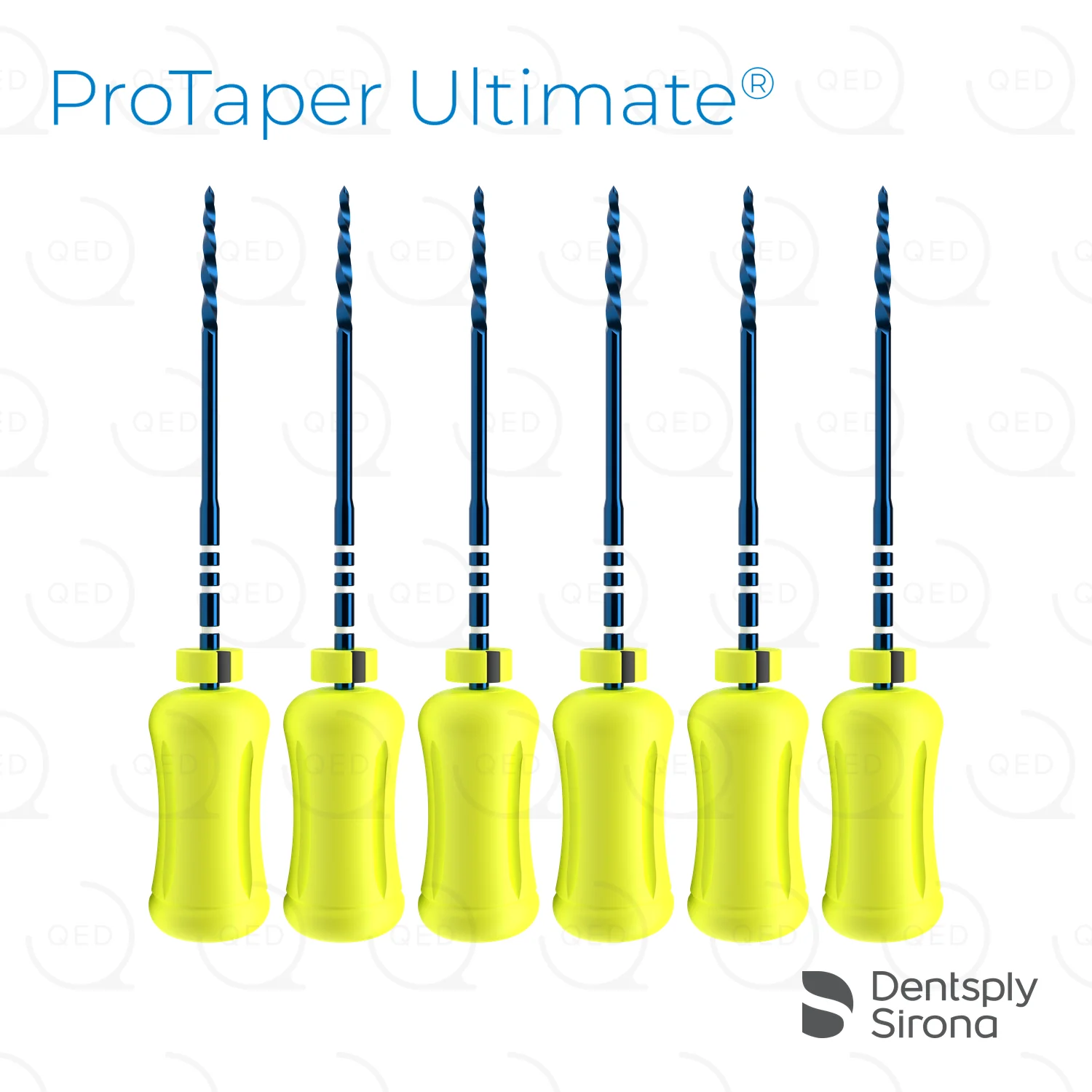
protaper ultimate® hand · f1 · 25 mm
apical shapingdeep shapehand use
the protaper ultimate® f1, without the motor. dentsply sirona make every file in the range in a hand version, and their fact file is plain about what changes: “a dedicated hand-use version is available for all protaper ultimate® files with the same technical features as the rotary ones.” this is the 25 mm version, the middle of the three lengths.
this pack: protaper ultimate® f1 hand file, 25 mm (pack of 6)
dentsply sirona · made by maillefer instruments holding sàrl, ballaigues, switzerland
| printed size | 020.007v – iso 20 tip, .07 variable taper, 7% apical |
| heat treatment | gold |
| role | the first finisher, and the one that decides whether the case goes up a size: loaded apical flutes at length mean finished; loose and clean means f2. |
| rotary version | protaper ultimate® f1, 25 mm |
| other lengths | 21 mm · 31 mm |
› same file, same place in the sequence. slider, shaper, then f1 to f3 as the canal gauges; fx and fxl for larger, straighter canals.
› matched obturation still applies. dentsply sirona match paper points and cones to the colour and size of the last file used – by hand or by motor.
› discard on deformation. their procedure: inspect the flutes on removal, and discard any file showing unwinding, straightening or stretching.
how do i use the hand version?
follow the instructions for use supplied with the hand files. the dentsply sirona literature we hold sets out the motor-driven technique, so we will not describe a manual one in its place – ask us if you would like the ifu chased.
can i mix hand and rotary in one case?
dentsply sirona’s larger-canal sequence names fx and fxl as either mechanically driven or manual, and their fact file gives the hand files the same technical features. beyond that, follow the ifu.
| motor-driven | protaper ultimate® f1, 25 mm |
| full hand set | protaper ultimate® hand sequence, 25 mm (5) · slider, shaper, f1, f2, f3 |
| patency | c-pilot® 010, 25 mm · a small stainless hand file, as the sequence asks for when the slider will not reach |
| dry | paper points, f1 |
| fill and seal | conform fit® gp, f1 · ah plus®, neosealer® ezflo, 25 mm tips or proroot® bio sealer |
protaper ultimate® hand f1, 25 mm (6) · 020.007v · gold heat treatment · niti hand file · dentsply sirona · ref bstpulh6250f1

protaper ultimate® hand · f2 · 25 mm
apical shapingdeep shapehand use
the protaper ultimate® f2, without the motor. dentsply sirona make every file in the range in a hand version, and their fact file is plain about what changes: “a dedicated hand-use version is available for all protaper ultimate® files with the same technical features as the rotary ones.” this is the 25 mm version, the middle of the three lengths.
this pack: protaper ultimate® f2 hand file, 25 mm (pack of 6)
dentsply sirona · made by maillefer instruments holding sàrl, ballaigues, switzerland
| printed size | 025.008v – iso 25 tip, .08 variable taper, 8% apical |
| heat treatment | gold |
| role | the second finisher, 8% apical taper, picked up when f1 is loose at length and its flutes come out clean. |
| rotary version | protaper ultimate® f2, 25 mm |
| other lengths | 21 mm · 31 mm |
› same file, same place in the sequence. slider, shaper, then f1 to f3 as the canal gauges; fx and fxl for larger, straighter canals.
› matched obturation still applies. dentsply sirona match paper points and cones to the colour and size of the last file used – by hand or by motor.
› discard on deformation. their procedure: inspect the flutes on removal, and discard any file showing unwinding, straightening or stretching.
how do i use the hand version?
follow the instructions for use supplied with the hand files. the dentsply sirona literature we hold sets out the motor-driven technique, so we will not describe a manual one in its place – ask us if you would like the ifu chased.
can i mix hand and rotary in one case?
dentsply sirona’s larger-canal sequence names fx and fxl as either mechanically driven or manual, and their fact file gives the hand files the same technical features. beyond that, follow the ifu.
| motor-driven | protaper ultimate® f2, 25 mm |
| full hand set | protaper ultimate® hand sequence, 25 mm (5) · slider, shaper, f1, f2, f3 |
| patency | c-pilot® 010, 25 mm · a small stainless hand file, as the sequence asks for when the slider will not reach |
| dry | paper points, f2 |
| fill and seal | conform fit® gp, f2 · ah plus®, neosealer® ezflo, 25 mm tips or proroot® bio sealer |
protaper ultimate® hand f2, 25 mm (6) · 025.008v · gold heat treatment · niti hand file · dentsply sirona · ref bstpulh6250f2
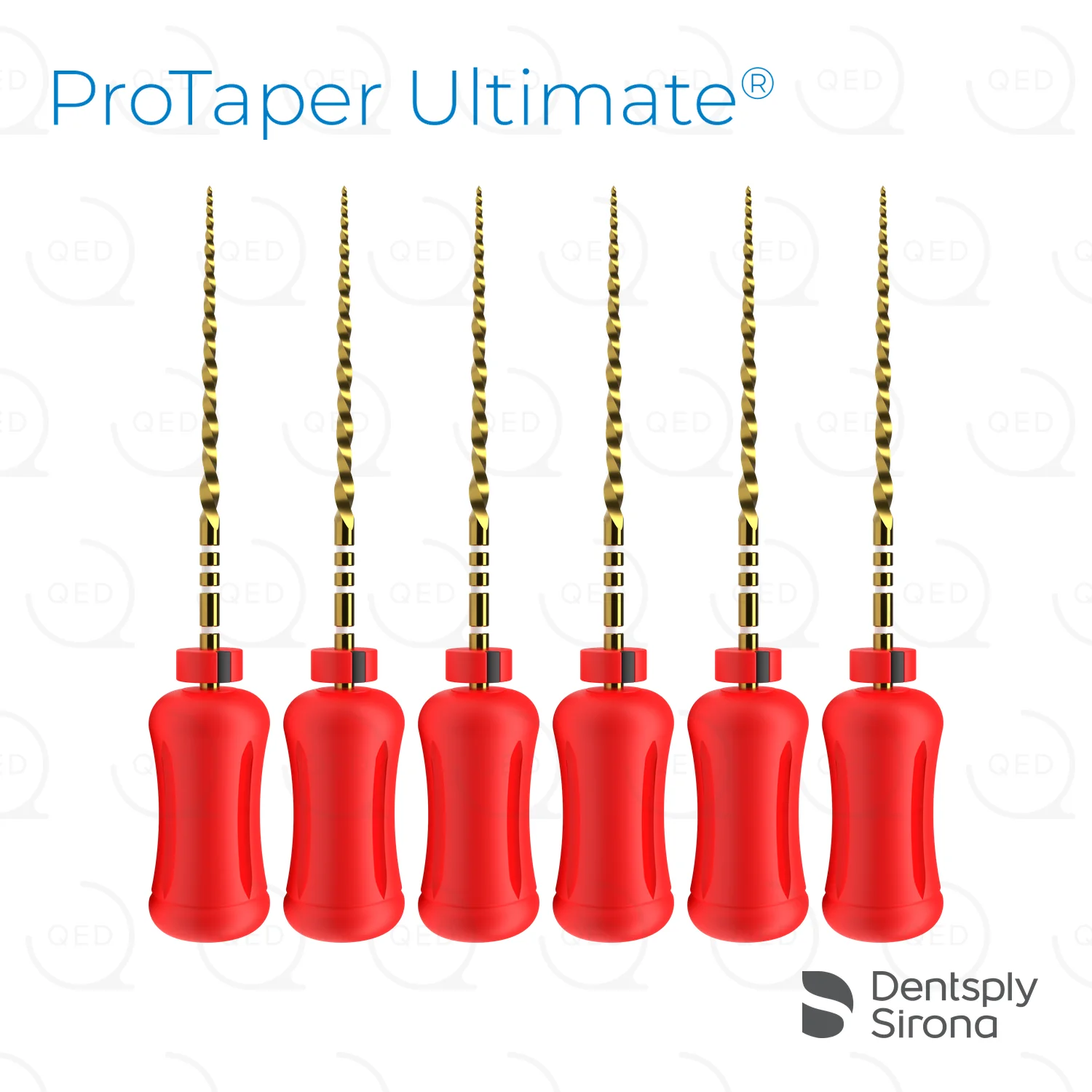
protaper ultimate® hand · f3 · 25 mm
apical shapingwider canalshand use
the protaper ultimate® f3, without the motor. dentsply sirona make every file in the range in a hand version, and their fact file is plain about what changes: “a dedicated hand-use version is available for all protaper ultimate® files with the same technical features as the rotary ones.” this is the 25 mm version, the middle of the three lengths.
this pack: protaper ultimate® f3 hand file, 25 mm (pack of 6)
dentsply sirona · made by maillefer instruments holding sàrl, ballaigues, switzerland
| printed size | 030.009v – iso 30 tip, .09 variable taper, 9% apical |
| heat treatment | gold |
| role | the third finisher, 9% apical taper, picked up when f2 is loose at length and its flutes come out clean. |
| rotary version | protaper ultimate® f3, 25 mm |
| other lengths | 21 mm · 31 mm |
› same file, same place in the sequence. slider, shaper, then f1 to f3 as the canal gauges; fx and fxl for larger, straighter canals.
› matched obturation still applies. dentsply sirona match paper points and cones to the colour and size of the last file used – by hand or by motor.
› discard on deformation. their procedure: inspect the flutes on removal, and discard any file showing unwinding, straightening or stretching.
how do i use the hand version?
follow the instructions for use supplied with the hand files. the dentsply sirona literature we hold sets out the motor-driven technique, so we will not describe a manual one in its place – ask us if you would like the ifu chased.
can i mix hand and rotary in one case?
dentsply sirona’s larger-canal sequence names fx and fxl as either mechanically driven or manual, and their fact file gives the hand files the same technical features. beyond that, follow the ifu.
| motor-driven | protaper ultimate® f3, 25 mm |
| full hand set | protaper ultimate® hand sequence, 25 mm (5) · slider, shaper, f1, f2, f3 |
| patency | c-pilot® 010, 25 mm · a small stainless hand file, as the sequence asks for when the slider will not reach |
| dry | paper points, f3 |
| fill and seal | conform fit® gp, f3 · ah plus®, neosealer® ezflo, 25 mm tips or proroot® bio sealer |
protaper ultimate® hand f3, 25 mm (6) · 030.009v · gold heat treatment · niti hand file · dentsply sirona · ref bstpulh6250f3

protaper ultimate® hand · fx · 25 mm
larger canalsstraighter canalshand use
the protaper ultimate® fx, without the motor. dentsply sirona make every file in the range in a hand version, and their fact file is plain about what changes: “a dedicated hand-use version is available for all protaper ultimate® files with the same technical features as the rotary ones.” this is the 25 mm version, the middle of the three lengths.
this pack: protaper ultimate® fx hand file, 25 mm (pack of 6)
dentsply sirona · made by maillefer instruments holding sàrl, ballaigues, switzerland
| printed size | 035.012v – iso 35 tip, .12 variable taper |
| heat treatment | blue |
| role | dentsply sirona’s larger-canal sequence asks for “either a mechanically driven or manual auxiliary file, finisher fx”, in larger and straighter canals only. |
| rotary version | protaper ultimate® fx, 25 mm |
| other lengths | 21 mm · 31 mm |
› same file, same place in the sequence. slider, shaper, then f1 to f3 as the canal gauges; fx and fxl for larger, straighter canals.
› matched obturation still applies. dentsply sirona match paper points and cones to the colour and size of the last file used – by hand or by motor.
› discard on deformation. their procedure: inspect the flutes on removal, and discard any file showing unwinding, straightening or stretching.
how do i use the hand version?
follow the instructions for use supplied with the hand files. the dentsply sirona literature we hold sets out the motor-driven technique, so we will not describe a manual one in its place – ask us if you would like the ifu chased.
can i mix hand and rotary in one case?
dentsply sirona’s larger-canal sequence names fx and fxl as either mechanically driven or manual, and their fact file gives the hand files the same technical features. beyond that, follow the ifu.
| motor-driven | protaper ultimate® fx, 25 mm |
| full hand set | protaper ultimate® hand sequence, 25 mm (5) · slider, shaper, f1, f2, f3 |
| patency | c-pilot® 010, 25 mm · a small stainless hand file, as the sequence asks for when the slider will not reach |
| dry | paper points, fx |
| fill and seal | conform fit® gp, fx · ah plus®, neosealer® ezflo, 25 mm tips or proroot® bio sealer |
protaper ultimate® hand fx, 25 mm (6) · 035.012v · blue heat treatment · niti hand file · dentsply sirona · ref bstpulh6250fx

protaper ultimate® hand · shaper · 25 mm
coronal shapingcurved canalshand use
the protaper ultimate® shaper, without the motor. dentsply sirona make every file in the range in a hand version, and their fact file is plain about what changes: “a dedicated hand-use version is available for all protaper ultimate® files with the same technical features as the rotary ones.” this is the 25 mm version, the middle of the three lengths.
this pack: protaper ultimate® shaper hand file, 25 mm (pack of 6)
dentsply sirona · made by maillefer instruments holding sàrl, ballaigues, switzerland
| printed size | 020.004v – iso 20 tip, .04 variable taper |
| heat treatment | gold |
| role | dentsply sirona describe the shaper’s job as cutting and hauling debris in the coronal two-thirds, giving the finishers easy and safe access to the apical third. |
| rotary version | protaper ultimate® shaper, 25 mm |
| other lengths | 21 mm · 31 mm |
› same file, same place in the sequence. slider, shaper, then f1 to f3 as the canal gauges; fx and fxl for larger, straighter canals.
› matched obturation still applies. dentsply sirona match paper points and cones to the colour and size of the last file used – by hand or by motor.
› discard on deformation. their procedure: inspect the flutes on removal, and discard any file showing unwinding, straightening or stretching.
how do i use the hand version?
follow the instructions for use supplied with the hand files. the dentsply sirona literature we hold sets out the motor-driven technique, so we will not describe a manual one in its place – ask us if you would like the ifu chased.
can i mix hand and rotary in one case?
dentsply sirona’s larger-canal sequence names fx and fxl as either mechanically driven or manual, and their fact file gives the hand files the same technical features. beyond that, follow the ifu.
| motor-driven | protaper ultimate® shaper, 25 mm |
| full hand set | protaper ultimate® hand sequence, 25 mm (5) · slider, shaper, f1, f2, f3 |
| patency | c-pilot® 010, 25 mm · a small stainless hand file, as the sequence asks for when the slider will not reach |
| dry | paper points, f1–f3 assortment |
| fill and seal | conform fit® gp, f1–f3 assortment · ah plus®, neosealer® ezflo, 25 mm tips or proroot® bio sealer |
protaper ultimate® hand shaper, 25 mm (6) · 020.004v · gold heat treatment · niti hand file · dentsply sirona · ref bstpulh6250sh
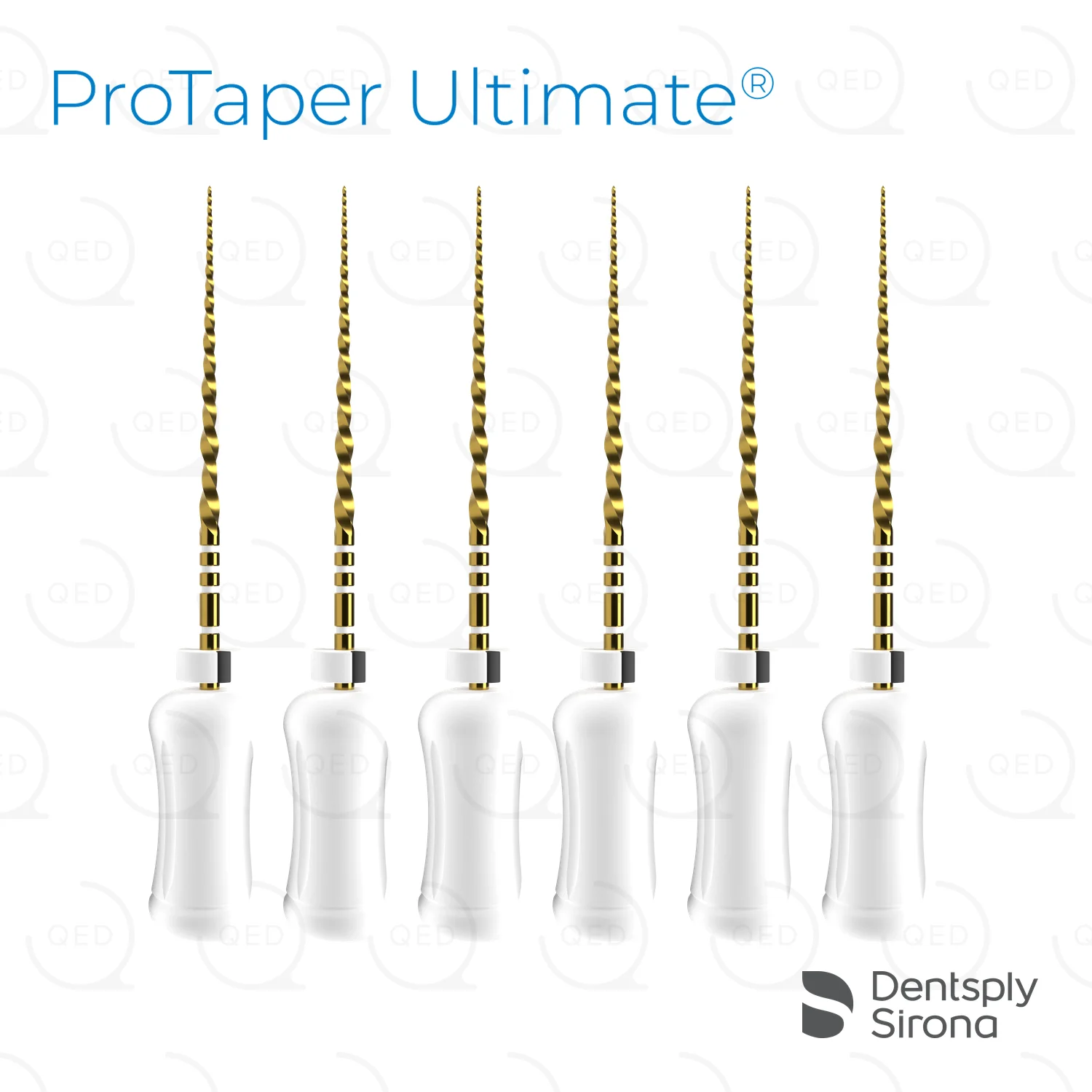
protaper ultimate® hand · slider · 25 mm
glide pathsecuring the canal pathhand use
the protaper ultimate® slider, without the motor. dentsply sirona make every file in the range in a hand version, and their fact file is plain about what changes: “a dedicated hand-use version is available for all protaper ultimate® files with the same technical features as the rotary ones.” this is the 25 mm version, the middle of the three lengths.
this pack: protaper ultimate® slider hand file, 25 mm (pack of 6)
dentsply sirona · made by maillefer instruments holding sàrl, ballaigues, switzerland
| printed size | 016.002v – iso 16 tip, .02 variable taper |
| heat treatment | m-wire® |
| role | the slider secures the canal path to the terminus. dentsply sirona treat it during wire production for a certain rigidity, to remove restrictive dentine and calcifications without the systematic need of a k-file. |
| rotary version | protaper ultimate® slider, 25 mm |
| other lengths | 21 mm · 31 mm |
› same file, same place in the sequence. slider, shaper, then f1 to f3 as the canal gauges; fx and fxl for larger, straighter canals.
› matched obturation still applies. dentsply sirona match paper points and cones to the colour and size of the last file used – by hand or by motor.
› discard on deformation. their procedure: inspect the flutes on removal, and discard any file showing unwinding, straightening or stretching.
how do i use the hand version?
follow the instructions for use supplied with the hand files. the dentsply sirona literature we hold sets out the motor-driven technique, so we will not describe a manual one in its place – ask us if you would like the ifu chased.
can i mix hand and rotary in one case?
dentsply sirona’s larger-canal sequence names fx and fxl as either mechanically driven or manual, and their fact file gives the hand files the same technical features. beyond that, follow the ifu.
| motor-driven | protaper ultimate® slider, 25 mm |
| full hand set | protaper ultimate® hand sequence, 25 mm (5) · slider, shaper, f1, f2, f3 |
| patency | c-pilot® 010, 25 mm · a small stainless hand file, as the sequence asks for when the slider will not reach |
| dry | paper points, f1–f3 assortment |
| fill and seal | conform fit® gp, f1–f3 assortment · ah plus®, neosealer® ezflo, 25 mm tips or proroot® bio sealer |
protaper ultimate® hand slider, 25 mm (6) · 016.002v · m-wire® heat treatment · niti hand file · dentsply sirona · ref bstpulh6250sl

protaper ultimate® hand · fxl · 25 mm
large canalsstraighter canalshand use
the protaper ultimate® fxl, without the motor. dentsply sirona make every file in the range in a hand version, and their fact file is plain about what changes: “a dedicated hand-use version is available for all protaper ultimate® files with the same technical features as the rotary ones.” this is the 25 mm version, the middle of the three lengths.
this pack: protaper ultimate® fxl hand file, 25 mm (pack of 6)
dentsply sirona · made by maillefer instruments holding sàrl, ballaigues, switzerland
| printed size | 050.010v – iso 50 tip, .10 variable taper |
| heat treatment | blue |
| role | used after fx in larger and straighter canals, and named by dentsply sirona as either mechanically driven or manual. |
| rotary version | protaper ultimate® fxl, 25 mm |
| other lengths | 21 mm · 31 mm |
› same file, same place in the sequence. slider, shaper, then f1 to f3 as the canal gauges; fx and fxl for larger, straighter canals.
› matched obturation still applies. dentsply sirona match paper points and cones to the colour and size of the last file used – by hand or by motor.
› discard on deformation. their procedure: inspect the flutes on removal, and discard any file showing unwinding, straightening or stretching.
how do i use the hand version?
follow the instructions for use supplied with the hand files. the dentsply sirona literature we hold sets out the motor-driven technique, so we will not describe a manual one in its place – ask us if you would like the ifu chased.
can i mix hand and rotary in one case?
dentsply sirona’s larger-canal sequence names fx and fxl as either mechanically driven or manual, and their fact file gives the hand files the same technical features. beyond that, follow the ifu.
| motor-driven | protaper ultimate® fxl, 25 mm |
| full hand set | protaper ultimate® hand sequence, 25 mm (5) · slider, shaper, f1, f2, f3 |
| patency | c-pilot® 010, 25 mm · a small stainless hand file, as the sequence asks for when the slider will not reach |
| dry | paper points, fxl |
| fill and seal | conform fit® gp, fxl · ah plus®, neosealer® ezflo, 25 mm tips or proroot® bio sealer |
protaper ultimate® hand fxl, 25 mm (6) · 050.010v · blue heat treatment · niti hand file · dentsply sirona · ref bstpulh625fxl

protaper ultimate® hand · f1 · 31 mm
apical shapingdeep shapehand use
the protaper ultimate® f1, without the motor. dentsply sirona make every file in the range in a hand version, and their fact file is plain about what changes: “a dedicated hand-use version is available for all protaper ultimate® files with the same technical features as the rotary ones.” this is the 31 mm version, for long roots that a 25 mm file will not take to working length.
this pack: protaper ultimate® f1 hand file, 31 mm (pack of 6)
dentsply sirona · made by maillefer instruments holding sàrl, ballaigues, switzerland
| printed size | 020.007v – iso 20 tip, .07 variable taper, 7% apical |
| heat treatment | gold |
| role | the first finisher, and the one that decides whether the case goes up a size: loaded apical flutes at length mean finished; loose and clean means f2. |
| rotary version | protaper ultimate® f1, 31 mm |
| other lengths | 21 mm · 25 mm |
› same file, same place in the sequence. slider, shaper, then f1 to f3 as the canal gauges; fx and fxl for larger, straighter canals.
› matched obturation still applies. dentsply sirona match paper points and cones to the colour and size of the last file used – by hand or by motor.
› discard on deformation. their procedure: inspect the flutes on removal, and discard any file showing unwinding, straightening or stretching.
how do i use the hand version?
follow the instructions for use supplied with the hand files. the dentsply sirona literature we hold sets out the motor-driven technique, so we will not describe a manual one in its place – ask us if you would like the ifu chased.
can i mix hand and rotary in one case?
dentsply sirona’s larger-canal sequence names fx and fxl as either mechanically driven or manual, and their fact file gives the hand files the same technical features. beyond that, follow the ifu.
| motor-driven | protaper ultimate® f1, 31 mm |
| full hand set | protaper ultimate® hand sequence, 31 mm (5) · slider, shaper, f1, f2, f3 |
| patency | a small stainless steel hand file in 31 mm, as the sequence asks for when the slider will not reach – there is no 31 mm c-pilot®, so ask us |
| dry | paper points, f1 |
| fill and seal | conform fit® gp, f1 · ah plus®, neosealer® ezflo, 25 mm tips or proroot® bio sealer |
protaper ultimate® hand f1, 31 mm (6) · 020.007v · gold heat treatment · niti hand file · dentsply sirona · ref bstpulh6310f1

protaper ultimate® hand · f2 · 31 mm
apical shapingdeep shapehand use
the protaper ultimate® f2, without the motor. dentsply sirona make every file in the range in a hand version, and their fact file is plain about what changes: “a dedicated hand-use version is available for all protaper ultimate® files with the same technical features as the rotary ones.” this is the 31 mm version, for long roots that a 25 mm file will not take to working length.
this pack: protaper ultimate® f2 hand file, 31 mm (pack of 6)
dentsply sirona · made by maillefer instruments holding sàrl, ballaigues, switzerland
| printed size | 025.008v – iso 25 tip, .08 variable taper, 8% apical |
| heat treatment | gold |
| role | the second finisher, 8% apical taper, picked up when f1 is loose at length and its flutes come out clean. |
| rotary version | protaper ultimate® f2, 31 mm |
| other lengths | 21 mm · 25 mm |
› same file, same place in the sequence. slider, shaper, then f1 to f3 as the canal gauges; fx and fxl for larger, straighter canals.
› matched obturation still applies. dentsply sirona match paper points and cones to the colour and size of the last file used – by hand or by motor.
› discard on deformation. their procedure: inspect the flutes on removal, and discard any file showing unwinding, straightening or stretching.
how do i use the hand version?
follow the instructions for use supplied with the hand files. the dentsply sirona literature we hold sets out the motor-driven technique, so we will not describe a manual one in its place – ask us if you would like the ifu chased.
can i mix hand and rotary in one case?
dentsply sirona’s larger-canal sequence names fx and fxl as either mechanically driven or manual, and their fact file gives the hand files the same technical features. beyond that, follow the ifu.
| motor-driven | protaper ultimate® f2, 31 mm |
| full hand set | protaper ultimate® hand sequence, 31 mm (5) · slider, shaper, f1, f2, f3 |
| patency | a small stainless steel hand file in 31 mm, as the sequence asks for when the slider will not reach – there is no 31 mm c-pilot®, so ask us |
| dry | paper points, f2 |
| fill and seal | conform fit® gp, f2 · ah plus®, neosealer® ezflo, 25 mm tips or proroot® bio sealer |
protaper ultimate® hand f2, 31 mm (6) · 025.008v · gold heat treatment · niti hand file · dentsply sirona · ref bstpulh6310f2

protaper ultimate® hand · f3 · 31 mm
apical shapingwider canalshand use
the protaper ultimate® f3, without the motor. dentsply sirona make every file in the range in a hand version, and their fact file is plain about what changes: “a dedicated hand-use version is available for all protaper ultimate® files with the same technical features as the rotary ones.” this is the 31 mm version, for long roots that a 25 mm file will not take to working length.
this pack: protaper ultimate® f3 hand file, 31 mm (pack of 6)
dentsply sirona · made by maillefer instruments holding sàrl, ballaigues, switzerland
| printed size | 030.009v – iso 30 tip, .09 variable taper, 9% apical |
| heat treatment | gold |
| role | the third finisher, 9% apical taper, picked up when f2 is loose at length and its flutes come out clean. |
| rotary version | protaper ultimate® f3, 31 mm |
| other lengths | 21 mm · 25 mm |
› same file, same place in the sequence. slider, shaper, then f1 to f3 as the canal gauges; fx and fxl for larger, straighter canals.
› matched obturation still applies. dentsply sirona match paper points and cones to the colour and size of the last file used – by hand or by motor.
› discard on deformation. their procedure: inspect the flutes on removal, and discard any file showing unwinding, straightening or stretching.
how do i use the hand version?
follow the instructions for use supplied with the hand files. the dentsply sirona literature we hold sets out the motor-driven technique, so we will not describe a manual one in its place – ask us if you would like the ifu chased.
can i mix hand and rotary in one case?
dentsply sirona’s larger-canal sequence names fx and fxl as either mechanically driven or manual, and their fact file gives the hand files the same technical features. beyond that, follow the ifu.
| motor-driven | protaper ultimate® f3, 31 mm |
| full hand set | protaper ultimate® hand sequence, 31 mm (5) · slider, shaper, f1, f2, f3 |
| patency | a small stainless steel hand file in 31 mm, as the sequence asks for when the slider will not reach – there is no 31 mm c-pilot®, so ask us |
| dry | paper points, f3 |
| fill and seal | conform fit® gp, f3 · ah plus®, neosealer® ezflo, 25 mm tips or proroot® bio sealer |
protaper ultimate® hand f3, 31 mm (6) · 030.009v · gold heat treatment · niti hand file · dentsply sirona · ref bstpulh6310f3
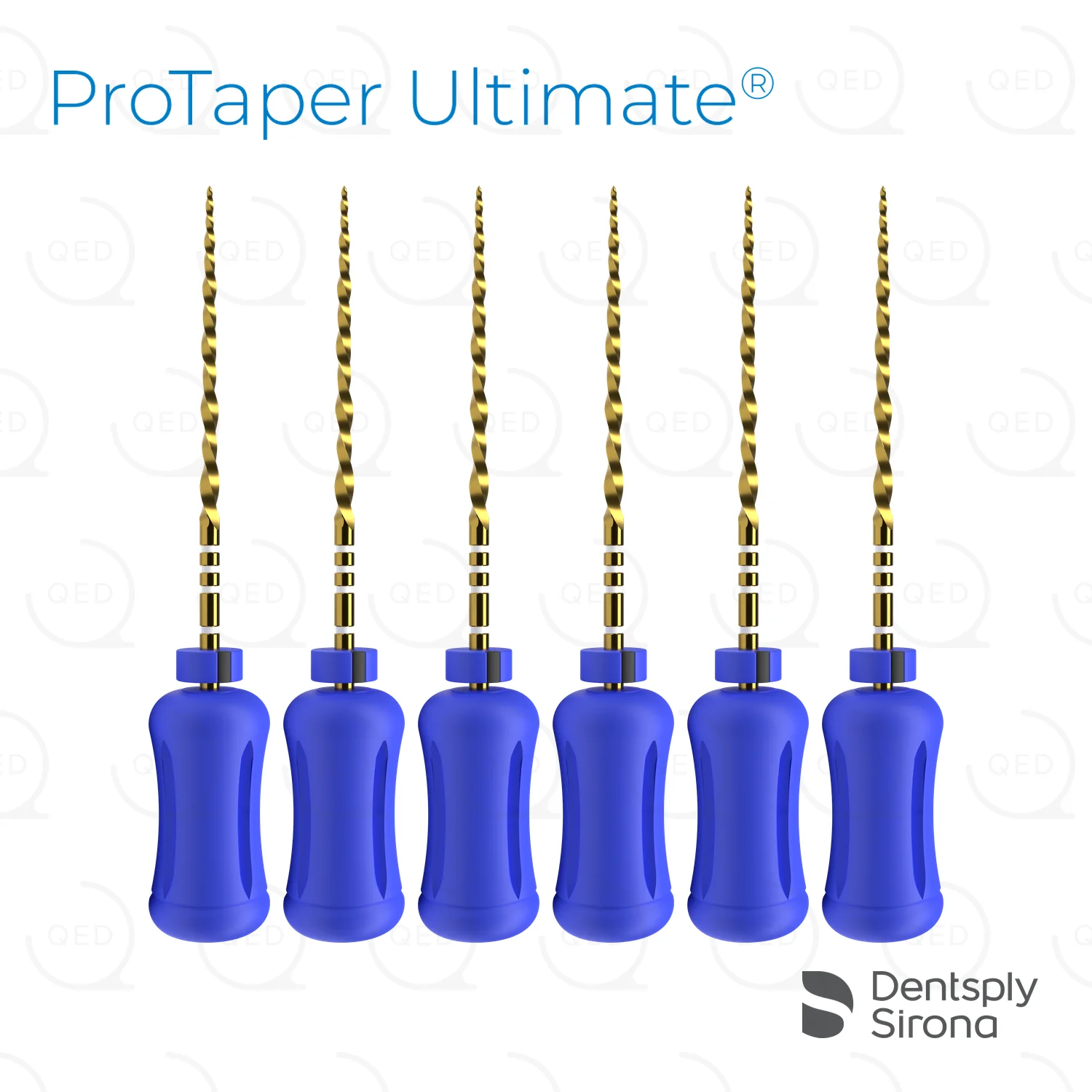
protaper ultimate® hand · fx · 31 mm
larger canalsstraighter canalshand use
the protaper ultimate® fx, without the motor. dentsply sirona make every file in the range in a hand version, and their fact file is plain about what changes: “a dedicated hand-use version is available for all protaper ultimate® files with the same technical features as the rotary ones.” this is the 31 mm version, for long roots that a 25 mm file will not take to working length.
this pack: protaper ultimate® fx hand file, 31 mm (pack of 6)
dentsply sirona · made by maillefer instruments holding sàrl, ballaigues, switzerland
| printed size | 035.012v – iso 35 tip, .12 variable taper |
| heat treatment | blue |
| role | dentsply sirona’s larger-canal sequence asks for “either a mechanically driven or manual auxiliary file, finisher fx”, in larger and straighter canals only. |
| rotary version | protaper ultimate® fx, 31 mm |
| other lengths | 21 mm · 25 mm |
› same file, same place in the sequence. slider, shaper, then f1 to f3 as the canal gauges; fx and fxl for larger, straighter canals.
› matched obturation still applies. dentsply sirona match paper points and cones to the colour and size of the last file used – by hand or by motor.
› discard on deformation. their procedure: inspect the flutes on removal, and discard any file showing unwinding, straightening or stretching.
how do i use the hand version?
follow the instructions for use supplied with the hand files. the dentsply sirona literature we hold sets out the motor-driven technique, so we will not describe a manual one in its place – ask us if you would like the ifu chased.
can i mix hand and rotary in one case?
dentsply sirona’s larger-canal sequence names fx and fxl as either mechanically driven or manual, and their fact file gives the hand files the same technical features. beyond that, follow the ifu.
| motor-driven | protaper ultimate® fx, 31 mm |
| full hand set | protaper ultimate® hand sequence, 31 mm (5) · slider, shaper, f1, f2, f3 |
| patency | a small stainless steel hand file in 31 mm, as the sequence asks for when the slider will not reach – there is no 31 mm c-pilot®, so ask us |
| dry | paper points, fx |
| fill and seal | conform fit® gp, fx · ah plus®, neosealer® ezflo, 25 mm tips or proroot® bio sealer |
protaper ultimate® hand fx, 31 mm (6) · 035.012v · blue heat treatment · niti hand file · dentsply sirona · ref bstpulh6310fx

protaper ultimate® hand · shaper · 31 mm
coronal shapingcurved canalshand use
the protaper ultimate® shaper, without the motor. dentsply sirona make every file in the range in a hand version, and their fact file is plain about what changes: “a dedicated hand-use version is available for all protaper ultimate® files with the same technical features as the rotary ones.” this is the 31 mm version, for long roots that a 25 mm file will not take to working length.
this pack: protaper ultimate® shaper hand file, 31 mm (pack of 6)
dentsply sirona · made by maillefer instruments holding sàrl, ballaigues, switzerland
| printed size | 020.004v – iso 20 tip, .04 variable taper |
| heat treatment | gold |
| role | dentsply sirona describe the shaper’s job as cutting and hauling debris in the coronal two-thirds, giving the finishers easy and safe access to the apical third. |
| rotary version | protaper ultimate® shaper, 31 mm |
| other lengths | 21 mm · 25 mm |
› same file, same place in the sequence. slider, shaper, then f1 to f3 as the canal gauges; fx and fxl for larger, straighter canals.
› matched obturation still applies. dentsply sirona match paper points and cones to the colour and size of the last file used – by hand or by motor.
› discard on deformation. their procedure: inspect the flutes on removal, and discard any file showing unwinding, straightening or stretching.
how do i use the hand version?
follow the instructions for use supplied with the hand files. the dentsply sirona literature we hold sets out the motor-driven technique, so we will not describe a manual one in its place – ask us if you would like the ifu chased.
can i mix hand and rotary in one case?
dentsply sirona’s larger-canal sequence names fx and fxl as either mechanically driven or manual, and their fact file gives the hand files the same technical features. beyond that, follow the ifu.
| motor-driven | protaper ultimate® shaper, 31 mm |
| full hand set | protaper ultimate® hand sequence, 31 mm (5) · slider, shaper, f1, f2, f3 |
| patency | a small stainless steel hand file in 31 mm, as the sequence asks for when the slider will not reach – there is no 31 mm c-pilot®, so ask us |
| dry | paper points, f1–f3 assortment |
| fill and seal | conform fit® gp, f1–f3 assortment · ah plus®, neosealer® ezflo, 25 mm tips or proroot® bio sealer |
protaper ultimate® hand shaper, 31 mm (6) · 020.004v · gold heat treatment · niti hand file · dentsply sirona · ref bstpulh6310sh

protaper ultimate® hand · slider · 31 mm
glide pathsecuring the canal pathhand use
the protaper ultimate® slider, without the motor. dentsply sirona make every file in the range in a hand version, and their fact file is plain about what changes: “a dedicated hand-use version is available for all protaper ultimate® files with the same technical features as the rotary ones.” this is the 31 mm version, for long roots that a 25 mm file will not take to working length.
this pack: protaper ultimate® slider hand file, 31 mm (pack of 6)
dentsply sirona · made by maillefer instruments holding sàrl, ballaigues, switzerland
| printed size | 016.002v – iso 16 tip, .02 variable taper |
| heat treatment | m-wire® |
| role | the slider secures the canal path to the terminus. dentsply sirona treat it during wire production for a certain rigidity, to remove restrictive dentine and calcifications without the systematic need of a k-file. |
| rotary version | protaper ultimate® slider, 31 mm |
| other lengths | 21 mm · 25 mm |
› same file, same place in the sequence. slider, shaper, then f1 to f3 as the canal gauges; fx and fxl for larger, straighter canals.
› matched obturation still applies. dentsply sirona match paper points and cones to the colour and size of the last file used – by hand or by motor.
› discard on deformation. their procedure: inspect the flutes on removal, and discard any file showing unwinding, straightening or stretching.
how do i use the hand version?
follow the instructions for use supplied with the hand files. the dentsply sirona literature we hold sets out the motor-driven technique, so we will not describe a manual one in its place – ask us if you would like the ifu chased.
can i mix hand and rotary in one case?
dentsply sirona’s larger-canal sequence names fx and fxl as either mechanically driven or manual, and their fact file gives the hand files the same technical features. beyond that, follow the ifu.
| motor-driven | protaper ultimate® slider, 31 mm |
| full hand set | protaper ultimate® hand sequence, 31 mm (5) · slider, shaper, f1, f2, f3 |
| patency | a small stainless steel hand file in 31 mm, as the sequence asks for when the slider will not reach – there is no 31 mm c-pilot®, so ask us |
| dry | paper points, f1–f3 assortment |
| fill and seal | conform fit® gp, f1–f3 assortment · ah plus®, neosealer® ezflo, 25 mm tips or proroot® bio sealer |
protaper ultimate® hand slider, 31 mm (6) · 016.002v · m-wire® heat treatment · niti hand file · dentsply sirona · ref bstpulh6310sl
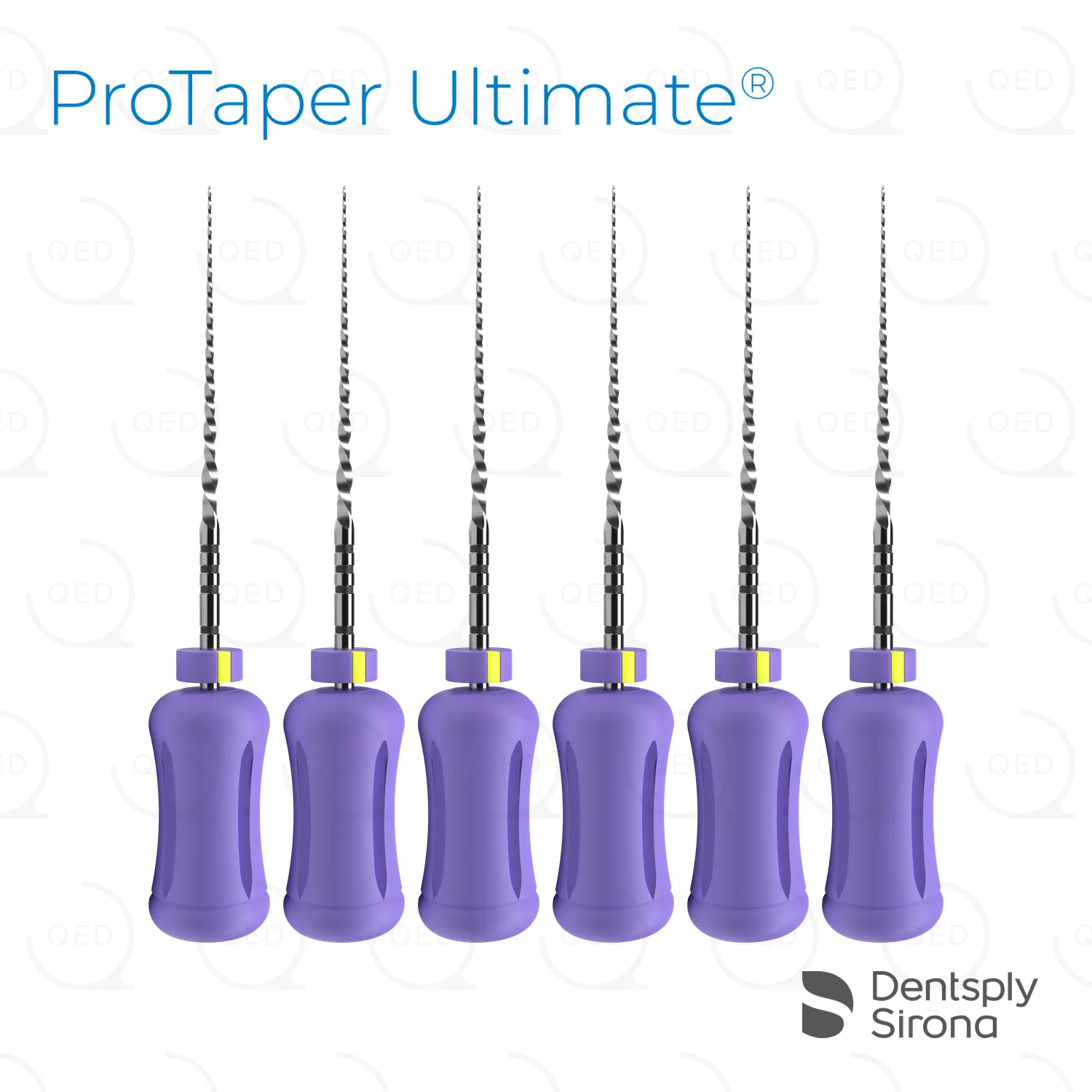
protaper ultimate® hand · fxl · 31 mm
large canalsstraighter canalshand use
the protaper ultimate® fxl, without the motor. dentsply sirona make every file in the range in a hand version, and their fact file is plain about what changes: “a dedicated hand-use version is available for all protaper ultimate® files with the same technical features as the rotary ones.” this is the 31 mm version, for long roots that a 25 mm file will not take to working length.
this pack: protaper ultimate® fxl hand file, 31 mm (pack of 6)
dentsply sirona · made by maillefer instruments holding sàrl, ballaigues, switzerland
| printed size | 050.010v – iso 50 tip, .10 variable taper |
| heat treatment | blue |
| role | used after fx in larger and straighter canals, and named by dentsply sirona as either mechanically driven or manual. |
| rotary version | protaper ultimate® fxl, 31 mm |
| other lengths | 21 mm · 25 mm |
› same file, same place in the sequence. slider, shaper, then f1 to f3 as the canal gauges; fx and fxl for larger, straighter canals.
› matched obturation still applies. dentsply sirona match paper points and cones to the colour and size of the last file used – by hand or by motor.
› discard on deformation. their procedure: inspect the flutes on removal, and discard any file showing unwinding, straightening or stretching.
how do i use the hand version?
follow the instructions for use supplied with the hand files. the dentsply sirona literature we hold sets out the motor-driven technique, so we will not describe a manual one in its place – ask us if you would like the ifu chased.
can i mix hand and rotary in one case?
dentsply sirona’s larger-canal sequence names fx and fxl as either mechanically driven or manual, and their fact file gives the hand files the same technical features. beyond that, follow the ifu.
| motor-driven | protaper ultimate® fxl, 31 mm |
| full hand set | protaper ultimate® hand sequence, 31 mm (5) · slider, shaper, f1, f2, f3 |
| patency | a small stainless steel hand file in 31 mm, as the sequence asks for when the slider will not reach – there is no 31 mm c-pilot®, so ask us |
| dry | paper points, fxl |
| fill and seal | conform fit® gp, fxl · ah plus®, neosealer® ezflo, 25 mm tips or proroot® bio sealer |
protaper ultimate® hand fxl, 31 mm (6) · 050.010v · blue heat treatment · niti hand file · dentsply sirona · ref bstpulh631fxl

protaper ultimate® · finisher f2 · 25 mm, pack of 6
apical shapingcurved canalsdeep shapestandard sequence
f1 went to length loose, and its flutes came out clean. dentsply sirona’s procedure picks up f2: an iso 25 tip on an 8% apical taper, gold heat-treated, and in their laboratory testing 30% more flexible and 30% more resistant to cyclic fatigue than the protaper gold® f2 it follows.
| +30% flex vs pt gold f2 | +30% fatigue vs pt gold f2 | 400 rpm 4–5.2 ncm |
dentsply sirona laboratory data on file (test 21/039), protaper ultimate® f2 against protaper gold® f2. motor settings from their fact file.
this pack: protaper ultimate® f2 rotary file, 25 mm (pack of 6)
dentsply sirona · made by maillefer instruments holding sàrl, ballaigues, switzerland
since its first introduction 20 years ago, each generation of protaper from dentsply sirona has stood for a trusted, reliable and predictable preparation method that enables excellent clinical outcomes for patients worldwide.
dentsply sirona, protaper ultimate® launch copy
the idea that has survived every generation is what dentsply sirona call deep shape – increased apical taper. their fact file sets out why: removing debris and smear layer by irrigation is less predictable in the apical part of the canal than the coronal, and the shape of the apical canal influences it. so every protaper ultimate® finisher carries an apical taper of at least 7%, and f2’s is 8%.
what is new in the fourth generation is how the work is divided. in dentsply sirona’s words: “the slider is used to create a reproducible pathway to the apical/canal terminus and paves the way for the shaper. the shaper’s enhanced cutting efficiency and hauling of debris in the coronal two-thirds provides an easy and safe access to the apical third for the finishers. the finishers finally create the protaper ultimate® deep shape.”
each file is treated for the job it does. the slider is m-wire®, treated during wire production for a certain rigidity to secure the canal path. the shaper and f1 to f3 are gold heat-treated after grinding, for the curve. fx and fxl are blue. every file runs at the same motor setting.
| sx | sx 19 mm · 020.003v · orifice opener, optional |
| slider | slider 25 mm · 016.002v · m-wire® · glide path to the terminus |
| shaper | shaper 25 mm · 020.004v · gold · coronal two-thirds |
| f1 | f1 25 mm · 020.007v · gold · 7% apical |
| f2 | this page · 025.008v · gold · 8% apical |
| f3 | f3 25 mm · 030.009v · gold · 9% apical |
| fx | fx 25 mm · 035.012v · blue · larger, straighter canals only |
| fxl | fxl 25 mm · 050.010v · blue · larger, straighter canals only |
› a parallelogram cross-section that changes along the file. variable acute angles let dentsply sirona tune cutting efficiency to the workload in each part of the canal, which they say also helps flexibility and unwinding resistance.
› off-set, not centred. alternating off-set machining puts the file’s centre of mass off its axis of rotation – less stress during cutting, more room for debris.
dentsply sirona tested protaper ultimate® against its own predecessor – a file we also stock, so the fair comparison. f2: +30% flexibility and +30% cyclic fatigue resistance. f1: +13% and +75%. laboratory data on file (test 21/039), not a published study. in their user evaluation of 21 dentists and 210 canals, 95% reported a sufficient deep shape for disinfection and 85–90% sufficient flexibility and unwinding resistance – internal data, labelled as such.
1 slider to the terminus. in the presence of a lubricant, passively, in one or more passes. working length by apex locator and radiograph; confirm patency. if the slider does not easily reach, a small stainless steel hand file first, then the slider again.
2 irrigate. irrigation needle in gently at the orifice, irrigating abundantly down to the coronal two-thirds.
3 shaper to length. in the presence of naocl, along the slidepath. on removal, irrigate, activate with the endoactivator®, re-irrigate. reconfirm working length.
4 f1, then read it. passively to length. apical flutes loaded with dentine: finished.
5 loose and clean? f2. this file, the same way. loaded: finished. loose and clean again: f3.
6 finished when the cone agrees. “the preparation is finished when the apical extent of any finisher is loaded with debris, and the corresponding gutta-percha point fits at the wl.”
summarised and quoted from the dentsply sirona, protaper ultimate® step-by-step procedure (linked under downloads). throughout: cradle the handpiece, avoid pushing, let the files progress passively; brushing outward or pecking lightly inward. your clinical judgement governs the case; the instructions for use govern the file.
dentsply sirona write irrigation into the procedure – after the slider, after the shaper, after every finisher – with recapitulation using a size 10 file or the endoactivator®, and a final 3-d disinfection before drying. a shorter file sequence shortens the mechanical part of the case, not the chemical one.
| irrigants | chlorax 5.25% · chlorax 2% · endo-solution 17% edta |
| delivery | dentsply sirona irrigation needles (40) · the needle named in the sequence |
| activation | smartlite pro endoactivator® complete kit · medium tips |
dentsply sirona’s obturation step is specific: dedicated protaper ultimate® absorbent points and conform fit® gutta-percha matched to the colour code and size of the last instrument used to prepare the canal. finished on f2, that is f2 paper points and f2 conform fit® cones.
the sealer goes with the cone, in the same step. on a dentsply sirona file, ah plus® is the manufacturer’s own – the epoxy sealer every other one is measured against. if you work bioceramic, neosealer® ezflo comes premixed with fine 29-gauge navitip™ cannulas, 25 mm to match this file – avalon biomed’s instructions take the tip no further than the middle third and express the sealer with a steady outward movement. resin or bioceramic is a real choice of technique rather than a ranking – we carry both because both are right in different hands.
then the coronal seal. the apical seal is only half the job: sdr® flow+ refill, universal places in 4 mm increments with one cure.
is f2 the file i will use most?
dentsply sirona’s procedure reaches f2 only when f1 is loose at length, and goes to f3 when f2 is too. the sequence pack puts all three on the tray until you know your own pattern.
do i still need a hand file before the slider?
not systematically. in dentsply sirona’s user evaluation the slider reached the terminus without a k-file in 63% of canals; where it does not easily reach, their procedure goes to a small stainless hand file – c-pilot® 010, 25 mm – then back to the slider.
which motor?
400 rpm and 4–5.2 ncm for every file in the range. dentsply sirona list a protaper ultimate® library among the x-smart® go’s presets; on the x-smart® pro+ it is set as a custom sequence, and on the vdw.silver® in a dr’s choice slot (vdw manual: up to 4.1 ncm).
when do i throw a file away?
inspect the flutes each time the file comes out. dentsply sirona: if deformation – unwinding, straightening or stretching – is noted, discard it and use a new file.
| if f2 is loose | protaper ultimate® f3, 25 mm |
| other versions | 21 mm · 31 mm · hand f2, 25 mm |
| patency | c-pilot® 010, 25 mm · a small stainless hand file, as the sequence asks for when the slider will not reach |
| dry | protaper ultimate® paper points, f2 |
| fill and seal | conform fit® gutta-percha, f2 · ah plus®, neosealer® ezflo, 25 mm tips or proroot® bio sealer |
| coronal seal | sdr® flow+ refill, universal |
| motor | x-smart® go · x-smart® pro+ · vdw.silver® reciproc® |
| starting out | protaper ultimate® treatment solution box |
› protaper ultimate® step-by-step guide (pdf, 0.4 mb, dentsply sirona, 2021) – both sequences and the full 20-step procedure. printed at launch: the smartlite pro endoactivator® it lists as coming soon is now in stock, and the sealer it names is no longer available – ah plus® is dentsply sirona’s current epoxy sealer.
worth knowing: fx and fxl are for larger and straighter canals only. the figures on this page are dentsply sirona’s own laboratory and user-evaluation data, not published studies. full indications, warnings and reprocessing are in the instructions for use.
protaper ultimate® f2, 25 mm (6) · 025.008v · iso 25, 8% apical taper, variable · gold heat treatment · parallelogram cross-section, off-set · niti rotary · 400 rpm, 4–5.2 ncm · dentsply sirona · ref bstpulr6250f2

trunatomy® assorted · 21 mm · 5 files
trying the systemone of eachmixed caseload
you do not know whether a trunatomy® case ends on prime, needs the small on the way, or goes up to medium until the canal tells you. this pack puts one of each on the tray: orifice modifier, glider, small, prime and medium. this is the 21 mm version, for short teeth or where opening is limited.
| 5 files, one of each | 0.8 mm shaping file wire | 500 rpm 1.5 ncm |
sizes as dentsply sirona print them. the “v” means variable taper; the taper shown is the average along the file, not the taper at the tip.
this pack: trunatomy® rotary files, assorted, 21 mm (pack of 5)
dentsply sirona · made by maillefer instruments holding sàrl, ballaigues, switzerland
| orifice modifier | 20.08 · coronal third, 7 mm of flutes |
| glider | 17.02v · glide path |
| small | 20.04v · narrow or severely curved canals, when prime stalls |
| prime | 26.04v · always the first shaping file |
| medium | 36.03v · when prime is loose at length |
| singles, same length | orifice modifier · glider · small · prime · medium |
pack contents as listed for this product. the large 46.02v is sold separately: large, 21 mm.
1 scout, then the orifice modifier. iso 010 k-file to the coronal two-thirds with a lubricant, then the orifice modifier until the coronal third is shaped (steps 4–5).
2 length, then the glider. working length by apex locator and radiograph, patency, then a reproducible glide path with the glider (steps 6–7).
3 always prime next. not progressing: small, then prime. loose at length with clean apical flutes: medium (steps 8–13).
4 confirm and fit. length by hand with the last file, matched cone, 3-d disinfection, matched points, fill (steps 14–16).
summarised from the dentsply sirona trunatomy® solution guide. the instructions for use govern.
why the assortment rather than singles?
because prime is the only shaping file dentsply sirona’s procedure uses on every case; the small and medium depend on the canal. once you know your own pattern, singles in packs of six are cheaper per file for the sizes you use most.
which motor settings?
dentsply sirona give one setting for every trunatomy® file: 500 rpm and 1.5 ncm. set it on any of the three endo motors we stock – x-smart® go · x-smart® pro+ · vdw.silver® reciproc®.
when do i throw a file away?
dentsply sirona’s procedure (step 11): inspect the cutting flutes routinely on removal for unwinding and straightening, and if deformation is noted, discard it and use a new trunatomy® instrument.
| other lengths | 25 mm · 31 mm |
| starting out | trunatomy® treatment solution box |
| scouting and patency | c-pilot® 010, 21 mm · for the iso 010 k-file scouting and patency steps |
| lubricant | glyde™ file prep · named in step 4 of the solution guide |
| irrigants | chlorax 5.25% · chlorax 2% · endo-solution 17% edta |
| delivery | dentsply sirona irrigation needles, 30g (40) |
| activation | smartlite pro endoactivator® |
| dry | trunatomy® paper points, prime · assorted |
| fill and seal | conform fit® gutta-percha, prime · ah plus®, neosealer® ezflo, 21 mm tips or proroot® bio sealer |
| coronal seal | sdr® flow+ refill, universal |
| motor | x-smart® go · x-smart® pro+ · vdw.silver® reciproc® |
› trunatomy® brochure (pdf, 0.7 mb, dentsply sirona, 06/2025) – the four shaping sizes, the product references and the published claims.
› trunatomy® solution guide (pdf, 0.1 mb, dentsply sirona, 06/2025) – the step-by-step technique at 500 rpm / 1.5 ncm, from access cavity to obturation.
› trunatomy® scientific manual (pdf, 0.7 mb, dentsply sirona, 12/2022) – the laboratory and clinical research behind the system.
› clinical case – dr jonathan cowie, bath (pdf, 0.2 mb, dentsply sirona) – long roots and a calcified system, reviewed at 14 months.
› trunatomy® clinical case collection (dentsply sirona uk website) – more cases, and the full case booklet to download.
trunatomy® assorted, 21 mm (5) · orifice modifier 20.08 · glider 17.02v · small 20.04v · prime 26.04v · medium 36.03v · 500 rpm · 1.5 ncm · dentsply sirona · ref bsttnmy521ast

trunatomy® assorted · 25 mm · 5 files
trying the systemone of eachmixed caseload
you do not know whether a trunatomy® case ends on prime, needs the small on the way, or goes up to medium until the canal tells you. this pack puts one of each on the tray: orifice modifier, glider, small, prime and medium. this is the 25 mm version, the middle of the three lengths.
| 5 files, one of each | 0.8 mm shaping file wire | 500 rpm 1.5 ncm |
sizes as dentsply sirona print them. the “v” means variable taper; the taper shown is the average along the file, not the taper at the tip.
this pack: trunatomy® rotary files, assorted, 25 mm (pack of 5)
dentsply sirona · made by maillefer instruments holding sàrl, ballaigues, switzerland
| orifice modifier | 20.08 · coronal third, 7 mm of flutes |
| glider | 17.02v · glide path |
| small | 20.04v · narrow or severely curved canals, when prime stalls |
| prime | 26.04v · always the first shaping file |
| medium | 36.03v · when prime is loose at length |
| singles, same length | orifice modifier · glider · small · prime · medium |
pack contents as listed for this product. the large 46.02v is sold separately: large, 25 mm.
1 scout, then the orifice modifier. iso 010 k-file to the coronal two-thirds with a lubricant, then the orifice modifier until the coronal third is shaped (steps 4–5).
2 length, then the glider. working length by apex locator and radiograph, patency, then a reproducible glide path with the glider (steps 6–7).
3 always prime next. not progressing: small, then prime. loose at length with clean apical flutes: medium (steps 8–13).
4 confirm and fit. length by hand with the last file, matched cone, 3-d disinfection, matched points, fill (steps 14–16).
summarised from the dentsply sirona trunatomy® solution guide. the instructions for use govern.
why the assortment rather than singles?
because prime is the only shaping file dentsply sirona’s procedure uses on every case; the small and medium depend on the canal. once you know your own pattern, singles in packs of six are cheaper per file for the sizes you use most.
which motor settings?
dentsply sirona give one setting for every trunatomy® file: 500 rpm and 1.5 ncm. set it on any of the three endo motors we stock – x-smart® go · x-smart® pro+ · vdw.silver® reciproc®.
when do i throw a file away?
dentsply sirona’s procedure (step 11): inspect the cutting flutes routinely on removal for unwinding and straightening, and if deformation is noted, discard it and use a new trunatomy® instrument.
| other lengths | 21 mm · 31 mm |
| starting out | trunatomy® treatment solution box |
| scouting and patency | c-pilot® 010, 25 mm · for the iso 010 k-file scouting and patency steps |
| lubricant | glyde™ file prep · named in step 4 of the solution guide |
| irrigants | chlorax 5.25% · chlorax 2% · endo-solution 17% edta |
| delivery | dentsply sirona irrigation needles, 30g (40) |
| activation | smartlite pro endoactivator® |
| dry | trunatomy® paper points, prime · assorted |
| fill and seal | conform fit® gutta-percha, prime · ah plus®, neosealer® ezflo, 25 mm tips or proroot® bio sealer |
| coronal seal | sdr® flow+ refill, universal |
| motor | x-smart® go · x-smart® pro+ · vdw.silver® reciproc® |
› trunatomy® brochure (pdf, 0.7 mb, dentsply sirona, 06/2025) – the four shaping sizes, the product references and the published claims.
› trunatomy® solution guide (pdf, 0.1 mb, dentsply sirona, 06/2025) – the step-by-step technique at 500 rpm / 1.5 ncm, from access cavity to obturation.
› trunatomy® scientific manual (pdf, 0.7 mb, dentsply sirona, 12/2022) – the laboratory and clinical research behind the system.
› clinical case – dr jonathan cowie, bath (pdf, 0.2 mb, dentsply sirona) – long roots and a calcified system, reviewed at 14 months.
› trunatomy® clinical case collection (dentsply sirona uk website) – more cases, and the full case booklet to download.
trunatomy® assorted, 25 mm (5) · orifice modifier 20.08 · glider 17.02v · small 20.04v · prime 26.04v · medium 36.03v · 500 rpm · 1.5 ncm · dentsply sirona · ref bsttnmy525ast

trunatomy® assorted · 31 mm · 5 files
trying the systemone of eachmixed caseload
you do not know whether a trunatomy® case ends on prime, needs the small on the way, or goes up to medium until the canal tells you. this pack puts one of each on the tray: orifice modifier, glider, small, prime and medium. this is the 31 mm version, for long roots a 25 mm file will not take to working length.
| 5 files, one of each | 0.8 mm shaping file wire | 500 rpm 1.5 ncm |
sizes as dentsply sirona print them. the “v” means variable taper; the taper shown is the average along the file, not the taper at the tip.
this pack: trunatomy® rotary files, assorted, 31 mm (pack of 5)
dentsply sirona · made by maillefer instruments holding sàrl, ballaigues, switzerland
| orifice modifier | 20.08 · coronal third, 7 mm of flutes |
| glider | 17.02v · glide path |
| small | 20.04v · narrow or severely curved canals, when prime stalls |
| prime | 26.04v · always the first shaping file |
| medium | 36.03v · when prime is loose at length |
| singles, same length | orifice modifier · glider · small · prime · medium |
pack contents as listed for this product. the large 46.02v is sold separately: large, 31 mm.
1 scout, then the orifice modifier. iso 010 k-file to the coronal two-thirds with a lubricant, then the orifice modifier until the coronal third is shaped (steps 4–5).
2 length, then the glider. working length by apex locator and radiograph, patency, then a reproducible glide path with the glider (steps 6–7).
3 always prime next. not progressing: small, then prime. loose at length with clean apical flutes: medium (steps 8–13).
4 confirm and fit. length by hand with the last file, matched cone, 3-d disinfection, matched points, fill (steps 14–16).
summarised from the dentsply sirona trunatomy® solution guide. the instructions for use govern.
why the assortment rather than singles?
because prime is the only shaping file dentsply sirona’s procedure uses on every case; the small and medium depend on the canal. once you know your own pattern, singles in packs of six are cheaper per file for the sizes you use most.
which motor settings?
dentsply sirona give one setting for every trunatomy® file: 500 rpm and 1.5 ncm. set it on any of the three endo motors we stock – x-smart® go · x-smart® pro+ · vdw.silver® reciproc®.
when do i throw a file away?
dentsply sirona’s procedure (step 11): inspect the cutting flutes routinely on removal for unwinding and straightening, and if deformation is noted, discard it and use a new trunatomy® instrument.
| other lengths | 21 mm · 25 mm |
| starting out | trunatomy® treatment solution box |
| scouting and patency | an iso 010 hand file in 31 mm for the scouting and patency steps – there is no 31 mm c-pilot®, so ask us |
| lubricant | glyde™ file prep · named in step 4 of the solution guide |
| irrigants | chlorax 5.25% · chlorax 2% · endo-solution 17% edta |
| delivery | dentsply sirona irrigation needles, 30g (40) |
| activation | smartlite pro endoactivator® |
| dry | trunatomy® paper points, prime · assorted |
| fill and seal | conform fit® gutta-percha, prime · ah plus®, neosealer® ezflo, 25 mm tips or proroot® bio sealer |
| coronal seal | sdr® flow+ refill, universal |
| motor | x-smart® go · x-smart® pro+ · vdw.silver® reciproc® |
› trunatomy® brochure (pdf, 0.7 mb, dentsply sirona, 06/2025) – the four shaping sizes, the product references and the published claims.
› trunatomy® solution guide (pdf, 0.1 mb, dentsply sirona, 06/2025) – the step-by-step technique at 500 rpm / 1.5 ncm, from access cavity to obturation.
› trunatomy® scientific manual (pdf, 0.7 mb, dentsply sirona, 12/2022) – the laboratory and clinical research behind the system.
› clinical case – dr jonathan cowie, bath (pdf, 0.2 mb, dentsply sirona) – long roots and a calcified system, reviewed at 14 months.
› trunatomy® clinical case collection (dentsply sirona uk website) – more cases, and the full case booklet to download.
trunatomy® assorted, 31 mm (5) · orifice modifier 20.08 · glider 17.02v · small 20.04v · prime 26.04v · medium 36.03v · 500 rpm · 1.5 ncm · dentsply sirona · ref bsttnmy531ast

trunatomy® · orifice modifier · 16 mm
coronal accessno straight-line accesspreserving peri-cervical dentine
straight-line access costs dentine at the neck of the tooth, and that is the part trunatomy® is designed to keep. the orifice modifier is the first rotary file in dentsply sirona’s sequence: it shapes the orifice to create the entry point for the glider and shaping files, and works only in the coronal third. the orifice modifier comes in one length, 16 mm.
| 20.08 tip / taper | 7 mm cutting flutes | 500 rpm 1.5 ncm |
sizes as dentsply sirona print them. the “v” means variable taper; the taper shown is the average along the file, not the taper at the tip. motor settings from the solution guide.
this pack: trunatomy® orifice modifier, 16 mm (pack of 6)
dentsply sirona · made by maillefer instruments holding sàrl, ballaigues, switzerland
› entry point, not a straight-line cavity. dentsply sirona’s solution guide: “no need for conventional straight line access.”
› coronal third only. step 5 of the solution guide: “the instrument has 7 mm of cutting flutes, insertion into the canal should not exceed the length of the cutting portion.”
› one length. dentsply sirona list it at 16 mm only – its job never takes it deeper than its flutes.
1 scout the coronal two-thirds. an iso 010 k-file with a lubricant such as glyde™ file prep, then irrigate (step 4).
2 orifice modifier. with irrigant in the canal, 2–3 gentle amplitudes of about 2–5 mm, repeated until the coronal third is shaped. irrigate and clean the flutes (step 5).
3 then the whole canal. scout to length with the iso 010 k-file, working length by apex locator and radiograph, confirm patency (step 6) – then the glider.
quoted and summarised from the dentsply sirona trunatomy® solution guide. your clinical judgement governs the case; the instructions for use govern the file.
| printed size | 20.08 – iso 20 tip, .08 taper |
| role | shapes the orifice, coronal third only |
| motor | 500 rpm · 1.5 ncm |
| other lengths | 16 mm only |
| the range | orifice modifier 20.08 · glider 17.02v · small 20.04v · prime 26.04v · medium 36.03v · large 46.02v |
do i still need to prepare an access cavity?
yes. step 3: “prepare a conservative access cavity sufficient enough to reveal all root canal orifices.” the orifice modifier works from there.
why is there no 21, 25 or 31 mm version?
because it never goes past its 7 mm of flutes. dentsply sirona list it at 16 mm only.
which motor settings?
dentsply sirona give one setting for every trunatomy® file: 500 rpm and 1.5 ncm. set it on any of the three endo motors we stock – x-smart® go · x-smart® pro+ · vdw.silver® reciproc®.
when do i throw a file away?
dentsply sirona’s procedure (step 11): inspect the cutting flutes routinely on removal for unwinding and straightening, and if deformation is noted, discard it and use a new trunatomy® instrument.
| next file | trunatomy® glider 17.02v, 25 mm |
| all five files | trunatomy® assorted, 25 mm (5) · also 21 and 31 mm |
| scouting and patency | c-pilot® 010, 25 mm · for the iso 010 k-file scouting and patency steps |
| lubricant | glyde™ file prep · named in step 4 of the solution guide |
| irrigants | chlorax 5.25% · chlorax 2% · endo-solution 17% edta |
| delivery | dentsply sirona irrigation needles, 30g (40) |
| activation | smartlite pro endoactivator® |
| dry | trunatomy® paper points, prime · assorted |
| fill and seal | conform fit® gutta-percha, prime · ah plus®, neosealer® ezflo, 25 mm tips or proroot® bio sealer |
| coronal seal | sdr® flow+ refill, universal |
| motor | x-smart® go · x-smart® pro+ · vdw.silver® reciproc® |
› trunatomy® brochure (pdf, 0.7 mb, dentsply sirona, 06/2025) – the four shaping sizes, the product references and the published claims.
› trunatomy® solution guide (pdf, 0.1 mb, dentsply sirona, 06/2025) – the step-by-step technique at 500 rpm / 1.5 ncm, from access cavity to obturation.
› trunatomy® scientific manual (pdf, 0.7 mb, dentsply sirona, 12/2022) – the laboratory and clinical research behind the system.
› clinical case – dr jonathan cowie, bath (pdf, 0.2 mb, dentsply sirona) – long roots and a calcified system, reviewed at 14 months.
› trunatomy® clinical case collection (dentsply sirona uk website) – more cases, and the full case booklet to download.
trunatomy® orifice modifier 20.08, 16 mm (6) · heat-treated niti rotary · 500 rpm · 1.5 ncm · dentsply sirona · ref bsttnmy616omd

trunatomy® · glider · 21 mm
glide pathbefore shapingreproducible path to length
dentsply sirona’s procedure does not start shaping until a glide path has been made and confirmed. the glider is the file for that step: 17.02v, run at the same 500 rpm and 1.5 ncm as every other file in the range, and taken to the working length you have already confirmed with an apex locator. this is the 21 mm version, for short teeth or where opening is limited.
| 17.02v tip / taper | step 7 in the procedure | 500 rpm 1.5 ncm |
sizes as dentsply sirona print them. the “v” means variable taper; the taper shown is the average along the file, not the taper at the tip. motor settings from the solution guide.
this pack: trunatomy® glider glide path file, iso size 17, .02v taper, 21 mm (pack of 6)
dentsply sirona · made by maillefer instruments holding sàrl, ballaigues, switzerland
› its step, word for word. step 7: “with irrigant in the canal, create and confirm a reproducible glide path using a trunatomy® glider in 2-3 gentle amplitudes approximately 2-5 mm.”
› after the hand file, not instead of it. dentsply sirona scout the whole canal with an iso 010 k-file and confirm working length and patency first (step 6).
› peck, never brush. the solution guide’s rule for every trunatomy® file: “low torque instruments - never brush, but peck with large amplitudes.”
1 iso 010 k-file to length. working length by apex locator with radiographs, irrigate, confirm patency (step 6).
2 glider to that length. with irrigant in the canal, 2–3 gentle amplitudes of about 2–5 mm. irrigate and repeat until the confirmed working length is reached (step 7).
3 then prime. every case starts shaping with trunatomy® prime (step 8).
quoted and summarised from the dentsply sirona trunatomy® solution guide. your clinical judgement governs the case; the instructions for use govern the file.
| printed size | 17.02v – iso 17 tip, .02 variable taper |
| role | glide path to working length |
| motor | 500 rpm · 1.5 ncm |
| other lengths | 25 mm · 31 mm |
| the range | orifice modifier 20.08 · glider 17.02v · small 20.04v · prime 26.04v · medium 36.03v · large 46.02v |
can i skip the glider?
dentsply sirona’s procedure does not: shaping starts only after a glide path has been created and confirmed. your clinical judgement governs the case; the instructions for use govern the file.
which motor settings?
dentsply sirona give one setting for every trunatomy® file: 500 rpm and 1.5 ncm. set it on any of the three endo motors we stock – x-smart® go · x-smart® pro+ · vdw.silver® reciproc®.
when do i throw a file away?
dentsply sirona’s procedure (step 11): inspect the cutting flutes routinely on removal for unwinding and straightening, and if deformation is noted, discard it and use a new trunatomy® instrument.
| next file | trunatomy® prime 26.04v, 21 mm |
| one of each | trunatomy® assorted, 21 mm (5) |
| scouting and patency | c-pilot® 010, 21 mm · for the iso 010 k-file scouting and patency steps |
| lubricant | glyde™ file prep · named in step 4 of the solution guide |
| irrigants | chlorax 5.25% · chlorax 2% · endo-solution 17% edta |
| delivery | dentsply sirona irrigation needles, 30g (40) |
| activation | smartlite pro endoactivator® |
| dry | trunatomy® paper points, prime · assorted |
| fill and seal | conform fit® gutta-percha, prime · ah plus®, neosealer® ezflo, 21 mm tips or proroot® bio sealer |
| coronal seal | sdr® flow+ refill, universal |
| motor | x-smart® go · x-smart® pro+ · vdw.silver® reciproc® |
› trunatomy® brochure (pdf, 0.7 mb, dentsply sirona, 06/2025) – the four shaping sizes, the product references and the published claims.
› trunatomy® solution guide (pdf, 0.1 mb, dentsply sirona, 06/2025) – the step-by-step technique at 500 rpm / 1.5 ncm, from access cavity to obturation.
› trunatomy® scientific manual (pdf, 0.7 mb, dentsply sirona, 12/2022) – the laboratory and clinical research behind the system.
› clinical case – dr jonathan cowie, bath (pdf, 0.2 mb, dentsply sirona) – long roots and a calcified system, reviewed at 14 months.
› trunatomy® clinical case collection (dentsply sirona uk website) – more cases, and the full case booklet to download.
trunatomy® glider 17.02v, 21 mm (6) · heat-treated niti rotary · 500 rpm · 1.5 ncm · dentsply sirona · ref bsttnmy621glr

trunatomy® · large · 21 mm
large straight canalsmaxillary centralspalatal and distal roots
a maxillary central incisor, some palatal or distal molar canals. those are dentsply sirona’s own examples of where the large belongs. it is the newest and largest trunatomy® shaping file, 46.02v, and it comes after medium – never instead of prime. this is the 21 mm version, for short teeth or where opening is limited.
| 46.02v tip / taper | 0.8 mm wire | 500 rpm 1.5 ncm |
sizes as dentsply sirona print them. the “v” means variable taper; the taper shown is the average along the file, not the taper at the tip. motor settings from the solution guide.
this pack: trunatomy® large rotary file, iso size 46, .02v taper, 21 mm (pack of 6)
dentsply sirona · made by maillefer instruments holding sàrl, ballaigues, switzerland
› where dentsply sirona say to use it. step 13: “use trunatomy® large in larger and straighter canals only, such as maxillary central incisors, some palatal or distal canals of molars.”
› after medium. prime loose at length, then medium, “and subsequently with large if needed”.
› newest size in the range. not in the 2019 launch literature; the current brochure lists it as now available.
1 prime, then medium. prime loose at length with clean apical flutes, medium to full working length (step 13).
2 large, if the canal is larger and straighter. guided gently to full working length (step 13).
3 confirm and fit. confirm working length by hand with the large, then try in the large cone (step 14).
quoted and summarised from the dentsply sirona trunatomy® solution guide. your clinical judgement governs the case; the instructions for use govern the file.
| printed size | 46.02v – iso 46 tip, .02 variable taper |
| role | larger and straighter canals only, after medium |
| motor | 500 rpm · 1.5 ncm |
| other lengths | 25 mm · 31 mm |
| the range | orifice modifier 20.08 · glider 17.02v · small 20.04v · prime 26.04v · medium 36.03v · large 46.02v |
can i use the large in a curved molar canal?
dentsply sirona limit it to larger and straighter canals and give their examples. a curved canal belongs to prime, small or medium.
why is the taper lower than the medium?
the .02v taper sits on a much larger iso 46 tip. dentsply sirona publish the size, not the reasoning, so we will not invent one.
which points and cone?
the large ones, matched to the last instrument used.
which motor settings?
dentsply sirona give one setting for every trunatomy® file: 500 rpm and 1.5 ncm. set it on any of the three endo motors we stock – x-smart® go · x-smart® pro+ · vdw.silver® reciproc®.
when do i throw a file away?
dentsply sirona’s procedure (step 11): inspect the cutting flutes routinely on removal for unwinding and straightening, and if deformation is noted, discard it and use a new trunatomy® instrument.
| one of each | trunatomy® assorted, 21 mm (5) |
| scouting and patency | c-pilot® 010, 21 mm · for the iso 010 k-file scouting and patency steps |
| lubricant | glyde™ file prep · named in step 4 of the solution guide |
| irrigants | chlorax 5.25% · chlorax 2% · endo-solution 17% edta |
| delivery | dentsply sirona irrigation needles, 30g (40) |
| activation | smartlite pro endoactivator® |
| dry | trunatomy® paper points, large · assorted |
| fill and seal | conform fit® gutta-percha, large · ah plus®, neosealer® ezflo, 21 mm tips or proroot® bio sealer |
| coronal seal | sdr® flow+ refill, universal |
| motor | x-smart® go · x-smart® pro+ · vdw.silver® reciproc® |
› trunatomy® brochure (pdf, 0.7 mb, dentsply sirona, 06/2025) – the four shaping sizes, the product references and the published claims.
› trunatomy® solution guide (pdf, 0.1 mb, dentsply sirona, 06/2025) – the step-by-step technique at 500 rpm / 1.5 ncm, from access cavity to obturation.
› trunatomy® scientific manual (pdf, 0.7 mb, dentsply sirona, 12/2022) – the laboratory and clinical research behind the system.
› clinical case – dr jonathan cowie, bath (pdf, 0.2 mb, dentsply sirona) – long roots and a calcified system, reviewed at 14 months.
› trunatomy® clinical case collection (dentsply sirona uk website) – more cases, and the full case booklet to download.
trunatomy® large 46.02v, 21 mm (6) · heat-treated niti rotary · 500 rpm · 1.5 ncm · dentsply sirona · ref bsttnmy621lrg
trunatomy® · medium · 21 mm
larger apexafter primestraighter canals
prime went to length, and came out loose with no dentinal debris in its apical flutes. then the apex is larger than prime, and dentsply sirona’s procedure continues with the medium – 36.03v, the same slim heat-treated niti and the same 500 rpm and 1.5 ncm. this is the 21 mm version, for short teeth or where opening is limited.
| 36.03v tip / taper | 0.8 mm wire | 500 rpm 1.5 ncm |
sizes as dentsply sirona print them. the “v” means variable taper; the taper shown is the average along the file, not the taper at the tip. motor settings from the solution guide.
this pack: trunatomy® medium rotary file, iso size 36, .03v taper, 21 mm (pack of 6)
dentsply sirona · made by maillefer instruments holding sàrl, ballaigues, switzerland
› when, in their words. step 13: “if trunatomy® prime is loose at length with no dentinal debris in the apical flutes, continue shaping with trunatomy® medium and subsequently with large if needed.”
› the same slim build. dedicated heat-treated niti on a 0.8 mm wire, against up to 1.2 mm for most generic variable tapered files, with an off-centred cross-section and regressive taper.
› straight anatomies. the solution guide’s front page puts medium and large after prime “if needed (straight anatomies)”.
1 prime first, and gauge it. prime to length; loose with clean apical flutes means the apex is larger (step 13).
2 medium to length. guide it gently to full working length to ensure completeness of shape (step 13).
3 still loose? large. in larger and straighter canals only. otherwise confirm length by hand and try in the medium cone (step 14).
quoted and summarised from the dentsply sirona trunatomy® solution guide. your clinical judgement governs the case; the instructions for use govern the file.
| printed size | 36.03v – iso 36 tip, .03 variable taper |
| role | larger apex, after prime |
| motor | 500 rpm · 1.5 ncm |
| other lengths | 25 mm · 31 mm |
| the range | orifice modifier 20.08 · glider 17.02v · small 20.04v · prime 26.04v · medium 36.03v · large 46.02v |
can i go straight to the medium?
not in dentsply sirona’s procedure: every case begins shaping with prime, and the medium follows only when prime is loose at length.
which points and cone?
the medium ones, matched to the last instrument used.
which motor settings?
dentsply sirona give one setting for every trunatomy® file: 500 rpm and 1.5 ncm. set it on any of the three endo motors we stock – x-smart® go · x-smart® pro+ · vdw.silver® reciproc®.
when do i throw a file away?
dentsply sirona’s procedure (step 11): inspect the cutting flutes routinely on removal for unwinding and straightening, and if deformation is noted, discard it and use a new trunatomy® instrument.
| if still loose, straight canals | trunatomy® large 46.02v, 21 mm |
| one of each | trunatomy® assorted, 21 mm (5) |
| scouting and patency | c-pilot® 010, 21 mm · for the iso 010 k-file scouting and patency steps |
| lubricant | glyde™ file prep · named in step 4 of the solution guide |
| irrigants | chlorax 5.25% · chlorax 2% · endo-solution 17% edta |
| delivery | dentsply sirona irrigation needles, 30g (40) |
| activation | smartlite pro endoactivator® |
| dry | trunatomy® paper points, medium · assorted |
| fill and seal | conform fit® gutta-percha, medium · ah plus®, neosealer® ezflo, 21 mm tips or proroot® bio sealer |
| coronal seal | sdr® flow+ refill, universal |
| motor | x-smart® go · x-smart® pro+ · vdw.silver® reciproc® |
› trunatomy® brochure (pdf, 0.7 mb, dentsply sirona, 06/2025) – the four shaping sizes, the product references and the published claims.
› trunatomy® solution guide (pdf, 0.1 mb, dentsply sirona, 06/2025) – the step-by-step technique at 500 rpm / 1.5 ncm, from access cavity to obturation.
› trunatomy® scientific manual (pdf, 0.7 mb, dentsply sirona, 12/2022) – the laboratory and clinical research behind the system.
› clinical case – dr jonathan cowie, bath (pdf, 0.2 mb, dentsply sirona) – long roots and a calcified system, reviewed at 14 months.
› trunatomy® clinical case collection (dentsply sirona uk website) – more cases, and the full case booklet to download.
trunatomy® medium 36.03v, 21 mm (6) · heat-treated niti rotary · 500 rpm · 1.5 ncm · dentsply sirona · ref bsttnmy621med

trunatomy® · prime · 21 mm
every caseshapingpreserving dentinecurved canals
“always begin shaping with trunatomy® prime.” that is step 8 of dentsply sirona’s procedure, in capitals. prime is the file the whole system is built around: a 26.04v shaping file on a slim 0.8 mm heat-treated niti wire, designed to shape the canal while removing dentine only where it is needed. this is the 21 mm version, for short teeth or where opening is limited.
| 26.04v tip / taper | 0.8 mm wire | 500 rpm 1.5 ncm |
sizes as dentsply sirona print them. the “v” means variable taper; the taper shown is the average along the file, not the taper at the tip. motor settings from the solution guide.
this pack: trunatomy® prime rotary file, iso size 26, .04v taper, 21 mm (pack of 6)
dentsply sirona · made by maillefer instruments holding sàrl, ballaigues, switzerland
› first, every time. after the orifice modifier and glider, prime goes in passively in the presence of sodium hypochlorite, 2–3 gentle amplitudes of about 2–5 mm, until working length (step 8).
› stop at length. step 8 again: “upon reaching length, remove the file to avoid over-enlarging the apical canal portion.”
› where the shape goes next. not progressing: the small, then back to prime. loose at length with clean apical flutes: medium, then large if needed (steps 10 and 13).
1 orifice modifier, then glider. coronal third shaped, working length confirmed, glide path made (steps 5–7).
2 prime to working length. passively, with sodium hypochlorite, 2–3 gentle amplitudes; irrigate, clean the flutes and repeat (steps 8–9).
3 read the apical flutes. loose at length with no dentinal debris: go to medium. otherwise confirm length by hand with prime and try in the prime cone (steps 13–14).
quoted and summarised from the dentsply sirona trunatomy® solution guide. your clinical judgement governs the case; the instructions for use govern the file.
| printed size | 26.04v – iso 26 tip, .04 variable taper |
| role | the shaping file every case starts with |
| motor | 500 rpm · 1.5 ncm |
| other lengths | 25 mm · 31 mm |
| the range | orifice modifier 20.08 · glider 17.02v · small 20.04v · prime 26.04v · medium 36.03v · large 46.02v |
when do i go past prime?
dentsply sirona’s procedure moves on only when prime is loose at length with no dentinal debris in the apical flutes – then medium, and large in larger, straighter canals.
which points and cone?
the prime ones. dentsply sirona match both to the colour code and size of the last instrument used.
which motor settings?
dentsply sirona give one setting for every trunatomy® file: 500 rpm and 1.5 ncm. set it on any of the three endo motors we stock – x-smart® go · x-smart® pro+ · vdw.silver® reciproc®.
when do i throw a file away?
dentsply sirona’s procedure (step 11): inspect the cutting flutes routinely on removal for unwinding and straightening, and if deformation is noted, discard it and use a new trunatomy® instrument.
| if prime is loose | trunatomy® medium 36.03v, 21 mm |
| one of each | trunatomy® assorted, 21 mm (5) |
| scouting and patency | c-pilot® 010, 21 mm · for the iso 010 k-file scouting and patency steps |
| lubricant | glyde™ file prep · named in step 4 of the solution guide |
| irrigants | chlorax 5.25% · chlorax 2% · endo-solution 17% edta |
| delivery | dentsply sirona irrigation needles, 30g (40) |
| activation | smartlite pro endoactivator® |
| dry | trunatomy® paper points, prime · assorted |
| fill and seal | conform fit® gutta-percha, prime · ah plus®, neosealer® ezflo, 21 mm tips or proroot® bio sealer |
| coronal seal | sdr® flow+ refill, universal |
| motor | x-smart® go · x-smart® pro+ · vdw.silver® reciproc® |
› trunatomy® brochure (pdf, 0.7 mb, dentsply sirona, 06/2025) – the four shaping sizes, the product references and the published claims.
› trunatomy® solution guide (pdf, 0.1 mb, dentsply sirona, 06/2025) – the step-by-step technique at 500 rpm / 1.5 ncm, from access cavity to obturation.
› trunatomy® scientific manual (pdf, 0.7 mb, dentsply sirona, 12/2022) – the laboratory and clinical research behind the system.
› clinical case – dr jonathan cowie, bath (pdf, 0.2 mb, dentsply sirona) – long roots and a calcified system, reviewed at 14 months.
› trunatomy® clinical case collection (dentsply sirona uk website) – more cases, and the full case booklet to download.
trunatomy® prime 26.04v, 21 mm (6) · heat-treated niti rotary · 500 rpm · 1.5 ncm · dentsply sirona · ref bsttnmy621prm

trunatomy® · small · 21 mm
narrow canalssevere curvatureswhen prime will not progress
dentsply sirona are candid about the small: “not needed in most cases”. every trunatomy® case starts shaping with prime. the small is the file you move to when prime does not progress easily, or for severe curvatures and narrow canals – and then you finish with prime. this is the 21 mm version, for short teeth or where opening is limited.
| 20.04v tip / taper | 0.8 mm wire | 500 rpm 1.5 ncm |
sizes as dentsply sirona print them. the “v” means variable taper; the taper shown is the average along the file, not the taper at the tip. motor settings from the solution guide.
this pack: trunatomy® small rotary file, iso size 20, .04v taper, 21 mm (pack of 6)
dentsply sirona · made by maillefer instruments holding sàrl, ballaigues, switzerland
› when, in their words. the solution guide: “small not needed in most cases but can help for severe curvatures or narrow canals” and “if the prime does not progress easily use the small then finish with prime”.
› slim wire, off-centred section. dentsply sirona build the shaping files from dedicated heat-treated niti on a 0.8 mm wire – against up to 1.2 mm for most generic variable tapered files – with an off-centred cross-section and regressive taper.
› always followed by prime. step 12 takes the small to working length, then prime to working length “to optimize the shape”.
1 prime will not progress. remove it, irrigate, and recapitulate with an iso 010 k-file to confirm patency (step 10).
2 small to length. passively, in the presence of sodium hypochlorite, no more than 2–3 gentle amplitudes of about 2–5 mm; irrigate and repeat (step 12).
3 prime to length. the same gentle in-and-out motion, to optimise the shape (step 12).
quoted and summarised from the dentsply sirona trunatomy® solution guide. your clinical judgement governs the case; the instructions for use govern the file.
| printed size | 20.04v – iso 20 tip, .04 variable taper |
| role | shaping file for narrow or severely curved canals, before prime |
| motor | 500 rpm · 1.5 ncm |
| other lengths | 25 mm · 31 mm |
| the range | orifice modifier 20.08 · glider 17.02v · small 20.04v · prime 26.04v · medium 36.03v · large 46.02v |
is the small the first shaping file?
no. step 8 is emphatic: “always begin shaping with trunatomy® prime”. the small comes in only when prime does not progress easily, or for severe curvatures and narrow canals.
which points and cone after the small?
dentsply sirona finish with prime after the small, so the prime ones – matched to the last instrument used.
which motor settings?
dentsply sirona give one setting for every trunatomy® file: 500 rpm and 1.5 ncm. set it on any of the three endo motors we stock – x-smart® go · x-smart® pro+ · vdw.silver® reciproc®.
when do i throw a file away?
dentsply sirona’s procedure (step 11): inspect the cutting flutes routinely on removal for unwinding and straightening, and if deformation is noted, discard it and use a new trunatomy® instrument.
| then finish with | trunatomy® prime 26.04v, 21 mm |
| one of each | trunatomy® assorted, 21 mm (5) |
| scouting and patency | c-pilot® 010, 21 mm · for the iso 010 k-file scouting and patency steps |
| lubricant | glyde™ file prep · named in step 4 of the solution guide |
| irrigants | chlorax 5.25% · chlorax 2% · endo-solution 17% edta |
| delivery | dentsply sirona irrigation needles, 30g (40) |
| activation | smartlite pro endoactivator® |
| dry | trunatomy® paper points, prime · assorted |
| fill and seal | conform fit® gutta-percha, prime · ah plus®, neosealer® ezflo, 21 mm tips or proroot® bio sealer |
| coronal seal | sdr® flow+ refill, universal |
| motor | x-smart® go · x-smart® pro+ · vdw.silver® reciproc® |
› trunatomy® brochure (pdf, 0.7 mb, dentsply sirona, 06/2025) – the four shaping sizes, the product references and the published claims.
› trunatomy® solution guide (pdf, 0.1 mb, dentsply sirona, 06/2025) – the step-by-step technique at 500 rpm / 1.5 ncm, from access cavity to obturation.
› trunatomy® scientific manual (pdf, 0.7 mb, dentsply sirona, 12/2022) – the laboratory and clinical research behind the system.
› clinical case – dr jonathan cowie, bath (pdf, 0.2 mb, dentsply sirona) – long roots and a calcified system, reviewed at 14 months.
› trunatomy® clinical case collection (dentsply sirona uk website) – more cases, and the full case booklet to download.
trunatomy® small 20.04v, 21 mm (6) · heat-treated niti rotary · 500 rpm · 1.5 ncm · dentsply sirona · ref bsttnmy621sml

trunatomy® · glider · 25 mm
glide pathbefore shapingreproducible path to length
dentsply sirona’s procedure does not start shaping until a glide path has been made and confirmed. the glider is the file for that step: 17.02v, run at the same 500 rpm and 1.5 ncm as every other file in the range, and taken to the working length you have already confirmed with an apex locator. this is the 25 mm version, the middle of the three lengths.
| 17.02v tip / taper | step 7 in the procedure | 500 rpm 1.5 ncm |
sizes as dentsply sirona print them. the “v” means variable taper; the taper shown is the average along the file, not the taper at the tip. motor settings from the solution guide.
this pack: trunatomy® glider glide path file, iso size 17, .02v taper, 25 mm (pack of 6)
dentsply sirona · made by maillefer instruments holding sàrl, ballaigues, switzerland
› its step, word for word. step 7: “with irrigant in the canal, create and confirm a reproducible glide path using a trunatomy® glider in 2-3 gentle amplitudes approximately 2-5 mm.”
› after the hand file, not instead of it. dentsply sirona scout the whole canal with an iso 010 k-file and confirm working length and patency first (step 6).
› peck, never brush. the solution guide’s rule for every trunatomy® file: “low torque instruments - never brush, but peck with large amplitudes.”
1 iso 010 k-file to length. working length by apex locator with radiographs, irrigate, confirm patency (step 6).
2 glider to that length. with irrigant in the canal, 2–3 gentle amplitudes of about 2–5 mm. irrigate and repeat until the confirmed working length is reached (step 7).
3 then prime. every case starts shaping with trunatomy® prime (step 8).
quoted and summarised from the dentsply sirona trunatomy® solution guide. your clinical judgement governs the case; the instructions for use govern the file.
| printed size | 17.02v – iso 17 tip, .02 variable taper |
| role | glide path to working length |
| motor | 500 rpm · 1.5 ncm |
| other lengths | 21 mm · 31 mm |
| the range | orifice modifier 20.08 · glider 17.02v · small 20.04v · prime 26.04v · medium 36.03v · large 46.02v |
can i skip the glider?
dentsply sirona’s procedure does not: shaping starts only after a glide path has been created and confirmed. your clinical judgement governs the case; the instructions for use govern the file.
which motor settings?
dentsply sirona give one setting for every trunatomy® file: 500 rpm and 1.5 ncm. set it on any of the three endo motors we stock – x-smart® go · x-smart® pro+ · vdw.silver® reciproc®.
when do i throw a file away?
dentsply sirona’s procedure (step 11): inspect the cutting flutes routinely on removal for unwinding and straightening, and if deformation is noted, discard it and use a new trunatomy® instrument.
| next file | trunatomy® prime 26.04v, 25 mm |
| one of each | trunatomy® assorted, 25 mm (5) |
| scouting and patency | c-pilot® 010, 25 mm · for the iso 010 k-file scouting and patency steps |
| lubricant | glyde™ file prep · named in step 4 of the solution guide |
| irrigants | chlorax 5.25% · chlorax 2% · endo-solution 17% edta |
| delivery | dentsply sirona irrigation needles, 30g (40) |
| activation | smartlite pro endoactivator® |
| dry | trunatomy® paper points, prime · assorted |
| fill and seal | conform fit® gutta-percha, prime · ah plus®, neosealer® ezflo, 25 mm tips or proroot® bio sealer |
| coronal seal | sdr® flow+ refill, universal |
| motor | x-smart® go · x-smart® pro+ · vdw.silver® reciproc® |
› trunatomy® brochure (pdf, 0.7 mb, dentsply sirona, 06/2025) – the four shaping sizes, the product references and the published claims.
› trunatomy® solution guide (pdf, 0.1 mb, dentsply sirona, 06/2025) – the step-by-step technique at 500 rpm / 1.5 ncm, from access cavity to obturation.
› trunatomy® scientific manual (pdf, 0.7 mb, dentsply sirona, 12/2022) – the laboratory and clinical research behind the system.
› clinical case – dr jonathan cowie, bath (pdf, 0.2 mb, dentsply sirona) – long roots and a calcified system, reviewed at 14 months.
› trunatomy® clinical case collection (dentsply sirona uk website) – more cases, and the full case booklet to download.
trunatomy® glider 17.02v, 25 mm (6) · heat-treated niti rotary · 500 rpm · 1.5 ncm · dentsply sirona · ref bsttnmy625glr

trunatomy® · large · 25 mm
large straight canalsmaxillary centralspalatal and distal roots
a maxillary central incisor, some palatal or distal molar canals. those are dentsply sirona’s own examples of where the large belongs. it is the newest and largest trunatomy® shaping file, 46.02v, and it comes after medium – never instead of prime. this is the 25 mm version, the middle of the three lengths.
| 46.02v tip / taper | 0.8 mm wire | 500 rpm 1.5 ncm |
sizes as dentsply sirona print them. the “v” means variable taper; the taper shown is the average along the file, not the taper at the tip. motor settings from the solution guide.
this pack: trunatomy® large rotary file, iso size 46, .02v taper, 25 mm (pack of 6)
dentsply sirona · made by maillefer instruments holding sàrl, ballaigues, switzerland
› where dentsply sirona say to use it. step 13: “use trunatomy® large in larger and straighter canals only, such as maxillary central incisors, some palatal or distal canals of molars.”
› after medium. prime loose at length, then medium, “and subsequently with large if needed”.
› newest size in the range. not in the 2019 launch literature; the current brochure lists it as now available.
1 prime, then medium. prime loose at length with clean apical flutes, medium to full working length (step 13).
2 large, if the canal is larger and straighter. guided gently to full working length (step 13).
3 confirm and fit. confirm working length by hand with the large, then try in the large cone (step 14).
quoted and summarised from the dentsply sirona trunatomy® solution guide. your clinical judgement governs the case; the instructions for use govern the file.
| printed size | 46.02v – iso 46 tip, .02 variable taper |
| role | larger and straighter canals only, after medium |
| motor | 500 rpm · 1.5 ncm |
| other lengths | 21 mm · 31 mm |
| the range | orifice modifier 20.08 · glider 17.02v · small 20.04v · prime 26.04v · medium 36.03v · large 46.02v |
can i use the large in a curved molar canal?
dentsply sirona limit it to larger and straighter canals and give their examples. a curved canal belongs to prime, small or medium.
why is the taper lower than the medium?
the .02v taper sits on a much larger iso 46 tip. dentsply sirona publish the size, not the reasoning, so we will not invent one.
which points and cone?
the large ones, matched to the last instrument used.
which motor settings?
dentsply sirona give one setting for every trunatomy® file: 500 rpm and 1.5 ncm. set it on any of the three endo motors we stock – x-smart® go · x-smart® pro+ · vdw.silver® reciproc®.
when do i throw a file away?
dentsply sirona’s procedure (step 11): inspect the cutting flutes routinely on removal for unwinding and straightening, and if deformation is noted, discard it and use a new trunatomy® instrument.
| one of each | trunatomy® assorted, 25 mm (5) |
| scouting and patency | c-pilot® 010, 25 mm · for the iso 010 k-file scouting and patency steps |
| lubricant | glyde™ file prep · named in step 4 of the solution guide |
| irrigants | chlorax 5.25% · chlorax 2% · endo-solution 17% edta |
| delivery | dentsply sirona irrigation needles, 30g (40) |
| activation | smartlite pro endoactivator® |
| dry | trunatomy® paper points, large · assorted |
| fill and seal | conform fit® gutta-percha, large · ah plus®, neosealer® ezflo, 25 mm tips or proroot® bio sealer |
| coronal seal | sdr® flow+ refill, universal |
| motor | x-smart® go · x-smart® pro+ · vdw.silver® reciproc® |
› trunatomy® brochure (pdf, 0.7 mb, dentsply sirona, 06/2025) – the four shaping sizes, the product references and the published claims.
› trunatomy® solution guide (pdf, 0.1 mb, dentsply sirona, 06/2025) – the step-by-step technique at 500 rpm / 1.5 ncm, from access cavity to obturation.
› trunatomy® scientific manual (pdf, 0.7 mb, dentsply sirona, 12/2022) – the laboratory and clinical research behind the system.
› clinical case – dr jonathan cowie, bath (pdf, 0.2 mb, dentsply sirona) – long roots and a calcified system, reviewed at 14 months.
› trunatomy® clinical case collection (dentsply sirona uk website) – more cases, and the full case booklet to download.
trunatomy® large 46.02v, 25 mm (6) · heat-treated niti rotary · 500 rpm · 1.5 ncm · dentsply sirona · ref bsttnmy625lrg
trunatomy® · medium · 25 mm
larger apexafter primestraighter canals
prime went to length, and came out loose with no dentinal debris in its apical flutes. then the apex is larger than prime, and dentsply sirona’s procedure continues with the medium – 36.03v, the same slim heat-treated niti and the same 500 rpm and 1.5 ncm. this is the 25 mm version, the middle of the three lengths.
| 36.03v tip / taper | 0.8 mm wire | 500 rpm 1.5 ncm |
sizes as dentsply sirona print them. the “v” means variable taper; the taper shown is the average along the file, not the taper at the tip. motor settings from the solution guide.
this pack: trunatomy® medium rotary file, iso size 36, .03v taper, 25 mm (pack of 6)
dentsply sirona · made by maillefer instruments holding sàrl, ballaigues, switzerland
› when, in their words. step 13: “if trunatomy® prime is loose at length with no dentinal debris in the apical flutes, continue shaping with trunatomy® medium and subsequently with large if needed.”
› the same slim build. dedicated heat-treated niti on a 0.8 mm wire, against up to 1.2 mm for most generic variable tapered files, with an off-centred cross-section and regressive taper.
› straight anatomies. the solution guide’s front page puts medium and large after prime “if needed (straight anatomies)”.
1 prime first, and gauge it. prime to length; loose with clean apical flutes means the apex is larger (step 13).
2 medium to length. guide it gently to full working length to ensure completeness of shape (step 13).
3 still loose? large. in larger and straighter canals only. otherwise confirm length by hand and try in the medium cone (step 14).
quoted and summarised from the dentsply sirona trunatomy® solution guide. your clinical judgement governs the case; the instructions for use govern the file.
| printed size | 36.03v – iso 36 tip, .03 variable taper |
| role | larger apex, after prime |
| motor | 500 rpm · 1.5 ncm |
| other lengths | 21 mm · 31 mm |
| the range | orifice modifier 20.08 · glider 17.02v · small 20.04v · prime 26.04v · medium 36.03v · large 46.02v |
can i go straight to the medium?
not in dentsply sirona’s procedure: every case begins shaping with prime, and the medium follows only when prime is loose at length.
which points and cone?
the medium ones, matched to the last instrument used.
which motor settings?
dentsply sirona give one setting for every trunatomy® file: 500 rpm and 1.5 ncm. set it on any of the three endo motors we stock – x-smart® go · x-smart® pro+ · vdw.silver® reciproc®.
when do i throw a file away?
dentsply sirona’s procedure (step 11): inspect the cutting flutes routinely on removal for unwinding and straightening, and if deformation is noted, discard it and use a new trunatomy® instrument.
| if still loose, straight canals | trunatomy® large 46.02v, 25 mm |
| one of each | trunatomy® assorted, 25 mm (5) |
| scouting and patency | c-pilot® 010, 25 mm · for the iso 010 k-file scouting and patency steps |
| lubricant | glyde™ file prep · named in step 4 of the solution guide |
| irrigants | chlorax 5.25% · chlorax 2% · endo-solution 17% edta |
| delivery | dentsply sirona irrigation needles, 30g (40) |
| activation | smartlite pro endoactivator® |
| dry | trunatomy® paper points, medium · assorted |
| fill and seal | conform fit® gutta-percha, medium · ah plus®, neosealer® ezflo, 25 mm tips or proroot® bio sealer |
| coronal seal | sdr® flow+ refill, universal |
| motor | x-smart® go · x-smart® pro+ · vdw.silver® reciproc® |
› trunatomy® brochure (pdf, 0.7 mb, dentsply sirona, 06/2025) – the four shaping sizes, the product references and the published claims.
› trunatomy® solution guide (pdf, 0.1 mb, dentsply sirona, 06/2025) – the step-by-step technique at 500 rpm / 1.5 ncm, from access cavity to obturation.
› trunatomy® scientific manual (pdf, 0.7 mb, dentsply sirona, 12/2022) – the laboratory and clinical research behind the system.
› clinical case – dr jonathan cowie, bath (pdf, 0.2 mb, dentsply sirona) – long roots and a calcified system, reviewed at 14 months.
› trunatomy® clinical case collection (dentsply sirona uk website) – more cases, and the full case booklet to download.
trunatomy® medium 36.03v, 25 mm (6) · heat-treated niti rotary · 500 rpm · 1.5 ncm · dentsply sirona · ref bsttnmy625med

trunatomy® · prime · 25 mm
every caseshapingpreserving dentinecurved canals
“always begin shaping with trunatomy® prime.” that is step 8 of dentsply sirona’s procedure, in capitals. prime is the file the whole system is built around: a 26.04v shaping file on a slim 0.8 mm heat-treated niti wire, designed to shape the canal while removing dentine only where it is needed. this is the 25 mm version, the middle of the three lengths.
| 26.04v tip / taper | 0.8 mm wire | 500 rpm 1.5 ncm |
sizes as dentsply sirona print them. the “v” means variable taper; the taper shown is the average along the file, not the taper at the tip. motor settings from the solution guide.
this pack: trunatomy® prime rotary file, iso size 26, .04v taper, 25 mm (pack of 6)
dentsply sirona · made by maillefer instruments holding sàrl, ballaigues, switzerland
› first, every time. after the orifice modifier and glider, prime goes in passively in the presence of sodium hypochlorite, 2–3 gentle amplitudes of about 2–5 mm, until working length (step 8).
› stop at length. step 8 again: “upon reaching length, remove the file to avoid over-enlarging the apical canal portion.”
› where the shape goes next. not progressing: the small, then back to prime. loose at length with clean apical flutes: medium, then large if needed (steps 10 and 13).
1 orifice modifier, then glider. coronal third shaped, working length confirmed, glide path made (steps 5–7).
2 prime to working length. passively, with sodium hypochlorite, 2–3 gentle amplitudes; irrigate, clean the flutes and repeat (steps 8–9).
3 read the apical flutes. loose at length with no dentinal debris: go to medium. otherwise confirm length by hand with prime and try in the prime cone (steps 13–14).
quoted and summarised from the dentsply sirona trunatomy® solution guide. your clinical judgement governs the case; the instructions for use govern the file.
| printed size | 26.04v – iso 26 tip, .04 variable taper |
| role | the shaping file every case starts with |
| motor | 500 rpm · 1.5 ncm |
| other lengths | 21 mm · 31 mm |
| the range | orifice modifier 20.08 · glider 17.02v · small 20.04v · prime 26.04v · medium 36.03v · large 46.02v |
the idea behind the range is dentine preservation. dentsply sirona’s brochure puts it in one line: a unique combination of features “enables efficient root canal treatment while removing dentin only where needed.” that is their internal data, and they label it so. what they build it from is published in plain terms:
› a 0.8 mm wire. dedicated heat-treated niti, against up to 1.2 mm for most generic variable tapered files.
› an off-centred cross-section with a regressive taper. patented, in dentsply sirona’s words, on the shaping files.
› no conventional straight-line access. the orifice modifier creates the entry point instead; dentsply sirona say trunatomy® preserves dentine in the peri-cervical area while ensuring sufficient apical debridement (data on file).
› low torque, higher speed. one setting across the range, 500 rpm and 1.5 ncm – and one motion: “never brush, but peck with large amplitudes.”
| 1. orifice modifier | orifice modifier 20.08, 16 mm · coronal third, no deeper than its 7 mm of flutes |
| 2. glider | glider 17.02v, 25 mm · reproducible glide path to confirmed length |
| 3. prime | this file · always the first shaping file |
| if prime stalls | small 20.04v, 25 mm · then finish with prime |
| if prime is loose | medium 36.03v, 25 mm · then large 46.02v in larger, straighter canals |
| then | confirm length by hand with the last file, try in the matched conform fit® cone, 3-d disinfection, dry with matched points, fill |
steps 5–16 of the dentsply sirona trunatomy® solution guide, summarised.
the sealer goes in with the cone. dentsply sirona’s procedure names ah plus®, their own epoxy sealer. if you work bioceramic, neosealer® ezflo, 25 mm tips comes premixed with fine 29-gauge navitip™ cannulas – resin or bioceramic is a choice of technique rather than a ranking, and we carry both. then a coronal seal: sdr® flow+ refill, universal.
when do i go past prime?
dentsply sirona’s procedure moves on only when prime is loose at length with no dentinal debris in the apical flutes – then medium, and large in larger, straighter canals.
which points and cone?
the prime ones. dentsply sirona match both to the colour code and size of the last instrument used.
which motor settings?
dentsply sirona give one setting for every trunatomy® file: 500 rpm and 1.5 ncm. set it on any of the three endo motors we stock – x-smart® go · x-smart® pro+ · vdw.silver® reciproc®.
when do i throw a file away?
dentsply sirona’s procedure (step 11): inspect the cutting flutes routinely on removal for unwinding and straightening, and if deformation is noted, discard it and use a new trunatomy® instrument.
| if prime is loose | trunatomy® medium 36.03v, 25 mm |
| one of each | trunatomy® assorted, 25 mm (5) |
| scouting and patency | c-pilot® 010, 25 mm · for the iso 010 k-file scouting and patency steps |
| lubricant | glyde™ file prep · named in step 4 of the solution guide |
| irrigants | chlorax 5.25% · chlorax 2% · endo-solution 17% edta |
| delivery | dentsply sirona irrigation needles, 30g (40) |
| activation | smartlite pro endoactivator® |
| dry | trunatomy® paper points, prime · assorted |
| fill and seal | conform fit® gutta-percha, prime · ah plus®, neosealer® ezflo, 25 mm tips or proroot® bio sealer |
| coronal seal | sdr® flow+ refill, universal |
| motor | x-smart® go · x-smart® pro+ · vdw.silver® reciproc® |
› trunatomy® brochure (pdf, 0.7 mb, dentsply sirona, 06/2025) – the four shaping sizes, the product references and the published claims.
› trunatomy® solution guide (pdf, 0.1 mb, dentsply sirona, 06/2025) – the step-by-step technique at 500 rpm / 1.5 ncm, from access cavity to obturation.
› trunatomy® scientific manual (pdf, 0.7 mb, dentsply sirona, 12/2022) – the laboratory and clinical research behind the system.
› clinical case – dr jonathan cowie, bath (pdf, 0.2 mb, dentsply sirona) – long roots and a calcified system, reviewed at 14 months.
› trunatomy® clinical case collection (dentsply sirona uk website) – more cases, and the full case booklet to download.
trunatomy® prime 26.04v, 25 mm (6) · heat-treated niti rotary · 500 rpm · 1.5 ncm · dentsply sirona · ref bsttnmy625prm

trunatomy® · small · 25 mm
narrow canalssevere curvatureswhen prime will not progress
dentsply sirona are candid about the small: “not needed in most cases”. every trunatomy® case starts shaping with prime. the small is the file you move to when prime does not progress easily, or for severe curvatures and narrow canals – and then you finish with prime. this is the 25 mm version, the middle of the three lengths.
| 20.04v tip / taper | 0.8 mm wire | 500 rpm 1.5 ncm |
sizes as dentsply sirona print them. the “v” means variable taper; the taper shown is the average along the file, not the taper at the tip. motor settings from the solution guide.
this pack: trunatomy® small rotary file, iso size 20, .04v taper, 25 mm (pack of 6)
dentsply sirona · made by maillefer instruments holding sàrl, ballaigues, switzerland
› when, in their words. the solution guide: “small not needed in most cases but can help for severe curvatures or narrow canals” and “if the prime does not progress easily use the small then finish with prime”.
› slim wire, off-centred section. dentsply sirona build the shaping files from dedicated heat-treated niti on a 0.8 mm wire – against up to 1.2 mm for most generic variable tapered files – with an off-centred cross-section and regressive taper.
› always followed by prime. step 12 takes the small to working length, then prime to working length “to optimize the shape”.
1 prime will not progress. remove it, irrigate, and recapitulate with an iso 010 k-file to confirm patency (step 10).
2 small to length. passively, in the presence of sodium hypochlorite, no more than 2–3 gentle amplitudes of about 2–5 mm; irrigate and repeat (step 12).
3 prime to length. the same gentle in-and-out motion, to optimise the shape (step 12).
quoted and summarised from the dentsply sirona trunatomy® solution guide. your clinical judgement governs the case; the instructions for use govern the file.
| printed size | 20.04v – iso 20 tip, .04 variable taper |
| role | shaping file for narrow or severely curved canals, before prime |
| motor | 500 rpm · 1.5 ncm |
| other lengths | 21 mm · 31 mm |
| the range | orifice modifier 20.08 · glider 17.02v · small 20.04v · prime 26.04v · medium 36.03v · large 46.02v |
is the small the first shaping file?
no. step 8 is emphatic: “always begin shaping with trunatomy® prime”. the small comes in only when prime does not progress easily, or for severe curvatures and narrow canals.
which points and cone after the small?
dentsply sirona finish with prime after the small, so the prime ones – matched to the last instrument used.
which motor settings?
dentsply sirona give one setting for every trunatomy® file: 500 rpm and 1.5 ncm. set it on any of the three endo motors we stock – x-smart® go · x-smart® pro+ · vdw.silver® reciproc®.
when do i throw a file away?
dentsply sirona’s procedure (step 11): inspect the cutting flutes routinely on removal for unwinding and straightening, and if deformation is noted, discard it and use a new trunatomy® instrument.
| then finish with | trunatomy® prime 26.04v, 25 mm |
| one of each | trunatomy® assorted, 25 mm (5) |
| scouting and patency | c-pilot® 010, 25 mm · for the iso 010 k-file scouting and patency steps |
| lubricant | glyde™ file prep · named in step 4 of the solution guide |
| irrigants | chlorax 5.25% · chlorax 2% · endo-solution 17% edta |
| delivery | dentsply sirona irrigation needles, 30g (40) |
| activation | smartlite pro endoactivator® |
| dry | trunatomy® paper points, prime · assorted |
| fill and seal | conform fit® gutta-percha, prime · ah plus®, neosealer® ezflo, 25 mm tips or proroot® bio sealer |
| coronal seal | sdr® flow+ refill, universal |
| motor | x-smart® go · x-smart® pro+ · vdw.silver® reciproc® |
› trunatomy® brochure (pdf, 0.7 mb, dentsply sirona, 06/2025) – the four shaping sizes, the product references and the published claims.
› trunatomy® solution guide (pdf, 0.1 mb, dentsply sirona, 06/2025) – the step-by-step technique at 500 rpm / 1.5 ncm, from access cavity to obturation.
› trunatomy® scientific manual (pdf, 0.7 mb, dentsply sirona, 12/2022) – the laboratory and clinical research behind the system.
› clinical case – dr jonathan cowie, bath (pdf, 0.2 mb, dentsply sirona) – long roots and a calcified system, reviewed at 14 months.
› trunatomy® clinical case collection (dentsply sirona uk website) – more cases, and the full case booklet to download.
trunatomy® small 20.04v, 25 mm (6) · heat-treated niti rotary · 500 rpm · 1.5 ncm · dentsply sirona · ref bsttnmy625sml

trunatomy® · glider · 31 mm
glide pathbefore shapingreproducible path to length
dentsply sirona’s procedure does not start shaping until a glide path has been made and confirmed. the glider is the file for that step: 17.02v, run at the same 500 rpm and 1.5 ncm as every other file in the range, and taken to the working length you have already confirmed with an apex locator. this is the 31 mm version, for long roots a 25 mm file will not take to working length.
| 17.02v tip / taper | step 7 in the procedure | 500 rpm 1.5 ncm |
sizes as dentsply sirona print them. the “v” means variable taper; the taper shown is the average along the file, not the taper at the tip. motor settings from the solution guide.
this pack: trunatomy® glider glide path file, iso size 17, .02v taper, 31 mm (pack of 6)
dentsply sirona · made by maillefer instruments holding sàrl, ballaigues, switzerland
› its step, word for word. step 7: “with irrigant in the canal, create and confirm a reproducible glide path using a trunatomy® glider in 2-3 gentle amplitudes approximately 2-5 mm.”
› after the hand file, not instead of it. dentsply sirona scout the whole canal with an iso 010 k-file and confirm working length and patency first (step 6).
› peck, never brush. the solution guide’s rule for every trunatomy® file: “low torque instruments - never brush, but peck with large amplitudes.”
1 iso 010 k-file to length. working length by apex locator with radiographs, irrigate, confirm patency (step 6).
2 glider to that length. with irrigant in the canal, 2–3 gentle amplitudes of about 2–5 mm. irrigate and repeat until the confirmed working length is reached (step 7).
3 then prime. every case starts shaping with trunatomy® prime (step 8).
quoted and summarised from the dentsply sirona trunatomy® solution guide. your clinical judgement governs the case; the instructions for use govern the file.
| printed size | 17.02v – iso 17 tip, .02 variable taper |
| role | glide path to working length |
| motor | 500 rpm · 1.5 ncm |
| other lengths | 21 mm · 25 mm |
| the range | orifice modifier 20.08 · glider 17.02v · small 20.04v · prime 26.04v · medium 36.03v · large 46.02v |
can i skip the glider?
dentsply sirona’s procedure does not: shaping starts only after a glide path has been created and confirmed. your clinical judgement governs the case; the instructions for use govern the file.
which motor settings?
dentsply sirona give one setting for every trunatomy® file: 500 rpm and 1.5 ncm. set it on any of the three endo motors we stock – x-smart® go · x-smart® pro+ · vdw.silver® reciproc®.
when do i throw a file away?
dentsply sirona’s procedure (step 11): inspect the cutting flutes routinely on removal for unwinding and straightening, and if deformation is noted, discard it and use a new trunatomy® instrument.
| next file | trunatomy® prime 26.04v, 31 mm |
| one of each | trunatomy® assorted, 31 mm (5) |
| scouting and patency | an iso 010 hand file in 31 mm for the scouting and patency steps – there is no 31 mm c-pilot®, so ask us |
| lubricant | glyde™ file prep · named in step 4 of the solution guide |
| irrigants | chlorax 5.25% · chlorax 2% · endo-solution 17% edta |
| delivery | dentsply sirona irrigation needles, 30g (40) |
| activation | smartlite pro endoactivator® |
| dry | trunatomy® paper points, prime · assorted |
| fill and seal | conform fit® gutta-percha, prime · ah plus®, neosealer® ezflo, 25 mm tips or proroot® bio sealer |
| coronal seal | sdr® flow+ refill, universal |
| motor | x-smart® go · x-smart® pro+ · vdw.silver® reciproc® |
› trunatomy® brochure (pdf, 0.7 mb, dentsply sirona, 06/2025) – the four shaping sizes, the product references and the published claims.
› trunatomy® solution guide (pdf, 0.1 mb, dentsply sirona, 06/2025) – the step-by-step technique at 500 rpm / 1.5 ncm, from access cavity to obturation.
› trunatomy® scientific manual (pdf, 0.7 mb, dentsply sirona, 12/2022) – the laboratory and clinical research behind the system.
› clinical case – dr jonathan cowie, bath (pdf, 0.2 mb, dentsply sirona) – long roots and a calcified system, reviewed at 14 months.
› trunatomy® clinical case collection (dentsply sirona uk website) – more cases, and the full case booklet to download.
trunatomy® glider 17.02v, 31 mm (6) · heat-treated niti rotary · 500 rpm · 1.5 ncm · dentsply sirona · ref bsttnmy631glr

trunatomy® · large · 31 mm
large straight canalsmaxillary centralspalatal and distal roots
a maxillary central incisor, some palatal or distal molar canals. those are dentsply sirona’s own examples of where the large belongs. it is the newest and largest trunatomy® shaping file, 46.02v, and it comes after medium – never instead of prime. this is the 31 mm version, for long roots a 25 mm file will not take to working length.
| 46.02v tip / taper | 0.8 mm wire | 500 rpm 1.5 ncm |
sizes as dentsply sirona print them. the “v” means variable taper; the taper shown is the average along the file, not the taper at the tip. motor settings from the solution guide.
this pack: trunatomy® large rotary file, iso size 46, .02v taper, 31 mm (pack of 6)
dentsply sirona · made by maillefer instruments holding sàrl, ballaigues, switzerland
› where dentsply sirona say to use it. step 13: “use trunatomy® large in larger and straighter canals only, such as maxillary central incisors, some palatal or distal canals of molars.”
› after medium. prime loose at length, then medium, “and subsequently with large if needed”.
› newest size in the range. not in the 2019 launch literature; the current brochure lists it as now available.
1 prime, then medium. prime loose at length with clean apical flutes, medium to full working length (step 13).
2 large, if the canal is larger and straighter. guided gently to full working length (step 13).
3 confirm and fit. confirm working length by hand with the large, then try in the large cone (step 14).
quoted and summarised from the dentsply sirona trunatomy® solution guide. your clinical judgement governs the case; the instructions for use govern the file.
| printed size | 46.02v – iso 46 tip, .02 variable taper |
| role | larger and straighter canals only, after medium |
| motor | 500 rpm · 1.5 ncm |
| other lengths | 21 mm · 25 mm |
| the range | orifice modifier 20.08 · glider 17.02v · small 20.04v · prime 26.04v · medium 36.03v · large 46.02v |
can i use the large in a curved molar canal?
dentsply sirona limit it to larger and straighter canals and give their examples. a curved canal belongs to prime, small or medium.
why is the taper lower than the medium?
the .02v taper sits on a much larger iso 46 tip. dentsply sirona publish the size, not the reasoning, so we will not invent one.
which points and cone?
the large ones, matched to the last instrument used.
which motor settings?
dentsply sirona give one setting for every trunatomy® file: 500 rpm and 1.5 ncm. set it on any of the three endo motors we stock – x-smart® go · x-smart® pro+ · vdw.silver® reciproc®.
when do i throw a file away?
dentsply sirona’s procedure (step 11): inspect the cutting flutes routinely on removal for unwinding and straightening, and if deformation is noted, discard it and use a new trunatomy® instrument.
| one of each | trunatomy® assorted, 31 mm (5) |
| scouting and patency | an iso 010 hand file in 31 mm for the scouting and patency steps – there is no 31 mm c-pilot®, so ask us |
| lubricant | glyde™ file prep · named in step 4 of the solution guide |
| irrigants | chlorax 5.25% · chlorax 2% · endo-solution 17% edta |
| delivery | dentsply sirona irrigation needles, 30g (40) |
| activation | smartlite pro endoactivator® |
| dry | trunatomy® paper points, large · assorted |
| fill and seal | conform fit® gutta-percha, large · ah plus®, neosealer® ezflo, 25 mm tips or proroot® bio sealer |
| coronal seal | sdr® flow+ refill, universal |
| motor | x-smart® go · x-smart® pro+ · vdw.silver® reciproc® |
› trunatomy® brochure (pdf, 0.7 mb, dentsply sirona, 06/2025) – the four shaping sizes, the product references and the published claims.
› trunatomy® solution guide (pdf, 0.1 mb, dentsply sirona, 06/2025) – the step-by-step technique at 500 rpm / 1.5 ncm, from access cavity to obturation.
› trunatomy® scientific manual (pdf, 0.7 mb, dentsply sirona, 12/2022) – the laboratory and clinical research behind the system.
› clinical case – dr jonathan cowie, bath (pdf, 0.2 mb, dentsply sirona) – long roots and a calcified system, reviewed at 14 months.
› trunatomy® clinical case collection (dentsply sirona uk website) – more cases, and the full case booklet to download.
trunatomy® large 46.02v, 31 mm (6) · heat-treated niti rotary · 500 rpm · 1.5 ncm · dentsply sirona · ref bsttnmy631lrg
trunatomy® · medium · 31 mm
larger apexafter primestraighter canals
prime went to length, and came out loose with no dentinal debris in its apical flutes. then the apex is larger than prime, and dentsply sirona’s procedure continues with the medium – 36.03v, the same slim heat-treated niti and the same 500 rpm and 1.5 ncm. this is the 31 mm version, for long roots a 25 mm file will not take to working length.
| 36.03v tip / taper | 0.8 mm wire | 500 rpm 1.5 ncm |
sizes as dentsply sirona print them. the “v” means variable taper; the taper shown is the average along the file, not the taper at the tip. motor settings from the solution guide.
this pack: trunatomy® medium rotary file, iso size 36, .03v taper, 31 mm (pack of 6)
dentsply sirona · made by maillefer instruments holding sàrl, ballaigues, switzerland
› when, in their words. step 13: “if trunatomy® prime is loose at length with no dentinal debris in the apical flutes, continue shaping with trunatomy® medium and subsequently with large if needed.”
› the same slim build. dedicated heat-treated niti on a 0.8 mm wire, against up to 1.2 mm for most generic variable tapered files, with an off-centred cross-section and regressive taper.
› straight anatomies. the solution guide’s front page puts medium and large after prime “if needed (straight anatomies)”.
1 prime first, and gauge it. prime to length; loose with clean apical flutes means the apex is larger (step 13).
2 medium to length. guide it gently to full working length to ensure completeness of shape (step 13).
3 still loose? large. in larger and straighter canals only. otherwise confirm length by hand and try in the medium cone (step 14).
quoted and summarised from the dentsply sirona trunatomy® solution guide. your clinical judgement governs the case; the instructions for use govern the file.
| printed size | 36.03v – iso 36 tip, .03 variable taper |
| role | larger apex, after prime |
| motor | 500 rpm · 1.5 ncm |
| other lengths | 21 mm · 25 mm |
| the range | orifice modifier 20.08 · glider 17.02v · small 20.04v · prime 26.04v · medium 36.03v · large 46.02v |
can i go straight to the medium?
not in dentsply sirona’s procedure: every case begins shaping with prime, and the medium follows only when prime is loose at length.
which points and cone?
the medium ones, matched to the last instrument used.
which motor settings?
dentsply sirona give one setting for every trunatomy® file: 500 rpm and 1.5 ncm. set it on any of the three endo motors we stock – x-smart® go · x-smart® pro+ · vdw.silver® reciproc®.
when do i throw a file away?
dentsply sirona’s procedure (step 11): inspect the cutting flutes routinely on removal for unwinding and straightening, and if deformation is noted, discard it and use a new trunatomy® instrument.
| if still loose, straight canals | trunatomy® large 46.02v, 31 mm |
| one of each | trunatomy® assorted, 31 mm (5) |
| scouting and patency | an iso 010 hand file in 31 mm for the scouting and patency steps – there is no 31 mm c-pilot®, so ask us |
| lubricant | glyde™ file prep · named in step 4 of the solution guide |
| irrigants | chlorax 5.25% · chlorax 2% · endo-solution 17% edta |
| delivery | dentsply sirona irrigation needles, 30g (40) |
| activation | smartlite pro endoactivator® |
| dry | trunatomy® paper points, medium · assorted |
| fill and seal | conform fit® gutta-percha, medium · ah plus®, neosealer® ezflo, 25 mm tips or proroot® bio sealer |
| coronal seal | sdr® flow+ refill, universal |
| motor | x-smart® go · x-smart® pro+ · vdw.silver® reciproc® |
› trunatomy® brochure (pdf, 0.7 mb, dentsply sirona, 06/2025) – the four shaping sizes, the product references and the published claims.
› trunatomy® solution guide (pdf, 0.1 mb, dentsply sirona, 06/2025) – the step-by-step technique at 500 rpm / 1.5 ncm, from access cavity to obturation.
› trunatomy® scientific manual (pdf, 0.7 mb, dentsply sirona, 12/2022) – the laboratory and clinical research behind the system.
› clinical case – dr jonathan cowie, bath (pdf, 0.2 mb, dentsply sirona) – long roots and a calcified system, reviewed at 14 months.
› trunatomy® clinical case collection (dentsply sirona uk website) – more cases, and the full case booklet to download.
trunatomy® medium 36.03v, 31 mm (6) · heat-treated niti rotary · 500 rpm · 1.5 ncm · dentsply sirona · ref bsttnmy631med

trunatomy® · prime · 31 mm
every caseshapingpreserving dentinecurved canals
“always begin shaping with trunatomy® prime.” that is step 8 of dentsply sirona’s procedure, in capitals. prime is the file the whole system is built around: a 26.04v shaping file on a slim 0.8 mm heat-treated niti wire, designed to shape the canal while removing dentine only where it is needed. this is the 31 mm version, for long roots a 25 mm file will not take to working length.
| 26.04v tip / taper | 0.8 mm wire | 500 rpm 1.5 ncm |
sizes as dentsply sirona print them. the “v” means variable taper; the taper shown is the average along the file, not the taper at the tip. motor settings from the solution guide.
this pack: trunatomy® prime rotary file, iso size 26, .04v taper, 31 mm (pack of 6)
dentsply sirona · made by maillefer instruments holding sàrl, ballaigues, switzerland
› first, every time. after the orifice modifier and glider, prime goes in passively in the presence of sodium hypochlorite, 2–3 gentle amplitudes of about 2–5 mm, until working length (step 8).
› stop at length. step 8 again: “upon reaching length, remove the file to avoid over-enlarging the apical canal portion.”
› where the shape goes next. not progressing: the small, then back to prime. loose at length with clean apical flutes: medium, then large if needed (steps 10 and 13).
1 orifice modifier, then glider. coronal third shaped, working length confirmed, glide path made (steps 5–7).
2 prime to working length. passively, with sodium hypochlorite, 2–3 gentle amplitudes; irrigate, clean the flutes and repeat (steps 8–9).
3 read the apical flutes. loose at length with no dentinal debris: go to medium. otherwise confirm length by hand with prime and try in the prime cone (steps 13–14).
quoted and summarised from the dentsply sirona trunatomy® solution guide. your clinical judgement governs the case; the instructions for use govern the file.
| printed size | 26.04v – iso 26 tip, .04 variable taper |
| role | the shaping file every case starts with |
| motor | 500 rpm · 1.5 ncm |
| other lengths | 21 mm · 25 mm |
| the range | orifice modifier 20.08 · glider 17.02v · small 20.04v · prime 26.04v · medium 36.03v · large 46.02v |
when do i go past prime?
dentsply sirona’s procedure moves on only when prime is loose at length with no dentinal debris in the apical flutes – then medium, and large in larger, straighter canals.
which points and cone?
the prime ones. dentsply sirona match both to the colour code and size of the last instrument used.
which motor settings?
dentsply sirona give one setting for every trunatomy® file: 500 rpm and 1.5 ncm. set it on any of the three endo motors we stock – x-smart® go · x-smart® pro+ · vdw.silver® reciproc®.
when do i throw a file away?
dentsply sirona’s procedure (step 11): inspect the cutting flutes routinely on removal for unwinding and straightening, and if deformation is noted, discard it and use a new trunatomy® instrument.
| if prime is loose | trunatomy® medium 36.03v, 31 mm |
| one of each | trunatomy® assorted, 31 mm (5) |
| scouting and patency | an iso 010 hand file in 31 mm for the scouting and patency steps – there is no 31 mm c-pilot®, so ask us |
| lubricant | glyde™ file prep · named in step 4 of the solution guide |
| irrigants | chlorax 5.25% · chlorax 2% · endo-solution 17% edta |
| delivery | dentsply sirona irrigation needles, 30g (40) |
| activation | smartlite pro endoactivator® |
| dry | trunatomy® paper points, prime · assorted |
| fill and seal | conform fit® gutta-percha, prime · ah plus®, neosealer® ezflo, 25 mm tips or proroot® bio sealer |
| coronal seal | sdr® flow+ refill, universal |
| motor | x-smart® go · x-smart® pro+ · vdw.silver® reciproc® |
› trunatomy® brochure (pdf, 0.7 mb, dentsply sirona, 06/2025) – the four shaping sizes, the product references and the published claims.
› trunatomy® solution guide (pdf, 0.1 mb, dentsply sirona, 06/2025) – the step-by-step technique at 500 rpm / 1.5 ncm, from access cavity to obturation.
› trunatomy® scientific manual (pdf, 0.7 mb, dentsply sirona, 12/2022) – the laboratory and clinical research behind the system.
› clinical case – dr jonathan cowie, bath (pdf, 0.2 mb, dentsply sirona) – long roots and a calcified system, reviewed at 14 months.
› trunatomy® clinical case collection (dentsply sirona uk website) – more cases, and the full case booklet to download.
trunatomy® prime 26.04v, 31 mm (6) · heat-treated niti rotary · 500 rpm · 1.5 ncm · dentsply sirona · ref bsttnmy631prm

trunatomy® · small · 31 mm
narrow canalssevere curvatureswhen prime will not progress
dentsply sirona are candid about the small: “not needed in most cases”. every trunatomy® case starts shaping with prime. the small is the file you move to when prime does not progress easily, or for severe curvatures and narrow canals – and then you finish with prime. this is the 31 mm version, for long roots a 25 mm file will not take to working length.
| 20.04v tip / taper | 0.8 mm wire | 500 rpm 1.5 ncm |
sizes as dentsply sirona print them. the “v” means variable taper; the taper shown is the average along the file, not the taper at the tip. motor settings from the solution guide.
this pack: trunatomy® small rotary file, iso size 20, .04v taper, 31 mm (pack of 6)
dentsply sirona · made by maillefer instruments holding sàrl, ballaigues, switzerland
› when, in their words. the solution guide: “small not needed in most cases but can help for severe curvatures or narrow canals” and “if the prime does not progress easily use the small then finish with prime”.
› slim wire, off-centred section. dentsply sirona build the shaping files from dedicated heat-treated niti on a 0.8 mm wire – against up to 1.2 mm for most generic variable tapered files – with an off-centred cross-section and regressive taper.
› always followed by prime. step 12 takes the small to working length, then prime to working length “to optimize the shape”.
1 prime will not progress. remove it, irrigate, and recapitulate with an iso 010 k-file to confirm patency (step 10).
2 small to length. passively, in the presence of sodium hypochlorite, no more than 2–3 gentle amplitudes of about 2–5 mm; irrigate and repeat (step 12).
3 prime to length. the same gentle in-and-out motion, to optimise the shape (step 12).
quoted and summarised from the dentsply sirona trunatomy® solution guide. your clinical judgement governs the case; the instructions for use govern the file.
| printed size | 20.04v – iso 20 tip, .04 variable taper |
| role | shaping file for narrow or severely curved canals, before prime |
| motor | 500 rpm · 1.5 ncm |
| other lengths | 21 mm · 25 mm |
| the range | orifice modifier 20.08 · glider 17.02v · small 20.04v · prime 26.04v · medium 36.03v · large 46.02v |
is the small the first shaping file?
no. step 8 is emphatic: “always begin shaping with trunatomy® prime”. the small comes in only when prime does not progress easily, or for severe curvatures and narrow canals.
which points and cone after the small?
dentsply sirona finish with prime after the small, so the prime ones – matched to the last instrument used.
which motor settings?
dentsply sirona give one setting for every trunatomy® file: 500 rpm and 1.5 ncm. set it on any of the three endo motors we stock – x-smart® go · x-smart® pro+ · vdw.silver® reciproc®.
when do i throw a file away?
dentsply sirona’s procedure (step 11): inspect the cutting flutes routinely on removal for unwinding and straightening, and if deformation is noted, discard it and use a new trunatomy® instrument.
| then finish with | trunatomy® prime 26.04v, 31 mm |
| one of each | trunatomy® assorted, 31 mm (5) |
| scouting and patency | an iso 010 hand file in 31 mm for the scouting and patency steps – there is no 31 mm c-pilot®, so ask us |
| lubricant | glyde™ file prep · named in step 4 of the solution guide |
| irrigants | chlorax 5.25% · chlorax 2% · endo-solution 17% edta |
| delivery | dentsply sirona irrigation needles, 30g (40) |
| activation | smartlite pro endoactivator® |
| dry | trunatomy® paper points, prime · assorted |
| fill and seal | conform fit® gutta-percha, prime · ah plus®, neosealer® ezflo, 25 mm tips or proroot® bio sealer |
| coronal seal | sdr® flow+ refill, universal |
| motor | x-smart® go · x-smart® pro+ · vdw.silver® reciproc® |
› trunatomy® brochure (pdf, 0.7 mb, dentsply sirona, 06/2025) – the four shaping sizes, the product references and the published claims.
› trunatomy® solution guide (pdf, 0.1 mb, dentsply sirona, 06/2025) – the step-by-step technique at 500 rpm / 1.5 ncm, from access cavity to obturation.
› trunatomy® scientific manual (pdf, 0.7 mb, dentsply sirona, 12/2022) – the laboratory and clinical research behind the system.
› clinical case – dr jonathan cowie, bath (pdf, 0.2 mb, dentsply sirona) – long roots and a calcified system, reviewed at 14 months.
› trunatomy® clinical case collection (dentsply sirona uk website) – more cases, and the full case booklet to download.
trunatomy® small 20.04v, 31 mm (6) · heat-treated niti rotary · 500 rpm · 1.5 ncm · dentsply sirona · ref bsttnmy631sml

acteon endo success™ · s04 · obturation
obturationultrasonic tipnewtron®
lateral condensation by heat. s04 is acteon’s fine condenser. their brochure describes it as designed “for lateral condensation of gutta percha by heating effect”, used dry, without irrigation.
this pack: 1 × acteon endo success™ s04 ultrasonic tip · ref f88009
made by satelec, a company of the acteon group, mérignac, france
| acteon reference | s04 |
| geometry | 40 mm, 4% taper |
| material | smooth stainless steel |
| indication | non-surgical endodontics, obturation (acteon tip sheet) |
| power setting | 7 on a newtron® generator, per acteon’s tip sheet · the colour ring on the tip matches the power zone (colour coding system™) |
| classification | class iia medical device |
› clean, disinfect and sterilise before each use, following acteon’s cleaning, disinfection and sterilisation instructions for tips (j02001).
› replace at least once a year. acteon: because a maximum number of uses cannot be set, tips in routine use should be “replaced at least once a year”, and sooner if the tip no longer vibrates as expected or treatment slows.
› used dry. acteon’s brochure says s04 is used without irrigation. their general instructions set out the conditions for irrigation-free use, including magnification, an assistant and continual monitoring for heat.
which generator does it fit?
acteon’s tip sheet gives settings for the newtron® range, including the p5 xs b.led and booster. acteon advise against using their tips on other makers’ handpieces, and other makers’ tips on theirs.
| long retreatment tips | et40 · et25l |
| sealers | ah plus® · neosealer® ezflo |
| generators | newtron® p5 xs b.led · newtron® booster |
| tools | acteon universal wrench · autoclavable tip stand |
acteon endo success™ s04 · 40 mm, 4% taper · obturation · newtron® power 7 · satelec / acteon · ref f88009
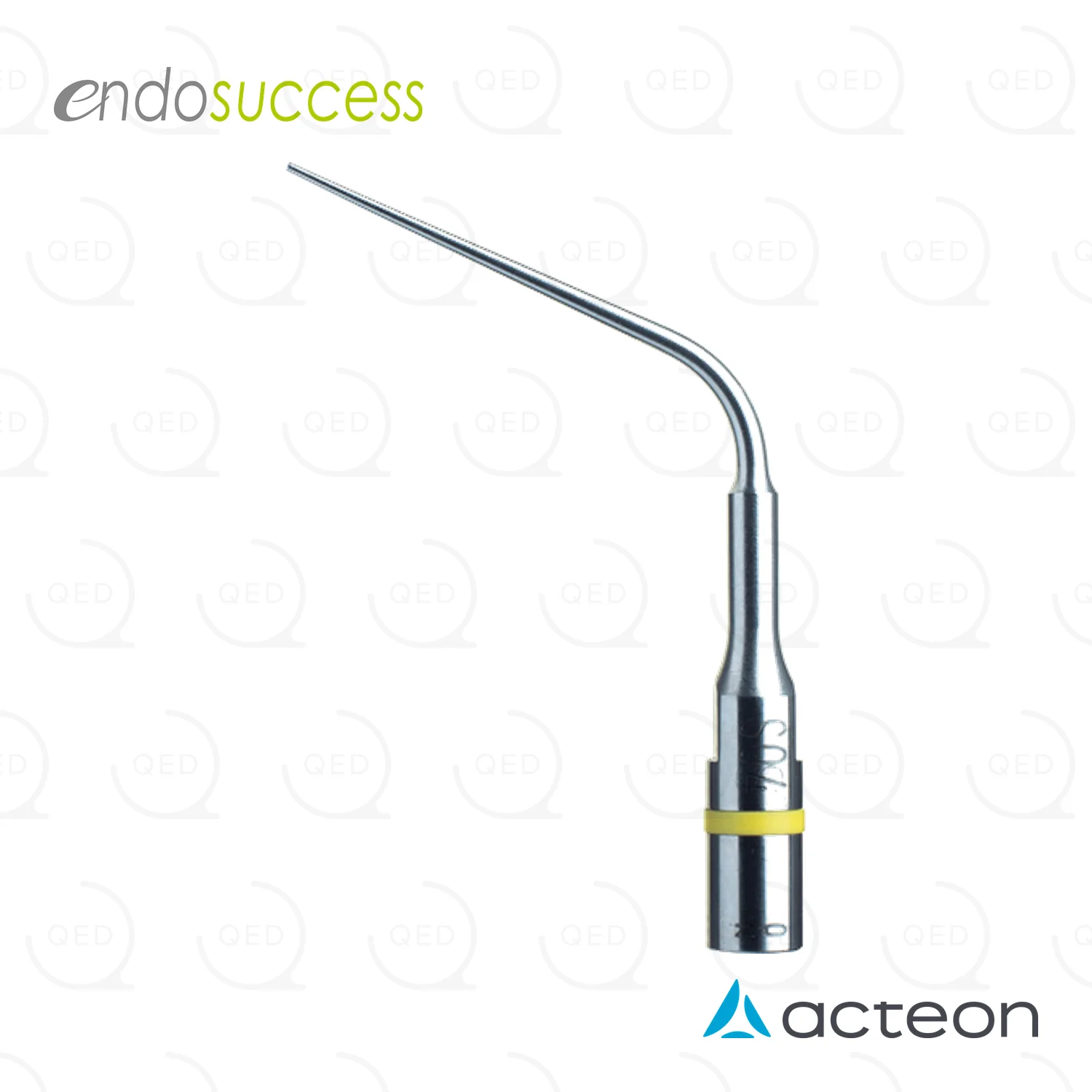
reciproc® minima r20 · 21 mm · 6 files
short roots, or a patient who cannot open far enough for a 25 mm file and a contra-angle? this is r20 – the size the instructions tell you to start with in narrow and challenging canals – in the 21 mm working length. paired with the 9.5 mm short handle, it is the combination that decides whether you can work at all on a lower seven.
this pack: 6 × reciproc® minima r20, 21 mm · sterile, single use
made by dentsply sirona – maillefer, switzerland
| iso 20/.08v | 0.20 mm tip, .08 apical taper reducing coronally – 3.6% averaged along the blade |
| 21 mm | short working length for short roots, and for the posterior access that a longer file cannot reach |
| 0.77 mm | maximum flute diameter – the slimmest body in the range |
| 9.5 mm handle | short shank; with the 21 mm length it is the shortest combination available |
› start here – the instructions specify r20 as the first instrument in narrow and challenging canals.
› technique – pecks of no more than 3 mm, light pressure, and if it stops progressing withdraw it and create a glide path.
› the full story is on the 25 mm r20 page – geometry, published evidence and technique in full.
› obturate with the matched consumables – minima paper points r20 to dry, then conform fit® gp rm20 – sized to this preparation, not to a constant taper.
which length do i need?
21 mm for short roots and limited opening; 25 mm is the everyday length; 31 mm for long roots and canines.
which size after this one?
r25 for a larger apical preparation, or the assorted 21 mm pack to cover the range.
reusable?
no – sterile blister, single use.
reciproc® minima r20 · iso 20/.08v · 0.77 mm max flute · blue heat-treated niti · 9.5 mm handle · 21 mm · 6 sterile files · dentsply sirona · ref mstrcpm621020 · also 25 and 31 mm
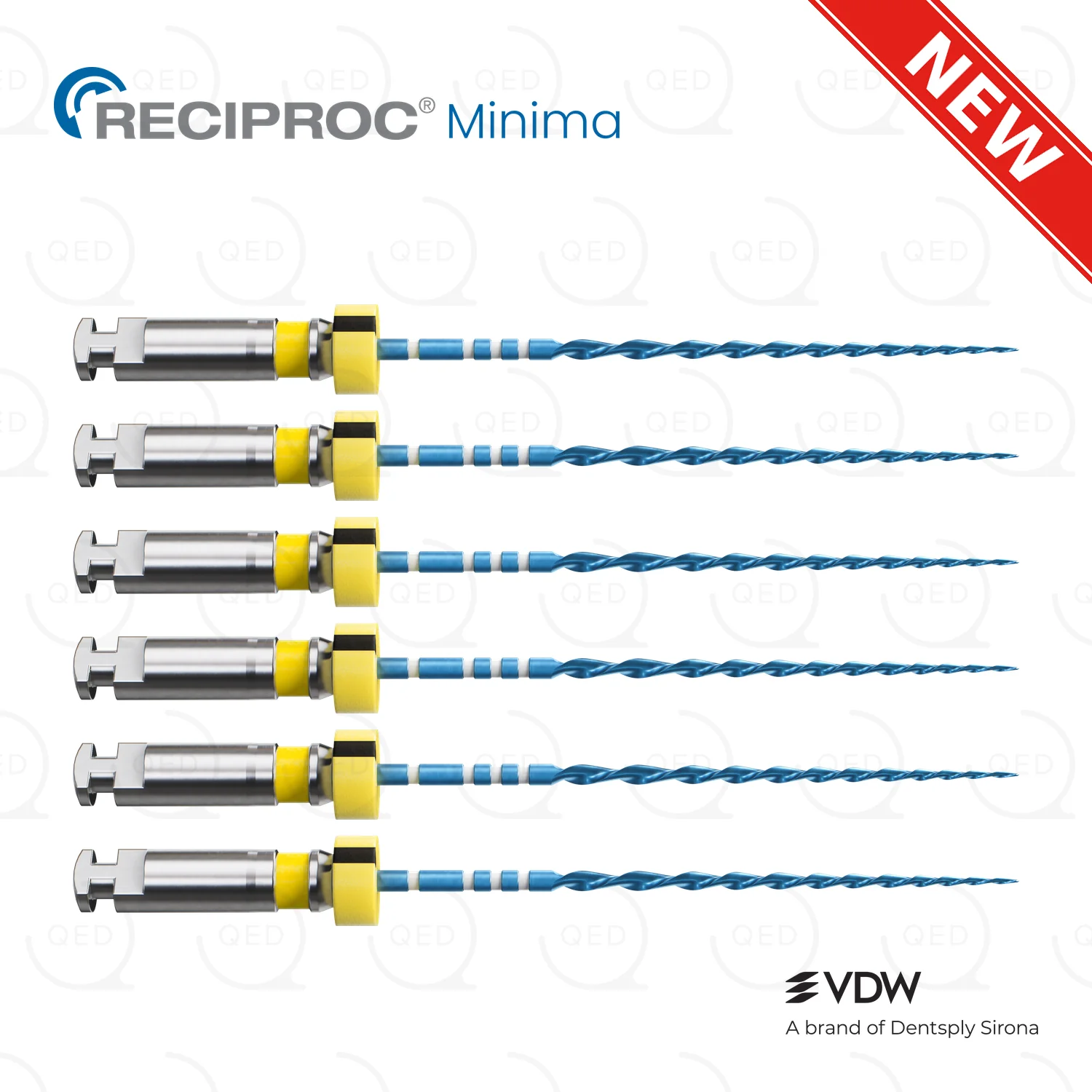
reciproc® minima r25 · 21 mm · 6 files
a stocky molar that needs a 0.25 mm apex, on a patient who barely opens? r25 in the 21 mm length carries the same .08 apical taper as r20 with a wider tip, so the extra preparation lands apically rather than at the orifice – in the working length that suits short roots and awkward access.
this pack: 6 × reciproc® minima r25, 21 mm · sterile, single use
made by dentsply sirona – maillefer, switzerland
| iso 25/.08v | 0.25 mm tip, .08 apical taper reducing coronally – 3.3% averaged along the blade |
| 21 mm | the short working length, for short roots and restricted mouth opening |
| blue niti | heat-treated for flexibility and cyclic-fatigue resistance in curvature |
| non-cutting tip | s-shaped cross-section, inactive tip – follows the canal rather than cutting its own path |
› in wider anatomy the instructions leave the starting size to you, and r25 is where that judgement usually lands.
› in narrow canals start with r20 as the instructions direct.
› full geometry and evidence on the 25 mm r25 page.
› obturate with the matched consumables – minima paper points r25 to dry, then conform fit® gp rm25 – sized to this preparation, not to a constant taper.
how does this differ from reciproc® blue r25?
same tip diameter, very different body – blue runs a .08 regressive taper for regular anatomies and retreatment, minima averages 3.3% for narrow ones. see blue r25.
need a larger apical size?
r35 or r45 in the same length – their apical taper steps down as tip diameter rises.
glide path?
often unnecessary, but the instructions require one if the file stops progressing, with a patency check using an iso 010 or 008 hand instrument.
reciproc® minima r25 · iso 25/.08v · 3.3% average taper · blue heat-treated niti · 9.5 mm handle · 21 mm · 6 sterile files · dentsply sirona · ref mstrcpm621025 · also 25 and 31 mm

reciproc® minima r35 · 21 mm · 6 files
short molar root that still wants a larger apical preparation? r35 is the size where the trade-off breaks: the tip goes up to 0.35 mm while the apical taper steps down to .06 and the average falls to 2.6%. in the 21 mm length, that is a bigger apex in a tooth where you have very little room to work.
this pack: 6 × reciproc® minima r35, 21 mm · sterile, single use
made by dentsply sirona – maillefer, switzerland
| iso 35/.06v | 0.35 mm tip, .06 apical taper reducing coronally – 2.6% averaged along the blade |
| 21 mm | short working length – short roots, and posterior teeth where access is the constraint |
| direct use | its reduced overall taper is why clinicians report going straight to r35 in suitable canals |
| blue niti | heat-treated for flexibility and resistance to cyclic fatigue |
› after r20 or r25, or directly in wider anatomy where the starting size is your choice.
› narrow canal? begin with r20, as the instructions direct.
› full rationale on the 25 mm r35 page.
› obturate with the matched consumables – minima paper points r35 to dry, then conform fit® gp rm35 – sized to this preparation, not to a constant taper.
do the published figures cover r35?
no – the international endodontic journal laboratory study tested r20 and r25 in narrow canals. r35's case is geometric, and we would rather say so than borrow numbers.
is there anything larger?
r45 – 0.45 mm tip on a .05 apical taper, the lowest in the range.
other lengths?
25 mm and 31 mm.
reciproc® minima r35 · iso 35/.06v · 2.6% average taper · blue heat-treated niti · 9.5 mm handle · 21 mm · 6 sterile files · dentsply sirona · ref mstrcpm621035 · also 25 and 31 mm

reciproc® minima r45 · 21 mm · 6 files
wide canal in a short root? a retreatment where the coronal dentine has already been spent? r45 gives a 0.45 mm apical preparation on a .05 apical taper – 2.0% averaged, the slimmest body in the range – in the 21 mm working length.
this pack: 6 × reciproc® minima r45, 21 mm · sterile, single use
made by dentsply sirona – maillefer, switzerland
| iso 45/.05v | 0.45 mm tip, .05 apical taper reducing coronally – 2.0% averaged, the lowest in the range |
| 21 mm | short working length for short roots and constrained access |
| direct use | low overall taper is why it can be used directly in suitable, wider canals |
| blue niti | heat-treated flexibility and fatigue resistance – useful in the largest instrument of the set |
› wide canals, open apices and retreatment finishing – where apical diameter is set by the anatomy.
› not for narrow canals – those start at r20.
› full rationale on the 25 mm r45 page.
› obturate with the matched consumables – minima paper points r45 to dry, then conform fit® gp rm45 – sized to this preparation, not to a constant taper.
one size down?
r35 – 0.35 mm tip on a .06 apical taper.
other lengths?
25 mm and 31 mm.
reusable?
no – sterile blister, single use.
reciproc® minima r45 · iso 45/.05v · 2.0% average taper · blue heat-treated niti · 9.5 mm handle · 21 mm · 6 sterile files · dentsply sirona · ref mstrcpm621045 · also 25 and 31 mm

reciproc® minima assorted · 21 mm · 6 files
mostly posterior work, short roots, limited opening? the assorted blister in 21 mm holds two r20, two r25, one r35 and one r45 – the whole sequence in the length that suits that case mix, without committing to four separate boxes.
this pack: 2 × r20 · 2 × r25 · 1 × r35 · 1 × r45, all 21 mm · sterile, single use
made by dentsply sirona – maillefer, switzerland
| 2 × r20 | iso 20/.08v – the size the instructions say to start with in narrow canals |
| 2 × r25 | iso 25/.08v – the step up, and the usual first file in wider anatomy |
| 1 × r35 | iso 35/.06v – larger apical preparation, lower coronal taper |
| 1 × r45 | iso 45/.05v – widest apex, slimmest body |
› two thirds r20 and r25 – the pack composition is the manufacturer showing you where the work happens.
› single use – six files is a system to learn on, not a case count.
› full breakdown on the 25 mm assorted page.
› obturate with the matched consumables – assorted minima paper points to dry, then assorted conform fit® gp – sized to this preparation, not to a constant taper.
what do i reorder afterwards?
usually single-size packs of r20 and r25, once you know what your case mix consumes.
other lengths?
25 mm and 31 mm.
which motor?
a dedicated dentsply sirona motor and contra-angle on reciproc® settings. all three motors we stock carry a reciproc® programme: the vdw.silver® reciproc®, the x-smart® pro+ and the x-smart® go. ask us if you are unsure your unit carries the programme.
reciproc® minima assorted · 2 × r20, 2 × r25, 1 × r35, 1 × r45 · blue heat-treated niti · 9.5 mm handle · 21 mm · 6 sterile files · dentsply sirona · ref mstrcpm621ast · also 25 and 31 mm
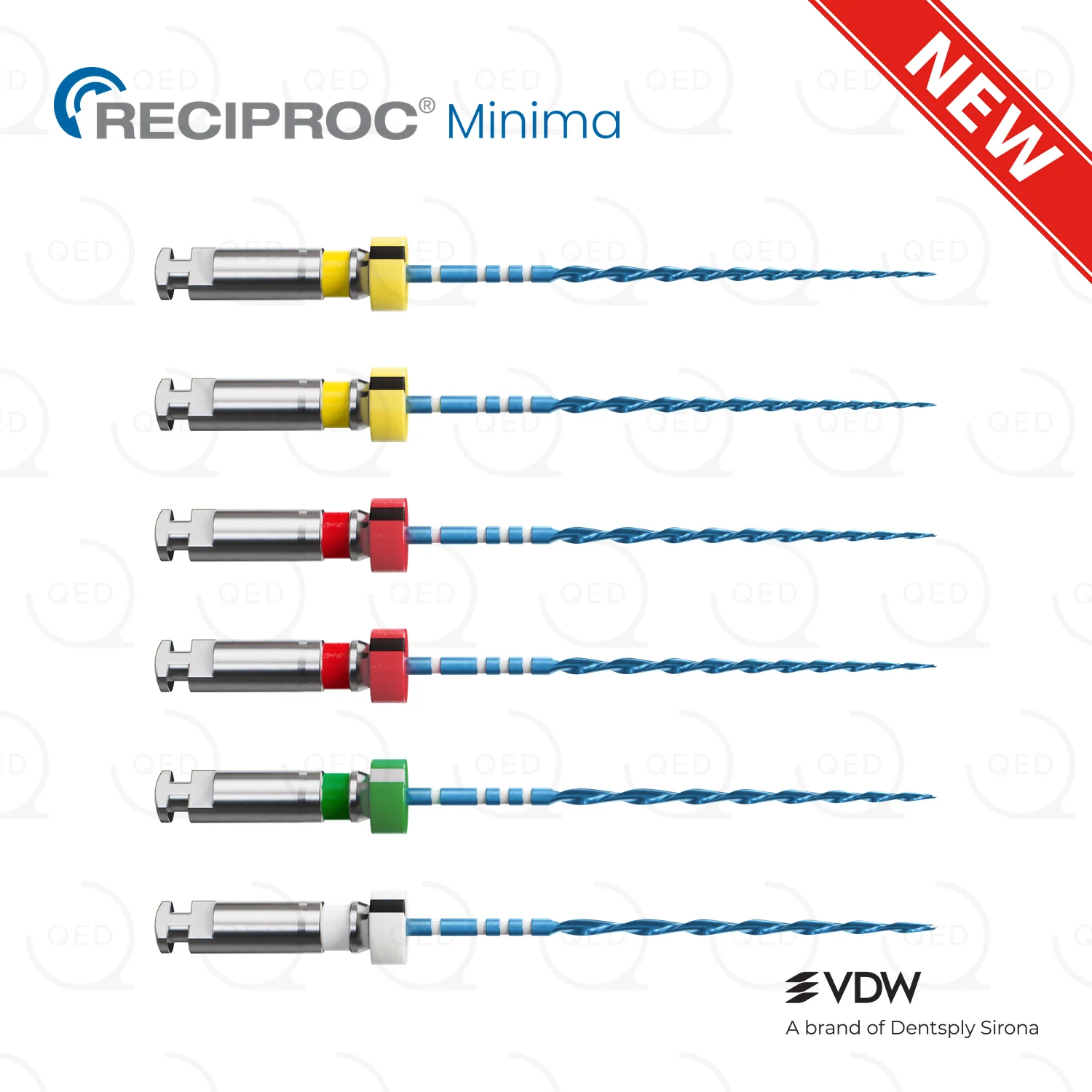
reciproc® minima r20 · 25 mm · 6 files
narrow canalsmb2severe curvaturecalcifiedsingle fileminimally invasivesterile, single use
calcified canal? an mb2 you cannot catch? a curve your files would rather not follow? reciproc® minima is the slim end of the reciprocating family, and r20 is where its instructions for use tell you to begin. a thinner core, a 0.77 mm maximum flute diameter and a 3.6% average taper mean it follows the canal instead of fighting it – which is the whole argument for a conservative preparation in an anatomy that punishes anything wider.
| 96% to length, ex vivo | 0.77 mm max flute | 3.6% average taper |
this pack: 6 × reciproc® minima r20, 25 mm · sterile blister, single use
made by dentsply sirona – maillefer, switzerland
the instrument that will not negotiate a canal is usually not the one that lacks cutting efficiency – it is the one that is too stiff and too wide at the point where the anatomy narrows. minima attacks that directly: a reduced overall taper and a thinner wire, so the file reaches the constriction with less bulk behind it. the practical effect is that a canal you would previously have scouted, opened and only then shaped can often be negotiated by the shaping file itself, and that the pericervical dentine you would have removed to make room simply stays where it is.
the taper figure is worth reading properly, because the headline number understates it. r20's full designation is iso 20/.08v – a 0.20 mm tip with a .08 (8%) taper apically, the v denoting a variable taper that reduces as the blade runs coronally, averaging 3.6% overall. (on the pack and in the instructions it is printed as 020.008v, which is the same thing in zero-padded three-digit fields – 020 is the iso size, 008 is the .08 taper.) so it is not a uniformly thin file: it carries a proper apical taper where shaping and irrigant exchange actually matter, then gives the diameter back through the middle and coronal thirds instead of quietly reaming out the dentine that holds the tooth together. that is the minimally invasive argument in one specification – what the literature now calls minimally invasive endodontics (mie): preserving as much healthy coronal, cervical and radicular tooth structure as the case allows, through access, shaping and obturation alike.
| iso 20/.08v | 0.20 mm tip with an 8% apical taper that reduces coronally – 3.6% averaged along the blade. cutting where it has to be, slim where it counts |
| blue niti | heat-treated for flexibility and resistance to cyclic fatigue, which is what severe curvature actually tests |
| non-cutting tip | s-shaped cross-section with an inactive tip – it follows the canal path rather than cutting its own |
| 9.5 mm handle | short shank for posterior access, where limited opening usually decides whether you can work at all |
for narrow and challenging canals, the procedure should start with instrument size r20. in cases of wider canal anatomy, the selection of the initial instrument size is at the clinician's discretion.
— reciproc® minima instructions for use. this is why r20 is the file to stock first.
in a laboratory study of 330 mesial canals in extracted mandibular molars, published in the international endodontic journal in 2026, instruments were taken to full working length with no prior scouting and no glide path. r20 reached length in 96.4% of canals, against 83.6% for minima r25 and 70.9% for reciproc® blue r25. no instrument fractured in any group. where a larger instrument failed, r20 subsequently reached length in about four cases out of five. it is an ex-vivo study rather than a clinical trial – extracted teeth, controlled conditions – but it is peer-reviewed, and it is the reason this file is worth your attention.
1 reciprocating setting. a dedicated dentsply sirona motor and contra-angle on reciproc® settings – or by hand in severe curvatures.
2 short pecks, light hands. in-and-out movements of no more than 3 mm amplitude, with very light pressure. never force the instrument down the canal.
3 if it stops, stop. the instructions are explicit: do not force it. remove the file, create a glide path, and confirm patency with an iso 010 or 008 hand instrument before continuing.
so do i still need a glide path?
often not – that is the point of the file, and the published study bears it out. but the instructions require one if r20 stops progressing, along with a patency check using an iso 010 or 008 hand instrument. treat "frequently unnecessary" and "never necessary" as very different claims, because they are.
which size do i start with?
r20, in narrow and challenging canals – the instructions say so directly. in wider anatomy the starting size is your call, and r25 is the usual next step. larger apical sizes can be taken with r35 (iso 35/.06v) or r45 (iso 45/.05v) without adding coronal taper – their apical taper steps down to 6% and 5% as the tip diameter goes up, so the coronal profile stays conservative.
is this what people mean by minimally invasive endodontics?
it is one part of it. minimally invasive endodontics – mie, or conservative endodontics – is the principle of keeping as much sound coronal, cervical and radicular dentine as the case allows, and it runs through access design, shaping and obturation. a reduced-taper file addresses the shaping half, and addresses it directly: less coronal enlargement to reach the same apical size, and pericervical dentine left intact. access design and case selection remain yours.
does this replace reciproc® blue?
no – they sit alongside each other. dentsply position blue for regular anatomies, wider canals and retreatment, and minima for narrow and challenging ones. if most of your work is routine, blue r25 stays your everyday file and minima is what you reach for when the anatomy argues back.
which motor do i need?
the instructions specify a dedicated dentsply sirona motor and contra-angle set to reciproc® settings. all three motors we stock carry a reciproc® programme: the vdw.silver® reciproc®, the x-smart® pro+ and the x-smart® go. no model list is published, so if you are unsure whether your unit carries the programme, ask us before ordering rather than after.
can i reuse them?
no. supplied sterile in single-use blisters – reuse raises the risk of cross-contamination and breakage, and with a file this slim the fracture margin is precisely what you are buying.
| next size up | minima r25 25 mm · 3.3% taper |
| larger apical | minima r35 25 mm · 2.6% taper |
| largest | minima r45 25 mm · 2.0% taper |
| try the system | minima assorted 25 mm · all four sizes |
| short roots | r20 in 21 mm |
| long roots | r20 in 31 mm |
| everyday file | reciproc® blue r25 25 mm |
| dry the canal | minima paper points r20 · dedicated points, sized to this file |
| matched cone | conform fit® gp rm20 · the cone moulded to this preparation |
| slim-prep sealer | neosealer® ezflo, 25 mm tips · 29 ga delivery for a conservative preparation |
reciproc® minima r20 · reciprocating single-file system · iso 20/.08v · 8% apical taper, 3.6% average · 0.77 mm max flute · blue heat-treated niti · s-shaped, non-cutting tip · 9.5 mm handle · 25 mm · 6 sterile files · dentsply sirona · ref mstrcpm625020 · also in 21 mm and 31 mm

reciproc® minima r20 · 31 mm · 6 files
upper canine at 26 mm? a long-rooted premolar where a 25 mm file leaves you short? this is r20 – the size the instructions tell you to start with in narrow and challenging canals – in the 31 mm working length. the cases that need this reach are often the same ones with a fine, curved canal at the end of it, which is exactly what the slimmest file in the range is for.
this pack: 6 × reciproc® minima r20, 31 mm · sterile, single use
made by dentsply sirona – maillefer, switzerland
| iso 20/.08v | 0.20 mm tip, .08 apical taper reducing coronally – 3.6% averaged along the blade |
| 31 mm | the long working length – canines, long-rooted premolars, and anything a 25 mm file cannot reach to length |
| 0.77 mm | maximum flute diameter – the slimmest body in the range, which matters more the longer the canal |
| blue niti | heat-treated for flexibility and cyclic-fatigue resistance – a longer file sees more of both |
› start here – the instructions specify r20 as the first instrument in narrow and challenging canals.
› technique – pecks of no more than 3 mm, light pressure; if it stops progressing, withdraw and create a glide path.
› the full story is on the 25 mm r20 page – geometry, published evidence and technique in full.
› obturate with the matched consumables – minima paper points r20 to dry, then conform fit® gp rm20 – sized to this preparation, not to a constant taper.
which length do i need?
31 mm for canines and long roots; 25 mm is the everyday length; 21 mm for short roots and limited mouth opening.
which size after this one?
r25 for a larger apical preparation, or the assorted 31 mm pack to cover the range.
reusable?
no – sterile blister, single use.
reciproc® minima r20 · iso 20/.08v · 0.77 mm max flute · blue heat-treated niti · 9.5 mm handle · 31 mm · 6 sterile files · dentsply sirona · ref mstrcpm631020 · also 21 and 25 mm

reciproc® minima r25 · 31 mm · 6 files
long canine that needs a 0.25 mm apex? r25 in the 31 mm length carries the same .08 apical taper as r20 on a wider tip, so the extra preparation lands apically rather than at the orifice – useful in a long tooth, where every extra percent of taper compounds over more millimetres of dentine.
this pack: 6 × reciproc® minima r25, 31 mm · sterile, single use
made by dentsply sirona – maillefer, switzerland
| iso 25/.08v | 0.25 mm tip, .08 apical taper reducing coronally – 3.3% averaged along the blade |
| 31 mm | the long working length, for canines and long-rooted teeth |
| low average taper | 3.3% over 31 mm removes markedly less coronal dentine than a conventional .06 or .08 file of the same tip size |
| non-cutting tip | s-shaped cross-section, inactive tip – follows the canal rather than cutting its own path |
› in wider anatomy the instructions leave the starting size to you, and r25 is where that judgement usually lands.
› in narrow canals start with r20, as the instructions direct.
› full geometry and evidence on the 25 mm r25 page.
› obturate with the matched consumables – minima paper points r25 to dry, then conform fit® gp rm25 – sized to this preparation, not to a constant taper.
how does this differ from reciproc® blue r25?
same tip diameter, very different body – blue runs a .08 regressive taper for regular anatomies and retreatment; minima averages 3.3% for narrow ones. see blue r25.
need a larger apical size?
r35 or r45 in the same length – their apical taper steps down as tip diameter rises.
glide path?
often unnecessary, but the instructions require one if the file stops progressing, with a patency check using an iso 010 or 008 hand instrument.
reciproc® minima r25 · iso 25/.08v · 3.3% average taper · blue heat-treated niti · 9.5 mm handle · 31 mm · 6 sterile files · dentsply sirona · ref mstrcpm631025 · also 21 and 25 mm

reciproc® minima r35 · 31 mm · 6 files
a long tooth that still needs a 0.35 mm apical preparation? this is the combination where conventional geometry hurts most – a larger taper compounded over 31 mm of canal. r35 inverts it: the tip rises to 0.35 mm while the apical taper steps down to .06 and the average falls to 2.6%.
this pack: 6 × reciproc® minima r35, 31 mm · sterile, single use
made by dentsply sirona – maillefer, switzerland
| iso 35/.06v | 0.35 mm tip, .06 apical taper reducing coronally – 2.6% averaged along the blade |
| 31 mm | the long working length – where a low average taper saves the most dentine |
| direct use | its reduced overall taper is why clinicians report going straight to r35 in suitable canals |
| blue niti | heat-treated for flexibility and resistance to cyclic fatigue |
› after r20 or r25, or directly in wider anatomy where the starting size is your choice.
› narrow canal? begin with r20, as the instructions direct.
› full rationale on the 25 mm r35 page.
› obturate with the matched consumables – minima paper points r35 to dry, then conform fit® gp rm35 – sized to this preparation, not to a constant taper.
do the published figures cover r35?
no – the international endodontic journal laboratory study tested r20 and r25 in narrow canals. r35's case is geometric, and we would rather say so than borrow numbers.
is there anything larger?
r45 – 0.45 mm tip on a .05 apical taper, the lowest in the range.
other lengths?
21 mm and 25 mm.
reciproc® minima r35 · iso 35/.06v · 2.6% average taper · blue heat-treated niti · 9.5 mm handle · 31 mm · 6 sterile files · dentsply sirona · ref mstrcpm631035 · also 21 and 25 mm

reciproc® minima r45 · 31 mm · 6 files
long tooth, wide canal, open apex – or a retreatment where the coronal dentine is already spent? r45 in 31 mm gives a 0.45 mm apical preparation on a .05 apical taper, averaging just 2.0% along the blade. over a canal this long, that difference in body diameter is the most dentine any file in the range will save you.
this pack: 6 × reciproc® minima r45, 31 mm · sterile, single use
made by dentsply sirona – maillefer, switzerland
| iso 45/.05v | 0.45 mm tip, .05 apical taper reducing coronally – 2.0% averaged, the lowest in the range |
| 31 mm | the long working length – canines, long premolars and anything a 25 mm file leaves short |
| direct use | low overall taper is why it can be used directly in suitable, wider canals |
| blue niti | heat-treated flexibility and fatigue resistance – the largest instrument of the set has the most to lose |
› wide canals, open apices and retreatment finishing – where apical diameter is set by the anatomy rather than chosen.
› not for narrow canals – those start at r20.
› full rationale on the 25 mm r45 page.
› obturate with the matched consumables – minima paper points r45 to dry, then conform fit® gp rm45 – sized to this preparation, not to a constant taper.
one size down?
r35 – 0.35 mm tip on a .06 apical taper.
other lengths?
21 mm and 25 mm.
reusable?
no – sterile blister, single use.
reciproc® minima r45 · iso 45/.05v · 2.0% average taper · blue heat-treated niti · 9.5 mm handle · 31 mm · 6 sterile files · dentsply sirona · ref mstrcpm631045 · also 21 and 25 mm
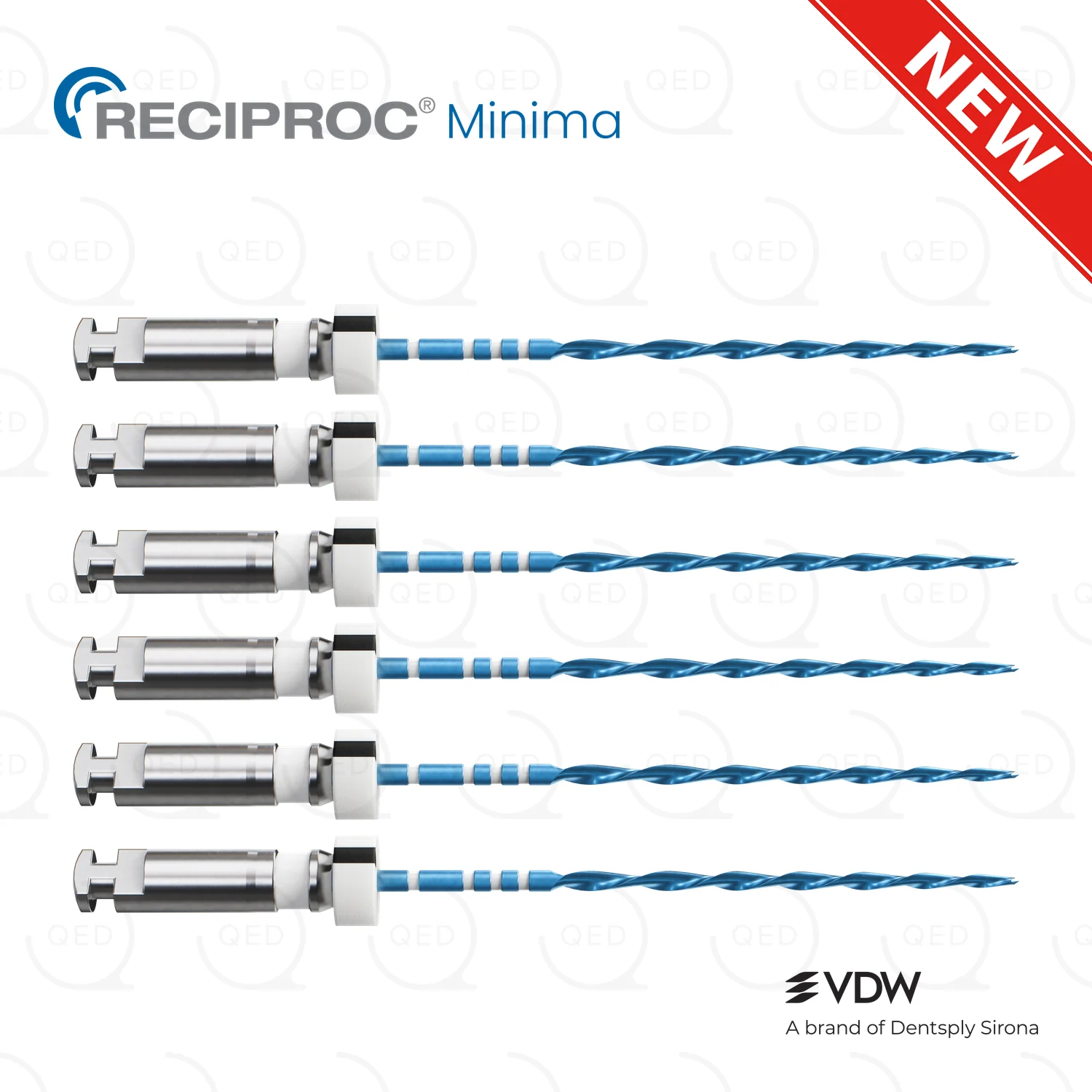
reciproc® minima assorted · 31 mm · 6 files
anterior and canine work, or a referral list of long-rooted teeth? the assorted blister in 31 mm holds two r20, two r25, one r35 and one r45 – the whole sequence in the length those cases need, without stocking four separate boxes of a size you use occasionally.
this pack: 2 × r20 · 2 × r25 · 1 × r35 · 1 × r45, all 31 mm · sterile, single use
made by dentsply sirona – maillefer, switzerland
| 2 × r20 | iso 20/.08v – the size the instructions say to start with in narrow canals |
| 2 × r25 | iso 25/.08v – the step up, and the usual first file in wider anatomy |
| 1 × r35 | iso 35/.06v – larger apical preparation, lower coronal taper |
| 1 × r45 | iso 45/.05v – widest apex, slimmest body |
› two thirds r20 and r25 – the pack composition is the manufacturer showing you where the work happens.
› single use – six files is a system to learn on, not a case count.
› full breakdown on the 25 mm assorted page.
› obturate with the matched consumables – assorted minima paper points to dry, then assorted conform fit® gp – sized to this preparation, not to a constant taper.
what do i reorder afterwards?
usually single-size packs of r20 and r25, once you know what your case mix consumes.
other lengths?
21 mm and 25 mm.
which motor?
a dedicated dentsply sirona motor and contra-angle on reciproc® settings. all three motors we stock carry a reciproc® programme: the vdw.silver® reciproc®, the x-smart® pro+ and the x-smart® go. ask us if you are unsure your unit carries the programme.
reciproc® minima assorted · 2 × r20, 2 × r25, 1 × r35, 1 × r45 · blue heat-treated niti · 9.5 mm handle · 31 mm · 6 sterile files · dentsply sirona · ref mstrcpm631ast · also 21 and 25 mm

bio-c® temp · bioceramic intracanal dressing
necrotic pulpretreatmentperforationsresorptiontraumaopen apex
necrotic case? retreatment? a review you can't book for a month? bio-c® temp is a ready-to-use bioceramic paste for intracanal dressing. its calcium silicates hydrate to produce calcium hydroxide gradually, releasing calcium and hydroxyl ions over time rather than all at once – and angelus states the paste can stay in the canal for up to 30 days without replacement.
| 30 days angelus maximum | 9+ ph at day 28 | 4 syringes |
this pack: 4 × 0.5 g syringes · 20 intracanal tips
made by angelus, brazil – the bioceramics specialists
a conventional calcium hydroxide paste reaches a high ph quickly and is typically refreshed between visits. bio-c® temp works differently: the calcium silicates generate calcium hydroxide as they hydrate, so the alkalinity arrives gradually and persists. independent work bears this out honestly – lopes and colleagues (european endodontic journal, 2024) recorded ph above 9 from day three through day 28, below a calcium hydroxide control that held around 11.3 to 11.5. the case for this material is that it stays working for weeks, not that it is more alkaline.
| up to 30 days | angelus states the dressing can remain in the canal for up to 30 days without replacement |
| sustained ph | gradual release of calcium and hydroxyl ions holds an alkaline environment, unfavourable to bacterial growth |
| ready to use | no mixing, no spatulation, no waiting – the syringe and tip go straight into the canal |
| radiopaque | clear radiographic check that the canal is filled to length before the patient leaves |
“bio-c® temp can remain in the canal until 30 days” without requiring replacement, unlike calcium hydroxide which needs frequent changes.
— angelus, bio-c temp product information
› necrotic pulp and retreatment – where the canal needs disinfecting between visits and the next appointment is not next week.
› perforations and resorption, internal or external – angelus indicates it ahead of definitive repair with mta angelus.
› incomplete rhizogenesis and trauma – the cases where healing sets the timetable, not the diary.
› long recall intervals – referral practices, patients travelling, anyone you cannot see again in a fortnight.
1 place direct. fit an intracanal tip, insert to about 3 mm short of working length, and fill on withdrawal.
2 remove with hypochlorite. sodium hypochlorite with a k-file in brushing movements, or ultrasonic inserts.
3 then edta. 17% edta activated ultrasonically in three ten-second cycles – angelus's published protocol.
how is it different from a calcium hydroxide paste?
duration rather than peak ph. pastes such as opacal, calcipast and ultracal™ xs reach a higher ph quickly and are typically refreshed between visits. bio-c® temp generates its calcium hydroxide gradually as it hydrates.
will i get all of it out again?
be realistic – no technique fully removes any intracanal dressing. in the lopes study neither manual irrigation nor passive ultrasonic cleared the canal completely, though ultrasonic activation performed significantly better in the apical third. follow the protocol above and expect some residue.
does it cause postoperative pain if it extrudes?
angelus reports no painful symptomatology even where the paste extrudes through the apical foramen. that is the manufacturer's clinical experience rather than a controlled trial, so treat it as reassurance rather than evidence, and place to length as you would with any dressing.
when would i reach for it over a conventional paste?
when the interval is long or healing needs time – trauma follow-ups, resorption management, apexification-type cases. for a routine two-week dressing where you will re-enter anyway, a calcium hydroxide paste does the job and comes ready to use: opacal in a single 3 ml syringe, calcipast with hydroxyapatite, or ultracal™ xs at ph 12.5 through a sideport tip. different tools, not better or worse ones.
how many cases does the pack cover?
four 0.5 g syringes and 20 intracanal tips. each syringe carries several canals' worth, so the tip count is usually the practical limit rather than the paste.
| routine dressing | opacal – 3 ml syringe |
| four-syringe pack | calcipast – with hydroxyapatite, 4 × 2.1 g |
| precision delivery | ultracal™ xs refill |
| repair, white | mta angelus white 1 g |
| repair, grey | mta angelus grey 1 g |
| non-staining repair | neomta® 2 – tantalite, no bismuth oxide |
| no mixing | neoputty® – premixed bioceramic putty, 8.1 mm al |
| placing mta | mta carrier 0.99 mm |
| then obturate | mta fillapex® sealer |
bio-c® temp · calcium silicate bioceramic paste · ready to use · radiopaque · 4 × 0.5 g syringes + 20 tips · angelus, brazil · ref mta-2833 · mfr code 2833

mta angelus® white · 1 g repair cement
perforationsresorptionretrofillpulp cappingpulpotomyapexogenesisapexification
perforation high in the crown? pulp cap under thin dentine on a tooth that shows? mta angelus® white is the pale formulation of the tricalcium silicate repair cement that has been the reference material for perforations, retrofills and open apices for two decades. angelus attributes the grey version's dark colour to its iron oxide content; the white has less of it. same chemistry, same fifteen-minute set, in a material that does not read as a dark mass through thin tooth structure.
| 15 min setting time | ~7 applications | 8 indications |
this pack: 1 g white powder (roughly 7 applications) · 3 ml distilled water · powder dispenser
made by angelus, brazil – the bioceramics specialists
mta sets in the presence of blood and moisture, seals against dentine, and is tolerated well enough to be left against periradicular tissue. that is why it stays the material of choice for the awkward cases – the furcation perforated while finding a fourth canal, the immature apex with nothing to obturate against, the root end you have just resected.
| 15 minutes | angelus's published setting time – you are not holding an appointment open, or asking a patient back to check a set |
| pale shade | less iron oxide than the grey, which angelus identifies as what makes the grey formulation dark |
| 44.2 mpa | the compressive strength angelus publishes for mta angelus |
| radiopaque | radiographic visualisation of the repair, so placement is confirmed before you close rather than hoped for |
› perforations of the root canal and furcation, whether iatrogenic or caused by a caries lesion
› root perforation from internal resorption, treated via the canal
› the same, treated surgically
› periapical surgery with reverse filling
› direct pulp capping
› pulpotomy, preserving the vitality of the remaining pulp tissue
› apexogenesis in vital teeth with an inflamed coronal pulp
› apexification, inducing a mineralised barrier at the root tip of immature teeth with a necrotic pulp
1 one spoon to one drop. one dispenser of powder against a single drop of the distilled water supplied, on a sterile glass slab.
2 thirty seconds. spatulate to a homogeneous mix with the consistency of wet sand – angelus's own description, and a useful one: if it slumps, it is too wet.
3 place and condense. carry it with an applicator or an mta carrier, condense with amalgam condensers, a spatula or moistened paper points, then radiograph to verify.
“do not use mta angelus® gray in areas exposed to light to ensure that staining of the dental structure does not occur.”
— angelus, mta angelus instructions for use. it is the reason the white formulation exists.
› moisture, before you mix – the powder is very sensitive to it. open the sachet only when you are ready to use it, and never keep spare mixed material.
› control the acute phase first – angelus warns that the acidic ph of endodontic lesions and the tissue around them can compromise solidification.
› not a root filling – its plasticity and flow are wrong for the job, and removal at retreatment would be difficult.
› not against the gingival groove – in that contact angelus states the cement will solubilise completely.
white or grey – does it actually matter?
where the repair sits under thin or visible tooth structure, the material's own colour does. angelus's precaution above is explicit about the grey. for posterior and furcation work where nothing shows, grey 1 g does the same job for the same money.
how do i get it down a canal or into a root end?
hand instruments are fine for an open furcation. for anything deeper, a disposable carrier places the mix where you want it without smearing it up the walls – 0.80 mm for fine canals, 0.99 mm as the general size, or 1.60 mm for bulk placement in perforation repair and apexification.
how far does a gram actually go?
roughly seven applications, mixed a drop at a time. if you place mta most weeks, the 2 g grey pack is cheaper per gram; the white is stocked in 1 g.
the case needs weeks before i can repair it – what goes in first?
bio-c® temp is the angelus intracanal dressing indicated ahead of definitive repair with mta angelus, and angelus states it can stay in the canal up to 30 days without replacement.
what if discolouration is the deciding factor?
then look at neomta® 2. it uses tantalite as its radiopacifier, contains no bismuth oxide, and nusmile state plainly that tantalite does not cause staining. it also sets in about 14 minutes as a putty and lets you vary the powder-to-gel ratio for the consistency you want. if the case is anterior and the aesthetic risk is what is keeping you awake, that is the honest recommendation.
any contraindication?
mta angelus contains components that may cause reactions in susceptible individuals – do not use on patients allergic to them. confirm allergies as you would before placing anything.
| grey, 1 g | mta angelus grey – hidden repairs |
| grey, 2 g | the bulk pack – cheaper per gram |
| non-staining | neomta® 2 – tantalite radiopacifier, ~10 doses |
| no mixing | neoputty® – premixed bioceramic putty, 8.1 mm al |
| fine canals | mta carrier 0.80 mm · box of five |
| general use | mta carrier 0.99 mm · box of five |
| bulk placement | mta carrier 1.60 mm · box of five |
| trying one | single carrier, 0.99 mm |
| dress first | bio-c® temp – up to 30 days |
| then obturate | mta fillapex® sealer · 30 g tubes |
mta angelus® white · tricalcium silicate repair cement · radiopaque · 15-minute set · 1 g + 3 ml distilled water + powder dispenser · angelus · ref mta-8222 · mfr code 822 · grey also in 1 g and 2 g

neomta® 2 · avalon biomed · 1.0 g kit
pulp cappingpulpotomyapexificationresorptionperforation repairroot-end fillingobturation
the reason classic mta cases so often need a second appointment is washout. you place the material, you cannot irrigate over it, you cannot condense a restoration onto it, so you dress the tooth and bring the patient back. avalon's answer is blunt and it is in their own instructions: neomta® 2 is immediately washout resistant – gently rinse and complete the restoration, or cement a crown, straight after placing it.
| 6.5 mm al radiopacity | 14 min working time | 13 indications |
this pack: 1.0 g neomta® 2 powder with water-based gel · 0.1 g scoop, so roughly ten typical doses
made by avalon biomed · 3-year shelf life
“neomta 2 is immediately wash-out resistant. you can gently rinse and complete the restoration or cement a crown, immediately after placing neomta 2.”
avalon biomed, neomta® 2 frequently asked questions (ifu-62).
neomta® 2 is supplied as powder plus a water-based gel, and how much gel you add decides what you have made. that is the trade against a premixed putty: a little bench work in exchange for a material that covers repair and obturation from one jar.
| putty mix | 1–2 drops of gel per scoop · about 14 minutes working time, sets in about 14 minutes · 6.5 mm al radiopacity |
| sealer mix | 2 drops of gel · about 21 minutes working time at a thinner consistency, setting in about 1 hour 10 minutes |
| why it matters | a premixed putty cannot be thinned. if you want one material for a perforation on tuesday and an obturation on thursday, this is the one that does both |
traditional mtas use bismuth oxide to make the material visible on a radiograph, and bismuth is the accepted mechanism behind the grey shadow those materials can leave in a tooth. avalon build on tantalum oxide – tantalite instead, which gives 6.5 mm al equivalent radiopacity at putty consistency without the bismuth in the formulation at all.
put plainly: removing bismuth removes the best-understood staining mechanism. no calcium silicate is immune to discolouration, and blood contamination at placement affects colour stability across the whole class – so get haemostasis first, whatever you are placing.
in a randomised clinical trial of 70 primary molars in 42 children, published in pediatric dentistry in 2023, neomta® 2 achieved 100% clinical success (34 of 34) and 94.1% radiographic success (32 of 34) as a pulpotomy medicament at twelve months. the comparator arm – premixed neoputty® – came in at 97.1% and 92.8%, which the authors reported as comparable.
alqahtani as, alsuhaibani nn, sulimany am, bawazir oa. pediatric dentistry 2023;45(3):240–244.
that trial is primary molar pulpotomy at twelve months. the longer view comes from the predecessor formulation, neomta® plus – a different product from the one in this box, but the same chemistry lineage, and the follow-up runs to four years:
| 4 years, permanent teeth | full pulpotomy in 109 symptomatic mature permanent teeth with carious pulp exposure, ages 14–60. cumulative survival 98%, 97.4%, 93% and 83.8% at six months, one, two and four years; the authors put pulpotomy success at about 90% |
| primary molars | against proroot® mta in 80 primary teeth: 100% clinical and 97.5% radiographic success at twelve months, with no significant difference between the two |
taha na, al-khatib h. journal of endodontics 2022;48(1):87–95. · alsanouni m, bawazir oa. pediatric dentistry 2019;41(2):107–111. both studied neomta® plus, the predecessor formulation.
the four-year study is the one worth dwelling on, because it is the hardest case: symptomatic mature permanent teeth with carious exposure, where the textbook answer used to be root canal treatment. its authors also found the strongest predictor of failure was not the material but severe preoperative pain – and that the coronal seal was critical to long-term survival.
avalon list thirteen, and ask that you read the instructions for use before each application. in practice the ones that bring people to this material are direct and indirect pulp capping, partial pulpotomy and pulpotomy, apexogenesis and apexification, internal and external root resorption, perforation repair, root-end filling, and use as a cavity liner or base – plus obturation, when mixed to the thinner consistency.
| larger kit | neomta® 2 2.5 g kit · 25 doses, with gel to spare |
| no mixing wanted | neoputty® · the premixed putty from the same family |
| carrying it | vista mta carrier · for root-end and perforation work |
| obturating | neosealer® flo · premixed, if you would rather not thin the powder |
| narrow canals | neosealer® ezflo · 29 ga delivery for conservative preparations |
| between visits | bio-c® temp · when the case does need two appointments |
| isolation | oraseal® caulking · a dry field before any calcium silicate |
neomta® 2 or neoputty®?
if you want one material that can be a putty or a sealer, take this. if you never thin your mta and would rather skip the slab entirely, take the putty. the randomised trial found their pulpotomy outcomes comparable, so choose on handling, not on efficacy.
can i really restore in the same visit?
that is avalon's own instruction, quoted above. follow the instructions for use for your indication – and note that the material is washout resistant immediately, which is not the same as fully set.
how many cases will 1.0 g cover?
the scoop is 0.1 g, so roughly ten typical doses. avalon quote 25 doses for the 2.5 g kit, which is the better buy if mta is routine for you.
does it contain bismuth?
no – the radiopacifier is tantalum oxide. if a specific formulation question matters for your case, ask us and we will get it in writing from avalon rather than paraphrasing a brochure.
neomta® 2 1.0 gm kit · tricalcium and dicalcium silicate powder with water-based gel · tantalite radiopacifier · 6.5 mm al · immediately washout resistant · 0.1 g scoop · 3-year shelf life · avalon biomed · ref n2100

simit protrain · endodontic simulator · for extracted teeth
real dentine, held still. protrain locks an extracted tooth in position with a ring nut, so it can be taken through a complete treatment: working length with the apex locator, shaping, irrigation, radiographs and obturation. simit dental describe it as letting “the operator perform endodontic therapy on extracted teeth as if they were still alive”. it was invented by dr riccardo tonini, a specialist in endodontics, and is made in italy by simit dental.
this pack: 1 × protrain simulator · 6 grips in 3 diameters · gel for 10–12 exercises · 1 metal bar · 1 ring nut to lock the tooth · instructions for use · extracted teeth not included
made by simit dental srl, italy
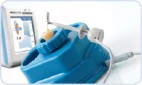 | measure root canal length “by inserting the k-file connected to the apex locator” |
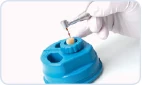 | shape and fill with the tooth held in the same position throughout |
 | take radiographs a space for the vertical positioning of intraoral radiographic film |
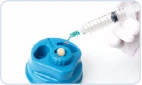 | irrigate root canal washes with saline solution |
 | measure the file a millimetre scale on the simulator |
› courses and workshops – simit made protrain “to allow and facilitate the simulation of the dentist’s endodontic therapy during workshops and training courses”.
› dental schools – prof. giuseppe cantatore, quoted by simit, adopted it for teaching conservative dentistry and endodontics at the university of verona and vita-salute san raffaele in milan, calling it “easy and intuitive to use”.
› research – prof. luigi cianconi and colleagues, also quoted by simit, used it to standardise procedures from working length to obturation and retreatment, and to standardise radiograph film position.
does it come with teeth?
no. protrain holds extracted teeth you supply. the kit is the simulator, grips, gel, metal bar and ring nut. if you have no extracted teeth, see the printed training teeth in the table below.
which apex locator does it work with?
simit describe measuring with a k-file connected to the apex locator and do not name a model. we list the locators we stock below.
how far does the gel go?
the pack in the kit is for 10 to 12 exercises, per simit.
| apex locator | root zx3 · x-smart® go with apex locator |
| measuring file | vdw c-pilot® 10, 21 mm · vdw k-files 15, 21 mm |
| isolation | qed rubber dam, medium (36) |
| irrigation delivery | navitip™ 29 ga, 25 mm |
| no extracted teeth? | vdw training tooth ur6 (5) · x2 endo™ #30 molar |
simit protrain · endodontic training simulator · extracted teeth · apex locator · radiographs · irrigation · courses · dental schools · research · simit dental srl, italy · ref protr

special offer · adhesive included free
three order lines for one root-filled molar? files from one shelf, compules from another, and the adhesive that turns out to be empty at the wrong moment? this kit puts the back end of the appointment on one code – single-file shaping, a bulk fill build-up for the access cavity, and the adhesive that bonds one to the other, with the prime&bond active bottle free of charge while stocks last.
this kit: 5 × reciproc® blue r25 25 mm (30 files) · 2 × sdr® flow+ refill universal (30 compules) · 1 × prime&bond active® 4 ml, free of charge
made by vdw and dentsply sirona
| the free item | one 4 ml bottle of prime&bond active, the same standard refill sold on its own – while stocks last |
| what it covers | r25 single-file shaping at 25 mm, then a bulk fill base and core build-up cured 4 mm at a time |
| not included | paper points, cones and sealer – it shapes and restores, it does not obturate |
› shape, bond, rebuild – the part of the appointment that decides whether your obturation stays sealed.
› one caution carries through all three: the adhesive and the composite are both contraindicated alongside eugenol-containing materials, so a zoe sealer or an irm-type temporary changes the plan.
how does this differ from the standard kit?
by one bottle. files and compules are identical to the reciproc blue and sdr flow+ procedure kit; this code adds a 4 ml prime&bond active free while the offer runs.
is the composite the obturation material?
no. sdr flow+ is a restorative base and core build-up material – it fills the access cavity after obturation. the canal still needs cones, points and a sealer.
| dry | reciproc® paper points r25 · 144 – matched to the r25 preparation |
| fill | reciproc® blue gutta percha r25 · 60 – the cone that matches the file in this kit |
| top up | sdr® flow+ refill universal – when the compules run out first |
reciproc® blue, sdr® flow+ & prime&bond · 30 r25 25 mm files · 30 sdr flow+ compules · 4 ml adhesive free of charge · vdw and dentsply sirona · ref sp_b00rsdrr2ckit · while stocks last
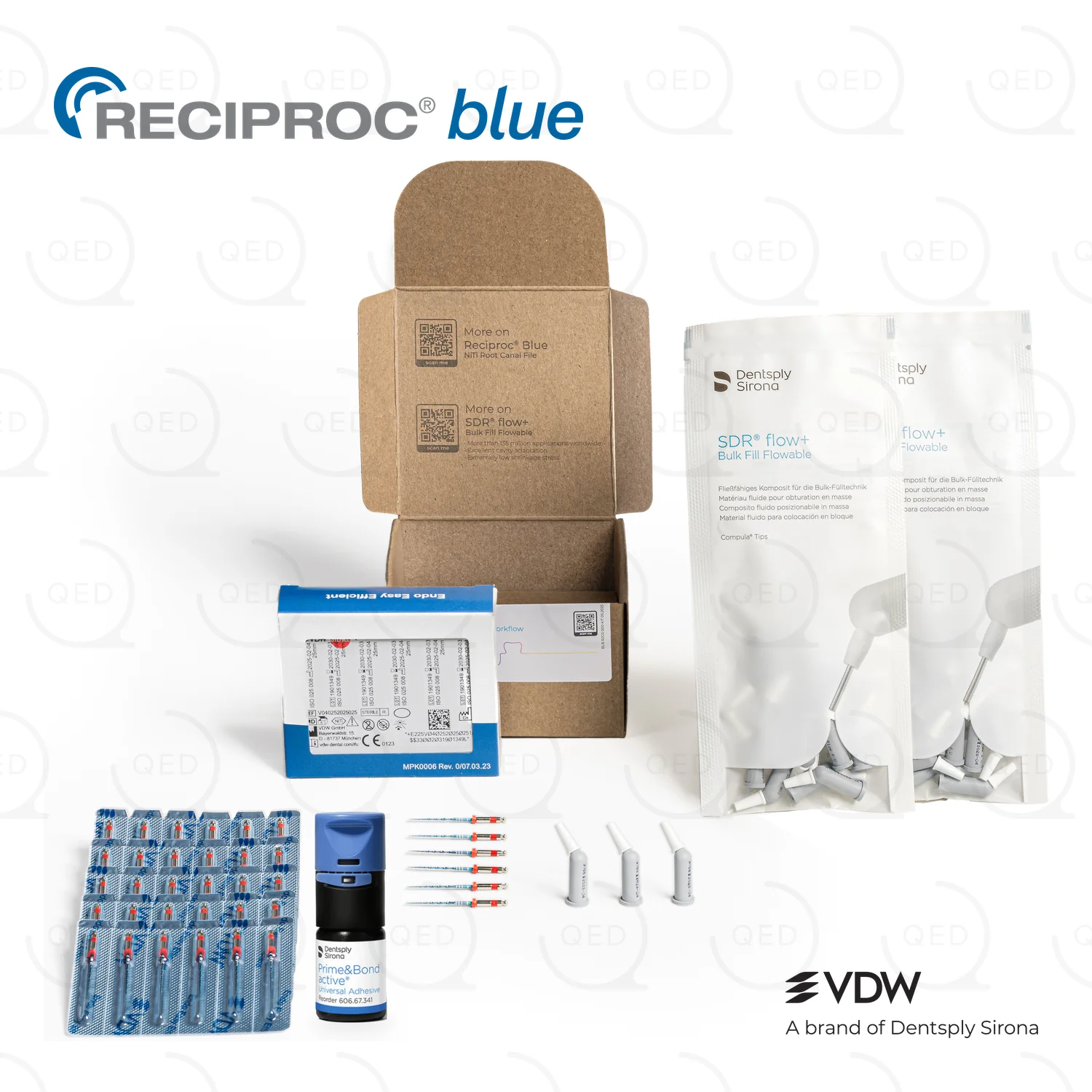
special offer · adhesive included free
the canal is shaped, the root filling is down – and the access cavity is still open. what is bonding the build-up? this code is the waveone® gold and sdr® flow+ kit with a bottle of prime&bond active® added free of charge while stocks last – the shaping, the coronal seal and the adhesive between them, on one order line.
this kit: 15 × sterile procedure blisters – each holding 1 × #10 k-flexofile, 1 × waveone® gold glider and 1 × waveone® gold primary · 1 × sdr® flow+ refill universal, 15 × 0.25 g compula® tips · 1 × prime&bond active® 4 ml, free of charge
made by dentsply sirona
| the free item | one 4 ml bottle of prime&bond active, the same standard refill sold on its own – while stocks last |
| what it covers | scout, glide and shape from one sterile blister per patient, then a bulk fill build-up cured 4 mm at a time |
| not included | paper points, cones, sealer and irrigant – it shapes and restores, it does not obturate |
› the blister is the sequence – scout, glide, shape, sealed together. every case starts on instruments that have cut nothing else.
› one caution carries through both added materials: the adhesive and the composite are each contraindicated alongside eugenol-containing materials – a zoe sealer or an irm-type temporary changes the plan.
how does this differ from the standard kit?
by one bottle. blisters and compules are identical to the waveone gold and sdr flow+ kit; this code adds a 4 ml prime&bond active free while the offer runs.
is the composite the obturation material?
no. sdr® flow+ is a bulk-fill flowable base and core build-up material – it fills the access cavity after obturation, capped with your usual universal composite in a load-bearing cavity. the canal still needs cones, points and a sealer.
| irrigation | chlorax 5.25% · chlorax 2% · irriflex® 30g · smartlite® pro endoactivator |
| dry | waveone® gold paper points primary · 180 – matched to the primary preparation |
| fill and seal | conform fit® gp primary · 60, carried to length with a sealer – ah plus®, dentsply's own epoxy, or neosealer® ezflo, premixed bioceramic, 25 mm tips · proroot® bio sealer |
| when it runs out | sdr® flow+ refill universal · 15 compula® tips – the coronal seal, sold on its own |
waveone® gold, sdr® flow+ & prime&bond · 15 sterile procedure blisters · #10 k-flexofile, gold glider and gold primary in each · 15 sdr® flow+ compula® tips · 4 ml adhesive free of charge · all instruments 25 mm · dentsply sirona · ref sp_b00wsdrr2ckit
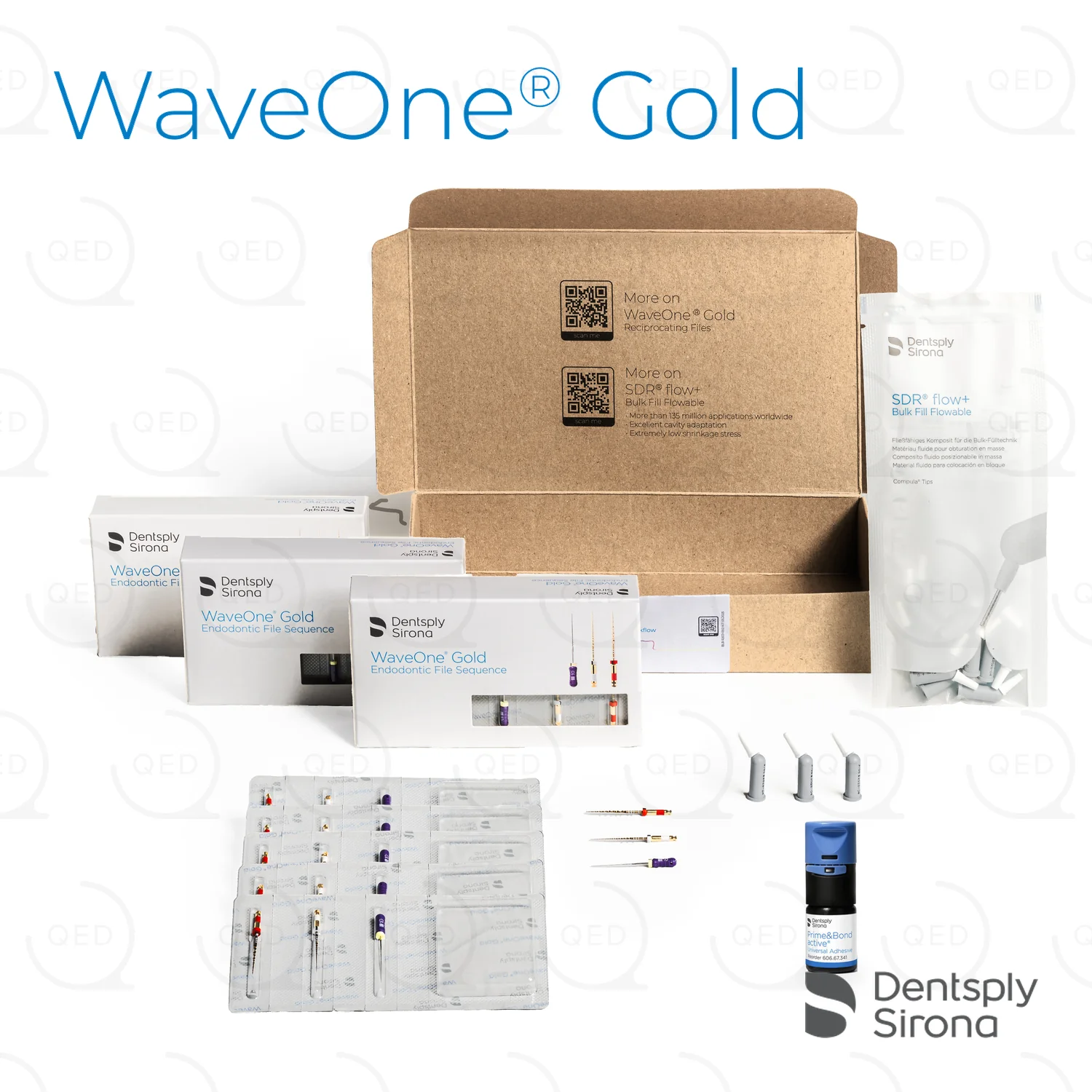
offer · reciproc® minima assorted · 21 mm
2 blisters · 12 filesfree conform fit® gpfree paper pointsuntil 31 december 2026
order two blisters of reciproc® minima assorted at 21 mm and the matched obturation comes in the same order, free. the conform fit® gutta-percha and paper points in the bundle are the ones sized to this file’s preparation, so the case is covered from shaping to fill without a second order.
this bundle: 2 × reciproc® minima assorted, 21 mm (6) · 12 sterile single-use files
free: 1 × conform fit® gutta-percha, assorted (60) · 1 × reciproc® minima paper points, assorted (180)
vdw · a brand of dentsply sirona
| files | 2 × reciproc® minima assorted, 21 mm (6) · £104.94 each |
| gutta-percha, free | conform fit® gutta-percha, assorted (60) · £17.96 |
| paper points, free | reciproc® minima paper points, assorted (180) · £24.44 |
| bought separately | £252.28 at list price |
› mix & match. want a different combination of reciproc® minima files, or other sizes of gutta-percha and paper points? tell us when you order and we will tailor the free consumables to your choice. the same bundle pricing applies, within the same offer period.
| bundles | basket total | per bundle | you save* |
| 1 | £205.68 | £205.68 | £46.60 · 18% |
| 3 | £598.16 | £199.39 | £158.68 · 20% |
| 5 | £944.46 | £188.89 | £316.94 · 25% |
| 7 | £1,248.79 | £178.40 | £517.17 · 29% |
*against buying the same files, gutta-percha and paper points separately at list price (£252.28 per bundle). basket prices as shown on qedendo.com on 15 september 2026 – the price in your basket is the price you pay.
› not sure yet? the assorted blister holds two r20, two r25, one r35 and one r45 – the sequence the system is designed around.
› 21 mm – short roots, and posterior teeth where mouth opening is the limiting factor. with the 9.5 mm short handle it is the shortest combination available.
› other lengths: 25 mm bundle · 31 mm bundle
› other sizes at 21 mm: r20 · r25 · r35 · r45
› just the files? reciproc® minima assorted, 21 mm (6)
when does the offer end?
31 december 2026, or sooner if stock runs out.
can i mix sizes?
yes – choose any combination of reciproc® minima files and tell us which gutta-percha and paper points you would like. the same bundle pricing applies, and mix & match runs to the same 31 december 2026 end date.
which motor do i need?
the instructions specify a dedicated dentsply sirona motor and contra-angle on reciproc® settings. all three motors we stock carry a reciproc® programme: x-smart® go · x-smart® pro+ · vdw.silver® reciproc®. ask us if you are unsure your own unit carries it.
can the files be reused?
no – each file is supplied sterile in a single-use blister.
what is the sealer?
not included. for a bioceramic sealer with fine tips, see neosealer® ezflo.
terms: offer valid until 31 december 2026 while stocks last. cannot be combined with any other promotion, discount or existing subscription or standing-order pricing. the free gutta-percha and paper points are supplied with qualifying purchases only and have no cash alternative. qed may amend or withdraw this offer at any time.
reciproc® minima assorted bundle, 21 mm · 2 blisters, 12 files · free conform fit® gutta-percha, assorted (60) and reciproc® minima paper points, assorted (180) · offer to 31 december 2026 · vdw, a brand of dentsply sirona · ref sp_minima_ass_21mm
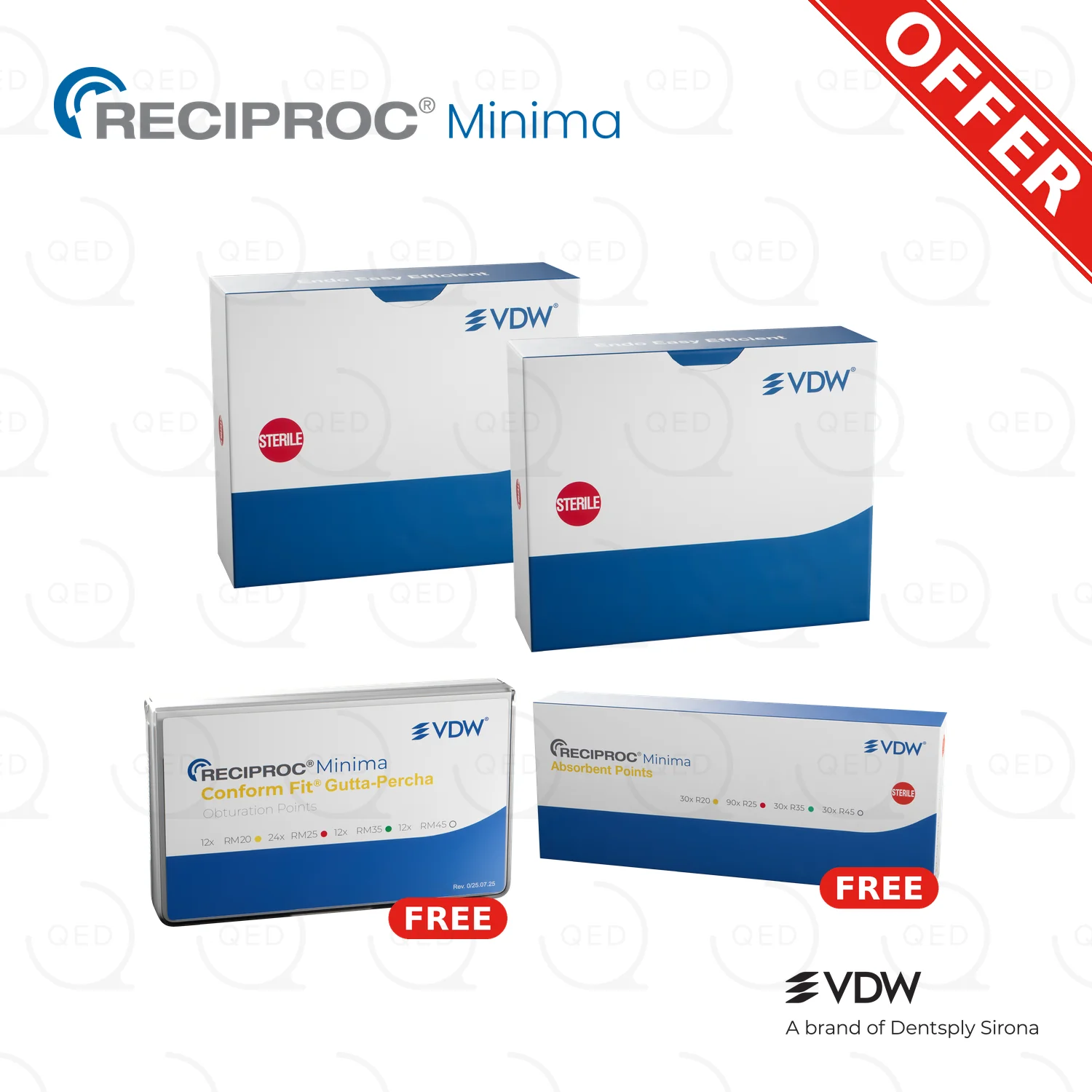
offer · reciproc® minima assorted · 25 mm
2 blisters · 12 filesfree conform fit® gpfree paper pointsuntil 31 december 2026
order two blisters of reciproc® minima assorted at 25 mm and the matched obturation comes in the same order, free. the conform fit® gutta-percha and paper points in the bundle are the ones sized to this file’s preparation, so the case is covered from shaping to fill without a second order.
this bundle: 2 × reciproc® minima assorted, 25 mm (6) · 12 sterile single-use files
free: 1 × conform fit® gutta-percha, assorted (60) · 1 × reciproc® minima paper points, assorted (180)
vdw · a brand of dentsply sirona
| files | 2 × reciproc® minima assorted, 25 mm (6) · £104.94 each |
| gutta-percha, free | conform fit® gutta-percha, assorted (60) · £17.96 |
| paper points, free | reciproc® minima paper points, assorted (180) · £24.44 |
| bought separately | £252.28 at list price |
› mix & match. want a different combination of reciproc® minima files, or other sizes of gutta-percha and paper points? tell us when you order and we will tailor the free consumables to your choice. the same bundle pricing applies, within the same offer period.
| bundles | basket total | per bundle | you save* |
| 1 | £205.68 | £205.68 | £46.60 · 18% |
| 3 | £598.16 | £199.39 | £158.68 · 20% |
| 5 | £944.46 | £188.89 | £316.94 · 25% |
| 7 | £1,248.79 | £178.40 | £517.17 · 29% |
*against buying the same files, gutta-percha and paper points separately at list price (£252.28 per bundle). basket prices as shown on qedendo.com on 15 september 2026 – the price in your basket is the price you pay.
› not sure yet? the assorted blister holds two r20, two r25, one r35 and one r45 – the sequence the system is designed around.
› 25 mm – the everyday length, and the one most practices stock first.
› other lengths: 21 mm bundle · 31 mm bundle
› other sizes at 25 mm: r20 · r25 · r35 · r45
› just the files? reciproc® minima assorted, 25 mm (6)
when does the offer end?
31 december 2026, or sooner if stock runs out.
can i mix sizes?
yes – choose any combination of reciproc® minima files and tell us which gutta-percha and paper points you would like. the same bundle pricing applies, and mix & match runs to the same 31 december 2026 end date.
which motor do i need?
the instructions specify a dedicated dentsply sirona motor and contra-angle on reciproc® settings. all three motors we stock carry a reciproc® programme: x-smart® go · x-smart® pro+ · vdw.silver® reciproc®. ask us if you are unsure your own unit carries it.
can the files be reused?
no – each file is supplied sterile in a single-use blister.
what is the sealer?
not included. for a bioceramic sealer with fine tips, see neosealer® ezflo.
terms: offer valid until 31 december 2026 while stocks last. cannot be combined with any other promotion, discount or existing subscription or standing-order pricing. the free gutta-percha and paper points are supplied with qualifying purchases only and have no cash alternative. qed may amend or withdraw this offer at any time.
reciproc® minima assorted bundle, 25 mm · 2 blisters, 12 files · free conform fit® gutta-percha, assorted (60) and reciproc® minima paper points, assorted (180) · offer to 31 december 2026 · vdw, a brand of dentsply sirona · ref sp_minima_ass_25mm

offer · reciproc® minima assorted · 31 mm
2 blisters · 12 filesfree conform fit® gpfree paper pointsuntil 31 december 2026
order two blisters of reciproc® minima assorted at 31 mm and the matched obturation comes in the same order, free. the conform fit® gutta-percha and paper points in the bundle are the ones sized to this file’s preparation, so the case is covered from shaping to fill without a second order.
this bundle: 2 × reciproc® minima assorted, 31 mm (6) · 12 sterile single-use files
free: 1 × conform fit® gutta-percha, assorted (60) · 1 × reciproc® minima paper points, assorted (180)
vdw · a brand of dentsply sirona
| files | 2 × reciproc® minima assorted, 31 mm (6) · £104.94 each |
| gutta-percha, free | conform fit® gutta-percha, assorted (60) · £17.96 |
| paper points, free | reciproc® minima paper points, assorted (180) · £24.44 |
| bought separately | £252.28 at list price |
› mix & match. want a different combination of reciproc® minima files, or other sizes of gutta-percha and paper points? tell us when you order and we will tailor the free consumables to your choice. the same bundle pricing applies, within the same offer period.
| bundles | basket total | per bundle | you save* |
| 1 | £205.68 | £205.68 | £46.60 · 18% |
| 3 | £598.16 | £199.39 | £158.68 · 20% |
| 5 | £944.46 | £188.89 | £316.94 · 25% |
| 7 | £1,248.79 | £178.40 | £517.17 · 29% |
*against buying the same files, gutta-percha and paper points separately at list price (£252.28 per bundle). basket prices as shown on qedendo.com on 15 september 2026 – the price in your basket is the price you pay.
› not sure yet? the assorted blister holds two r20, two r25, one r35 and one r45 – the sequence the system is designed around.
› 31 mm – canines, long-rooted premolars, and anything a 25 mm file leaves short of length.
› other lengths: 21 mm bundle · 25 mm bundle
› other sizes at 31 mm: r20 · r25 · r35 · r45
› just the files? reciproc® minima assorted, 31 mm (6)
when does the offer end?
31 december 2026, or sooner if stock runs out.
can i mix sizes?
yes – choose any combination of reciproc® minima files and tell us which gutta-percha and paper points you would like. the same bundle pricing applies, and mix & match runs to the same 31 december 2026 end date.
which motor do i need?
the instructions specify a dedicated dentsply sirona motor and contra-angle on reciproc® settings. all three motors we stock carry a reciproc® programme: x-smart® go · x-smart® pro+ · vdw.silver® reciproc®. ask us if you are unsure your own unit carries it.
can the files be reused?
no – each file is supplied sterile in a single-use blister.
what is the sealer?
not included. for a bioceramic sealer with fine tips, see neosealer® ezflo.
terms: offer valid until 31 december 2026 while stocks last. cannot be combined with any other promotion, discount or existing subscription or standing-order pricing. the free gutta-percha and paper points are supplied with qualifying purchases only and have no cash alternative. qed may amend or withdraw this offer at any time.
reciproc® minima assorted bundle, 31 mm · 2 blisters, 12 files · free conform fit® gutta-percha, assorted (60) and reciproc® minima paper points, assorted (180) · offer to 31 december 2026 · vdw, a brand of dentsply sirona · ref sp_minima_ass_31mm
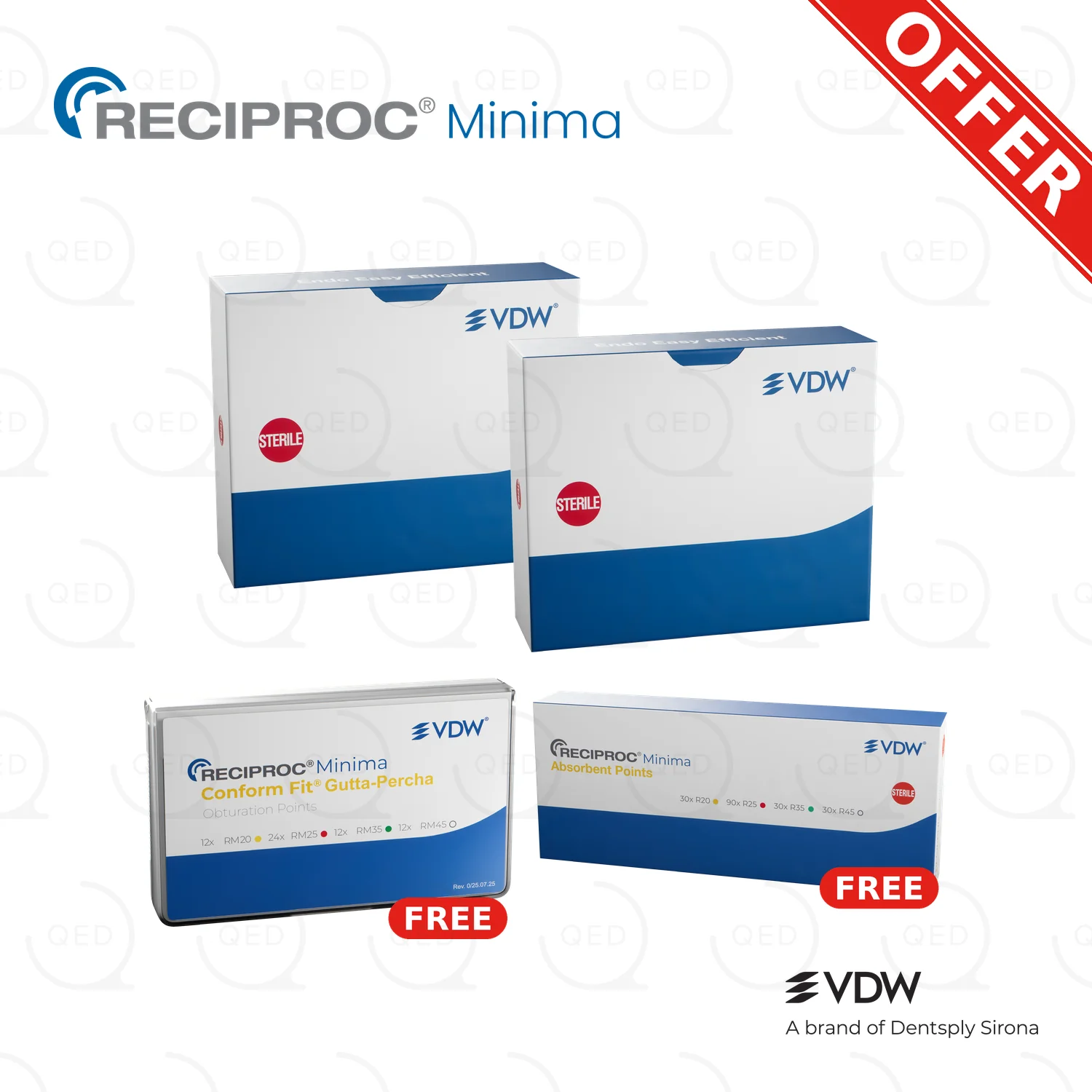
offer · reciproc® minima r20 · 21 mm
2 blisters · 12 filesfree conform fit® gpfree paper pointsuntil 31 december 2026
order two blisters of reciproc® minima r20 at 21 mm and the matched obturation comes in the same order, free. the conform fit® gutta-percha and paper points in the bundle are the ones sized to this file’s preparation, so the case is covered from shaping to fill without a second order.
this bundle: 2 × reciproc® minima r20, 21 mm (6) · 12 sterile single-use files
free: 1 × conform fit® gutta-percha, rm20 (60) · 1 × reciproc® minima paper points, r20 (180)
vdw · a brand of dentsply sirona
| files | 2 × reciproc® minima r20, 21 mm (6) · £104.94 each |
| gutta-percha, free | conform fit® gutta-percha, rm20 (60) · £17.96 |
| paper points, free | reciproc® minima paper points, r20 (180) · £24.44 |
| bought separately | £252.28 at list price |
› mix & match. want a different combination of reciproc® minima files, or other sizes of gutta-percha and paper points? tell us when you order and we will tailor the free consumables to your choice. the same bundle pricing applies, within the same offer period.
| bundles | basket total | per bundle | you save* |
| 1 | £205.68 | £205.68 | £46.60 · 18% |
| 3 | £598.16 | £199.39 | £158.68 · 20% |
| 5 | £944.46 | £188.89 | £316.94 · 25% |
| 7 | £1,248.79 | £178.40 | £517.17 · 29% |
*against buying the same files, gutta-percha and paper points separately at list price (£252.28 per bundle). basket prices as shown on qedendo.com on 15 september 2026 – the price in your basket is the price you pay.
› narrow or challenging canal? start at r20. the instructions are explicit, and it is the size with the published negotiation data behind it.
› 21 mm – short roots, and posterior teeth where mouth opening is the limiting factor. with the 9.5 mm short handle it is the shortest combination available.
› iso 20/.08v – 0.20 mm apical tip, 3.6% averaged along the blade.
› other lengths: 25 mm bundle · 31 mm bundle
› other sizes at 21 mm: r25 · r35 · r45 · assorted
› just the files? reciproc® minima r20, 21 mm (6)
when does the offer end?
31 december 2026, or sooner if stock runs out.
can i mix sizes?
yes – choose any combination of reciproc® minima files and tell us which gutta-percha and paper points you would like. the same bundle pricing applies, and mix & match runs to the same 31 december 2026 end date.
which motor do i need?
the instructions specify a dedicated dentsply sirona motor and contra-angle on reciproc® settings. all three motors we stock carry a reciproc® programme: x-smart® go · x-smart® pro+ · vdw.silver® reciproc®. ask us if you are unsure your own unit carries it.
can the files be reused?
no – each file is supplied sterile in a single-use blister.
what is the sealer?
not included. for a bioceramic sealer with fine tips, see neosealer® ezflo.
terms: offer valid until 31 december 2026 while stocks last. cannot be combined with any other promotion, discount or existing subscription or standing-order pricing. the free gutta-percha and paper points are supplied with qualifying purchases only and have no cash alternative. qed may amend or withdraw this offer at any time.
reciproc® minima r20 bundle, 21 mm · 2 blisters, 12 files · free conform fit® gutta-percha, rm20 (60) and reciproc® minima paper points, r20 (180) · offer to 31 december 2026 · vdw, a brand of dentsply sirona · ref sp_minima_r20_21mm
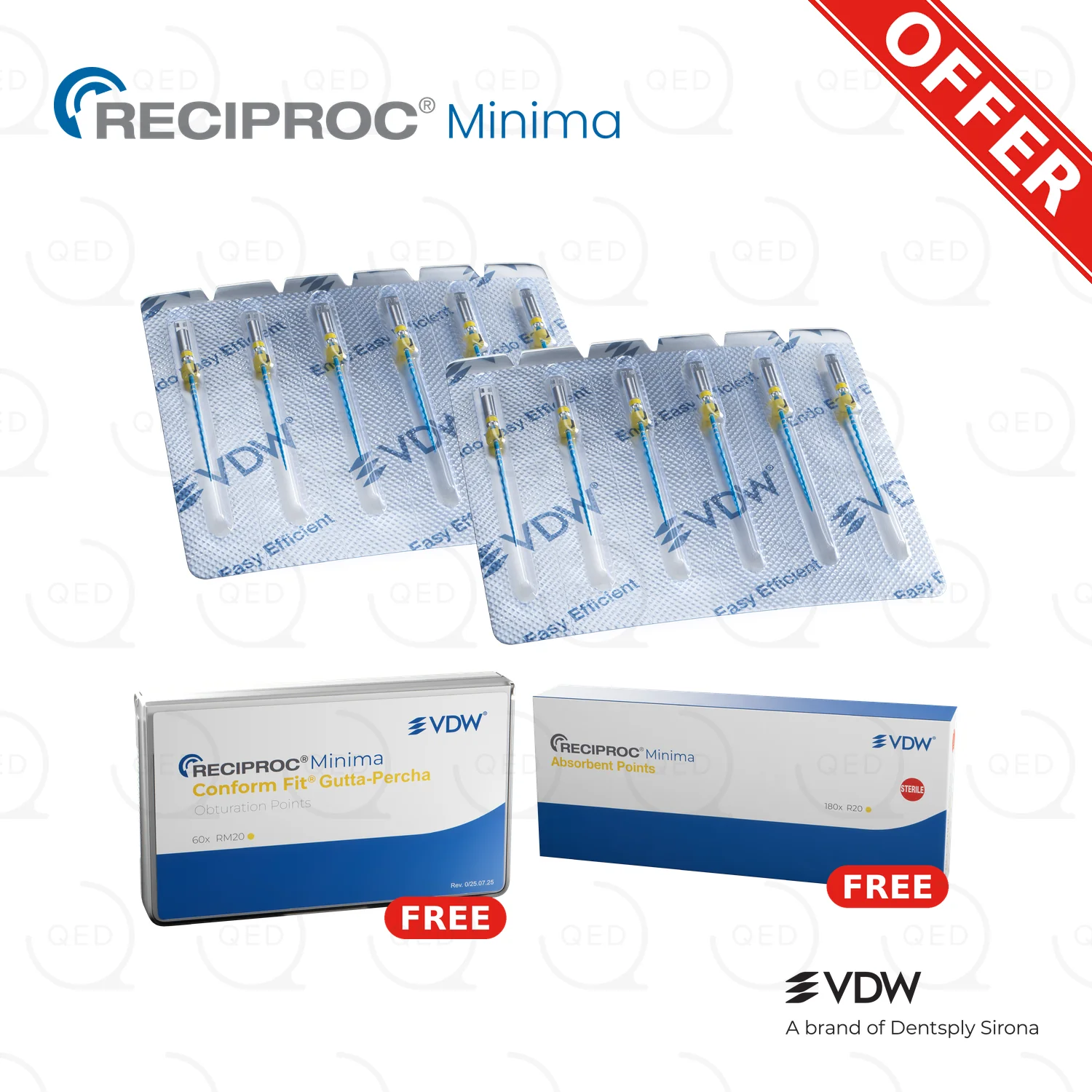
offer · reciproc® minima r20 · 25 mm
2 blisters · 12 filesfree conform fit® gpfree paper pointsuntil 31 december 2026
order two blisters of reciproc® minima r20 at 25 mm and the matched obturation comes in the same order, free. the conform fit® gutta-percha and paper points in the bundle are the ones sized to this file’s preparation, so the case is covered from shaping to fill without a second order.
this bundle: 2 × reciproc® minima r20, 25 mm (6) · 12 sterile single-use files
free: 1 × conform fit® gutta-percha, rm20 (60) · 1 × reciproc® minima paper points, r20 (180)
vdw · a brand of dentsply sirona
| files | 2 × reciproc® minima r20, 25 mm (6) · £104.94 each |
| gutta-percha, free | conform fit® gutta-percha, rm20 (60) · £17.96 |
| paper points, free | reciproc® minima paper points, r20 (180) · £24.44 |
| bought separately | £252.28 at list price |
› mix & match. want a different combination of reciproc® minima files, or other sizes of gutta-percha and paper points? tell us when you order and we will tailor the free consumables to your choice. the same bundle pricing applies, within the same offer period.
| bundles | basket total | per bundle | you save* |
| 1 | £205.68 | £205.68 | £46.60 · 18% |
| 3 | £598.16 | £199.39 | £158.68 · 20% |
| 5 | £944.46 | £188.89 | £316.94 · 25% |
| 7 | £1,248.79 | £178.40 | £517.17 · 29% |
*against buying the same files, gutta-percha and paper points separately at list price (£252.28 per bundle). basket prices as shown on qedendo.com on 15 september 2026 – the price in your basket is the price you pay.
› narrow or challenging canal? start at r20. the instructions are explicit, and it is the size with the published negotiation data behind it.
› 25 mm – the everyday length, and the one most practices stock first.
› iso 20/.08v – 0.20 mm apical tip, 3.6% averaged along the blade.
› other lengths: 21 mm bundle · 31 mm bundle
› other sizes at 25 mm: r25 · r35 · r45 · assorted
› just the files? reciproc® minima r20, 25 mm (6)
when does the offer end?
31 december 2026, or sooner if stock runs out.
can i mix sizes?
yes – choose any combination of reciproc® minima files and tell us which gutta-percha and paper points you would like. the same bundle pricing applies, and mix & match runs to the same 31 december 2026 end date.
which motor do i need?
the instructions specify a dedicated dentsply sirona motor and contra-angle on reciproc® settings. all three motors we stock carry a reciproc® programme: x-smart® go · x-smart® pro+ · vdw.silver® reciproc®. ask us if you are unsure your own unit carries it.
can the files be reused?
no – each file is supplied sterile in a single-use blister.
what is the sealer?
not included. for a bioceramic sealer with fine tips, see neosealer® ezflo.
terms: offer valid until 31 december 2026 while stocks last. cannot be combined with any other promotion, discount or existing subscription or standing-order pricing. the free gutta-percha and paper points are supplied with qualifying purchases only and have no cash alternative. qed may amend or withdraw this offer at any time.
reciproc® minima r20 bundle, 25 mm · 2 blisters, 12 files · free conform fit® gutta-percha, rm20 (60) and reciproc® minima paper points, r20 (180) · offer to 31 december 2026 · vdw, a brand of dentsply sirona · ref sp_minima_r20_25mm
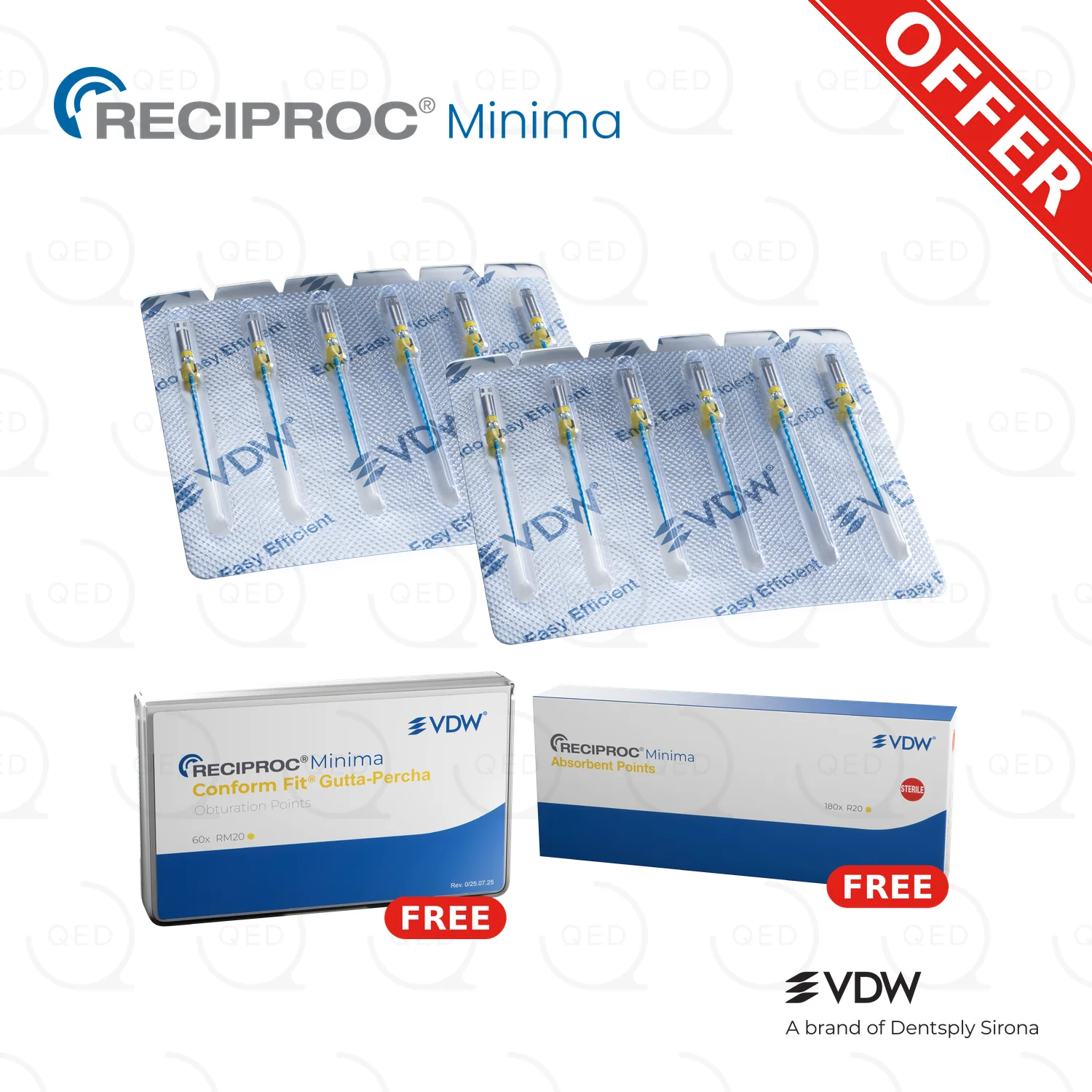
offer · reciproc® minima r20 · 31 mm
2 blisters · 12 filesfree conform fit® gpfree paper pointsuntil 31 december 2026
order two blisters of reciproc® minima r20 at 31 mm and the matched obturation comes in the same order, free. the conform fit® gutta-percha and paper points in the bundle are the ones sized to this file’s preparation, so the case is covered from shaping to fill without a second order.
this bundle: 2 × reciproc® minima r20, 31 mm (6) · 12 sterile single-use files
free: 1 × conform fit® gutta-percha, rm20 (60) · 1 × reciproc® minima paper points, r20 (180)
vdw · a brand of dentsply sirona
| files | 2 × reciproc® minima r20, 31 mm (6) · £104.94 each |
| gutta-percha, free | conform fit® gutta-percha, rm20 (60) · £17.96 |
| paper points, free | reciproc® minima paper points, r20 (180) · £24.44 |
| bought separately | £252.28 at list price |
› mix & match. want a different combination of reciproc® minima files, or other sizes of gutta-percha and paper points? tell us when you order and we will tailor the free consumables to your choice. the same bundle pricing applies, within the same offer period.
| bundles | basket total | per bundle | you save* |
| 1 | £205.68 | £205.68 | £46.60 · 18% |
| 3 | £598.16 | £199.39 | £158.68 · 20% |
| 5 | £944.46 | £188.89 | £316.94 · 25% |
| 7 | £1,248.79 | £178.40 | £517.17 · 29% |
*against buying the same files, gutta-percha and paper points separately at list price (£252.28 per bundle). basket prices as shown on qedendo.com on 15 september 2026 – the price in your basket is the price you pay.
› narrow or challenging canal? start at r20. the instructions are explicit, and it is the size with the published negotiation data behind it.
› 31 mm – canines, long-rooted premolars, and anything a 25 mm file leaves short of length.
› iso 20/.08v – 0.20 mm apical tip, 3.6% averaged along the blade.
› other lengths: 21 mm bundle · 25 mm bundle
› other sizes at 31 mm: r25 · r35 · r45 · assorted
› just the files? reciproc® minima r20, 31 mm (6)
when does the offer end?
31 december 2026, or sooner if stock runs out.
can i mix sizes?
yes – choose any combination of reciproc® minima files and tell us which gutta-percha and paper points you would like. the same bundle pricing applies, and mix & match runs to the same 31 december 2026 end date.
which motor do i need?
the instructions specify a dedicated dentsply sirona motor and contra-angle on reciproc® settings. all three motors we stock carry a reciproc® programme: x-smart® go · x-smart® pro+ · vdw.silver® reciproc®. ask us if you are unsure your own unit carries it.
can the files be reused?
no – each file is supplied sterile in a single-use blister.
what is the sealer?
not included. for a bioceramic sealer with fine tips, see neosealer® ezflo.
terms: offer valid until 31 december 2026 while stocks last. cannot be combined with any other promotion, discount or existing subscription or standing-order pricing. the free gutta-percha and paper points are supplied with qualifying purchases only and have no cash alternative. qed may amend or withdraw this offer at any time.
reciproc® minima r20 bundle, 31 mm · 2 blisters, 12 files · free conform fit® gutta-percha, rm20 (60) and reciproc® minima paper points, r20 (180) · offer to 31 december 2026 · vdw, a brand of dentsply sirona · ref sp_minima_r20_31mm

offer · reciproc® minima r25 · 21 mm
2 blisters · 12 filesfree conform fit® gpfree paper pointsuntil 31 december 2026
order two blisters of reciproc® minima r25 at 21 mm and the matched obturation comes in the same order, free. the conform fit® gutta-percha and paper points in the bundle are the ones sized to this file’s preparation, so the case is covered from shaping to fill without a second order.
this bundle: 2 × reciproc® minima r25, 21 mm (6) · 12 sterile single-use files
free: 1 × conform fit® gutta-percha, rm25 (60) · 1 × reciproc® minima paper points, r25 (180)
vdw · a brand of dentsply sirona
| files | 2 × reciproc® minima r25, 21 mm (6) · £104.94 each |
| gutta-percha, free | conform fit® gutta-percha, rm25 (60) · £17.96 |
| paper points, free | reciproc® minima paper points, r25 (180) · £24.44 |
| bought separately | £252.28 at list price |
› mix & match. want a different combination of reciproc® minima files, or other sizes of gutta-percha and paper points? tell us when you order and we will tailor the free consumables to your choice. the same bundle pricing applies, within the same offer period.
| bundles | basket total | per bundle | you save* |
| 1 | £205.68 | £205.68 | £46.60 · 18% |
| 3 | £598.16 | £199.39 | £158.68 · 20% |
| 5 | £944.46 | £188.89 | £316.94 · 25% |
| 7 | £1,248.79 | £178.40 | £517.17 · 29% |
*against buying the same files, gutta-percha and paper points separately at list price (£252.28 per bundle). basket prices as shown on qedendo.com on 15 september 2026 – the price in your basket is the price you pay.
› wider anatomy? the starting size is your call. r25 is where most clinicians begin.
› 21 mm – short roots, and posterior teeth where mouth opening is the limiting factor. with the 9.5 mm short handle it is the shortest combination available.
› iso 25/.08v – 0.25 mm apical tip, 3.3% averaged along the blade.
› other lengths: 25 mm bundle · 31 mm bundle
› other sizes at 21 mm: r20 · r35 · r45 · assorted
› just the files? reciproc® minima r25, 21 mm (6)
when does the offer end?
31 december 2026, or sooner if stock runs out.
can i mix sizes?
yes – choose any combination of reciproc® minima files and tell us which gutta-percha and paper points you would like. the same bundle pricing applies, and mix & match runs to the same 31 december 2026 end date.
which motor do i need?
the instructions specify a dedicated dentsply sirona motor and contra-angle on reciproc® settings. all three motors we stock carry a reciproc® programme: x-smart® go · x-smart® pro+ · vdw.silver® reciproc®. ask us if you are unsure your own unit carries it.
can the files be reused?
no – each file is supplied sterile in a single-use blister.
what is the sealer?
not included. for a bioceramic sealer with fine tips, see neosealer® ezflo.
terms: offer valid until 31 december 2026 while stocks last. cannot be combined with any other promotion, discount or existing subscription or standing-order pricing. the free gutta-percha and paper points are supplied with qualifying purchases only and have no cash alternative. qed may amend or withdraw this offer at any time.
reciproc® minima r25 bundle, 21 mm · 2 blisters, 12 files · free conform fit® gutta-percha, rm25 (60) and reciproc® minima paper points, r25 (180) · offer to 31 december 2026 · vdw, a brand of dentsply sirona · ref sp_minima_r25_21mm
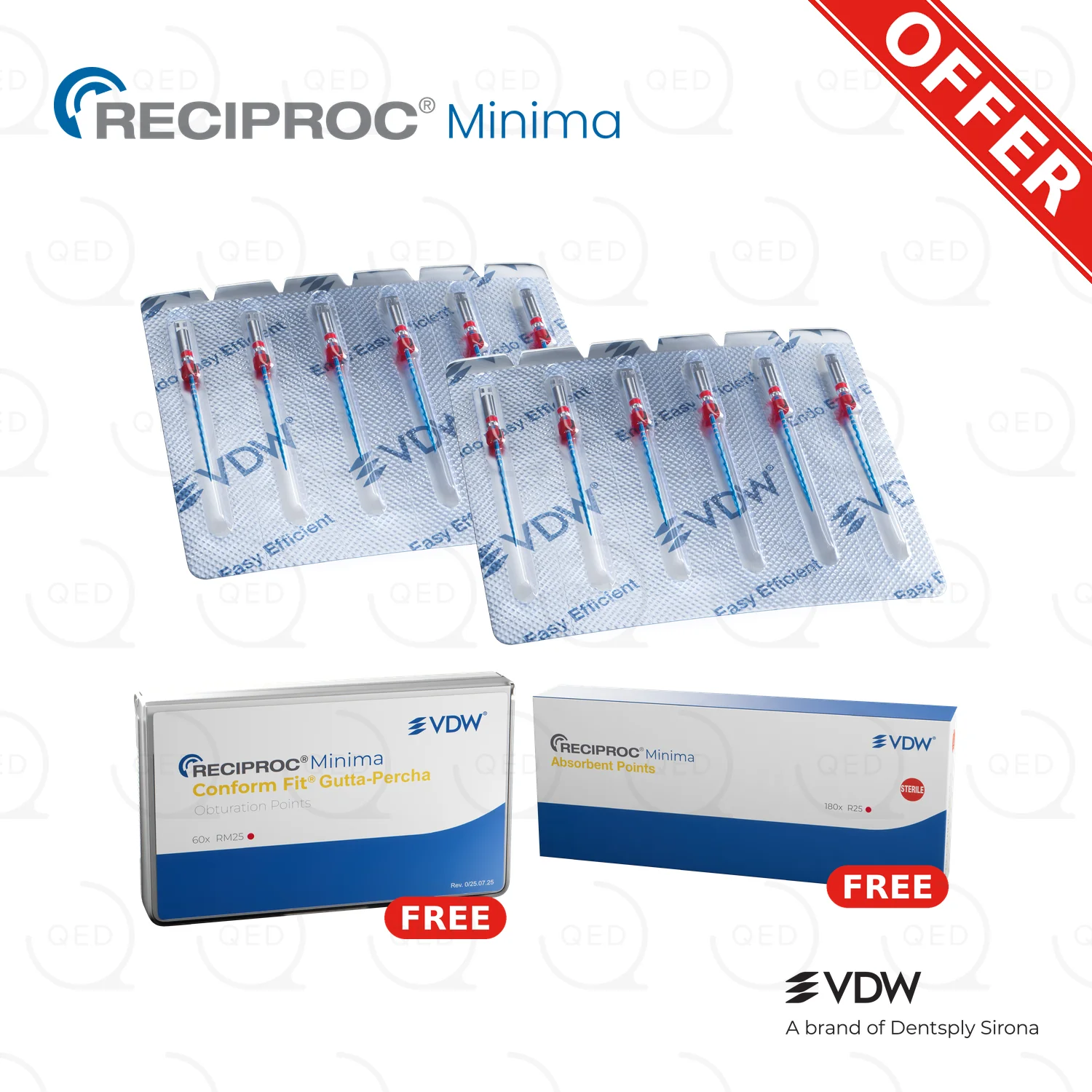
offer · reciproc® minima r25 · 25 mm
2 blisters · 12 filesfree conform fit® gpfree paper pointsuntil 31 december 2026
order two blisters of reciproc® minima r25 at 25 mm and the matched obturation comes in the same order, free. the conform fit® gutta-percha and paper points in the bundle are the ones sized to this file’s preparation, so the case is covered from shaping to fill without a second order.
this bundle: 2 × reciproc® minima r25, 25 mm (6) · 12 sterile single-use files
free: 1 × conform fit® gutta-percha, rm25 (60) · 1 × reciproc® minima paper points, r25 (180)
vdw · a brand of dentsply sirona
| files | 2 × reciproc® minima r25, 25 mm (6) · £104.94 each |
| gutta-percha, free | conform fit® gutta-percha, rm25 (60) · £17.96 |
| paper points, free | reciproc® minima paper points, r25 (180) · £24.44 |
| bought separately | £252.28 at list price |
› mix & match. want a different combination of reciproc® minima files, or other sizes of gutta-percha and paper points? tell us when you order and we will tailor the free consumables to your choice. the same bundle pricing applies, within the same offer period.
| bundles | basket total | per bundle | you save* |
| 1 | £205.68 | £205.68 | £46.60 · 18% |
| 3 | £598.16 | £199.39 | £158.68 · 20% |
| 5 | £944.46 | £188.89 | £316.94 · 25% |
| 7 | £1,248.79 | £178.40 | £517.17 · 29% |
*against buying the same files, gutta-percha and paper points separately at list price (£252.28 per bundle). basket prices as shown on qedendo.com on 15 september 2026 – the price in your basket is the price you pay.
› wider anatomy? the starting size is your call. r25 is where most clinicians begin.
› 25 mm – the everyday length, and the one most practices stock first.
› iso 25/.08v – 0.25 mm apical tip, 3.3% averaged along the blade.
› other lengths: 21 mm bundle · 31 mm bundle
› other sizes at 25 mm: r20 · r35 · r45 · assorted
› just the files? reciproc® minima r25, 25 mm (6)
when does the offer end?
31 december 2026, or sooner if stock runs out.
can i mix sizes?
yes – choose any combination of reciproc® minima files and tell us which gutta-percha and paper points you would like. the same bundle pricing applies, and mix & match runs to the same 31 december 2026 end date.
which motor do i need?
the instructions specify a dedicated dentsply sirona motor and contra-angle on reciproc® settings. all three motors we stock carry a reciproc® programme: x-smart® go · x-smart® pro+ · vdw.silver® reciproc®. ask us if you are unsure your own unit carries it.
can the files be reused?
no – each file is supplied sterile in a single-use blister.
what is the sealer?
not included. for a bioceramic sealer with fine tips, see neosealer® ezflo.
terms: offer valid until 31 december 2026 while stocks last. cannot be combined with any other promotion, discount or existing subscription or standing-order pricing. the free gutta-percha and paper points are supplied with qualifying purchases only and have no cash alternative. qed may amend or withdraw this offer at any time.
reciproc® minima r25 bundle, 25 mm · 2 blisters, 12 files · free conform fit® gutta-percha, rm25 (60) and reciproc® minima paper points, r25 (180) · offer to 31 december 2026 · vdw, a brand of dentsply sirona · ref sp_minima_r25_25mm
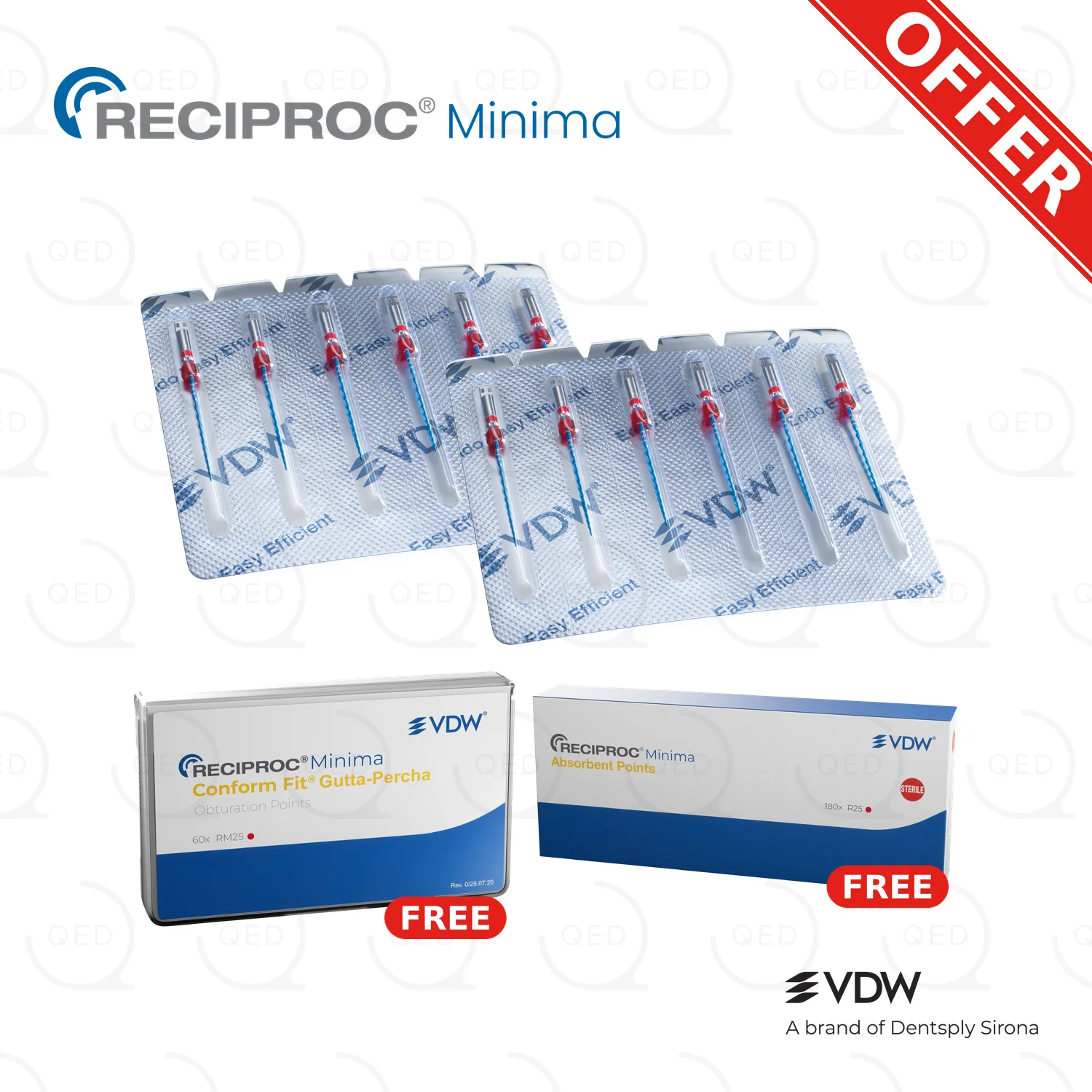
offer · reciproc® minima r25 · 31 mm
2 blisters · 12 filesfree conform fit® gpfree paper pointsuntil 31 december 2026
order two blisters of reciproc® minima r25 at 31 mm and the matched obturation comes in the same order, free. the conform fit® gutta-percha and paper points in the bundle are the ones sized to this file’s preparation, so the case is covered from shaping to fill without a second order.
this bundle: 2 × reciproc® minima r25, 31 mm (6) · 12 sterile single-use files
free: 1 × conform fit® gutta-percha, rm25 (60) · 1 × reciproc® minima paper points, r25 (180)
vdw · a brand of dentsply sirona
| files | 2 × reciproc® minima r25, 31 mm (6) · £104.94 each |
| gutta-percha, free | conform fit® gutta-percha, rm25 (60) · £17.96 |
| paper points, free | reciproc® minima paper points, r25 (180) · £24.44 |
| bought separately | £252.28 at list price |
› mix & match. want a different combination of reciproc® minima files, or other sizes of gutta-percha and paper points? tell us when you order and we will tailor the free consumables to your choice. the same bundle pricing applies, within the same offer period.
| bundles | basket total | per bundle | you save* |
| 1 | £205.68 | £205.68 | £46.60 · 18% |
| 3 | £598.16 | £199.39 | £158.68 · 20% |
| 5 | £944.46 | £188.89 | £316.94 · 25% |
| 7 | £1,248.79 | £178.40 | £517.17 · 29% |
*against buying the same files, gutta-percha and paper points separately at list price (£252.28 per bundle). basket prices as shown on qedendo.com on 15 september 2026 – the price in your basket is the price you pay.
› wider anatomy? the starting size is your call. r25 is where most clinicians begin.
› 31 mm – canines, long-rooted premolars, and anything a 25 mm file leaves short of length.
› iso 25/.08v – 0.25 mm apical tip, 3.3% averaged along the blade.
› other lengths: 21 mm bundle · 25 mm bundle
› other sizes at 31 mm: r20 · r35 · r45 · assorted
› just the files? reciproc® minima r25, 31 mm (6)
when does the offer end?
31 december 2026, or sooner if stock runs out.
can i mix sizes?
yes – choose any combination of reciproc® minima files and tell us which gutta-percha and paper points you would like. the same bundle pricing applies, and mix & match runs to the same 31 december 2026 end date.
which motor do i need?
the instructions specify a dedicated dentsply sirona motor and contra-angle on reciproc® settings. all three motors we stock carry a reciproc® programme: x-smart® go · x-smart® pro+ · vdw.silver® reciproc®. ask us if you are unsure your own unit carries it.
can the files be reused?
no – each file is supplied sterile in a single-use blister.
what is the sealer?
not included. for a bioceramic sealer with fine tips, see neosealer® ezflo.
terms: offer valid until 31 december 2026 while stocks last. cannot be combined with any other promotion, discount or existing subscription or standing-order pricing. the free gutta-percha and paper points are supplied with qualifying purchases only and have no cash alternative. qed may amend or withdraw this offer at any time.
reciproc® minima r25 bundle, 31 mm · 2 blisters, 12 files · free conform fit® gutta-percha, rm25 (60) and reciproc® minima paper points, r25 (180) · offer to 31 december 2026 · vdw, a brand of dentsply sirona · ref sp_minima_r25_31mm
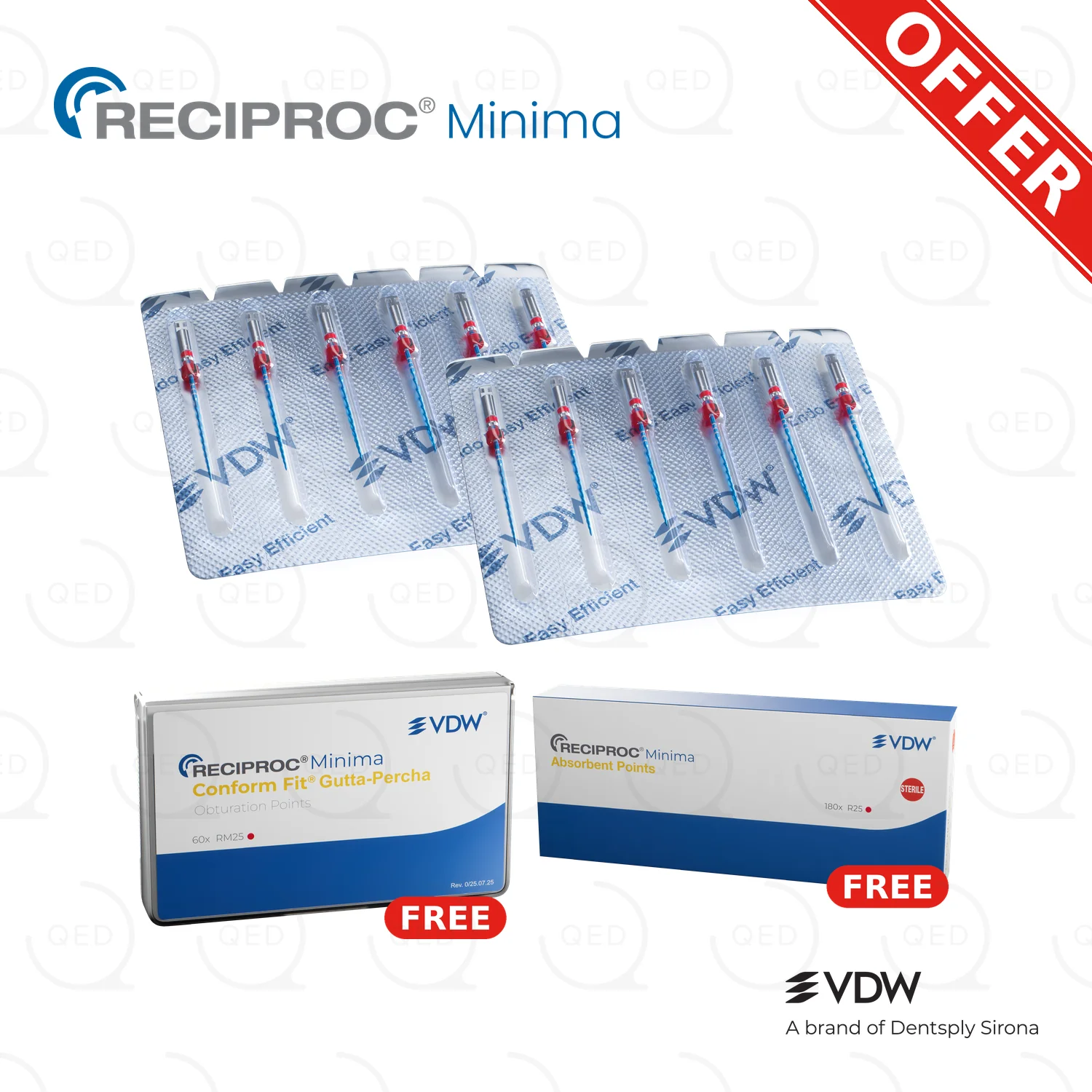
offer · reciproc® minima r35 · 21 mm
2 blisters · 12 filesfree conform fit® gpfree paper pointsuntil 31 december 2026
order two blisters of reciproc® minima r35 at 21 mm and the matched obturation comes in the same order, free. the conform fit® gutta-percha and paper points in the bundle are the ones sized to this file’s preparation, so the case is covered from shaping to fill without a second order.
this bundle: 2 × reciproc® minima r35, 21 mm (6) · 12 sterile single-use files
free: 1 × conform fit® gutta-percha, rm35 (60) · 1 × reciproc® minima paper points, r35 (180)
vdw · a brand of dentsply sirona
| files | 2 × reciproc® minima r35, 21 mm (6) · £104.94 each |
| gutta-percha, free | conform fit® gutta-percha, rm35 (60) · £17.96 |
| paper points, free | reciproc® minima paper points, r35 (180) · £24.44 |
| bought separately | £252.28 at list price |
› mix & match. want a different combination of reciproc® minima files, or other sizes of gutta-percha and paper points? tell us when you order and we will tailor the free consumables to your choice. the same bundle pricing applies, within the same offer period.
| bundles | basket total | per bundle | you save* |
| 1 | £205.68 | £205.68 | £46.60 · 18% |
| 3 | £598.16 | £199.39 | £158.68 · 20% |
| 5 | £944.46 | £188.89 | £316.94 · 25% |
| 7 | £1,248.79 | £178.40 | £517.17 · 29% |
*against buying the same files, gutta-percha and paper points separately at list price (£252.28 per bundle). basket prices as shown on qedendo.com on 15 september 2026 – the price in your basket is the price you pay.
› larger apical preparation wanted? r35 or r45, whose lower overall taper means they can often be used directly rather than stepping through the smaller sizes.
› 21 mm – short roots, and posterior teeth where mouth opening is the limiting factor. with the 9.5 mm short handle it is the shortest combination available.
› iso 35/.06v – 0.35 mm apical tip, 2.6% averaged along the blade.
› other lengths: 25 mm bundle · 31 mm bundle
› other sizes at 21 mm: r20 · r25 · r45 · assorted
› just the files? reciproc® minima r35, 21 mm (6)
when does the offer end?
31 december 2026, or sooner if stock runs out.
can i mix sizes?
yes – choose any combination of reciproc® minima files and tell us which gutta-percha and paper points you would like. the same bundle pricing applies, and mix & match runs to the same 31 december 2026 end date.
which motor do i need?
the instructions specify a dedicated dentsply sirona motor and contra-angle on reciproc® settings. all three motors we stock carry a reciproc® programme: x-smart® go · x-smart® pro+ · vdw.silver® reciproc®. ask us if you are unsure your own unit carries it.
can the files be reused?
no – each file is supplied sterile in a single-use blister.
what is the sealer?
not included. for a bioceramic sealer with fine tips, see neosealer® ezflo.
terms: offer valid until 31 december 2026 while stocks last. cannot be combined with any other promotion, discount or existing subscription or standing-order pricing. the free gutta-percha and paper points are supplied with qualifying purchases only and have no cash alternative. qed may amend or withdraw this offer at any time.
reciproc® minima r35 bundle, 21 mm · 2 blisters, 12 files · free conform fit® gutta-percha, rm35 (60) and reciproc® minima paper points, r35 (180) · offer to 31 december 2026 · vdw, a brand of dentsply sirona · ref sp_minima_r35_21mm
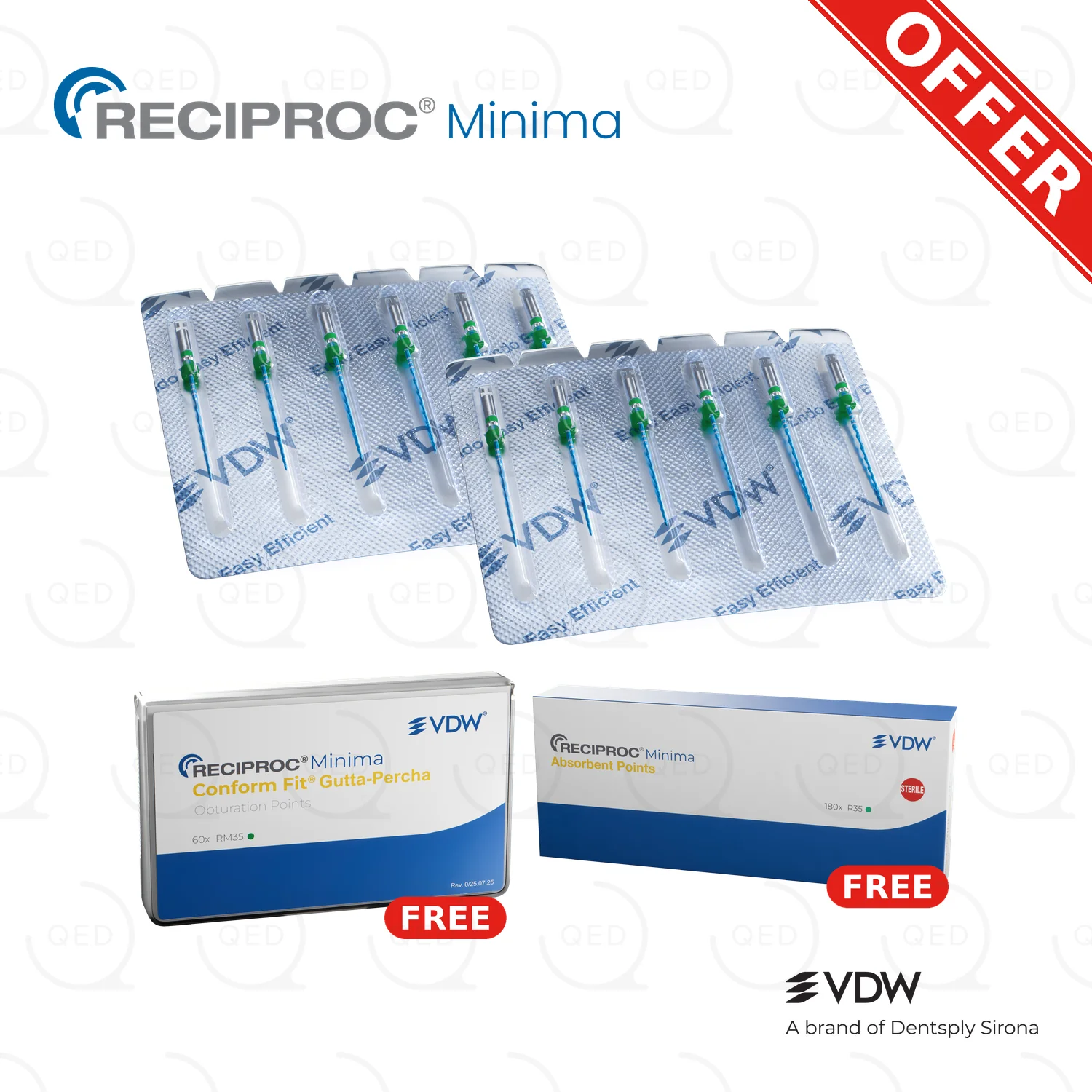
offer · reciproc® minima r35 · 25 mm
2 blisters · 12 filesfree conform fit® gpfree paper pointsuntil 31 december 2026
order two blisters of reciproc® minima r35 at 25 mm and the matched obturation comes in the same order, free. the conform fit® gutta-percha and paper points in the bundle are the ones sized to this file’s preparation, so the case is covered from shaping to fill without a second order.
this bundle: 2 × reciproc® minima r35, 25 mm (6) · 12 sterile single-use files
free: 1 × conform fit® gutta-percha, rm35 (60) · 1 × reciproc® minima paper points, r35 (180)
vdw · a brand of dentsply sirona
| files | 2 × reciproc® minima r35, 25 mm (6) · £104.94 each |
| gutta-percha, free | conform fit® gutta-percha, rm35 (60) · £17.96 |
| paper points, free | reciproc® minima paper points, r35 (180) · £24.44 |
| bought separately | £252.28 at list price |
› mix & match. want a different combination of reciproc® minima files, or other sizes of gutta-percha and paper points? tell us when you order and we will tailor the free consumables to your choice. the same bundle pricing applies, within the same offer period.
| bundles | basket total | per bundle | you save* |
| 1 | £205.68 | £205.68 | £46.60 · 18% |
| 3 | £598.16 | £199.39 | £158.68 · 20% |
| 5 | £944.46 | £188.89 | £316.94 · 25% |
| 7 | £1,248.79 | £178.40 | £517.17 · 29% |
*against buying the same files, gutta-percha and paper points separately at list price (£252.28 per bundle). basket prices as shown on qedendo.com on 15 september 2026 – the price in your basket is the price you pay.
› larger apical preparation wanted? r35 or r45, whose lower overall taper means they can often be used directly rather than stepping through the smaller sizes.
› 25 mm – the everyday length, and the one most practices stock first.
› iso 35/.06v – 0.35 mm apical tip, 2.6% averaged along the blade.
› other lengths: 21 mm bundle · 31 mm bundle
› other sizes at 25 mm: r20 · r25 · r45 · assorted
› just the files? reciproc® minima r35, 25 mm (6)
when does the offer end?
31 december 2026, or sooner if stock runs out.
can i mix sizes?
yes – choose any combination of reciproc® minima files and tell us which gutta-percha and paper points you would like. the same bundle pricing applies, and mix & match runs to the same 31 december 2026 end date.
which motor do i need?
the instructions specify a dedicated dentsply sirona motor and contra-angle on reciproc® settings. all three motors we stock carry a reciproc® programme: x-smart® go · x-smart® pro+ · vdw.silver® reciproc®. ask us if you are unsure your own unit carries it.
can the files be reused?
no – each file is supplied sterile in a single-use blister.
what is the sealer?
not included. for a bioceramic sealer with fine tips, see neosealer® ezflo.
terms: offer valid until 31 december 2026 while stocks last. cannot be combined with any other promotion, discount or existing subscription or standing-order pricing. the free gutta-percha and paper points are supplied with qualifying purchases only and have no cash alternative. qed may amend or withdraw this offer at any time.
reciproc® minima r35 bundle, 25 mm · 2 blisters, 12 files · free conform fit® gutta-percha, rm35 (60) and reciproc® minima paper points, r35 (180) · offer to 31 december 2026 · vdw, a brand of dentsply sirona · ref sp_minima_r35_25mm
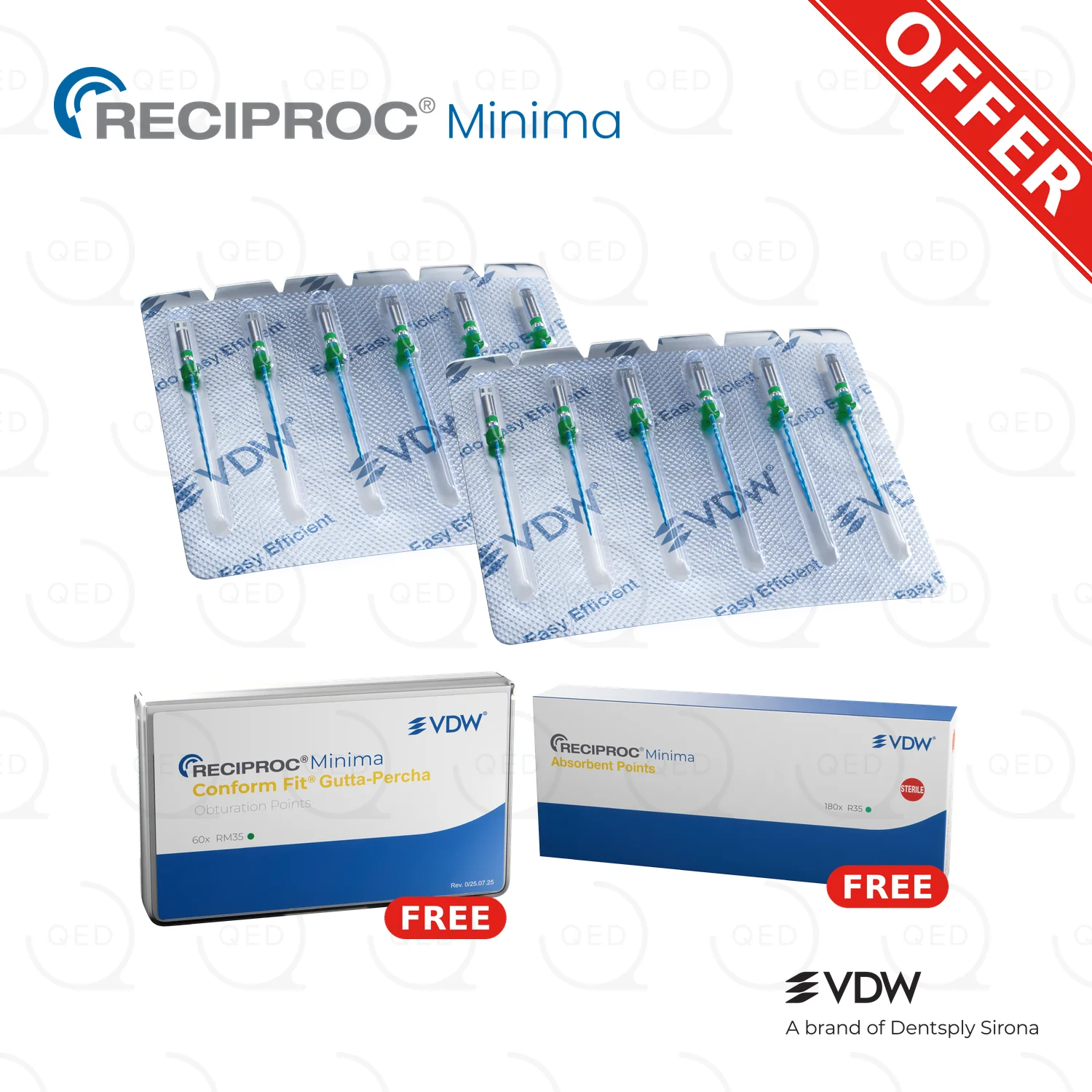
offer · reciproc® minima r35 · 31 mm
2 blisters · 12 filesfree conform fit® gpfree paper pointsuntil 31 december 2026
order two blisters of reciproc® minima r35 at 31 mm and the matched obturation comes in the same order, free. the conform fit® gutta-percha and paper points in the bundle are the ones sized to this file’s preparation, so the case is covered from shaping to fill without a second order.
this bundle: 2 × reciproc® minima r35, 31 mm (6) · 12 sterile single-use files
free: 1 × conform fit® gutta-percha, rm35 (60) · 1 × reciproc® minima paper points, r35 (180)
vdw · a brand of dentsply sirona
| files | 2 × reciproc® minima r35, 31 mm (6) · £104.94 each |
| gutta-percha, free | conform fit® gutta-percha, rm35 (60) · £17.96 |
| paper points, free | reciproc® minima paper points, r35 (180) · £24.44 |
| bought separately | £252.28 at list price |
› mix & match. want a different combination of reciproc® minima files, or other sizes of gutta-percha and paper points? tell us when you order and we will tailor the free consumables to your choice. the same bundle pricing applies, within the same offer period.
| bundles | basket total | per bundle | you save* |
| 1 | £205.68 | £205.68 | £46.60 · 18% |
| 3 | £598.16 | £199.39 | £158.68 · 20% |
| 5 | £944.46 | £188.89 | £316.94 · 25% |
| 7 | £1,248.79 | £178.40 | £517.17 · 29% |
*against buying the same files, gutta-percha and paper points separately at list price (£252.28 per bundle). basket prices as shown on qedendo.com on 15 september 2026 – the price in your basket is the price you pay.
› larger apical preparation wanted? r35 or r45, whose lower overall taper means they can often be used directly rather than stepping through the smaller sizes.
› 31 mm – canines, long-rooted premolars, and anything a 25 mm file leaves short of length.
› iso 35/.06v – 0.35 mm apical tip, 2.6% averaged along the blade.
› other lengths: 21 mm bundle · 25 mm bundle
› other sizes at 31 mm: r20 · r25 · r45 · assorted
› just the files? reciproc® minima r35, 31 mm (6)
when does the offer end?
31 december 2026, or sooner if stock runs out.
can i mix sizes?
yes – choose any combination of reciproc® minima files and tell us which gutta-percha and paper points you would like. the same bundle pricing applies, and mix & match runs to the same 31 december 2026 end date.
which motor do i need?
the instructions specify a dedicated dentsply sirona motor and contra-angle on reciproc® settings. all three motors we stock carry a reciproc® programme: x-smart® go · x-smart® pro+ · vdw.silver® reciproc®. ask us if you are unsure your own unit carries it.
can the files be reused?
no – each file is supplied sterile in a single-use blister.
what is the sealer?
not included. for a bioceramic sealer with fine tips, see neosealer® ezflo.
terms: offer valid until 31 december 2026 while stocks last. cannot be combined with any other promotion, discount or existing subscription or standing-order pricing. the free gutta-percha and paper points are supplied with qualifying purchases only and have no cash alternative. qed may amend or withdraw this offer at any time.
reciproc® minima r35 bundle, 31 mm · 2 blisters, 12 files · free conform fit® gutta-percha, rm35 (60) and reciproc® minima paper points, r35 (180) · offer to 31 december 2026 · vdw, a brand of dentsply sirona · ref sp_minima_r35_31mm
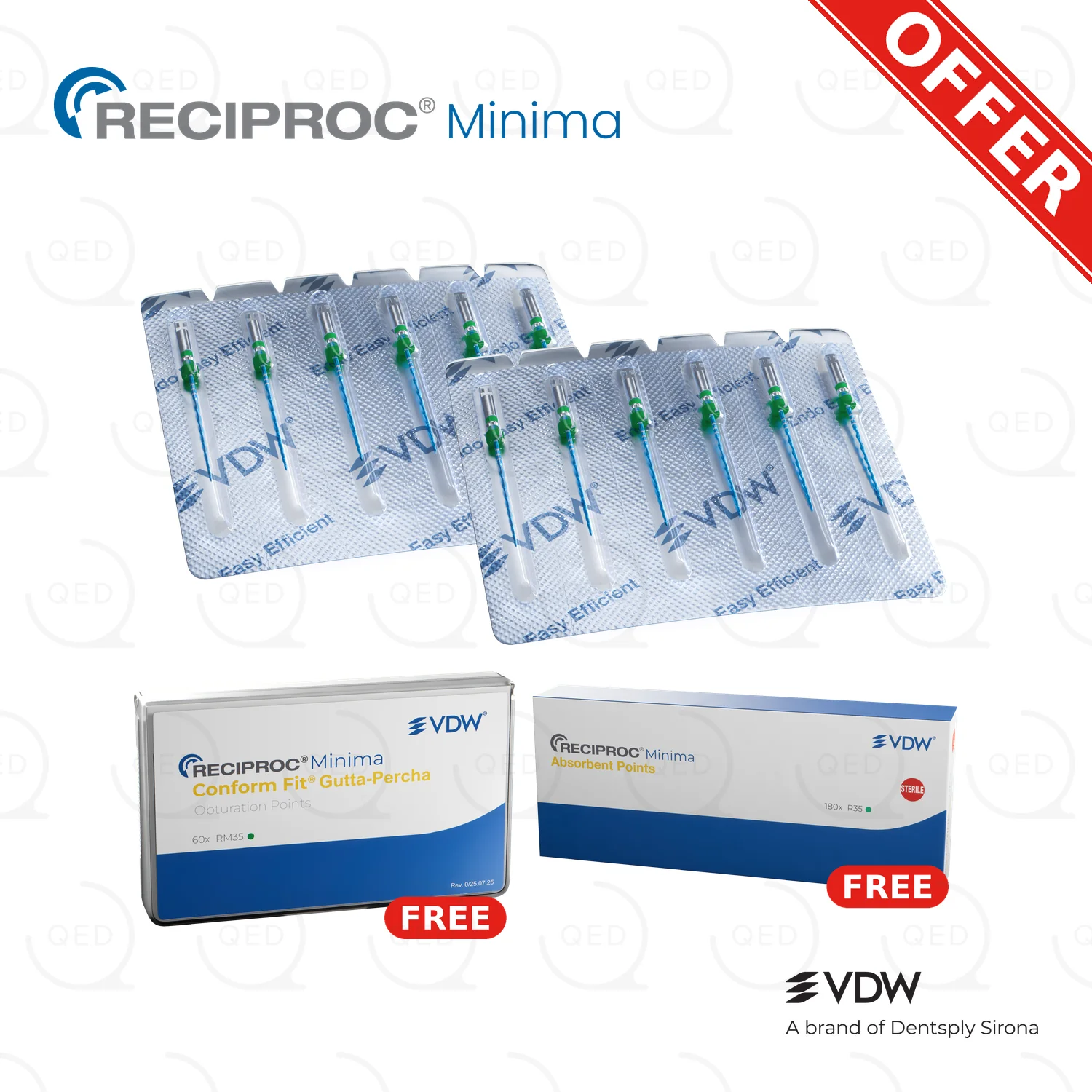
offer · reciproc® minima r45 · 21 mm
2 blisters · 12 filesfree conform fit® gpfree paper pointsuntil 31 december 2026
order two blisters of reciproc® minima r45 at 21 mm and the matched obturation comes in the same order, free. the conform fit® gutta-percha and paper points in the bundle are the ones sized to this file’s preparation, so the case is covered from shaping to fill without a second order.
this bundle: 2 × reciproc® minima r45, 21 mm (6) · 12 sterile single-use files
free: 1 × conform fit® gutta-percha, rm45 (60) · 1 × reciproc® minima paper points, r45 (180)
vdw · a brand of dentsply sirona
| files | 2 × reciproc® minima r45, 21 mm (6) · £104.94 each |
| gutta-percha, free | conform fit® gutta-percha, rm45 (60) · £17.96 |
| paper points, free | reciproc® minima paper points, r45 (180) · £24.44 |
| bought separately | £252.28 at list price |
› mix & match. want a different combination of reciproc® minima files, or other sizes of gutta-percha and paper points? tell us when you order and we will tailor the free consumables to your choice. the same bundle pricing applies, within the same offer period.
| bundles | basket total | per bundle | you save* |
| 1 | £205.68 | £205.68 | £46.60 · 18% |
| 3 | £598.16 | £199.39 | £158.68 · 20% |
| 5 | £944.46 | £188.89 | £316.94 · 25% |
| 7 | £1,248.79 | £178.40 | £517.17 · 29% |
*against buying the same files, gutta-percha and paper points separately at list price (£252.28 per bundle). basket prices as shown on qedendo.com on 15 september 2026 – the price in your basket is the price you pay.
› larger apical preparation wanted? r35 or r45, whose lower overall taper means they can often be used directly rather than stepping through the smaller sizes.
› 21 mm – short roots, and posterior teeth where mouth opening is the limiting factor. with the 9.5 mm short handle it is the shortest combination available.
› iso 45/.05v – 0.45 mm apical tip, 2.0% averaged along the blade.
› other lengths: 25 mm bundle · 31 mm bundle
› other sizes at 21 mm: r20 · r25 · r35 · assorted
› just the files? reciproc® minima r45, 21 mm (6)
when does the offer end?
31 december 2026, or sooner if stock runs out.
can i mix sizes?
yes – choose any combination of reciproc® minima files and tell us which gutta-percha and paper points you would like. the same bundle pricing applies, and mix & match runs to the same 31 december 2026 end date.
which motor do i need?
the instructions specify a dedicated dentsply sirona motor and contra-angle on reciproc® settings. all three motors we stock carry a reciproc® programme: x-smart® go · x-smart® pro+ · vdw.silver® reciproc®. ask us if you are unsure your own unit carries it.
can the files be reused?
no – each file is supplied sterile in a single-use blister.
what is the sealer?
not included. for a bioceramic sealer with fine tips, see neosealer® ezflo.
terms: offer valid until 31 december 2026 while stocks last. cannot be combined with any other promotion, discount or existing subscription or standing-order pricing. the free gutta-percha and paper points are supplied with qualifying purchases only and have no cash alternative. qed may amend or withdraw this offer at any time.
reciproc® minima r45 bundle, 21 mm · 2 blisters, 12 files · free conform fit® gutta-percha, rm45 (60) and reciproc® minima paper points, r45 (180) · offer to 31 december 2026 · vdw, a brand of dentsply sirona · ref sp_minima_r45_21mm
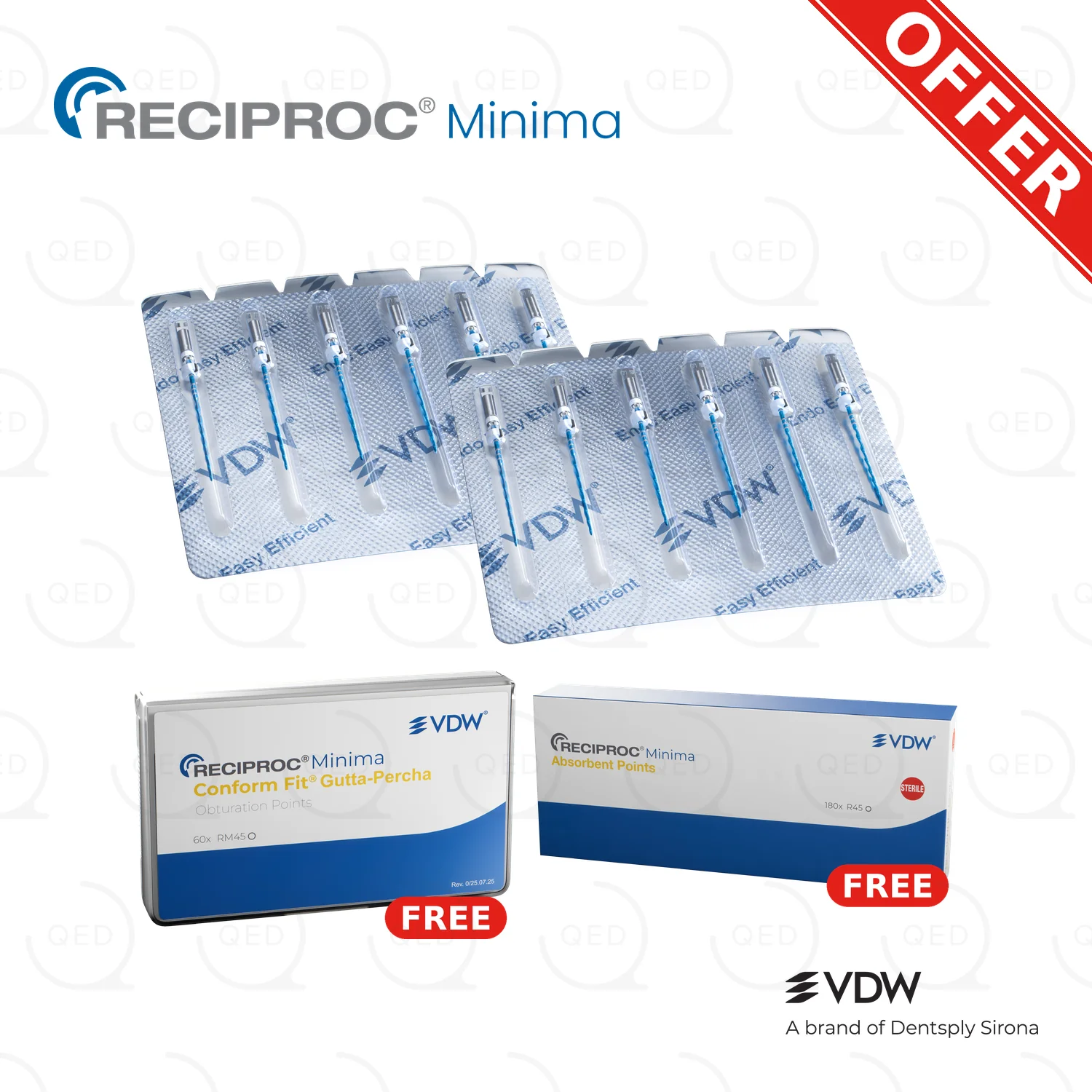
offer · reciproc® minima r45 · 25 mm
2 blisters · 12 filesfree conform fit® gpfree paper pointsuntil 31 december 2026
order two blisters of reciproc® minima r45 at 25 mm and the matched obturation comes in the same order, free. the conform fit® gutta-percha and paper points in the bundle are the ones sized to this file’s preparation, so the case is covered from shaping to fill without a second order.
this bundle: 2 × reciproc® minima r45, 25 mm (6) · 12 sterile single-use files
free: 1 × conform fit® gutta-percha, rm45 (60) · 1 × reciproc® minima paper points, r45 (180)
vdw · a brand of dentsply sirona
| files | 2 × reciproc® minima r45, 25 mm (6) · £104.94 each |
| gutta-percha, free | conform fit® gutta-percha, rm45 (60) · £17.96 |
| paper points, free | reciproc® minima paper points, r45 (180) · £24.44 |
| bought separately | £252.28 at list price |
› mix & match. want a different combination of reciproc® minima files, or other sizes of gutta-percha and paper points? tell us when you order and we will tailor the free consumables to your choice. the same bundle pricing applies, within the same offer period.
| bundles | basket total | per bundle | you save* |
| 1 | £205.68 | £205.68 | £46.60 · 18% |
| 3 | £598.16 | £199.39 | £158.68 · 20% |
| 5 | £944.46 | £188.89 | £316.94 · 25% |
| 7 | £1,248.79 | £178.40 | £517.17 · 29% |
*against buying the same files, gutta-percha and paper points separately at list price (£252.28 per bundle). basket prices as shown on qedendo.com on 15 september 2026 – the price in your basket is the price you pay.
› larger apical preparation wanted? r35 or r45, whose lower overall taper means they can often be used directly rather than stepping through the smaller sizes.
› 25 mm – the everyday length, and the one most practices stock first.
› iso 45/.05v – 0.45 mm apical tip, 2.0% averaged along the blade.
› other lengths: 21 mm bundle · 31 mm bundle
› other sizes at 25 mm: r20 · r25 · r35 · assorted
› just the files? reciproc® minima r45, 25 mm (6)
when does the offer end?
31 december 2026, or sooner if stock runs out.
can i mix sizes?
yes – choose any combination of reciproc® minima files and tell us which gutta-percha and paper points you would like. the same bundle pricing applies, and mix & match runs to the same 31 december 2026 end date.
which motor do i need?
the instructions specify a dedicated dentsply sirona motor and contra-angle on reciproc® settings. all three motors we stock carry a reciproc® programme: x-smart® go · x-smart® pro+ · vdw.silver® reciproc®. ask us if you are unsure your own unit carries it.
can the files be reused?
no – each file is supplied sterile in a single-use blister.
what is the sealer?
not included. for a bioceramic sealer with fine tips, see neosealer® ezflo.
terms: offer valid until 31 december 2026 while stocks last. cannot be combined with any other promotion, discount or existing subscription or standing-order pricing. the free gutta-percha and paper points are supplied with qualifying purchases only and have no cash alternative. qed may amend or withdraw this offer at any time.
reciproc® minima r45 bundle, 25 mm · 2 blisters, 12 files · free conform fit® gutta-percha, rm45 (60) and reciproc® minima paper points, r45 (180) · offer to 31 december 2026 · vdw, a brand of dentsply sirona · ref sp_minima_r45_25mm
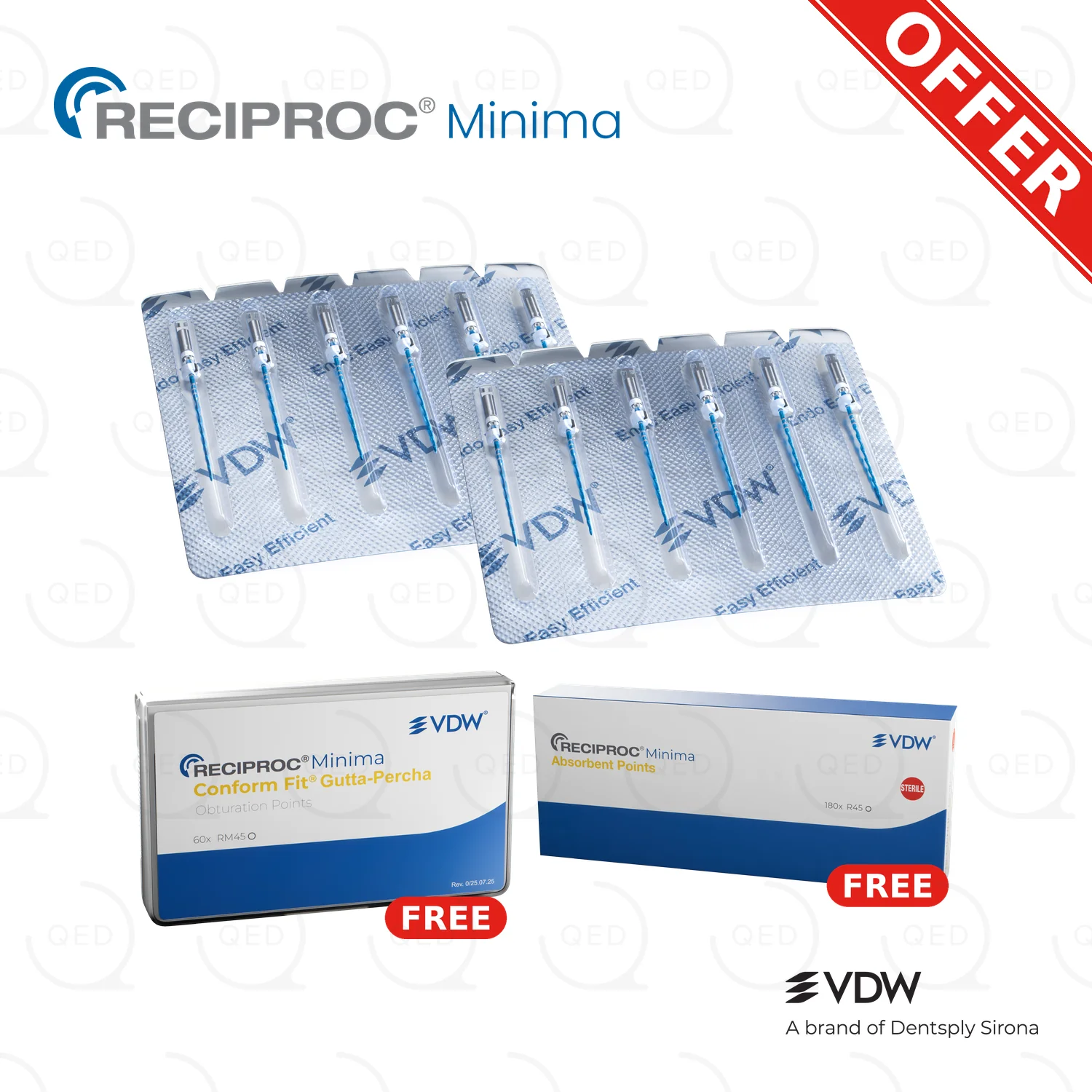
offer · reciproc® minima r45 · 31 mm
2 blisters · 12 filesfree conform fit® gpfree paper pointsuntil 31 december 2026
order two blisters of reciproc® minima r45 at 31 mm and the matched obturation comes in the same order, free. the conform fit® gutta-percha and paper points in the bundle are the ones sized to this file’s preparation, so the case is covered from shaping to fill without a second order.
this bundle: 2 × reciproc® minima r45, 31 mm (6) · 12 sterile single-use files
free: 1 × conform fit® gutta-percha, rm45 (60) · 1 × reciproc® minima paper points, r45 (180)
vdw · a brand of dentsply sirona
| files | 2 × reciproc® minima r45, 31 mm (6) · £104.94 each |
| gutta-percha, free | conform fit® gutta-percha, rm45 (60) · £17.96 |
| paper points, free | reciproc® minima paper points, r45 (180) · £24.44 |
| bought separately | £252.28 at list price |
› mix & match. want a different combination of reciproc® minima files, or other sizes of gutta-percha and paper points? tell us when you order and we will tailor the free consumables to your choice. the same bundle pricing applies, within the same offer period.
| bundles | basket total | per bundle | you save* |
| 1 | £205.68 | £205.68 | £46.60 · 18% |
| 3 | £598.16 | £199.39 | £158.68 · 20% |
| 5 | £944.46 | £188.89 | £316.94 · 25% |
| 7 | £1,248.79 | £178.40 | £517.17 · 29% |
*against buying the same files, gutta-percha and paper points separately at list price (£252.28 per bundle). basket prices as shown on qedendo.com on 15 september 2026 – the price in your basket is the price you pay.
› larger apical preparation wanted? r35 or r45, whose lower overall taper means they can often be used directly rather than stepping through the smaller sizes.
› 31 mm – canines, long-rooted premolars, and anything a 25 mm file leaves short of length.
› iso 45/.05v – 0.45 mm apical tip, 2.0% averaged along the blade.
› other lengths: 21 mm bundle · 25 mm bundle
› other sizes at 31 mm: r20 · r25 · r35 · assorted
› just the files? reciproc® minima r45, 31 mm (6)
when does the offer end?
31 december 2026, or sooner if stock runs out.
can i mix sizes?
yes – choose any combination of reciproc® minima files and tell us which gutta-percha and paper points you would like. the same bundle pricing applies, and mix & match runs to the same 31 december 2026 end date.
which motor do i need?
the instructions specify a dedicated dentsply sirona motor and contra-angle on reciproc® settings. all three motors we stock carry a reciproc® programme: x-smart® go · x-smart® pro+ · vdw.silver® reciproc®. ask us if you are unsure your own unit carries it.
can the files be reused?
no – each file is supplied sterile in a single-use blister.
what is the sealer?
not included. for a bioceramic sealer with fine tips, see neosealer® ezflo.
terms: offer valid until 31 december 2026 while stocks last. cannot be combined with any other promotion, discount or existing subscription or standing-order pricing. the free gutta-percha and paper points are supplied with qualifying purchases only and have no cash alternative. qed may amend or withdraw this offer at any time.
reciproc® minima r45 bundle, 31 mm · 2 blisters, 12 files · free conform fit® gutta-percha, rm45 (60) and reciproc® minima paper points, r45 (180) · offer to 31 december 2026 · vdw, a brand of dentsply sirona · ref sp_minima_r45_31mm
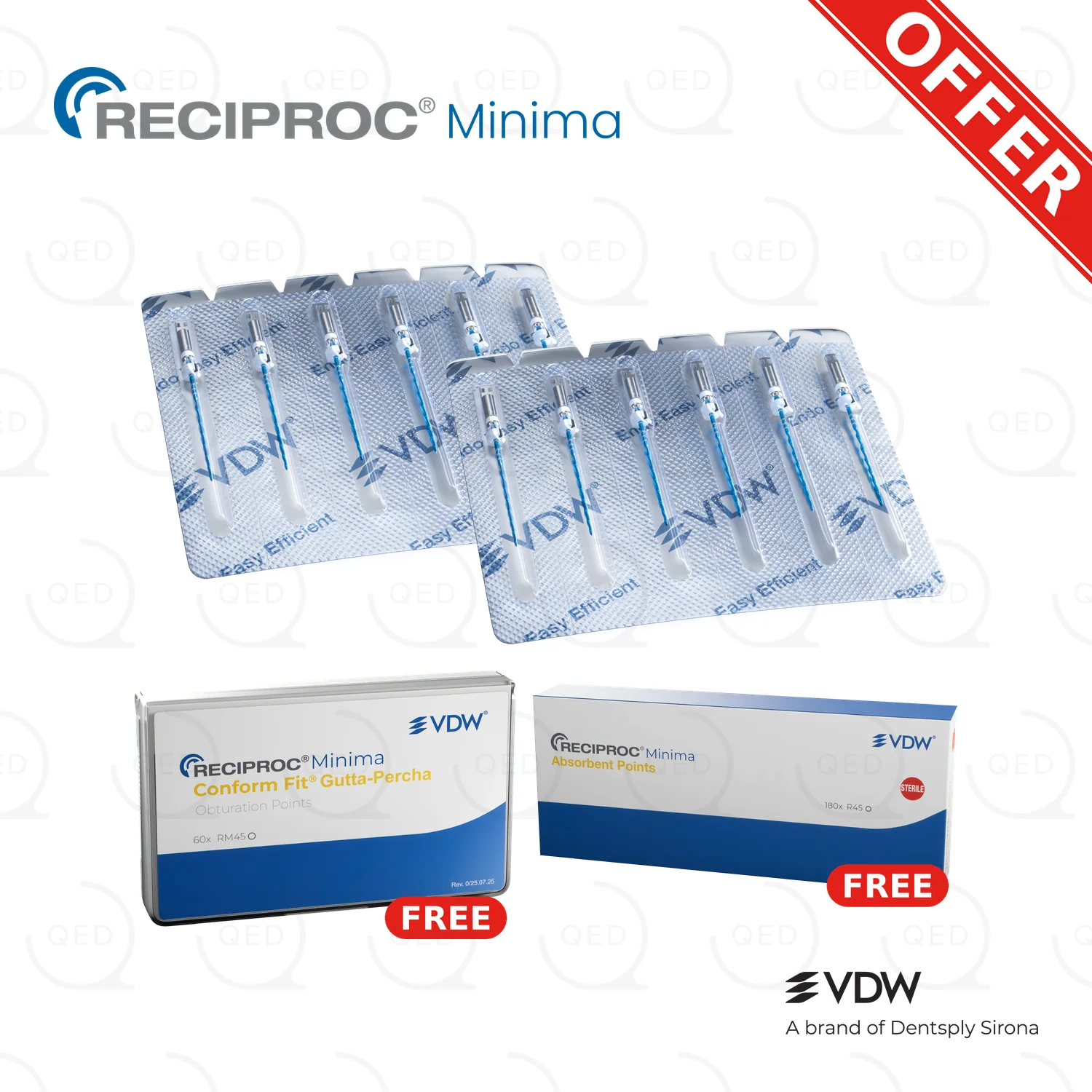
reciproc® r25 · 25 mm · 6 files
still stepping through a sequence, and reprocessing what survives it? reciproc® prepares the whole canal with one reciprocating instrument, and in the majority of canals with no initial hand filing. r25 is where vdw's own selection protocol lands most often, and 25 mm is the length most cases call for. it is also the instrument in the published papers: when a study says reciproc®, this is usually what was on the bench.
| 93%+ without a glide path | 1 file per molar | 66% fewer retreatments |
this pack: 6 × reciproc® r25, 25 mm · radiopaque depth markings at 18/19/20/22 mm · sterile blisters, single use – one molar per file, per vdw
made by vdw, munich – genuine reciproc®
a 0.25 mm tip on an 8% taper over the first 3 mm, regressing above it to d16 1.05 mm – apical shaping where the case needs it, coronal dentine left alone. the alloy is m-wire®, which vdw describe as having greater cyclic fatigue resistance and greater flexibility than traditional nickel-titanium; the core is s-shaped with a non-cutting tip, so it follows the canal rather than cutting its own path; and the shaft is 11 mm against the 13 mm or longer on many instruments, which is felt on a second molar with limited opening.
it is not a rotary file driven differently. the reciprocating angles are set below the point at which the instrument would fail, so binding cannot lock it – which is the whole basis of the glide path argument. vdw's wording, and ours: the angles "are smaller than the angle settings where the elastic limit of the instrument would be met, thus minimising the risk of instrument fractures."
settled before you start, from the radiograph and, where the canal is visible, one hand file inserted passively – here meaning it travels directly to working length with a gentle watch-winding movement, but with no filing action.
› r25 – canal partly or completely invisible on the radiograph, or visible but an iso 20 will not go passively.
› r40 – an iso 20 goes passively, an iso 30 does not.
› r50 – an iso 30 reaches working length passively.
in most cases, the r25 will be suitable in size for the root canal treatment.
— vdw, reciproc® user brochure, summarising its own instrument-selection protocol.
1 check the canal is free with an iso 10 hand instrument – the directions name vdw's own c-pilot® 010 in 25 mm. no orifice opener first; the design clears the coronal third itself.
2 irrigate, throughout. the directions have you irrigate the canal and clean the flutes between passes – a single-file system shortens the mechanical part of the case, not the chemical one. sodium hypochlorite in 5.25% or 2%, to your own protocol.
3 shape on the reciproc® setting in slow in-and-out pecks of no more than 3 mm, very light pressure, three at a time. then out, flutes cleaned in the interim stand, re-irrigate, patency confirmed, back in. a lateral brushing motion is sanctioned for irregular canals.
4 gauge the apex with a hand instrument one iso size larger than the file that reached length: light tug-back about 1 mm short and no further means the preparation is done. r25 achieves an iso 33 at 1 mm from the apex; for a larger apical preparation, r40 or r50 follow.
5 dry, then obturate. matched paper points r25, then the matched gutta-percha cone carried to length with sealer – vdw make it in the greater taper corresponding to this instrument, for single cone, lateral compaction or a master cone in warm vertical condensation. the taper you cut is the taper you fill.
6 seal it coronally. the apical seal is only half the job – sdr® flow+ places a 4 mm bulk increment straight over the orifices in a single cure.
and the glide path? no initial hand filing in the majority of canals – the manufacturer's own headline, unchanged since 2011, with a peer-reviewed figure behind it: de-deus and colleagues (international endodontic journal, 2013) took the r25 to full working length without an initial glide path in more than 93% of canals. where it does not advance, do not force it: withdraw, clean, irrigate, try again, and if it still will not go, create a glide path with c-pilot® 015 and continue. "usually unnecessary" and "never necessary" are different claims, and only the first is ours to make.
a single-file canal is only as good as what goes into it, and this is where we reach for neosealer® ezflo: premixed bioceramic, nothing to mix or time on the bench, around 35 minutes of working time, 5.5 mm al radiopacity, delivered through 29 gauge navitip™ cannulas. the gauge is the point – a bore that fine places sealer in the apical third rather than wiping it down the coronal walls, and the 25 mm tips match this file's length. prefer a wider bore? neosealer® flo is the same chemistry with flex flo tips. staying with resin? ah plus® is still the epoxy sealer every other one is measured against, and vdw's own 2seal® is the brand-matched epoxy-amine. resin or bioceramic is a choice of technique rather than a ranking – we carry both because both are right in different hands.
bürklein and colleagues (iej, 2012) found this system prepared a canal up to 60% faster than multiple-file systems – 73.1 seconds against 185.2 – while maintaining the original curvature and cleaning the apical region more thoroughly; gavini (joe, 2012) measured the r25's own cyclic fatigue resistance as significantly higher in reciprocation than in continuous rotation; and zuolo (iej, 2013) found it left the least residual gutta percha and sealer of the retreatment approaches compared, at 4.57%, because r25 retreats as well as it shapes. the newest citation is about teeth rather than benches: kiel followed 14,233 endodontically treated teeth for five to ten years (iej, june 2025) and found survival without further intervention 30–40% higher under the reciproc® protocol, non-surgical retreatment 66% lower and extractions 21% lower. it is a retrospective single-centre cohort, statistically adjusted, and the authors say only that the result "might be attributed to" the system – but it answers the question a clinician actually has.
the limit is worth knowing and it is narrow. severe curvature is what this instrument is for; abrupt apical curvature is a contraindication. if the iso 10 hand file used for working length still has to be pre-curved to reach it, after the instrument has reached two thirds of the estimated length, finish the canal with hand files. vdw have printed the sentence that puts it in proportion since 2010: this limitation also applies to continuous rotary instruments. and the files may look slightly curved in the blister – vdw note that this is not a manufacturing defect.
the fracture of the original reciproc is not an issue considering that its fracture rate is very low (0.2%).
— ghassan yared, who developed single-file reciprocation and consults to the reciproc® range. his statement in a vdw article, rather than a study result.
what motor do i need?
a drive system carrying the original vdw reciproc® settings – reciprocating motors without them can lead to misuse. we stock the vdw.silver® reciproc® with 6:1 contra-angle, the motor this system launched with, and the x-smart® pro+ with an integrated apex locator. the cordless x-smart® go carries a reciproc® programme too.
how does this compare with reciproc® blue?
same geometry, same three sizes, same movement, same motor programme – the difference is the alloy. this is the original in m-wire®, and the instrument most of the published reciproc® literature was measured on. blue is the later heat-treated version. if your practice is already standardised on this one, nothing about it has changed.
one file per case, really?
per molar, which is the unit vdw set – so a two-molar appointment is two files, and one per canal in extreme curvature. against three to six rotary instruments plus reprocessing the arithmetic still works, and the plastic band on the shaft deforms in the autoclave, so the decision is made for you.
| patency, and between passes | c-pilot® 010 and 008 in 25 mm · interim stand and foam refills for the flutes |
| drive it | a motor with original reciproc® settings: vdw.silver® · x-smart® pro+ · x-smart® go |
| other sizes and lengths | r40 and r50 in 25 mm, or the assorted blister · r25 in 21 mm or 31 mm |
| irrigate | hypochlorite 5.25% or 2% · 17% edta · 40% citric acid · 2% chx · through irriflex® 30g or navitip™ 29 ga 25 mm, activated with eddy® |
| dry and fill | paper points r25 · gutta-percha r25 · or assorted boxes covering all three sizes: points, cones |
| buying in | system kit – 12 files, assorted cones and points, and a training model |
reciproc® r25 · reciprocating single-file system · 0.25 mm tip, 8% taper over the first 3 mm, regressive, d16 1.05 mm · m-wire® niti · s-shaped cross-section, non-cutting tip, 11 mm shaft · radiopaque markings 18/19/20/22 mm · shaping, curvature, mb2 and retreatment · 6 sterile files, single use, one molar · 25 mm, also in 21 and 31 mm · vdw, munich · ref v040212025025

vdw r-pilot® · iso 12.5 · 21 mm · 6 files
glide pathreciprocatingcurved canalsone file to length
r-pilot® cuts the glide path in the same reciprocating motion your reciproc® files already use, on the same motor setting, with no change to the handpiece. at 21 mm it is the length for molars and for patients who cannot open far – which is where the fewest instrument changes are worth the most.
| 12.5 iso tip size | 4% constant taper | 89% to length, ex vivo |
this pack: vdw r-pilot® reciprocating glide path file, iso size 12.5, 21mm (pack of 6) · sterile
ref v040217021012 · made by dentsply sirona (maillefer), switzerland
› one size, iso 12.5, on a constant 4% taper – wider than a .02 glide path file, so it leaves more room for the shaping file that follows.
› reciprocating, and vdw are direct about the practical consequence: "no need to change motor settings if you are already working with reciprocating motion."
› m-wire, with an s-shape cross section that vdw credit for its cutting efficiency.
› sterile, single use, in a blister of six – vdw’s own comparison is with manual files: "sterile instruments and less files needed compared to manual files."
› vdw describe it as "the first motor driven glide path instrument in reciprocating motion", and as a solution "for cases where a glide path is needed" – their wording, and worth keeping, because it does not claim every case needs one.
› three lengths – r-pilot® 25 mm and r-pilot® 31 mm sit beside this one.
the claims on the r-pilot® brochure carry footnotes, and the footnotes matter, so here they are with the claims attached. less risk of instrument fracture and a reduction of cyclic fatigue are compared to rotary multiple-use instruments. better respect of the canal anatomy is versus vdw stainless steel files. neither is a comparison with every other glide path file on the market, and we are not going to write it as though it were.
de-deus and colleagues took r-pilot® through 156 root canals in 52 mandibular molars and counted how often it reached working length, examining every fractured or deformed instrument by scanning electron microscopy. it reached working length in 89.10% of canals, with fracture in 2.56% and deformation in 1.92%. (de-deus g et al., journal of endodontics 2021 – ex vivo, extracted teeth.)
a randomised clinical trial then measured what the patient feels. in 240 patients treated by four specialists, those whose glide path was cut with r-pilot® reported significantly less postoperative pain than those whose glide path was cut with stainless steel k-files. there was no significant difference between r-pilot® and proglider®, the rotary equivalent. (keskin c et al., international endodontic journal 2019 – randomised clinical trial.)
vdw’s own step-by-step card, in their order. not a qed protocol.
1 scout. a c-pilot® file iso size 08 at minimum, or a similar hand file, to ensure patency – c-pilot® 08, 21 mm.
2 working length. by preoperative radiograph, which vdw mark mandatory, and/or an apex locator.
3 irrigant in the access cavity.
4 introduce r-pilot® free, without binding. start the motor when the instrument is at the canal orifice.
5 peck. a slow in-and-out pecking motion, amplitude no more than 3 mm, with only very light pressure. one in-and-out movement is one peck.
6 clean after three pecks. in the interim stand.
7 irrigate.
8 repeat 4 to 7. until full working length is reached.
9 shape. continue with the file system of your choice.
reciproc all – the original vdw reciproc® settings, unchanged. that is the whole point of it on a reciprocating motor. both motors we stock carry the setting: vdw.silver® reciproc® and x-smart® pro+ with apex locator.
| r-pilot® | rotary glide path files | |
| motion | reciprocating | continuous rotation |
| motor | reciproc all – no change | 300 rpm, torque set separately |
| files to length | one | one or three, depending on the system |
| size and taper | iso 12.5, constant 4% | iso 13–19, .02 constant or variable |
| postoperative pain | significantly less than hand files | significantly less than hand files |
the last row is the keskin trial, which found no significant difference between the reciprocating and rotary options. the honest summary is that the choice is usually about which motor is already on the bench.
do i need a different motor?
no, if you already reciprocate. r-pilot® uses the original reciproc® settings, so nothing on the motor changes. if you do not reciprocate, proglider® does the same job in continuous rotation.
is iso 12.5 a real size?
it is vdw’s own designation, printed twice in their current brochure. it sits between an 010 and an 015 hand file, which is the gap a glide path file is meant to close. our stock code ends 012 for historical reasons; the file is a 12.5.
what does it pair with?
anything, but it is vdw’s own file, so the natural sequence is r-pilot® then reciproc® blue r25 on the same motor setting.
can the files be reused?
no. vdw supply them sterile for single patient use.
| patency | c-pilot® 08, 21 mm · c-pilot® 10, 21 mm |
| irrigants | chlorax 5.25% · chlorax 2% · endo-solution 17% edta |
| delivery | navitip™ 29 ga, 25 mm · irriflex® 30g |
| activation | vdw eddy® tips · smartlite pro endoactivator® |
| shape | reciproc® blue r25, 21 mm |
| obturate | vdw 2seal® · ah plus® paste · neosealer® ezflo, 21 mm tips |
| coronal seal | sdr® flow+ refill universal |
vdw 2seal® and ah plus® are the epoxy sealers in the group’s own range; neosealer® ezflo is the premixed bioceramic. resin or bioceramic is a real choice of technique rather than a ranking – we carry both because both are right in different hands.
| proglider®, 21 mm | rotary, one file, iso 16 on a variable progressive taper, 300 rpm. |
| pathfile® assorted, 21 mm | rotary, three files in sequence – 013, 016 and 019, all at a constant .02 taper. |
| waveone® gold glider, 21 mm | reciprocating, one file, matched to the waveone® gold sequence. |
› vdw r-pilot® brochure (pdf, 0.5 mb, vdw) – the geometry, the claims with their footnotes and the product range.
› vdw r-pilot® step-by-step card (pdf, 0.6 mb, vdw) – the nine steps above, as vdw print them.
vdw r-pilot® niti glidepath file · iso 12.5 · constant 4% taper · m-wire · s-shape cross section · 21 mm · sterile, single use · blister of 6 · reciprocating, reciproc all · ref v040217021012

vdw r-pilot® · iso 12.5 · 25 mm · 6 files
glide pathreciprocatingcurved canalsone file to length
r-pilot® is vdw’s glide path instrument, and the argument for it is as much about the motor as the file. it runs on the original reciproc® settings, so a practice already reciprocating changes nothing at all – the same handpiece, the same programme, one extra file.
| 12.5 iso tip size | 4% constant taper | 89% to length, ex vivo |
this pack: vdw r-pilot® reciprocating glide path file, iso size 12.5, 25mm (pack of 6) · sterile
ref v040217025012 · made by dentsply sirona (maillefer), switzerland
› one size, iso 12.5, on a constant 4% taper – wider than a .02 glide path file, so it leaves more room for the shaping file that follows.
› reciprocating, and vdw are direct about the practical consequence: "no need to change motor settings if you are already working with reciprocating motion."
› m-wire, with an s-shape cross section that vdw credit for its cutting efficiency.
› sterile, single use, in a blister of six – vdw’s own comparison is with manual files: "sterile instruments and less files needed compared to manual files."
› vdw describe it as "the first motor driven glide path instrument in reciprocating motion", and as a solution "for cases where a glide path is needed" – their wording, and worth keeping, because it does not claim every case needs one.
› three lengths – r-pilot® 21 mm and r-pilot® 31 mm sit beside this one.
the claims on the r-pilot® brochure carry footnotes, and the footnotes matter, so here they are with the claims attached. less risk of instrument fracture and a reduction of cyclic fatigue are compared to rotary multiple-use instruments. better respect of the canal anatomy is versus vdw stainless steel files. neither is a comparison with every other glide path file on the market, and we are not going to write it as though it were.
de-deus and colleagues took r-pilot® through 156 root canals in 52 mandibular molars and counted how often it reached working length, examining every fractured or deformed instrument by scanning electron microscopy. it reached working length in 89.10% of canals, with fracture in 2.56% and deformation in 1.92%. (de-deus g et al., journal of endodontics 2021 – ex vivo, extracted teeth.)
a randomised clinical trial then measured what the patient feels. in 240 patients treated by four specialists, those whose glide path was cut with r-pilot® reported significantly less postoperative pain than those whose glide path was cut with stainless steel k-files. there was no significant difference between r-pilot® and proglider®, the rotary equivalent. (keskin c et al., international endodontic journal 2019 – randomised clinical trial.)
vdw’s own step-by-step card, in their order. not a qed protocol.
1 scout. a c-pilot® file iso size 08 at minimum, or a similar hand file, to ensure patency – c-pilot® 08, 25 mm.
2 working length. by preoperative radiograph, which vdw mark mandatory, and/or an apex locator.
3 irrigant in the access cavity.
4 introduce r-pilot® free, without binding. start the motor when the instrument is at the canal orifice.
5 peck. a slow in-and-out pecking motion, amplitude no more than 3 mm, with only very light pressure. one in-and-out movement is one peck.
6 clean after three pecks. in the interim stand.
7 irrigate.
8 repeat 4 to 7. until full working length is reached.
9 shape. continue with the file system of your choice.
reciproc all – the original vdw reciproc® settings, unchanged. that is the whole point of it on a reciprocating motor. both motors we stock carry the setting: vdw.silver® reciproc® and x-smart® pro+ with apex locator.
| r-pilot® | rotary glide path files | |
| motion | reciprocating | continuous rotation |
| motor | reciproc all – no change | 300 rpm, torque set separately |
| files to length | one | one or three, depending on the system |
| size and taper | iso 12.5, constant 4% | iso 13–19, .02 constant or variable |
| postoperative pain | significantly less than hand files | significantly less than hand files |
the last row is the keskin trial, which found no significant difference between the reciprocating and rotary options. the honest summary is that the choice is usually about which motor is already on the bench.
do i need a different motor?
no, if you already reciprocate. r-pilot® uses the original reciproc® settings, so nothing on the motor changes. if you do not reciprocate, proglider® does the same job in continuous rotation.
is iso 12.5 a real size?
it is vdw’s own designation, printed twice in their current brochure. it sits between an 010 and an 015 hand file, which is the gap a glide path file is meant to close. our stock code ends 012 for historical reasons; the file is a 12.5.
what does it pair with?
anything, but it is vdw’s own file, so the natural sequence is r-pilot® then reciproc® blue r25 on the same motor setting.
can the files be reused?
no. vdw supply them sterile for single patient use.
| patency | c-pilot® 08, 25 mm · c-pilot® 10, 25 mm |
| irrigants | chlorax 5.25% · chlorax 2% · endo-solution 17% edta |
| delivery | navitip™ 29 ga, 25 mm · irriflex® 30g |
| activation | vdw eddy® tips · smartlite pro endoactivator® |
| shape | reciproc® blue r25, 25 mm |
| obturate | vdw 2seal® · ah plus® paste · neosealer® ezflo, 25 mm tips |
| coronal seal | sdr® flow+ refill universal |
vdw 2seal® and ah plus® are the epoxy sealers in the group’s own range; neosealer® ezflo is the premixed bioceramic. resin or bioceramic is a real choice of technique rather than a ranking – we carry both because both are right in different hands.
| proglider®, 25 mm | rotary, one file, iso 16 on a variable progressive taper, 300 rpm. |
| pathfile® assorted, 25 mm | rotary, three files in sequence – 013, 016 and 019, all at a constant .02 taper. |
| waveone® gold glider, 25 mm | reciprocating, one file, matched to the waveone® gold sequence. |
› vdw r-pilot® brochure (pdf, 0.5 mb, vdw) – the geometry, the claims with their footnotes and the product range.
› vdw r-pilot® step-by-step card (pdf, 0.6 mb, vdw) – the nine steps above, as vdw print them.
vdw r-pilot® niti glidepath file · iso 12.5 · constant 4% taper · m-wire · s-shape cross section · 25 mm · sterile, single use · blister of 6 · reciprocating, reciproc all · ref v040217025012
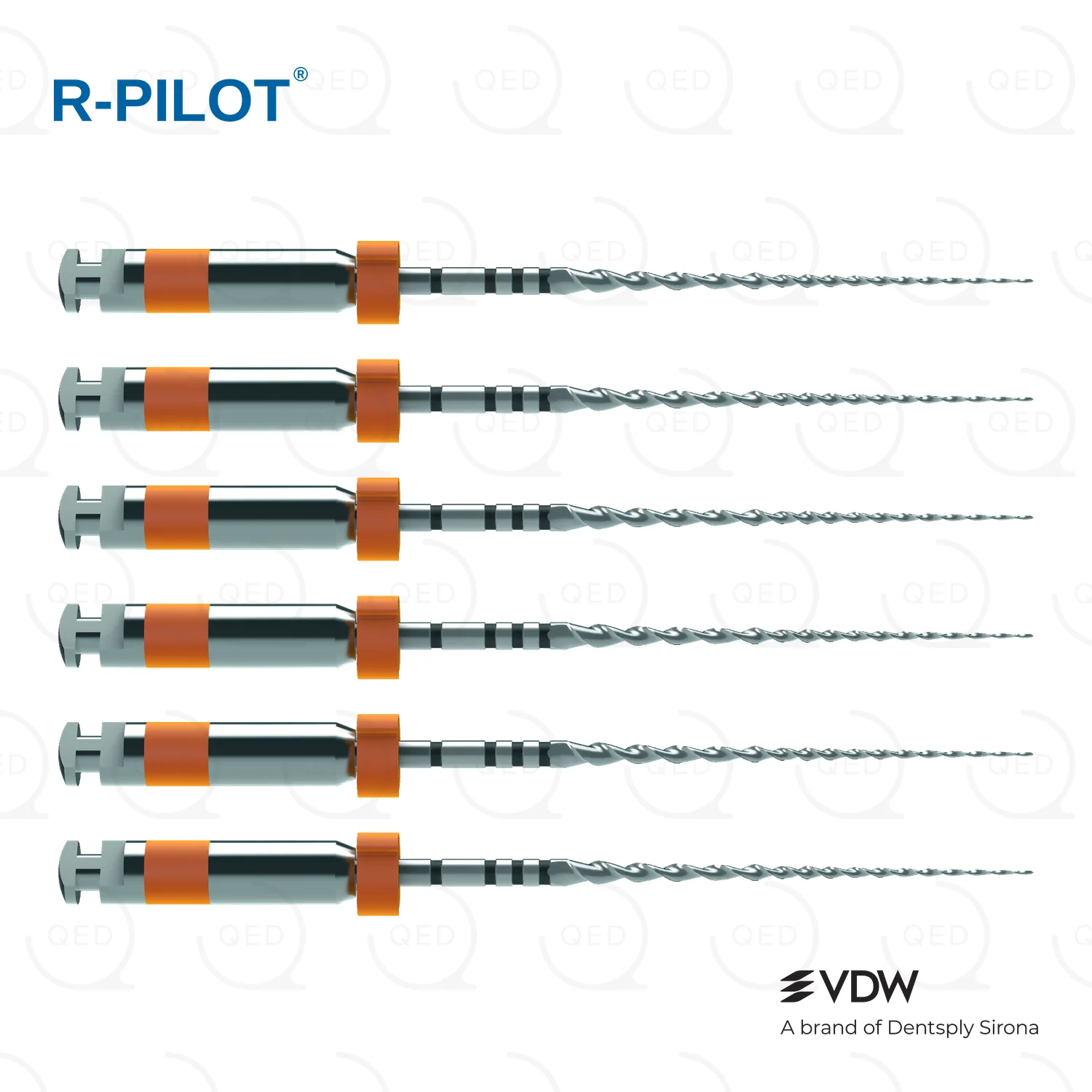
vdw r-pilot® · iso 12.5 · 31 mm · 6 files
glide pathreciprocatingcurved canalsone file to length
r-pilot® in 31 mm is for the canals that need the reach – long roots, and anterior teeth where working length runs past what a 25 mm file will do. the reciprocating motion and the reciproc all setting are the same as the shorter lengths; the scouting step is the part that needs thought, and there is a note on it below.
| 12.5 iso tip size | 4% constant taper | 89% to length, ex vivo |
this pack: vdw r-pilot® reciprocating glide path file, iso size 12.5, 31mm (pack of 6) · sterile
ref v040217031012 · made by dentsply sirona (maillefer), switzerland
› one size, iso 12.5, on a constant 4% taper – wider than a .02 glide path file, so it leaves more room for the shaping file that follows.
› reciprocating, and vdw are direct about the practical consequence: "no need to change motor settings if you are already working with reciprocating motion."
› m-wire, with an s-shape cross section that vdw credit for its cutting efficiency.
› sterile, single use, in a blister of six – vdw’s own comparison is with manual files: "sterile instruments and less files needed compared to manual files."
› vdw describe it as "the first motor driven glide path instrument in reciprocating motion", and as a solution "for cases where a glide path is needed" – their wording, and worth keeping, because it does not claim every case needs one.
› three lengths – r-pilot® 21 mm and r-pilot® 25 mm sit beside this one.
the claims on the r-pilot® brochure carry footnotes, and the footnotes matter, so here they are with the claims attached. less risk of instrument fracture and a reduction of cyclic fatigue are compared to rotary multiple-use instruments. better respect of the canal anatomy is versus vdw stainless steel files. neither is a comparison with every other glide path file on the market, and we are not going to write it as though it were.
de-deus and colleagues took r-pilot® through 156 root canals in 52 mandibular molars and counted how often it reached working length, examining every fractured or deformed instrument by scanning electron microscopy. it reached working length in 89.10% of canals, with fracture in 2.56% and deformation in 1.92%. (de-deus g et al., journal of endodontics 2021 – ex vivo, extracted teeth.)
a randomised clinical trial then measured what the patient feels. in 240 patients treated by four specialists, those whose glide path was cut with r-pilot® reported significantly less postoperative pain than those whose glide path was cut with stainless steel k-files. there was no significant difference between r-pilot® and proglider®, the rotary equivalent. (keskin c et al., international endodontic journal 2019 – randomised clinical trial.)
vdw’s own step-by-step card, in their order. not a qed protocol.
1 scout. a c-pilot® file iso size 08 at minimum, or a similar hand file, to ensure patency – an iso 008 hand file long enough to reach working length at 31 mm.
2 working length. by preoperative radiograph, which vdw mark mandatory, and/or an apex locator.
3 irrigant in the access cavity.
4 introduce r-pilot® free, without binding. start the motor when the instrument is at the canal orifice.
5 peck. a slow in-and-out pecking motion, amplitude no more than 3 mm, with only very light pressure. one in-and-out movement is one peck.
6 clean after three pecks. in the interim stand.
7 irrigate.
8 repeat 4 to 7. until full working length is reached.
9 shape. continue with the file system of your choice.
a note specific to 31 mm. step 1 needs a hand file that reaches working length, and the c-pilot® range stops at 25 mm. take the requirement from vdw’s card – an iso 008 at minimum – and use a 31 mm hand file. a 25 mm file would be shorter than the canal, so we have not linked one here.
reciproc all – the original vdw reciproc® settings, unchanged. that is the whole point of it on a reciprocating motor. both motors we stock carry the setting: vdw.silver® reciproc® and x-smart® pro+ with apex locator.
| r-pilot® | rotary glide path files | |
| motion | reciprocating | continuous rotation |
| motor | reciproc all – no change | 300 rpm, torque set separately |
| files to length | one | one or three, depending on the system |
| size and taper | iso 12.5, constant 4% | iso 13–19, .02 constant or variable |
| postoperative pain | significantly less than hand files | significantly less than hand files |
the last row is the keskin trial, which found no significant difference between the reciprocating and rotary options. the honest summary is that the choice is usually about which motor is already on the bench.
do i need a different motor?
no, if you already reciprocate. r-pilot® uses the original reciproc® settings, so nothing on the motor changes. if you do not reciprocate, proglider® does the same job in continuous rotation.
is iso 12.5 a real size?
it is vdw’s own designation, printed twice in their current brochure. it sits between an 010 and an 015 hand file, which is the gap a glide path file is meant to close. our stock code ends 012 for historical reasons; the file is a 12.5.
what does it pair with?
anything, but it is vdw’s own file, so the natural sequence is r-pilot® then reciproc® blue r25 on the same motor setting.
can the files be reused?
no. vdw supply them sterile for single patient use.
| patency | an iso 008 or 010 hand file in a 31 mm length – the c-pilot® range stops at 25 mm |
| irrigants | chlorax 5.25% · chlorax 2% · endo-solution 17% edta |
| delivery | navitip™ 29 ga, 25 mm · irriflex® 30g |
| activation | vdw eddy® tips · smartlite pro endoactivator® |
| shape | reciproc® blue r25, 31 mm |
| obturate | vdw 2seal® · ah plus® paste · neosealer® ezflo, 25 mm tips |
| coronal seal | sdr® flow+ refill universal |
vdw 2seal® and ah plus® are the epoxy sealers in the group’s own range; neosealer® ezflo is the premixed bioceramic. resin or bioceramic is a real choice of technique rather than a ranking – we carry both because both are right in different hands.
| proglider®, 31 mm | rotary, one file, iso 16 on a variable progressive taper, 300 rpm. |
| pathfile® assorted, 31 mm | rotary, three files in sequence – 013, 016 and 019, all at a constant .02 taper. |
| waveone® gold glider, 31 mm | reciprocating, one file, matched to the waveone® gold sequence. |
› vdw r-pilot® brochure (pdf, 0.5 mb, vdw) – the geometry, the claims with their footnotes and the product range.
› vdw r-pilot® step-by-step card (pdf, 0.6 mb, vdw) – the nine steps above, as vdw print them.
vdw r-pilot® niti glidepath file · iso 12.5 · constant 4% taper · m-wire · s-shape cross section · 31 mm · sterile, single use · blister of 6 · reciprocating, reciproc all · ref v040217031012
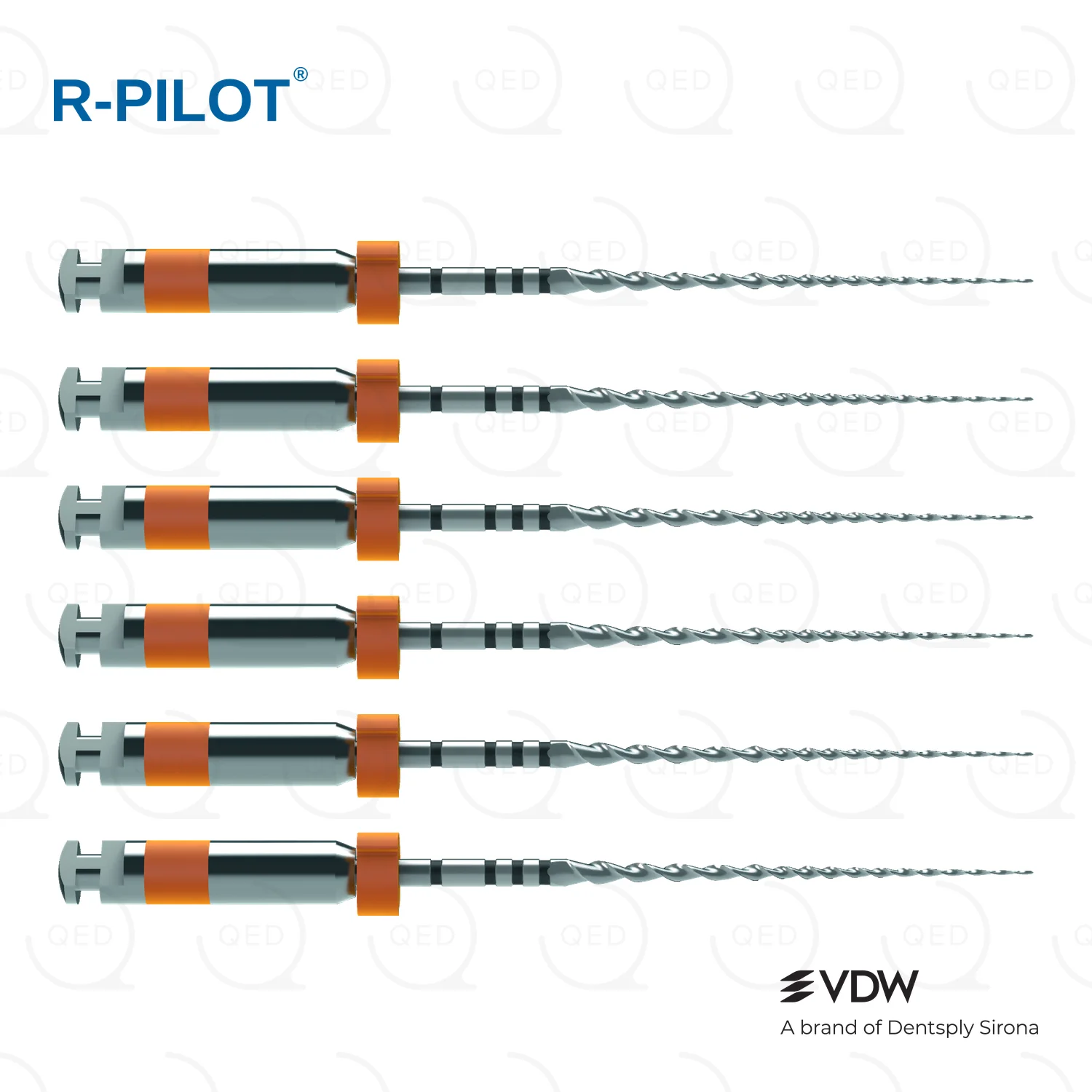
mtwo® · 10/.04 · 21 mm · wp 16 mm · 6 files
s-shaped sectionsterile blistersingle length technique
vdw’s long-standing rotary file. vdw describe an “s-shaped cross-section with two active cutting edges” and a “small instrument core for high flexibility” – the same s-section family as reciproc® blue and vdw.rotate®. every instrument is taken to full working length rather than stepping back.
this pack: vdw mtwo® rotary file, iso size 10, .04 taper, 21 mm, 16 mm working part (pack of 6)
vdw · vdw gmbh, munich, germany (dentsply sirona) · mtwo® is licensed by sweden & martina
| tip (d0) | 0.10 mm |
| taper | .04 |
| length | 21 mm |
| working part | 16 mm |
| handle | iso colour (purple) |
| material | nickel titanium |
| supplied | sterile, pack of 6 |
› s-shaped section, two cutting edges. vdw’s own description, with a “small instrument core for high flexibility”.
› one sequence, one length. vdw: “single length: all instruments are brought to full working length”.
› progressive pitch. vdw describe “active cutting blades and a progressive pitch”.
› wp 16 mm. the flutes run 16 mm from the tip on a 21 mm instrument. vdw list “16 mm working part (21 or 25 mm working length)” and a 21 mm working part at 25 or 31 mm.
“superior cutting efficiency and flexibility, for an efficient root canal preparation”
vdw, vdw dental product catalogue 2023.
what does wp 16 mm mean?
the working part – how far the flutes run up from the tip. this one is 16 mm of cutting on a 21 mm instrument. a shorter working part gives you more shank, which helps in a posterior tooth with limited opening.
should i be looking at vdw.rotate instead?
it is the newer file in the same s-section family, with a heat treatment vdw say lowers the risk of breakage, plus taper rings and radiopaque calibration rings on the handle. we stock both. our suggestion for this size is below.
› the basic sequence: 15/.05 · 20/.06 · 25/.06, 21 mm
› same size, other lengths: 25 mm, wp 16 mm · 25 mm, wp 21 mm · 31 mm, wp 21 mm
› larger anatomies: 30/.05 · 35/.04 · 40/.04 · 45/.04
› moving to vdw.rotate: vdw.rotate® 15/.04, 21 mm – the nearest size in the newer range
› retreatment: mtwo® retreatment assorted, 21 mm
› obturation: the dia-pro .04 range stops at 45, so there is no matched cone at 10/.04. fit from 45/.04.
› motor: x-smart® pro+ with apex locator
› lubricant and irrigation: glyde™ file prep · chlorax 5.25% · irriflex® needles
mtwo® is licensed by sweden & martina. sizes, tapers and working parts are as vdw list them in the vdw dental product catalogue 2023. single use. follow the instructions supplied with the product.
mtwo® 10/.04, 21 mm, wp 16 mm (6) · nickel titanium · ref v040234021010

mtwo® · 35/.04 · 21 mm · wp 16 mm · 6 files
s-shaped sectionsterile blistersingle length technique
vdw’s long-standing rotary file. vdw describe an “s-shaped cross-section with two active cutting edges” and a “small instrument core for high flexibility” – the same s-section family as reciproc® blue and vdw.rotate®. every instrument is taken to full working length rather than stepping back.
this pack: vdw mtwo® rotary file, iso size 35, .04 taper, 21 mm, 16 mm working part (pack of 6)
vdw · vdw gmbh, munich, germany (dentsply sirona) · mtwo® is licensed by sweden & martina
| tip (d0) | 0.35 mm |
| taper | .04 |
| length | 21 mm |
| working part | 16 mm |
| handle | iso colour (green) |
| material | nickel titanium |
| supplied | sterile, pack of 6 |
› s-shaped section, two cutting edges. vdw’s own description, with a “small instrument core for high flexibility”.
› one sequence, one length. vdw: “single length: all instruments are brought to full working length”.
› progressive pitch. vdw describe “active cutting blades and a progressive pitch”.
› wp 16 mm. the flutes run 16 mm from the tip on a 21 mm instrument. vdw list “16 mm working part (21 or 25 mm working length)” and a 21 mm working part at 25 or 31 mm.
“superior cutting efficiency and flexibility, for an efficient root canal preparation”
vdw, vdw dental product catalogue 2023.
what does wp 16 mm mean?
the working part – how far the flutes run up from the tip. this one is 16 mm of cutting on a 21 mm instrument. a shorter working part gives you more shank, which helps in a posterior tooth with limited opening.
should i be looking at vdw.rotate instead?
it is the newer file in the same s-section family, with a heat treatment vdw say lowers the risk of breakage, plus taper rings and radiopaque calibration rings on the handle. we stock both. our suggestion for this size is below.
› the basic sequence: 10/.04 · 15/.05 · 20/.06 · 25/.06, 21 mm
› same size, other lengths: 25 mm, wp 16 mm · 31 mm, wp 21 mm
› larger anatomies: 30/.05 · 40/.04 · 45/.04 · 50/.04
› moving to vdw.rotate: vdw.rotate® 35/.04, 21 mm – the same size and taper, on heat-treated wire
› retreatment: mtwo® retreatment assorted, 21 mm
› obturation: diadent® dia-pro iso gutta-percha 35/.04 · paper points 35/.04 – the same size and taper
› motor: x-smart® pro+ with apex locator
› lubricant and irrigation: glyde™ file prep · chlorax 5.25% · irriflex® needles
mtwo® is licensed by sweden & martina. sizes, tapers and working parts are as vdw list them in the vdw dental product catalogue 2023. single use. follow the instructions supplied with the product.
mtwo® 35/.04, 21 mm, wp 16 mm (6) · nickel titanium · ref v040234021035
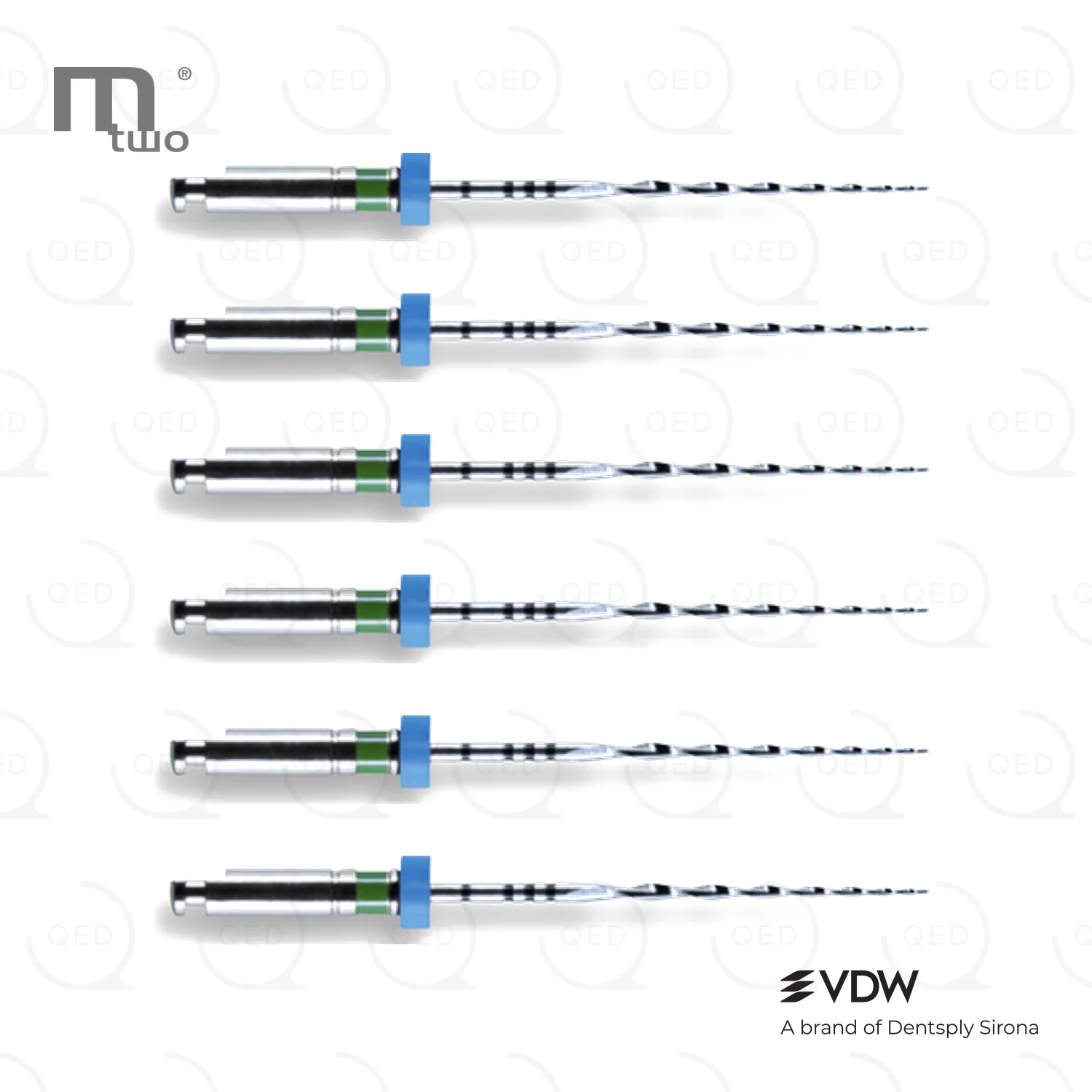
mtwo® · 40/.04 · 21 mm · wp 16 mm · 6 files
s-shaped sectionsterile blistersingle length technique
vdw’s long-standing rotary file. vdw describe an “s-shaped cross-section with two active cutting edges” and a “small instrument core for high flexibility” – the same s-section family as reciproc® blue and vdw.rotate®. every instrument is taken to full working length rather than stepping back.
this pack: vdw mtwo® rotary file, iso size 40, .04 taper, 21 mm, 16 mm working part (pack of 6)
vdw · vdw gmbh, munich, germany (dentsply sirona) · mtwo® is licensed by sweden & martina
| tip (d0) | 0.40 mm |
| taper | .04 |
| length | 21 mm |
| working part | 16 mm |
| handle | iso colour (black) |
| material | nickel titanium |
| supplied | sterile, pack of 6 |
› s-shaped section, two cutting edges. vdw’s own description, with a “small instrument core for high flexibility”.
› one sequence, one length. vdw: “single length: all instruments are brought to full working length”.
› progressive pitch. vdw describe “active cutting blades and a progressive pitch”.
› wp 16 mm. the flutes run 16 mm from the tip on a 21 mm instrument. vdw list “16 mm working part (21 or 25 mm working length)” and a 21 mm working part at 25 or 31 mm.
“superior cutting efficiency and flexibility, for an efficient root canal preparation”
vdw, vdw dental product catalogue 2023.
what does wp 16 mm mean?
the working part – how far the flutes run up from the tip. this one is 16 mm of cutting on a 21 mm instrument. a shorter working part gives you more shank, which helps in a posterior tooth with limited opening.
should i be looking at vdw.rotate instead?
it is the newer file in the same s-section family, with a heat treatment vdw say lowers the risk of breakage, plus taper rings and radiopaque calibration rings on the handle. we stock both. our suggestion for this size is below.
› the basic sequence: 10/.04 · 15/.05 · 20/.06 · 25/.06, 21 mm
› same size, other lengths: 25 mm, wp 16 mm · 31 mm, wp 21 mm
› larger anatomies: 30/.05 · 35/.04 · 45/.04 · 50/.04
› moving to vdw.rotate: vdw.rotate® 40/.04, 21 mm – the same size and taper, on heat-treated wire
› retreatment: mtwo® retreatment assorted, 21 mm
› obturation: diadent® dia-pro iso gutta-percha 40/.04 · paper points 40/.04 – the same size and taper
› motor: x-smart® pro+ with apex locator
› lubricant and irrigation: glyde™ file prep · chlorax 5.25% · irriflex® needles
mtwo® is licensed by sweden & martina. sizes, tapers and working parts are as vdw list them in the vdw dental product catalogue 2023. single use. follow the instructions supplied with the product.
mtwo® 40/.04, 21 mm, wp 16 mm (6) · nickel titanium · ref v040234021040
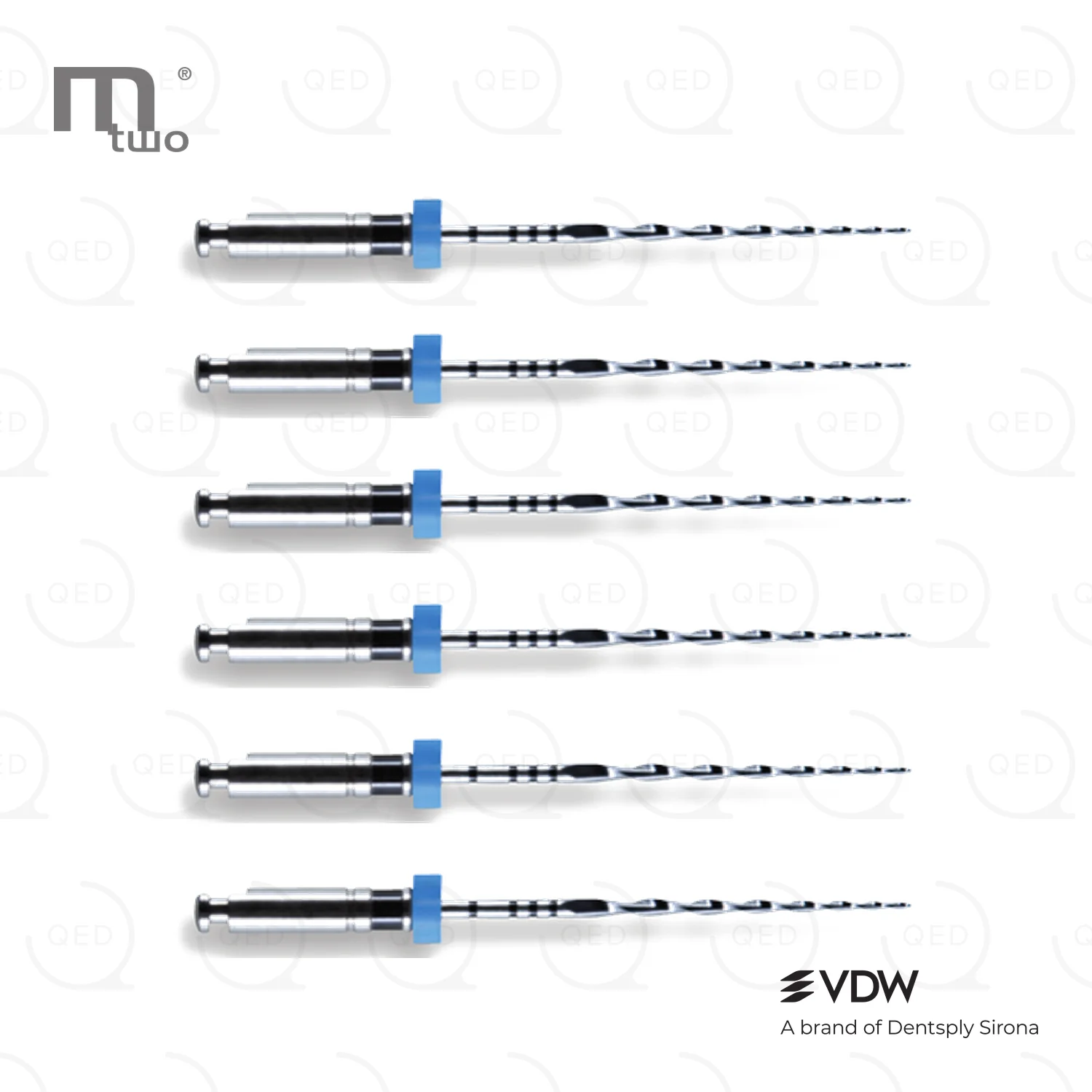
mtwo® · 45/.04 · 21 mm · wp 16 mm · 6 files
s-shaped sectionsterile blistersingle length technique
vdw’s long-standing rotary file. vdw describe an “s-shaped cross-section with two active cutting edges” and a “small instrument core for high flexibility” – the same s-section family as reciproc® blue and vdw.rotate®. every instrument is taken to full working length rather than stepping back.
this pack: vdw mtwo® rotary file, iso size 45, .04 taper, 21 mm, 16 mm working part (pack of 6)
vdw · vdw gmbh, munich, germany (dentsply sirona) · mtwo® is licensed by sweden & martina
| tip (d0) | 0.45 mm |
| taper | .04 |
| length | 21 mm |
| working part | 16 mm |
| handle | iso colour (white) |
| material | nickel titanium |
| supplied | sterile, pack of 6 |
› s-shaped section, two cutting edges. vdw’s own description, with a “small instrument core for high flexibility”.
› one sequence, one length. vdw: “single length: all instruments are brought to full working length”.
› progressive pitch. vdw describe “active cutting blades and a progressive pitch”.
› wp 16 mm. the flutes run 16 mm from the tip on a 21 mm instrument. vdw list “16 mm working part (21 or 25 mm working length)” and a 21 mm working part at 25 or 31 mm.
“superior cutting efficiency and flexibility, for an efficient root canal preparation”
vdw, vdw dental product catalogue 2023.
what does wp 16 mm mean?
the working part – how far the flutes run up from the tip. this one is 16 mm of cutting on a 21 mm instrument. a shorter working part gives you more shank, which helps in a posterior tooth with limited opening.
should i be looking at vdw.rotate instead?
it is the newer file in the same s-section family, with a heat treatment vdw say lowers the risk of breakage, plus taper rings and radiopaque calibration rings on the handle. we stock both. our suggestion for this size is below.
› the basic sequence: 10/.04 · 15/.05 · 20/.06 · 25/.06, 21 mm
› same size, other lengths: 25 mm, wp 16 mm · 31 mm, wp 21 mm
› larger anatomies: 30/.05 · 35/.04 · 40/.04 · 50/.04
› moving to vdw.rotate: vdw.rotate® 50/.04, 21 mm – the nearest size in the newer range
› retreatment: mtwo® retreatment assorted, 21 mm
› obturation: diadent® dia-pro iso gutta-percha 45/.04 – the same size and taper. the dia-pro paper points stop at 40, so gauge with 40/.04 or a standard point.
› motor: x-smart® pro+ with apex locator
› lubricant and irrigation: glyde™ file prep · chlorax 5.25% · irriflex® needles
mtwo® is licensed by sweden & martina. sizes, tapers and working parts are as vdw list them in the vdw dental product catalogue 2023. single use. follow the instructions supplied with the product.
mtwo® 45/.04, 21 mm, wp 16 mm (6) · nickel titanium · ref v040234021045
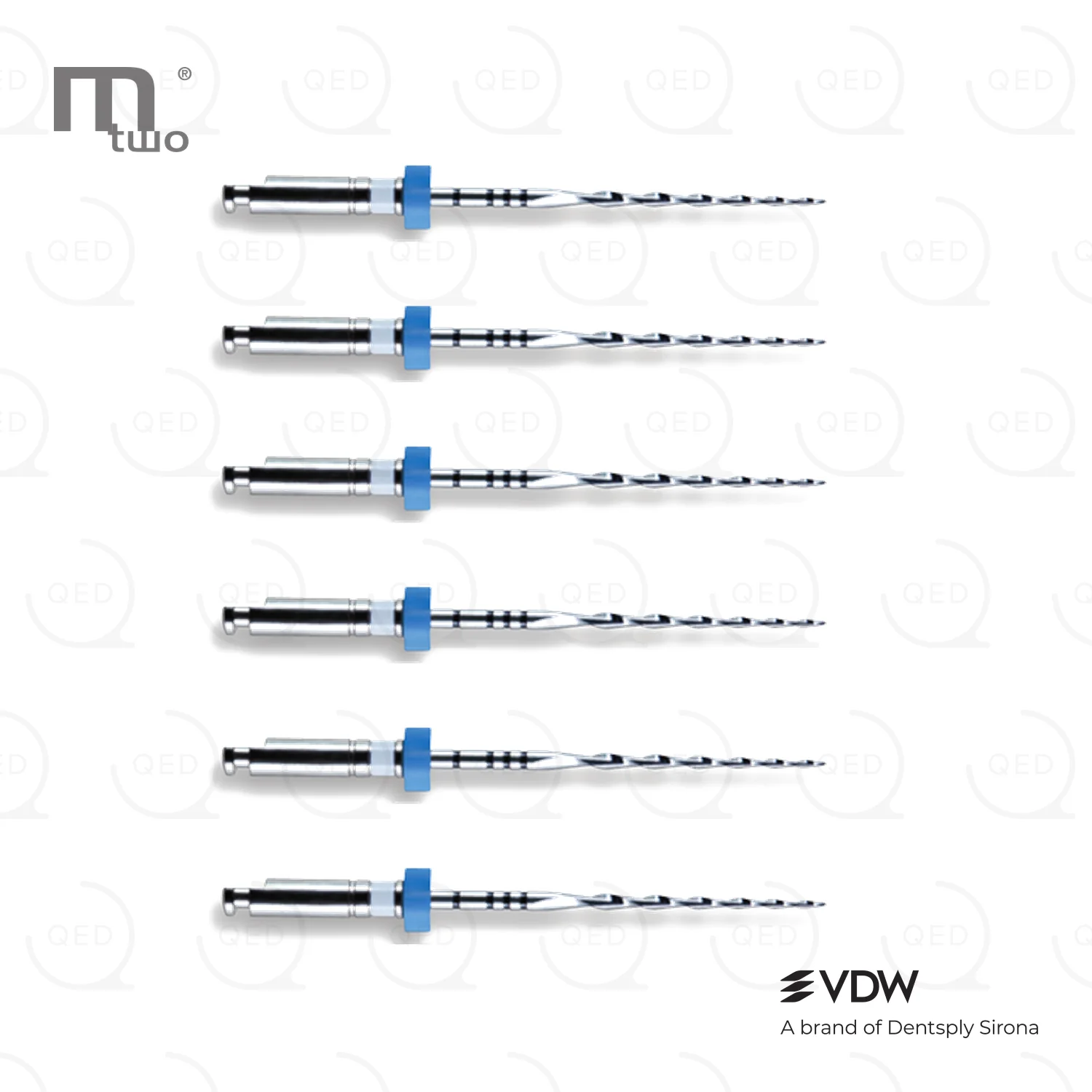
mtwo® · 50/.04 · 21 mm · wp 16 mm · 6 files
s-shaped sectionsterile blistersingle length technique
vdw’s long-standing rotary file. vdw describe an “s-shaped cross-section with two active cutting edges” and a “small instrument core for high flexibility” – the same s-section family as reciproc® blue and vdw.rotate®. every instrument is taken to full working length rather than stepping back.
this pack: vdw mtwo® rotary file, iso size 50, .04 taper, 21 mm, 16 mm working part (pack of 6)
vdw · vdw gmbh, munich, germany (dentsply sirona) · mtwo® is licensed by sweden & martina
| tip (d0) | 0.50 mm |
| taper | .04 |
| length | 21 mm |
| working part | 16 mm |
| handle | iso colour (yellow) |
| material | nickel titanium |
| supplied | sterile, pack of 6 |
› s-shaped section, two cutting edges. vdw’s own description, with a “small instrument core for high flexibility”.
› one sequence, one length. vdw: “single length: all instruments are brought to full working length”.
› progressive pitch. vdw describe “active cutting blades and a progressive pitch”.
› wp 16 mm. the flutes run 16 mm from the tip on a 21 mm instrument. vdw list “16 mm working part (21 or 25 mm working length)” and a 21 mm working part at 25 or 31 mm.
“superior cutting efficiency and flexibility, for an efficient root canal preparation”
vdw, vdw dental product catalogue 2023.
what does wp 16 mm mean?
the working part – how far the flutes run up from the tip. this one is 16 mm of cutting on a 21 mm instrument. a shorter working part gives you more shank, which helps in a posterior tooth with limited opening.
should i be looking at vdw.rotate instead?
it is the newer file in the same s-section family, with a heat treatment vdw say lowers the risk of breakage, plus taper rings and radiopaque calibration rings on the handle. we stock both. our suggestion for this size is below.
› the basic sequence: 10/.04 · 15/.05 · 20/.06 · 25/.06, 21 mm
› same size, other lengths: 25 mm, wp 16 mm · 31 mm, wp 21 mm
› larger anatomies: 30/.05 · 35/.04 · 40/.04 · 45/.04
› moving to vdw.rotate: vdw.rotate® 50/.04, 21 mm – the same size and taper, on heat-treated wire
› retreatment: mtwo® retreatment assorted, 21 mm
› obturation: the dia-pro .04 range stops at 45, so there is no matched cone at 50/.04. fit from 45/.04 or the standard ml.029™ 50/.02.
› motor: x-smart® pro+ with apex locator
› lubricant and irrigation: glyde™ file prep · chlorax 5.25% · irriflex® needles
mtwo® is licensed by sweden & martina. sizes, tapers and working parts are as vdw list them in the vdw dental product catalogue 2023. single use. follow the instructions supplied with the product.
mtwo® 50/.04, 21 mm, wp 16 mm (6) · nickel titanium · ref v040234021050
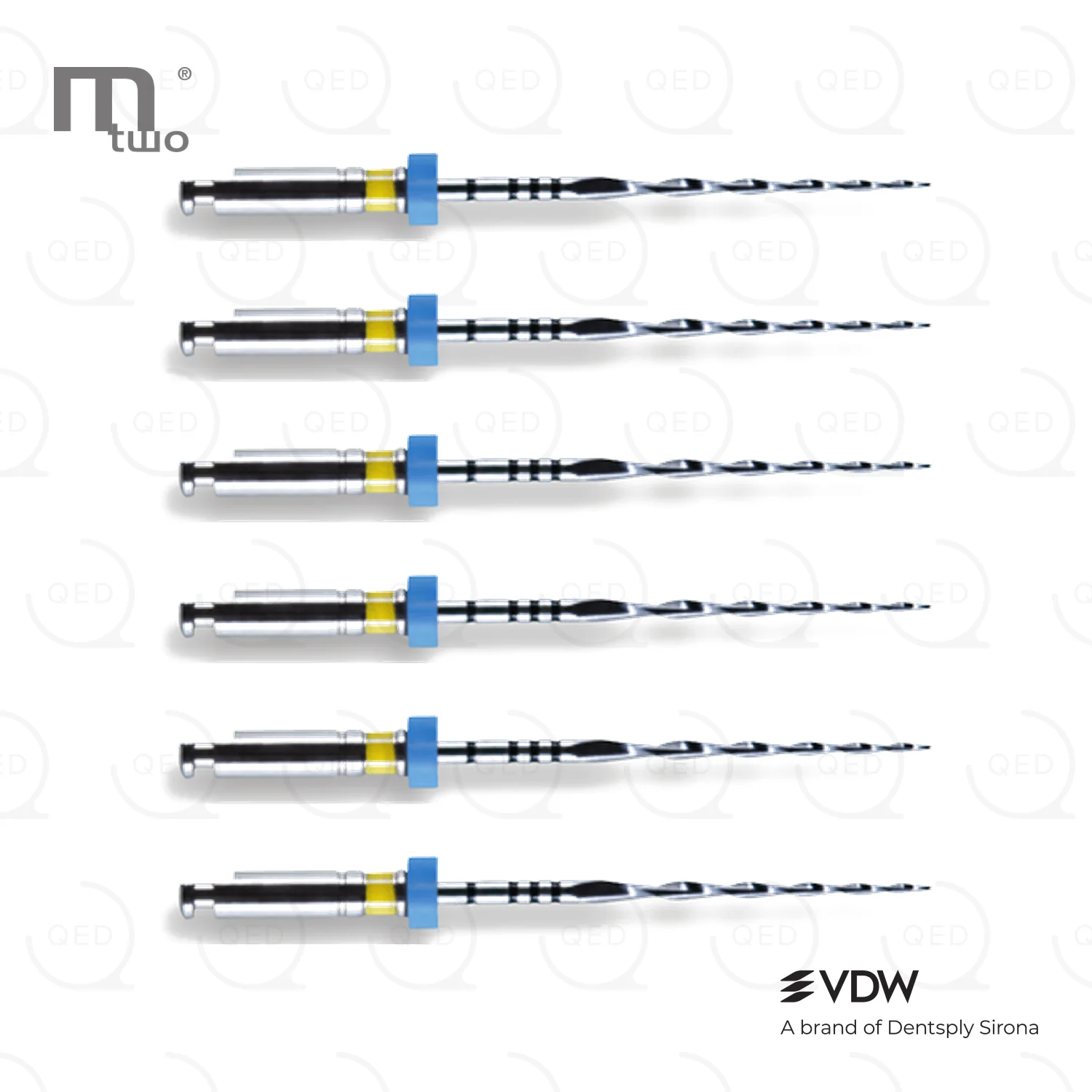
mtwo® · 60/.04 · 21 mm · wp 16 mm · 6 files
s-shaped sectionsterile blistersingle length technique
vdw’s long-standing rotary file. vdw describe an “s-shaped cross-section with two active cutting edges” and a “small instrument core for high flexibility” – the same s-section family as reciproc® blue and vdw.rotate®. every instrument is taken to full working length rather than stepping back.
this pack: vdw mtwo® rotary file, iso size 60, .04 taper, 21 mm, 16 mm working part (pack of 6)
vdw · vdw gmbh, munich, germany (dentsply sirona) · mtwo® is licensed by sweden & martina
| tip (d0) | 0.60 mm |
| taper | .04 |
| length | 21 mm |
| working part | 16 mm |
| handle | iso colour (blue) |
| material | nickel titanium |
| supplied | sterile, pack of 6 |
› s-shaped section, two cutting edges. vdw’s own description, with a “small instrument core for high flexibility”.
› one sequence, one length. vdw: “single length: all instruments are brought to full working length”.
› progressive pitch. vdw describe “active cutting blades and a progressive pitch”.
› wp 16 mm. the flutes run 16 mm from the tip on a 21 mm instrument. vdw list “16 mm working part (21 or 25 mm working length)” and a 21 mm working part at 25 or 31 mm.
“superior cutting efficiency and flexibility, for an efficient root canal preparation”
vdw, vdw dental product catalogue 2023.
what does wp 16 mm mean?
the working part – how far the flutes run up from the tip. this one is 16 mm of cutting on a 21 mm instrument. a shorter working part gives you more shank, which helps in a posterior tooth with limited opening.
should i be looking at vdw.rotate instead?
it is the newer file in the same s-section family, with a heat treatment vdw say lowers the risk of breakage, plus taper rings and radiopaque calibration rings on the handle. we stock both. our suggestion for this size is below.
› the basic sequence: 10/.04 · 15/.05 · 20/.06 · 25/.06, 21 mm
› same size, other lengths: 25 mm, wp 16 mm · 31 mm, wp 21 mm
› larger anatomies: 30/.05 · 35/.04 · 40/.04 · 45/.04
› moving to vdw.rotate: vdw.rotate® 60/.04, 21 mm – the same size and taper, on heat-treated wire
› retreatment: mtwo® retreatment assorted, 21 mm
› obturation: the dia-pro .04 range stops at 45, so there is no matched cone at 60/.04. fit from 45/.04 or the standard ml.029™ 60/.02.
› motor: x-smart® pro+ with apex locator
› lubricant and irrigation: glyde™ file prep · chlorax 5.25% · irriflex® needles
mtwo® is licensed by sweden & martina. sizes, tapers and working parts are as vdw list them in the vdw dental product catalogue 2023. single use. follow the instructions supplied with the product.
mtwo® 60/.04, 21 mm, wp 16 mm (6) · nickel titanium · ref v040234021060
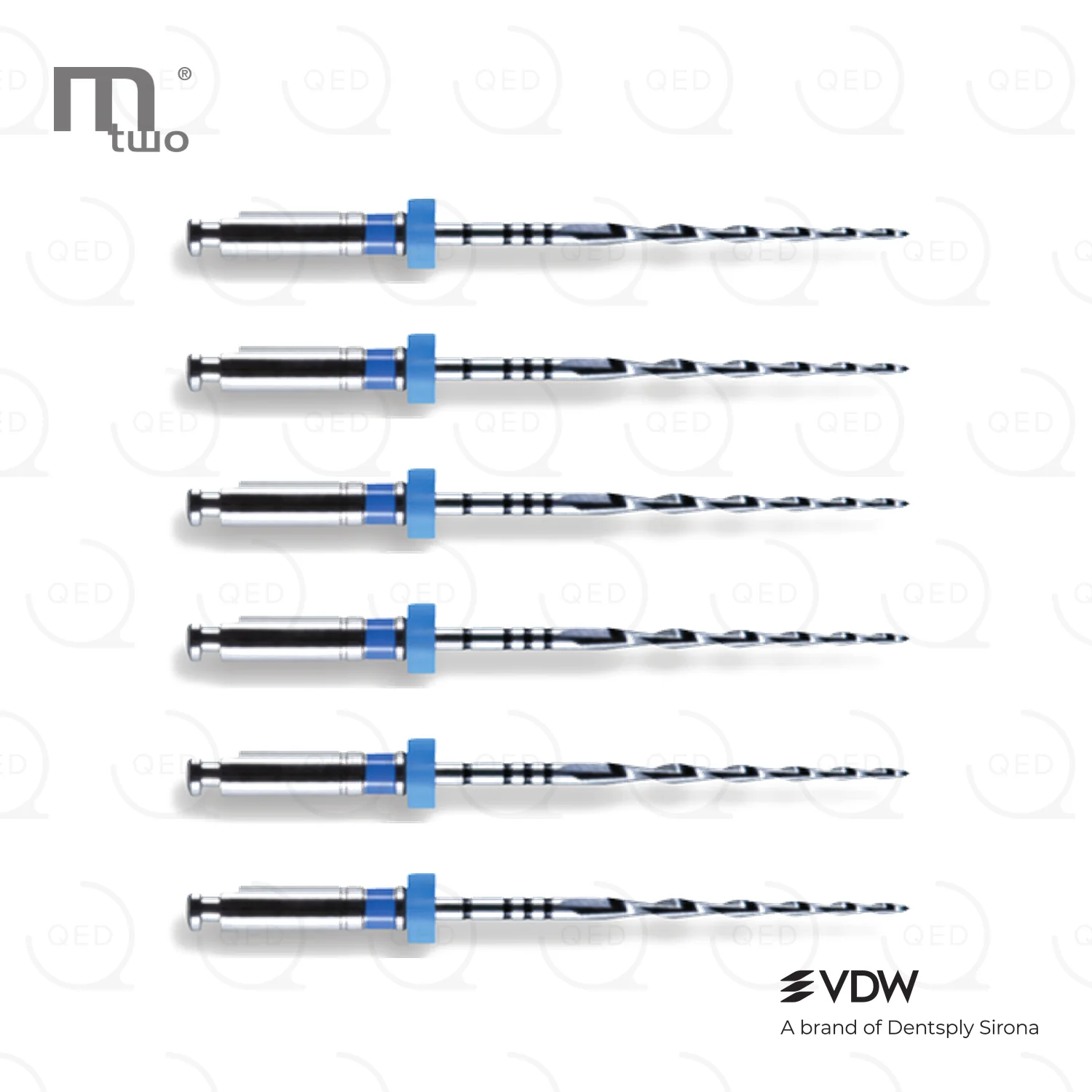
mtwo® · 10/.04 · 25 mm · wp 16 mm · 6 files
s-shaped sectionsterile blistersingle length technique
vdw’s long-standing rotary file. vdw describe an “s-shaped cross-section with two active cutting edges” and a “small instrument core for high flexibility” – the same s-section family as reciproc® blue and vdw.rotate®. every instrument is taken to full working length rather than stepping back.
this pack: vdw mtwo® rotary file, iso size 10, .04 taper, 25 mm, 16 mm working part (pack of 6)
vdw · vdw gmbh, munich, germany (dentsply sirona) · mtwo® is licensed by sweden & martina
| tip (d0) | 0.10 mm |
| taper | .04 |
| length | 25 mm |
| working part | 16 mm |
| handle | iso colour (purple) |
| material | nickel titanium |
| supplied | sterile, pack of 6 |
› s-shaped section, two cutting edges. vdw’s own description, with a “small instrument core for high flexibility”.
› one sequence, one length. vdw: “single length: all instruments are brought to full working length”.
› progressive pitch. vdw describe “active cutting blades and a progressive pitch”.
› wp 16 mm. the flutes run 16 mm from the tip on a 25 mm instrument. vdw list “16 mm working part (21 or 25 mm working length)” and a 21 mm working part at 25 or 31 mm.
“superior cutting efficiency and flexibility, for an efficient root canal preparation”
vdw, vdw dental product catalogue 2023.
what does wp 16 mm mean?
the working part – how far the flutes run up from the tip. this one is 16 mm of cutting on a 25 mm instrument. a shorter working part gives you more shank, which helps in a posterior tooth with limited opening.
should i be looking at vdw.rotate instead?
it is the newer file in the same s-section family, with a heat treatment vdw say lowers the risk of breakage, plus taper rings and radiopaque calibration rings on the handle. we stock both. our suggestion for this size is below.
› the basic sequence: 15/.05 · 20/.06 · 25/.06, 25 mm
› same size, other lengths: 21 mm, wp 16 mm · 25 mm, wp 21 mm · 31 mm, wp 21 mm
› larger anatomies: 30/.05 · 35/.04 · 40/.04 · 45/.04
› moving to vdw.rotate: vdw.rotate® 15/.04, 25 mm – the nearest size in the newer range
› retreatment: mtwo® retreatment assorted, 21 mm
› obturation: the dia-pro .04 range stops at 45, so there is no matched cone at 10/.04. fit from 45/.04.
› motor: x-smart® pro+ with apex locator
› lubricant and irrigation: glyde™ file prep · chlorax 5.25% · irriflex® needles
mtwo® is licensed by sweden & martina. sizes, tapers and working parts are as vdw list them in the vdw dental product catalogue 2023. single use. follow the instructions supplied with the product.
mtwo® 10/.04, 25 mm, wp 16 mm (6) · nickel titanium · ref v040234025010
mtwo® · 35/.04 · 25 mm · wp 16 mm · 6 files
s-shaped sectionsterile blistersingle length technique
vdw’s long-standing rotary file. vdw describe an “s-shaped cross-section with two active cutting edges” and a “small instrument core for high flexibility” – the same s-section family as reciproc® blue and vdw.rotate®. every instrument is taken to full working length rather than stepping back.
this pack: vdw mtwo® rotary file, iso size 35, .04 taper, 25 mm, 16 mm working part (pack of 6)
vdw · vdw gmbh, munich, germany (dentsply sirona) · mtwo® is licensed by sweden & martina
| tip (d0) | 0.35 mm |
| taper | .04 |
| length | 25 mm |
| working part | 16 mm |
| handle | iso colour (green) |
| material | nickel titanium |
| supplied | sterile, pack of 6 |
› s-shaped section, two cutting edges. vdw’s own description, with a “small instrument core for high flexibility”.
› one sequence, one length. vdw: “single length: all instruments are brought to full working length”.
› progressive pitch. vdw describe “active cutting blades and a progressive pitch”.
› wp 16 mm. the flutes run 16 mm from the tip on a 25 mm instrument. vdw list “16 mm working part (21 or 25 mm working length)” and a 21 mm working part at 25 or 31 mm.
“superior cutting efficiency and flexibility, for an efficient root canal preparation”
vdw, vdw dental product catalogue 2023.
what does wp 16 mm mean?
the working part – how far the flutes run up from the tip. this one is 16 mm of cutting on a 25 mm instrument. a shorter working part gives you more shank, which helps in a posterior tooth with limited opening.
should i be looking at vdw.rotate instead?
it is the newer file in the same s-section family, with a heat treatment vdw say lowers the risk of breakage, plus taper rings and radiopaque calibration rings on the handle. we stock both. our suggestion for this size is below.
› the basic sequence: 10/.04 · 15/.05 · 20/.06 · 25/.06, 25 mm
› same size, other lengths: 21 mm, wp 16 mm · 31 mm, wp 21 mm
› larger anatomies: 30/.05 · 40/.04 · 45/.04 · 50/.04
› moving to vdw.rotate: vdw.rotate® 35/.04, 25 mm – the same size and taper, on heat-treated wire
› retreatment: mtwo® retreatment assorted, 21 mm
› obturation: diadent® dia-pro iso gutta-percha 35/.04 · paper points 35/.04 – the same size and taper
› motor: x-smart® pro+ with apex locator
› lubricant and irrigation: glyde™ file prep · chlorax 5.25% · irriflex® needles
mtwo® is licensed by sweden & martina. sizes, tapers and working parts are as vdw list them in the vdw dental product catalogue 2023. single use. follow the instructions supplied with the product.
mtwo® 35/.04, 25 mm, wp 16 mm (6) · nickel titanium · ref v040234025035
mtwo® · 40/.04 · 25 mm · wp 16 mm · 6 files
s-shaped sectionsterile blistersingle length technique
vdw’s long-standing rotary file. vdw describe an “s-shaped cross-section with two active cutting edges” and a “small instrument core for high flexibility” – the same s-section family as reciproc® blue and vdw.rotate®. every instrument is taken to full working length rather than stepping back.
this pack: vdw mtwo® rotary file, iso size 40, .04 taper, 25 mm, 16 mm working part (pack of 6)
vdw · vdw gmbh, munich, germany (dentsply sirona) · mtwo® is licensed by sweden & martina
| tip (d0) | 0.40 mm |
| taper | .04 |
| length | 25 mm |
| working part | 16 mm |
| handle | iso colour (black) |
| material | nickel titanium |
| supplied | sterile, pack of 6 |
› s-shaped section, two cutting edges. vdw’s own description, with a “small instrument core for high flexibility”.
› one sequence, one length. vdw: “single length: all instruments are brought to full working length”.
› progressive pitch. vdw describe “active cutting blades and a progressive pitch”.
› wp 16 mm. the flutes run 16 mm from the tip on a 25 mm instrument. vdw list “16 mm working part (21 or 25 mm working length)” and a 21 mm working part at 25 or 31 mm.
“superior cutting efficiency and flexibility, for an efficient root canal preparation”
vdw, vdw dental product catalogue 2023.
what does wp 16 mm mean?
the working part – how far the flutes run up from the tip. this one is 16 mm of cutting on a 25 mm instrument. a shorter working part gives you more shank, which helps in a posterior tooth with limited opening.
should i be looking at vdw.rotate instead?
it is the newer file in the same s-section family, with a heat treatment vdw say lowers the risk of breakage, plus taper rings and radiopaque calibration rings on the handle. we stock both. our suggestion for this size is below.
› the basic sequence: 10/.04 · 15/.05 · 20/.06 · 25/.06, 25 mm
› same size, other lengths: 21 mm, wp 16 mm · 31 mm, wp 21 mm
› larger anatomies: 30/.05 · 35/.04 · 45/.04 · 50/.04
› moving to vdw.rotate: vdw.rotate® 40/.04, 25 mm – the same size and taper, on heat-treated wire
› retreatment: mtwo® retreatment assorted, 21 mm
› obturation: diadent® dia-pro iso gutta-percha 40/.04 · paper points 40/.04 – the same size and taper
› motor: x-smart® pro+ with apex locator
› lubricant and irrigation: glyde™ file prep · chlorax 5.25% · irriflex® needles
mtwo® is licensed by sweden & martina. sizes, tapers and working parts are as vdw list them in the vdw dental product catalogue 2023. single use. follow the instructions supplied with the product.
mtwo® 40/.04, 25 mm, wp 16 mm (6) · nickel titanium · ref v040234025040
mtwo® · 45/.04 · 25 mm · wp 16 mm · 6 files
s-shaped sectionsterile blistersingle length technique
vdw’s long-standing rotary file. vdw describe an “s-shaped cross-section with two active cutting edges” and a “small instrument core for high flexibility” – the same s-section family as reciproc® blue and vdw.rotate®. every instrument is taken to full working length rather than stepping back.
this pack: vdw mtwo® rotary file, iso size 45, .04 taper, 25 mm, 16 mm working part (pack of 6)
vdw · vdw gmbh, munich, germany (dentsply sirona) · mtwo® is licensed by sweden & martina
| tip (d0) | 0.45 mm |
| taper | .04 |
| length | 25 mm |
| working part | 16 mm |
| handle | iso colour (white) |
| material | nickel titanium |
| supplied | sterile, pack of 6 |
› s-shaped section, two cutting edges. vdw’s own description, with a “small instrument core for high flexibility”.
› one sequence, one length. vdw: “single length: all instruments are brought to full working length”.
› progressive pitch. vdw describe “active cutting blades and a progressive pitch”.
› wp 16 mm. the flutes run 16 mm from the tip on a 25 mm instrument. vdw list “16 mm working part (21 or 25 mm working length)” and a 21 mm working part at 25 or 31 mm.
“superior cutting efficiency and flexibility, for an efficient root canal preparation”
vdw, vdw dental product catalogue 2023.
what does wp 16 mm mean?
the working part – how far the flutes run up from the tip. this one is 16 mm of cutting on a 25 mm instrument. a shorter working part gives you more shank, which helps in a posterior tooth with limited opening.
should i be looking at vdw.rotate instead?
it is the newer file in the same s-section family, with a heat treatment vdw say lowers the risk of breakage, plus taper rings and radiopaque calibration rings on the handle. we stock both. our suggestion for this size is below.
› the basic sequence: 10/.04 · 15/.05 · 20/.06 · 25/.06, 25 mm
› same size, other lengths: 21 mm, wp 16 mm · 31 mm, wp 21 mm
› larger anatomies: 30/.05 · 35/.04 · 40/.04 · 50/.04
› moving to vdw.rotate: vdw.rotate® 50/.04, 25 mm – the nearest size in the newer range
› retreatment: mtwo® retreatment assorted, 21 mm
› obturation: diadent® dia-pro iso gutta-percha 45/.04 – the same size and taper. the dia-pro paper points stop at 40, so gauge with 40/.04 or a standard point.
› motor: x-smart® pro+ with apex locator
› lubricant and irrigation: glyde™ file prep · chlorax 5.25% · irriflex® needles
mtwo® is licensed by sweden & martina. sizes, tapers and working parts are as vdw list them in the vdw dental product catalogue 2023. single use. follow the instructions supplied with the product.
mtwo® 45/.04, 25 mm, wp 16 mm (6) · nickel titanium · ref v040234025045
mtwo® · 50/.04 · 25 mm · wp 16 mm · 6 files
s-shaped sectionsterile blistersingle length technique
vdw’s long-standing rotary file. vdw describe an “s-shaped cross-section with two active cutting edges” and a “small instrument core for high flexibility” – the same s-section family as reciproc® blue and vdw.rotate®. every instrument is taken to full working length rather than stepping back.
this pack: vdw mtwo® rotary file, iso size 50, .04 taper, 25 mm, 16 mm working part (pack of 6)
vdw · vdw gmbh, munich, germany (dentsply sirona) · mtwo® is licensed by sweden & martina
| tip (d0) | 0.50 mm |
| taper | .04 |
| length | 25 mm |
| working part | 16 mm |
| handle | iso colour (yellow) |
| material | nickel titanium |
| supplied | sterile, pack of 6 |
› s-shaped section, two cutting edges. vdw’s own description, with a “small instrument core for high flexibility”.
› one sequence, one length. vdw: “single length: all instruments are brought to full working length”.
› progressive pitch. vdw describe “active cutting blades and a progressive pitch”.
› wp 16 mm. the flutes run 16 mm from the tip on a 25 mm instrument. vdw list “16 mm working part (21 or 25 mm working length)” and a 21 mm working part at 25 or 31 mm.
“superior cutting efficiency and flexibility, for an efficient root canal preparation”
vdw, vdw dental product catalogue 2023.
what does wp 16 mm mean?
the working part – how far the flutes run up from the tip. this one is 16 mm of cutting on a 25 mm instrument. a shorter working part gives you more shank, which helps in a posterior tooth with limited opening.
should i be looking at vdw.rotate instead?
it is the newer file in the same s-section family, with a heat treatment vdw say lowers the risk of breakage, plus taper rings and radiopaque calibration rings on the handle. we stock both. our suggestion for this size is below.
› the basic sequence: 10/.04 · 15/.05 · 20/.06 · 25/.06, 25 mm
› same size, other lengths: 21 mm, wp 16 mm · 31 mm, wp 21 mm
› larger anatomies: 30/.05 · 35/.04 · 40/.04 · 45/.04
› moving to vdw.rotate: vdw.rotate® 50/.04, 25 mm – the same size and taper, on heat-treated wire
› retreatment: mtwo® retreatment assorted, 21 mm
› obturation: the dia-pro .04 range stops at 45, so there is no matched cone at 50/.04. fit from 45/.04 or the standard ml.029™ 50/.02.
› motor: x-smart® pro+ with apex locator
› lubricant and irrigation: glyde™ file prep · chlorax 5.25% · irriflex® needles
mtwo® is licensed by sweden & martina. sizes, tapers and working parts are as vdw list them in the vdw dental product catalogue 2023. single use. follow the instructions supplied with the product.
mtwo® 50/.04, 25 mm, wp 16 mm (6) · nickel titanium · ref v040234025050
mtwo® · 60/.04 · 25 mm · wp 16 mm · 6 files
s-shaped sectionsterile blistersingle length technique
vdw’s long-standing rotary file. vdw describe an “s-shaped cross-section with two active cutting edges” and a “small instrument core for high flexibility” – the same s-section family as reciproc® blue and vdw.rotate®. every instrument is taken to full working length rather than stepping back.
this pack: vdw mtwo® rotary file, iso size 60, .04 taper, 25 mm, 16 mm working part (pack of 6)
vdw · vdw gmbh, munich, germany (dentsply sirona) · mtwo® is licensed by sweden & martina
| tip (d0) | 0.60 mm |
| taper | .04 |
| length | 25 mm |
| working part | 16 mm |
| handle | iso colour (blue) |
| material | nickel titanium |
| supplied | sterile, pack of 6 |
› s-shaped section, two cutting edges. vdw’s own description, with a “small instrument core for high flexibility”.
› one sequence, one length. vdw: “single length: all instruments are brought to full working length”.
› progressive pitch. vdw describe “active cutting blades and a progressive pitch”.
› wp 16 mm. the flutes run 16 mm from the tip on a 25 mm instrument. vdw list “16 mm working part (21 or 25 mm working length)” and a 21 mm working part at 25 or 31 mm.
“superior cutting efficiency and flexibility, for an efficient root canal preparation”
vdw, vdw dental product catalogue 2023.
what does wp 16 mm mean?
the working part – how far the flutes run up from the tip. this one is 16 mm of cutting on a 25 mm instrument. a shorter working part gives you more shank, which helps in a posterior tooth with limited opening.
should i be looking at vdw.rotate instead?
it is the newer file in the same s-section family, with a heat treatment vdw say lowers the risk of breakage, plus taper rings and radiopaque calibration rings on the handle. we stock both. our suggestion for this size is below.
› the basic sequence: 10/.04 · 15/.05 · 20/.06 · 25/.06, 25 mm
› same size, other lengths: 21 mm, wp 16 mm · 31 mm, wp 21 mm
› larger anatomies: 30/.05 · 35/.04 · 40/.04 · 45/.04
› moving to vdw.rotate: vdw.rotate® 60/.04, 25 mm – the same size and taper, on heat-treated wire
› retreatment: mtwo® retreatment assorted, 21 mm
› obturation: the dia-pro .04 range stops at 45, so there is no matched cone at 60/.04. fit from 45/.04 or the standard ml.029™ 60/.02.
› motor: x-smart® pro+ with apex locator
› lubricant and irrigation: glyde™ file prep · chlorax 5.25% · irriflex® needles
mtwo® is licensed by sweden & martina. sizes, tapers and working parts are as vdw list them in the vdw dental product catalogue 2023. single use. follow the instructions supplied with the product.
mtwo® 60/.04, 25 mm, wp 16 mm (6) · nickel titanium · ref v040234025060
mtwo® · 15/.05 · 21 mm · wp 16 mm · 6 files
s-shaped sectionsterile blistersingle length technique
vdw’s long-standing rotary file. vdw describe an “s-shaped cross-section with two active cutting edges” and a “small instrument core for high flexibility” – the same s-section family as reciproc® blue and vdw.rotate®. every instrument is taken to full working length rather than stepping back.
this pack: vdw mtwo® rotary file, iso size 15, .05 taper, 21 mm, 16 mm working part (pack of 6)
vdw · vdw gmbh, munich, germany (dentsply sirona) · mtwo® is licensed by sweden & martina
| tip (d0) | 0.15 mm |
| taper | .05 |
| length | 21 mm |
| working part | 16 mm |
| handle | iso colour (white) |
| material | nickel titanium |
| supplied | sterile, pack of 6 |
› s-shaped section, two cutting edges. vdw’s own description, with a “small instrument core for high flexibility”.
› one sequence, one length. vdw: “single length: all instruments are brought to full working length”.
› progressive pitch. vdw describe “active cutting blades and a progressive pitch”.
› wp 16 mm. the flutes run 16 mm from the tip on a 21 mm instrument. vdw list “16 mm working part (21 or 25 mm working length)” and a 21 mm working part at 25 or 31 mm.
“superior cutting efficiency and flexibility, for an efficient root canal preparation”
vdw, vdw dental product catalogue 2023.
what does wp 16 mm mean?
the working part – how far the flutes run up from the tip. this one is 16 mm of cutting on a 21 mm instrument. a shorter working part gives you more shank, which helps in a posterior tooth with limited opening.
should i be looking at vdw.rotate instead?
it is the newer file in the same s-section family, with a heat treatment vdw say lowers the risk of breakage, plus taper rings and radiopaque calibration rings on the handle. we stock both. our suggestion for this size is below.
› the basic sequence: 10/.04 · 20/.06 · 25/.06, 21 mm
› same size, other lengths: 25 mm, wp 16 mm · 25 mm, wp 21 mm · 31 mm, wp 21 mm
› larger anatomies: 30/.05 · 35/.04 · 40/.04 · 45/.04
› moving to vdw.rotate: vdw.rotate® 15/.04, 21 mm – the nearest size in the newer range
› retreatment: mtwo® retreatment assorted, 21 mm
› obturation: dia-pro iso is made in .04 and .06 only, so there is no matched cone for a .05 preparation. fit from the .04 assorted pack or the standard ml.029™ .02 range.
› motor: x-smart® pro+ with apex locator
› lubricant and irrigation: glyde™ file prep · chlorax 5.25% · irriflex® needles
mtwo® is licensed by sweden & martina. sizes, tapers and working parts are as vdw list them in the vdw dental product catalogue 2023. single use. follow the instructions supplied with the product.
mtwo® 15/.05, 21 mm, wp 16 mm (6) · nickel titanium · ref v040235021015

mtwo® · 30/.05 · 21 mm · wp 16 mm · 6 files
s-shaped sectionsterile blistersingle length technique
vdw’s long-standing rotary file. vdw describe an “s-shaped cross-section with two active cutting edges” and a “small instrument core for high flexibility” – the same s-section family as reciproc® blue and vdw.rotate®. every instrument is taken to full working length rather than stepping back.
this pack: vdw mtwo® rotary file, iso size 30, .05 taper, 21 mm, 16 mm working part (pack of 6)
vdw · vdw gmbh, munich, germany (dentsply sirona) · mtwo® is licensed by sweden & martina
| tip (d0) | 0.30 mm |
| taper | .05 |
| length | 21 mm |
| working part | 16 mm |
| handle | iso colour (blue) |
| material | nickel titanium |
| supplied | sterile, pack of 6 |
› s-shaped section, two cutting edges. vdw’s own description, with a “small instrument core for high flexibility”.
› one sequence, one length. vdw: “single length: all instruments are brought to full working length”.
› progressive pitch. vdw describe “active cutting blades and a progressive pitch”.
› wp 16 mm. the flutes run 16 mm from the tip on a 21 mm instrument. vdw list “16 mm working part (21 or 25 mm working length)” and a 21 mm working part at 25 or 31 mm.
“superior cutting efficiency and flexibility, for an efficient root canal preparation”
vdw, vdw dental product catalogue 2023.
what does wp 16 mm mean?
the working part – how far the flutes run up from the tip. this one is 16 mm of cutting on a 21 mm instrument. a shorter working part gives you more shank, which helps in a posterior tooth with limited opening.
should i be looking at vdw.rotate instead?
it is the newer file in the same s-section family, with a heat treatment vdw say lowers the risk of breakage, plus taper rings and radiopaque calibration rings on the handle. we stock both. our suggestion for this size is below.
› the basic sequence: 10/.04 · 15/.05 · 20/.06 · 25/.06, 21 mm
› same size, other lengths: 25 mm, wp 16 mm · 31 mm, wp 21 mm
› larger anatomies: 35/.04 · 40/.04 · 45/.04 · 50/.04
› moving to vdw.rotate: vdw.rotate® 30/.04, 21 mm – the nearest size in the newer range
› retreatment: mtwo® retreatment assorted, 21 mm
› obturation: dia-pro iso is made in .04 and .06 only, so there is no matched cone for a .05 preparation. fit from the .04 assorted pack or the standard ml.029™ .02 range.
› motor: x-smart® pro+ with apex locator
› lubricant and irrigation: glyde™ file prep · chlorax 5.25% · irriflex® needles
mtwo® is licensed by sweden & martina. sizes, tapers and working parts are as vdw list them in the vdw dental product catalogue 2023. single use. follow the instructions supplied with the product.
mtwo® 30/.05, 21 mm, wp 16 mm (6) · nickel titanium · ref v040235021030
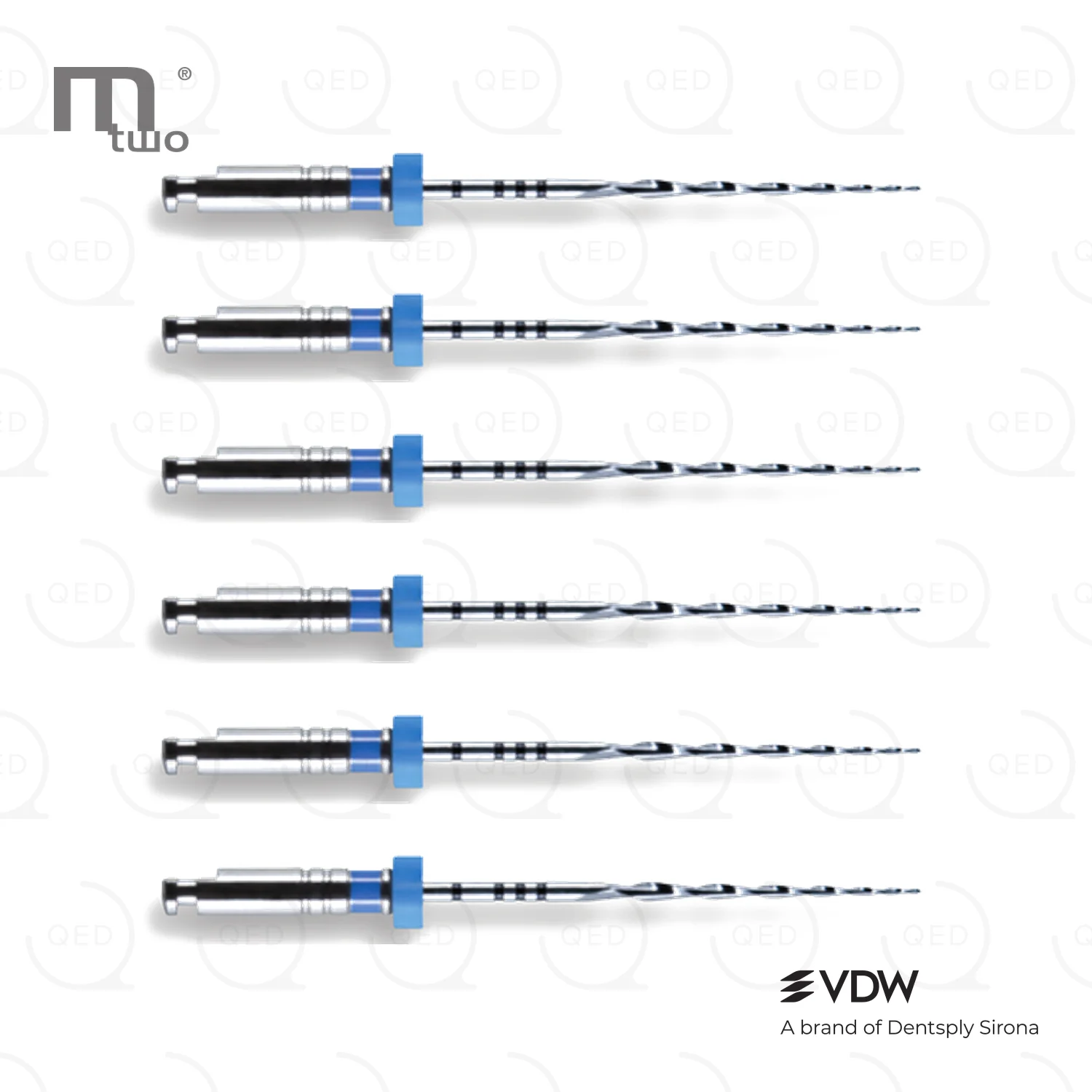
mtwo® · 15/.05 · 25 mm · wp 16 mm · 6 files
s-shaped sectionsterile blistersingle length technique
vdw’s long-standing rotary file. vdw describe an “s-shaped cross-section with two active cutting edges” and a “small instrument core for high flexibility” – the same s-section family as reciproc® blue and vdw.rotate®. every instrument is taken to full working length rather than stepping back.
this pack: vdw mtwo® rotary file, iso size 15, .05 taper, 25 mm, 16 mm working part (pack of 6)
vdw · vdw gmbh, munich, germany (dentsply sirona) · mtwo® is licensed by sweden & martina
| tip (d0) | 0.15 mm |
| taper | .05 |
| length | 25 mm |
| working part | 16 mm |
| handle | iso colour (white) |
| material | nickel titanium |
| supplied | sterile, pack of 6 |
› s-shaped section, two cutting edges. vdw’s own description, with a “small instrument core for high flexibility”.
› one sequence, one length. vdw: “single length: all instruments are brought to full working length”.
› progressive pitch. vdw describe “active cutting blades and a progressive pitch”.
› wp 16 mm. the flutes run 16 mm from the tip on a 25 mm instrument. vdw list “16 mm working part (21 or 25 mm working length)” and a 21 mm working part at 25 or 31 mm.
“superior cutting efficiency and flexibility, for an efficient root canal preparation”
vdw, vdw dental product catalogue 2023.
what does wp 16 mm mean?
the working part – how far the flutes run up from the tip. this one is 16 mm of cutting on a 25 mm instrument. a shorter working part gives you more shank, which helps in a posterior tooth with limited opening.
should i be looking at vdw.rotate instead?
it is the newer file in the same s-section family, with a heat treatment vdw say lowers the risk of breakage, plus taper rings and radiopaque calibration rings on the handle. we stock both. our suggestion for this size is below.
› the basic sequence: 10/.04 · 20/.06 · 25/.06, 25 mm
› same size, other lengths: 21 mm, wp 16 mm · 25 mm, wp 21 mm · 31 mm, wp 21 mm
› larger anatomies: 30/.05 · 35/.04 · 40/.04 · 45/.04
› moving to vdw.rotate: vdw.rotate® 15/.04, 25 mm – the nearest size in the newer range
› retreatment: mtwo® retreatment assorted, 21 mm
› obturation: dia-pro iso is made in .04 and .06 only, so there is no matched cone for a .05 preparation. fit from the .04 assorted pack or the standard ml.029™ .02 range.
› motor: x-smart® pro+ with apex locator
› lubricant and irrigation: glyde™ file prep · chlorax 5.25% · irriflex® needles
mtwo® is licensed by sweden & martina. sizes, tapers and working parts are as vdw list them in the vdw dental product catalogue 2023. single use. follow the instructions supplied with the product.
mtwo® 15/.05, 25 mm, wp 16 mm (6) · nickel titanium · ref v040235025015
mtwo® · 30/.05 · 25 mm · wp 16 mm · 6 files
s-shaped sectionsterile blistersingle length technique
vdw’s long-standing rotary file. vdw describe an “s-shaped cross-section with two active cutting edges” and a “small instrument core for high flexibility” – the same s-section family as reciproc® blue and vdw.rotate®. every instrument is taken to full working length rather than stepping back.
this pack: vdw mtwo® rotary file, iso size 30, .05 taper, 25 mm, 16 mm working part (pack of 6)
vdw · vdw gmbh, munich, germany (dentsply sirona) · mtwo® is licensed by sweden & martina
| tip (d0) | 0.30 mm |
| taper | .05 |
| length | 25 mm |
| working part | 16 mm |
| handle | iso colour (blue) |
| material | nickel titanium |
| supplied | sterile, pack of 6 |
› s-shaped section, two cutting edges. vdw’s own description, with a “small instrument core for high flexibility”.
› one sequence, one length. vdw: “single length: all instruments are brought to full working length”.
› progressive pitch. vdw describe “active cutting blades and a progressive pitch”.
› wp 16 mm. the flutes run 16 mm from the tip on a 25 mm instrument. vdw list “16 mm working part (21 or 25 mm working length)” and a 21 mm working part at 25 or 31 mm.
“superior cutting efficiency and flexibility, for an efficient root canal preparation”
vdw, vdw dental product catalogue 2023.
what does wp 16 mm mean?
the working part – how far the flutes run up from the tip. this one is 16 mm of cutting on a 25 mm instrument. a shorter working part gives you more shank, which helps in a posterior tooth with limited opening.
should i be looking at vdw.rotate instead?
it is the newer file in the same s-section family, with a heat treatment vdw say lowers the risk of breakage, plus taper rings and radiopaque calibration rings on the handle. we stock both. our suggestion for this size is below.
› the basic sequence: 10/.04 · 15/.05 · 20/.06 · 25/.06, 25 mm
› same size, other lengths: 21 mm, wp 16 mm · 31 mm, wp 21 mm
› larger anatomies: 35/.04 · 40/.04 · 45/.04 · 50/.04
› moving to vdw.rotate: vdw.rotate® 30/.04, 25 mm – the nearest size in the newer range
› retreatment: mtwo® retreatment assorted, 21 mm
› obturation: dia-pro iso is made in .04 and .06 only, so there is no matched cone for a .05 preparation. fit from the .04 assorted pack or the standard ml.029™ .02 range.
› motor: x-smart® pro+ with apex locator
› lubricant and irrigation: glyde™ file prep · chlorax 5.25% · irriflex® needles
mtwo® is licensed by sweden & martina. sizes, tapers and working parts are as vdw list them in the vdw dental product catalogue 2023. single use. follow the instructions supplied with the product.
mtwo® 30/.05, 25 mm, wp 16 mm (6) · nickel titanium · ref v040235025030
mtwo® · 20/.06 · 21 mm · wp 16 mm · 6 files
s-shaped sectionsterile blistersingle length technique
vdw’s long-standing rotary file. vdw describe an “s-shaped cross-section with two active cutting edges” and a “small instrument core for high flexibility” – the same s-section family as reciproc® blue and vdw.rotate®. every instrument is taken to full working length rather than stepping back.
this pack: vdw mtwo® rotary file, iso size 20, .06 taper, 21 mm, 16 mm working part (pack of 6)
vdw · vdw gmbh, munich, germany (dentsply sirona) · mtwo® is licensed by sweden & martina
| tip (d0) | 0.20 mm |
| taper | .06 |
| length | 21 mm |
| working part | 16 mm |
| handle | iso colour (yellow) |
| material | nickel titanium |
| supplied | sterile, pack of 6 |
› s-shaped section, two cutting edges. vdw’s own description, with a “small instrument core for high flexibility”.
› one sequence, one length. vdw: “single length: all instruments are brought to full working length”.
› progressive pitch. vdw describe “active cutting blades and a progressive pitch”.
› wp 16 mm. the flutes run 16 mm from the tip on a 21 mm instrument. vdw list “16 mm working part (21 or 25 mm working length)” and a 21 mm working part at 25 or 31 mm.
“superior cutting efficiency and flexibility, for an efficient root canal preparation”
vdw, vdw dental product catalogue 2023.
what does wp 16 mm mean?
the working part – how far the flutes run up from the tip. this one is 16 mm of cutting on a 21 mm instrument. a shorter working part gives you more shank, which helps in a posterior tooth with limited opening.
should i be looking at vdw.rotate instead?
it is the newer file in the same s-section family, with a heat treatment vdw say lowers the risk of breakage, plus taper rings and radiopaque calibration rings on the handle. we stock both. our suggestion for this size is below.
› the basic sequence: 10/.04 · 15/.05 · 25/.06, 21 mm
› same size, other lengths: 25 mm, wp 16 mm · 25 mm, wp 21 mm · 31 mm, wp 21 mm
› larger anatomies: 30/.05 · 35/.04 · 40/.04 · 45/.04
› moving to vdw.rotate: vdw.rotate® 20/.05, 21 mm – the nearest size in the newer range
› retreatment: mtwo® retreatment assorted, 21 mm
› obturation: diadent® dia-pro iso gutta-percha 20/.06 · paper points 20/.06 – the same size and taper
› motor: x-smart® pro+ with apex locator
› lubricant and irrigation: glyde™ file prep · chlorax 5.25% · irriflex® needles
mtwo® is licensed by sweden & martina. sizes, tapers and working parts are as vdw list them in the vdw dental product catalogue 2023. single use. follow the instructions supplied with the product.
mtwo® 20/.06, 21 mm, wp 16 mm (6) · nickel titanium · ref v040236021020
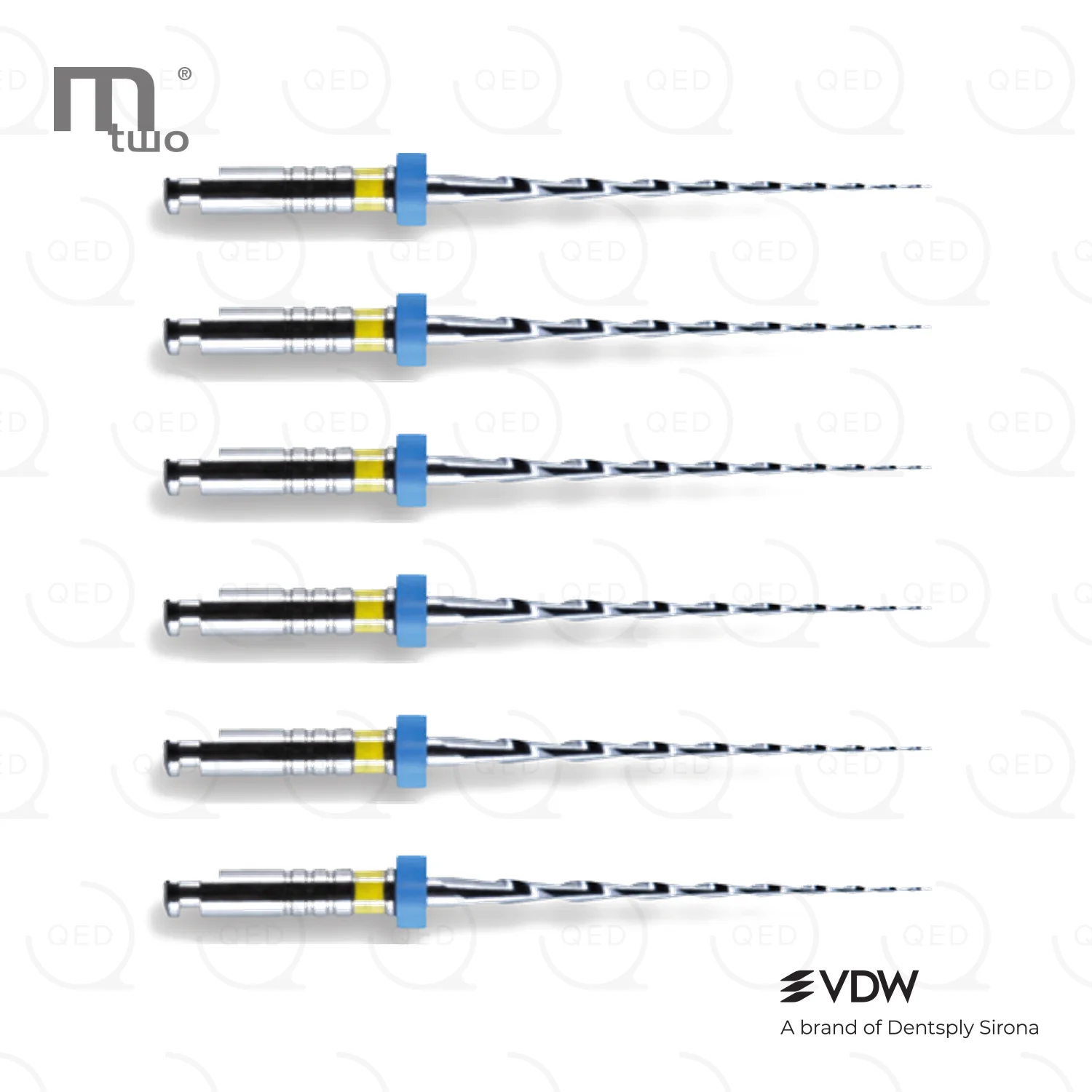
mtwo® · 25/.06 · 21 mm · wp 16 mm · 6 files
s-shaped sectionsterile blistersingle length technique
vdw’s long-standing rotary file. vdw describe an “s-shaped cross-section with two active cutting edges” and a “small instrument core for high flexibility” – the same s-section family as reciproc® blue and vdw.rotate®. every instrument is taken to full working length rather than stepping back.
this pack: vdw mtwo® rotary file, iso size 25, .06 taper, 21 mm, 16 mm working part (pack of 6)
vdw · vdw gmbh, munich, germany (dentsply sirona) · mtwo® is licensed by sweden & martina
| tip (d0) | 0.25 mm |
| taper | .06 |
| length | 21 mm |
| working part | 16 mm |
| handle | iso colour (red) |
| material | nickel titanium |
| supplied | sterile, pack of 6 |
› s-shaped section, two cutting edges. vdw’s own description, with a “small instrument core for high flexibility”.
› one sequence, one length. vdw: “single length: all instruments are brought to full working length”.
› progressive pitch. vdw describe “active cutting blades and a progressive pitch”.
› wp 16 mm. the flutes run 16 mm from the tip on a 21 mm instrument. vdw list “16 mm working part (21 or 25 mm working length)” and a 21 mm working part at 25 or 31 mm.
“superior cutting efficiency and flexibility, for an efficient root canal preparation”
vdw, vdw dental product catalogue 2023.
what does wp 16 mm mean?
the working part – how far the flutes run up from the tip. this one is 16 mm of cutting on a 21 mm instrument. a shorter working part gives you more shank, which helps in a posterior tooth with limited opening.
should i be looking at vdw.rotate instead?
it is the newer file in the same s-section family, with a heat treatment vdw say lowers the risk of breakage, plus taper rings and radiopaque calibration rings on the handle. we stock both. our suggestion for this size is below.
› the basic sequence: 10/.04 · 15/.05 · 20/.06, 21 mm
› same size, other lengths: 25 mm, wp 16 mm · 25 mm, wp 21 mm · 31 mm, wp 21 mm
› larger anatomies: 30/.05 · 35/.04 · 40/.04 · 45/.04
› moving to vdw.rotate: vdw.rotate® 25/.06, 21 mm – the same size and taper, on heat-treated wire
› retreatment: mtwo® retreatment assorted, 21 mm
› obturation: diadent® dia-pro iso gutta-percha 25/.06 · paper points 25/.06 – the same size and taper
› motor: x-smart® pro+ with apex locator
› lubricant and irrigation: glyde™ file prep · chlorax 5.25% · irriflex® needles
mtwo® is licensed by sweden & martina. sizes, tapers and working parts are as vdw list them in the vdw dental product catalogue 2023. single use. follow the instructions supplied with the product.
mtwo® 25/.06, 21 mm, wp 16 mm (6) · nickel titanium · ref v040236021025
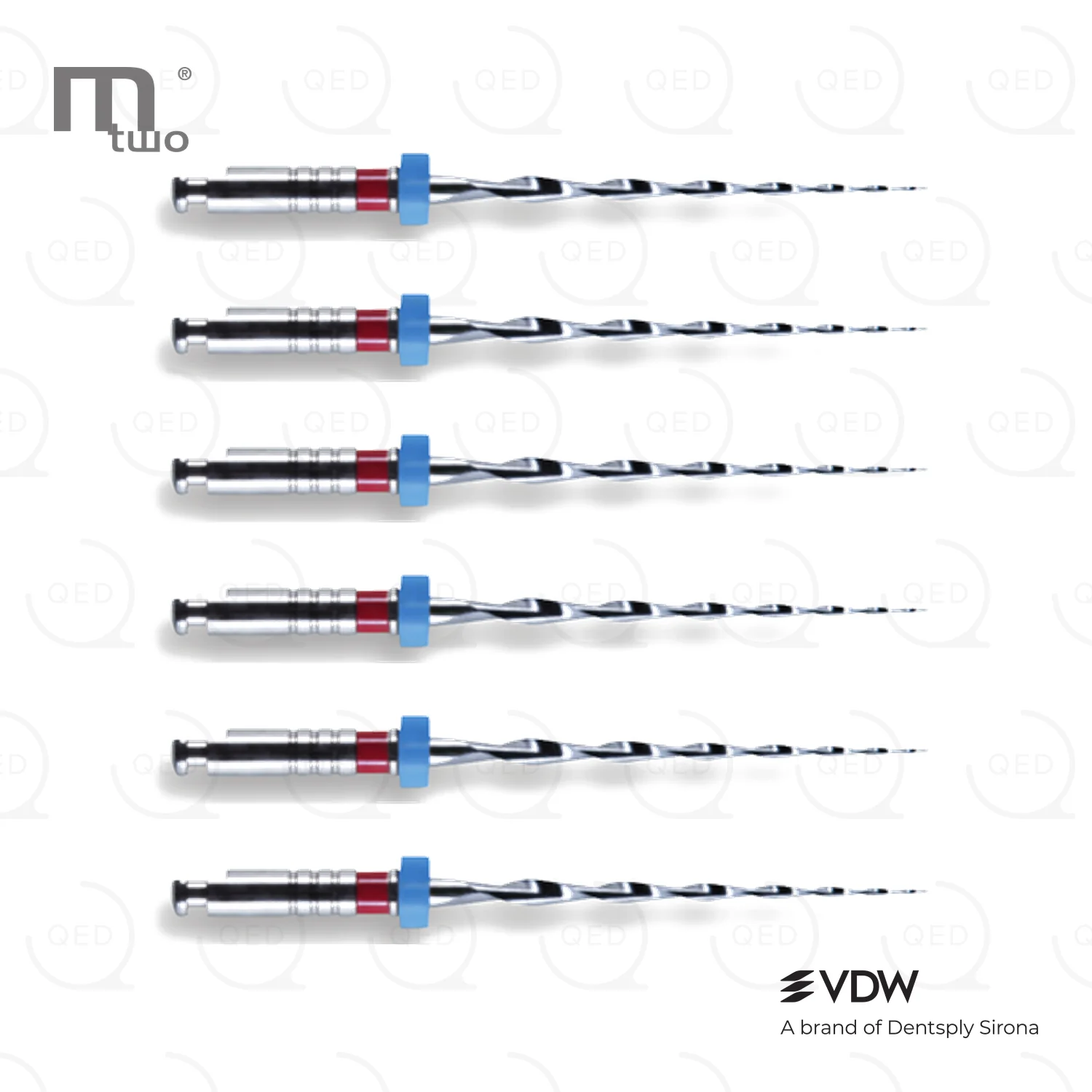
mtwo® · 30/.06 · 21 mm · wp 16 mm · 6 files
s-shaped sectionsterile blistersingle length technique
vdw’s long-standing rotary file. vdw describe an “s-shaped cross-section with two active cutting edges” and a “small instrument core for high flexibility” – the same s-section family as reciproc® blue and vdw.rotate®. every instrument is taken to full working length rather than stepping back.
this pack: vdw mtwo® rotary file, iso size 30, .06 taper, 21 mm, 16 mm working part (pack of 6)
vdw · vdw gmbh, munich, germany (dentsply sirona) · mtwo® is licensed by sweden & martina
| tip (d0) | 0.30 mm |
| taper | .06 |
| length | 21 mm |
| working part | 16 mm |
| handle | iso colour (blue) |
| material | nickel titanium |
| supplied | sterile, pack of 6 |
› s-shaped section, two cutting edges. vdw’s own description, with a “small instrument core for high flexibility”.
› one sequence, one length. vdw: “single length: all instruments are brought to full working length”.
› progressive pitch. vdw describe “active cutting blades and a progressive pitch”.
› wp 16 mm. the flutes run 16 mm from the tip on a 21 mm instrument. vdw list “16 mm working part (21 or 25 mm working length)” and a 21 mm working part at 25 or 31 mm.
“superior cutting efficiency and flexibility, for an efficient root canal preparation”
vdw, vdw dental product catalogue 2023.
what does wp 16 mm mean?
the working part – how far the flutes run up from the tip. this one is 16 mm of cutting on a 21 mm instrument. a shorter working part gives you more shank, which helps in a posterior tooth with limited opening.
should i be looking at vdw.rotate instead?
it is the newer file in the same s-section family, with a heat treatment vdw say lowers the risk of breakage, plus taper rings and radiopaque calibration rings on the handle. we stock both. our suggestion for this size is below.
› the basic sequence: 10/.04 · 15/.05 · 20/.06 · 25/.06, 21 mm
› same size, other lengths: 25 mm, wp 16 mm · 31 mm, wp 21 mm
› larger anatomies: 30/.05 · 35/.04 · 40/.04 · 45/.04
› moving to vdw.rotate: vdw.rotate® 30/.06, 21 mm – the same size and taper, on heat-treated wire
› retreatment: mtwo® retreatment assorted, 21 mm
› obturation: diadent® dia-pro iso gutta-percha 30/.06 · paper points 30/.06 – the same size and taper
› motor: x-smart® pro+ with apex locator
› lubricant and irrigation: glyde™ file prep · chlorax 5.25% · irriflex® needles
mtwo® is licensed by sweden & martina. sizes, tapers and working parts are as vdw list them in the vdw dental product catalogue 2023. single use. follow the instructions supplied with the product.
mtwo® 30/.06, 21 mm, wp 16 mm (6) · nickel titanium · ref v040236021030

mtwo® · 35/.06 · 21 mm · wp 16 mm · 6 files
s-shaped sectionsterile blistersingle length technique
vdw’s long-standing rotary file. vdw describe an “s-shaped cross-section with two active cutting edges” and a “small instrument core for high flexibility” – the same s-section family as reciproc® blue and vdw.rotate®. every instrument is taken to full working length rather than stepping back.
this pack: vdw mtwo® rotary file, iso size 35, .06 taper, 21 mm, 16 mm working part (pack of 6)
vdw · vdw gmbh, munich, germany (dentsply sirona) · mtwo® is licensed by sweden & martina
| tip (d0) | 0.35 mm |
| taper | .06 |
| length | 21 mm |
| working part | 16 mm |
| handle | iso colour (green) |
| material | nickel titanium |
| supplied | sterile, pack of 6 |
› s-shaped section, two cutting edges. vdw’s own description, with a “small instrument core for high flexibility”.
› one sequence, one length. vdw: “single length: all instruments are brought to full working length”.
› progressive pitch. vdw describe “active cutting blades and a progressive pitch”.
› wp 16 mm. the flutes run 16 mm from the tip on a 21 mm instrument. vdw list “16 mm working part (21 or 25 mm working length)” and a 21 mm working part at 25 or 31 mm.
“superior cutting efficiency and flexibility, for an efficient root canal preparation”
vdw, vdw dental product catalogue 2023.
what does wp 16 mm mean?
the working part – how far the flutes run up from the tip. this one is 16 mm of cutting on a 21 mm instrument. a shorter working part gives you more shank, which helps in a posterior tooth with limited opening.
should i be looking at vdw.rotate instead?
it is the newer file in the same s-section family, with a heat treatment vdw say lowers the risk of breakage, plus taper rings and radiopaque calibration rings on the handle. we stock both. our suggestion for this size is below.
› the basic sequence: 10/.04 · 15/.05 · 20/.06 · 25/.06, 21 mm
› same size, other lengths: 25 mm, wp 16 mm · 31 mm, wp 21 mm
› larger anatomies: 30/.05 · 35/.04 · 40/.04 · 45/.04
› moving to vdw.rotate: vdw.rotate® 35/.06, 21 mm – the same size and taper, on heat-treated wire
› retreatment: mtwo® retreatment assorted, 21 mm
› obturation: diadent® dia-pro iso gutta-percha 35/.06 · paper points 35/.06 – the same size and taper
› motor: x-smart® pro+ with apex locator
› lubricant and irrigation: glyde™ file prep · chlorax 5.25% · irriflex® needles
mtwo® is licensed by sweden & martina. sizes, tapers and working parts are as vdw list them in the vdw dental product catalogue 2023. single use. follow the instructions supplied with the product.
mtwo® 35/.06, 21 mm, wp 16 mm (6) · nickel titanium · ref v040236021035
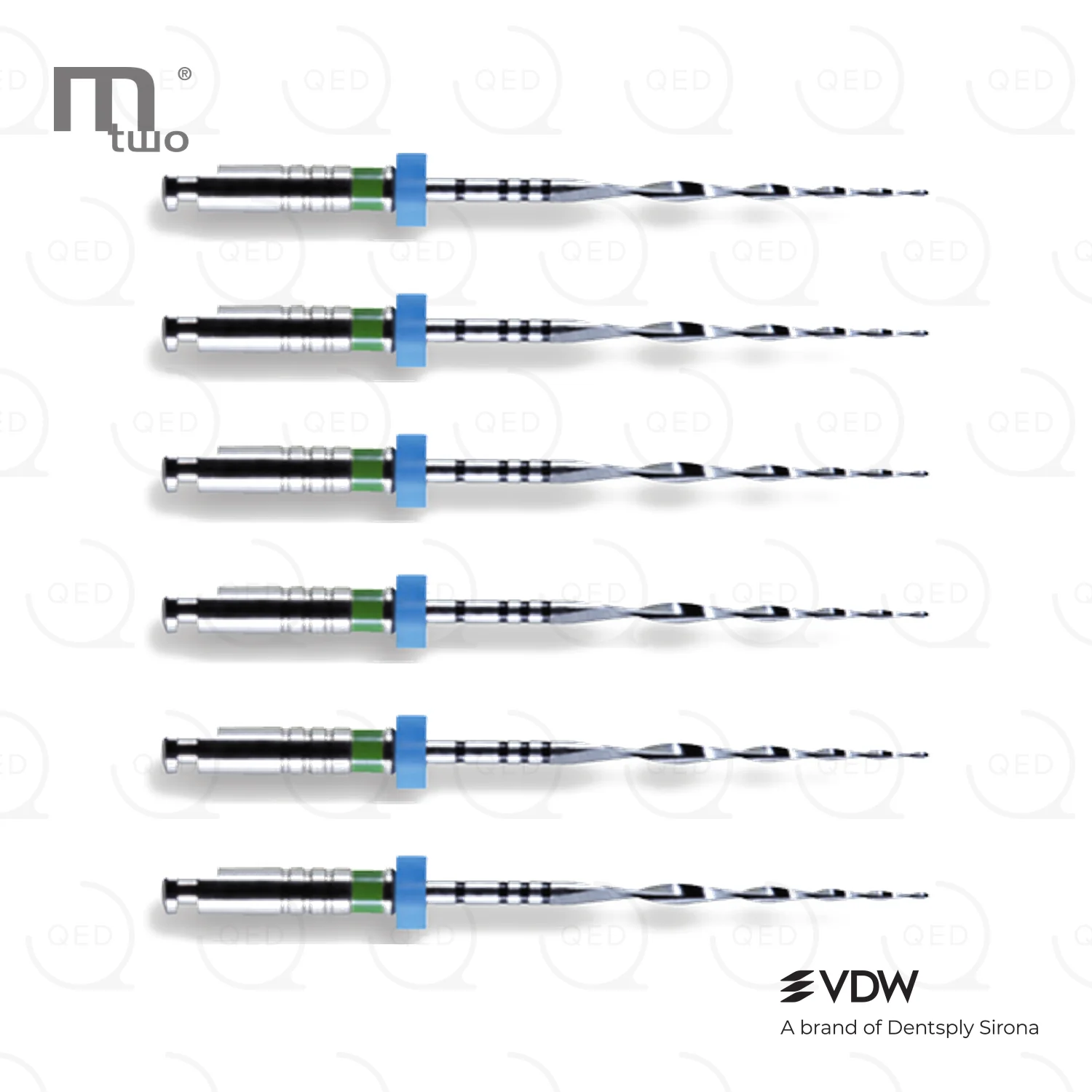
mtwo® · 40/.06 · 21 mm · wp 16 mm · 6 files
s-shaped sectionsterile blistersingle length technique
vdw’s long-standing rotary file. vdw describe an “s-shaped cross-section with two active cutting edges” and a “small instrument core for high flexibility” – the same s-section family as reciproc® blue and vdw.rotate®. every instrument is taken to full working length rather than stepping back.
this pack: vdw mtwo® rotary file, iso size 40, .06 taper, 21 mm, 16 mm working part (pack of 6)
vdw · vdw gmbh, munich, germany (dentsply sirona) · mtwo® is licensed by sweden & martina
| tip (d0) | 0.40 mm |
| taper | .06 |
| length | 21 mm |
| working part | 16 mm |
| handle | iso colour (black) |
| material | nickel titanium |
| supplied | sterile, pack of 6 |
› s-shaped section, two cutting edges. vdw’s own description, with a “small instrument core for high flexibility”.
› one sequence, one length. vdw: “single length: all instruments are brought to full working length”.
› progressive pitch. vdw describe “active cutting blades and a progressive pitch”.
› wp 16 mm. the flutes run 16 mm from the tip on a 21 mm instrument. vdw list “16 mm working part (21 or 25 mm working length)” and a 21 mm working part at 25 or 31 mm.
“superior cutting efficiency and flexibility, for an efficient root canal preparation”
vdw, vdw dental product catalogue 2023.
what does wp 16 mm mean?
the working part – how far the flutes run up from the tip. this one is 16 mm of cutting on a 21 mm instrument. a shorter working part gives you more shank, which helps in a posterior tooth with limited opening.
should i be looking at vdw.rotate instead?
it is the newer file in the same s-section family, with a heat treatment vdw say lowers the risk of breakage, plus taper rings and radiopaque calibration rings on the handle. we stock both. our suggestion for this size is below.
› the basic sequence: 10/.04 · 15/.05 · 20/.06 · 25/.06, 21 mm
› same size, other lengths: 25 mm, wp 16 mm · 31 mm, wp 21 mm
› larger anatomies: 30/.05 · 35/.04 · 40/.04 · 45/.04
› moving to vdw.rotate: vdw.rotate® 40/.06, 21 mm – the same size and taper, on heat-treated wire
› retreatment: mtwo® retreatment assorted, 21 mm
› obturation: diadent® dia-pro iso gutta-percha 40/.06 · paper points 40/.06 – the same size and taper
› motor: x-smart® pro+ with apex locator
› lubricant and irrigation: glyde™ file prep · chlorax 5.25% · irriflex® needles
mtwo® is licensed by sweden & martina. sizes, tapers and working parts are as vdw list them in the vdw dental product catalogue 2023. single use. follow the instructions supplied with the product.
mtwo® 40/.06, 21 mm, wp 16 mm (6) · nickel titanium · ref v040236021040
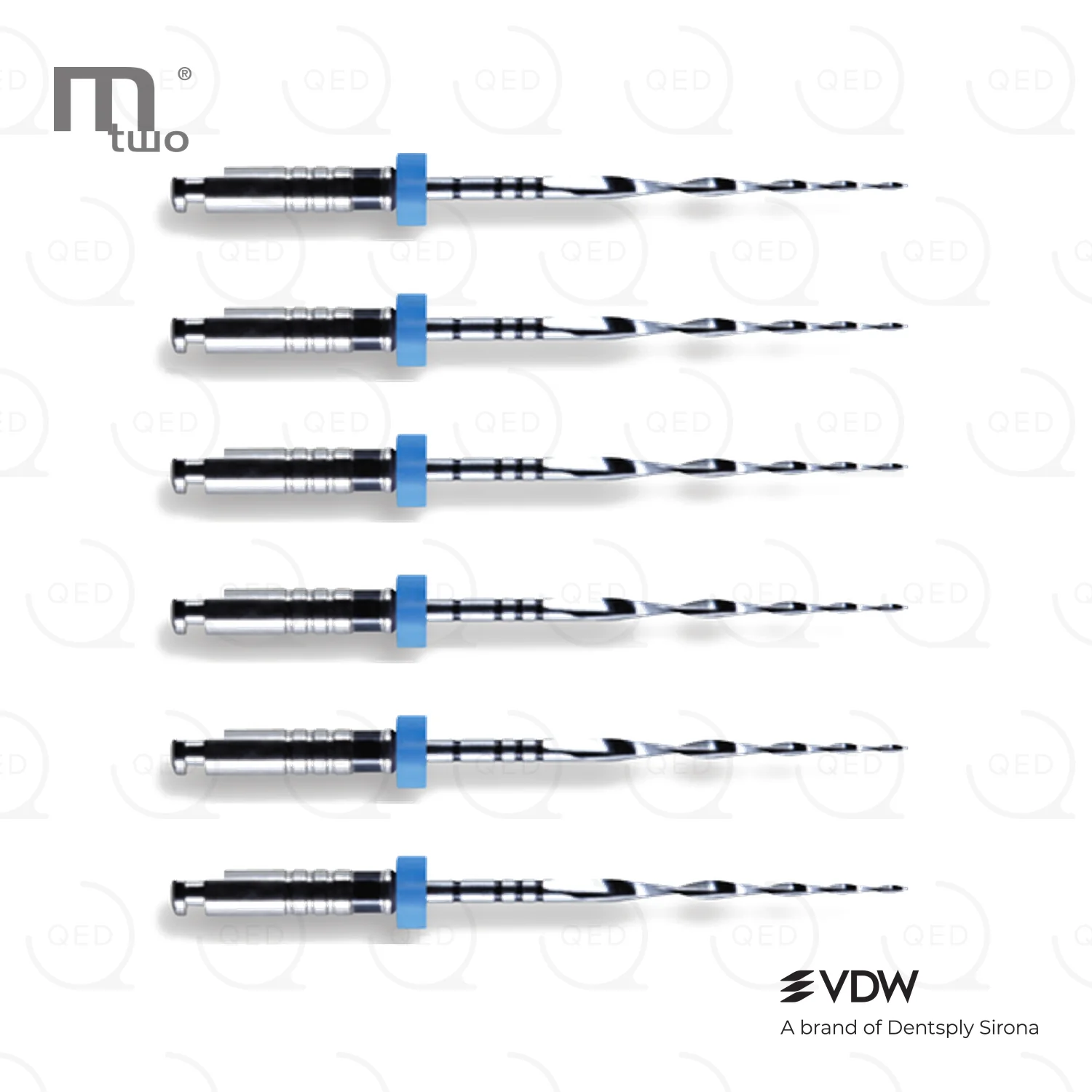
mtwo® · 20/.06 · 25 mm · wp 16 mm · 6 files
s-shaped sectionsterile blistersingle length technique
vdw’s long-standing rotary file. vdw describe an “s-shaped cross-section with two active cutting edges” and a “small instrument core for high flexibility” – the same s-section family as reciproc® blue and vdw.rotate®. every instrument is taken to full working length rather than stepping back.
this pack: vdw mtwo® rotary file, iso size 20, .06 taper, 25 mm, 16 mm working part (pack of 6)
vdw · vdw gmbh, munich, germany (dentsply sirona) · mtwo® is licensed by sweden & martina
| tip (d0) | 0.20 mm |
| taper | .06 |
| length | 25 mm |
| working part | 16 mm |
| handle | iso colour (yellow) |
| material | nickel titanium |
| supplied | sterile, pack of 6 |
› s-shaped section, two cutting edges. vdw’s own description, with a “small instrument core for high flexibility”.
› one sequence, one length. vdw: “single length: all instruments are brought to full working length”.
› progressive pitch. vdw describe “active cutting blades and a progressive pitch”.
› wp 16 mm. the flutes run 16 mm from the tip on a 25 mm instrument. vdw list “16 mm working part (21 or 25 mm working length)” and a 21 mm working part at 25 or 31 mm.
“superior cutting efficiency and flexibility, for an efficient root canal preparation”
vdw, vdw dental product catalogue 2023.
what does wp 16 mm mean?
the working part – how far the flutes run up from the tip. this one is 16 mm of cutting on a 25 mm instrument. a shorter working part gives you more shank, which helps in a posterior tooth with limited opening.
should i be looking at vdw.rotate instead?
it is the newer file in the same s-section family, with a heat treatment vdw say lowers the risk of breakage, plus taper rings and radiopaque calibration rings on the handle. we stock both. our suggestion for this size is below.
› the basic sequence: 10/.04 · 15/.05 · 25/.06, 25 mm
› same size, other lengths: 21 mm, wp 16 mm · 25 mm, wp 21 mm · 31 mm, wp 21 mm
› larger anatomies: 30/.05 · 35/.04 · 40/.04 · 45/.04
› moving to vdw.rotate: vdw.rotate® 20/.05, 25 mm – the nearest size in the newer range
› retreatment: mtwo® retreatment assorted, 21 mm
› obturation: diadent® dia-pro iso gutta-percha 20/.06 · paper points 20/.06 – the same size and taper
› motor: x-smart® pro+ with apex locator
› lubricant and irrigation: glyde™ file prep · chlorax 5.25% · irriflex® needles
mtwo® is licensed by sweden & martina. sizes, tapers and working parts are as vdw list them in the vdw dental product catalogue 2023. single use. follow the instructions supplied with the product.
mtwo® 20/.06, 25 mm, wp 16 mm (6) · nickel titanium · ref v040236025020
mtwo® · 25/.06 · 25 mm · wp 16 mm · 6 files
s-shaped sectionsterile blistersingle length technique
vdw’s long-standing rotary file. vdw describe an “s-shaped cross-section with two active cutting edges” and a “small instrument core for high flexibility” – the same s-section family as reciproc® blue and vdw.rotate®. every instrument is taken to full working length rather than stepping back.
this pack: vdw mtwo® rotary file, iso size 25, .06 taper, 25 mm, 16 mm working part (pack of 6)
vdw · vdw gmbh, munich, germany (dentsply sirona) · mtwo® is licensed by sweden & martina
| tip (d0) | 0.25 mm |
| taper | .06 |
| length | 25 mm |
| working part | 16 mm |
| handle | iso colour (red) |
| material | nickel titanium |
| supplied | sterile, pack of 6 |
› s-shaped section, two cutting edges. vdw’s own description, with a “small instrument core for high flexibility”.
› one sequence, one length. vdw: “single length: all instruments are brought to full working length”.
› progressive pitch. vdw describe “active cutting blades and a progressive pitch”.
› wp 16 mm. the flutes run 16 mm from the tip on a 25 mm instrument. vdw list “16 mm working part (21 or 25 mm working length)” and a 21 mm working part at 25 or 31 mm.
“superior cutting efficiency and flexibility, for an efficient root canal preparation”
vdw, vdw dental product catalogue 2023.
what does wp 16 mm mean?
the working part – how far the flutes run up from the tip. this one is 16 mm of cutting on a 25 mm instrument. a shorter working part gives you more shank, which helps in a posterior tooth with limited opening.
should i be looking at vdw.rotate instead?
it is the newer file in the same s-section family, with a heat treatment vdw say lowers the risk of breakage, plus taper rings and radiopaque calibration rings on the handle. we stock both. our suggestion for this size is below.
› the basic sequence: 10/.04 · 15/.05 · 20/.06, 25 mm
› same size, other lengths: 21 mm, wp 16 mm · 25 mm, wp 21 mm · 31 mm, wp 21 mm
› larger anatomies: 30/.05 · 35/.04 · 40/.04 · 45/.04
› moving to vdw.rotate: vdw.rotate® 25/.06, 25 mm – the same size and taper, on heat-treated wire
› retreatment: mtwo® retreatment assorted, 21 mm
› obturation: diadent® dia-pro iso gutta-percha 25/.06 · paper points 25/.06 – the same size and taper
› motor: x-smart® pro+ with apex locator
› lubricant and irrigation: glyde™ file prep · chlorax 5.25% · irriflex® needles
mtwo® is licensed by sweden & martina. sizes, tapers and working parts are as vdw list them in the vdw dental product catalogue 2023. single use. follow the instructions supplied with the product.
mtwo® 25/.06, 25 mm, wp 16 mm (6) · nickel titanium · ref v040236025025
mtwo® · 30/.06 · 25 mm · wp 16 mm · 6 files
s-shaped sectionsterile blistersingle length technique
vdw’s long-standing rotary file. vdw describe an “s-shaped cross-section with two active cutting edges” and a “small instrument core for high flexibility” – the same s-section family as reciproc® blue and vdw.rotate®. every instrument is taken to full working length rather than stepping back.
this pack: vdw mtwo® rotary file, iso size 30, .06 taper, 25 mm, 16 mm working part (pack of 6)
vdw · vdw gmbh, munich, germany (dentsply sirona) · mtwo® is licensed by sweden & martina
| tip (d0) | 0.30 mm |
| taper | .06 |
| length | 25 mm |
| working part | 16 mm |
| handle | iso colour (blue) |
| material | nickel titanium |
| supplied | sterile, pack of 6 |
› s-shaped section, two cutting edges. vdw’s own description, with a “small instrument core for high flexibility”.
› one sequence, one length. vdw: “single length: all instruments are brought to full working length”.
› progressive pitch. vdw describe “active cutting blades and a progressive pitch”.
› wp 16 mm. the flutes run 16 mm from the tip on a 25 mm instrument. vdw list “16 mm working part (21 or 25 mm working length)” and a 21 mm working part at 25 or 31 mm.
“superior cutting efficiency and flexibility, for an efficient root canal preparation”
vdw, vdw dental product catalogue 2023.
what does wp 16 mm mean?
the working part – how far the flutes run up from the tip. this one is 16 mm of cutting on a 25 mm instrument. a shorter working part gives you more shank, which helps in a posterior tooth with limited opening.
should i be looking at vdw.rotate instead?
it is the newer file in the same s-section family, with a heat treatment vdw say lowers the risk of breakage, plus taper rings and radiopaque calibration rings on the handle. we stock both. our suggestion for this size is below.
› the basic sequence: 10/.04 · 15/.05 · 20/.06 · 25/.06, 25 mm
› same size, other lengths: 21 mm, wp 16 mm · 31 mm, wp 21 mm
› larger anatomies: 30/.05 · 35/.04 · 40/.04 · 45/.04
› moving to vdw.rotate: vdw.rotate® 30/.06, 25 mm – the same size and taper, on heat-treated wire
› retreatment: mtwo® retreatment assorted, 21 mm
› obturation: diadent® dia-pro iso gutta-percha 30/.06 · paper points 30/.06 – the same size and taper
› motor: x-smart® pro+ with apex locator
› lubricant and irrigation: glyde™ file prep · chlorax 5.25% · irriflex® needles
mtwo® is licensed by sweden & martina. sizes, tapers and working parts are as vdw list them in the vdw dental product catalogue 2023. single use. follow the instructions supplied with the product.
mtwo® 30/.06, 25 mm, wp 16 mm (6) · nickel titanium · ref v040236025030
mtwo® · 35/.06 · 25 mm · wp 16 mm · 6 files
s-shaped sectionsterile blistersingle length technique
vdw’s long-standing rotary file. vdw describe an “s-shaped cross-section with two active cutting edges” and a “small instrument core for high flexibility” – the same s-section family as reciproc® blue and vdw.rotate®. every instrument is taken to full working length rather than stepping back.
this pack: vdw mtwo® rotary file, iso size 35, .06 taper, 25 mm, 16 mm working part (pack of 6)
vdw · vdw gmbh, munich, germany (dentsply sirona) · mtwo® is licensed by sweden & martina
| tip (d0) | 0.35 mm |
| taper | .06 |
| length | 25 mm |
| working part | 16 mm |
| handle | iso colour (green) |
| material | nickel titanium |
| supplied | sterile, pack of 6 |
› s-shaped section, two cutting edges. vdw’s own description, with a “small instrument core for high flexibility”.
› one sequence, one length. vdw: “single length: all instruments are brought to full working length”.
› progressive pitch. vdw describe “active cutting blades and a progressive pitch”.
› wp 16 mm. the flutes run 16 mm from the tip on a 25 mm instrument. vdw list “16 mm working part (21 or 25 mm working length)” and a 21 mm working part at 25 or 31 mm.
“superior cutting efficiency and flexibility, for an efficient root canal preparation”
vdw, vdw dental product catalogue 2023.
what does wp 16 mm mean?
the working part – how far the flutes run up from the tip. this one is 16 mm of cutting on a 25 mm instrument. a shorter working part gives you more shank, which helps in a posterior tooth with limited opening.
should i be looking at vdw.rotate instead?
it is the newer file in the same s-section family, with a heat treatment vdw say lowers the risk of breakage, plus taper rings and radiopaque calibration rings on the handle. we stock both. our suggestion for this size is below.
› the basic sequence: 10/.04 · 15/.05 · 20/.06 · 25/.06, 25 mm
› same size, other lengths: 21 mm, wp 16 mm · 31 mm, wp 21 mm
› larger anatomies: 30/.05 · 35/.04 · 40/.04 · 45/.04
› moving to vdw.rotate: vdw.rotate® 35/.06, 25 mm – the same size and taper, on heat-treated wire
› retreatment: mtwo® retreatment assorted, 21 mm
› obturation: diadent® dia-pro iso gutta-percha 35/.06 · paper points 35/.06 – the same size and taper
› motor: x-smart® pro+ with apex locator
› lubricant and irrigation: glyde™ file prep · chlorax 5.25% · irriflex® needles
mtwo® is licensed by sweden & martina. sizes, tapers and working parts are as vdw list them in the vdw dental product catalogue 2023. single use. follow the instructions supplied with the product.
mtwo® 35/.06, 25 mm, wp 16 mm (6) · nickel titanium · ref v040236025035
mtwo® · 40/.06 · 25 mm · wp 16 mm · 6 files
s-shaped sectionsterile blistersingle length technique
vdw’s long-standing rotary file. vdw describe an “s-shaped cross-section with two active cutting edges” and a “small instrument core for high flexibility” – the same s-section family as reciproc® blue and vdw.rotate®. every instrument is taken to full working length rather than stepping back.
this pack: vdw mtwo® rotary file, iso size 40, .06 taper, 25 mm, 16 mm working part (pack of 6)
vdw · vdw gmbh, munich, germany (dentsply sirona) · mtwo® is licensed by sweden & martina
| tip (d0) | 0.40 mm |
| taper | .06 |
| length | 25 mm |
| working part | 16 mm |
| handle | iso colour (black) |
| material | nickel titanium |
| supplied | sterile, pack of 6 |
› s-shaped section, two cutting edges. vdw’s own description, with a “small instrument core for high flexibility”.
› one sequence, one length. vdw: “single length: all instruments are brought to full working length”.
› progressive pitch. vdw describe “active cutting blades and a progressive pitch”.
› wp 16 mm. the flutes run 16 mm from the tip on a 25 mm instrument. vdw list “16 mm working part (21 or 25 mm working length)” and a 21 mm working part at 25 or 31 mm.
“superior cutting efficiency and flexibility, for an efficient root canal preparation”
vdw, vdw dental product catalogue 2023.
what does wp 16 mm mean?
the working part – how far the flutes run up from the tip. this one is 16 mm of cutting on a 25 mm instrument. a shorter working part gives you more shank, which helps in a posterior tooth with limited opening.
should i be looking at vdw.rotate instead?
it is the newer file in the same s-section family, with a heat treatment vdw say lowers the risk of breakage, plus taper rings and radiopaque calibration rings on the handle. we stock both. our suggestion for this size is below.
› the basic sequence: 10/.04 · 15/.05 · 20/.06 · 25/.06, 25 mm
› same size, other lengths: 21 mm, wp 16 mm · 31 mm, wp 21 mm
› larger anatomies: 30/.05 · 35/.04 · 40/.04 · 45/.04
› moving to vdw.rotate: vdw.rotate® 40/.06, 25 mm – the same size and taper, on heat-treated wire
› retreatment: mtwo® retreatment assorted, 21 mm
› obturation: diadent® dia-pro iso gutta-percha 40/.06 · paper points 40/.06 – the same size and taper
› motor: x-smart® pro+ with apex locator
› lubricant and irrigation: glyde™ file prep · chlorax 5.25% · irriflex® needles
mtwo® is licensed by sweden & martina. sizes, tapers and working parts are as vdw list them in the vdw dental product catalogue 2023. single use. follow the instructions supplied with the product.
mtwo® 40/.06, 25 mm, wp 16 mm (6) · nickel titanium · ref v040236025040
mtwo® · 25/.07 · 21 mm · wp 16 mm · 6 files
s-shaped sectionsterile blistersingle length technique
vdw’s long-standing rotary file. vdw describe an “s-shaped cross-section with two active cutting edges” and a “small instrument core for high flexibility” – the same s-section family as reciproc® blue and vdw.rotate®. every instrument is taken to full working length rather than stepping back.
this pack: vdw mtwo® rotary file, iso size 25, .07 taper, 21 mm, 16 mm working part (pack of 6)
vdw · vdw gmbh, munich, germany (dentsply sirona) · mtwo® is licensed by sweden & martina
| tip (d0) | 0.25 mm |
| taper | .07 |
| length | 21 mm |
| working part | 16 mm |
| handle | iso colour (red) |
| material | nickel titanium |
| supplied | sterile, pack of 6 |
› s-shaped section, two cutting edges. vdw’s own description, with a “small instrument core for high flexibility”.
› one sequence, one length. vdw: “single length: all instruments are brought to full working length”.
› progressive pitch. vdw describe “active cutting blades and a progressive pitch”.
› wp 16 mm. the flutes run 16 mm from the tip on a 21 mm instrument. vdw list “16 mm working part (21 or 25 mm working length)” and a 21 mm working part at 25 or 31 mm.
“superior cutting efficiency and flexibility, for an efficient root canal preparation”
vdw, vdw dental product catalogue 2023.
what does wp 16 mm mean?
the working part – how far the flutes run up from the tip. this one is 16 mm of cutting on a 21 mm instrument. a shorter working part gives you more shank, which helps in a posterior tooth with limited opening.
should i be looking at vdw.rotate instead?
it is the newer file in the same s-section family, with a heat treatment vdw say lowers the risk of breakage, plus taper rings and radiopaque calibration rings on the handle. we stock both. our suggestion for this size is below.
› the basic sequence: 10/.04 · 15/.05 · 20/.06 · 25/.06, 21 mm
› same size, other lengths: 25 mm, wp 16 mm · 31 mm, wp 21 mm
› larger anatomies: 30/.05 · 35/.04 · 40/.04 · 45/.04
› moving to vdw.rotate: vdw.rotate® 25/.06, 21 mm – the nearest size in the newer range
› retreatment: mtwo® retreatment assorted, 21 mm
› obturation: dia-pro iso is made in .04 and .06 only, so there is no matched cone for a .07 preparation. fit from the .04 assorted pack or the standard ml.029™ .02 range.
› motor: x-smart® pro+ with apex locator
› lubricant and irrigation: glyde™ file prep · chlorax 5.25% · irriflex® needles
mtwo® is licensed by sweden & martina. sizes, tapers and working parts are as vdw list them in the vdw dental product catalogue 2023. single use. follow the instructions supplied with the product.
mtwo® 25/.07, 21 mm, wp 16 mm (6) · nickel titanium · ref v040237021025

mtwo® · 25/.07 · 25 mm · wp 16 mm · 6 files
s-shaped sectionsterile blistersingle length technique
vdw’s long-standing rotary file. vdw describe an “s-shaped cross-section with two active cutting edges” and a “small instrument core for high flexibility” – the same s-section family as reciproc® blue and vdw.rotate®. every instrument is taken to full working length rather than stepping back.
this pack: vdw mtwo® rotary file, iso size 25, .07 taper, 25 mm, 16 mm working part (pack of 6)
vdw · vdw gmbh, munich, germany (dentsply sirona) · mtwo® is licensed by sweden & martina
| tip (d0) | 0.25 mm |
| taper | .07 |
| length | 25 mm |
| working part | 16 mm |
| handle | iso colour (red) |
| material | nickel titanium |
| supplied | sterile, pack of 6 |
› s-shaped section, two cutting edges. vdw’s own description, with a “small instrument core for high flexibility”.
› one sequence, one length. vdw: “single length: all instruments are brought to full working length”.
› progressive pitch. vdw describe “active cutting blades and a progressive pitch”.
› wp 16 mm. the flutes run 16 mm from the tip on a 25 mm instrument. vdw list “16 mm working part (21 or 25 mm working length)” and a 21 mm working part at 25 or 31 mm.
“superior cutting efficiency and flexibility, for an efficient root canal preparation”
vdw, vdw dental product catalogue 2023.
what does wp 16 mm mean?
the working part – how far the flutes run up from the tip. this one is 16 mm of cutting on a 25 mm instrument. a shorter working part gives you more shank, which helps in a posterior tooth with limited opening.
should i be looking at vdw.rotate instead?
it is the newer file in the same s-section family, with a heat treatment vdw say lowers the risk of breakage, plus taper rings and radiopaque calibration rings on the handle. we stock both. our suggestion for this size is below.
› the basic sequence: 10/.04 · 15/.05 · 20/.06 · 25/.06, 25 mm
› same size, other lengths: 21 mm, wp 16 mm · 31 mm, wp 21 mm
› larger anatomies: 30/.05 · 35/.04 · 40/.04 · 45/.04
› moving to vdw.rotate: vdw.rotate® 25/.06, 25 mm – the nearest size in the newer range
› retreatment: mtwo® retreatment assorted, 21 mm
› obturation: dia-pro iso is made in .04 and .06 only, so there is no matched cone for a .07 preparation. fit from the .04 assorted pack or the standard ml.029™ .02 range.
› motor: x-smart® pro+ with apex locator
› lubricant and irrigation: glyde™ file prep · chlorax 5.25% · irriflex® needles
mtwo® is licensed by sweden & martina. sizes, tapers and working parts are as vdw list them in the vdw dental product catalogue 2023. single use. follow the instructions supplied with the product.
mtwo® 25/.07, 25 mm, wp 16 mm (6) · nickel titanium · ref v040237025025
reciproc® blue r25 · 25 mm · 6 files
single filecurvaturemolarsretreatmentsterile, single use
still stepping through a sequence, and reprocessing what is left of it? reciproc® blue prepares the whole canal with one reciprocating instrument, and in the majority of canals with no initial glide path. r25 is where vdw's own size-selection protocol lands most often – an iso 25 tip on a .08v taper, 8% apically and regressing coronally – and 25 mm is the length most cases call for.
| +40% flexibility, vdw test | 1 file per molar | 66% fewer retreatments |
this pack: 6 × reciproc® blue r25, 25 mm · radiopaque rings at 18/19/20/22 mm · sterile blisters, single use – one molar per file, per vdw
made by vdw, germany – genuine reciproc®
the colour is not a coating – it is the visible result of a thermomechanical treatment of the niti itself, and it changes how the instrument behaves. dentsply sirona put it at 40% more flexible than the original reciproc®, better centred in the canal and more resistant to cyclic fatigue (vdw laboratory test 16-ho-003 to iso 3630-1, instruments made at the upper dimensional limit to simulate the worst case). de-deus et al. examined the same thermal treatment independently in the journal of endodontics, 2017.
| iso 25/.08v | 0.25 mm tip, 8% taper apically, regressing coronally – apical shaping where the case needs it, coronal dentine left alone |
| blue niti | heat-treated for flexibility and fatigue resistance – and it can be slightly pre-curved, to a maximum of 10°, for easier access to an awkward orifice. that is what the directions sanction it for: orifice access, not apical negotiation |
| s-shaped core | two cutting edges and a non-cutting tip on a short shaft – it follows the canal rather than cutting its own path, and reaches second molars |
vdw settle it before you start, from the radiograph and, where the canal is visible, one hand file. passively has a definition: the instrument travels directly to working length without watch-winding, and moves up and down 4–5 mm without any filing action.
| r25 | canal partly or completely invisible on the radiograph – or visible, but an iso 20 will not go passively |
| r40 | an iso 20 goes passively to working length, an iso 30 does not |
| r50 | an iso 30 hand instrument reaches working length passively |
in most cases, the r25 will be suitable.
— vdw, reciproc® blue directions for use (vw000394), summarising its own size-selection protocol.
1 check the canal is free with an iso 10 hand instrument – the directions name vdw's own c-pilot® 010 in 25 mm.
2 irrigate, throughout. the directions have you irrigate and clean the flutes between passes: a single-file system shortens the mechanical part of the case, not the chemical one. sodium hypochlorite in 5.25% or 2%, to your own protocol.
3 shape on the reciproc® setting in slow in-and-out pecking movements, no more than three pecks at a time, cleaning the flutes and re-irrigating between every pass. the radiopaque rings at 18/19/20/22 mm give length reference on the radiograph.
4 gauge the apex with a hand instrument one iso size larger than the file that reached length: light tug-back 0.7 mm short and no further means no more enlargement is needed. if it reaches full length, finish with r40 or r50.
5 dry, then obturate. matched paper points r25, then the matched gutta percha cone carried to length with sealer. the cone mirrors the file's variable taper – vdw put it at up to 40% more dimensionally stable than hand-rolled – so the taper you cut is the taper you fill.
6 seal it coronally. the apical seal is only half the job – sdr® flow+ places a 4 mm bulk increment straight over the orifices in a single cure.
and the glide path? no initial scouting or glide path in the majority of canals – that is the reciproc® concept and the manufacturer's own protocol. the directions still have you confirm the canal is free with an iso 010 hand file, and if the instrument stops progressing you withdraw it and create a glide path up to iso 15 rather than forcing it. "usually unnecessary" and "never necessary" are different claims, and only the first one is ours to make.
a single-file canal is only as good as what goes into it, and this is where we reach for neosealer® ezflo. premixed bioceramic – nothing to mix or time on the bench – with around 35 minutes of working time, 5.5 mm al radiopacity, and delivery through 29 gauge navitip™ cannulas. the gauge is the point: a bore that fine places sealer in the apical third rather than wiping it down the coronal walls, and the 25 mm tips match this file's length. twenty tips per pack. prefer a wider bore? neosealer® flo is the same avalon biomed chemistry in the familiar kit.
staying with a resin sealer? ah plus® is still the epoxy sealer every other one is measured against, and it is dentsply sirona's own – the brand-matched choice for a dentsply or vdw file, and the obvious answer if your protocol is already built around it. the ah plus jet® system delivers the same chemistry from an auto-mixing syringe. vdw's own 2seal® is the other epoxy-amine we stock. resin or bioceramic is a real choice of technique rather than a ranking – we carry both because both are right in different hands.
r25 is vdw's retreatment instrument as well as their shaping one, and the protocol sits in the same directions. remove the coronal bulk of the old filling first, with a gates glidden or ultrasonically, and soften what remains with a solvent if it is stubborn. then take r25 to working length – where it meets resistance, withdraw and reapply solvent rather than pushing through – with a brushing motion against the lateral walls, and r40 or r50 after it if the apical third needs enlarging. a carrier-based filling sometimes comes out in one piece.
there is a test for it, and it is quick. if the hand file used for working length still has to be pre-curved after a glide path to iso 15 has been created, there is an abrupt apical curvature, and the canal should be finished with hand files rather than a reciprocating instrument – a pre-curved c-pilot® 015 is the remedy the directions point to. vdw add the sentence that puts it in proportion: this limitation also applies to continuous rotary instruments. otherwise contraindications and warnings alike are recorded as none known. one more piece of candour: the files may look slightly curved in the blister, and vdw note that this is not a manufacturing defect.
most single-file marketing rests on bench data. this system has better. elmaasarawi, mekhemar and bartols at kiel followed 14,233 endodontically treated teeth for 5 to 10 years and published in the international endodontic journal in june 2025: survival without further intervention 30–40% higher under the reciproc® protocol than with hand k-files or multi-file rotary, non-surgical retreatment 66% lower, extractions 21% lower. it is a retrospective single-centre cohort, statistically adjusted, and the authors say only that the result "might be attributed to" the system – but it answers the question a clinician actually has, which is whether the tooth lasts. dentsply sirona now cite those figures themselves, alongside a count of more than 650 peer-reviewed papers on the reciproc® family.
the fracture of the original reciproc is not an issue considering that its fracture rate is very low (0.2%).
— ghassan yared, who developed reciprocating single-file preparation. blue is the more fatigue-resistant of the two alloys.
a rotary sequence spends three to six instruments per case, plus reprocessing. this spends one sterile file per molar – the unit the directions set – so a two-molar appointment is two files, one per canal in extreme curvature. the cost is known in advance and the sterilisation load drops.
what motor do i need?
a drive system carrying the original vdw reciproc® or reciproc® all settings – reciprocating motors without them can lead to misuse. we stock the vdw.silver® reciproc® with 6:1 contra-angle, built for this system, and the x-smart® pro+ with an integrated apex locator. the cordless x-smart® go carries a reciproc® programme too.
how does this compare with reciproc® minima?
same tip diameter on the r25, different intent. blue is the workhorse for regular anatomy, wider canals and retreatment; minima r25 runs a slimmer body for narrow and strongly curved canals where preserving pericervical dentine is the priority. companions, not replacements.
| check patency | c-pilot® 010 · 008, 25 mm |
| drive it | a motor with original reciproc® settings: vdw.silver® · x-smart® pro+ · x-smart® go |
| wider canals | r40 25 mm for medium · r50 25 mm for wide |
| other lengths | r25 in 21 mm for short roots · r25 in 31 mm for long ones |
| irrigants | sodium hypochlorite 5.25% or 2% · 17% edta · 40% citric acid · 2% chx |
| delivery | irriflex® 30g flexible needles · navitip™ 29 ga, 25 mm |
| activation | vdw's eddy® tips · or the smartlite pro endoactivator® |
| dry and fill | paper points r25 · gutta percha r25 · or assorted boxes covering all three sizes: points, cones |
| seal | bioceramic neosealer® ezflo with 29 ga 25 mm tips, or neosealer® flo · resin ah plus® or 2seal® |
| coronal seal | sdr® flow+ universal · 4 mm bulk increment over the orifices |
| narrow anatomy | reciproc® minima r25 · same tip diameter, slimmer body |
| buying in | system kit, every size with matched fill · or the blue and sdr® flow+ kit |
reciproc® blue r25 · reciprocating single-file system · iso 25/.08v – 8% apical taper, regressing coronally · blue heat-treated niti, pre-curvable to 10° · s-shaped cross-section, non-cutting tip · radiopaque rings 18/19/20/22 mm · shaping and retreatment · 6 sterile files, 25 mm · vdw, germany · ref v040252025025 · also in 21 mm and 31 mm

reciproc® system kit · 12 files · 25 mm
trying single-file endodontics usually means assembling six separate orders and hoping you picked the right sizes. this is the alternative: every instrument the system uses, the matched cones and points to fill what they cut, and a training model to learn the pecking motion on before it meets a patient. it is the order to place when the answer to "should we try reciproc®?" is "probably".
this kit: 12 sterile files at 25 mm – a blister of 6 × r25 and a blister of 3 × r40 with 3 × r50 · assorted reciproc® gutta-percha · assorted reciproc® paper points · training model · user card, brochure and directions for use
made by vdw, munich – genuine reciproc®
| one file per canal | the whole preparation with a single reciprocating instrument, and no initial hand filing in the majority of cases – the manufacturer's own qualifier, unchanged since 2011 |
| weighted 6 : 3 : 3 | six r25 because most canals take one, three r40 and three r50 for the wider ones and the apical enlargements |
| matched fill included | assorted cones and points, each corresponding to its instrument, so the first case is done in system from access to obturation |
| practise first | the training model lets you feel the three-peck cycle and the light pressure before it matters |
› the size is chosen, not stepped through. from the radiograph and one passive hand file – and in most cases it is r25.
› faster, and published. bürklein and colleagues (international endodontic journal, 2012) found preparation up to 60% faster than multiple-file systems, 73.1 seconds against 185.2, while maintaining the original canal curvature.
› sterile, single use, one molar per file. nothing to reprocess, and the plastic band on the shaft deforms in the autoclave so the decision is made for you.
what else do i need?
a drive system carrying the original vdw reciproc® settings, and a hand file for patency. we stock the vdw.silver® reciproc® with 6:1 contra-angle – the motor this system launched with – and the x-smart® pro+ with an integrated apex locator. the cordless x-smart® go carries a reciproc® programme too.
is this everything for a first case?
everything reciproc® makes, yes. you will still need your own irrigants, a sealer and a coronal restorative – all linked below.
and when the kit runs out?
every component is sold separately, in the same weighting: r25 six to a blister, the assorted blister of three r40 and three r50, and the assorted cones and points.
| patency, and the flutes | c-pilot® 010 and 008 in 25 mm · interim stand for cleaning between passes |
| irrigate | hypochlorite 5.25% or 2% · 17% edta · through irriflex® 30g or navitip™ 25 mm |
| seal | bioceramic neosealer® ezflo with 29 ga 25 mm tips · resin ah plus® or vdw's 2seal® |
| coronal seal | sdr® flow+ universal · 4 mm bulk increment over the orifices in one cure |
| more practice | vdw training teeth · upper right first molar, five per pack |
reciproc® system kit · 12 sterile files at 25 mm – 6 × r25, 3 × r40, 3 × r50 · assorted gutta-percha and paper points · training model · user card, brochure and directions for use · m-wire® niti, s-shaped cross-section, non-cutting tip, 11 mm shaft · single use, one molar per file · requires a motor with original reciproc® settings · vdw, munich · ref v041211025000
reciproc® blue system kit · the complete start
thinking about switching to one-file endo? this is how you start. the system kit holds everything a reciproc® blue case needs, coordinated to the three file sizes: twenty-four sterile files weighted to a real caseload, matched gutta percha and paper points for the fill, and an endo training tooth to practise the reciprocating technique before your first patient.
this kit: 24 files, 25 mm – 12 × r25, 6 × r40, 6 × r50 (sterile blisters) · reciproc® blue gutta-percha assorted · reciproc® blue paper points assorted, sterile · endo training tooth
made by vdw, germany – genuine reciproc®
| one file. done. | complete canal preparation with a single instrument – no glide path needed in the majority of cases (vdw) |
| 24 files, 3 sizes | weighted like real dentistry: 12 × r25 for most canals, 6 × r40 for medium, 6 × r50 for wide |
| +40% flexibility | blue heat treatment vs original reciproc® – better centring, pre-bendable, higher cyclic-fatigue resistance (vdw) |
| practice first | the included endo training tooth lets you feel the reciprocating technique before it meets a patient |
› shape and fill, matched – the assorted gutta percha and paper points mirror the file geometries, so the first case is done in system from access to obturation.
› runs on reciproc all – vdw.silver®, vdw.gold®, x-smart® pro+, x-smart® go and compatible motors.
› easy to learn – vdw positions the system as easier to learn and teach than rotary sequences, with less likelihood of procedural errors.
is this the right way to try reciproc® blue?
yes – it's the purpose-built entry: every size, the matched fill, and a tooth to practise on, in one order. when you've settled in, each component is available separately: files, gutta percha and paper points.
what else do i need?
just a motor with the "reciproc all" reciprocation programme – if you run a vdw or x-smart® motor, you already have it.
do i need a glide path first?
in the majority of cases, no – that's the reciproc® concept. where a canal can't be negotiated, a conventional glide path can still be established first.
reciproc® blue system kit 24 · 12 × r25 + 6 × r40 + 6 × r50, 25 mm · assorted gp & paper points · endo training tooth · blue heat-treated niti · sterile, single-use files · vdw · all components also sold separately

mtwo® · 10/.04 · 25 mm · wp 21 mm · 6 files
s-shaped sectionsterile blistersingle length technique
vdw’s long-standing rotary file. vdw describe an “s-shaped cross-section with two active cutting edges” and a “small instrument core for high flexibility” – the same s-section family as reciproc® blue and vdw.rotate®. every instrument is taken to full working length rather than stepping back.
this pack: vdw mtwo® rotary file, iso size 10, .04 taper, 25 mm, 21 mm working part (pack of 6)
vdw · vdw gmbh, munich, germany (dentsply sirona) · mtwo® is licensed by sweden & martina
| tip (d0) | 0.10 mm |
| taper | .04 |
| length | 25 mm |
| working part | 21 mm |
| handle | iso colour (purple) |
| material | nickel titanium |
| supplied | sterile, pack of 6 |
› s-shaped section, two cutting edges. vdw’s own description, with a “small instrument core for high flexibility”.
› one sequence, one length. vdw: “single length: all instruments are brought to full working length”.
› progressive pitch. vdw describe “active cutting blades and a progressive pitch”.
› wp 21 mm. the flutes run 21 mm from the tip on a 25 mm instrument. vdw list “16 mm working part (21 or 25 mm working length)” and a 21 mm working part at 25 or 31 mm.
“superior cutting efficiency and flexibility, for an efficient root canal preparation”
vdw, vdw dental product catalogue 2023.
what does wp 21 mm mean?
the working part – how far the flutes run up from the tip. this one is 21 mm of cutting on a 25 mm instrument. a shorter working part gives you more shank, which helps in a posterior tooth with limited opening.
should i be looking at vdw.rotate instead?
it is the newer file in the same s-section family, with a heat treatment vdw say lowers the risk of breakage, plus taper rings and radiopaque calibration rings on the handle. we stock both. our suggestion for this size is below.
› the basic sequence: 15/.05 · 20/.06 · 25/.06, 25 mm
› same size, other lengths: 21 mm, wp 16 mm · 25 mm, wp 16 mm · 31 mm, wp 21 mm
› moving to vdw.rotate: vdw.rotate® 15/.04, 25 mm – the nearest size in the newer range
› retreatment: mtwo® retreatment assorted, 21 mm
› obturation: the dia-pro .04 range stops at 45, so there is no matched cone at 10/.04. fit from 45/.04.
› motor: x-smart® pro+ with apex locator
› lubricant and irrigation: glyde™ file prep · chlorax 5.25% · irriflex® needles
mtwo® is licensed by sweden & martina. sizes, tapers and working parts are as vdw list them in the vdw dental product catalogue 2023. single use. follow the instructions supplied with the product.
mtwo® 10/.04, 25 mm, wp 21 mm (6) · nickel titanium · ref v041234025010
mtwo® · 10/.04 · 31 mm · wp 21 mm · 6 files
s-shaped sectionsterile blistersingle length technique
vdw’s long-standing rotary file. vdw describe an “s-shaped cross-section with two active cutting edges” and a “small instrument core for high flexibility” – the same s-section family as reciproc® blue and vdw.rotate®. every instrument is taken to full working length rather than stepping back.
this pack: vdw mtwo® rotary file, iso size 10, .04 taper, 31 mm, 21 mm working part (pack of 6)
vdw · vdw gmbh, munich, germany (dentsply sirona) · mtwo® is licensed by sweden & martina
| tip (d0) | 0.10 mm |
| taper | .04 |
| length | 31 mm |
| working part | 21 mm |
| handle | iso colour (purple) |
| material | nickel titanium |
| supplied | sterile, pack of 6 |
› s-shaped section, two cutting edges. vdw’s own description, with a “small instrument core for high flexibility”.
› one sequence, one length. vdw: “single length: all instruments are brought to full working length”.
› progressive pitch. vdw describe “active cutting blades and a progressive pitch”.
› wp 21 mm. the flutes run 21 mm from the tip on a 31 mm instrument. vdw list “16 mm working part (21 or 25 mm working length)” and a 21 mm working part at 25 or 31 mm.
“superior cutting efficiency and flexibility, for an efficient root canal preparation”
vdw, vdw dental product catalogue 2023.
what does wp 21 mm mean?
the working part – how far the flutes run up from the tip. this one is 21 mm of cutting on a 31 mm instrument. a shorter working part gives you more shank, which helps in a posterior tooth with limited opening.
should i be looking at vdw.rotate instead?
it is the newer file in the same s-section family, with a heat treatment vdw say lowers the risk of breakage, plus taper rings and radiopaque calibration rings on the handle. we stock both. our suggestion for this size is below.
› the basic sequence: 15/.05 · 20/.06 · 25/.06, 31 mm
› same size, other lengths: 21 mm, wp 16 mm · 25 mm, wp 16 mm · 25 mm, wp 21 mm
› larger anatomies: 30/.05 · 35/.04 · 40/.04 · 45/.04
› moving to vdw.rotate: vdw.rotate® 15/.04, 31 mm – the nearest size in the newer range
› retreatment: mtwo® retreatment assorted, 21 mm
› obturation: the dia-pro .04 range stops at 45, so there is no matched cone at 10/.04. fit from 45/.04.
› motor: x-smart® pro+ with apex locator
› lubricant and irrigation: glyde™ file prep · chlorax 5.25% · irriflex® needles
mtwo® is licensed by sweden & martina. sizes, tapers and working parts are as vdw list them in the vdw dental product catalogue 2023. single use. follow the instructions supplied with the product.
mtwo® 10/.04, 31 mm, wp 21 mm (6) · nickel titanium · ref v041234031010
mtwo® · 35/.04 · 31 mm · wp 21 mm · 6 files
s-shaped sectionsterile blistersingle length technique
vdw’s long-standing rotary file. vdw describe an “s-shaped cross-section with two active cutting edges” and a “small instrument core for high flexibility” – the same s-section family as reciproc® blue and vdw.rotate®. every instrument is taken to full working length rather than stepping back.
this pack: vdw mtwo® rotary file, iso size 35, .04 taper, 31 mm, 21 mm working part (pack of 6)
vdw · vdw gmbh, munich, germany (dentsply sirona) · mtwo® is licensed by sweden & martina
| tip (d0) | 0.35 mm |
| taper | .04 |
| length | 31 mm |
| working part | 21 mm |
| handle | iso colour (green) |
| material | nickel titanium |
| supplied | sterile, pack of 6 |
› s-shaped section, two cutting edges. vdw’s own description, with a “small instrument core for high flexibility”.
› one sequence, one length. vdw: “single length: all instruments are brought to full working length”.
› progressive pitch. vdw describe “active cutting blades and a progressive pitch”.
› wp 21 mm. the flutes run 21 mm from the tip on a 31 mm instrument. vdw list “16 mm working part (21 or 25 mm working length)” and a 21 mm working part at 25 or 31 mm.
“superior cutting efficiency and flexibility, for an efficient root canal preparation”
vdw, vdw dental product catalogue 2023.
what does wp 21 mm mean?
the working part – how far the flutes run up from the tip. this one is 21 mm of cutting on a 31 mm instrument. a shorter working part gives you more shank, which helps in a posterior tooth with limited opening.
should i be looking at vdw.rotate instead?
it is the newer file in the same s-section family, with a heat treatment vdw say lowers the risk of breakage, plus taper rings and radiopaque calibration rings on the handle. we stock both. our suggestion for this size is below.
› the basic sequence: 10/.04 · 15/.05 · 20/.06 · 25/.06, 31 mm
› same size, other lengths: 21 mm, wp 16 mm · 25 mm, wp 16 mm
› larger anatomies: 30/.05 · 40/.04 · 45/.04 · 50/.04
› moving to vdw.rotate: vdw.rotate® 35/.04, 31 mm – the same size and taper, on heat-treated wire
› retreatment: mtwo® retreatment assorted, 21 mm
› obturation: diadent® dia-pro iso gutta-percha 35/.04 · paper points 35/.04 – the same size and taper
› motor: x-smart® pro+ with apex locator
› lubricant and irrigation: glyde™ file prep · chlorax 5.25% · irriflex® needles
mtwo® is licensed by sweden & martina. sizes, tapers and working parts are as vdw list them in the vdw dental product catalogue 2023. single use. follow the instructions supplied with the product.
mtwo® 35/.04, 31 mm, wp 21 mm (6) · nickel titanium · ref v041234031035

mtwo® · 40/.04 · 31 mm · wp 21 mm · 6 files
s-shaped sectionsterile blistersingle length technique
vdw’s long-standing rotary file. vdw describe an “s-shaped cross-section with two active cutting edges” and a “small instrument core for high flexibility” – the same s-section family as reciproc® blue and vdw.rotate®. every instrument is taken to full working length rather than stepping back.
this pack: vdw mtwo® rotary file, iso size 40, .04 taper, 31 mm, 21 mm working part (pack of 6)
vdw · vdw gmbh, munich, germany (dentsply sirona) · mtwo® is licensed by sweden & martina
| tip (d0) | 0.40 mm |
| taper | .04 |
| length | 31 mm |
| working part | 21 mm |
| handle | iso colour (black) |
| material | nickel titanium |
| supplied | sterile, pack of 6 |
› s-shaped section, two cutting edges. vdw’s own description, with a “small instrument core for high flexibility”.
› one sequence, one length. vdw: “single length: all instruments are brought to full working length”.
› progressive pitch. vdw describe “active cutting blades and a progressive pitch”.
› wp 21 mm. the flutes run 21 mm from the tip on a 31 mm instrument. vdw list “16 mm working part (21 or 25 mm working length)” and a 21 mm working part at 25 or 31 mm.
“superior cutting efficiency and flexibility, for an efficient root canal preparation”
vdw, vdw dental product catalogue 2023.
what does wp 21 mm mean?
the working part – how far the flutes run up from the tip. this one is 21 mm of cutting on a 31 mm instrument. a shorter working part gives you more shank, which helps in a posterior tooth with limited opening.
should i be looking at vdw.rotate instead?
it is the newer file in the same s-section family, with a heat treatment vdw say lowers the risk of breakage, plus taper rings and radiopaque calibration rings on the handle. we stock both. our suggestion for this size is below.
› the basic sequence: 10/.04 · 15/.05 · 20/.06 · 25/.06, 31 mm
› same size, other lengths: 21 mm, wp 16 mm · 25 mm, wp 16 mm
› larger anatomies: 30/.05 · 35/.04 · 45/.04 · 50/.04
› moving to vdw.rotate: vdw.rotate® 40/.04, 31 mm – the same size and taper, on heat-treated wire
› retreatment: mtwo® retreatment assorted, 21 mm
› obturation: diadent® dia-pro iso gutta-percha 40/.04 · paper points 40/.04 – the same size and taper
› motor: x-smart® pro+ with apex locator
› lubricant and irrigation: glyde™ file prep · chlorax 5.25% · irriflex® needles
mtwo® is licensed by sweden & martina. sizes, tapers and working parts are as vdw list them in the vdw dental product catalogue 2023. single use. follow the instructions supplied with the product.
mtwo® 40/.04, 31 mm, wp 21 mm (6) · nickel titanium · ref v041234031040
mtwo® · 45/.04 · 31 mm · wp 21 mm · 6 files
s-shaped sectionsterile blistersingle length technique
vdw’s long-standing rotary file. vdw describe an “s-shaped cross-section with two active cutting edges” and a “small instrument core for high flexibility” – the same s-section family as reciproc® blue and vdw.rotate®. every instrument is taken to full working length rather than stepping back.
this pack: vdw mtwo® rotary file, iso size 45, .04 taper, 31 mm, 21 mm working part (pack of 6)
vdw · vdw gmbh, munich, germany (dentsply sirona) · mtwo® is licensed by sweden & martina
| tip (d0) | 0.45 mm |
| taper | .04 |
| length | 31 mm |
| working part | 21 mm |
| handle | iso colour (white) |
| material | nickel titanium |
| supplied | sterile, pack of 6 |
› s-shaped section, two cutting edges. vdw’s own description, with a “small instrument core for high flexibility”.
› one sequence, one length. vdw: “single length: all instruments are brought to full working length”.
› progressive pitch. vdw describe “active cutting blades and a progressive pitch”.
› wp 21 mm. the flutes run 21 mm from the tip on a 31 mm instrument. vdw list “16 mm working part (21 or 25 mm working length)” and a 21 mm working part at 25 or 31 mm.
“superior cutting efficiency and flexibility, for an efficient root canal preparation”
vdw, vdw dental product catalogue 2023.
what does wp 21 mm mean?
the working part – how far the flutes run up from the tip. this one is 21 mm of cutting on a 31 mm instrument. a shorter working part gives you more shank, which helps in a posterior tooth with limited opening.
should i be looking at vdw.rotate instead?
it is the newer file in the same s-section family, with a heat treatment vdw say lowers the risk of breakage, plus taper rings and radiopaque calibration rings on the handle. we stock both. our suggestion for this size is below.
› the basic sequence: 10/.04 · 15/.05 · 20/.06 · 25/.06, 31 mm
› same size, other lengths: 21 mm, wp 16 mm · 25 mm, wp 16 mm
› larger anatomies: 30/.05 · 35/.04 · 40/.04 · 50/.04
› moving to vdw.rotate: vdw.rotate® 50/.04, 31 mm – the nearest size in the newer range
› retreatment: mtwo® retreatment assorted, 21 mm
› obturation: diadent® dia-pro iso gutta-percha 45/.04 – the same size and taper. the dia-pro paper points stop at 40, so gauge with 40/.04 or a standard point.
› motor: x-smart® pro+ with apex locator
› lubricant and irrigation: glyde™ file prep · chlorax 5.25% · irriflex® needles
mtwo® is licensed by sweden & martina. sizes, tapers and working parts are as vdw list them in the vdw dental product catalogue 2023. single use. follow the instructions supplied with the product.
mtwo® 45/.04, 31 mm, wp 21 mm (6) · nickel titanium · ref v041234031045
mtwo® · 50/.04 · 31 mm · wp 21 mm · 6 files
s-shaped sectionsterile blistersingle length technique
vdw’s long-standing rotary file. vdw describe an “s-shaped cross-section with two active cutting edges” and a “small instrument core for high flexibility” – the same s-section family as reciproc® blue and vdw.rotate®. every instrument is taken to full working length rather than stepping back.
this pack: vdw mtwo® rotary file, iso size 50, .04 taper, 31 mm, 21 mm working part (pack of 6)
vdw · vdw gmbh, munich, germany (dentsply sirona) · mtwo® is licensed by sweden & martina
| tip (d0) | 0.50 mm |
| taper | .04 |
| length | 31 mm |
| working part | 21 mm |
| handle | iso colour (yellow) |
| material | nickel titanium |
| supplied | sterile, pack of 6 |
› s-shaped section, two cutting edges. vdw’s own description, with a “small instrument core for high flexibility”.
› one sequence, one length. vdw: “single length: all instruments are brought to full working length”.
› progressive pitch. vdw describe “active cutting blades and a progressive pitch”.
› wp 21 mm. the flutes run 21 mm from the tip on a 31 mm instrument. vdw list “16 mm working part (21 or 25 mm working length)” and a 21 mm working part at 25 or 31 mm.
“superior cutting efficiency and flexibility, for an efficient root canal preparation”
vdw, vdw dental product catalogue 2023.
what does wp 21 mm mean?
the working part – how far the flutes run up from the tip. this one is 21 mm of cutting on a 31 mm instrument. a shorter working part gives you more shank, which helps in a posterior tooth with limited opening.
should i be looking at vdw.rotate instead?
it is the newer file in the same s-section family, with a heat treatment vdw say lowers the risk of breakage, plus taper rings and radiopaque calibration rings on the handle. we stock both. our suggestion for this size is below.
› the basic sequence: 10/.04 · 15/.05 · 20/.06 · 25/.06, 31 mm
› same size, other lengths: 21 mm, wp 16 mm · 25 mm, wp 16 mm
› larger anatomies: 30/.05 · 35/.04 · 40/.04 · 45/.04
› moving to vdw.rotate: vdw.rotate® 50/.04, 31 mm – the same size and taper, on heat-treated wire
› retreatment: mtwo® retreatment assorted, 21 mm
› obturation: the dia-pro .04 range stops at 45, so there is no matched cone at 50/.04. fit from 45/.04 or the standard ml.029™ 50/.02.
› motor: x-smart® pro+ with apex locator
› lubricant and irrigation: glyde™ file prep · chlorax 5.25% · irriflex® needles
mtwo® is licensed by sweden & martina. sizes, tapers and working parts are as vdw list them in the vdw dental product catalogue 2023. single use. follow the instructions supplied with the product.
mtwo® 50/.04, 31 mm, wp 21 mm (6) · nickel titanium · ref v041234031050
mtwo® · 60/.04 · 31 mm · wp 21 mm · 6 files
s-shaped sectionsterile blistersingle length technique
vdw’s long-standing rotary file. vdw describe an “s-shaped cross-section with two active cutting edges” and a “small instrument core for high flexibility” – the same s-section family as reciproc® blue and vdw.rotate®. every instrument is taken to full working length rather than stepping back.
this pack: vdw mtwo® rotary file, iso size 60, .04 taper, 31 mm, 21 mm working part (pack of 6)
vdw · vdw gmbh, munich, germany (dentsply sirona) · mtwo® is licensed by sweden & martina
| tip (d0) | 0.60 mm |
| taper | .04 |
| length | 31 mm |
| working part | 21 mm |
| handle | iso colour (blue) |
| material | nickel titanium |
| supplied | sterile, pack of 6 |
› s-shaped section, two cutting edges. vdw’s own description, with a “small instrument core for high flexibility”.
› one sequence, one length. vdw: “single length: all instruments are brought to full working length”.
› progressive pitch. vdw describe “active cutting blades and a progressive pitch”.
› wp 21 mm. the flutes run 21 mm from the tip on a 31 mm instrument. vdw list “16 mm working part (21 or 25 mm working length)” and a 21 mm working part at 25 or 31 mm.
“superior cutting efficiency and flexibility, for an efficient root canal preparation”
vdw, vdw dental product catalogue 2023.
what does wp 21 mm mean?
the working part – how far the flutes run up from the tip. this one is 21 mm of cutting on a 31 mm instrument. a shorter working part gives you more shank, which helps in a posterior tooth with limited opening.
should i be looking at vdw.rotate instead?
it is the newer file in the same s-section family, with a heat treatment vdw say lowers the risk of breakage, plus taper rings and radiopaque calibration rings on the handle. we stock both. our suggestion for this size is below.
› the basic sequence: 10/.04 · 15/.05 · 20/.06 · 25/.06, 31 mm
› same size, other lengths: 21 mm, wp 16 mm · 25 mm, wp 16 mm
› larger anatomies: 30/.05 · 35/.04 · 40/.04 · 45/.04
› moving to vdw.rotate: vdw.rotate® 60/.04, 31 mm – the same size and taper, on heat-treated wire
› retreatment: mtwo® retreatment assorted, 21 mm
› obturation: the dia-pro .04 range stops at 45, so there is no matched cone at 60/.04. fit from 45/.04 or the standard ml.029™ 60/.02.
› motor: x-smart® pro+ with apex locator
› lubricant and irrigation: glyde™ file prep · chlorax 5.25% · irriflex® needles
mtwo® is licensed by sweden & martina. sizes, tapers and working parts are as vdw list them in the vdw dental product catalogue 2023. single use. follow the instructions supplied with the product.
mtwo® 60/.04, 31 mm, wp 21 mm (6) · nickel titanium · ref v041234031060
mtwo® · 15/.05 · 25 mm · wp 21 mm · 6 files
s-shaped sectionsterile blistersingle length technique
vdw’s long-standing rotary file. vdw describe an “s-shaped cross-section with two active cutting edges” and a “small instrument core for high flexibility” – the same s-section family as reciproc® blue and vdw.rotate®. every instrument is taken to full working length rather than stepping back.
this pack: vdw mtwo® rotary file, iso size 15, .05 taper, 25 mm, 21 mm working part (pack of 6)
vdw · vdw gmbh, munich, germany (dentsply sirona) · mtwo® is licensed by sweden & martina
| tip (d0) | 0.15 mm |
| taper | .05 |
| length | 25 mm |
| working part | 21 mm |
| handle | iso colour (white) |
| material | nickel titanium |
| supplied | sterile, pack of 6 |
› s-shaped section, two cutting edges. vdw’s own description, with a “small instrument core for high flexibility”.
› one sequence, one length. vdw: “single length: all instruments are brought to full working length”.
› progressive pitch. vdw describe “active cutting blades and a progressive pitch”.
› wp 21 mm. the flutes run 21 mm from the tip on a 25 mm instrument. vdw list “16 mm working part (21 or 25 mm working length)” and a 21 mm working part at 25 or 31 mm.
“superior cutting efficiency and flexibility, for an efficient root canal preparation”
vdw, vdw dental product catalogue 2023.
what does wp 21 mm mean?
the working part – how far the flutes run up from the tip. this one is 21 mm of cutting on a 25 mm instrument. a shorter working part gives you more shank, which helps in a posterior tooth with limited opening.
should i be looking at vdw.rotate instead?
it is the newer file in the same s-section family, with a heat treatment vdw say lowers the risk of breakage, plus taper rings and radiopaque calibration rings on the handle. we stock both. our suggestion for this size is below.
› the basic sequence: 10/.04 · 20/.06 · 25/.06, 25 mm
› same size, other lengths: 21 mm, wp 16 mm · 25 mm, wp 16 mm · 31 mm, wp 21 mm
› moving to vdw.rotate: vdw.rotate® 15/.04, 25 mm – the nearest size in the newer range
› retreatment: mtwo® retreatment assorted, 21 mm
› obturation: dia-pro iso is made in .04 and .06 only, so there is no matched cone for a .05 preparation. fit from the .04 assorted pack or the standard ml.029™ .02 range.
› motor: x-smart® pro+ with apex locator
› lubricant and irrigation: glyde™ file prep · chlorax 5.25% · irriflex® needles
mtwo® is licensed by sweden & martina. sizes, tapers and working parts are as vdw list them in the vdw dental product catalogue 2023. single use. follow the instructions supplied with the product.
mtwo® 15/.05, 25 mm, wp 21 mm (6) · nickel titanium · ref v041235025015
mtwo® · 15/.05 · 31 mm · wp 21 mm · 6 files
s-shaped sectionsterile blistersingle length technique
vdw’s long-standing rotary file. vdw describe an “s-shaped cross-section with two active cutting edges” and a “small instrument core for high flexibility” – the same s-section family as reciproc® blue and vdw.rotate®. every instrument is taken to full working length rather than stepping back.
this pack: vdw mtwo® rotary file, iso size 15, .05 taper, 31 mm, 21 mm working part (pack of 6)
vdw · vdw gmbh, munich, germany (dentsply sirona) · mtwo® is licensed by sweden & martina
| tip (d0) | 0.15 mm |
| taper | .05 |
| length | 31 mm |
| working part | 21 mm |
| handle | iso colour (white) |
| material | nickel titanium |
| supplied | sterile, pack of 6 |
› s-shaped section, two cutting edges. vdw’s own description, with a “small instrument core for high flexibility”.
› one sequence, one length. vdw: “single length: all instruments are brought to full working length”.
› progressive pitch. vdw describe “active cutting blades and a progressive pitch”.
› wp 21 mm. the flutes run 21 mm from the tip on a 31 mm instrument. vdw list “16 mm working part (21 or 25 mm working length)” and a 21 mm working part at 25 or 31 mm.
“superior cutting efficiency and flexibility, for an efficient root canal preparation”
vdw, vdw dental product catalogue 2023.
what does wp 21 mm mean?
the working part – how far the flutes run up from the tip. this one is 21 mm of cutting on a 31 mm instrument. a shorter working part gives you more shank, which helps in a posterior tooth with limited opening.
should i be looking at vdw.rotate instead?
it is the newer file in the same s-section family, with a heat treatment vdw say lowers the risk of breakage, plus taper rings and radiopaque calibration rings on the handle. we stock both. our suggestion for this size is below.
› the basic sequence: 10/.04 · 20/.06 · 25/.06, 31 mm
› same size, other lengths: 21 mm, wp 16 mm · 25 mm, wp 16 mm · 25 mm, wp 21 mm
› larger anatomies: 30/.05 · 35/.04 · 40/.04 · 45/.04
› moving to vdw.rotate: vdw.rotate® 15/.04, 31 mm – the nearest size in the newer range
› retreatment: mtwo® retreatment assorted, 21 mm
› obturation: dia-pro iso is made in .04 and .06 only, so there is no matched cone for a .05 preparation. fit from the .04 assorted pack or the standard ml.029™ .02 range.
› motor: x-smart® pro+ with apex locator
› lubricant and irrigation: glyde™ file prep · chlorax 5.25% · irriflex® needles
mtwo® is licensed by sweden & martina. sizes, tapers and working parts are as vdw list them in the vdw dental product catalogue 2023. single use. follow the instructions supplied with the product.
mtwo® 15/.05, 31 mm, wp 21 mm (6) · nickel titanium · ref v041235031015
mtwo® · 30/.05 · 31 mm · wp 21 mm · 6 files
s-shaped sectionsterile blistersingle length technique
vdw’s long-standing rotary file. vdw describe an “s-shaped cross-section with two active cutting edges” and a “small instrument core for high flexibility” – the same s-section family as reciproc® blue and vdw.rotate®. every instrument is taken to full working length rather than stepping back.
this pack: vdw mtwo® rotary file, iso size 30, .05 taper, 31 mm, 21 mm working part (pack of 6)
vdw · vdw gmbh, munich, germany (dentsply sirona) · mtwo® is licensed by sweden & martina
| tip (d0) | 0.30 mm |
| taper | .05 |
| length | 31 mm |
| working part | 21 mm |
| handle | iso colour (blue) |
| material | nickel titanium |
| supplied | sterile, pack of 6 |
› s-shaped section, two cutting edges. vdw’s own description, with a “small instrument core for high flexibility”.
› one sequence, one length. vdw: “single length: all instruments are brought to full working length”.
› progressive pitch. vdw describe “active cutting blades and a progressive pitch”.
› wp 21 mm. the flutes run 21 mm from the tip on a 31 mm instrument. vdw list “16 mm working part (21 or 25 mm working length)” and a 21 mm working part at 25 or 31 mm.
“superior cutting efficiency and flexibility, for an efficient root canal preparation”
vdw, vdw dental product catalogue 2023.
what does wp 21 mm mean?
the working part – how far the flutes run up from the tip. this one is 21 mm of cutting on a 31 mm instrument. a shorter working part gives you more shank, which helps in a posterior tooth with limited opening.
should i be looking at vdw.rotate instead?
it is the newer file in the same s-section family, with a heat treatment vdw say lowers the risk of breakage, plus taper rings and radiopaque calibration rings on the handle. we stock both. our suggestion for this size is below.
› the basic sequence: 10/.04 · 15/.05 · 20/.06 · 25/.06, 31 mm
› same size, other lengths: 21 mm, wp 16 mm · 25 mm, wp 16 mm
› larger anatomies: 35/.04 · 40/.04 · 45/.04 · 50/.04
› moving to vdw.rotate: vdw.rotate® 30/.04, 31 mm – the nearest size in the newer range
› retreatment: mtwo® retreatment assorted, 21 mm
› obturation: dia-pro iso is made in .04 and .06 only, so there is no matched cone for a .05 preparation. fit from the .04 assorted pack or the standard ml.029™ .02 range.
› motor: x-smart® pro+ with apex locator
› lubricant and irrigation: glyde™ file prep · chlorax 5.25% · irriflex® needles
mtwo® is licensed by sweden & martina. sizes, tapers and working parts are as vdw list them in the vdw dental product catalogue 2023. single use. follow the instructions supplied with the product.
mtwo® 30/.05, 31 mm, wp 21 mm (6) · nickel titanium · ref v041235031030
mtwo® · 20/.06 · 25 mm · wp 21 mm · 6 files
s-shaped sectionsterile blistersingle length technique
vdw’s long-standing rotary file. vdw describe an “s-shaped cross-section with two active cutting edges” and a “small instrument core for high flexibility” – the same s-section family as reciproc® blue and vdw.rotate®. every instrument is taken to full working length rather than stepping back.
this pack: vdw mtwo® rotary file, iso size 20, .06 taper, 25 mm, 21 mm working part (pack of 6)
vdw · vdw gmbh, munich, germany (dentsply sirona) · mtwo® is licensed by sweden & martina
| tip (d0) | 0.20 mm |
| taper | .06 |
| length | 25 mm |
| working part | 21 mm |
| handle | iso colour (yellow) |
| material | nickel titanium |
| supplied | sterile, pack of 6 |
› s-shaped section, two cutting edges. vdw’s own description, with a “small instrument core for high flexibility”.
› one sequence, one length. vdw: “single length: all instruments are brought to full working length”.
› progressive pitch. vdw describe “active cutting blades and a progressive pitch”.
› wp 21 mm. the flutes run 21 mm from the tip on a 25 mm instrument. vdw list “16 mm working part (21 or 25 mm working length)” and a 21 mm working part at 25 or 31 mm.
“superior cutting efficiency and flexibility, for an efficient root canal preparation”
vdw, vdw dental product catalogue 2023.
what does wp 21 mm mean?
the working part – how far the flutes run up from the tip. this one is 21 mm of cutting on a 25 mm instrument. a shorter working part gives you more shank, which helps in a posterior tooth with limited opening.
should i be looking at vdw.rotate instead?
it is the newer file in the same s-section family, with a heat treatment vdw say lowers the risk of breakage, plus taper rings and radiopaque calibration rings on the handle. we stock both. our suggestion for this size is below.
› the basic sequence: 10/.04 · 15/.05 · 25/.06, 25 mm
› same size, other lengths: 21 mm, wp 16 mm · 25 mm, wp 16 mm · 31 mm, wp 21 mm
› moving to vdw.rotate: vdw.rotate® 20/.05, 25 mm – the nearest size in the newer range
› retreatment: mtwo® retreatment assorted, 21 mm
› obturation: diadent® dia-pro iso gutta-percha 20/.06 · paper points 20/.06 – the same size and taper
› motor: x-smart® pro+ with apex locator
› lubricant and irrigation: glyde™ file prep · chlorax 5.25% · irriflex® needles
mtwo® is licensed by sweden & martina. sizes, tapers and working parts are as vdw list them in the vdw dental product catalogue 2023. single use. follow the instructions supplied with the product.
mtwo® 20/.06, 25 mm, wp 21 mm (6) · nickel titanium · ref v041236025020
mtwo® · 25/.06 · 25 mm · wp 21 mm · 6 files
s-shaped sectionsterile blistersingle length technique
vdw’s long-standing rotary file. vdw describe an “s-shaped cross-section with two active cutting edges” and a “small instrument core for high flexibility” – the same s-section family as reciproc® blue and vdw.rotate®. every instrument is taken to full working length rather than stepping back.
this pack: vdw mtwo® rotary file, iso size 25, .06 taper, 25 mm, 21 mm working part (pack of 6)
vdw · vdw gmbh, munich, germany (dentsply sirona) · mtwo® is licensed by sweden & martina
| tip (d0) | 0.25 mm |
| taper | .06 |
| length | 25 mm |
| working part | 21 mm |
| handle | iso colour (red) |
| material | nickel titanium |
| supplied | sterile, pack of 6 |
› s-shaped section, two cutting edges. vdw’s own description, with a “small instrument core for high flexibility”.
› one sequence, one length. vdw: “single length: all instruments are brought to full working length”.
› progressive pitch. vdw describe “active cutting blades and a progressive pitch”.
› wp 21 mm. the flutes run 21 mm from the tip on a 25 mm instrument. vdw list “16 mm working part (21 or 25 mm working length)” and a 21 mm working part at 25 or 31 mm.
“superior cutting efficiency and flexibility, for an efficient root canal preparation”
vdw, vdw dental product catalogue 2023.
what does wp 21 mm mean?
the working part – how far the flutes run up from the tip. this one is 21 mm of cutting on a 25 mm instrument. a shorter working part gives you more shank, which helps in a posterior tooth with limited opening.
should i be looking at vdw.rotate instead?
it is the newer file in the same s-section family, with a heat treatment vdw say lowers the risk of breakage, plus taper rings and radiopaque calibration rings on the handle. we stock both. our suggestion for this size is below.
› the basic sequence: 10/.04 · 15/.05 · 20/.06, 25 mm
› same size, other lengths: 21 mm, wp 16 mm · 25 mm, wp 16 mm · 31 mm, wp 21 mm
› moving to vdw.rotate: vdw.rotate® 25/.06, 25 mm – the same size and taper, on heat-treated wire
› retreatment: mtwo® retreatment assorted, 21 mm
› obturation: diadent® dia-pro iso gutta-percha 25/.06 · paper points 25/.06 – the same size and taper
› motor: x-smart® pro+ with apex locator
› lubricant and irrigation: glyde™ file prep · chlorax 5.25% · irriflex® needles
mtwo® is licensed by sweden & martina. sizes, tapers and working parts are as vdw list them in the vdw dental product catalogue 2023. single use. follow the instructions supplied with the product.
mtwo® 25/.06, 25 mm, wp 21 mm (6) · nickel titanium · ref v041236025025
mtwo® · 20/.06 · 31 mm · wp 21 mm · 6 files
s-shaped sectionsterile blistersingle length technique
vdw’s long-standing rotary file. vdw describe an “s-shaped cross-section with two active cutting edges” and a “small instrument core for high flexibility” – the same s-section family as reciproc® blue and vdw.rotate®. every instrument is taken to full working length rather than stepping back.
this pack: vdw mtwo® rotary file, iso size 20, .06 taper, 31 mm, 21 mm working part (pack of 6)
vdw · vdw gmbh, munich, germany (dentsply sirona) · mtwo® is licensed by sweden & martina
| tip (d0) | 0.20 mm |
| taper | .06 |
| length | 31 mm |
| working part | 21 mm |
| handle | iso colour (yellow) |
| material | nickel titanium |
| supplied | sterile, pack of 6 |
› s-shaped section, two cutting edges. vdw’s own description, with a “small instrument core for high flexibility”.
› one sequence, one length. vdw: “single length: all instruments are brought to full working length”.
› progressive pitch. vdw describe “active cutting blades and a progressive pitch”.
› wp 21 mm. the flutes run 21 mm from the tip on a 31 mm instrument. vdw list “16 mm working part (21 or 25 mm working length)” and a 21 mm working part at 25 or 31 mm.
“superior cutting efficiency and flexibility, for an efficient root canal preparation”
vdw, vdw dental product catalogue 2023.
what does wp 21 mm mean?
the working part – how far the flutes run up from the tip. this one is 21 mm of cutting on a 31 mm instrument. a shorter working part gives you more shank, which helps in a posterior tooth with limited opening.
should i be looking at vdw.rotate instead?
it is the newer file in the same s-section family, with a heat treatment vdw say lowers the risk of breakage, plus taper rings and radiopaque calibration rings on the handle. we stock both. our suggestion for this size is below.
› the basic sequence: 10/.04 · 15/.05 · 25/.06, 31 mm
› same size, other lengths: 21 mm, wp 16 mm · 25 mm, wp 16 mm · 25 mm, wp 21 mm
› larger anatomies: 30/.05 · 35/.04 · 40/.04 · 45/.04
› moving to vdw.rotate: vdw.rotate® 20/.05, 31 mm – the nearest size in the newer range
› retreatment: mtwo® retreatment assorted, 21 mm
› obturation: diadent® dia-pro iso gutta-percha 20/.06 · paper points 20/.06 – the same size and taper
› motor: x-smart® pro+ with apex locator
› lubricant and irrigation: glyde™ file prep · chlorax 5.25% · irriflex® needles
mtwo® is licensed by sweden & martina. sizes, tapers and working parts are as vdw list them in the vdw dental product catalogue 2023. single use. follow the instructions supplied with the product.
mtwo® 20/.06, 31 mm, wp 21 mm (6) · nickel titanium · ref v041236031020
mtwo® · 25/.06 · 31 mm · wp 21 mm · 6 files
s-shaped sectionsterile blistersingle length technique
vdw’s long-standing rotary file. vdw describe an “s-shaped cross-section with two active cutting edges” and a “small instrument core for high flexibility” – the same s-section family as reciproc® blue and vdw.rotate®. every instrument is taken to full working length rather than stepping back.
this pack: vdw mtwo® rotary file, iso size 25, .06 taper, 31 mm, 21 mm working part (pack of 6)
vdw · vdw gmbh, munich, germany (dentsply sirona) · mtwo® is licensed by sweden & martina
| tip (d0) | 0.25 mm |
| taper | .06 |
| length | 31 mm |
| working part | 21 mm |
| handle | iso colour (red) |
| material | nickel titanium |
| supplied | sterile, pack of 6 |
› s-shaped section, two cutting edges. vdw’s own description, with a “small instrument core for high flexibility”.
› one sequence, one length. vdw: “single length: all instruments are brought to full working length”.
› progressive pitch. vdw describe “active cutting blades and a progressive pitch”.
› wp 21 mm. the flutes run 21 mm from the tip on a 31 mm instrument. vdw list “16 mm working part (21 or 25 mm working length)” and a 21 mm working part at 25 or 31 mm.
“superior cutting efficiency and flexibility, for an efficient root canal preparation”
vdw, vdw dental product catalogue 2023.
what does wp 21 mm mean?
the working part – how far the flutes run up from the tip. this one is 21 mm of cutting on a 31 mm instrument. a shorter working part gives you more shank, which helps in a posterior tooth with limited opening.
should i be looking at vdw.rotate instead?
it is the newer file in the same s-section family, with a heat treatment vdw say lowers the risk of breakage, plus taper rings and radiopaque calibration rings on the handle. we stock both. our suggestion for this size is below.
› the basic sequence: 10/.04 · 15/.05 · 20/.06, 31 mm
› same size, other lengths: 21 mm, wp 16 mm · 25 mm, wp 16 mm · 25 mm, wp 21 mm
› larger anatomies: 30/.05 · 35/.04 · 40/.04 · 45/.04
› moving to vdw.rotate: vdw.rotate® 25/.06, 31 mm – the same size and taper, on heat-treated wire
› retreatment: mtwo® retreatment assorted, 21 mm
› obturation: diadent® dia-pro iso gutta-percha 25/.06 · paper points 25/.06 – the same size and taper
› motor: x-smart® pro+ with apex locator
› lubricant and irrigation: glyde™ file prep · chlorax 5.25% · irriflex® needles
mtwo® is licensed by sweden & martina. sizes, tapers and working parts are as vdw list them in the vdw dental product catalogue 2023. single use. follow the instructions supplied with the product.
mtwo® 25/.06, 31 mm, wp 21 mm (6) · nickel titanium · ref v041236031025
mtwo® · 30/.06 · 31 mm · wp 21 mm · 6 files
s-shaped sectionsterile blistersingle length technique
vdw’s long-standing rotary file. vdw describe an “s-shaped cross-section with two active cutting edges” and a “small instrument core for high flexibility” – the same s-section family as reciproc® blue and vdw.rotate®. every instrument is taken to full working length rather than stepping back.
this pack: vdw mtwo® rotary file, iso size 30, .06 taper, 31 mm, 21 mm working part (pack of 6)
vdw · vdw gmbh, munich, germany (dentsply sirona) · mtwo® is licensed by sweden & martina
| tip (d0) | 0.30 mm |
| taper | .06 |
| length | 31 mm |
| working part | 21 mm |
| handle | iso colour (blue) |
| material | nickel titanium |
| supplied | sterile, pack of 6 |
› s-shaped section, two cutting edges. vdw’s own description, with a “small instrument core for high flexibility”.
› one sequence, one length. vdw: “single length: all instruments are brought to full working length”.
› progressive pitch. vdw describe “active cutting blades and a progressive pitch”.
› wp 21 mm. the flutes run 21 mm from the tip on a 31 mm instrument. vdw list “16 mm working part (21 or 25 mm working length)” and a 21 mm working part at 25 or 31 mm.
“superior cutting efficiency and flexibility, for an efficient root canal preparation”
vdw, vdw dental product catalogue 2023.
what does wp 21 mm mean?
the working part – how far the flutes run up from the tip. this one is 21 mm of cutting on a 31 mm instrument. a shorter working part gives you more shank, which helps in a posterior tooth with limited opening.
should i be looking at vdw.rotate instead?
it is the newer file in the same s-section family, with a heat treatment vdw say lowers the risk of breakage, plus taper rings and radiopaque calibration rings on the handle. we stock both. our suggestion for this size is below.
› the basic sequence: 10/.04 · 15/.05 · 20/.06 · 25/.06, 31 mm
› same size, other lengths: 21 mm, wp 16 mm · 25 mm, wp 16 mm
› larger anatomies: 30/.05 · 35/.04 · 40/.04 · 45/.04
› moving to vdw.rotate: vdw.rotate® 30/.06, 31 mm – the same size and taper, on heat-treated wire
› retreatment: mtwo® retreatment assorted, 21 mm
› obturation: diadent® dia-pro iso gutta-percha 30/.06 · paper points 30/.06 – the same size and taper
› motor: x-smart® pro+ with apex locator
› lubricant and irrigation: glyde™ file prep · chlorax 5.25% · irriflex® needles
mtwo® is licensed by sweden & martina. sizes, tapers and working parts are as vdw list them in the vdw dental product catalogue 2023. single use. follow the instructions supplied with the product.
mtwo® 30/.06, 31 mm, wp 21 mm (6) · nickel titanium · ref v041236031030
mtwo® · 35/.06 · 31 mm · wp 21 mm · 6 files
s-shaped sectionsterile blistersingle length technique
vdw’s long-standing rotary file. vdw describe an “s-shaped cross-section with two active cutting edges” and a “small instrument core for high flexibility” – the same s-section family as reciproc® blue and vdw.rotate®. every instrument is taken to full working length rather than stepping back.
this pack: vdw mtwo® rotary file, iso size 35, .06 taper, 31 mm, 21 mm working part (pack of 6)
vdw · vdw gmbh, munich, germany (dentsply sirona) · mtwo® is licensed by sweden & martina
| tip (d0) | 0.35 mm |
| taper | .06 |
| length | 31 mm |
| working part | 21 mm |
| handle | iso colour (green) |
| material | nickel titanium |
| supplied | sterile, pack of 6 |
› s-shaped section, two cutting edges. vdw’s own description, with a “small instrument core for high flexibility”.
› one sequence, one length. vdw: “single length: all instruments are brought to full working length”.
› progressive pitch. vdw describe “active cutting blades and a progressive pitch”.
› wp 21 mm. the flutes run 21 mm from the tip on a 31 mm instrument. vdw list “16 mm working part (21 or 25 mm working length)” and a 21 mm working part at 25 or 31 mm.
“superior cutting efficiency and flexibility, for an efficient root canal preparation”
vdw, vdw dental product catalogue 2023.
what does wp 21 mm mean?
the working part – how far the flutes run up from the tip. this one is 21 mm of cutting on a 31 mm instrument. a shorter working part gives you more shank, which helps in a posterior tooth with limited opening.
should i be looking at vdw.rotate instead?
it is the newer file in the same s-section family, with a heat treatment vdw say lowers the risk of breakage, plus taper rings and radiopaque calibration rings on the handle. we stock both. our suggestion for this size is below.
› the basic sequence: 10/.04 · 15/.05 · 20/.06 · 25/.06, 31 mm
› same size, other lengths: 21 mm, wp 16 mm · 25 mm, wp 16 mm
› larger anatomies: 30/.05 · 35/.04 · 40/.04 · 45/.04
› moving to vdw.rotate: vdw.rotate® 35/.06, 31 mm – the same size and taper, on heat-treated wire
› retreatment: mtwo® retreatment assorted, 21 mm
› obturation: diadent® dia-pro iso gutta-percha 35/.06 · paper points 35/.06 – the same size and taper
› motor: x-smart® pro+ with apex locator
› lubricant and irrigation: glyde™ file prep · chlorax 5.25% · irriflex® needles
mtwo® is licensed by sweden & martina. sizes, tapers and working parts are as vdw list them in the vdw dental product catalogue 2023. single use. follow the instructions supplied with the product.
mtwo® 35/.06, 31 mm, wp 21 mm (6) · nickel titanium · ref v041236031035
mtwo® · 40/.06 · 31 mm · wp 21 mm · 6 files
s-shaped sectionsterile blistersingle length technique
vdw’s long-standing rotary file. vdw describe an “s-shaped cross-section with two active cutting edges” and a “small instrument core for high flexibility” – the same s-section family as reciproc® blue and vdw.rotate®. every instrument is taken to full working length rather than stepping back.
this pack: vdw mtwo® rotary file, iso size 40, .06 taper, 31 mm, 21 mm working part (pack of 6)
vdw · vdw gmbh, munich, germany (dentsply sirona) · mtwo® is licensed by sweden & martina
| tip (d0) | 0.40 mm |
| taper | .06 |
| length | 31 mm |
| working part | 21 mm |
| handle | iso colour (black) |
| material | nickel titanium |
| supplied | sterile, pack of 6 |
› s-shaped section, two cutting edges. vdw’s own description, with a “small instrument core for high flexibility”.
› one sequence, one length. vdw: “single length: all instruments are brought to full working length”.
› progressive pitch. vdw describe “active cutting blades and a progressive pitch”.
› wp 21 mm. the flutes run 21 mm from the tip on a 31 mm instrument. vdw list “16 mm working part (21 or 25 mm working length)” and a 21 mm working part at 25 or 31 mm.
“superior cutting efficiency and flexibility, for an efficient root canal preparation”
vdw, vdw dental product catalogue 2023.
what does wp 21 mm mean?
the working part – how far the flutes run up from the tip. this one is 21 mm of cutting on a 31 mm instrument. a shorter working part gives you more shank, which helps in a posterior tooth with limited opening.
should i be looking at vdw.rotate instead?
it is the newer file in the same s-section family, with a heat treatment vdw say lowers the risk of breakage, plus taper rings and radiopaque calibration rings on the handle. we stock both. our suggestion for this size is below.
› the basic sequence: 10/.04 · 15/.05 · 20/.06 · 25/.06, 31 mm
› same size, other lengths: 21 mm, wp 16 mm · 25 mm, wp 16 mm
› larger anatomies: 30/.05 · 35/.04 · 40/.04 · 45/.04
› moving to vdw.rotate: vdw.rotate® 40/.06, 31 mm – the same size and taper, on heat-treated wire
› retreatment: mtwo® retreatment assorted, 21 mm
› obturation: diadent® dia-pro iso gutta-percha 40/.06 · paper points 40/.06 – the same size and taper
› motor: x-smart® pro+ with apex locator
› lubricant and irrigation: glyde™ file prep · chlorax 5.25% · irriflex® needles
mtwo® is licensed by sweden & martina. sizes, tapers and working parts are as vdw list them in the vdw dental product catalogue 2023. single use. follow the instructions supplied with the product.
mtwo® 40/.06, 31 mm, wp 21 mm (6) · nickel titanium · ref v041236031040
mtwo® · 25/.07 · 31 mm · wp 21 mm · 6 files
s-shaped sectionsterile blistersingle length technique
vdw’s long-standing rotary file. vdw describe an “s-shaped cross-section with two active cutting edges” and a “small instrument core for high flexibility” – the same s-section family as reciproc® blue and vdw.rotate®. every instrument is taken to full working length rather than stepping back.
this pack: vdw mtwo® rotary file, iso size 25, .07 taper, 31 mm, 21 mm working part (pack of 6)
vdw · vdw gmbh, munich, germany (dentsply sirona) · mtwo® is licensed by sweden & martina
| tip (d0) | 0.25 mm |
| taper | .07 |
| length | 31 mm |
| working part | 21 mm |
| handle | iso colour (red) |
| material | nickel titanium |
| supplied | sterile, pack of 6 |
› s-shaped section, two cutting edges. vdw’s own description, with a “small instrument core for high flexibility”.
› one sequence, one length. vdw: “single length: all instruments are brought to full working length”.
› progressive pitch. vdw describe “active cutting blades and a progressive pitch”.
› wp 21 mm. the flutes run 21 mm from the tip on a 31 mm instrument. vdw list “16 mm working part (21 or 25 mm working length)” and a 21 mm working part at 25 or 31 mm.
“superior cutting efficiency and flexibility, for an efficient root canal preparation”
vdw, vdw dental product catalogue 2023.
what does wp 21 mm mean?
the working part – how far the flutes run up from the tip. this one is 21 mm of cutting on a 31 mm instrument. a shorter working part gives you more shank, which helps in a posterior tooth with limited opening.
should i be looking at vdw.rotate instead?
it is the newer file in the same s-section family, with a heat treatment vdw say lowers the risk of breakage, plus taper rings and radiopaque calibration rings on the handle. we stock both. our suggestion for this size is below.
› the basic sequence: 10/.04 · 15/.05 · 20/.06 · 25/.06, 31 mm
› same size, other lengths: 21 mm, wp 16 mm · 25 mm, wp 16 mm
› larger anatomies: 30/.05 · 35/.04 · 40/.04 · 45/.04
› moving to vdw.rotate: vdw.rotate® 25/.06, 31 mm – the nearest size in the newer range
› retreatment: mtwo® retreatment assorted, 21 mm
› obturation: dia-pro iso is made in .04 and .06 only, so there is no matched cone for a .07 preparation. fit from the .04 assorted pack or the standard ml.029™ .02 range.
› motor: x-smart® pro+ with apex locator
› lubricant and irrigation: glyde™ file prep · chlorax 5.25% · irriflex® needles
mtwo® is licensed by sweden & martina. sizes, tapers and working parts are as vdw list them in the vdw dental product catalogue 2023. single use. follow the instructions supplied with the product.
mtwo® 25/.07, 31 mm, wp 21 mm (6) · nickel titanium · ref v041237031025
triniti® 20/.04 · 21 mm · 6 files
crown-downlimited accessposterior teethshort canalssterile, single use
the same conservative 20/.04 geometry in a 21 mm length – four millimetres less handpiece to fit between the tooth and the opposing arch. vdw set it at 30 gcm – 0.30 ncm.
| 0.30 ncm torque (vdw) | 0.20 mm tip diameter | 16 mm working part |
this pack: triniti® rotary niti file, iso 20 tip, .04 taper, 21 mm, 16 mm working part (pack of 6) · sterile, single use
ref v201342021020 · made by maillefer instruments holding sàrl, ballaigues, switzerland
› iso 20 tip on a constant .04 taper – 0.20 mm across the tip, gaining 0.04 mm in diameter for every millimetre back from it, which is the same figure written as 4%
› 16 mm working part on a 21 mm shank, with the yellow iso 20 band on the handle
› three cutting edges on a convex triangular section – vdw describe the geometry as the efficiency of traditional k-type cutting blades, i.e. a convex cross-section to stabilise the instrument core and a cutting blade angle suitable for rotary use
› cut to clear debris – vdw credit the special k-type cutting edges with efficient removal of debris and dentine chips
› continuous rotation at approximately 300 rpm, with the torque set to the figure for the size – 30 gcm for this one
› supplied sterile and single use – ready to use, with no sterilisation before the case and nothing to re-process after it
length is an access decision before it is a clinical one. a second molar in a patient who cannot open wide does not care how good a 25 mm file is if the contra-angle will not seat straight on the orifice, and a file entered at an angle is a file being asked to bend at the hub. the 21 mm version is the same instrument, the same 16 mm working part and the same torque figure – just shorter behind the flutes.
the goal of root canal preparation is to create optimal conditions for a tightly sealed and long-lasting root filling, which includes a uniformly tapered canal shape.
vdw, on the triniti® range
it is a crown-down system, and the tapers are the sequence rather than a specification. vdw's smaller tapers are the ones they describe as being used for better apical shaping and for preserving the original canal axis – the centre line – which is the job this file is in the range to do. the larger tapers have already taken the bulk out of the straight part of the canal by the time it goes in.
triniti® came to the uk market in the early 2000s with one job: to get general practice to try niti – to move from stainless steel hand files to rotary nickel-titanium for the first time. the name carries that invitation and two further readings with it. the section is a convex triangle, so the blade cuts on three edges. and the instrument is nickel-titanium. try niti, tri, niti – three readings, one name, and it has outlived the campaign that coined it.
| rotation | continuous, approximately 300 rpm (vdw give a 250–350 rpm range) |
| torque | 30 gcm – 0.30 ncm for this file |
| handpiece | a torque-controlled endodontic motor with a reduction contra-angle |
| use | single use – a fresh file, then discard |
any torque-limited endodontic motor that can be set to a rotation speed and a torque ceiling will run it. we stock the x-smart® pro+ and the vdw.silver® reciproc, both with a 6:1 contra-angle.
| iso tip size | 20 (0.20 mm) |
| taper | .04, constant (4%) |
| length | 21 mm |
| active working part | 16 mm |
| material | nickel-titanium, rotary |
| motion | continuous rotation |
| supplied | sterile, single use |
| pack | blister of 6 instruments |
| manufacturer | maillefer instruments holding sàrl, ballaigues, switzerland |
| ref | v201342021020 |
what torque and speed should i set?
vdw's figure for this file is 30 gcm, which is 0.30 ncm, at a constant rotation of about 300 rpm. the torque is per file, not per range – every size in the range has its own number.
are they sterile, and can i re-use them?
they are supplied sterile and are single use in the uk. nothing to autoclave before the case and nothing to re-process after it, so there is no count to keep and no wear to judge – a fresh file every time, which is the whole argument for buying a rotary instrument sterile.
which cone and paper point fit it?
a constant-taper preparation wants a constant-taper cone of the same size. pro-fit® gutta percha 20/.04 and pro-fit® paper points 20/.04 match this file exactly on both tip size and taper.
how does it compare with its neighbours?
the range runs two tapers so that tip size and taper can be chosen separately. the nearest alternatives to this file are 25/.04.
| step | what we stock |
|---|---|
| patency | vdw c-pilot® 08 and c-pilot® 10 in 21 mm – the house hand file |
| lubricant | glyde™ file prep · file-eze™ |
| irrigants | chlorax 5.25% · chlorax 2% · endo-solution 17% edta |
| delivery | irriflex® 30g · navitip™ 29 ga |
| activation | vdw eddy® tips – vdw's own |
| dry | pro-fit® paper points 20/.04 – matched to this file |
| obturate | pro-fit® gutta percha 20/.04 with sealer, carried to length together |
| seal, resin | vdw 2seal® – vdw's own epoxy · ah plus®, the epoxy sealer every other one is measured against |
| seal, bioceramic | neosealer® ezflo – premixed, with 29 ga navitip cannulas in 21 mm |
| coronal seal | sdr® flow+ refill universal – 4 mm bulk increment, one cure |
resin or bioceramic is a real choice of technique rather than a ranking – we carry both because both are right in different hands. irrigation is the half of the case a file does not do: a crown-down sequence shortens the mechanical part, not the chemical one.
triniti® 20/.04 · 21 mm · 16 mm working part · nickel-titanium, continuous rotation · 0.30 ncm at ~300 rpm · sterile, single use · blister of 6 · made by maillefer, ballaigues · ref v201342021020
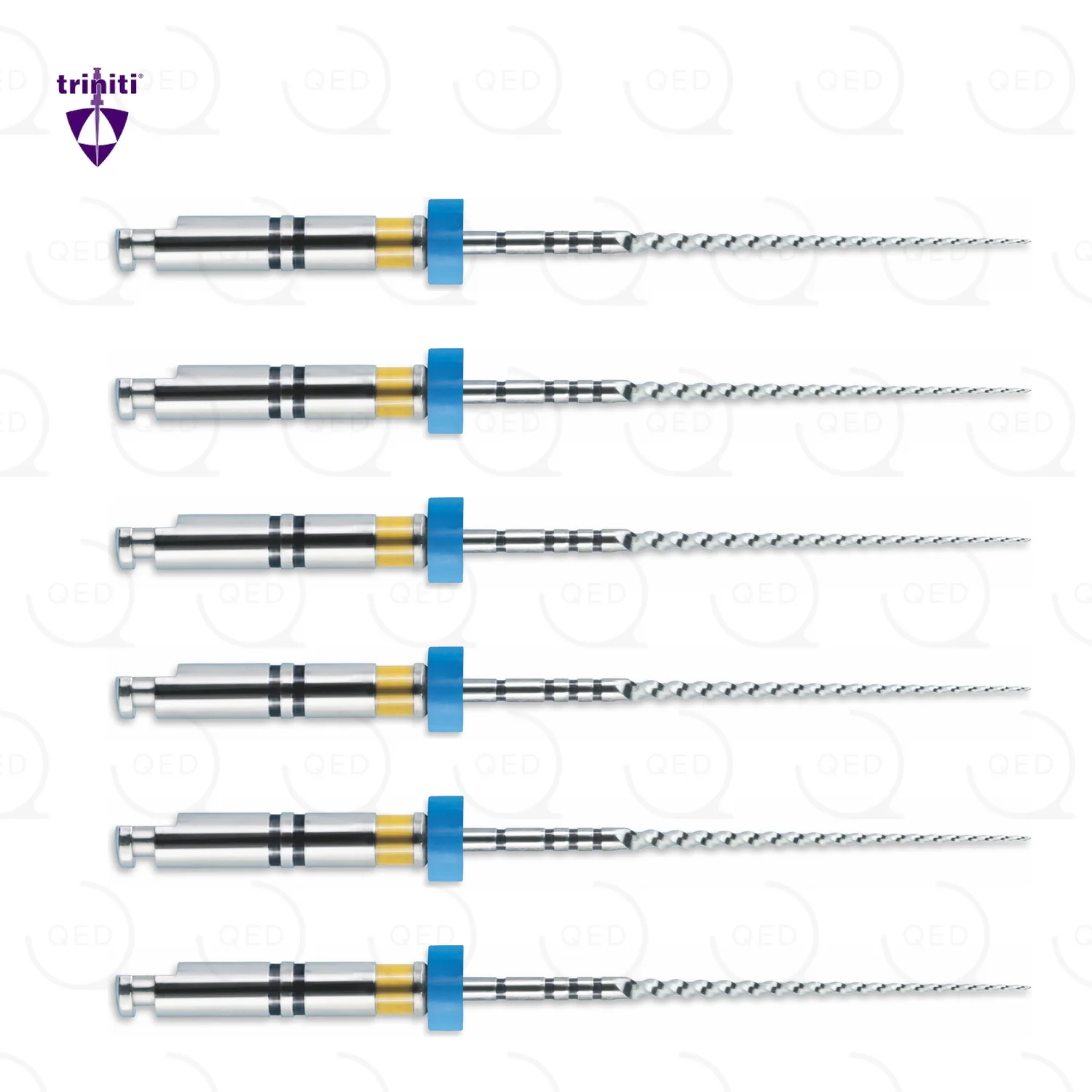
triniti® 25/.04 · 21 mm · 6 files
crown-downlimited accessposterior teethmaster apical filesterile, single use
the commonest apical size, in the length that fits where a 25 mm file will not. vdw set it at 60 gcm – 0.60 ncm.
| 0.60 ncm torque (vdw) | 0.25 mm tip diameter | 16 mm working part |
this pack: triniti® rotary niti file, iso 25 tip, .04 taper, 21 mm, 16 mm working part (pack of 6) · sterile, single use
ref v201342021025 · made by maillefer instruments holding sàrl, ballaigues, switzerland
› iso 25 tip on a constant .04 taper – 0.25 mm across the tip, gaining 0.04 mm in diameter for every millimetre back from it, which is the same figure written as 4%
› 16 mm working part on a 21 mm shank, with the red iso 25 band on the handle
› three cutting edges on a convex triangular section – vdw describe the geometry as the efficiency of traditional k-type cutting blades, i.e. a convex cross-section to stabilise the instrument core and a cutting blade angle suitable for rotary use
› cut to clear debris – vdw credit the special k-type cutting edges with efficient removal of debris and dentine chips
› continuous rotation at approximately 300 rpm, with the torque set to the figure for the size – 60 gcm for this one
› supplied sterile and single use – ready to use, with no sterilisation before the case and nothing to re-process after it
most molars are not 25 mm canals, and a 21 mm instrument in a 19 mm canal is a better-controlled file than a 25 mm one doing the same work with four more millimetres of unsupported shaft above the orifice. the working part is 16 mm either way, so nothing about the shape the file cuts changes – only what happens between the tooth and the handpiece.
the goal of root canal preparation is to create optimal conditions for a tightly sealed and long-lasting root filling, which includes a uniformly tapered canal shape.
vdw, on the triniti® range
it is a crown-down system, and the tapers are the sequence rather than a specification. vdw's smaller tapers are the ones they describe as being used for better apical shaping and for preserving the original canal axis – the centre line – which is the job this file is in the range to do. the larger tapers have already taken the bulk out of the straight part of the canal by the time it goes in.
triniti® came to the uk market in the early 2000s with one job: to get general practice to try niti – to move from stainless steel hand files to rotary nickel-titanium for the first time. the name carries that invitation and two further readings with it. the section is a convex triangle, so the blade cuts on three edges. and the instrument is nickel-titanium. try niti, tri, niti – three readings, one name, and it has outlived the campaign that coined it.
| rotation | continuous, approximately 300 rpm (vdw give a 250–350 rpm range) |
| torque | 60 gcm – 0.60 ncm for this file |
| handpiece | a torque-controlled endodontic motor with a reduction contra-angle |
| use | single use – a fresh file, then discard |
any torque-limited endodontic motor that can be set to a rotation speed and a torque ceiling will run it. we stock the x-smart® pro+ and the vdw.silver® reciproc, both with a 6:1 contra-angle.
| iso tip size | 25 (0.25 mm) |
| taper | .04, constant (4%) |
| length | 21 mm |
| active working part | 16 mm |
| material | nickel-titanium, rotary |
| motion | continuous rotation |
| supplied | sterile, single use |
| pack | blister of 6 instruments |
| manufacturer | maillefer instruments holding sàrl, ballaigues, switzerland |
| ref | v201342021025 |
what torque and speed should i set?
vdw's figure for this file is 60 gcm, which is 0.60 ncm, at a constant rotation of about 300 rpm. the torque is per file, not per range – every size in the range has its own number.
are they sterile, and can i re-use them?
they are supplied sterile and are single use in the uk. nothing to autoclave before the case and nothing to re-process after it, so there is no count to keep and no wear to judge – a fresh file every time, which is the whole argument for buying a rotary instrument sterile.
which cone and paper point fit it?
a constant-taper preparation wants a constant-taper cone of the same size. pro-fit® gutta percha 25/.04 and pro-fit® paper points 25/.04 match this file exactly on both tip size and taper.
how does it compare with its neighbours?
the range runs two tapers so that tip size and taper can be chosen separately. the nearest alternatives to this file are 20/.04.
| step | what we stock |
|---|---|
| patency | vdw c-pilot® 08 and c-pilot® 10 in 21 mm – the house hand file |
| lubricant | glyde™ file prep · file-eze™ |
| irrigants | chlorax 5.25% · chlorax 2% · endo-solution 17% edta |
| delivery | irriflex® 30g · navitip™ 29 ga |
| activation | vdw eddy® tips – vdw's own |
| dry | pro-fit® paper points 25/.04 – matched to this file |
| obturate | pro-fit® gutta percha 25/.04 with sealer, carried to length together |
| seal, resin | vdw 2seal® – vdw's own epoxy · ah plus®, the epoxy sealer every other one is measured against |
| seal, bioceramic | neosealer® ezflo – premixed, with 29 ga navitip cannulas in 21 mm |
| coronal seal | sdr® flow+ refill universal – 4 mm bulk increment, one cure |
resin or bioceramic is a real choice of technique rather than a ranking – we carry both because both are right in different hands. irrigation is the half of the case a file does not do: a crown-down sequence shortens the mechanical part, not the chemical one.
triniti® 25/.04 · 21 mm · 16 mm working part · nickel-titanium, continuous rotation · 0.60 ncm at ~300 rpm · sterile, single use · blister of 6 · made by maillefer, ballaigues · ref v201342021025

triniti® 20/.04 · 25 mm · 6 files
crown-downapical shapingnarrow canalsrotary nitisterile, single use
iso 20 on a .04 taper is the most conservative instrument triniti offers, and vdw set it to run at 30 gcm – 0.30 ncm, the lowest torque figure anywhere in the range. it is the file for the last few millimetres, where the canal is narrowest and the dentine is thinnest.
| 0.30 ncm torque (vdw) | 0.20 mm tip diameter | 16 mm working part |
this pack: triniti® rotary niti file, iso 20 tip, .04 taper, 25 mm, 16 mm working part (pack of 6) · sterile, single use
ref v201342025020 · made by maillefer instruments holding sàrl, ballaigues, switzerland
› iso 20 tip on a constant .04 taper – 0.20 mm across the tip, gaining 0.04 mm in diameter for every millimetre back from it, which is the same figure written as 4%
› 16 mm working part on a 25 mm shank, with the yellow iso 20 band on the handle
› three cutting edges on a convex triangular section – vdw describe the geometry as the efficiency of traditional k-type cutting blades, i.e. a convex cross-section to stabilise the instrument core and a cutting blade angle suitable for rotary use
› cut to clear debris – vdw credit the special k-type cutting edges with efficient removal of debris and dentine chips
› continuous rotation at approximately 300 rpm, with the torque set to the figure for the size – 30 gcm for this one
› supplied sterile and single use – ready to use, with no sterilisation before the case and nothing to re-process after it
a crown-down sequence spends its early instruments removing bulk from the straight part of the canal. by the time a 20/.04 goes in, the work left is apical, and what matters is how little metal is turning against how thin a wall. a 0.20 mm tip on a 4% taper is a small file by any measure, and the torque figure vdw publish for it – a third of what they allow the 30/.06 – is the honest measure of how gently it is meant to be driven.
the goal of root canal preparation is to create optimal conditions for a tightly sealed and long-lasting root filling, which includes a uniformly tapered canal shape.
vdw, on the triniti® range
it is a crown-down system, and the tapers are the sequence rather than a specification. vdw's smaller tapers are the ones they describe as being used for better apical shaping and for preserving the original canal axis – the centre line – which is the job this file is in the range to do. the larger tapers have already taken the bulk out of the straight part of the canal by the time it goes in.
triniti® came to the uk market in the early 2000s with one job: to get general practice to try niti – to move from stainless steel hand files to rotary nickel-titanium for the first time. the name carries that invitation and two further readings with it. the section is a convex triangle, so the blade cuts on three edges. and the instrument is nickel-titanium. try niti, tri, niti – three readings, one name, and it has outlived the campaign that coined it.
| rotation | continuous, approximately 300 rpm (vdw give a 250–350 rpm range) |
| torque | 30 gcm – 0.30 ncm for this file |
| handpiece | a torque-controlled endodontic motor with a reduction contra-angle |
| use | single use – a fresh file, then discard |
any torque-limited endodontic motor that can be set to a rotation speed and a torque ceiling will run it. we stock the x-smart® pro+ and the vdw.silver® reciproc, both with a 6:1 contra-angle.
| iso tip size | 20 (0.20 mm) |
| taper | .04, constant (4%) |
| length | 25 mm |
| active working part | 16 mm |
| material | nickel-titanium, rotary |
| motion | continuous rotation |
| supplied | sterile, single use |
| pack | blister of 6 instruments |
| manufacturer | maillefer instruments holding sàrl, ballaigues, switzerland |
| ref | v201342025020 |
what torque and speed should i set?
vdw's figure for this file is 30 gcm, which is 0.30 ncm, at a constant rotation of about 300 rpm. the torque is per file, not per range – every size in the range has its own number.
are they sterile, and can i re-use them?
they are supplied sterile and are single use in the uk. nothing to autoclave before the case and nothing to re-process after it, so there is no count to keep and no wear to judge – a fresh file every time, which is the whole argument for buying a rotary instrument sterile.
which cone and paper point fit it?
a constant-taper preparation wants a constant-taper cone of the same size. pro-fit® gutta percha 20/.04 and pro-fit® paper points 20/.04 match this file exactly on both tip size and taper.
how does it compare with its neighbours?
the range runs two tapers so that tip size and taper can be chosen separately. the nearest alternatives to this file are 20/.06 in 25 mm, 25/.04.
| step | what we stock |
|---|---|
| patency | vdw c-pilot® 08 and c-pilot® 10 in 25 mm – the house hand file |
| lubricant | glyde™ file prep · file-eze™ |
| irrigants | chlorax 5.25% · chlorax 2% · endo-solution 17% edta |
| delivery | irriflex® 30g · navitip™ 29 ga |
| activation | vdw eddy® tips – vdw's own |
| dry | pro-fit® paper points 20/.04 – matched to this file |
| obturate | pro-fit® gutta percha 20/.04 with sealer, carried to length together |
| seal, resin | vdw 2seal® – vdw's own epoxy · ah plus®, the epoxy sealer every other one is measured against |
| seal, bioceramic | neosealer® ezflo – premixed, with 29 ga navitip cannulas in 25 mm |
| coronal seal | sdr® flow+ refill universal – 4 mm bulk increment, one cure |
resin or bioceramic is a real choice of technique rather than a ranking – we carry both because both are right in different hands. irrigation is the half of the case a file does not do: a crown-down sequence shortens the mechanical part, not the chemical one.
triniti® 20/.04 · 25 mm · 16 mm working part · nickel-titanium, continuous rotation · 0.30 ncm at ~300 rpm · sterile, single use · blister of 6 · made by maillefer, ballaigues · ref v201342025020

triniti® 25/.04 · 25 mm · 6 files
crown-downapical shapingmaster apical filerotary nitisterile, single use
iso 25 on a .04 taper is the apical size most cases are gauged to, which makes this the file that decides the shape the cone has to fit. vdw give it 60 gcm – 0.60 ncm.
| 0.60 ncm torque (vdw) | 0.25 mm tip diameter | 16 mm working part |
this pack: triniti® rotary niti file, iso 25 tip, .04 taper, 25 mm, 16 mm working part (pack of 6) · sterile, single use
ref v201342025025 · made by maillefer instruments holding sàrl, ballaigues, switzerland
› iso 25 tip on a constant .04 taper – 0.25 mm across the tip, gaining 0.04 mm in diameter for every millimetre back from it, which is the same figure written as 4%
› 16 mm working part on a 25 mm shank, with the red iso 25 band on the handle
› three cutting edges on a convex triangular section – vdw describe the geometry as the efficiency of traditional k-type cutting blades, i.e. a convex cross-section to stabilise the instrument core and a cutting blade angle suitable for rotary use
› cut to clear debris – vdw credit the special k-type cutting edges with efficient removal of debris and dentine chips
› continuous rotation at approximately 300 rpm, with the torque set to the figure for the size – 60 gcm for this one
› supplied sterile and single use – ready to use, with no sterilisation before the case and nothing to re-process after it
size 25 is the size the rest of the case is built around: it is the commonest final apical diameter, the commonest master cone, and the commonest paper point on the tray. taking it to length on a 4% taper rather than a steeper one leaves more dentine in the middle third, and gives a cone that seats on taper rather than wedging short.
the goal of root canal preparation is to create optimal conditions for a tightly sealed and long-lasting root filling, which includes a uniformly tapered canal shape.
vdw, on the triniti® range
it is a crown-down system, and the tapers are the sequence rather than a specification. vdw's smaller tapers are the ones they describe as being used for better apical shaping and for preserving the original canal axis – the centre line – which is the job this file is in the range to do. the larger tapers have already taken the bulk out of the straight part of the canal by the time it goes in.
triniti® came to the uk market in the early 2000s with one job: to get general practice to try niti – to move from stainless steel hand files to rotary nickel-titanium for the first time. the name carries that invitation and two further readings with it. the section is a convex triangle, so the blade cuts on three edges. and the instrument is nickel-titanium. try niti, tri, niti – three readings, one name, and it has outlived the campaign that coined it.
| rotation | continuous, approximately 300 rpm (vdw give a 250–350 rpm range) |
| torque | 60 gcm – 0.60 ncm for this file |
| handpiece | a torque-controlled endodontic motor with a reduction contra-angle |
| use | single use – a fresh file, then discard |
any torque-limited endodontic motor that can be set to a rotation speed and a torque ceiling will run it. we stock the x-smart® pro+ and the vdw.silver® reciproc, both with a 6:1 contra-angle.
| iso tip size | 25 (0.25 mm) |
| taper | .04, constant (4%) |
| length | 25 mm |
| active working part | 16 mm |
| material | nickel-titanium, rotary |
| motion | continuous rotation |
| supplied | sterile, single use |
| pack | blister of 6 instruments |
| manufacturer | maillefer instruments holding sàrl, ballaigues, switzerland |
| ref | v201342025025 |
what torque and speed should i set?
vdw's figure for this file is 60 gcm, which is 0.60 ncm, at a constant rotation of about 300 rpm. the torque is per file, not per range – every size in the range has its own number.
are they sterile, and can i re-use them?
they are supplied sterile and are single use in the uk. nothing to autoclave before the case and nothing to re-process after it, so there is no count to keep and no wear to judge – a fresh file every time, which is the whole argument for buying a rotary instrument sterile.
which cone and paper point fit it?
a constant-taper preparation wants a constant-taper cone of the same size. pro-fit® gutta percha 25/.04 and pro-fit® paper points 25/.04 match this file exactly on both tip size and taper.
how does it compare with its neighbours?
the range runs two tapers so that tip size and taper can be chosen separately. the nearest alternatives to this file are 25/.06 in 25 mm, 20/.04, 30/.04.
| step | what we stock |
|---|---|
| patency | vdw c-pilot® 08 and c-pilot® 10 in 25 mm – the house hand file |
| lubricant | glyde™ file prep · file-eze™ |
| irrigants | chlorax 5.25% · chlorax 2% · endo-solution 17% edta |
| delivery | irriflex® 30g · navitip™ 29 ga |
| activation | vdw eddy® tips – vdw's own |
| dry | pro-fit® paper points 25/.04 – matched to this file |
| obturate | pro-fit® gutta percha 25/.04 with sealer, carried to length together |
| seal, resin | vdw 2seal® – vdw's own epoxy · ah plus®, the epoxy sealer every other one is measured against |
| seal, bioceramic | neosealer® ezflo – premixed, with 29 ga navitip cannulas in 25 mm |
| coronal seal | sdr® flow+ refill universal – 4 mm bulk increment, one cure |
resin or bioceramic is a real choice of technique rather than a ranking – we carry both because both are right in different hands. irrigation is the half of the case a file does not do: a crown-down sequence shortens the mechanical part, not the chemical one.
triniti® 25/.04 · 25 mm · 16 mm working part · nickel-titanium, continuous rotation · 0.60 ncm at ~300 rpm · sterile, single use · blister of 6 · made by maillefer, ballaigues · ref v201342025025
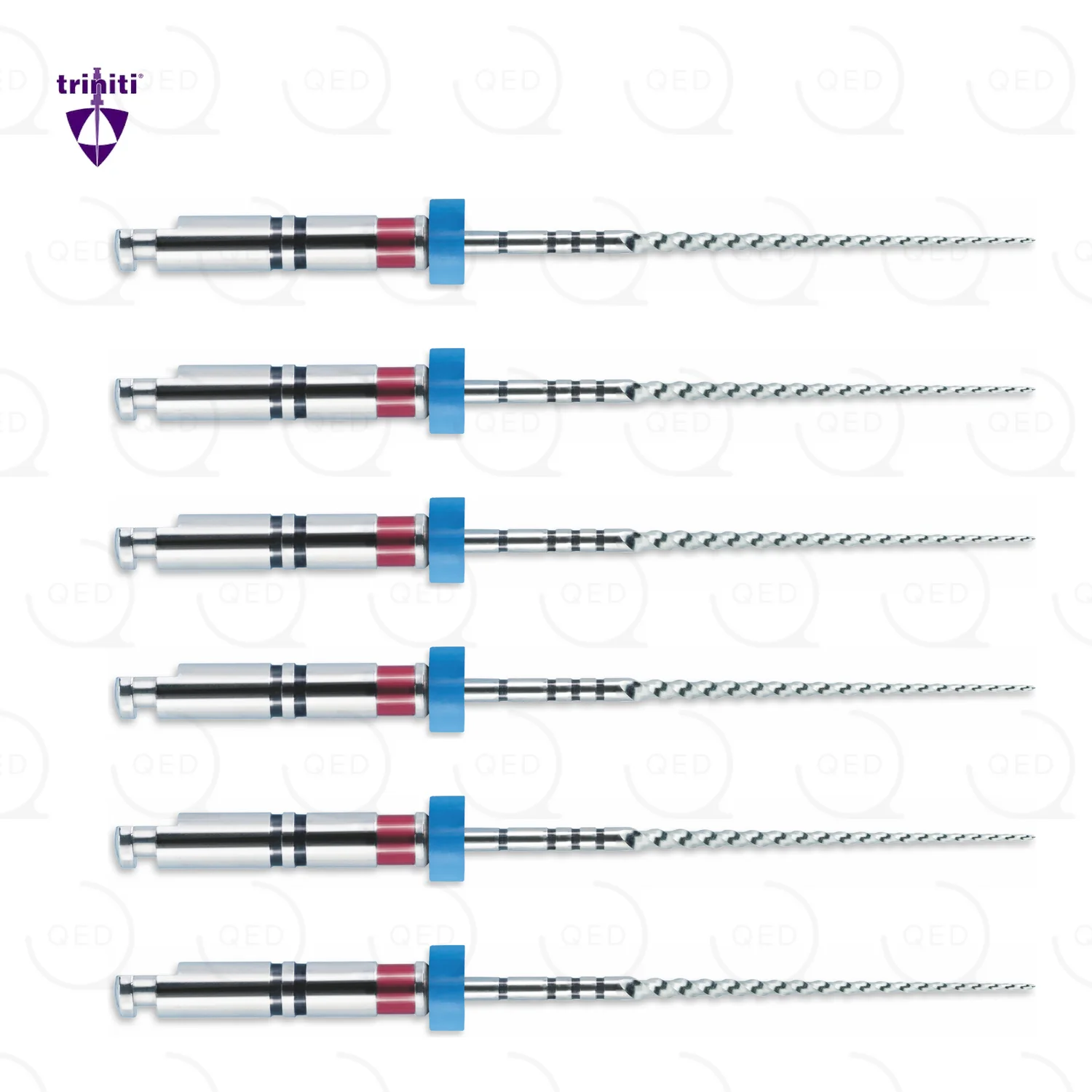
triniti® 30/.04 · 25 mm · 6 files
crown-downapical enlargementcurved canalsrotary nitisterile, single use
when a canal gauges larger than 25 but the anatomy will not take a steeper file, 30/.04 is the way to add apical diameter without adding taper. vdw set it at 90 gcm – 0.90 ncm.
| 0.90 ncm torque (vdw) | 0.30 mm tip diameter | 16 mm working part |
this pack: triniti® rotary niti file, iso 30 tip, .04 taper, 25 mm, 16 mm working part (pack of 6) · sterile, single use
ref v201342025030 · made by maillefer instruments holding sàrl, ballaigues, switzerland
› iso 30 tip on a constant .04 taper – 0.30 mm across the tip, gaining 0.04 mm in diameter for every millimetre back from it, which is the same figure written as 4%
› 16 mm working part on a 25 mm shank, with the blue iso 30 band on the handle
› three cutting edges on a convex triangular section – vdw describe the geometry as the efficiency of traditional k-type cutting blades, i.e. a convex cross-section to stabilise the instrument core and a cutting blade angle suitable for rotary use
› cut to clear debris – vdw credit the special k-type cutting edges with efficient removal of debris and dentine chips
› continuous rotation at approximately 300 rpm, with the torque set to the figure for the size – 90 gcm for this one
› supplied sterile and single use – ready to use, with no sterilisation before the case and nothing to re-process after it
the temptation at this point is to reach for a bigger taper instead, and in a curved or thin-walled root that is the expensive choice. stepping the tip from 0.25 to 0.30 mm on the same 4% taper widens the apical third where the irrigant has to reach, and leaves the middle third alone. torque goes up by half against the 25 – the file is doing more work, and vdw say so in the number.
the goal of root canal preparation is to create optimal conditions for a tightly sealed and long-lasting root filling, which includes a uniformly tapered canal shape.
vdw, on the triniti® range
it is a crown-down system, and the tapers are the sequence rather than a specification. vdw's smaller tapers are the ones they describe as being used for better apical shaping and for preserving the original canal axis – the centre line – which is the job this file is in the range to do. the larger tapers have already taken the bulk out of the straight part of the canal by the time it goes in.
triniti® came to the uk market in the early 2000s with one job: to get general practice to try niti – to move from stainless steel hand files to rotary nickel-titanium for the first time. the name carries that invitation and two further readings with it. the section is a convex triangle, so the blade cuts on three edges. and the instrument is nickel-titanium. try niti, tri, niti – three readings, one name, and it has outlived the campaign that coined it.
| rotation | continuous, approximately 300 rpm (vdw give a 250–350 rpm range) |
| torque | 90 gcm – 0.90 ncm for this file |
| handpiece | a torque-controlled endodontic motor with a reduction contra-angle |
| use | single use – a fresh file, then discard |
any torque-limited endodontic motor that can be set to a rotation speed and a torque ceiling will run it. we stock the x-smart® pro+ and the vdw.silver® reciproc, both with a 6:1 contra-angle.
| iso tip size | 30 (0.30 mm) |
| taper | .04, constant (4%) |
| length | 25 mm |
| active working part | 16 mm |
| material | nickel-titanium, rotary |
| motion | continuous rotation |
| supplied | sterile, single use |
| pack | blister of 6 instruments |
| manufacturer | maillefer instruments holding sàrl, ballaigues, switzerland |
| ref | v201342025030 |
what torque and speed should i set?
vdw's figure for this file is 90 gcm, which is 0.90 ncm, at a constant rotation of about 300 rpm. the torque is per file, not per range – every size in the range has its own number.
are they sterile, and can i re-use them?
they are supplied sterile and are single use in the uk. nothing to autoclave before the case and nothing to re-process after it, so there is no count to keep and no wear to judge – a fresh file every time, which is the whole argument for buying a rotary instrument sterile.
which cone and paper point fit it?
a constant-taper preparation wants a constant-taper cone of the same size. pro-fit® gutta percha 30/.04 and pro-fit® paper points 30/.04 match this file exactly on both tip size and taper.
how does it compare with its neighbours?
the range runs two tapers so that tip size and taper can be chosen separately. the nearest alternatives to this file are 30/.06 in 25 mm, 25/.04, 35/.04.
| step | what we stock |
|---|---|
| patency | vdw c-pilot® 08 and c-pilot® 10 in 25 mm – the house hand file |
| lubricant | glyde™ file prep · file-eze™ |
| irrigants | chlorax 5.25% · chlorax 2% · endo-solution 17% edta |
| delivery | irriflex® 30g · navitip™ 29 ga |
| activation | vdw eddy® tips – vdw's own |
| dry | pro-fit® paper points 30/.04 – matched to this file |
| obturate | pro-fit® gutta percha 30/.04 with sealer, carried to length together |
| seal, resin | vdw 2seal® – vdw's own epoxy · ah plus®, the epoxy sealer every other one is measured against |
| seal, bioceramic | neosealer® ezflo – premixed, with 29 ga navitip cannulas in 25 mm |
| coronal seal | sdr® flow+ refill universal – 4 mm bulk increment, one cure |
resin or bioceramic is a real choice of technique rather than a ranking – we carry both because both are right in different hands. irrigation is the half of the case a file does not do: a crown-down sequence shortens the mechanical part, not the chemical one.
triniti® 30/.04 · 25 mm · 16 mm working part · nickel-titanium, continuous rotation · 0.90 ncm at ~300 rpm · sterile, single use · blister of 6 · made by maillefer, ballaigues · ref v201342025030

triniti® 35/.04 · 25 mm · 6 files
crown-downapical enlargementwide canalsrotary nitisterile, single use
35/.04 is for the canal that gauges wide at the tip but does not want a 6% taper through its curve. vdw set it at 100 gcm – 1.0 ncm, and the handle carries the green iso 35 band.
| 1.0 ncm torque (vdw) | 0.35 mm tip diameter | 16 mm working part |
this pack: triniti® rotary niti file, iso 35 tip, .04 taper, 25 mm, 16 mm working part (pack of 6) · sterile, single use
ref v201342025035 · made by maillefer instruments holding sàrl, ballaigues, switzerland
› iso 35 tip on a constant .04 taper – 0.35 mm across the tip, gaining 0.04 mm in diameter for every millimetre back from it, which is the same figure written as 4%
› 16 mm working part on a 25 mm shank, with the green iso 35 band on the handle
› three cutting edges on a convex triangular section – vdw describe the geometry as the efficiency of traditional k-type cutting blades, i.e. a convex cross-section to stabilise the instrument core and a cutting blade angle suitable for rotary use
› cut to clear debris – vdw credit the special k-type cutting edges with efficient removal of debris and dentine chips
› continuous rotation at approximately 300 rpm, with the torque set to the figure for the size – 100 gcm for this one
› supplied sterile and single use – ready to use, with no sterilisation before the case and nothing to re-process after it
there is a real body of opinion that apical diameter, not taper, is what governs how well an irrigant reaches the last few millimetres. where that is the argument being followed, a 0.35 mm tip on a conservative 4% taper is exactly the instrument it implies – and it is the option that leaves the coronal two thirds of the root untouched by comparison with the .06 of the same size.
the goal of root canal preparation is to create optimal conditions for a tightly sealed and long-lasting root filling, which includes a uniformly tapered canal shape.
vdw, on the triniti® range
it is a crown-down system, and the tapers are the sequence rather than a specification. vdw's smaller tapers are the ones they describe as being used for better apical shaping and for preserving the original canal axis – the centre line – which is the job this file is in the range to do. the larger tapers have already taken the bulk out of the straight part of the canal by the time it goes in.
triniti® came to the uk market in the early 2000s with one job: to get general practice to try niti – to move from stainless steel hand files to rotary nickel-titanium for the first time. the name carries that invitation and two further readings with it. the section is a convex triangle, so the blade cuts on three edges. and the instrument is nickel-titanium. try niti, tri, niti – three readings, one name, and it has outlived the campaign that coined it.
| rotation | continuous, approximately 300 rpm (vdw give a 250–350 rpm range) |
| torque | 100 gcm – 1.0 ncm for this file |
| handpiece | a torque-controlled endodontic motor with a reduction contra-angle |
| use | single use – a fresh file, then discard |
any torque-limited endodontic motor that can be set to a rotation speed and a torque ceiling will run it. we stock the x-smart® pro+ and the vdw.silver® reciproc, both with a 6:1 contra-angle.
| iso tip size | 35 (0.35 mm) |
| taper | .04, constant (4%) |
| length | 25 mm |
| active working part | 16 mm |
| material | nickel-titanium, rotary |
| motion | continuous rotation |
| supplied | sterile, single use |
| pack | blister of 6 instruments |
| manufacturer | maillefer instruments holding sàrl, ballaigues, switzerland |
| ref | v201342025035 |
what torque and speed should i set?
vdw's figure for this file is 100 gcm, which is 1.0 ncm, at a constant rotation of about 300 rpm. the torque is per file, not per range – every size in the range has its own number.
are they sterile, and can i re-use them?
they are supplied sterile and are single use in the uk. nothing to autoclave before the case and nothing to re-process after it, so there is no count to keep and no wear to judge – a fresh file every time, which is the whole argument for buying a rotary instrument sterile.
which cone and paper point fit it?
a constant-taper preparation wants a constant-taper cone of the same size. pro-fit® gutta percha 35/.04 and pro-fit® paper points 35/.04 match this file exactly on both tip size and taper.
how does it compare with its neighbours?
the range runs two tapers so that tip size and taper can be chosen separately. the nearest alternatives to this file are 30/.04, 40/.04.
| step | what we stock |
|---|---|
| patency | vdw c-pilot® 08 and c-pilot® 10 in 25 mm – the house hand file |
| lubricant | glyde™ file prep · file-eze™ |
| irrigants | chlorax 5.25% · chlorax 2% · endo-solution 17% edta |
| delivery | irriflex® 30g · navitip™ 29 ga |
| activation | vdw eddy® tips – vdw's own |
| dry | pro-fit® paper points 35/.04 – matched to this file |
| obturate | pro-fit® gutta percha 35/.04 with sealer, carried to length together |
| seal, resin | vdw 2seal® – vdw's own epoxy · ah plus®, the epoxy sealer every other one is measured against |
| seal, bioceramic | neosealer® ezflo – premixed, with 29 ga navitip cannulas in 25 mm |
| coronal seal | sdr® flow+ refill universal – 4 mm bulk increment, one cure |
resin or bioceramic is a real choice of technique rather than a ranking – we carry both because both are right in different hands. irrigation is the half of the case a file does not do: a crown-down sequence shortens the mechanical part, not the chemical one.
triniti® 35/.04 · 25 mm · 16 mm working part · nickel-titanium, continuous rotation · 1.0 ncm at ~300 rpm · sterile, single use · blister of 6 · made by maillefer, ballaigues · ref v201342025035
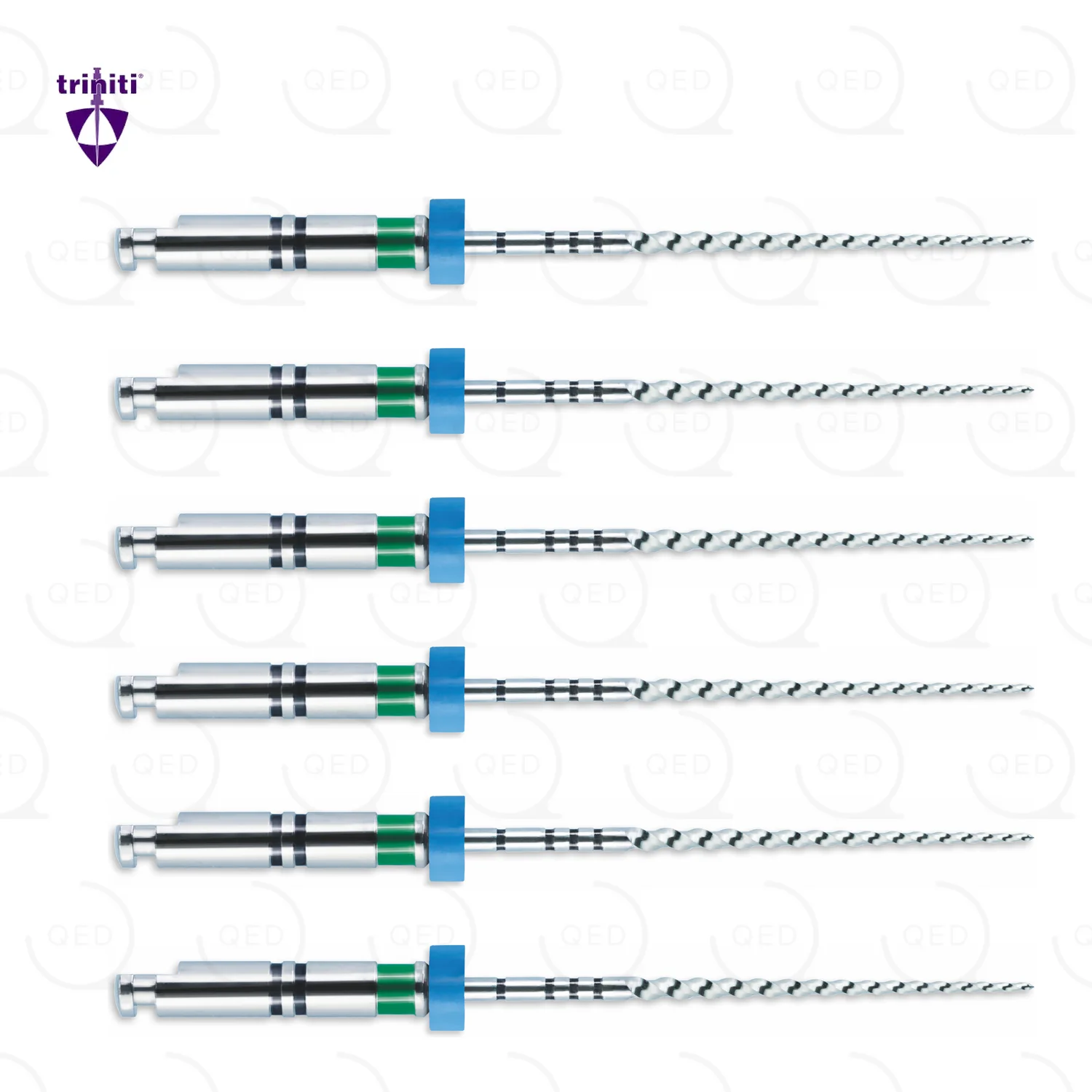
triniti® 40/.04 · 25 mm · 6 files
crown-downapical enlargementwide canalsrotary nitisterile, single use
40/.04 is the largest tip triniti offers on a 4% taper – the end of the line for enlarging apically while keeping the body of the preparation slim. vdw set it at 130 gcm – 1.30 ncm.
| 1.30 ncm torque (vdw) | 0.40 mm tip diameter | 16 mm working part |
this pack: triniti® rotary niti file, iso 40 tip, .04 taper, 25 mm, 16 mm working part (pack of 6) · sterile, single use
ref v201342025040 · made by maillefer instruments holding sàrl, ballaigues, switzerland
› iso 40 tip on a constant .04 taper – 0.40 mm across the tip, gaining 0.04 mm in diameter for every millimetre back from it, which is the same figure written as 4%
› 16 mm working part on a 25 mm shank, with the black iso 40 band on the handle
› three cutting edges on a convex triangular section – vdw describe the geometry as the efficiency of traditional k-type cutting blades, i.e. a convex cross-section to stabilise the instrument core and a cutting blade angle suitable for rotary use
› cut to clear debris – vdw credit the special k-type cutting edges with efficient removal of debris and dentine chips
› continuous rotation at approximately 300 rpm, with the torque set to the figure for the size – 130 gcm for this one
› supplied sterile and single use – ready to use, with no sterilisation before the case and nothing to re-process after it
a 0.40 mm tip is a wide apical preparation, and on a .06 taper it would carry a great deal of metal up through the curve behind it. on .04 it does not. that is the whole point of running two tapers in one system: the taper is chosen for the canal's shape and the tip is chosen for its gauge, and the two decisions stay independent of each other. black handle band, iso 40.
the goal of root canal preparation is to create optimal conditions for a tightly sealed and long-lasting root filling, which includes a uniformly tapered canal shape.
vdw, on the triniti® range
it is a crown-down system, and the tapers are the sequence rather than a specification. vdw's smaller tapers are the ones they describe as being used for better apical shaping and for preserving the original canal axis – the centre line – which is the job this file is in the range to do. the larger tapers have already taken the bulk out of the straight part of the canal by the time it goes in.
triniti® came to the uk market in the early 2000s with one job: to get general practice to try niti – to move from stainless steel hand files to rotary nickel-titanium for the first time. the name carries that invitation and two further readings with it. the section is a convex triangle, so the blade cuts on three edges. and the instrument is nickel-titanium. try niti, tri, niti – three readings, one name, and it has outlived the campaign that coined it.
| rotation | continuous, approximately 300 rpm (vdw give a 250–350 rpm range) |
| torque | 130 gcm – 1.30 ncm for this file |
| handpiece | a torque-controlled endodontic motor with a reduction contra-angle |
| use | single use – a fresh file, then discard |
any torque-limited endodontic motor that can be set to a rotation speed and a torque ceiling will run it. we stock the x-smart® pro+ and the vdw.silver® reciproc, both with a 6:1 contra-angle.
| iso tip size | 40 (0.40 mm) |
| taper | .04, constant (4%) |
| length | 25 mm |
| active working part | 16 mm |
| material | nickel-titanium, rotary |
| motion | continuous rotation |
| supplied | sterile, single use |
| pack | blister of 6 instruments |
| manufacturer | maillefer instruments holding sàrl, ballaigues, switzerland |
| ref | v201342025040 |
what torque and speed should i set?
vdw's figure for this file is 130 gcm, which is 1.30 ncm, at a constant rotation of about 300 rpm. the torque is per file, not per range – every size in the range has its own number.
are they sterile, and can i re-use them?
they are supplied sterile and are single use in the uk. nothing to autoclave before the case and nothing to re-process after it, so there is no count to keep and no wear to judge – a fresh file every time, which is the whole argument for buying a rotary instrument sterile.
which cone and paper point fit it?
a constant-taper preparation wants a constant-taper cone of the same size. pro-fit® gutta percha 40/.04 and pro-fit® paper points 40/.04 match this file exactly on both tip size and taper.
how does it compare with its neighbours?
the range runs two tapers so that tip size and taper can be chosen separately. the nearest alternatives to this file are 35/.04.
| step | what we stock |
|---|---|
| patency | vdw c-pilot® 08 and c-pilot® 10 in 25 mm – the house hand file |
| lubricant | glyde™ file prep · file-eze™ |
| irrigants | chlorax 5.25% · chlorax 2% · endo-solution 17% edta |
| delivery | irriflex® 30g · navitip™ 29 ga |
| activation | vdw eddy® tips – vdw's own |
| dry | pro-fit® paper points 40/.04 – matched to this file |
| obturate | pro-fit® gutta percha 40/.04 with sealer, carried to length together |
| seal, resin | vdw 2seal® – vdw's own epoxy · ah plus®, the epoxy sealer every other one is measured against |
| seal, bioceramic | neosealer® ezflo – premixed, with 29 ga navitip cannulas in 25 mm |
| coronal seal | sdr® flow+ refill universal – 4 mm bulk increment, one cure |
resin or bioceramic is a real choice of technique rather than a ranking – we carry both because both are right in different hands. irrigation is the half of the case a file does not do: a crown-down sequence shortens the mechanical part, not the chemical one.
triniti® 40/.04 · 25 mm · 16 mm working part · nickel-titanium, continuous rotation · 1.30 ncm at ~300 rpm · sterile, single use · blister of 6 · made by maillefer, ballaigues · ref v201342025040

triniti® 30/.06 · 21 mm · 6 files
crown-downlimited accessposterior teethcoronal shapingsterile, single use
30/.06 in 21 mm – the most shaping triniti does in a pass, in the length that fits a second molar. vdw set it at 120 gcm – 1.2 ncm.
| 1.2 ncm torque (vdw) | 0.30 mm tip diameter | 16 mm working part |
this pack: triniti® rotary niti file, iso 30 tip, .06 taper, 21 mm, 16 mm working part (pack of 6) · sterile, single use
ref v201343021030 · made by maillefer instruments holding sàrl, ballaigues, switzerland
› iso 30 tip on a constant .06 taper – 0.30 mm across the tip, gaining 0.06 mm in diameter for every millimetre back from it, which is the same figure written as 6%
› 16 mm working part on a 21 mm shank, with the blue iso 30 band on the handle
› three cutting edges on a convex triangular section – vdw describe the geometry as the efficiency of traditional k-type cutting blades, i.e. a convex cross-section to stabilise the instrument core and a cutting blade angle suitable for rotary use
› cut to clear debris – vdw credit the special k-type cutting edges with efficient removal of debris and dentine chips
› continuous rotation at approximately 300 rpm, with the torque set to the figure for the size – 120 gcm for this one
› supplied sterile and single use – ready to use, with no sterilisation before the case and nothing to re-process after it
this is the file that benefits most from the short length, because it is the one doing the most work. a 6% taper on a 0.30 mm tip has a lot of blade against the wall, and every millimetre of shaft between the orifice and the head is a millimetre that can flex instead of cut. shorter is steadier, and in the back of the mouth it is often the only thing that seats.
the goal of root canal preparation is to create optimal conditions for a tightly sealed and long-lasting root filling, which includes a uniformly tapered canal shape.
vdw, on the triniti® range
it is a crown-down system, and the tapers are the sequence rather than a specification. vdw's larger and medium tapers are the ones they credit with speedy dentine removal and with keeping the number of instrument changes to a minimum – that is this file's part of the work, in the straight portion of the canal. the smaller tapers follow it into the curve and into the apical third.
triniti® came to the uk market in the early 2000s with one job: to get general practice to try niti – to move from stainless steel hand files to rotary nickel-titanium for the first time. the name carries that invitation and two further readings with it. the section is a convex triangle, so the blade cuts on three edges. and the instrument is nickel-titanium. try niti, tri, niti – three readings, one name, and it has outlived the campaign that coined it.
| rotation | continuous, approximately 300 rpm (vdw give a 250–350 rpm range) |
| torque | 120 gcm – 1.2 ncm for this file |
| handpiece | a torque-controlled endodontic motor with a reduction contra-angle |
| use | single use – a fresh file, then discard |
any torque-limited endodontic motor that can be set to a rotation speed and a torque ceiling will run it. we stock the x-smart® pro+ and the vdw.silver® reciproc, both with a 6:1 contra-angle.
| iso tip size | 30 (0.30 mm) |
| taper | .06, constant (6%) |
| length | 21 mm |
| active working part | 16 mm |
| material | nickel-titanium, rotary |
| motion | continuous rotation |
| supplied | sterile, single use |
| pack | blister of 6 instruments |
| manufacturer | maillefer instruments holding sàrl, ballaigues, switzerland |
| ref | v201343021030 |
what torque and speed should i set?
vdw's figure for this file is 120 gcm, which is 1.2 ncm, at a constant rotation of about 300 rpm. the torque is per file, not per range – every size in the range has its own number.
are they sterile, and can i re-use them?
they are supplied sterile and are single use in the uk. nothing to autoclave before the case and nothing to re-process after it, so there is no count to keep and no wear to judge – a fresh file every time, which is the whole argument for buying a rotary instrument sterile.
which cone and paper point fit it?
a constant-taper preparation wants a constant-taper cone of the same size. pro-fit® gutta percha 30/.06 and pro-fit® paper points 30/.06 match this file exactly on both tip size and taper.
| step | what we stock |
|---|---|
| patency | vdw c-pilot® 08 and c-pilot® 10 in 21 mm – the house hand file |
| lubricant | glyde™ file prep · file-eze™ |
| irrigants | chlorax 5.25% · chlorax 2% · endo-solution 17% edta |
| delivery | irriflex® 30g · navitip™ 29 ga |
| activation | vdw eddy® tips – vdw's own |
| dry | pro-fit® paper points 30/.06 – matched to this file |
| obturate | pro-fit® gutta percha 30/.06 with sealer, carried to length together |
| seal, resin | vdw 2seal® – vdw's own epoxy · ah plus®, the epoxy sealer every other one is measured against |
| seal, bioceramic | neosealer® ezflo – premixed, with 29 ga navitip cannulas in 21 mm |
| coronal seal | sdr® flow+ refill universal – 4 mm bulk increment, one cure |
resin or bioceramic is a real choice of technique rather than a ranking – we carry both because both are right in different hands. irrigation is the half of the case a file does not do: a crown-down sequence shortens the mechanical part, not the chemical one.
triniti® 30/.06 · 21 mm · 16 mm working part · nickel-titanium, continuous rotation · 1.2 ncm at ~300 rpm · sterile, single use · blister of 6 · made by maillefer, ballaigues · ref v201343021030

triniti® 20/.06 · 25 mm · 6 files
crown-downcoronal shapingstraight canalsrotary nitisterile, single use
20/.06 opens the 6% side of the range: a small tip behind a taper steep enough to shape the body of the canal as it goes. vdw set it at 60 gcm – 0.60 ncm.
| 0.60 ncm torque (vdw) | 0.20 mm tip diameter | 16 mm working part |
this pack: triniti® rotary niti file, iso 20 tip, .06 taper, 25 mm, 16 mm working part (pack of 6) · sterile, single use
ref v201343025020 · made by maillefer instruments holding sàrl, ballaigues, switzerland
› iso 20 tip on a constant .06 taper – 0.20 mm across the tip, gaining 0.06 mm in diameter for every millimetre back from it, which is the same figure written as 6%
› 16 mm working part on a 25 mm shank, with the yellow iso 20 band on the handle
› three cutting edges on a convex triangular section – vdw describe the geometry as the efficiency of traditional k-type cutting blades, i.e. a convex cross-section to stabilise the instrument core and a cutting blade angle suitable for rotary use
› cut to clear debris – vdw credit the special k-type cutting edges with efficient removal of debris and dentine chips
› continuous rotation at approximately 300 rpm, with the torque set to the figure for the size – 60 gcm for this one
› supplied sterile and single use – ready to use, with no sterilisation before the case and nothing to re-process after it
vdw's own instruction for the system is to take the larger tapers through the straight part of the canal and the smaller ones into the curve. a 20/.06 sits at the junction of those two ideas – enough taper to do real shaping work coronally, a small enough tip to keep going where the canal narrows. it is the file that often decides whether the rest of the sequence needs to be .06 at all.
the goal of root canal preparation is to create optimal conditions for a tightly sealed and long-lasting root filling, which includes a uniformly tapered canal shape.
vdw, on the triniti® range
it is a crown-down system, and the tapers are the sequence rather than a specification. vdw's larger and medium tapers are the ones they credit with speedy dentine removal and with keeping the number of instrument changes to a minimum – that is this file's part of the work, in the straight portion of the canal. the smaller tapers follow it into the curve and into the apical third.
triniti® came to the uk market in the early 2000s with one job: to get general practice to try niti – to move from stainless steel hand files to rotary nickel-titanium for the first time. the name carries that invitation and two further readings with it. the section is a convex triangle, so the blade cuts on three edges. and the instrument is nickel-titanium. try niti, tri, niti – three readings, one name, and it has outlived the campaign that coined it.
| rotation | continuous, approximately 300 rpm (vdw give a 250–350 rpm range) |
| torque | 60 gcm – 0.60 ncm for this file |
| handpiece | a torque-controlled endodontic motor with a reduction contra-angle |
| use | single use – a fresh file, then discard |
any torque-limited endodontic motor that can be set to a rotation speed and a torque ceiling will run it. we stock the x-smart® pro+ and the vdw.silver® reciproc, both with a 6:1 contra-angle.
| iso tip size | 20 (0.20 mm) |
| taper | .06, constant (6%) |
| length | 25 mm |
| active working part | 16 mm |
| material | nickel-titanium, rotary |
| motion | continuous rotation |
| supplied | sterile, single use |
| pack | blister of 6 instruments |
| manufacturer | maillefer instruments holding sàrl, ballaigues, switzerland |
| ref | v201343025020 |
what torque and speed should i set?
vdw's figure for this file is 60 gcm, which is 0.60 ncm, at a constant rotation of about 300 rpm. the torque is per file, not per range – every size in the range has its own number.
are they sterile, and can i re-use them?
they are supplied sterile and are single use in the uk. nothing to autoclave before the case and nothing to re-process after it, so there is no count to keep and no wear to judge – a fresh file every time, which is the whole argument for buying a rotary instrument sterile.
which cone and paper point fit it?
a constant-taper preparation wants a constant-taper cone of the same size. pro-fit® gutta percha 20/.06 and pro-fit® paper points 20/.06 match this file exactly on both tip size and taper.
how does it compare with its neighbours?
the range runs two tapers so that tip size and taper can be chosen separately. the nearest alternatives to this file are 20/.04 in 25 mm, 25/.06.
| step | what we stock |
|---|---|
| patency | vdw c-pilot® 08 and c-pilot® 10 in 25 mm – the house hand file |
| lubricant | glyde™ file prep · file-eze™ |
| irrigants | chlorax 5.25% · chlorax 2% · endo-solution 17% edta |
| delivery | irriflex® 30g · navitip™ 29 ga |
| activation | vdw eddy® tips – vdw's own |
| dry | pro-fit® paper points 20/.06 – matched to this file |
| obturate | pro-fit® gutta percha 20/.06 with sealer, carried to length together |
| seal, resin | vdw 2seal® – vdw's own epoxy · ah plus®, the epoxy sealer every other one is measured against |
| seal, bioceramic | neosealer® ezflo – premixed, with 29 ga navitip cannulas in 25 mm |
| coronal seal | sdr® flow+ refill universal – 4 mm bulk increment, one cure |
resin or bioceramic is a real choice of technique rather than a ranking – we carry both because both are right in different hands. irrigation is the half of the case a file does not do: a crown-down sequence shortens the mechanical part, not the chemical one.
triniti® 20/.06 · 25 mm · 16 mm working part · nickel-titanium, continuous rotation · 0.60 ncm at ~300 rpm · sterile, single use · blister of 6 · made by maillefer, ballaigues · ref v201343025020
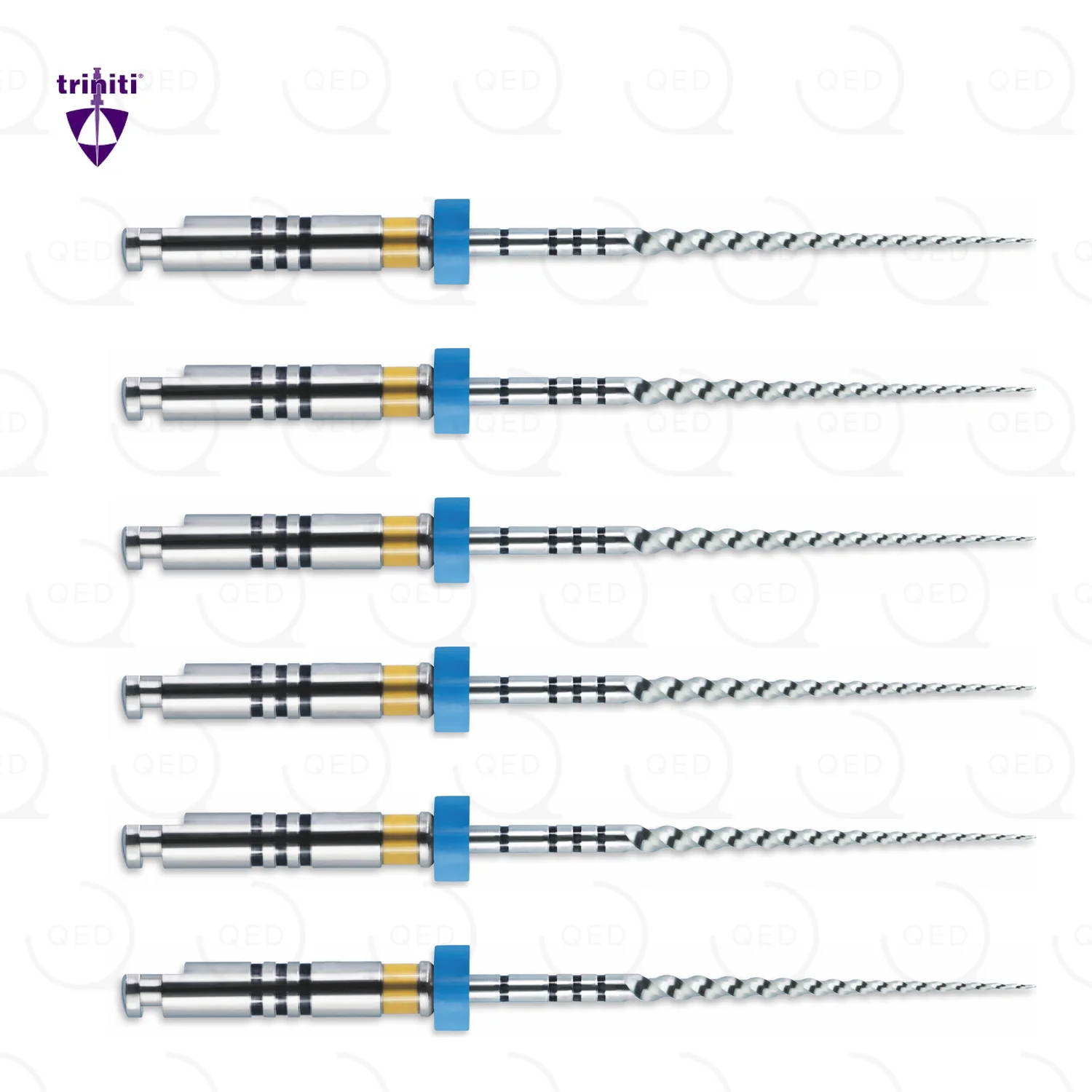
triniti® 25/.06 · 25 mm · 6 files
crown-downshapingstraight canalsrotary nitisterile, single use
iso 25 on a 6% taper does most of the shaping in a straightforward canal – a common final size behind a taper that opens the body of the preparation properly. vdw set it at 90 gcm – 0.90 ncm.
| 0.90 ncm torque (vdw) | 0.25 mm tip diameter | 16 mm working part |
this pack: triniti® rotary niti file, iso 25 tip, .06 taper, 25 mm, 16 mm working part (pack of 6) · sterile, single use
ref v201343025025 · made by maillefer instruments holding sàrl, ballaigues, switzerland
› iso 25 tip on a constant .06 taper – 0.25 mm across the tip, gaining 0.06 mm in diameter for every millimetre back from it, which is the same figure written as 6%
› 16 mm working part on a 25 mm shank, with the red iso 25 band on the handle
› three cutting edges on a convex triangular section – vdw describe the geometry as the efficiency of traditional k-type cutting blades, i.e. a convex cross-section to stabilise the instrument core and a cutting blade angle suitable for rotary use
› cut to clear debris – vdw credit the special k-type cutting edges with efficient removal of debris and dentine chips
› continuous rotation at approximately 300 rpm, with the torque set to the figure for the size – 90 gcm for this one
› supplied sterile and single use – ready to use, with no sterilisation before the case and nothing to re-process after it
taper is what gives an irrigant somewhere to go. a 6% preparation carries a column of fluid down a canal that a 4% preparation only threads, which is why the steeper file is the default in a root that can afford it. the judgement – and it is a judgement, not a rule – is whether this root can. where it cannot, the 25/.04 in the same length is the same tip on half the taper.
the goal of root canal preparation is to create optimal conditions for a tightly sealed and long-lasting root filling, which includes a uniformly tapered canal shape.
vdw, on the triniti® range
it is a crown-down system, and the tapers are the sequence rather than a specification. vdw's larger and medium tapers are the ones they credit with speedy dentine removal and with keeping the number of instrument changes to a minimum – that is this file's part of the work, in the straight portion of the canal. the smaller tapers follow it into the curve and into the apical third.
triniti® came to the uk market in the early 2000s with one job: to get general practice to try niti – to move from stainless steel hand files to rotary nickel-titanium for the first time. the name carries that invitation and two further readings with it. the section is a convex triangle, so the blade cuts on three edges. and the instrument is nickel-titanium. try niti, tri, niti – three readings, one name, and it has outlived the campaign that coined it.
| rotation | continuous, approximately 300 rpm (vdw give a 250–350 rpm range) |
| torque | 90 gcm – 0.90 ncm for this file |
| handpiece | a torque-controlled endodontic motor with a reduction contra-angle |
| use | single use – a fresh file, then discard |
any torque-limited endodontic motor that can be set to a rotation speed and a torque ceiling will run it. we stock the x-smart® pro+ and the vdw.silver® reciproc, both with a 6:1 contra-angle.
| iso tip size | 25 (0.25 mm) |
| taper | .06, constant (6%) |
| length | 25 mm |
| active working part | 16 mm |
| material | nickel-titanium, rotary |
| motion | continuous rotation |
| supplied | sterile, single use |
| pack | blister of 6 instruments |
| manufacturer | maillefer instruments holding sàrl, ballaigues, switzerland |
| ref | v201343025025 |
what torque and speed should i set?
vdw's figure for this file is 90 gcm, which is 0.90 ncm, at a constant rotation of about 300 rpm. the torque is per file, not per range – every size in the range has its own number.
are they sterile, and can i re-use them?
they are supplied sterile and are single use in the uk. nothing to autoclave before the case and nothing to re-process after it, so there is no count to keep and no wear to judge – a fresh file every time, which is the whole argument for buying a rotary instrument sterile.
which cone and paper point fit it?
a constant-taper preparation wants a constant-taper cone of the same size. pro-fit® gutta percha 25/.06 and pro-fit® paper points 25/.06 match this file exactly on both tip size and taper.
how does it compare with its neighbours?
the range runs two tapers so that tip size and taper can be chosen separately. the nearest alternatives to this file are 25/.04 in 25 mm, 20/.06, 30/.06.
| step | what we stock |
|---|---|
| patency | vdw c-pilot® 08 and c-pilot® 10 in 25 mm – the house hand file |
| lubricant | glyde™ file prep · file-eze™ |
| irrigants | chlorax 5.25% · chlorax 2% · endo-solution 17% edta |
| delivery | irriflex® 30g · navitip™ 29 ga |
| activation | vdw eddy® tips – vdw's own |
| dry | pro-fit® paper points 25/.06 – matched to this file |
| obturate | pro-fit® gutta percha 25/.06 with sealer, carried to length together |
| seal, resin | vdw 2seal® – vdw's own epoxy · ah plus®, the epoxy sealer every other one is measured against |
| seal, bioceramic | neosealer® ezflo – premixed, with 29 ga navitip cannulas in 25 mm |
| coronal seal | sdr® flow+ refill universal – 4 mm bulk increment, one cure |
resin or bioceramic is a real choice of technique rather than a ranking – we carry both because both are right in different hands. irrigation is the half of the case a file does not do: a crown-down sequence shortens the mechanical part, not the chemical one.
triniti® 25/.06 · 25 mm · 16 mm working part · nickel-titanium, continuous rotation · 0.90 ncm at ~300 rpm · sterile, single use · blister of 6 · made by maillefer, ballaigues · ref v201343025025

triniti® 30/.06 · 25 mm · 6 files
crown-downcoronal shapingstraight canalsrotary nitisterile, single use
30/.06 is the largest combination of tip and taper qed stock in the triniti range, and at 120 gcm – 1.2 ncm it carries the highest torque figure of any of the shaping files.
| 1.2 ncm torque (vdw) | 0.30 mm tip diameter | 16 mm working part |
this pack: triniti® rotary niti file, iso 30 tip, .06 taper, 25 mm, 16 mm working part (pack of 6) · sterile, single use
ref v201343025030 · made by maillefer instruments holding sàrl, ballaigues, switzerland
› iso 30 tip on a constant .06 taper – 0.30 mm across the tip, gaining 0.06 mm in diameter for every millimetre back from it, which is the same figure written as 6%
› 16 mm working part on a 25 mm shank, with the blue iso 30 band on the handle
› three cutting edges on a convex triangular section – vdw describe the geometry as the efficiency of traditional k-type cutting blades, i.e. a convex cross-section to stabilise the instrument core and a cutting blade angle suitable for rotary use
› cut to clear debris – vdw credit the special k-type cutting edges with efficient removal of debris and dentine chips
› continuous rotation at approximately 300 rpm, with the torque set to the figure for the size – 120 gcm for this one
› supplied sterile and single use – ready to use, with no sterilisation before the case and nothing to re-process after it
this is the coronal end of a crown-down sequence doing its job: a 0.30 mm tip behind a 6% taper removes a great deal of dentine per pass, which is exactly what vdw mean by speedy dentine removal with the instrument changes kept to a minimum. it is also the file that most rewards a torque-limited motor set properly, because the amount of blade in contact with the wall is at its greatest here.
the goal of root canal preparation is to create optimal conditions for a tightly sealed and long-lasting root filling, which includes a uniformly tapered canal shape.
vdw, on the triniti® range
it is a crown-down system, and the tapers are the sequence rather than a specification. vdw's larger and medium tapers are the ones they credit with speedy dentine removal and with keeping the number of instrument changes to a minimum – that is this file's part of the work, in the straight portion of the canal. the smaller tapers follow it into the curve and into the apical third.
triniti® came to the uk market in the early 2000s with one job: to get general practice to try niti – to move from stainless steel hand files to rotary nickel-titanium for the first time. the name carries that invitation and two further readings with it. the section is a convex triangle, so the blade cuts on three edges. and the instrument is nickel-titanium. try niti, tri, niti – three readings, one name, and it has outlived the campaign that coined it.
| rotation | continuous, approximately 300 rpm (vdw give a 250–350 rpm range) |
| torque | 120 gcm – 1.2 ncm for this file |
| handpiece | a torque-controlled endodontic motor with a reduction contra-angle |
| use | single use – a fresh file, then discard |
any torque-limited endodontic motor that can be set to a rotation speed and a torque ceiling will run it. we stock the x-smart® pro+ and the vdw.silver® reciproc, both with a 6:1 contra-angle.
| iso tip size | 30 (0.30 mm) |
| taper | .06, constant (6%) |
| length | 25 mm |
| active working part | 16 mm |
| material | nickel-titanium, rotary |
| motion | continuous rotation |
| supplied | sterile, single use |
| pack | blister of 6 instruments |
| manufacturer | maillefer instruments holding sàrl, ballaigues, switzerland |
| ref | v201343025030 |
what torque and speed should i set?
vdw's figure for this file is 120 gcm, which is 1.2 ncm, at a constant rotation of about 300 rpm. the torque is per file, not per range – every size in the range has its own number.
are they sterile, and can i re-use them?
they are supplied sterile and are single use in the uk. nothing to autoclave before the case and nothing to re-process after it, so there is no count to keep and no wear to judge – a fresh file every time, which is the whole argument for buying a rotary instrument sterile.
which cone and paper point fit it?
a constant-taper preparation wants a constant-taper cone of the same size. pro-fit® gutta percha 30/.06 and pro-fit® paper points 30/.06 match this file exactly on both tip size and taper.
how does it compare with its neighbours?
the range runs two tapers so that tip size and taper can be chosen separately. the nearest alternatives to this file are 30/.04 in 25 mm, 25/.06.
| step | what we stock |
|---|---|
| patency | vdw c-pilot® 08 and c-pilot® 10 in 25 mm – the house hand file |
| lubricant | glyde™ file prep · file-eze™ |
| irrigants | chlorax 5.25% · chlorax 2% · endo-solution 17% edta |
| delivery | irriflex® 30g · navitip™ 29 ga |
| activation | vdw eddy® tips – vdw's own |
| dry | pro-fit® paper points 30/.06 – matched to this file |
| obturate | pro-fit® gutta percha 30/.06 with sealer, carried to length together |
| seal, resin | vdw 2seal® – vdw's own epoxy · ah plus®, the epoxy sealer every other one is measured against |
| seal, bioceramic | neosealer® ezflo – premixed, with 29 ga navitip cannulas in 25 mm |
| coronal seal | sdr® flow+ refill universal – 4 mm bulk increment, one cure |
resin or bioceramic is a real choice of technique rather than a ranking – we carry both because both are right in different hands. irrigation is the half of the case a file does not do: a crown-down sequence shortens the mechanical part, not the chemical one.
triniti® 30/.06 · 25 mm · 16 mm working part · nickel-titanium, continuous rotation · 1.2 ncm at ~300 rpm · sterile, single use · blister of 6 · made by maillefer, ballaigues · ref v201343025030
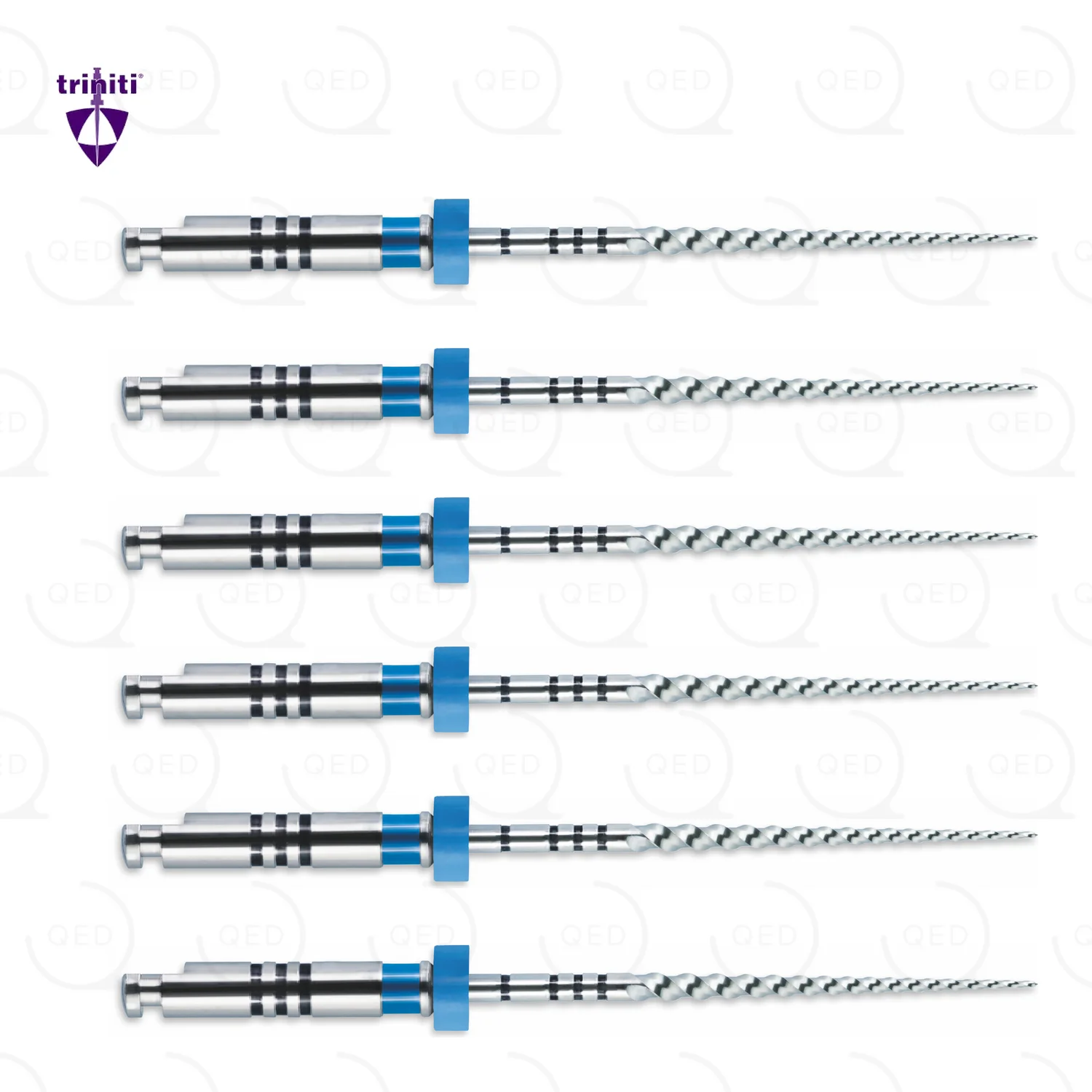
well-root™ pt · premixed bioceramic putty
why open a whole syringe for one pulp cap? well-root™ pt takes a different route to premixed bioceramics: unit-dose capsules. each 0.25 g capsule holds exactly one case’s worth of ready-to-use calcium silicate putty – fresh every time, nothing left drying on the shelf, nothing shared between patients.
| 5.4 mm al radiopacity | 45 min final set | 10 × 0.25 g unit-dose capsules |
this pack: well-root™ pt premixed bioceramic putty, 10 × 0.25 g unit-dose capsules · single use · made by vericom, korea
› unit dose. one capsule, one case – a fresh 0.25 g of putty every time, with no waste and no cross-use between patients.
› premixed, paste only. no powder, no gel, no mixing; it sets in the presence of moisture from the surrounding tissues.
› radiopaque. 5.4 mm al on vericom’s iso 6876:2012 testing – the repair or apical barrier is easy to verify on the radiograph.
› alkaline ph. vericom attribute an antibacterial effect to the high ph as the calcium silicate sets.
› compressive and push-out strength. vericom publish both as strengths of the material against comparator cements in their own bench testing.
› indicated for pulp capping, perforation repair, root-end filling and apexification.
vericom publish these figures measured to the international standard for root canal sealing materials. they are the manufacturer’s own bench data, not an independent study.
| radiopacity | 5.4 mm al |
| film thickness | 38.8 microns (tolerance 4) |
| setting time, initial | 5 minutes (tolerance 2) |
| setting time, final | 45 minutes (tolerance 5) |
vericom’s own clinical guideline for well-root™ pt, reproduced as they publish it. the full guideline, including pulp capping, root-end filling and apexification, is in the download below.
1 apply the putty. apply well-root™ pt to the perforation using the suitable instruments such as a plugger or paper points.
2 place a cotton pellet. place a moderately moist cotton pellet in the root canal.
3 temporise. fill the cavity with a temporary restoration material for more than 4 hours.
4 obturate. if well-root™ pt is fully set, obturate the root canal to complete the treatment.
why capsules rather than a syringe? portion control and freshness. every case starts a new sealed capsule, so the consistency is identical from the first patient in the box to the tenth, and there is no part-used syringe to manage.
do i need to dry the site completely? no. the putty needs moisture to set, drawing it from the surrounding tissues and dentine. vericom’s apexification guidance goes further and has a wet cotton pellet placed against it.
how do i place it? dispense from the capsule and carry it to the site with your preferred instrument – an mta carrier, an applicator or a plugger – then adapt it gently. one capsule is sized for a single case.
| carry the putty | vista apex mta carriers, 0.99 mm or the wider 1.60 mm carriers, and the mta applicator 0.80 mm. |
| temporary restoration | ultradent j-temp™ temporary resin for step 3. |
| patency | vdw c-pilot® 10, 25 mm and c-pilot® 08, 25 mm. |
| irrigants | chlorax 5.25% sodium hypochlorite, chlorax 2% and endo-solution 17% edta. |
| obturation | well-root™ st, vericom’s own premixed bioceramic sealer, for step 4. |
| coronal seal | sdr® flow+ refill, universal – the apical seal is only half the job. |
› well-root™ pt clinical guideline (pdf, 1.6 mb, vericom, 2026) – pulp capping, perforation repair, root-end filling and apexification, step by step.
pulp capping perforation repair root resorption root-end filling apexification unit dose premixed radiopaque
well-root™ pt · premixed calcium silicate putty · 10 × 0.25 g unit-dose capsules · single use · sets with moisture · radiopaque · made by vericom co. ltd, korea. figures are vericom’s own, measured to iso 6876:2012.

vdw.rotate® · 15/.04 · 21 mm · 6 files
heat-treated nitiadapted s sectionsingle use
the heat-treated file in vdw’s rotary range. vdw describe a “new heat treatment to increase flexibility without compromising cutting efficiency” and an “adapted s cross section for higher cutting efficiency” – the same s-section family as reciproc® blue, run in continuous rotation. this is the file the basic sequence opens on.
this pack: vdw.rotate® rotary file, iso size 15, .04 taper, 21 mm (pack of 6)
vdw · vdw gmbh, munich, germany (dentsply sirona)
| tip (d0) | 0.15 mm |
| taper | .04 |
| length | 21 mm |
| working part | 16 mm |
| handle | 11 mm, nickel plated · 1 ring for taper .04 · iso colour |
| calibration rings | 18, 19, 20 mm, radiopaque |
| supplied | sterile, pack of 6 |
› heat-treated wire. vdw say the treatment “strengthens cyclic fatigue resistance of the file and lowers the risk of file breakage”.*
› adapted s section. vdw say it “ensures effective debris removal and provides control of the instrument for a swift, thorough and safe preparation”.*
› you can read the taper off the handle. 1 ring on the handle means taper .04, on top of the iso colour. no squinting at the blister.
› radiopaque calibration rings. at 18, 19, 20 mm, so the length shows on the radiograph.
“the new vdw.rotate® file reduces canal transportation and better respects the canal anatomy.”
vdw, vdw.rotate product brochure menvrotbrc000 rev.1, 2019. vdw mark this “compared to other vdw continuous rotary instruments”.
which taper do i choose?
vdw put it simply: “choose taper .06 for the majority of clinical cases”, and “choose taper .04 for narrow and highly curved canals including apical curvature”.
coming from mtwo?
the same s-section idea, with the heat treatment and the handle coding added. see the mtwo range if you want to compare.
› the basic sequence: 20/.05 · 25/.06 · 25/.04, 21 mm
› same file, other lengths: 25 mm · 31 mm
› larger anatomies: 30/.04 · 35/.04 · 40/.04 · 50/.04
› obturation: diadent® dia-pro iso gutta-percha 15/.04 – the same size and taper. the dia-pro paper points stop at 40, so gauge with 40/.04 or a standard point.
› glide path: vdw c-pilot® assorted, 21 mm · vdw c-pilot® 10, 21 mm
› retreatment: vdw.rotate® retreatment 25/.05, 21 mm
› motor: x-smart® pro+ with apex locator
› lubricant and irrigation: glyde™ file prep · chlorax 5.25% · irriflex® needles
vdw mark their vdw.rotate performance claims “compared to other vdw continuous rotary instruments”, and the cutting-efficiency claim also “compared to a centred rotary cross section”. single use. follow the instructions supplied with the product.
vdw.rotate® 15/.04, 21 mm (6) · heat-treated niti · ref vrot621415
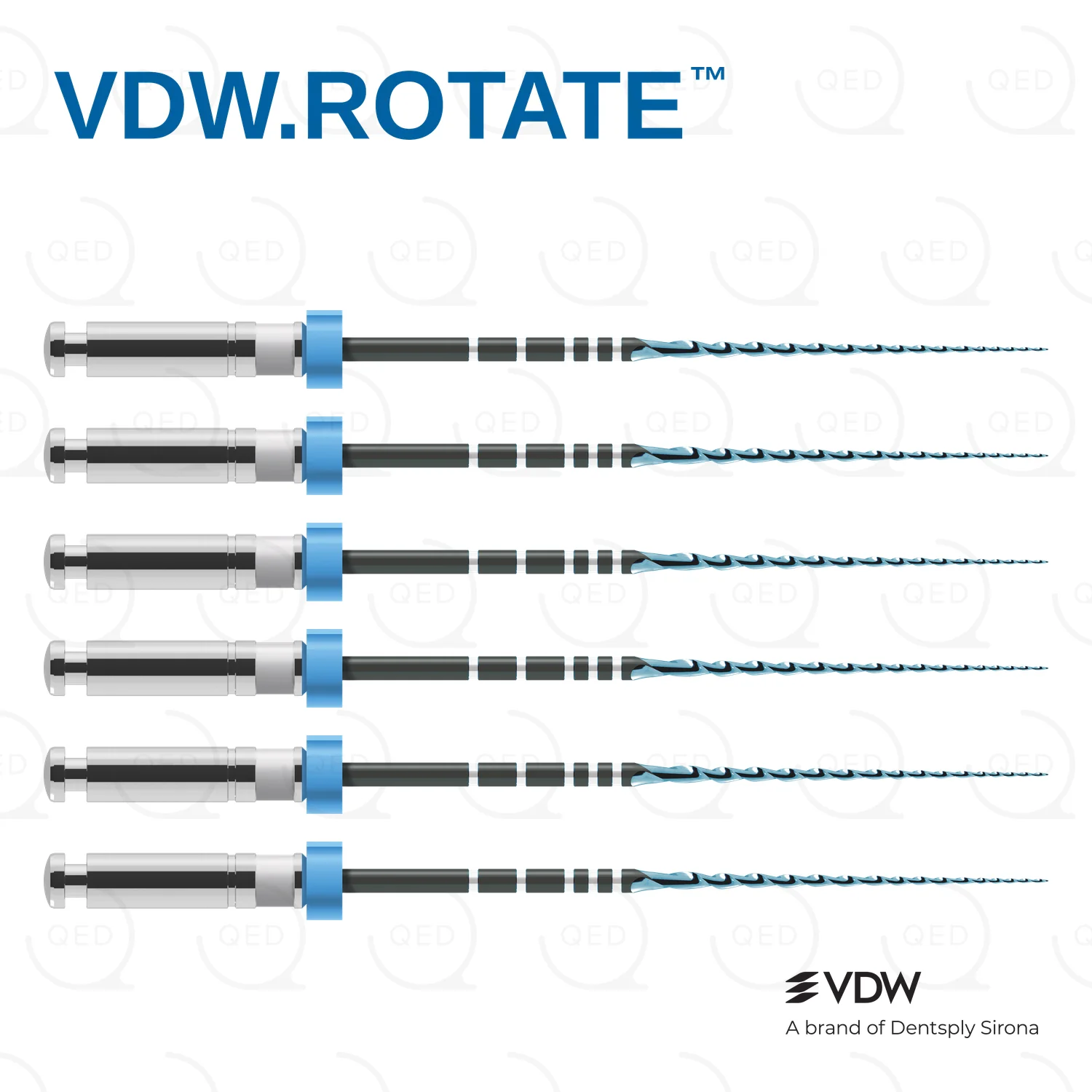
vdw.rotate® · 25/.04 · 21 mm · 6 files
heat-treated nitiadapted s sectionsingle use
the heat-treated file in vdw’s rotary range. vdw describe a “new heat treatment to increase flexibility without compromising cutting efficiency” and an “adapted s cross section for higher cutting efficiency” – the same s-section family as reciproc® blue, run in continuous rotation.
this pack: vdw.rotate® rotary file, iso size 25, .04 taper, 21 mm (pack of 6)
vdw · vdw gmbh, munich, germany (dentsply sirona)
| tip (d0) | 0.25 mm |
| taper | .04 |
| length | 21 mm |
| working part | 16 mm |
| handle | 11 mm, nickel plated · 1 ring for taper .04 · iso colour |
| calibration rings | 18, 19, 20 mm, radiopaque |
| supplied | sterile, pack of 6 |
› heat-treated wire. vdw say the treatment “strengthens cyclic fatigue resistance of the file and lowers the risk of file breakage”.*
› adapted s section. vdw say it “ensures effective debris removal and provides control of the instrument for a swift, thorough and safe preparation”.*
› you can read the taper off the handle. 1 ring on the handle means taper .04, on top of the iso colour. no squinting at the blister.
› radiopaque calibration rings. at 18, 19, 20 mm, so the length shows on the radiograph.
“the new vdw.rotate® file reduces canal transportation and better respects the canal anatomy.”
vdw, vdw.rotate product brochure menvrotbrc000 rev.1, 2019. vdw mark this “compared to other vdw continuous rotary instruments”.
which taper do i choose?
vdw put it simply: “choose taper .06 for the majority of clinical cases”, and “choose taper .04 for narrow and highly curved canals including apical curvature”.
coming from mtwo?
the same s-section idea, with the heat treatment and the handle coding added. see the mtwo range if you want to compare.
› the basic sequence: 15/.04 · 20/.05 · 25/.06, 21 mm
› same file, other lengths: 25 mm · 31 mm
› larger anatomies: 30/.04 · 35/.04 · 40/.04 · 50/.04
› matched obturation: gutta-percha 25/.04 · paper points 25/.04
› glide path: vdw c-pilot® assorted, 21 mm · vdw c-pilot® 10, 21 mm
› retreatment: vdw.rotate® retreatment 25/.05, 21 mm
› motor: x-smart® pro+ with apex locator
› lubricant and irrigation: glyde™ file prep · chlorax 5.25% · irriflex® needles
vdw mark their vdw.rotate performance claims “compared to other vdw continuous rotary instruments”, and the cutting-efficiency claim also “compared to a centred rotary cross section”. single use. follow the instructions supplied with the product.
vdw.rotate® 25/.04, 21 mm (6) · heat-treated niti · ref vrot621425
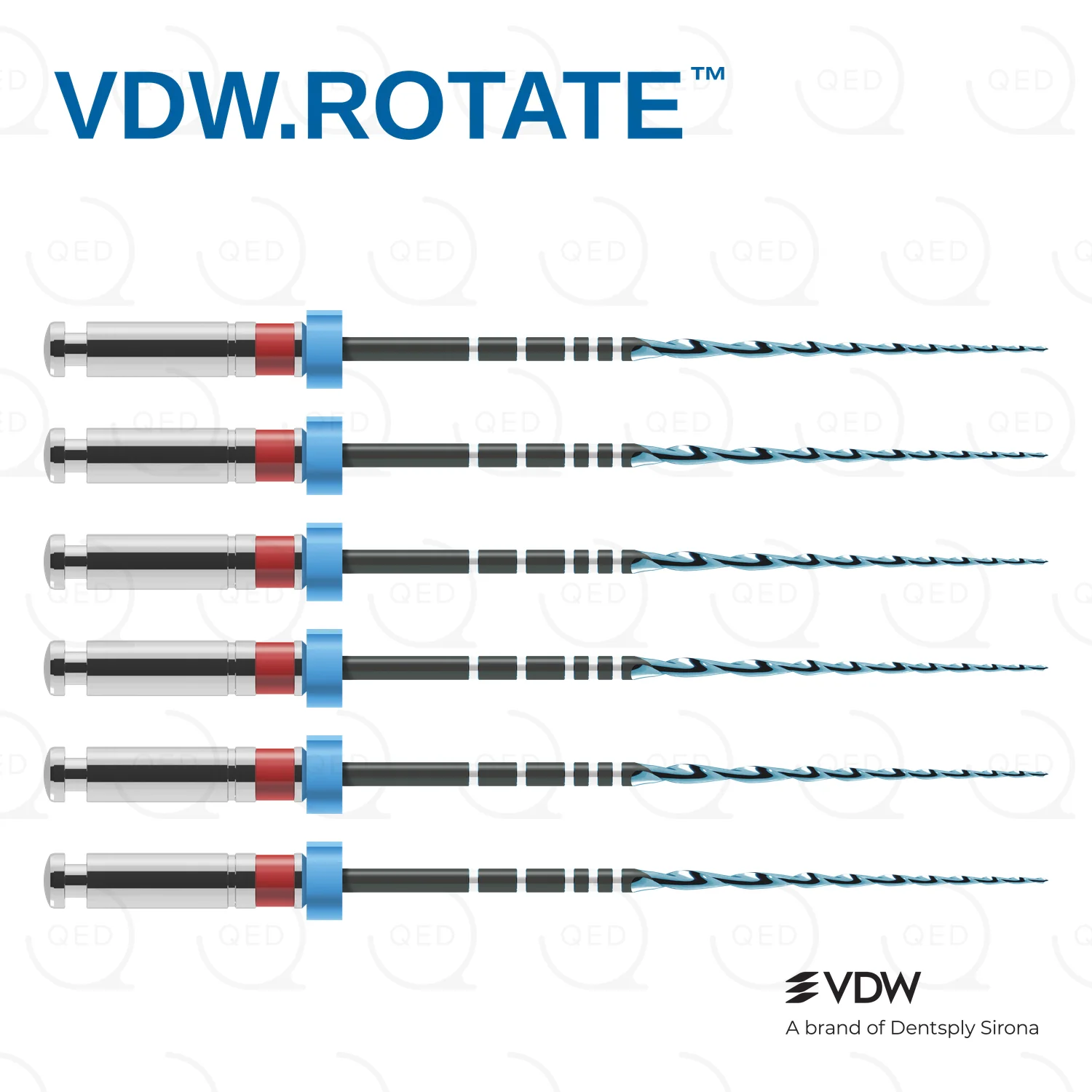
vdw.rotate® · 30/.04 · 21 mm · 6 files
heat-treated nitiadapted s sectionsingle use
the heat-treated file in vdw’s rotary range. vdw describe a “new heat treatment to increase flexibility without compromising cutting efficiency” and an “adapted s cross section for higher cutting efficiency” – the same s-section family as reciproc® blue, run in continuous rotation. this size is for shaping a larger canal once you have reached working length.
this pack: vdw.rotate® rotary file, iso size 30, .04 taper, 21 mm (pack of 6)
vdw · vdw gmbh, munich, germany (dentsply sirona)
| tip (d0) | 0.30 mm |
| taper | .04 |
| length | 21 mm |
| working part | 16 mm |
| handle | 11 mm, nickel plated · 1 ring for taper .04 · iso colour |
| calibration rings | 18, 19, 20 mm, radiopaque |
| supplied | sterile, pack of 6 |
› heat-treated wire. vdw say the treatment “strengthens cyclic fatigue resistance of the file and lowers the risk of file breakage”.*
› adapted s section. vdw say it “ensures effective debris removal and provides control of the instrument for a swift, thorough and safe preparation”.*
› you can read the taper off the handle. 1 ring on the handle means taper .04, on top of the iso colour. no squinting at the blister.
› radiopaque calibration rings. at 18, 19, 20 mm, so the length shows on the radiograph.
“the new vdw.rotate® file reduces canal transportation and better respects the canal anatomy.”
vdw, vdw.rotate product brochure menvrotbrc000 rev.1, 2019. vdw mark this “compared to other vdw continuous rotary instruments”.
which taper do i choose?
vdw put it simply: “choose taper .06 for the majority of clinical cases”, and “choose taper .04 for narrow and highly curved canals including apical curvature”.
coming from mtwo?
the same s-section idea, with the heat treatment and the handle coding added. see the mtwo range if you want to compare.
› the basic sequence: 15/.04 · 20/.05 · 25/.06 · 25/.04, 21 mm
› same file, other lengths: 25 mm · 31 mm
› larger anatomies: 35/.04 · 40/.04 · 50/.04 · 60/.04
› matched obturation: gutta-percha 30/.04 · paper points 30/.04
› glide path: vdw c-pilot® assorted, 21 mm · vdw c-pilot® 10, 21 mm
› retreatment: vdw.rotate® retreatment 25/.05, 21 mm
› motor: x-smart® pro+ with apex locator
› lubricant and irrigation: glyde™ file prep · chlorax 5.25% · irriflex® needles
vdw mark their vdw.rotate performance claims “compared to other vdw continuous rotary instruments”, and the cutting-efficiency claim also “compared to a centred rotary cross section”. single use. follow the instructions supplied with the product.
vdw.rotate® 30/.04, 21 mm (6) · heat-treated niti · ref vrot621430

vdw.rotate® · 35/.04 · 21 mm · 6 files
heat-treated nitiadapted s sectionsingle use
the heat-treated file in vdw’s rotary range. vdw describe a “new heat treatment to increase flexibility without compromising cutting efficiency” and an “adapted s cross section for higher cutting efficiency” – the same s-section family as reciproc® blue, run in continuous rotation. this size is for shaping a larger canal once you have reached working length.
this pack: vdw.rotate® rotary file, iso size 35, .04 taper, 21 mm (pack of 6)
vdw · vdw gmbh, munich, germany (dentsply sirona)
| tip (d0) | 0.35 mm |
| taper | .04 |
| length | 21 mm |
| working part | 16 mm |
| handle | 11 mm, nickel plated · 1 ring for taper .04 · iso colour |
| calibration rings | 18, 19, 20 mm, radiopaque |
| supplied | sterile, pack of 6 |
› heat-treated wire. vdw say the treatment “strengthens cyclic fatigue resistance of the file and lowers the risk of file breakage”.*
› adapted s section. vdw say it “ensures effective debris removal and provides control of the instrument for a swift, thorough and safe preparation”.*
› you can read the taper off the handle. 1 ring on the handle means taper .04, on top of the iso colour. no squinting at the blister.
› radiopaque calibration rings. at 18, 19, 20 mm, so the length shows on the radiograph.
“the new vdw.rotate® file reduces canal transportation and better respects the canal anatomy.”
vdw, vdw.rotate product brochure menvrotbrc000 rev.1, 2019. vdw mark this “compared to other vdw continuous rotary instruments”.
which taper do i choose?
vdw put it simply: “choose taper .06 for the majority of clinical cases”, and “choose taper .04 for narrow and highly curved canals including apical curvature”.
coming from mtwo?
the same s-section idea, with the heat treatment and the handle coding added. see the mtwo range if you want to compare.
› the basic sequence: 15/.04 · 20/.05 · 25/.06 · 25/.04, 21 mm
› same file, other lengths: 25 mm · 31 mm
› larger anatomies: 30/.04 · 40/.04 · 50/.04 · 60/.04
› matched obturation: gutta-percha 35/.04 · paper points 35/.04
› glide path: vdw c-pilot® assorted, 21 mm · vdw c-pilot® 10, 21 mm
› retreatment: vdw.rotate® retreatment 25/.05, 21 mm
› motor: x-smart® pro+ with apex locator
› lubricant and irrigation: glyde™ file prep · chlorax 5.25% · irriflex® needles
vdw mark their vdw.rotate performance claims “compared to other vdw continuous rotary instruments”, and the cutting-efficiency claim also “compared to a centred rotary cross section”. single use. follow the instructions supplied with the product.
vdw.rotate® 35/.04, 21 mm (6) · heat-treated niti · ref vrot621435
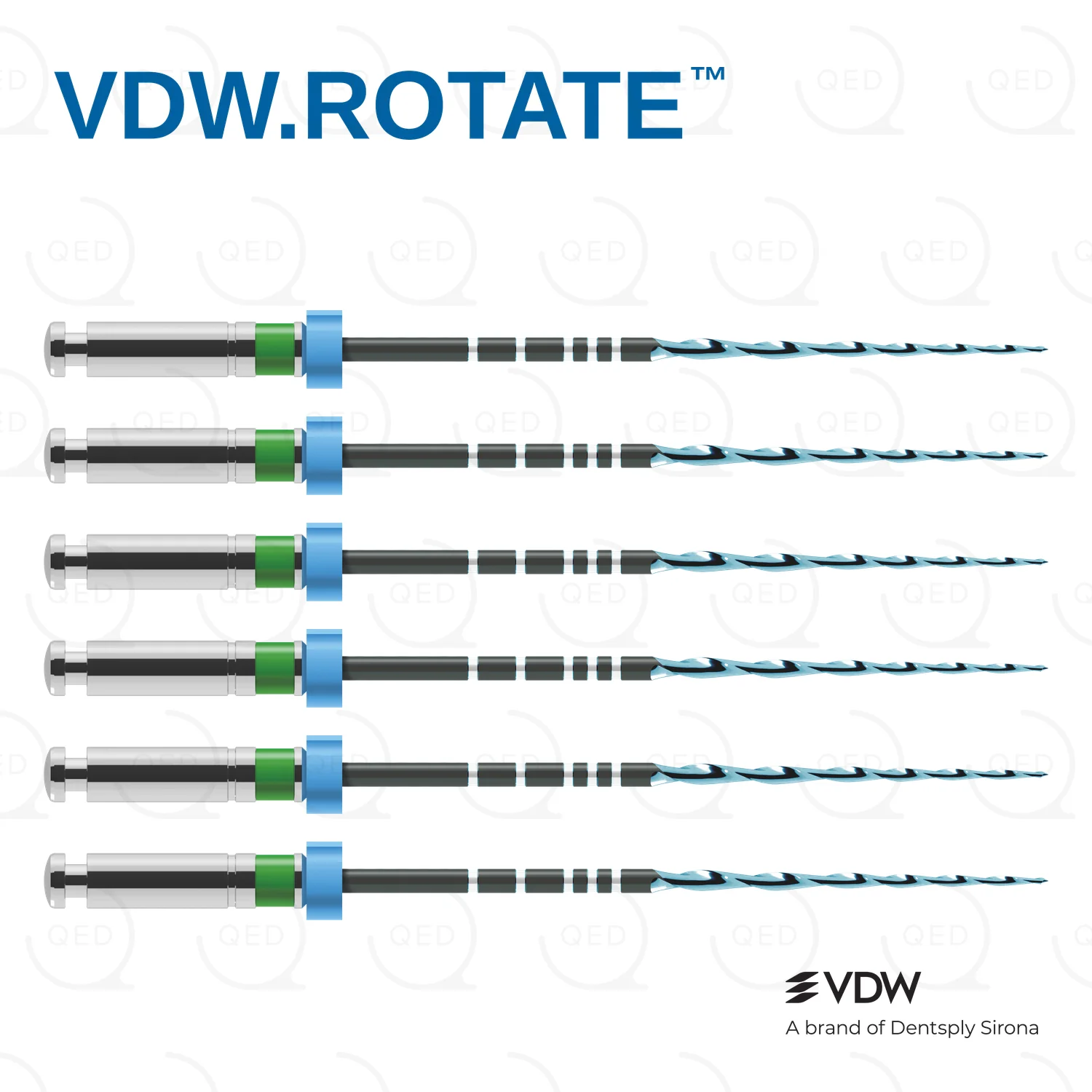
vdw.rotate® · 40/.04 · 21 mm · 6 files
heat-treated nitiadapted s sectionsingle use
the heat-treated file in vdw’s rotary range. vdw describe a “new heat treatment to increase flexibility without compromising cutting efficiency” and an “adapted s cross section for higher cutting efficiency” – the same s-section family as reciproc® blue, run in continuous rotation. this size is for shaping a larger canal once you have reached working length.
this pack: vdw.rotate® rotary file, iso size 40, .04 taper, 21 mm (pack of 6)
vdw · vdw gmbh, munich, germany (dentsply sirona)
| tip (d0) | 0.40 mm |
| taper | .04 |
| length | 21 mm |
| working part | 16 mm |
| handle | 11 mm, nickel plated · 1 ring for taper .04 · iso colour |
| calibration rings | 18, 19, 20 mm, radiopaque |
| supplied | sterile, pack of 6 |
› heat-treated wire. vdw say the treatment “strengthens cyclic fatigue resistance of the file and lowers the risk of file breakage”.*
› adapted s section. vdw say it “ensures effective debris removal and provides control of the instrument for a swift, thorough and safe preparation”.*
› you can read the taper off the handle. 1 ring on the handle means taper .04, on top of the iso colour. no squinting at the blister.
› radiopaque calibration rings. at 18, 19, 20 mm, so the length shows on the radiograph.
“the new vdw.rotate® file reduces canal transportation and better respects the canal anatomy.”
vdw, vdw.rotate product brochure menvrotbrc000 rev.1, 2019. vdw mark this “compared to other vdw continuous rotary instruments”.
which taper do i choose?
vdw put it simply: “choose taper .06 for the majority of clinical cases”, and “choose taper .04 for narrow and highly curved canals including apical curvature”.
coming from mtwo?
the same s-section idea, with the heat treatment and the handle coding added. see the mtwo range if you want to compare.
› the basic sequence: 15/.04 · 20/.05 · 25/.06 · 25/.04, 21 mm
› same file, other lengths: 25 mm · 31 mm
› larger anatomies: 30/.04 · 35/.04 · 50/.04 · 60/.04
› matched obturation: gutta-percha 40/.04 · paper points 40/.04
› glide path: vdw c-pilot® assorted, 21 mm · vdw c-pilot® 10, 21 mm
› retreatment: vdw.rotate® retreatment 25/.05, 21 mm
› motor: x-smart® pro+ with apex locator
› lubricant and irrigation: glyde™ file prep · chlorax 5.25% · irriflex® needles
vdw mark their vdw.rotate performance claims “compared to other vdw continuous rotary instruments”, and the cutting-efficiency claim also “compared to a centred rotary cross section”. single use. follow the instructions supplied with the product.
vdw.rotate® 40/.04, 21 mm (6) · heat-treated niti · ref vrot621440
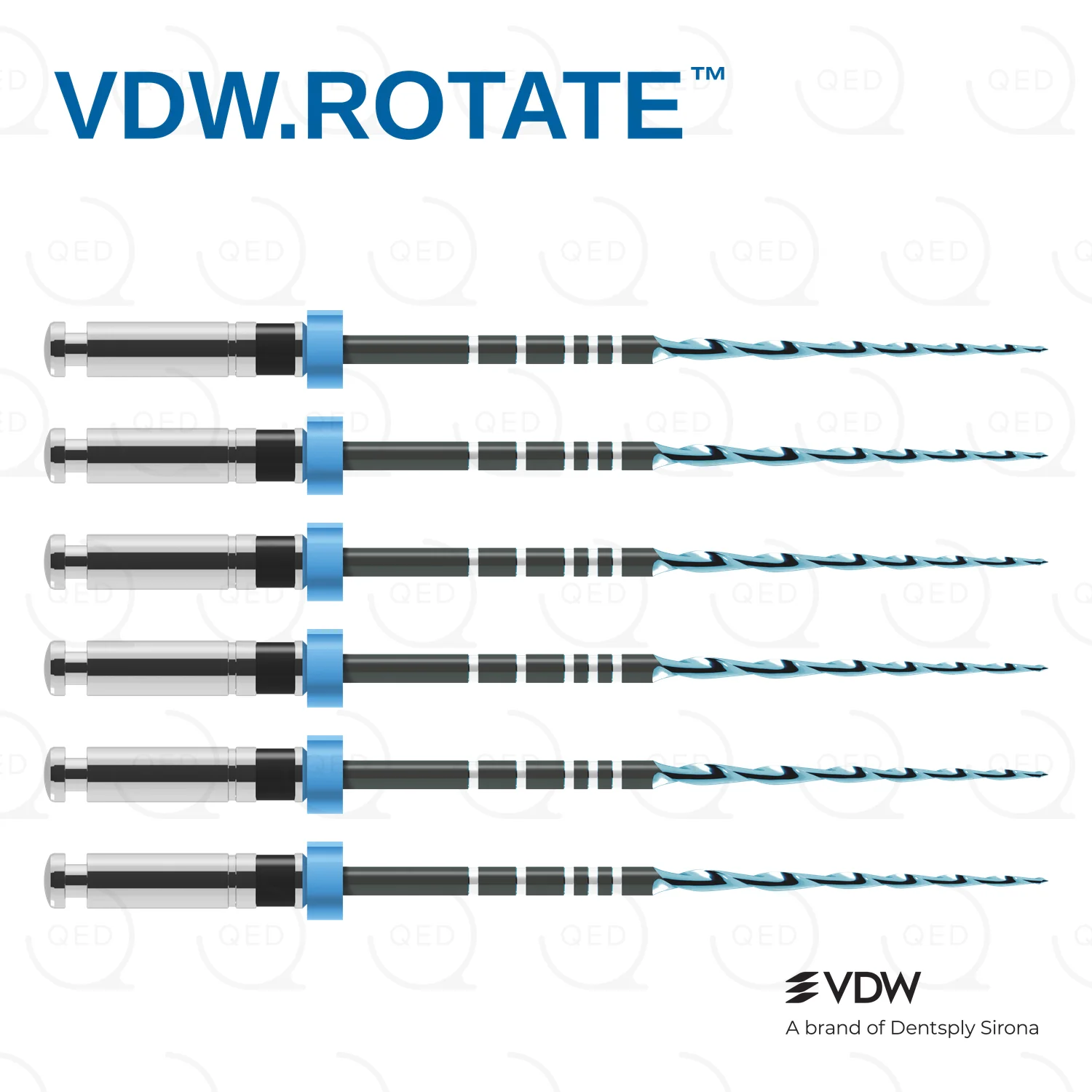
vdw.rotate® · 50/.04 · 21 mm · 6 files
heat-treated nitiadapted s sectionsingle use
the heat-treated file in vdw’s rotary range. vdw describe a “new heat treatment to increase flexibility without compromising cutting efficiency” and an “adapted s cross section for higher cutting efficiency” – the same s-section family as reciproc® blue, run in continuous rotation. this size is for shaping a larger canal once you have reached working length.
this pack: vdw.rotate® rotary file, iso size 50, .04 taper, 21 mm (pack of 6)
vdw · vdw gmbh, munich, germany (dentsply sirona)
| tip (d0) | 0.50 mm |
| taper | .04 |
| length | 21 mm |
| working part | 16 mm |
| handle | 11 mm, nickel plated · 1 ring for taper .04 · iso colour |
| calibration rings | 18, 19, 20 mm, radiopaque |
| supplied | sterile, pack of 6 |
› heat-treated wire. vdw say the treatment “strengthens cyclic fatigue resistance of the file and lowers the risk of file breakage”.*
› adapted s section. vdw say it “ensures effective debris removal and provides control of the instrument for a swift, thorough and safe preparation”.*
› you can read the taper off the handle. 1 ring on the handle means taper .04, on top of the iso colour. no squinting at the blister.
› radiopaque calibration rings. at 18, 19, 20 mm, so the length shows on the radiograph.
“the new vdw.rotate® file reduces canal transportation and better respects the canal anatomy.”
vdw, vdw.rotate product brochure menvrotbrc000 rev.1, 2019. vdw mark this “compared to other vdw continuous rotary instruments”.
which taper do i choose?
vdw put it simply: “choose taper .06 for the majority of clinical cases”, and “choose taper .04 for narrow and highly curved canals including apical curvature”.
coming from mtwo?
the same s-section idea, with the heat treatment and the handle coding added. see the mtwo range if you want to compare.
› the basic sequence: 15/.04 · 20/.05 · 25/.06 · 25/.04, 21 mm
› same file, other lengths: 25 mm · 31 mm
› larger anatomies: 30/.04 · 35/.04 · 40/.04 · 60/.04
› matched obturation: gutta-percha 50/.04
› glide path: vdw c-pilot® assorted, 21 mm · vdw c-pilot® 10, 21 mm
› retreatment: vdw.rotate® retreatment 25/.05, 21 mm
› motor: x-smart® pro+ with apex locator
› lubricant and irrigation: glyde™ file prep · chlorax 5.25% · irriflex® needles
vdw mark their vdw.rotate performance claims “compared to other vdw continuous rotary instruments”, and the cutting-efficiency claim also “compared to a centred rotary cross section”. single use. follow the instructions supplied with the product.
vdw.rotate® 50/.04, 21 mm (6) · heat-treated niti · ref vrot621450
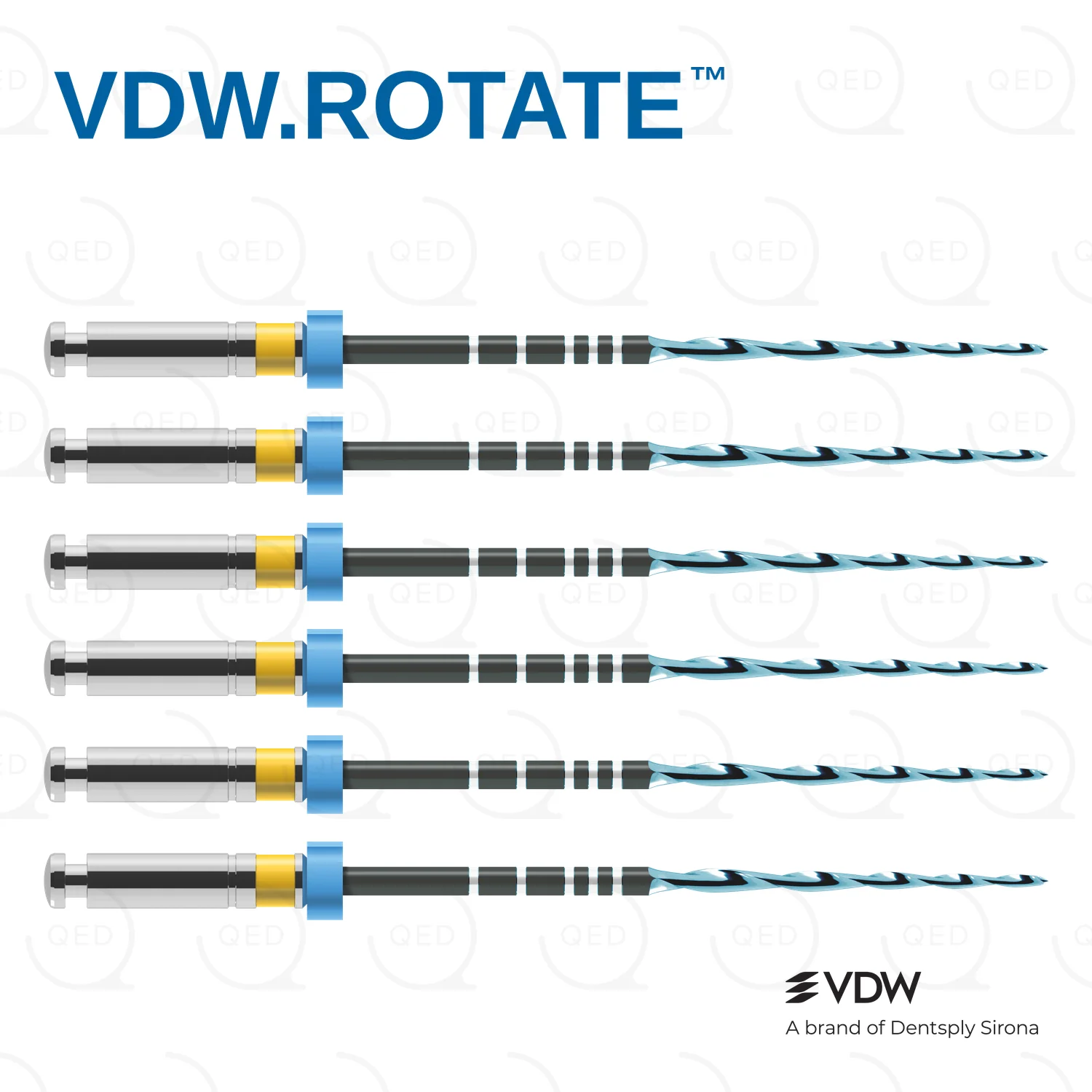
vdw.rotate® · 60/.04 · 21 mm · 6 files
heat-treated nitiadapted s sectionsingle use
the heat-treated file in vdw’s rotary range. vdw describe a “new heat treatment to increase flexibility without compromising cutting efficiency” and an “adapted s cross section for higher cutting efficiency” – the same s-section family as reciproc® blue, run in continuous rotation. this size is for shaping a larger canal once you have reached working length.
this pack: vdw.rotate® rotary file, iso size 60, .04 taper, 21 mm (pack of 6)
vdw · vdw gmbh, munich, germany (dentsply sirona)
| tip (d0) | 0.60 mm |
| taper | .04 |
| length | 21 mm |
| working part | 16 mm |
| handle | 11 mm, nickel plated · 1 ring for taper .04 · iso colour |
| calibration rings | 18, 19, 20 mm, radiopaque |
| supplied | sterile, pack of 6 |
› heat-treated wire. vdw say the treatment “strengthens cyclic fatigue resistance of the file and lowers the risk of file breakage”.*
› adapted s section. vdw say it “ensures effective debris removal and provides control of the instrument for a swift, thorough and safe preparation”.*
› you can read the taper off the handle. 1 ring on the handle means taper .04, on top of the iso colour. no squinting at the blister.
› radiopaque calibration rings. at 18, 19, 20 mm, so the length shows on the radiograph.
“the new vdw.rotate® file reduces canal transportation and better respects the canal anatomy.”
vdw, vdw.rotate product brochure menvrotbrc000 rev.1, 2019. vdw mark this “compared to other vdw continuous rotary instruments”.
which taper do i choose?
vdw put it simply: “choose taper .06 for the majority of clinical cases”, and “choose taper .04 for narrow and highly curved canals including apical curvature”.
coming from mtwo?
the same s-section idea, with the heat treatment and the handle coding added. see the mtwo range if you want to compare.
› the basic sequence: 15/.04 · 20/.05 · 25/.06 · 25/.04, 21 mm
› same file, other lengths: 25 mm · 31 mm
› larger anatomies: 30/.04 · 35/.04 · 40/.04 · 50/.04
› obturation: the dia-pro .04 range stops at 45, so there is no matched cone at 60/.04. fit from 45/.04 or the standard ml.029™ 60/.02.
› glide path: vdw c-pilot® assorted, 21 mm · vdw c-pilot® 10, 21 mm
› retreatment: vdw.rotate® retreatment 25/.05, 21 mm
› motor: x-smart® pro+ with apex locator
› lubricant and irrigation: glyde™ file prep · chlorax 5.25% · irriflex® needles
vdw mark their vdw.rotate performance claims “compared to other vdw continuous rotary instruments”, and the cutting-efficiency claim also “compared to a centred rotary cross section”. single use. follow the instructions supplied with the product.
vdw.rotate® 60/.04, 21 mm (6) · heat-treated niti · ref vrot621460

vdw.rotate® · 20/.05 · 21 mm · 6 files
heat-treated nitiadapted s sectionsingle use
the heat-treated file in vdw’s rotary range. vdw describe a “new heat treatment to increase flexibility without compromising cutting efficiency” and an “adapted s cross section for higher cutting efficiency” – the same s-section family as reciproc® blue, run in continuous rotation.
this pack: vdw.rotate® rotary file, iso size 20, .05 taper, 21 mm (pack of 6)
vdw · vdw gmbh, munich, germany (dentsply sirona)
| tip (d0) | 0.20 mm |
| taper | .05 |
| length | 21 mm |
| working part | 16 mm |
| handle | 11 mm, nickel plated · 2 rings for taper .05 · iso colour |
| calibration rings | 18, 19, 20 mm, radiopaque |
| supplied | sterile, pack of 6 |
› heat-treated wire. vdw say the treatment “strengthens cyclic fatigue resistance of the file and lowers the risk of file breakage”.*
› adapted s section. vdw say it “ensures effective debris removal and provides control of the instrument for a swift, thorough and safe preparation”.*
› you can read the taper off the handle. 2 rings on the handle means taper .05, on top of the iso colour. no squinting at the blister.
› radiopaque calibration rings. at 18, 19, 20 mm, so the length shows on the radiograph.
“the new vdw.rotate® file reduces canal transportation and better respects the canal anatomy.”
vdw, vdw.rotate product brochure menvrotbrc000 rev.1, 2019. vdw mark this “compared to other vdw continuous rotary instruments”.
which taper do i choose?
vdw put it simply: “choose taper .06 for the majority of clinical cases”, and “choose taper .04 for narrow and highly curved canals including apical curvature”.
coming from mtwo?
the same s-section idea, with the heat treatment and the handle coding added. see the mtwo range if you want to compare.
› the basic sequence: 15/.04 · 25/.06 · 25/.04, 21 mm
› same file, other lengths: 25 mm · 31 mm
› larger anatomies: 30/.04 · 35/.04 · 40/.04 · 50/.04
› obturation: dia-pro iso is made in .04 and .06 only, so there is no matched cone for a .05 preparation. fit from the .04 assorted pack or the standard ml.029™ .02 range.
› glide path: vdw c-pilot® assorted, 21 mm · vdw c-pilot® 10, 21 mm
› retreatment: vdw.rotate® retreatment 25/.05, 21 mm
› motor: x-smart® pro+ with apex locator
› lubricant and irrigation: glyde™ file prep · chlorax 5.25% · irriflex® needles
vdw mark their vdw.rotate performance claims “compared to other vdw continuous rotary instruments”, and the cutting-efficiency claim also “compared to a centred rotary cross section”. single use. follow the instructions supplied with the product.
vdw.rotate® 20/.05, 21 mm (6) · heat-treated niti · ref vrot621520
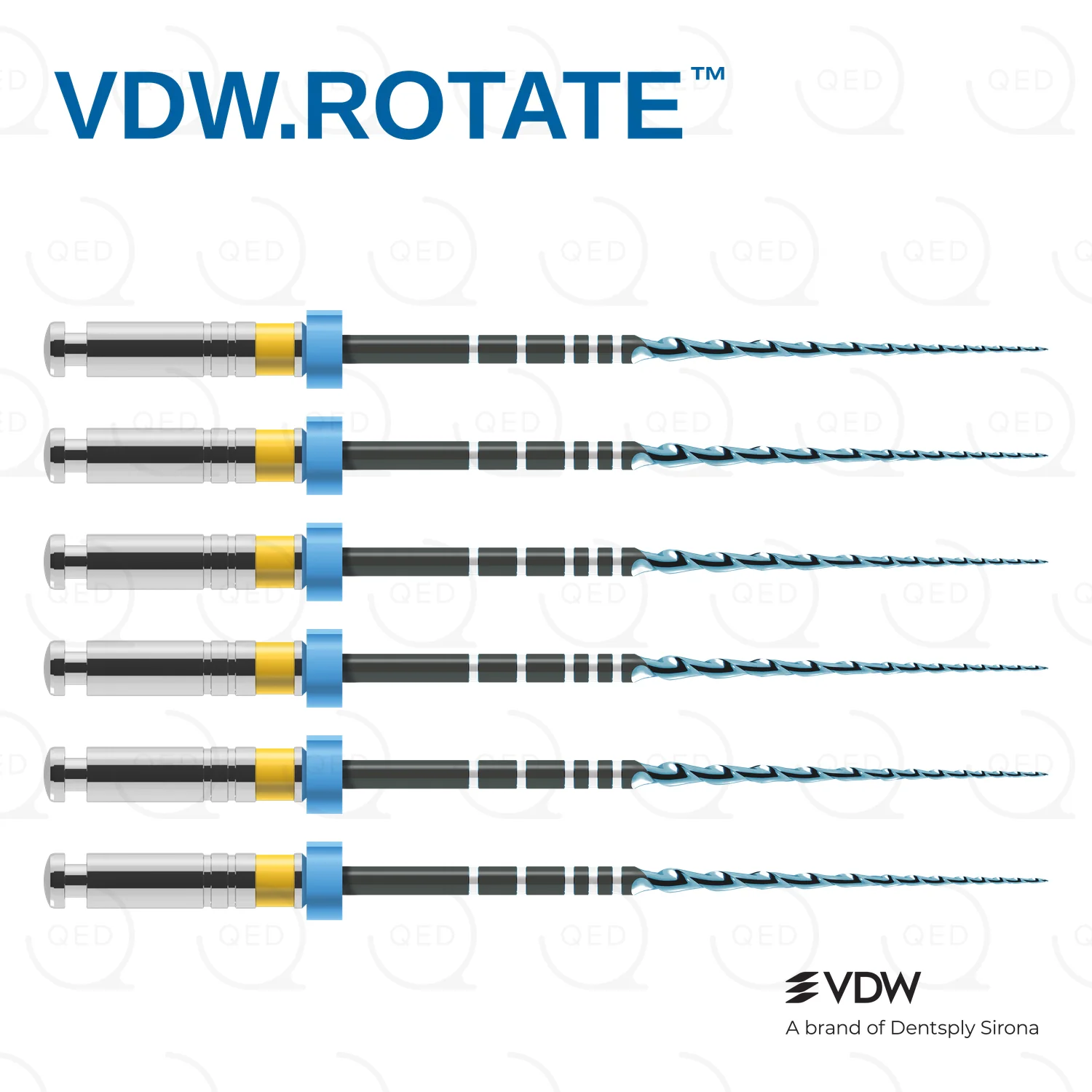
vdw.rotate® retreatment · 25/.05 · 21 mm · 6 files
heat-treated nitifilling removalsingle use
the retreatment file of the vdw.rotate range. same heat-treated niti and the same adapted s section as the shaping files, in a single 25/.05 at 21 mm – the length you want when you are working through an existing filling. vdw list it as part of the range “from preparation to obturation”.
this pack: vdw.rotate® retreatment file, iso size 25, .05 taper, 21 mm (pack of 6)
vdw · vdw gmbh, munich, germany (dentsply sirona)
| tip (d0) | 0.25 mm |
| taper | .05 |
| length | 21 mm |
| working part | 16 mm |
| material | heat-treated niti |
| handle | 11 mm, nickel plated · 2 rings · iso colour |
| supplied | sterile, pack of 6 |
› one file, not a sequence. a single 25/.05 rather than a graded retreatment set.
› the same wire as the shaping files. so it behaves the way the rest of the range does in your hand.
› 21 mm only. vdw make the retreatment file in one length.
› pair it with a solvent and a hand file. for the last of the filling material and for checking patency.
does it replace a full retreatment set?
it is one file for removing filling material in the body of the canal. for a graded set see the protaper universal retreatment files below.
which files do i shape with afterwards?
the vdw.rotate shaping sequence, once the old filling is out.
› shape afterwards: 15/.04 · 20/.05 · 25/.06, 25 mm
› a graded retreatment set: protaper® universal retreatment, d1–d3 assorted
› glide path: vdw c-pilot® assorted, 21 mm · vdw c-pilot® 10, 21 mm
› motor: x-smart® pro+ with apex locator
› lubricant: glyde™ file prep
› irrigation: chlorax 5.25% · irriflex® needles
vdw mark their vdw.rotate performance claims “compared to other vdw continuous rotary instruments”, and the cutting-efficiency claim also “compared to a centred rotary cross section”. single use. follow the instructions supplied with the product.
vdw.rotate® retreatment 25/.05, 21 mm (6) · heat-treated niti · ref vrot621525
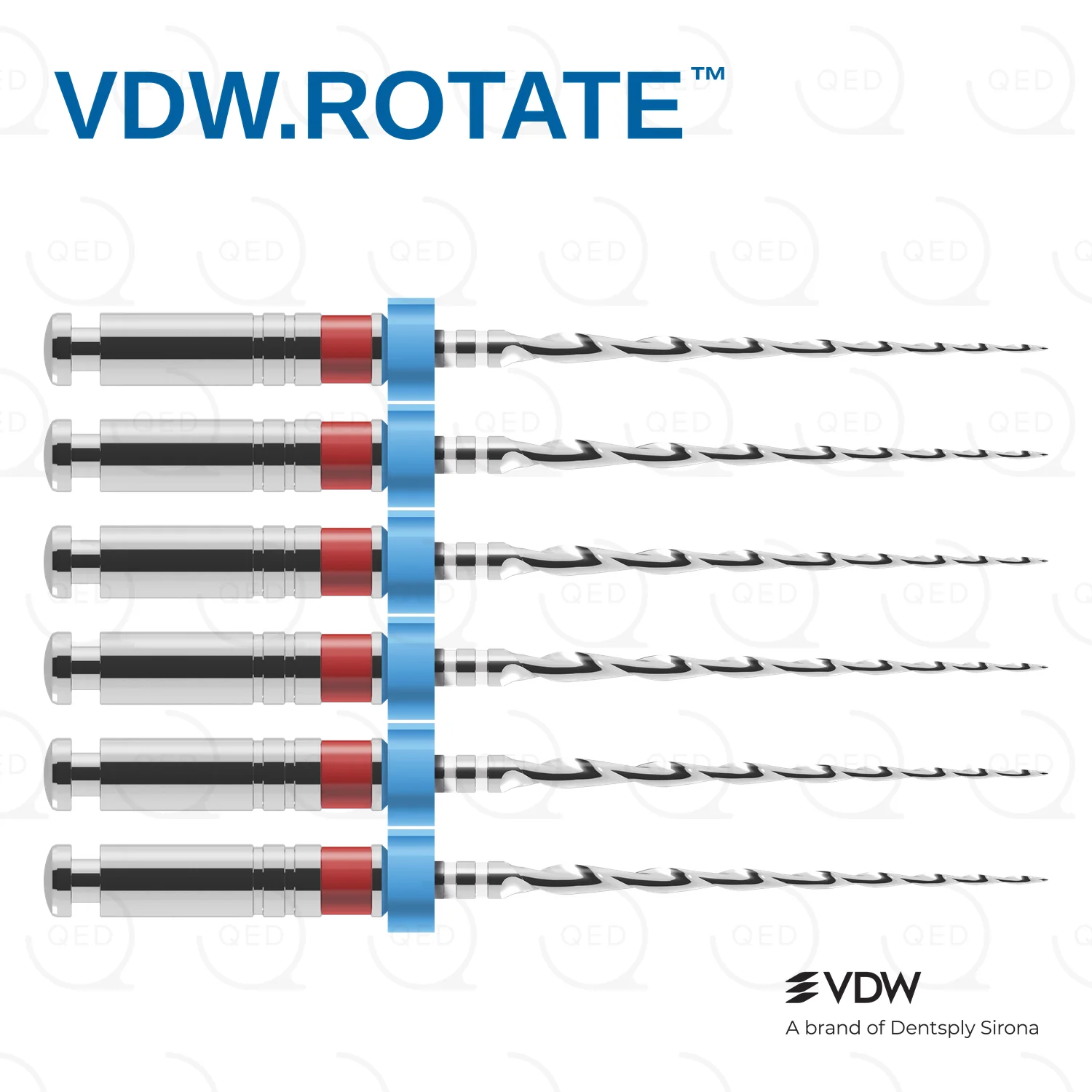
vdw.rotate® · 25/.06 · 21 mm · 6 files
heat-treated nitiadapted s sectionsingle use
the heat-treated file in vdw’s rotary range. vdw describe a “new heat treatment to increase flexibility without compromising cutting efficiency” and an “adapted s cross section for higher cutting efficiency” – the same s-section family as reciproc® blue, run in continuous rotation.
this pack: vdw.rotate® rotary file, iso size 25, .06 taper, 21 mm (pack of 6)
vdw · vdw gmbh, munich, germany (dentsply sirona)
| tip (d0) | 0.25 mm |
| taper | .06 |
| length | 21 mm |
| working part | 16 mm |
| handle | 11 mm, nickel plated · 3 rings for taper .06 · iso colour |
| calibration rings | 18, 19, 20 mm, radiopaque |
| supplied | sterile, pack of 6 |
› heat-treated wire. vdw say the treatment “strengthens cyclic fatigue resistance of the file and lowers the risk of file breakage”.*
› adapted s section. vdw say it “ensures effective debris removal and provides control of the instrument for a swift, thorough and safe preparation”.*
› you can read the taper off the handle. 3 rings on the handle means taper .06, on top of the iso colour. no squinting at the blister.
› radiopaque calibration rings. at 18, 19, 20 mm, so the length shows on the radiograph.
“the new vdw.rotate® file reduces canal transportation and better respects the canal anatomy.”
vdw, vdw.rotate product brochure menvrotbrc000 rev.1, 2019. vdw mark this “compared to other vdw continuous rotary instruments”.
which taper do i choose?
vdw put it simply: “choose taper .06 for the majority of clinical cases”, and “choose taper .04 for narrow and highly curved canals including apical curvature”.
coming from mtwo?
the same s-section idea, with the heat treatment and the handle coding added. see the mtwo range if you want to compare.
› the basic sequence: 15/.04 · 20/.05 · 25/.04, 21 mm
› same file, other lengths: 25 mm · 31 mm
› larger anatomies: 30/.04 · 35/.04 · 40/.04 · 50/.04
› matched obturation: gutta-percha 25/.06 · paper points 25/.06
› glide path: vdw c-pilot® assorted, 21 mm · vdw c-pilot® 10, 21 mm
› retreatment: vdw.rotate® retreatment 25/.05, 21 mm
› motor: x-smart® pro+ with apex locator
› lubricant and irrigation: glyde™ file prep · chlorax 5.25% · irriflex® needles
vdw mark their vdw.rotate performance claims “compared to other vdw continuous rotary instruments”, and the cutting-efficiency claim also “compared to a centred rotary cross section”. single use. follow the instructions supplied with the product.
vdw.rotate® 25/.06, 21 mm (6) · heat-treated niti · ref vrot621625
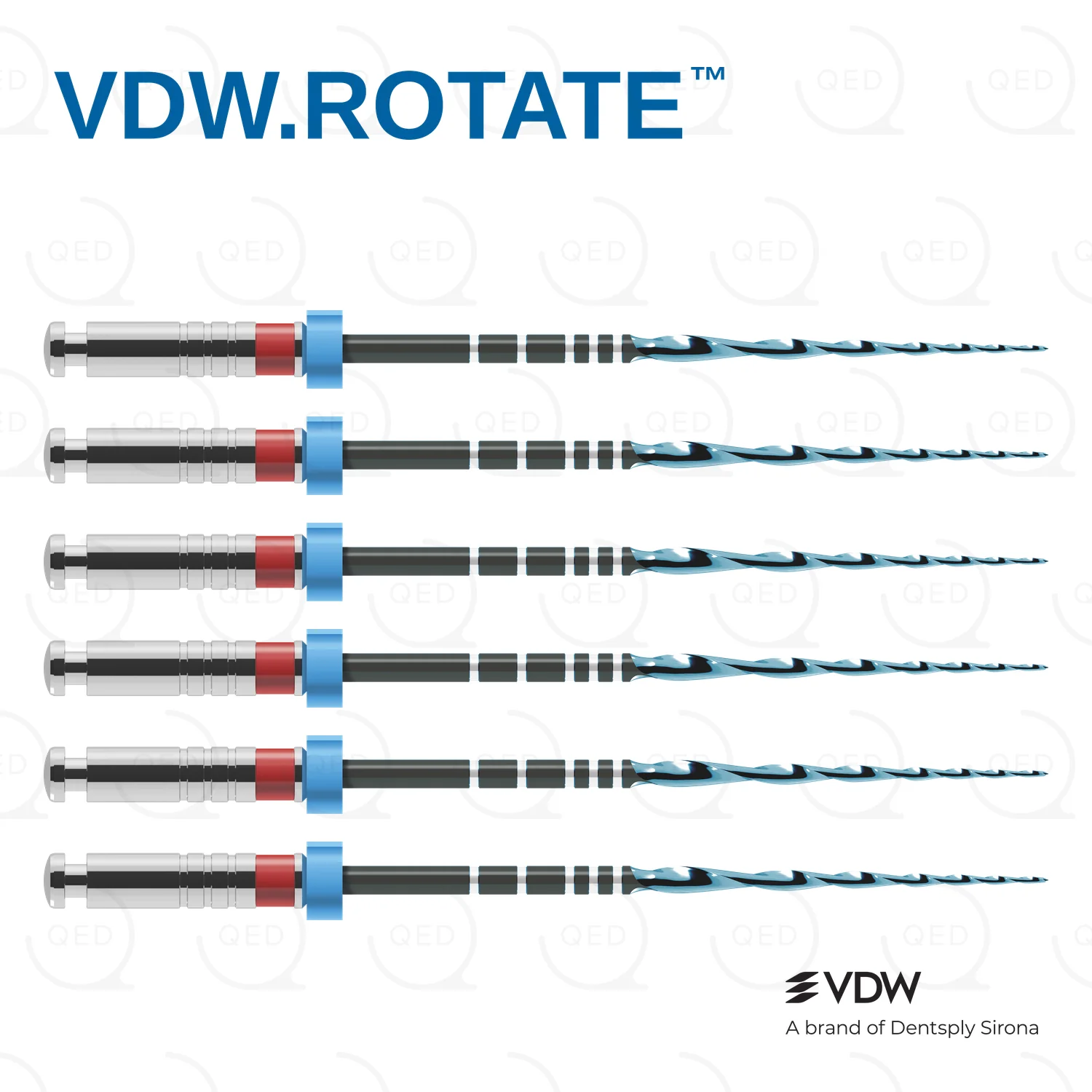
vdw.rotate® · 30/.06 · 21 mm · 6 files
heat-treated nitiadapted s sectionsingle use
the heat-treated file in vdw’s rotary range. vdw describe a “new heat treatment to increase flexibility without compromising cutting efficiency” and an “adapted s cross section for higher cutting efficiency” – the same s-section family as reciproc® blue, run in continuous rotation. this size is for shaping a larger canal once you have reached working length.
this pack: vdw.rotate® rotary file, iso size 30, .06 taper, 21 mm (pack of 6)
vdw · vdw gmbh, munich, germany (dentsply sirona)
| tip (d0) | 0.30 mm |
| taper | .06 |
| length | 21 mm |
| working part | 16 mm |
| handle | 11 mm, nickel plated · 3 rings for taper .06 · iso colour |
| calibration rings | 18, 19, 20 mm, radiopaque |
| supplied | sterile, pack of 6 |
› heat-treated wire. vdw say the treatment “strengthens cyclic fatigue resistance of the file and lowers the risk of file breakage”.*
› adapted s section. vdw say it “ensures effective debris removal and provides control of the instrument for a swift, thorough and safe preparation”.*
› you can read the taper off the handle. 3 rings on the handle means taper .06, on top of the iso colour. no squinting at the blister.
› radiopaque calibration rings. at 18, 19, 20 mm, so the length shows on the radiograph.
“the new vdw.rotate® file reduces canal transportation and better respects the canal anatomy.”
vdw, vdw.rotate product brochure menvrotbrc000 rev.1, 2019. vdw mark this “compared to other vdw continuous rotary instruments”.
which taper do i choose?
vdw put it simply: “choose taper .06 for the majority of clinical cases”, and “choose taper .04 for narrow and highly curved canals including apical curvature”.
coming from mtwo?
the same s-section idea, with the heat treatment and the handle coding added. see the mtwo range if you want to compare.
› the basic sequence: 15/.04 · 20/.05 · 25/.06 · 25/.04, 21 mm
› same file, other lengths: 25 mm · 31 mm
› larger anatomies: 30/.04 · 35/.04 · 40/.04 · 50/.04
› matched obturation: gutta-percha 30/.06
› glide path: vdw c-pilot® assorted, 21 mm · vdw c-pilot® 10, 21 mm
› retreatment: vdw.rotate® retreatment 25/.05, 21 mm
› motor: x-smart® pro+ with apex locator
› lubricant and irrigation: glyde™ file prep · chlorax 5.25% · irriflex® needles
vdw mark their vdw.rotate performance claims “compared to other vdw continuous rotary instruments”, and the cutting-efficiency claim also “compared to a centred rotary cross section”. single use. follow the instructions supplied with the product.
vdw.rotate® 30/.06, 21 mm (6) · heat-treated niti · ref vrot621630
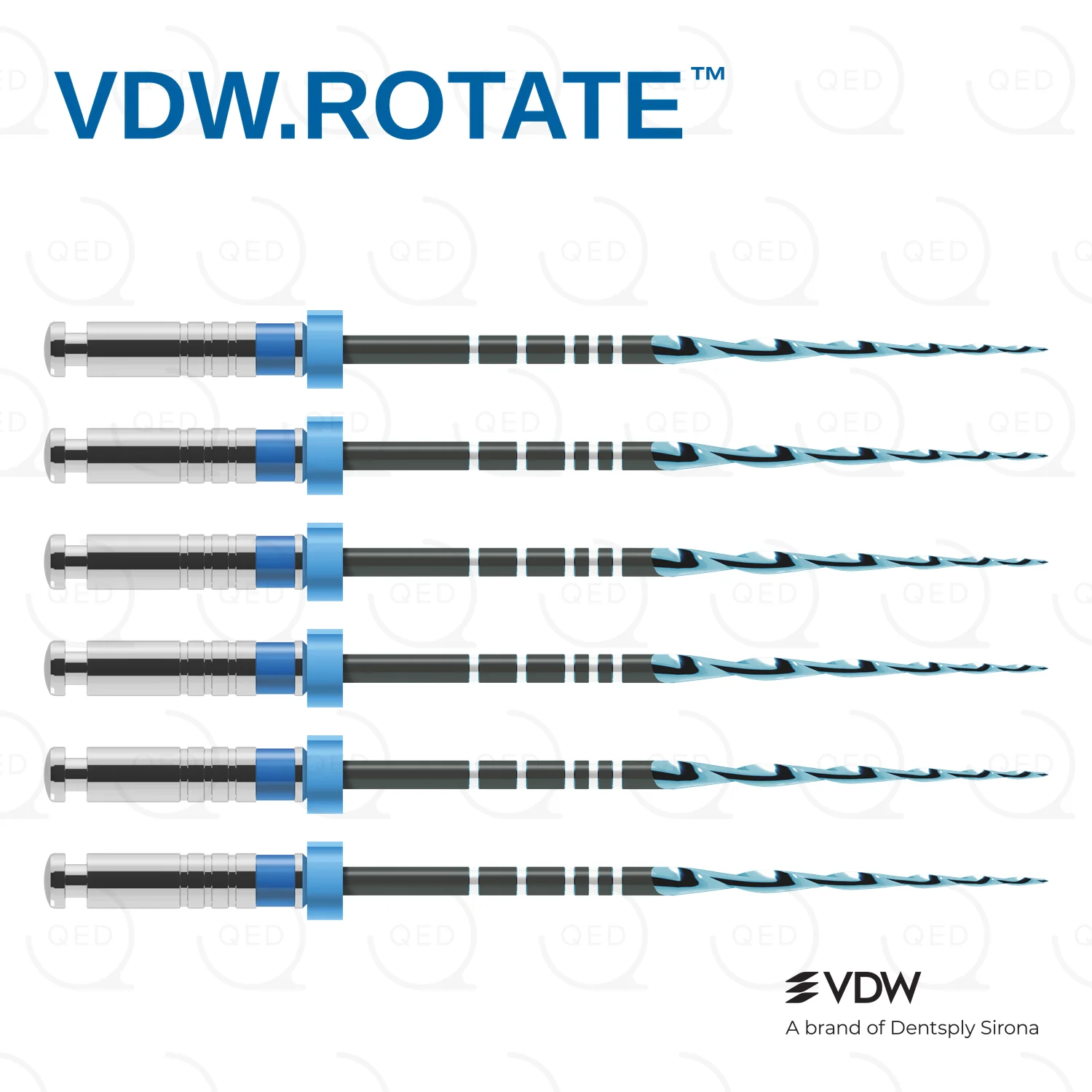
vdw.rotate® · 35/.06 · 21 mm · 6 files
heat-treated nitiadapted s sectionsingle use
the heat-treated file in vdw’s rotary range. vdw describe a “new heat treatment to increase flexibility without compromising cutting efficiency” and an “adapted s cross section for higher cutting efficiency” – the same s-section family as reciproc® blue, run in continuous rotation. this size is for shaping a larger canal once you have reached working length.
this pack: vdw.rotate® rotary file, iso size 35, .06 taper, 21 mm (pack of 6)
vdw · vdw gmbh, munich, germany (dentsply sirona)
| tip (d0) | 0.35 mm |
| taper | .06 |
| length | 21 mm |
| working part | 16 mm |
| handle | 11 mm, nickel plated · 3 rings for taper .06 · iso colour |
| calibration rings | 18, 19, 20 mm, radiopaque |
| supplied | sterile, pack of 6 |
› heat-treated wire. vdw say the treatment “strengthens cyclic fatigue resistance of the file and lowers the risk of file breakage”.*
› adapted s section. vdw say it “ensures effective debris removal and provides control of the instrument for a swift, thorough and safe preparation”.*
› you can read the taper off the handle. 3 rings on the handle means taper .06, on top of the iso colour. no squinting at the blister.
› radiopaque calibration rings. at 18, 19, 20 mm, so the length shows on the radiograph.
“the new vdw.rotate® file reduces canal transportation and better respects the canal anatomy.”
vdw, vdw.rotate product brochure menvrotbrc000 rev.1, 2019. vdw mark this “compared to other vdw continuous rotary instruments”.
which taper do i choose?
vdw put it simply: “choose taper .06 for the majority of clinical cases”, and “choose taper .04 for narrow and highly curved canals including apical curvature”.
coming from mtwo?
the same s-section idea, with the heat treatment and the handle coding added. see the mtwo range if you want to compare.
› the basic sequence: 15/.04 · 20/.05 · 25/.06 · 25/.04, 21 mm
› same file, other lengths: 25 mm · 31 mm
› larger anatomies: 30/.04 · 35/.04 · 40/.04 · 50/.04
› matched obturation: gutta-percha 35/.06
› glide path: vdw c-pilot® assorted, 21 mm · vdw c-pilot® 10, 21 mm
› retreatment: vdw.rotate® retreatment 25/.05, 21 mm
› motor: x-smart® pro+ with apex locator
› lubricant and irrigation: glyde™ file prep · chlorax 5.25% · irriflex® needles
vdw mark their vdw.rotate performance claims “compared to other vdw continuous rotary instruments”, and the cutting-efficiency claim also “compared to a centred rotary cross section”. single use. follow the instructions supplied with the product.
vdw.rotate® 35/.06, 21 mm (6) · heat-treated niti · ref vrot621635

vdw.rotate® · 40/.06 · 21 mm · 6 files
heat-treated nitiadapted s sectionsingle use
the heat-treated file in vdw’s rotary range. vdw describe a “new heat treatment to increase flexibility without compromising cutting efficiency” and an “adapted s cross section for higher cutting efficiency” – the same s-section family as reciproc® blue, run in continuous rotation. this size is for shaping a larger canal once you have reached working length.
this pack: vdw.rotate® rotary file, iso size 40, .06 taper, 21 mm (pack of 6)
vdw · vdw gmbh, munich, germany (dentsply sirona)
| tip (d0) | 0.40 mm |
| taper | .06 |
| length | 21 mm |
| working part | 16 mm |
| handle | 11 mm, nickel plated · 3 rings for taper .06 · iso colour |
| calibration rings | 18, 19, 20 mm, radiopaque |
| supplied | sterile, pack of 6 |
› heat-treated wire. vdw say the treatment “strengthens cyclic fatigue resistance of the file and lowers the risk of file breakage”.*
› adapted s section. vdw say it “ensures effective debris removal and provides control of the instrument for a swift, thorough and safe preparation”.*
› you can read the taper off the handle. 3 rings on the handle means taper .06, on top of the iso colour. no squinting at the blister.
› radiopaque calibration rings. at 18, 19, 20 mm, so the length shows on the radiograph.
“the new vdw.rotate® file reduces canal transportation and better respects the canal anatomy.”
vdw, vdw.rotate product brochure menvrotbrc000 rev.1, 2019. vdw mark this “compared to other vdw continuous rotary instruments”.
which taper do i choose?
vdw put it simply: “choose taper .06 for the majority of clinical cases”, and “choose taper .04 for narrow and highly curved canals including apical curvature”.
coming from mtwo?
the same s-section idea, with the heat treatment and the handle coding added. see the mtwo range if you want to compare.
› the basic sequence: 15/.04 · 20/.05 · 25/.06 · 25/.04, 21 mm
› same file, other lengths: 25 mm · 31 mm
› larger anatomies: 30/.04 · 35/.04 · 40/.04 · 50/.04
› matched obturation: gutta-percha 40/.06
› glide path: vdw c-pilot® assorted, 21 mm · vdw c-pilot® 10, 21 mm
› retreatment: vdw.rotate® retreatment 25/.05, 21 mm
› motor: x-smart® pro+ with apex locator
› lubricant and irrigation: glyde™ file prep · chlorax 5.25% · irriflex® needles
vdw mark their vdw.rotate performance claims “compared to other vdw continuous rotary instruments”, and the cutting-efficiency claim also “compared to a centred rotary cross section”. single use. follow the instructions supplied with the product.
vdw.rotate® 40/.06, 21 mm (6) · heat-treated niti · ref vrot621640
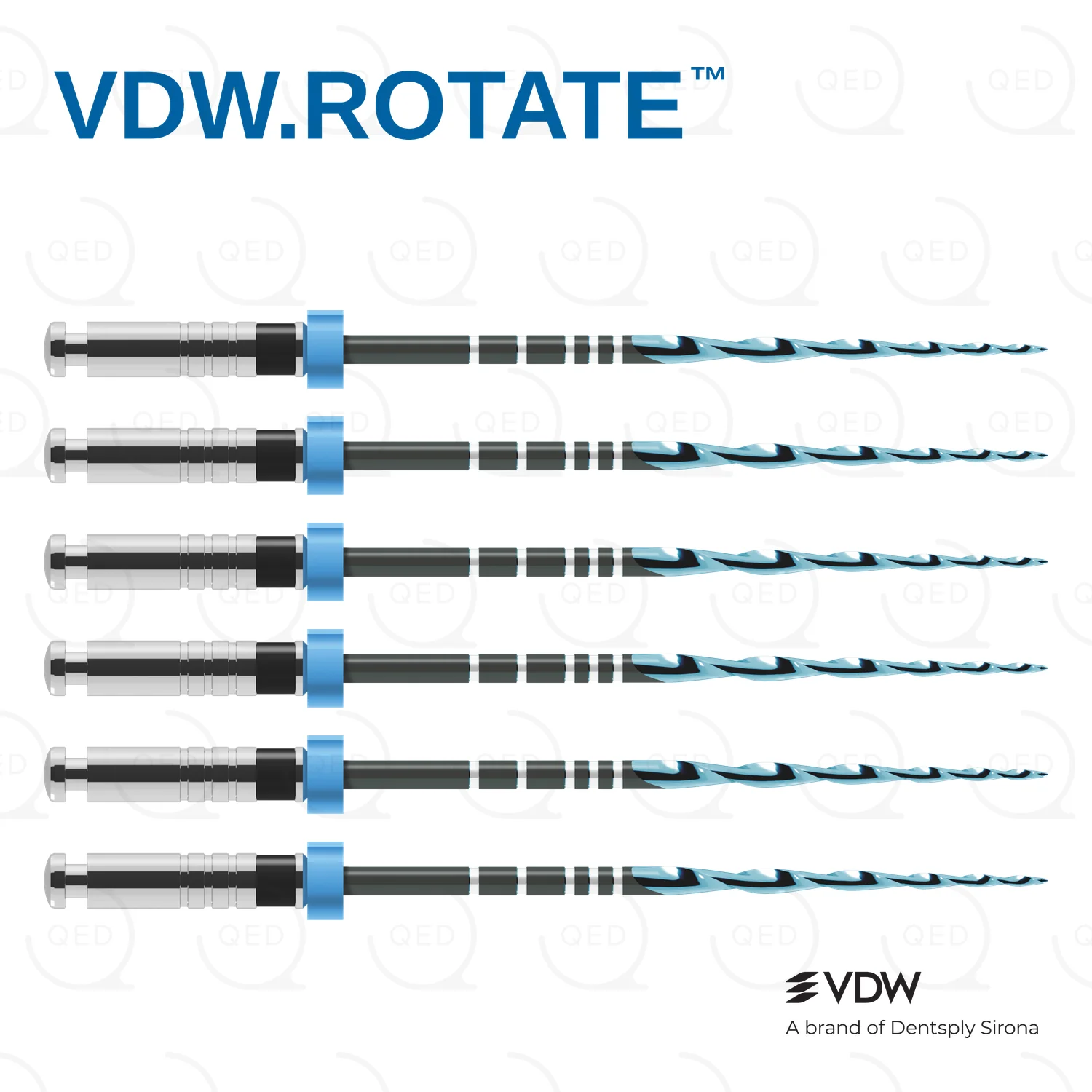
vdw.rotate® · 15/.04 · 25 mm · 6 files
heat-treated nitiadapted s sectionsingle use
the heat-treated file in vdw’s rotary range. vdw describe a “new heat treatment to increase flexibility without compromising cutting efficiency” and an “adapted s cross section for higher cutting efficiency” – the same s-section family as reciproc® blue, run in continuous rotation. this is the file the basic sequence opens on.
this pack: vdw.rotate® rotary file, iso size 15, .04 taper, 25 mm (pack of 6)
vdw · vdw gmbh, munich, germany (dentsply sirona)
| tip (d0) | 0.15 mm |
| taper | .04 |
| length | 25 mm |
| working part | 16 mm |
| handle | 11 mm, nickel plated · 1 ring for taper .04 · iso colour |
| calibration rings | 18, 19, 20, 22 mm, radiopaque |
| supplied | sterile, pack of 6 |
› heat-treated wire. vdw say the treatment “strengthens cyclic fatigue resistance of the file and lowers the risk of file breakage”.*
› adapted s section. vdw say it “ensures effective debris removal and provides control of the instrument for a swift, thorough and safe preparation”.*
› you can read the taper off the handle. 1 ring on the handle means taper .04, on top of the iso colour. no squinting at the blister.
› radiopaque calibration rings. at 18, 19, 20, 22 mm, so the length shows on the radiograph.
“the new vdw.rotate® file reduces canal transportation and better respects the canal anatomy.”
vdw, vdw.rotate product brochure menvrotbrc000 rev.1, 2019. vdw mark this “compared to other vdw continuous rotary instruments”.
which taper do i choose?
vdw put it simply: “choose taper .06 for the majority of clinical cases”, and “choose taper .04 for narrow and highly curved canals including apical curvature”.
coming from mtwo?
the same s-section idea, with the heat treatment and the handle coding added. see the mtwo range if you want to compare.
› the basic sequence: 20/.05 · 25/.06 · 25/.04, 25 mm
› same file, other lengths: 21 mm · 31 mm
› larger anatomies: 30/.04 · 35/.04 · 40/.04 · 50/.04
› obturation: diadent® dia-pro iso gutta-percha 15/.04 – the same size and taper. the dia-pro paper points stop at 40, so gauge with 40/.04 or a standard point.
› glide path: vdw c-pilot® assorted, 25 mm · vdw c-pilot® 10, 25 mm
› retreatment: vdw.rotate® retreatment 25/.05, 21 mm
› motor: x-smart® pro+ with apex locator
› lubricant and irrigation: glyde™ file prep · chlorax 5.25% · irriflex® needles
vdw mark their vdw.rotate performance claims “compared to other vdw continuous rotary instruments”, and the cutting-efficiency claim also “compared to a centred rotary cross section”. single use. follow the instructions supplied with the product.
vdw.rotate® 15/.04, 25 mm (6) · heat-treated niti · ref vrot625415

vdw.rotate® · 25/.04 · 25 mm · 6 files
heat-treated nitiadapted s sectionsingle use
the heat-treated file in vdw’s rotary range. vdw describe a “new heat treatment to increase flexibility without compromising cutting efficiency” and an “adapted s cross section for higher cutting efficiency” – the same s-section family as reciproc® blue, run in continuous rotation.
this pack: vdw.rotate® rotary file, iso size 25, .04 taper, 25 mm (pack of 6)
vdw · vdw gmbh, munich, germany (dentsply sirona)
| tip (d0) | 0.25 mm |
| taper | .04 |
| length | 25 mm |
| working part | 16 mm |
| handle | 11 mm, nickel plated · 1 ring for taper .04 · iso colour |
| calibration rings | 18, 19, 20, 22 mm, radiopaque |
| supplied | sterile, pack of 6 |
› heat-treated wire. vdw say the treatment “strengthens cyclic fatigue resistance of the file and lowers the risk of file breakage”.*
› adapted s section. vdw say it “ensures effective debris removal and provides control of the instrument for a swift, thorough and safe preparation”.*
› you can read the taper off the handle. 1 ring on the handle means taper .04, on top of the iso colour. no squinting at the blister.
› radiopaque calibration rings. at 18, 19, 20, 22 mm, so the length shows on the radiograph.
“the new vdw.rotate® file reduces canal transportation and better respects the canal anatomy.”
vdw, vdw.rotate product brochure menvrotbrc000 rev.1, 2019. vdw mark this “compared to other vdw continuous rotary instruments”.
which taper do i choose?
vdw put it simply: “choose taper .06 for the majority of clinical cases”, and “choose taper .04 for narrow and highly curved canals including apical curvature”.
coming from mtwo?
the same s-section idea, with the heat treatment and the handle coding added. see the mtwo range if you want to compare.
› the basic sequence: 15/.04 · 20/.05 · 25/.06, 25 mm
› same file, other lengths: 21 mm · 31 mm
› larger anatomies: 30/.04 · 35/.04 · 40/.04 · 50/.04
› matched obturation: gutta-percha 25/.04 · paper points 25/.04
› glide path: vdw c-pilot® assorted, 25 mm · vdw c-pilot® 10, 25 mm
› retreatment: vdw.rotate® retreatment 25/.05, 21 mm
› motor: x-smart® pro+ with apex locator
› lubricant and irrigation: glyde™ file prep · chlorax 5.25% · irriflex® needles
vdw mark their vdw.rotate performance claims “compared to other vdw continuous rotary instruments”, and the cutting-efficiency claim also “compared to a centred rotary cross section”. single use. follow the instructions supplied with the product.
vdw.rotate® 25/.04, 25 mm (6) · heat-treated niti · ref vrot625425

vdw.rotate® · 30/.04 · 25 mm · 6 files
heat-treated nitiadapted s sectionsingle use
the heat-treated file in vdw’s rotary range. vdw describe a “new heat treatment to increase flexibility without compromising cutting efficiency” and an “adapted s cross section for higher cutting efficiency” – the same s-section family as reciproc® blue, run in continuous rotation. this size is for shaping a larger canal once you have reached working length.
this pack: vdw.rotate® rotary file, iso size 30, .04 taper, 25 mm (pack of 6)
vdw · vdw gmbh, munich, germany (dentsply sirona)
| tip (d0) | 0.30 mm |
| taper | .04 |
| length | 25 mm |
| working part | 16 mm |
| handle | 11 mm, nickel plated · 1 ring for taper .04 · iso colour |
| calibration rings | 18, 19, 20, 22 mm, radiopaque |
| supplied | sterile, pack of 6 |
› heat-treated wire. vdw say the treatment “strengthens cyclic fatigue resistance of the file and lowers the risk of file breakage”.*
› adapted s section. vdw say it “ensures effective debris removal and provides control of the instrument for a swift, thorough and safe preparation”.*
› you can read the taper off the handle. 1 ring on the handle means taper .04, on top of the iso colour. no squinting at the blister.
› radiopaque calibration rings. at 18, 19, 20, 22 mm, so the length shows on the radiograph.
“the new vdw.rotate® file reduces canal transportation and better respects the canal anatomy.”
vdw, vdw.rotate product brochure menvrotbrc000 rev.1, 2019. vdw mark this “compared to other vdw continuous rotary instruments”.
which taper do i choose?
vdw put it simply: “choose taper .06 for the majority of clinical cases”, and “choose taper .04 for narrow and highly curved canals including apical curvature”.
coming from mtwo?
the same s-section idea, with the heat treatment and the handle coding added. see the mtwo range if you want to compare.
› the basic sequence: 15/.04 · 20/.05 · 25/.06 · 25/.04, 25 mm
› same file, other lengths: 21 mm · 31 mm
› larger anatomies: 35/.04 · 40/.04 · 50/.04 · 60/.04
› matched obturation: gutta-percha 30/.04 · paper points 30/.04
› glide path: vdw c-pilot® assorted, 25 mm · vdw c-pilot® 10, 25 mm
› retreatment: vdw.rotate® retreatment 25/.05, 21 mm
› motor: x-smart® pro+ with apex locator
› lubricant and irrigation: glyde™ file prep · chlorax 5.25% · irriflex® needles
vdw mark their vdw.rotate performance claims “compared to other vdw continuous rotary instruments”, and the cutting-efficiency claim also “compared to a centred rotary cross section”. single use. follow the instructions supplied with the product.
vdw.rotate® 30/.04, 25 mm (6) · heat-treated niti · ref vrot625430
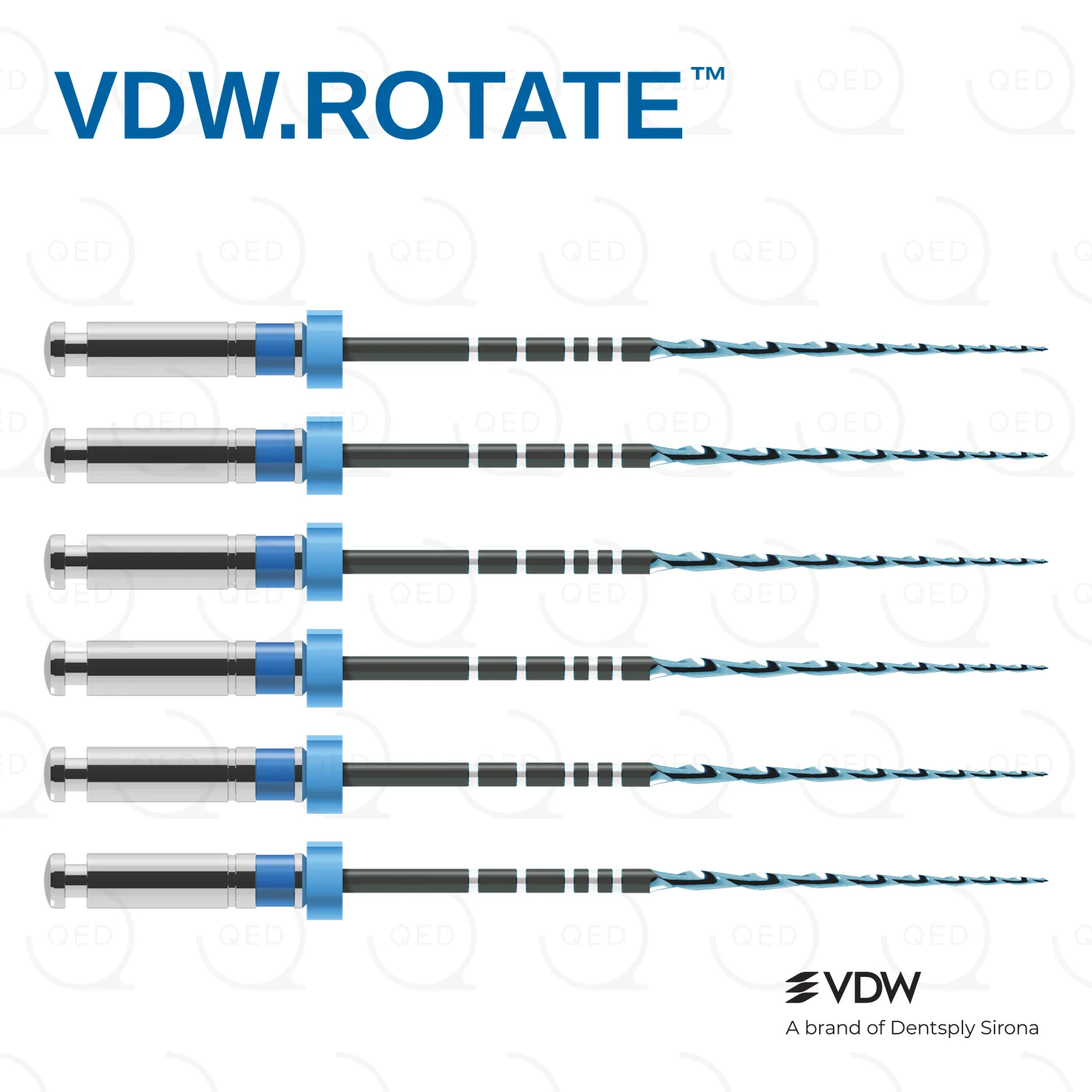
vdw.rotate® · 35/.04 · 25 mm · 6 files
heat-treated nitiadapted s sectionsingle use
the heat-treated file in vdw’s rotary range. vdw describe a “new heat treatment to increase flexibility without compromising cutting efficiency” and an “adapted s cross section for higher cutting efficiency” – the same s-section family as reciproc® blue, run in continuous rotation. this size is for shaping a larger canal once you have reached working length.
this pack: vdw.rotate® rotary file, iso size 35, .04 taper, 25 mm (pack of 6)
vdw · vdw gmbh, munich, germany (dentsply sirona)
| tip (d0) | 0.35 mm |
| taper | .04 |
| length | 25 mm |
| working part | 16 mm |
| handle | 11 mm, nickel plated · 1 ring for taper .04 · iso colour |
| calibration rings | 18, 19, 20, 22 mm, radiopaque |
| supplied | sterile, pack of 6 |
› heat-treated wire. vdw say the treatment “strengthens cyclic fatigue resistance of the file and lowers the risk of file breakage”.*
› adapted s section. vdw say it “ensures effective debris removal and provides control of the instrument for a swift, thorough and safe preparation”.*
› you can read the taper off the handle. 1 ring on the handle means taper .04, on top of the iso colour. no squinting at the blister.
› radiopaque calibration rings. at 18, 19, 20, 22 mm, so the length shows on the radiograph.
“the new vdw.rotate® file reduces canal transportation and better respects the canal anatomy.”
vdw, vdw.rotate product brochure menvrotbrc000 rev.1, 2019. vdw mark this “compared to other vdw continuous rotary instruments”.
which taper do i choose?
vdw put it simply: “choose taper .06 for the majority of clinical cases”, and “choose taper .04 for narrow and highly curved canals including apical curvature”.
coming from mtwo?
the same s-section idea, with the heat treatment and the handle coding added. see the mtwo range if you want to compare.
› the basic sequence: 15/.04 · 20/.05 · 25/.06 · 25/.04, 25 mm
› same file, other lengths: 21 mm · 31 mm
› larger anatomies: 30/.04 · 40/.04 · 50/.04 · 60/.04
› matched obturation: gutta-percha 35/.04 · paper points 35/.04
› glide path: vdw c-pilot® assorted, 25 mm · vdw c-pilot® 10, 25 mm
› retreatment: vdw.rotate® retreatment 25/.05, 21 mm
› motor: x-smart® pro+ with apex locator
› lubricant and irrigation: glyde™ file prep · chlorax 5.25% · irriflex® needles
vdw mark their vdw.rotate performance claims “compared to other vdw continuous rotary instruments”, and the cutting-efficiency claim also “compared to a centred rotary cross section”. single use. follow the instructions supplied with the product.
vdw.rotate® 35/.04, 25 mm (6) · heat-treated niti · ref vrot625435
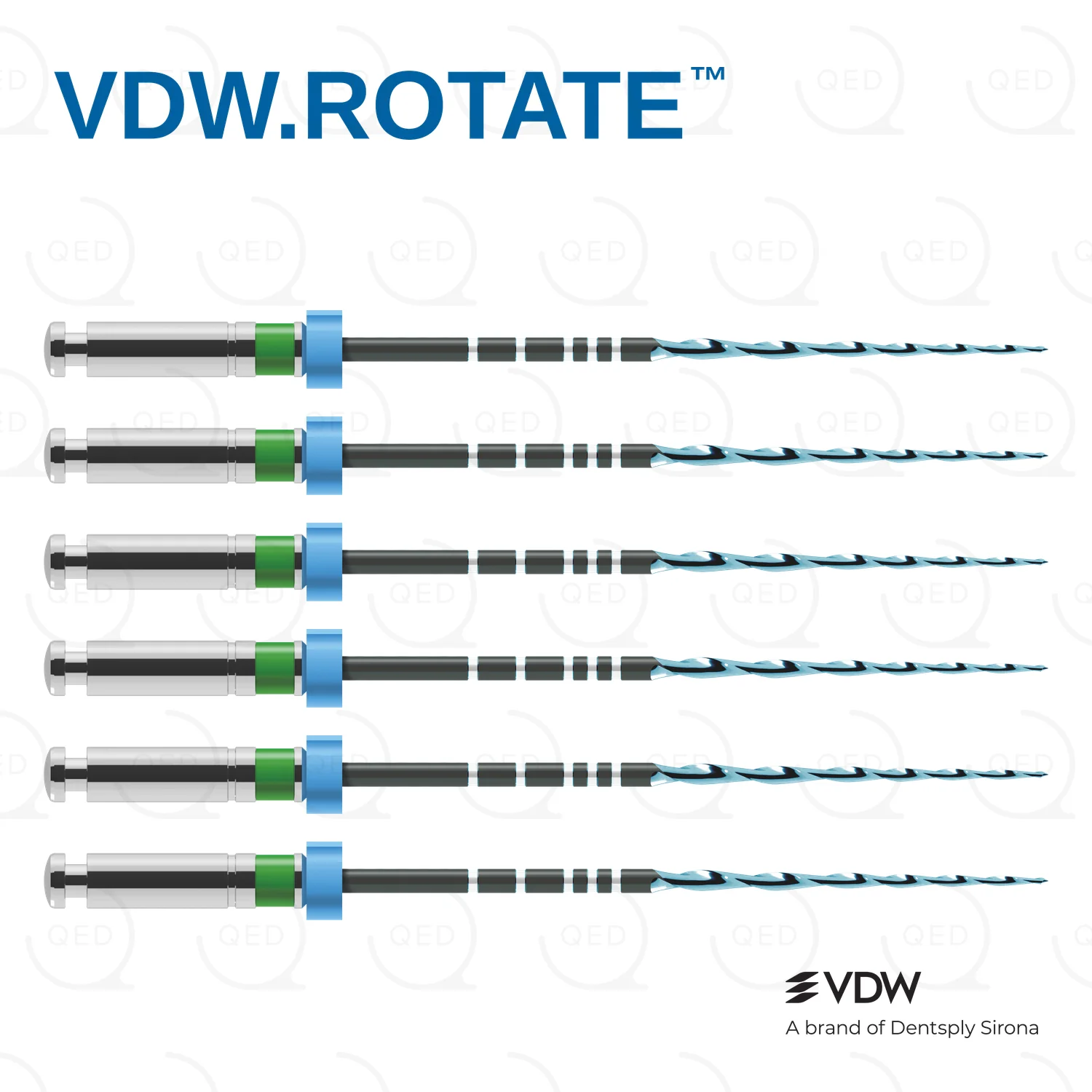
vdw.rotate® · 40/.04 · 25 mm · 6 files
heat-treated nitiadapted s sectionsingle use
the heat-treated file in vdw’s rotary range. vdw describe a “new heat treatment to increase flexibility without compromising cutting efficiency” and an “adapted s cross section for higher cutting efficiency” – the same s-section family as reciproc® blue, run in continuous rotation. this size is for shaping a larger canal once you have reached working length.
this pack: vdw.rotate® rotary file, iso size 40, .04 taper, 25 mm (pack of 6)
vdw · vdw gmbh, munich, germany (dentsply sirona)
| tip (d0) | 0.40 mm |
| taper | .04 |
| length | 25 mm |
| working part | 16 mm |
| handle | 11 mm, nickel plated · 1 ring for taper .04 · iso colour |
| calibration rings | 18, 19, 20, 22 mm, radiopaque |
| supplied | sterile, pack of 6 |
› heat-treated wire. vdw say the treatment “strengthens cyclic fatigue resistance of the file and lowers the risk of file breakage”.*
› adapted s section. vdw say it “ensures effective debris removal and provides control of the instrument for a swift, thorough and safe preparation”.*
› you can read the taper off the handle. 1 ring on the handle means taper .04, on top of the iso colour. no squinting at the blister.
› radiopaque calibration rings. at 18, 19, 20, 22 mm, so the length shows on the radiograph.
“the new vdw.rotate® file reduces canal transportation and better respects the canal anatomy.”
vdw, vdw.rotate product brochure menvrotbrc000 rev.1, 2019. vdw mark this “compared to other vdw continuous rotary instruments”.
which taper do i choose?
vdw put it simply: “choose taper .06 for the majority of clinical cases”, and “choose taper .04 for narrow and highly curved canals including apical curvature”.
coming from mtwo?
the same s-section idea, with the heat treatment and the handle coding added. see the mtwo range if you want to compare.
› the basic sequence: 15/.04 · 20/.05 · 25/.06 · 25/.04, 25 mm
› same file, other lengths: 21 mm · 31 mm
› larger anatomies: 30/.04 · 35/.04 · 50/.04 · 60/.04
› matched obturation: gutta-percha 40/.04 · paper points 40/.04
› glide path: vdw c-pilot® assorted, 25 mm · vdw c-pilot® 10, 25 mm
› retreatment: vdw.rotate® retreatment 25/.05, 21 mm
› motor: x-smart® pro+ with apex locator
› lubricant and irrigation: glyde™ file prep · chlorax 5.25% · irriflex® needles
vdw mark their vdw.rotate performance claims “compared to other vdw continuous rotary instruments”, and the cutting-efficiency claim also “compared to a centred rotary cross section”. single use. follow the instructions supplied with the product.
vdw.rotate® 40/.04, 25 mm (6) · heat-treated niti · ref vrot625440

vdw.rotate® · 50/.04 · 25 mm · 6 files
heat-treated nitiadapted s sectionsingle use
the heat-treated file in vdw’s rotary range. vdw describe a “new heat treatment to increase flexibility without compromising cutting efficiency” and an “adapted s cross section for higher cutting efficiency” – the same s-section family as reciproc® blue, run in continuous rotation. this size is for shaping a larger canal once you have reached working length.
this pack: vdw.rotate® rotary file, iso size 50, .04 taper, 25 mm (pack of 6)
vdw · vdw gmbh, munich, germany (dentsply sirona)
| tip (d0) | 0.50 mm |
| taper | .04 |
| length | 25 mm |
| working part | 16 mm |
| handle | 11 mm, nickel plated · 1 ring for taper .04 · iso colour |
| calibration rings | 18, 19, 20, 22 mm, radiopaque |
| supplied | sterile, pack of 6 |
› heat-treated wire. vdw say the treatment “strengthens cyclic fatigue resistance of the file and lowers the risk of file breakage”.*
› adapted s section. vdw say it “ensures effective debris removal and provides control of the instrument for a swift, thorough and safe preparation”.*
› you can read the taper off the handle. 1 ring on the handle means taper .04, on top of the iso colour. no squinting at the blister.
› radiopaque calibration rings. at 18, 19, 20, 22 mm, so the length shows on the radiograph.
“the new vdw.rotate® file reduces canal transportation and better respects the canal anatomy.”
vdw, vdw.rotate product brochure menvrotbrc000 rev.1, 2019. vdw mark this “compared to other vdw continuous rotary instruments”.
which taper do i choose?
vdw put it simply: “choose taper .06 for the majority of clinical cases”, and “choose taper .04 for narrow and highly curved canals including apical curvature”.
coming from mtwo?
the same s-section idea, with the heat treatment and the handle coding added. see the mtwo range if you want to compare.
› the basic sequence: 15/.04 · 20/.05 · 25/.06 · 25/.04, 25 mm
› same file, other lengths: 21 mm · 31 mm
› larger anatomies: 30/.04 · 35/.04 · 40/.04 · 60/.04
› matched obturation: gutta-percha 50/.04
› glide path: vdw c-pilot® assorted, 25 mm · vdw c-pilot® 10, 25 mm
› retreatment: vdw.rotate® retreatment 25/.05, 21 mm
› motor: x-smart® pro+ with apex locator
› lubricant and irrigation: glyde™ file prep · chlorax 5.25% · irriflex® needles
vdw mark their vdw.rotate performance claims “compared to other vdw continuous rotary instruments”, and the cutting-efficiency claim also “compared to a centred rotary cross section”. single use. follow the instructions supplied with the product.
vdw.rotate® 50/.04, 25 mm (6) · heat-treated niti · ref vrot625450

vdw.rotate® · 60/.04 · 25 mm · 6 files
heat-treated nitiadapted s sectionsingle use
the heat-treated file in vdw’s rotary range. vdw describe a “new heat treatment to increase flexibility without compromising cutting efficiency” and an “adapted s cross section for higher cutting efficiency” – the same s-section family as reciproc® blue, run in continuous rotation. this size is for shaping a larger canal once you have reached working length.
this pack: vdw.rotate® rotary file, iso size 60, .04 taper, 25 mm (pack of 6)
vdw · vdw gmbh, munich, germany (dentsply sirona)
| tip (d0) | 0.60 mm |
| taper | .04 |
| length | 25 mm |
| working part | 16 mm |
| handle | 11 mm, nickel plated · 1 ring for taper .04 · iso colour |
| calibration rings | 18, 19, 20, 22 mm, radiopaque |
| supplied | sterile, pack of 6 |
› heat-treated wire. vdw say the treatment “strengthens cyclic fatigue resistance of the file and lowers the risk of file breakage”.*
› adapted s section. vdw say it “ensures effective debris removal and provides control of the instrument for a swift, thorough and safe preparation”.*
› you can read the taper off the handle. 1 ring on the handle means taper .04, on top of the iso colour. no squinting at the blister.
› radiopaque calibration rings. at 18, 19, 20, 22 mm, so the length shows on the radiograph.
“the new vdw.rotate® file reduces canal transportation and better respects the canal anatomy.”
vdw, vdw.rotate product brochure menvrotbrc000 rev.1, 2019. vdw mark this “compared to other vdw continuous rotary instruments”.
which taper do i choose?
vdw put it simply: “choose taper .06 for the majority of clinical cases”, and “choose taper .04 for narrow and highly curved canals including apical curvature”.
coming from mtwo?
the same s-section idea, with the heat treatment and the handle coding added. see the mtwo range if you want to compare.
› the basic sequence: 15/.04 · 20/.05 · 25/.06 · 25/.04, 25 mm
› same file, other lengths: 21 mm · 31 mm
› larger anatomies: 30/.04 · 35/.04 · 40/.04 · 50/.04
› obturation: the dia-pro .04 range stops at 45, so there is no matched cone at 60/.04. fit from 45/.04 or the standard ml.029™ 60/.02.
› glide path: vdw c-pilot® assorted, 25 mm · vdw c-pilot® 10, 25 mm
› retreatment: vdw.rotate® retreatment 25/.05, 21 mm
› motor: x-smart® pro+ with apex locator
› lubricant and irrigation: glyde™ file prep · chlorax 5.25% · irriflex® needles
vdw mark their vdw.rotate performance claims “compared to other vdw continuous rotary instruments”, and the cutting-efficiency claim also “compared to a centred rotary cross section”. single use. follow the instructions supplied with the product.
vdw.rotate® 60/.04, 25 mm (6) · heat-treated niti · ref vrot625460

vdw.rotate® · 20/.05 · 25 mm · 6 files
heat-treated nitiadapted s sectionsingle use
the heat-treated file in vdw’s rotary range. vdw describe a “new heat treatment to increase flexibility without compromising cutting efficiency” and an “adapted s cross section for higher cutting efficiency” – the same s-section family as reciproc® blue, run in continuous rotation.
this pack: vdw.rotate® rotary file, iso size 20, .05 taper, 25 mm (pack of 6)
vdw · vdw gmbh, munich, germany (dentsply sirona)
| tip (d0) | 0.20 mm |
| taper | .05 |
| length | 25 mm |
| working part | 16 mm |
| handle | 11 mm, nickel plated · 2 rings for taper .05 · iso colour |
| calibration rings | 18, 19, 20, 22 mm, radiopaque |
| supplied | sterile, pack of 6 |
› heat-treated wire. vdw say the treatment “strengthens cyclic fatigue resistance of the file and lowers the risk of file breakage”.*
› adapted s section. vdw say it “ensures effective debris removal and provides control of the instrument for a swift, thorough and safe preparation”.*
› you can read the taper off the handle. 2 rings on the handle means taper .05, on top of the iso colour. no squinting at the blister.
› radiopaque calibration rings. at 18, 19, 20, 22 mm, so the length shows on the radiograph.
“the new vdw.rotate® file reduces canal transportation and better respects the canal anatomy.”
vdw, vdw.rotate product brochure menvrotbrc000 rev.1, 2019. vdw mark this “compared to other vdw continuous rotary instruments”.
which taper do i choose?
vdw put it simply: “choose taper .06 for the majority of clinical cases”, and “choose taper .04 for narrow and highly curved canals including apical curvature”.
coming from mtwo?
the same s-section idea, with the heat treatment and the handle coding added. see the mtwo range if you want to compare.
› the basic sequence: 15/.04 · 25/.06 · 25/.04, 25 mm
› same file, other lengths: 21 mm · 31 mm
› larger anatomies: 30/.04 · 35/.04 · 40/.04 · 50/.04
› obturation: dia-pro iso is made in .04 and .06 only, so there is no matched cone for a .05 preparation. fit from the .04 assorted pack or the standard ml.029™ .02 range.
› glide path: vdw c-pilot® assorted, 25 mm · vdw c-pilot® 10, 25 mm
› retreatment: vdw.rotate® retreatment 25/.05, 21 mm
› motor: x-smart® pro+ with apex locator
› lubricant and irrigation: glyde™ file prep · chlorax 5.25% · irriflex® needles
vdw mark their vdw.rotate performance claims “compared to other vdw continuous rotary instruments”, and the cutting-efficiency claim also “compared to a centred rotary cross section”. single use. follow the instructions supplied with the product.
vdw.rotate® 20/.05, 25 mm (6) · heat-treated niti · ref vrot625520
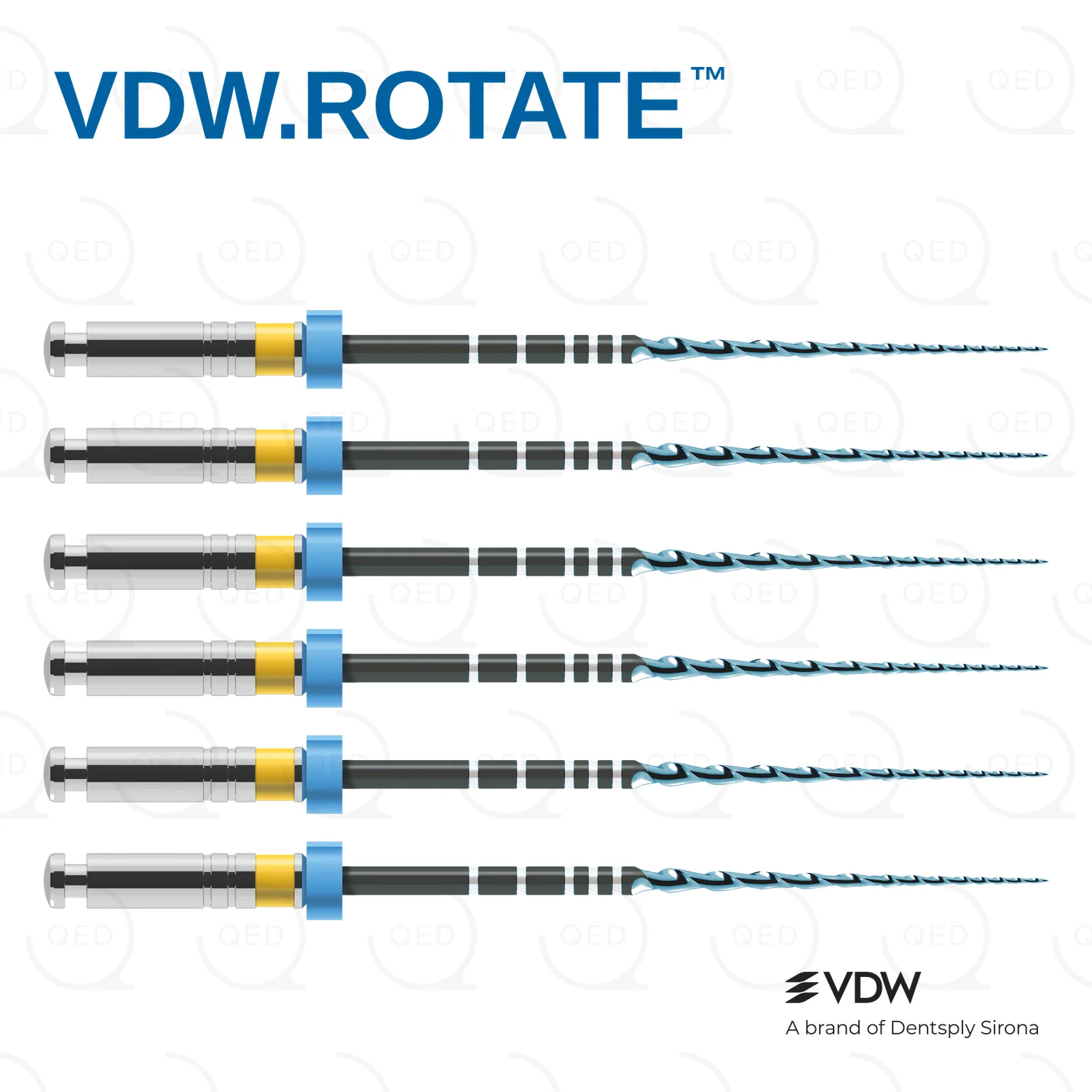
vdw.rotate® · 25/.06 · 25 mm · 6 files
heat-treated nitiadapted s sectionsingle use
the heat-treated file in vdw’s rotary range. vdw describe a “new heat treatment to increase flexibility without compromising cutting efficiency” and an “adapted s cross section for higher cutting efficiency” – the same s-section family as reciproc® blue, run in continuous rotation.
this pack: vdw.rotate® rotary file, iso size 25, .06 taper, 25 mm (pack of 6)
vdw · vdw gmbh, munich, germany (dentsply sirona)
| tip (d0) | 0.25 mm |
| taper | .06 |
| length | 25 mm |
| working part | 16 mm |
| handle | 11 mm, nickel plated · 3 rings for taper .06 · iso colour |
| calibration rings | 18, 19, 20, 22 mm, radiopaque |
| supplied | sterile, pack of 6 |
› heat-treated wire. vdw say the treatment “strengthens cyclic fatigue resistance of the file and lowers the risk of file breakage”.*
› adapted s section. vdw say it “ensures effective debris removal and provides control of the instrument for a swift, thorough and safe preparation”.*
› you can read the taper off the handle. 3 rings on the handle means taper .06, on top of the iso colour. no squinting at the blister.
› radiopaque calibration rings. at 18, 19, 20, 22 mm, so the length shows on the radiograph.
“the new vdw.rotate® file reduces canal transportation and better respects the canal anatomy.”
vdw, vdw.rotate product brochure menvrotbrc000 rev.1, 2019. vdw mark this “compared to other vdw continuous rotary instruments”.
which taper do i choose?
vdw put it simply: “choose taper .06 for the majority of clinical cases”, and “choose taper .04 for narrow and highly curved canals including apical curvature”.
coming from mtwo?
the same s-section idea, with the heat treatment and the handle coding added. see the mtwo range if you want to compare.
› the basic sequence: 15/.04 · 20/.05 · 25/.04, 25 mm
› same file, other lengths: 21 mm · 31 mm
› larger anatomies: 30/.04 · 35/.04 · 40/.04 · 50/.04
› matched obturation: gutta-percha 25/.06 · paper points 25/.06
› glide path: vdw c-pilot® assorted, 25 mm · vdw c-pilot® 10, 25 mm
› retreatment: vdw.rotate® retreatment 25/.05, 21 mm
› motor: x-smart® pro+ with apex locator
› lubricant and irrigation: glyde™ file prep · chlorax 5.25% · irriflex® needles
vdw mark their vdw.rotate performance claims “compared to other vdw continuous rotary instruments”, and the cutting-efficiency claim also “compared to a centred rotary cross section”. single use. follow the instructions supplied with the product.
vdw.rotate® 25/.06, 25 mm (6) · heat-treated niti · ref vrot625625

vdw.rotate® · 30/.06 · 25 mm · 6 files
heat-treated nitiadapted s sectionsingle use
the heat-treated file in vdw’s rotary range. vdw describe a “new heat treatment to increase flexibility without compromising cutting efficiency” and an “adapted s cross section for higher cutting efficiency” – the same s-section family as reciproc® blue, run in continuous rotation. this size is for shaping a larger canal once you have reached working length.
this pack: vdw.rotate® rotary file, iso size 30, .06 taper, 25 mm (pack of 6)
vdw · vdw gmbh, munich, germany (dentsply sirona)
| tip (d0) | 0.30 mm |
| taper | .06 |
| length | 25 mm |
| working part | 16 mm |
| handle | 11 mm, nickel plated · 3 rings for taper .06 · iso colour |
| calibration rings | 18, 19, 20, 22 mm, radiopaque |
| supplied | sterile, pack of 6 |
› heat-treated wire. vdw say the treatment “strengthens cyclic fatigue resistance of the file and lowers the risk of file breakage”.*
› adapted s section. vdw say it “ensures effective debris removal and provides control of the instrument for a swift, thorough and safe preparation”.*
› you can read the taper off the handle. 3 rings on the handle means taper .06, on top of the iso colour. no squinting at the blister.
› radiopaque calibration rings. at 18, 19, 20, 22 mm, so the length shows on the radiograph.
“the new vdw.rotate® file reduces canal transportation and better respects the canal anatomy.”
vdw, vdw.rotate product brochure menvrotbrc000 rev.1, 2019. vdw mark this “compared to other vdw continuous rotary instruments”.
which taper do i choose?
vdw put it simply: “choose taper .06 for the majority of clinical cases”, and “choose taper .04 for narrow and highly curved canals including apical curvature”.
coming from mtwo?
the same s-section idea, with the heat treatment and the handle coding added. see the mtwo range if you want to compare.
› the basic sequence: 15/.04 · 20/.05 · 25/.06 · 25/.04, 25 mm
› same file, other lengths: 21 mm · 31 mm
› larger anatomies: 30/.04 · 35/.04 · 40/.04 · 50/.04
› matched obturation: gutta-percha 30/.06
› glide path: vdw c-pilot® assorted, 25 mm · vdw c-pilot® 10, 25 mm
› retreatment: vdw.rotate® retreatment 25/.05, 21 mm
› motor: x-smart® pro+ with apex locator
› lubricant and irrigation: glyde™ file prep · chlorax 5.25% · irriflex® needles
vdw mark their vdw.rotate performance claims “compared to other vdw continuous rotary instruments”, and the cutting-efficiency claim also “compared to a centred rotary cross section”. single use. follow the instructions supplied with the product.
vdw.rotate® 30/.06, 25 mm (6) · heat-treated niti · ref vrot625630
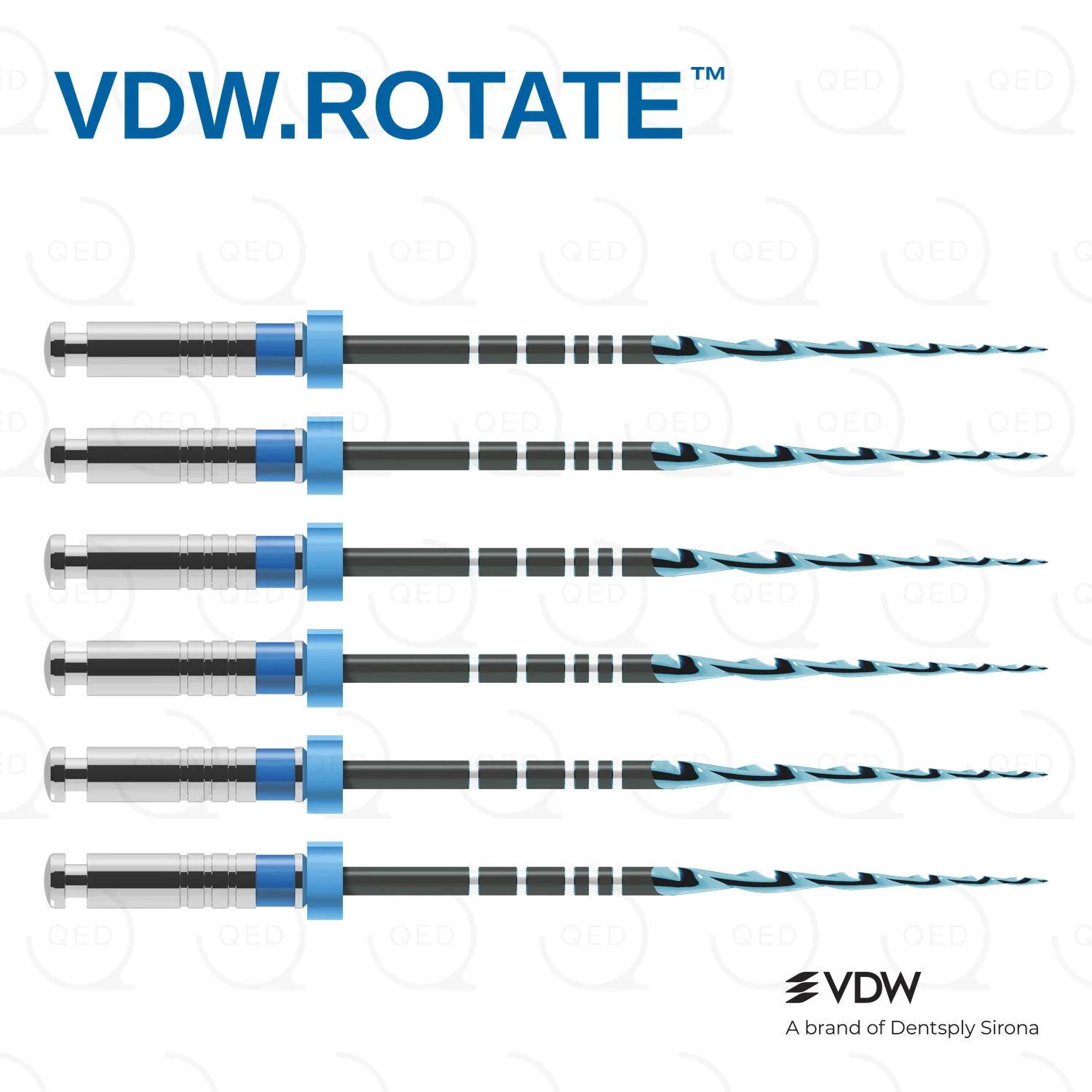
vdw.rotate® · 35/.06 · 25 mm · 6 files
heat-treated nitiadapted s sectionsingle use
the heat-treated file in vdw’s rotary range. vdw describe a “new heat treatment to increase flexibility without compromising cutting efficiency” and an “adapted s cross section for higher cutting efficiency” – the same s-section family as reciproc® blue, run in continuous rotation. this size is for shaping a larger canal once you have reached working length.
this pack: vdw.rotate® rotary file, iso size 35, .06 taper, 25 mm (pack of 6)
vdw · vdw gmbh, munich, germany (dentsply sirona)
| tip (d0) | 0.35 mm |
| taper | .06 |
| length | 25 mm |
| working part | 16 mm |
| handle | 11 mm, nickel plated · 3 rings for taper .06 · iso colour |
| calibration rings | 18, 19, 20, 22 mm, radiopaque |
| supplied | sterile, pack of 6 |
› heat-treated wire. vdw say the treatment “strengthens cyclic fatigue resistance of the file and lowers the risk of file breakage”.*
› adapted s section. vdw say it “ensures effective debris removal and provides control of the instrument for a swift, thorough and safe preparation”.*
› you can read the taper off the handle. 3 rings on the handle means taper .06, on top of the iso colour. no squinting at the blister.
› radiopaque calibration rings. at 18, 19, 20, 22 mm, so the length shows on the radiograph.
“the new vdw.rotate® file reduces canal transportation and better respects the canal anatomy.”
vdw, vdw.rotate product brochure menvrotbrc000 rev.1, 2019. vdw mark this “compared to other vdw continuous rotary instruments”.
which taper do i choose?
vdw put it simply: “choose taper .06 for the majority of clinical cases”, and “choose taper .04 for narrow and highly curved canals including apical curvature”.
coming from mtwo?
the same s-section idea, with the heat treatment and the handle coding added. see the mtwo range if you want to compare.
› the basic sequence: 15/.04 · 20/.05 · 25/.06 · 25/.04, 25 mm
› same file, other lengths: 21 mm · 31 mm
› larger anatomies: 30/.04 · 35/.04 · 40/.04 · 50/.04
› matched obturation: gutta-percha 35/.06
› glide path: vdw c-pilot® assorted, 25 mm · vdw c-pilot® 10, 25 mm
› retreatment: vdw.rotate® retreatment 25/.05, 21 mm
› motor: x-smart® pro+ with apex locator
› lubricant and irrigation: glyde™ file prep · chlorax 5.25% · irriflex® needles
vdw mark their vdw.rotate performance claims “compared to other vdw continuous rotary instruments”, and the cutting-efficiency claim also “compared to a centred rotary cross section”. single use. follow the instructions supplied with the product.
vdw.rotate® 35/.06, 25 mm (6) · heat-treated niti · ref vrot625635
vdw.rotate® · 40/.06 · 25 mm · 6 files
heat-treated nitiadapted s sectionsingle use
the heat-treated file in vdw’s rotary range. vdw describe a “new heat treatment to increase flexibility without compromising cutting efficiency” and an “adapted s cross section for higher cutting efficiency” – the same s-section family as reciproc® blue, run in continuous rotation. this size is for shaping a larger canal once you have reached working length.
this pack: vdw.rotate® rotary file, iso size 40, .06 taper, 25 mm (pack of 6)
vdw · vdw gmbh, munich, germany (dentsply sirona)
| tip (d0) | 0.40 mm |
| taper | .06 |
| length | 25 mm |
| working part | 16 mm |
| handle | 11 mm, nickel plated · 3 rings for taper .06 · iso colour |
| calibration rings | 18, 19, 20, 22 mm, radiopaque |
| supplied | sterile, pack of 6 |
› heat-treated wire. vdw say the treatment “strengthens cyclic fatigue resistance of the file and lowers the risk of file breakage”.*
› adapted s section. vdw say it “ensures effective debris removal and provides control of the instrument for a swift, thorough and safe preparation”.*
› you can read the taper off the handle. 3 rings on the handle means taper .06, on top of the iso colour. no squinting at the blister.
› radiopaque calibration rings. at 18, 19, 20, 22 mm, so the length shows on the radiograph.
“the new vdw.rotate® file reduces canal transportation and better respects the canal anatomy.”
vdw, vdw.rotate product brochure menvrotbrc000 rev.1, 2019. vdw mark this “compared to other vdw continuous rotary instruments”.
which taper do i choose?
vdw put it simply: “choose taper .06 for the majority of clinical cases”, and “choose taper .04 for narrow and highly curved canals including apical curvature”.
coming from mtwo?
the same s-section idea, with the heat treatment and the handle coding added. see the mtwo range if you want to compare.
› the basic sequence: 15/.04 · 20/.05 · 25/.06 · 25/.04, 25 mm
› same file, other lengths: 21 mm · 31 mm
› larger anatomies: 30/.04 · 35/.04 · 40/.04 · 50/.04
› matched obturation: gutta-percha 40/.06
› glide path: vdw c-pilot® assorted, 25 mm · vdw c-pilot® 10, 25 mm
› retreatment: vdw.rotate® retreatment 25/.05, 21 mm
› motor: x-smart® pro+ with apex locator
› lubricant and irrigation: glyde™ file prep · chlorax 5.25% · irriflex® needles
vdw mark their vdw.rotate performance claims “compared to other vdw continuous rotary instruments”, and the cutting-efficiency claim also “compared to a centred rotary cross section”. single use. follow the instructions supplied with the product.
vdw.rotate® 40/.06, 25 mm (6) · heat-treated niti · ref vrot625640

vdw.rotate® · 15/.04 · 31 mm · 6 files
heat-treated nitiadapted s sectionsingle use
the heat-treated file in vdw’s rotary range. vdw describe a “new heat treatment to increase flexibility without compromising cutting efficiency” and an “adapted s cross section for higher cutting efficiency” – the same s-section family as reciproc® blue, run in continuous rotation. this is the file the basic sequence opens on.
this pack: vdw.rotate® rotary file, iso size 15, .04 taper, 31 mm (pack of 6)
vdw · vdw gmbh, munich, germany (dentsply sirona)
| tip (d0) | 0.15 mm |
| taper | .04 |
| length | 31 mm |
| working part | 16 mm |
| handle | 11 mm, nickel plated · 1 ring for taper .04 · iso colour |
| calibration rings | 18, 19, 20, 22, 24 mm, radiopaque |
| supplied | sterile, pack of 6 |
› heat-treated wire. vdw say the treatment “strengthens cyclic fatigue resistance of the file and lowers the risk of file breakage”.*
› adapted s section. vdw say it “ensures effective debris removal and provides control of the instrument for a swift, thorough and safe preparation”.*
› you can read the taper off the handle. 1 ring on the handle means taper .04, on top of the iso colour. no squinting at the blister.
› radiopaque calibration rings. at 18, 19, 20, 22, 24 mm, so the length shows on the radiograph.
“the new vdw.rotate® file reduces canal transportation and better respects the canal anatomy.”
vdw, vdw.rotate product brochure menvrotbrc000 rev.1, 2019. vdw mark this “compared to other vdw continuous rotary instruments”.
which taper do i choose?
vdw put it simply: “choose taper .06 for the majority of clinical cases”, and “choose taper .04 for narrow and highly curved canals including apical curvature”.
coming from mtwo?
the same s-section idea, with the heat treatment and the handle coding added. see the mtwo range if you want to compare.
› the basic sequence: 20/.05 · 25/.06 · 25/.04, 31 mm
› same file, other lengths: 21 mm · 25 mm
› larger anatomies: 30/.04 · 35/.04 · 40/.04 · 50/.04
› obturation: diadent® dia-pro iso gutta-percha 15/.04 – the same size and taper. the dia-pro paper points stop at 40, so gauge with 40/.04 or a standard point.
› glide path: vdw c-pilot® assorted, 25 mm · vdw c-pilot® 10, 25 mm
› retreatment: vdw.rotate® retreatment 25/.05, 21 mm
› motor: x-smart® pro+ with apex locator
› lubricant and irrigation: glyde™ file prep · chlorax 5.25% · irriflex® needles
vdw mark their vdw.rotate performance claims “compared to other vdw continuous rotary instruments”, and the cutting-efficiency claim also “compared to a centred rotary cross section”. single use. follow the instructions supplied with the product.
vdw.rotate® 15/.04, 31 mm (6) · heat-treated niti · ref vrot631415
vdw.rotate® · 25/.04 · 31 mm · 6 files
heat-treated nitiadapted s sectionsingle use
the heat-treated file in vdw’s rotary range. vdw describe a “new heat treatment to increase flexibility without compromising cutting efficiency” and an “adapted s cross section for higher cutting efficiency” – the same s-section family as reciproc® blue, run in continuous rotation.
this pack: vdw.rotate® rotary file, iso size 25, .04 taper, 31 mm (pack of 6)
vdw · vdw gmbh, munich, germany (dentsply sirona)
| tip (d0) | 0.25 mm |
| taper | .04 |
| length | 31 mm |
| working part | 16 mm |
| handle | 11 mm, nickel plated · 1 ring for taper .04 · iso colour |
| calibration rings | 18, 19, 20, 22, 24 mm, radiopaque |
| supplied | sterile, pack of 6 |
› heat-treated wire. vdw say the treatment “strengthens cyclic fatigue resistance of the file and lowers the risk of file breakage”.*
› adapted s section. vdw say it “ensures effective debris removal and provides control of the instrument for a swift, thorough and safe preparation”.*
› you can read the taper off the handle. 1 ring on the handle means taper .04, on top of the iso colour. no squinting at the blister.
› radiopaque calibration rings. at 18, 19, 20, 22, 24 mm, so the length shows on the radiograph.
“the new vdw.rotate® file reduces canal transportation and better respects the canal anatomy.”
vdw, vdw.rotate product brochure menvrotbrc000 rev.1, 2019. vdw mark this “compared to other vdw continuous rotary instruments”.
which taper do i choose?
vdw put it simply: “choose taper .06 for the majority of clinical cases”, and “choose taper .04 for narrow and highly curved canals including apical curvature”.
coming from mtwo?
the same s-section idea, with the heat treatment and the handle coding added. see the mtwo range if you want to compare.
› the basic sequence: 15/.04 · 20/.05 · 25/.06, 31 mm
› same file, other lengths: 21 mm · 25 mm
› larger anatomies: 30/.04 · 35/.04 · 40/.04 · 50/.04
› matched obturation: gutta-percha 25/.04 · paper points 25/.04
› glide path: vdw c-pilot® assorted, 25 mm · vdw c-pilot® 10, 25 mm
› retreatment: vdw.rotate® retreatment 25/.05, 21 mm
› motor: x-smart® pro+ with apex locator
› lubricant and irrigation: glyde™ file prep · chlorax 5.25% · irriflex® needles
vdw mark their vdw.rotate performance claims “compared to other vdw continuous rotary instruments”, and the cutting-efficiency claim also “compared to a centred rotary cross section”. single use. follow the instructions supplied with the product.
vdw.rotate® 25/.04, 31 mm (6) · heat-treated niti · ref vrot631425
vdw.rotate® · 30/.04 · 31 mm · 6 files
heat-treated nitiadapted s sectionsingle use
the heat-treated file in vdw’s rotary range. vdw describe a “new heat treatment to increase flexibility without compromising cutting efficiency” and an “adapted s cross section for higher cutting efficiency” – the same s-section family as reciproc® blue, run in continuous rotation. this size is for shaping a larger canal once you have reached working length.
this pack: vdw.rotate® rotary file, iso size 30, .04 taper, 31 mm (pack of 6)
vdw · vdw gmbh, munich, germany (dentsply sirona)
| tip (d0) | 0.30 mm |
| taper | .04 |
| length | 31 mm |
| working part | 16 mm |
| handle | 11 mm, nickel plated · 1 ring for taper .04 · iso colour |
| calibration rings | 18, 19, 20, 22, 24 mm, radiopaque |
| supplied | sterile, pack of 6 |
› heat-treated wire. vdw say the treatment “strengthens cyclic fatigue resistance of the file and lowers the risk of file breakage”.*
› adapted s section. vdw say it “ensures effective debris removal and provides control of the instrument for a swift, thorough and safe preparation”.*
› you can read the taper off the handle. 1 ring on the handle means taper .04, on top of the iso colour. no squinting at the blister.
› radiopaque calibration rings. at 18, 19, 20, 22, 24 mm, so the length shows on the radiograph.
“the new vdw.rotate® file reduces canal transportation and better respects the canal anatomy.”
vdw, vdw.rotate product brochure menvrotbrc000 rev.1, 2019. vdw mark this “compared to other vdw continuous rotary instruments”.
which taper do i choose?
vdw put it simply: “choose taper .06 for the majority of clinical cases”, and “choose taper .04 for narrow and highly curved canals including apical curvature”.
coming from mtwo?
the same s-section idea, with the heat treatment and the handle coding added. see the mtwo range if you want to compare.
› the basic sequence: 15/.04 · 20/.05 · 25/.06 · 25/.04, 31 mm
› same file, other lengths: 21 mm · 25 mm
› larger anatomies: 35/.04 · 40/.04 · 50/.04 · 60/.04
› matched obturation: gutta-percha 30/.04 · paper points 30/.04
› glide path: vdw c-pilot® assorted, 25 mm · vdw c-pilot® 10, 25 mm
› retreatment: vdw.rotate® retreatment 25/.05, 21 mm
› motor: x-smart® pro+ with apex locator
› lubricant and irrigation: glyde™ file prep · chlorax 5.25% · irriflex® needles
vdw mark their vdw.rotate performance claims “compared to other vdw continuous rotary instruments”, and the cutting-efficiency claim also “compared to a centred rotary cross section”. single use. follow the instructions supplied with the product.
vdw.rotate® 30/.04, 31 mm (6) · heat-treated niti · ref vrot631430
vdw.rotate® · 35/.04 · 31 mm · 6 files
heat-treated nitiadapted s sectionsingle use
the heat-treated file in vdw’s rotary range. vdw describe a “new heat treatment to increase flexibility without compromising cutting efficiency” and an “adapted s cross section for higher cutting efficiency” – the same s-section family as reciproc® blue, run in continuous rotation. this size is for shaping a larger canal once you have reached working length.
this pack: vdw.rotate® rotary file, iso size 35, .04 taper, 31 mm (pack of 6)
vdw · vdw gmbh, munich, germany (dentsply sirona)
| tip (d0) | 0.35 mm |
| taper | .04 |
| length | 31 mm |
| working part | 16 mm |
| handle | 11 mm, nickel plated · 1 ring for taper .04 · iso colour |
| calibration rings | 18, 19, 20, 22, 24 mm, radiopaque |
| supplied | sterile, pack of 6 |
› heat-treated wire. vdw say the treatment “strengthens cyclic fatigue resistance of the file and lowers the risk of file breakage”.*
› adapted s section. vdw say it “ensures effective debris removal and provides control of the instrument for a swift, thorough and safe preparation”.*
› you can read the taper off the handle. 1 ring on the handle means taper .04, on top of the iso colour. no squinting at the blister.
› radiopaque calibration rings. at 18, 19, 20, 22, 24 mm, so the length shows on the radiograph.
“the new vdw.rotate® file reduces canal transportation and better respects the canal anatomy.”
vdw, vdw.rotate product brochure menvrotbrc000 rev.1, 2019. vdw mark this “compared to other vdw continuous rotary instruments”.
which taper do i choose?
vdw put it simply: “choose taper .06 for the majority of clinical cases”, and “choose taper .04 for narrow and highly curved canals including apical curvature”.
coming from mtwo?
the same s-section idea, with the heat treatment and the handle coding added. see the mtwo range if you want to compare.
› the basic sequence: 15/.04 · 20/.05 · 25/.06 · 25/.04, 31 mm
› same file, other lengths: 21 mm · 25 mm
› larger anatomies: 30/.04 · 40/.04 · 50/.04 · 60/.04
› matched obturation: gutta-percha 35/.04 · paper points 35/.04
› glide path: vdw c-pilot® assorted, 25 mm · vdw c-pilot® 10, 25 mm
› retreatment: vdw.rotate® retreatment 25/.05, 21 mm
› motor: x-smart® pro+ with apex locator
› lubricant and irrigation: glyde™ file prep · chlorax 5.25% · irriflex® needles
vdw mark their vdw.rotate performance claims “compared to other vdw continuous rotary instruments”, and the cutting-efficiency claim also “compared to a centred rotary cross section”. single use. follow the instructions supplied with the product.
vdw.rotate® 35/.04, 31 mm (6) · heat-treated niti · ref vrot631435
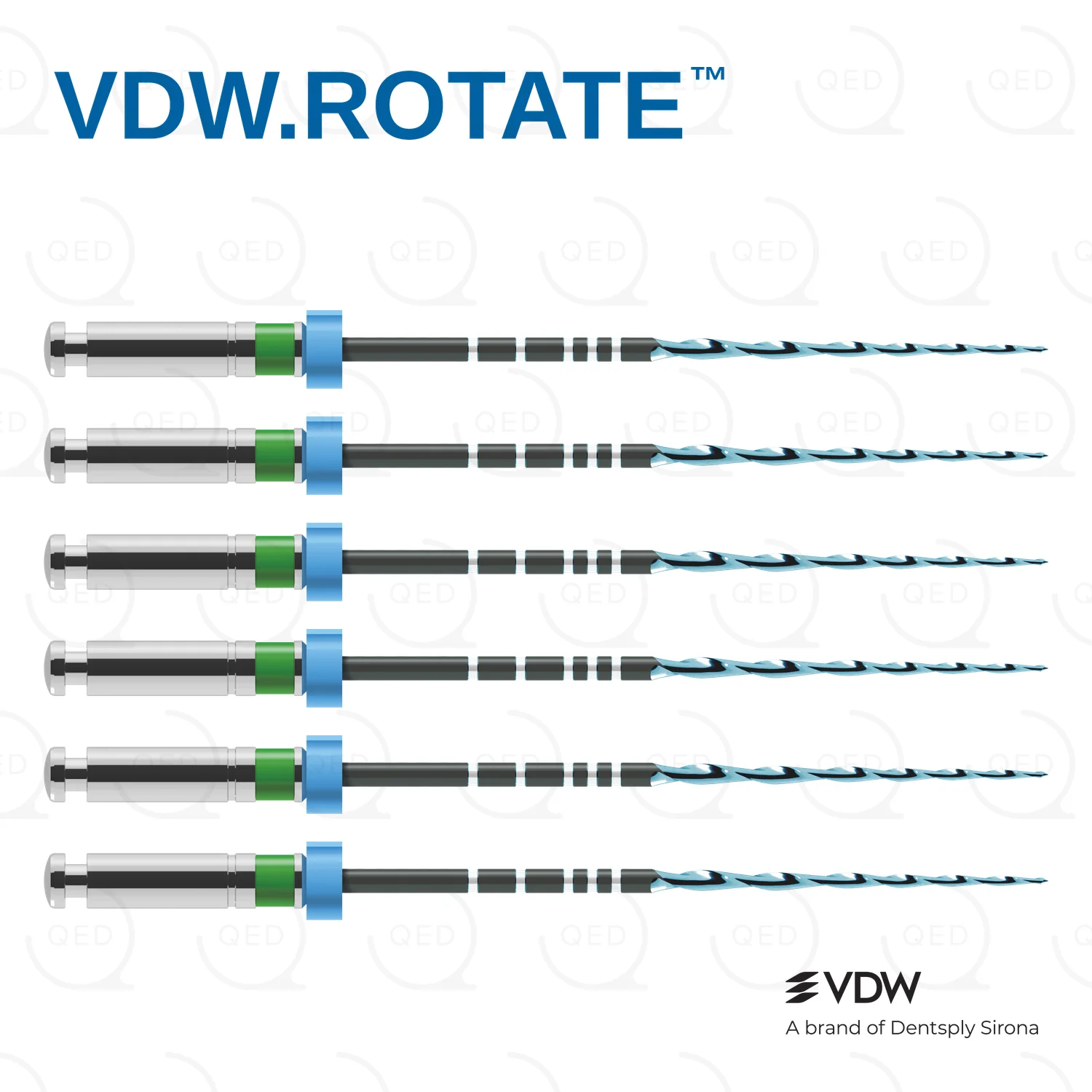
vdw.rotate® · 40/.04 · 31 mm · 6 files
heat-treated nitiadapted s sectionsingle use
the heat-treated file in vdw’s rotary range. vdw describe a “new heat treatment to increase flexibility without compromising cutting efficiency” and an “adapted s cross section for higher cutting efficiency” – the same s-section family as reciproc® blue, run in continuous rotation. this size is for shaping a larger canal once you have reached working length.
this pack: vdw.rotate® rotary file, iso size 40, .04 taper, 31 mm (pack of 6)
vdw · vdw gmbh, munich, germany (dentsply sirona)
| tip (d0) | 0.40 mm |
| taper | .04 |
| length | 31 mm |
| working part | 16 mm |
| handle | 11 mm, nickel plated · 1 ring for taper .04 · iso colour |
| calibration rings | 18, 19, 20, 22, 24 mm, radiopaque |
| supplied | sterile, pack of 6 |
› heat-treated wire. vdw say the treatment “strengthens cyclic fatigue resistance of the file and lowers the risk of file breakage”.*
› adapted s section. vdw say it “ensures effective debris removal and provides control of the instrument for a swift, thorough and safe preparation”.*
› you can read the taper off the handle. 1 ring on the handle means taper .04, on top of the iso colour. no squinting at the blister.
› radiopaque calibration rings. at 18, 19, 20, 22, 24 mm, so the length shows on the radiograph.
“the new vdw.rotate® file reduces canal transportation and better respects the canal anatomy.”
vdw, vdw.rotate product brochure menvrotbrc000 rev.1, 2019. vdw mark this “compared to other vdw continuous rotary instruments”.
which taper do i choose?
vdw put it simply: “choose taper .06 for the majority of clinical cases”, and “choose taper .04 for narrow and highly curved canals including apical curvature”.
coming from mtwo?
the same s-section idea, with the heat treatment and the handle coding added. see the mtwo range if you want to compare.
› the basic sequence: 15/.04 · 20/.05 · 25/.06 · 25/.04, 31 mm
› same file, other lengths: 21 mm · 25 mm
› larger anatomies: 30/.04 · 35/.04 · 50/.04 · 60/.04
› matched obturation: gutta-percha 40/.04 · paper points 40/.04
› glide path: vdw c-pilot® assorted, 25 mm · vdw c-pilot® 10, 25 mm
› retreatment: vdw.rotate® retreatment 25/.05, 21 mm
› motor: x-smart® pro+ with apex locator
› lubricant and irrigation: glyde™ file prep · chlorax 5.25% · irriflex® needles
vdw mark their vdw.rotate performance claims “compared to other vdw continuous rotary instruments”, and the cutting-efficiency claim also “compared to a centred rotary cross section”. single use. follow the instructions supplied with the product.
vdw.rotate® 40/.04, 31 mm (6) · heat-treated niti · ref vrot631440

vdw.rotate® · 50/.04 · 31 mm · 6 files
heat-treated nitiadapted s sectionsingle use
the heat-treated file in vdw’s rotary range. vdw describe a “new heat treatment to increase flexibility without compromising cutting efficiency” and an “adapted s cross section for higher cutting efficiency” – the same s-section family as reciproc® blue, run in continuous rotation. this size is for shaping a larger canal once you have reached working length.
this pack: vdw.rotate® rotary file, iso size 50, .04 taper, 31 mm (pack of 6)
vdw · vdw gmbh, munich, germany (dentsply sirona)
| tip (d0) | 0.50 mm |
| taper | .04 |
| length | 31 mm |
| working part | 16 mm |
| handle | 11 mm, nickel plated · 1 ring for taper .04 · iso colour |
| calibration rings | 18, 19, 20, 22, 24 mm, radiopaque |
| supplied | sterile, pack of 6 |
› heat-treated wire. vdw say the treatment “strengthens cyclic fatigue resistance of the file and lowers the risk of file breakage”.*
› adapted s section. vdw say it “ensures effective debris removal and provides control of the instrument for a swift, thorough and safe preparation”.*
› you can read the taper off the handle. 1 ring on the handle means taper .04, on top of the iso colour. no squinting at the blister.
› radiopaque calibration rings. at 18, 19, 20, 22, 24 mm, so the length shows on the radiograph.
“the new vdw.rotate® file reduces canal transportation and better respects the canal anatomy.”
vdw, vdw.rotate product brochure menvrotbrc000 rev.1, 2019. vdw mark this “compared to other vdw continuous rotary instruments”.
which taper do i choose?
vdw put it simply: “choose taper .06 for the majority of clinical cases”, and “choose taper .04 for narrow and highly curved canals including apical curvature”.
coming from mtwo?
the same s-section idea, with the heat treatment and the handle coding added. see the mtwo range if you want to compare.
› the basic sequence: 15/.04 · 20/.05 · 25/.06 · 25/.04, 31 mm
› same file, other lengths: 21 mm · 25 mm
› larger anatomies: 30/.04 · 35/.04 · 40/.04 · 60/.04
› matched obturation: gutta-percha 50/.04
› glide path: vdw c-pilot® assorted, 25 mm · vdw c-pilot® 10, 25 mm
› retreatment: vdw.rotate® retreatment 25/.05, 21 mm
› motor: x-smart® pro+ with apex locator
› lubricant and irrigation: glyde™ file prep · chlorax 5.25% · irriflex® needles
vdw mark their vdw.rotate performance claims “compared to other vdw continuous rotary instruments”, and the cutting-efficiency claim also “compared to a centred rotary cross section”. single use. follow the instructions supplied with the product.
vdw.rotate® 50/.04, 31 mm (6) · heat-treated niti · ref vrot631450

vdw.rotate® · 60/.04 · 31 mm · 6 files
heat-treated nitiadapted s sectionsingle use
the heat-treated file in vdw’s rotary range. vdw describe a “new heat treatment to increase flexibility without compromising cutting efficiency” and an “adapted s cross section for higher cutting efficiency” – the same s-section family as reciproc® blue, run in continuous rotation. this size is for shaping a larger canal once you have reached working length.
this pack: vdw.rotate® rotary file, iso size 60, .04 taper, 31 mm (pack of 6)
vdw · vdw gmbh, munich, germany (dentsply sirona)
| tip (d0) | 0.60 mm |
| taper | .04 |
| length | 31 mm |
| working part | 16 mm |
| handle | 11 mm, nickel plated · 1 ring for taper .04 · iso colour |
| calibration rings | 18, 19, 20, 22, 24 mm, radiopaque |
| supplied | sterile, pack of 6 |
› heat-treated wire. vdw say the treatment “strengthens cyclic fatigue resistance of the file and lowers the risk of file breakage”.*
› adapted s section. vdw say it “ensures effective debris removal and provides control of the instrument for a swift, thorough and safe preparation”.*
› you can read the taper off the handle. 1 ring on the handle means taper .04, on top of the iso colour. no squinting at the blister.
› radiopaque calibration rings. at 18, 19, 20, 22, 24 mm, so the length shows on the radiograph.
“the new vdw.rotate® file reduces canal transportation and better respects the canal anatomy.”
vdw, vdw.rotate product brochure menvrotbrc000 rev.1, 2019. vdw mark this “compared to other vdw continuous rotary instruments”.
which taper do i choose?
vdw put it simply: “choose taper .06 for the majority of clinical cases”, and “choose taper .04 for narrow and highly curved canals including apical curvature”.
coming from mtwo?
the same s-section idea, with the heat treatment and the handle coding added. see the mtwo range if you want to compare.
› the basic sequence: 15/.04 · 20/.05 · 25/.06 · 25/.04, 31 mm
› same file, other lengths: 21 mm · 25 mm
› larger anatomies: 30/.04 · 35/.04 · 40/.04 · 50/.04
› obturation: the dia-pro .04 range stops at 45, so there is no matched cone at 60/.04. fit from 45/.04 or the standard ml.029™ 60/.02.
› glide path: vdw c-pilot® assorted, 25 mm · vdw c-pilot® 10, 25 mm
› retreatment: vdw.rotate® retreatment 25/.05, 21 mm
› motor: x-smart® pro+ with apex locator
› lubricant and irrigation: glyde™ file prep · chlorax 5.25% · irriflex® needles
vdw mark their vdw.rotate performance claims “compared to other vdw continuous rotary instruments”, and the cutting-efficiency claim also “compared to a centred rotary cross section”. single use. follow the instructions supplied with the product.
vdw.rotate® 60/.04, 31 mm (6) · heat-treated niti · ref vrot631460

vdw.rotate® · 20/.05 · 31 mm · 6 files
heat-treated nitiadapted s sectionsingle use
the heat-treated file in vdw’s rotary range. vdw describe a “new heat treatment to increase flexibility without compromising cutting efficiency” and an “adapted s cross section for higher cutting efficiency” – the same s-section family as reciproc® blue, run in continuous rotation.
this pack: vdw.rotate® rotary file, iso size 20, .05 taper, 31 mm (pack of 6)
vdw · vdw gmbh, munich, germany (dentsply sirona)
| tip (d0) | 0.20 mm |
| taper | .05 |
| length | 31 mm |
| working part | 16 mm |
| handle | 11 mm, nickel plated · 2 rings for taper .05 · iso colour |
| calibration rings | 18, 19, 20, 22, 24 mm, radiopaque |
| supplied | sterile, pack of 6 |
› heat-treated wire. vdw say the treatment “strengthens cyclic fatigue resistance of the file and lowers the risk of file breakage”.*
› adapted s section. vdw say it “ensures effective debris removal and provides control of the instrument for a swift, thorough and safe preparation”.*
› you can read the taper off the handle. 2 rings on the handle means taper .05, on top of the iso colour. no squinting at the blister.
› radiopaque calibration rings. at 18, 19, 20, 22, 24 mm, so the length shows on the radiograph.
“the new vdw.rotate® file reduces canal transportation and better respects the canal anatomy.”
vdw, vdw.rotate product brochure menvrotbrc000 rev.1, 2019. vdw mark this “compared to other vdw continuous rotary instruments”.
which taper do i choose?
vdw put it simply: “choose taper .06 for the majority of clinical cases”, and “choose taper .04 for narrow and highly curved canals including apical curvature”.
coming from mtwo?
the same s-section idea, with the heat treatment and the handle coding added. see the mtwo range if you want to compare.
› the basic sequence: 15/.04 · 25/.06 · 25/.04, 31 mm
› same file, other lengths: 21 mm · 25 mm
› larger anatomies: 30/.04 · 35/.04 · 40/.04 · 50/.04
› obturation: dia-pro iso is made in .04 and .06 only, so there is no matched cone for a .05 preparation. fit from the .04 assorted pack or the standard ml.029™ .02 range.
› glide path: vdw c-pilot® assorted, 25 mm · vdw c-pilot® 10, 25 mm
› retreatment: vdw.rotate® retreatment 25/.05, 21 mm
› motor: x-smart® pro+ with apex locator
› lubricant and irrigation: glyde™ file prep · chlorax 5.25% · irriflex® needles
vdw mark their vdw.rotate performance claims “compared to other vdw continuous rotary instruments”, and the cutting-efficiency claim also “compared to a centred rotary cross section”. single use. follow the instructions supplied with the product.
vdw.rotate® 20/.05, 31 mm (6) · heat-treated niti · ref vrot631520
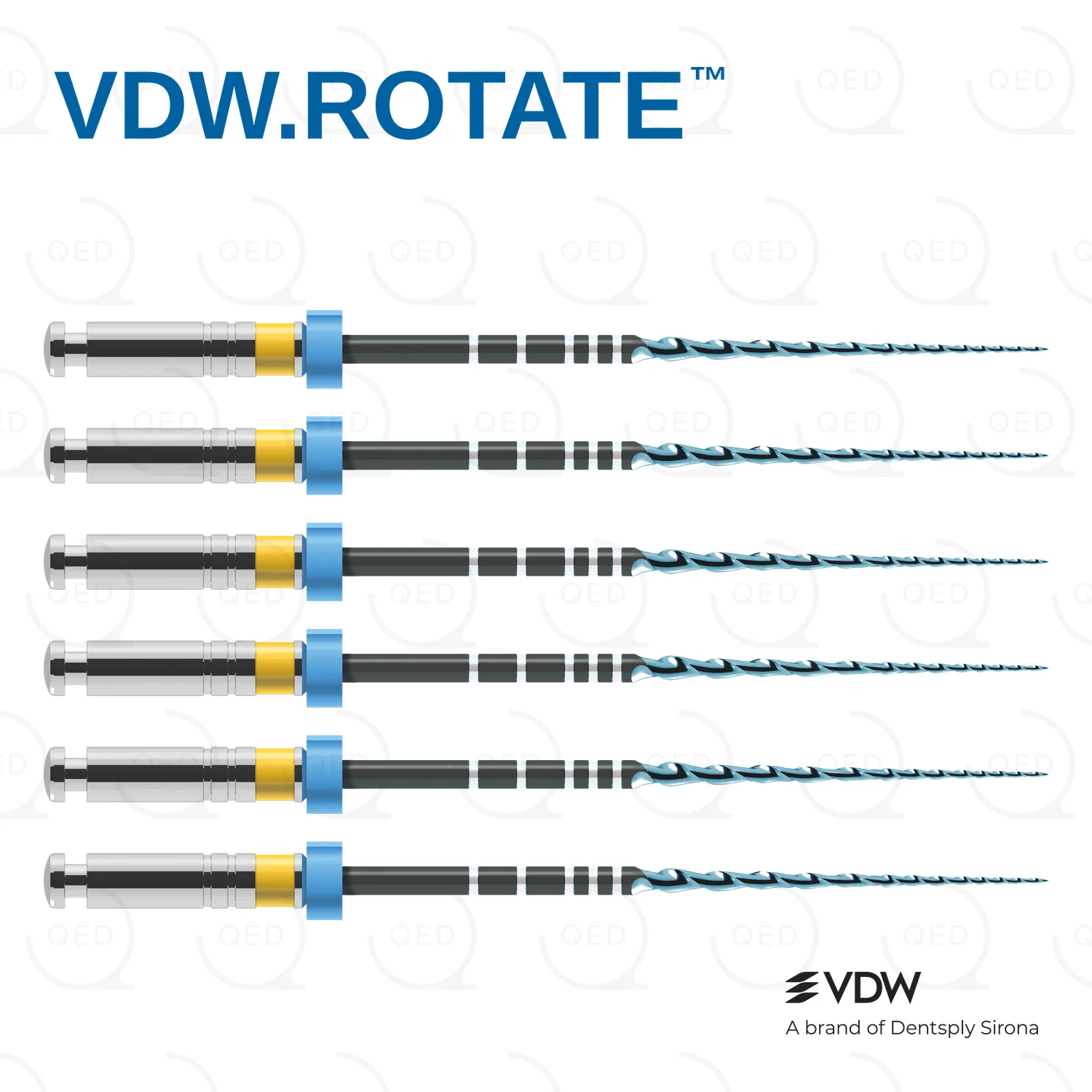
vdw.rotate® · 25/.06 · 31 mm · 6 files
heat-treated nitiadapted s sectionsingle use
the heat-treated file in vdw’s rotary range. vdw describe a “new heat treatment to increase flexibility without compromising cutting efficiency” and an “adapted s cross section for higher cutting efficiency” – the same s-section family as reciproc® blue, run in continuous rotation.
this pack: vdw.rotate® rotary file, iso size 25, .06 taper, 31 mm (pack of 6)
vdw · vdw gmbh, munich, germany (dentsply sirona)
| tip (d0) | 0.25 mm |
| taper | .06 |
| length | 31 mm |
| working part | 16 mm |
| handle | 11 mm, nickel plated · 3 rings for taper .06 · iso colour |
| calibration rings | 18, 19, 20, 22, 24 mm, radiopaque |
| supplied | sterile, pack of 6 |
› heat-treated wire. vdw say the treatment “strengthens cyclic fatigue resistance of the file and lowers the risk of file breakage”.*
› adapted s section. vdw say it “ensures effective debris removal and provides control of the instrument for a swift, thorough and safe preparation”.*
› you can read the taper off the handle. 3 rings on the handle means taper .06, on top of the iso colour. no squinting at the blister.
› radiopaque calibration rings. at 18, 19, 20, 22, 24 mm, so the length shows on the radiograph.
“the new vdw.rotate® file reduces canal transportation and better respects the canal anatomy.”
vdw, vdw.rotate product brochure menvrotbrc000 rev.1, 2019. vdw mark this “compared to other vdw continuous rotary instruments”.
which taper do i choose?
vdw put it simply: “choose taper .06 for the majority of clinical cases”, and “choose taper .04 for narrow and highly curved canals including apical curvature”.
coming from mtwo?
the same s-section idea, with the heat treatment and the handle coding added. see the mtwo range if you want to compare.
› the basic sequence: 15/.04 · 20/.05 · 25/.04, 31 mm
› same file, other lengths: 21 mm · 25 mm
› larger anatomies: 30/.04 · 35/.04 · 40/.04 · 50/.04
› matched obturation: gutta-percha 25/.06 · paper points 25/.06
› glide path: vdw c-pilot® assorted, 25 mm · vdw c-pilot® 10, 25 mm
› retreatment: vdw.rotate® retreatment 25/.05, 21 mm
› motor: x-smart® pro+ with apex locator
› lubricant and irrigation: glyde™ file prep · chlorax 5.25% · irriflex® needles
vdw mark their vdw.rotate performance claims “compared to other vdw continuous rotary instruments”, and the cutting-efficiency claim also “compared to a centred rotary cross section”. single use. follow the instructions supplied with the product.
vdw.rotate® 25/.06, 31 mm (6) · heat-treated niti · ref vrot631625

vdw.rotate® · 30/.06 · 31 mm · 6 files
heat-treated nitiadapted s sectionsingle use
the heat-treated file in vdw’s rotary range. vdw describe a “new heat treatment to increase flexibility without compromising cutting efficiency” and an “adapted s cross section for higher cutting efficiency” – the same s-section family as reciproc® blue, run in continuous rotation. this size is for shaping a larger canal once you have reached working length.
this pack: vdw.rotate® rotary file, iso size 30, .06 taper, 31 mm (pack of 6)
vdw · vdw gmbh, munich, germany (dentsply sirona)
| tip (d0) | 0.30 mm |
| taper | .06 |
| length | 31 mm |
| working part | 16 mm |
| handle | 11 mm, nickel plated · 3 rings for taper .06 · iso colour |
| calibration rings | 18, 19, 20, 22, 24 mm, radiopaque |
| supplied | sterile, pack of 6 |
› heat-treated wire. vdw say the treatment “strengthens cyclic fatigue resistance of the file and lowers the risk of file breakage”.*
› adapted s section. vdw say it “ensures effective debris removal and provides control of the instrument for a swift, thorough and safe preparation”.*
› you can read the taper off the handle. 3 rings on the handle means taper .06, on top of the iso colour. no squinting at the blister.
› radiopaque calibration rings. at 18, 19, 20, 22, 24 mm, so the length shows on the radiograph.
“the new vdw.rotate® file reduces canal transportation and better respects the canal anatomy.”
vdw, vdw.rotate product brochure menvrotbrc000 rev.1, 2019. vdw mark this “compared to other vdw continuous rotary instruments”.
which taper do i choose?
vdw put it simply: “choose taper .06 for the majority of clinical cases”, and “choose taper .04 for narrow and highly curved canals including apical curvature”.
coming from mtwo?
the same s-section idea, with the heat treatment and the handle coding added. see the mtwo range if you want to compare.
› the basic sequence: 15/.04 · 20/.05 · 25/.06 · 25/.04, 31 mm
› same file, other lengths: 21 mm · 25 mm
› larger anatomies: 30/.04 · 35/.04 · 40/.04 · 50/.04
› matched obturation: gutta-percha 30/.06
› glide path: vdw c-pilot® assorted, 25 mm · vdw c-pilot® 10, 25 mm
› retreatment: vdw.rotate® retreatment 25/.05, 21 mm
› motor: x-smart® pro+ with apex locator
› lubricant and irrigation: glyde™ file prep · chlorax 5.25% · irriflex® needles
vdw mark their vdw.rotate performance claims “compared to other vdw continuous rotary instruments”, and the cutting-efficiency claim also “compared to a centred rotary cross section”. single use. follow the instructions supplied with the product.
vdw.rotate® 30/.06, 31 mm (6) · heat-treated niti · ref vrot631630
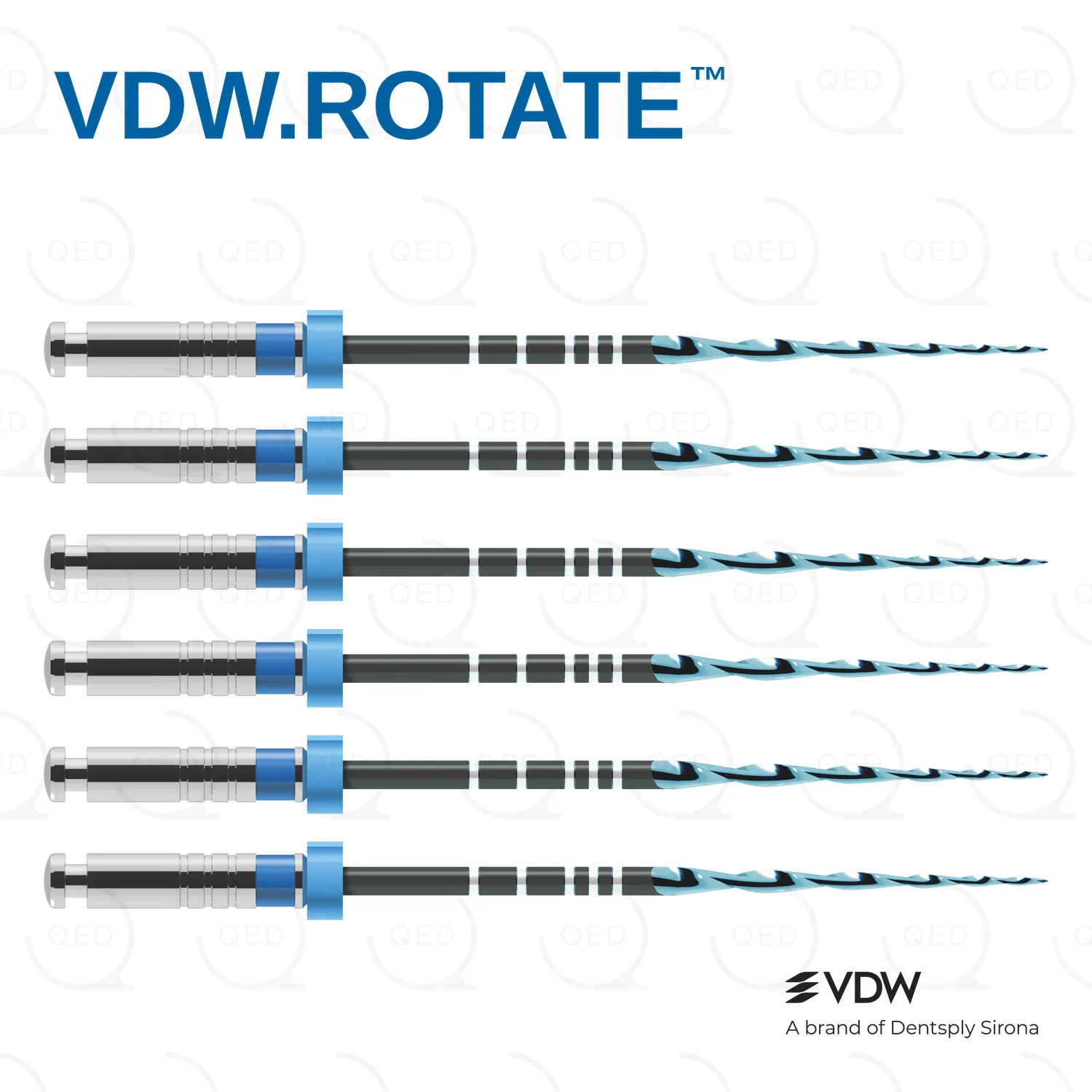
vdw.rotate® · 35/.06 · 31 mm · 6 files
heat-treated nitiadapted s sectionsingle use
the heat-treated file in vdw’s rotary range. vdw describe a “new heat treatment to increase flexibility without compromising cutting efficiency” and an “adapted s cross section for higher cutting efficiency” – the same s-section family as reciproc® blue, run in continuous rotation. this size is for shaping a larger canal once you have reached working length.
this pack: vdw.rotate® rotary file, iso size 35, .06 taper, 31 mm (pack of 6)
vdw · vdw gmbh, munich, germany (dentsply sirona)
| tip (d0) | 0.35 mm |
| taper | .06 |
| length | 31 mm |
| working part | 16 mm |
| handle | 11 mm, nickel plated · 3 rings for taper .06 · iso colour |
| calibration rings | 18, 19, 20, 22, 24 mm, radiopaque |
| supplied | sterile, pack of 6 |
› heat-treated wire. vdw say the treatment “strengthens cyclic fatigue resistance of the file and lowers the risk of file breakage”.*
› adapted s section. vdw say it “ensures effective debris removal and provides control of the instrument for a swift, thorough and safe preparation”.*
› you can read the taper off the handle. 3 rings on the handle means taper .06, on top of the iso colour. no squinting at the blister.
› radiopaque calibration rings. at 18, 19, 20, 22, 24 mm, so the length shows on the radiograph.
“the new vdw.rotate® file reduces canal transportation and better respects the canal anatomy.”
vdw, vdw.rotate product brochure menvrotbrc000 rev.1, 2019. vdw mark this “compared to other vdw continuous rotary instruments”.
which taper do i choose?
vdw put it simply: “choose taper .06 for the majority of clinical cases”, and “choose taper .04 for narrow and highly curved canals including apical curvature”.
coming from mtwo?
the same s-section idea, with the heat treatment and the handle coding added. see the mtwo range if you want to compare.
› the basic sequence: 15/.04 · 20/.05 · 25/.06 · 25/.04, 31 mm
› same file, other lengths: 21 mm · 25 mm
› larger anatomies: 30/.04 · 35/.04 · 40/.04 · 50/.04
› matched obturation: gutta-percha 35/.06
› glide path: vdw c-pilot® assorted, 25 mm · vdw c-pilot® 10, 25 mm
› retreatment: vdw.rotate® retreatment 25/.05, 21 mm
› motor: x-smart® pro+ with apex locator
› lubricant and irrigation: glyde™ file prep · chlorax 5.25% · irriflex® needles
vdw mark their vdw.rotate performance claims “compared to other vdw continuous rotary instruments”, and the cutting-efficiency claim also “compared to a centred rotary cross section”. single use. follow the instructions supplied with the product.
vdw.rotate® 35/.06, 31 mm (6) · heat-treated niti · ref vrot631635

vdw.rotate® · 40/.06 · 31 mm · 6 files
heat-treated nitiadapted s sectionsingle use
the heat-treated file in vdw’s rotary range. vdw describe a “new heat treatment to increase flexibility without compromising cutting efficiency” and an “adapted s cross section for higher cutting efficiency” – the same s-section family as reciproc® blue, run in continuous rotation. this size is for shaping a larger canal once you have reached working length.
this pack: vdw.rotate® rotary file, iso size 40, .06 taper, 31 mm (pack of 6)
vdw · vdw gmbh, munich, germany (dentsply sirona)
| tip (d0) | 0.40 mm |
| taper | .06 |
| length | 31 mm |
| working part | 16 mm |
| handle | 11 mm, nickel plated · 3 rings for taper .06 · iso colour |
| calibration rings | 18, 19, 20, 22, 24 mm, radiopaque |
| supplied | sterile, pack of 6 |
› heat-treated wire. vdw say the treatment “strengthens cyclic fatigue resistance of the file and lowers the risk of file breakage”.*
› adapted s section. vdw say it “ensures effective debris removal and provides control of the instrument for a swift, thorough and safe preparation”.*
› you can read the taper off the handle. 3 rings on the handle means taper .06, on top of the iso colour. no squinting at the blister.
› radiopaque calibration rings. at 18, 19, 20, 22, 24 mm, so the length shows on the radiograph.
“the new vdw.rotate® file reduces canal transportation and better respects the canal anatomy.”
vdw, vdw.rotate product brochure menvrotbrc000 rev.1, 2019. vdw mark this “compared to other vdw continuous rotary instruments”.
which taper do i choose?
vdw put it simply: “choose taper .06 for the majority of clinical cases”, and “choose taper .04 for narrow and highly curved canals including apical curvature”.
coming from mtwo?
the same s-section idea, with the heat treatment and the handle coding added. see the mtwo range if you want to compare.
› the basic sequence: 15/.04 · 20/.05 · 25/.06 · 25/.04, 31 mm
› same file, other lengths: 21 mm · 25 mm
› larger anatomies: 30/.04 · 35/.04 · 40/.04 · 50/.04
› matched obturation: gutta-percha 40/.06
› glide path: vdw c-pilot® assorted, 25 mm · vdw c-pilot® 10, 25 mm
› retreatment: vdw.rotate® retreatment 25/.05, 21 mm
› motor: x-smart® pro+ with apex locator
› lubricant and irrigation: glyde™ file prep · chlorax 5.25% · irriflex® needles
vdw mark their vdw.rotate performance claims “compared to other vdw continuous rotary instruments”, and the cutting-efficiency claim also “compared to a centred rotary cross section”. single use. follow the instructions supplied with the product.
vdw.rotate® 40/.06, 31 mm (6) · heat-treated niti · ref vrot631640


 Facebook
 X
 Instagram
 Pinterest
